
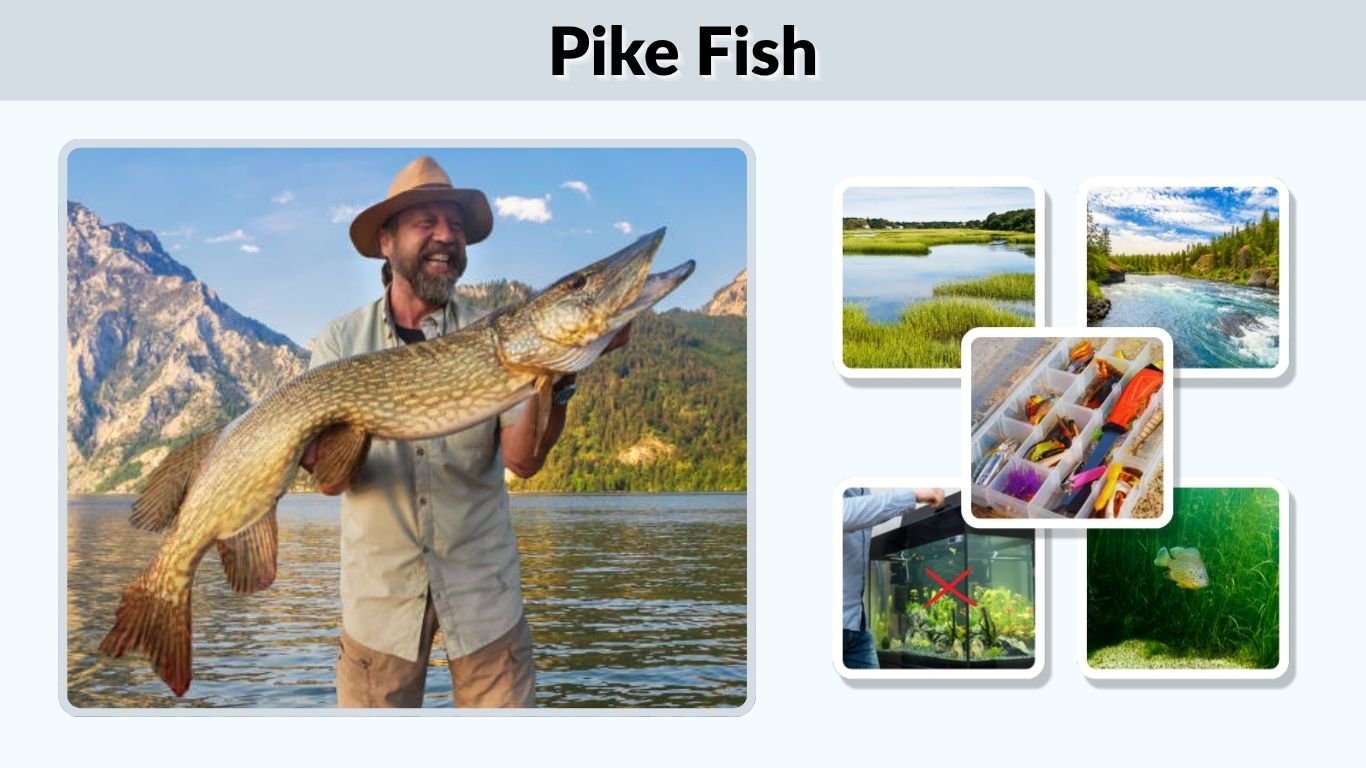
Pike fish are long, powerful freshwater predators known for their sharp teeth, fast strikes, and torpedo-shaped bodies. They live in lakes, rivers, ponds, reservoirs, and slow-moving waters where they hide among weeds and wait for prey. The name “pike” usually refers to northern pike, but it can also describe related predatory fish such as muskellunge and pickerel. Pike are popular among anglers because they fight hard, grow large, and are exciting to catch.
What Is a Pike Fish?
A pike fish is a freshwater predatory fish from the family Esocidae. These fish are built for ambush hunting. They have long bodies, large mouths, sharp teeth, and strong tails that help them burst forward quickly.
Pike Fish Species Overview
The most famous pike species is the northern pike, scientifically known as Esox lucius. It is found across parts of North America, Europe, and Asia. Pike are often top predators in their habitats, meaning they help control populations of smaller fish and other aquatic animals.
Pike are sometimes confused with muskellunge and pickerel because all three have a similar body shape. They are related, but they are not exactly the same fish.
Common Pike-Like Fish
- Northern pike
- Muskellunge
- Chain pickerel
- Grass pickerel
- Redfin pickerel
- Amur pike
Northern pike is the species most people mean when they say “pike fish.”
Pike Fish Identification
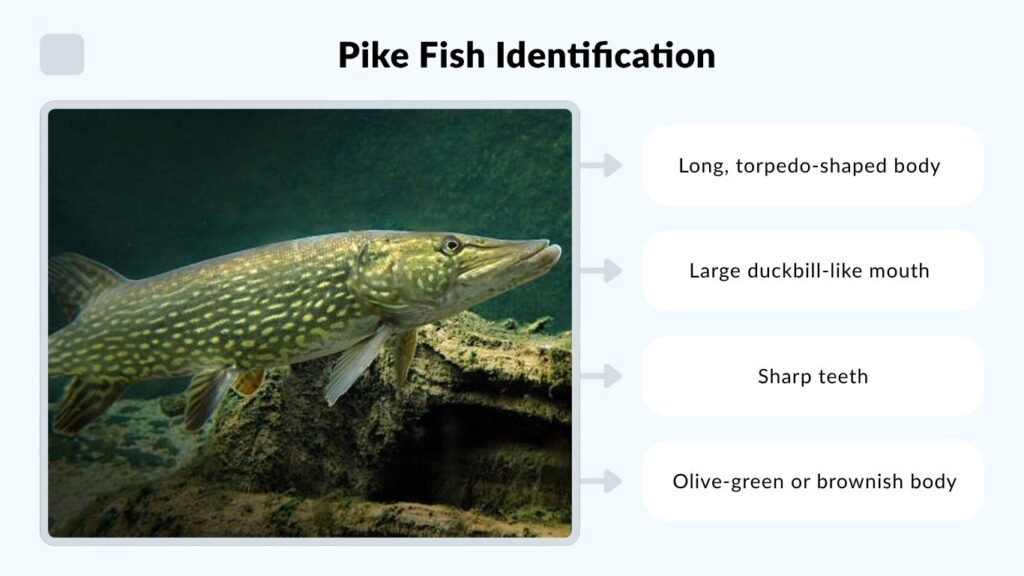
Pike are easy to recognize once you know their main features. They look like underwater hunters, with a long body and a large mouth full of teeth.
What Does a Pike Fish Look Like?
Pike usually have an olive-green, greenish-brown, or gray-green body with pale spots or markings. Their belly is lighter, often white or cream. Their head is flat and long, and their mouth looks almost duck-billed.
Key Identification Features
- Long, torpedo-shaped body
- Large duckbill-like mouth
- Sharp teeth
- Olive-green or brownish body
- Pale spots or bars on the sides
- Light-colored belly
- Dorsal fin set far back near the tail
- Fast, sudden swimming style
The dorsal fin placement is important. Pike have their dorsal fin far back on the body, close to the tail, which helps them accelerate quickly when attacking prey.
Pike Fish Habitat
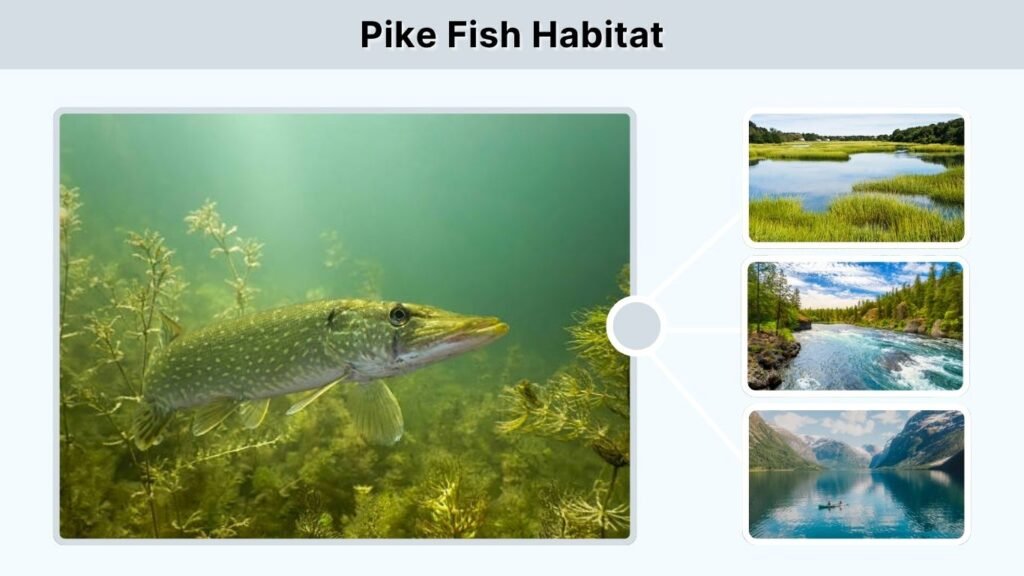
Pike fish live in freshwater habitats with enough cover and prey. They are especially common in weedy lakes, slow rivers, backwaters, marshes, and reservoirs.
Where Do Pike Fish Live?
Pike prefer areas where they can hide and ambush prey. They often stay near aquatic plants, fallen trees, rocks, docks, and shallow edges. Young pike may use weedy shallows for protection, while larger adults may move between shallow and deeper water depending on season and temperature.
Common pike habitats include:
- Lakes
- Rivers
- Reservoirs
- Ponds
- Marshes
- Backwaters
- Weed beds
- Shallow bays
- Slow-moving channels
Pike can live in cool and cold freshwater systems. They are often found in northern regions, but suitable habitat can vary by country and climate.
Pike Fish Habitat Table
| Habitat Type | Why Pike Like It |
| Weedy lakes | Good cover for ambush hunting |
| Slow rivers | Easy hunting areas with calm water |
| Marshes | Rich in small fish and frogs |
| Reservoirs | Deep and shallow areas available |
| Backwaters | Quiet water with cover |
| Shallow bays | Good spawning and feeding areas |
Pike Fish Size
Pike can grow much larger than many common freshwater fish. Their size depends on species, age, food supply, water quality, and habitat.
How Big Do Pike Fish Get?
Northern pike commonly grow between 20 and 30 inches, but larger individuals can pass 40 inches in good waters. Very large pike may weigh over 20 pounds, and trophy fish can be much heavier.
Young pike grow quickly when food is available. In lakes with many small fish, they can become strong predators within a short time.
Pike Size by Age
| Pike Stage | Typical Size |
| Young pike | A few inches long |
| Juvenile pike | 8 to 18 inches |
| Adult pike | 20 to 30 inches |
| Large pike | 30 to 40+ inches |
| Trophy pike | Over 40 inches |
Not every pike reaches trophy size. Large pike need good habitat, plenty of prey, and enough time to grow.
Pike Fish Diet
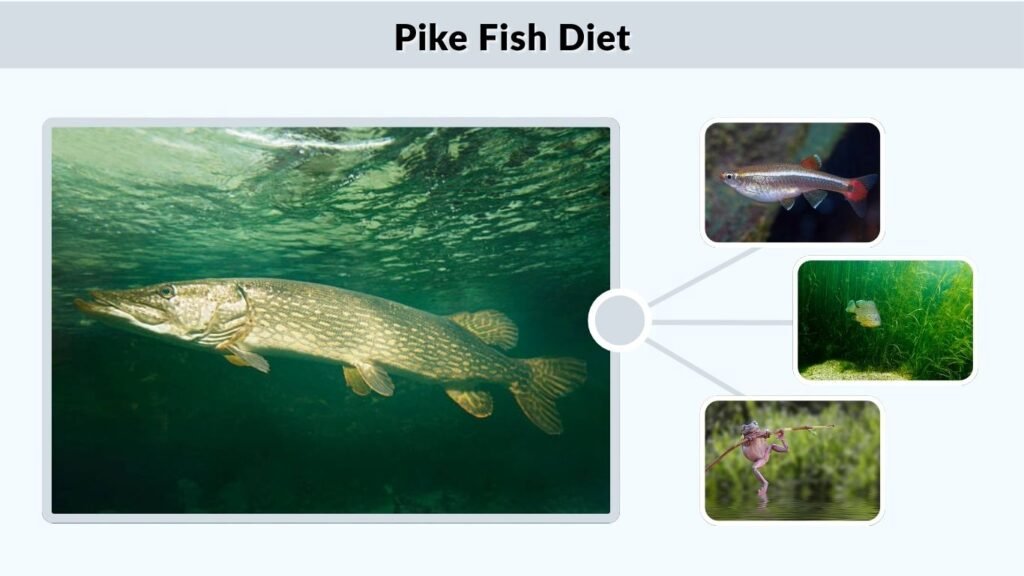
Pike fish are carnivores. They eat other animals and are known for their aggressive feeding behavior. They are ambush predators, meaning they hide and wait before attacking.
What Do Pike Fish Eat?
Pike mostly eat fish, but they are opportunistic hunters. They may also eat frogs, crayfish, insects, small mammals, and even small birds if they can catch them.
Common pike foods include:
- Minnows
- Perch
- Sunfish
- Shiners
- Suckers
- Frogs
- Crayfish
- Aquatic insects
- Small ducks or birds occasionally
- Small mammals near water occasionally
Fish are usually the main part of their diet. A large pike can eat surprisingly big prey because of its wide mouth and sharp teeth.
How Pike Hunt
Pike often stay motionless near weeds or cover. When a fish swims close, the pike launches forward in a sudden burst. This attack is fast and powerful.
Their sharp teeth help grab slippery prey. After catching a fish, a pike may turn it and swallow it headfirst.
Pike Fish Behavior
Pike are usually solitary predators. They do not normally swim in large schools like many small fish. Instead, each pike often uses a hunting area where it waits for prey.
Are Pike Aggressive?
Pike are aggressive predators toward prey, but they do not usually attack people. Anglers call them aggressive because they strike lures hard and may chase fast-moving bait.
Their aggression is mostly feeding behavior. In an aquarium or natural water, they may eat smaller fish, so they should not be kept with fish that fit into their mouth.
Pike Activity by Season
Pike behavior changes through the year. In spring, they move into shallow areas to spawn. In summer, they may use weed beds, deeper edges, and cooler water. In fall, they feed heavily before winter. In winter, they remain active under the ice in cold regions.
Pike Fish Spawning and Reproduction
Pike usually spawn in spring when water begins to warm. They often move into shallow, weedy, flooded, or marshy areas.
Pike Eggs
Female pike release many eggs over vegetation. The eggs stick to plants and bottom material. Pike do not guard their eggs like some fish species. After spawning, adults leave the area.
Young pike hatch and begin feeding on tiny aquatic organisms. As they grow, they quickly begin eating small fish and other prey.
Why Shallow Habitat Matters
Shallow wetlands, flooded grasses, and marsh edges are important for pike reproduction. These areas give eggs and young fish protection. If wetlands are damaged or water levels change too much, pike spawning success may decline.
Pike Fish vs Pickerel vs Muskie
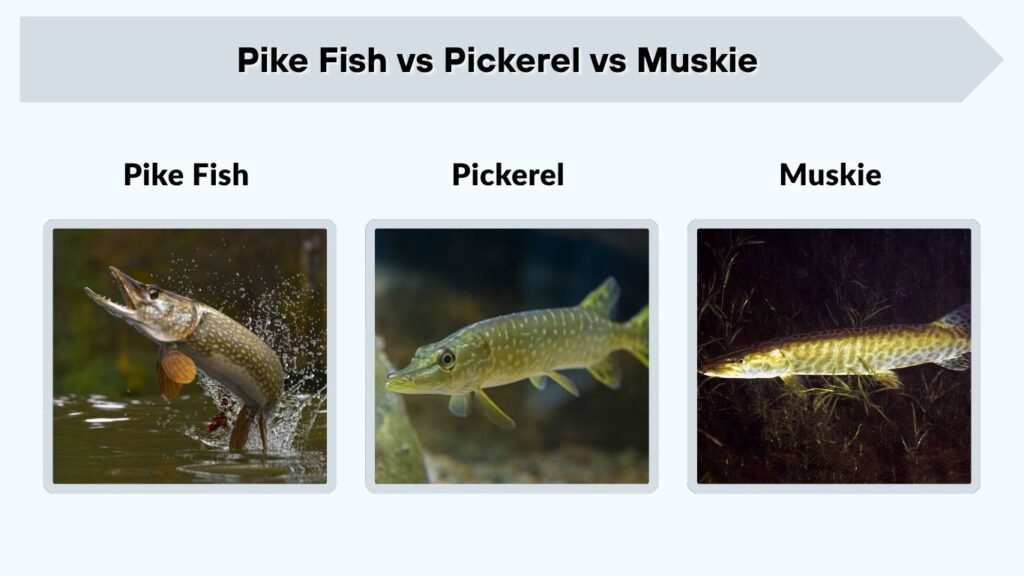
Pike, pickerel, and muskie are closely related, so people often confuse them. They all have long bodies, sharp teeth, and predatory habits.
Main Differences
| Fish | Main Features | Size |
| Northern pike | Light spots on darker body, large mouth | Large |
| Muskellunge | Larger, often with bars or spots, fewer cheek scales | Very large |
| Chain pickerel | Chain-like pattern on sides | Smaller |
| Grass pickerel | Smaller, short snout, bars | Small |
| Redfin pickerel | Small, reddish fins | Small |
Muskie are usually larger than northern pike, while pickerel are usually smaller. Northern pike often have pale spots on a darker green body.
Pike vs Muskie
A common identification trick is body pattern. Northern pike often show light markings on a dark body. Muskie often show darker markings on a lighter body, though patterns can vary.
Muskie also tend to grow larger and are often considered more difficult to catch.
Are Pike Fish Good to Eat?
Pike fish can be good to eat if prepared properly. Their meat is white, firm, and mild. However, they are known for having many Y-shaped bones, which can make cleaning and eating them more difficult.
What Does Pike Taste Like?
Pike has a mild freshwater flavor. When handled correctly, it can be tasty fried, baked, grilled, or made into fish cakes. The key is cleaning it well and removing the bones carefully.
Some people love pike, while others prefer fish with fewer bones.
Tips for Eating Pike
- Keep only legal-sized fish
- Clean the fish soon after catching
- Remove Y-bones carefully
- Cook thoroughly
- Use fresh fillets
- Check local fish consumption advisories
Fish consumption advisories are important because some waters may contain mercury or other pollutants.
Pike Fishing
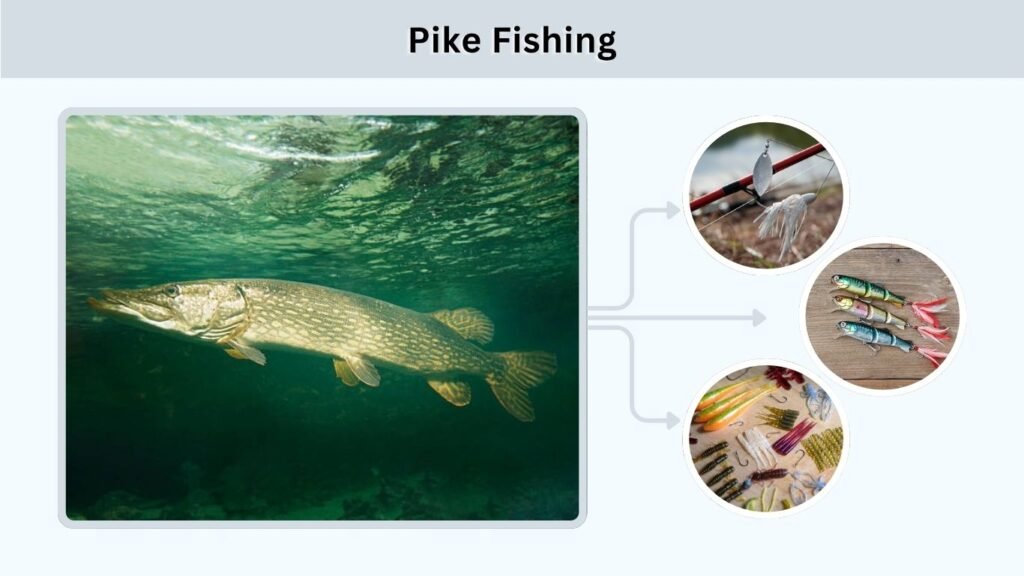
Pike are a popular sport fish because they strike aggressively and fight strongly. They are often caught using lures, baitfish, and large flashy presentations.
Best Lures for Pike
Pike are attracted to movement, flash, and vibration. Anglers often use lures that imitate injured fish.
Common pike lures include:
- Spinnerbaits
- Spoons
- Crankbaits
- Swimbaits
- Jerkbaits
- Large minnows
- Soft plastic fish
- Topwater lures
Because pikes have sharp teeth, anglers often use a strong leader to prevent the line from being cut.
Best Places to Catch Pike
Good pike fishing areas include weed edges, drop-offs, shallow bays, river bends, points, and areas near submerged structures. In spring, shallow bays can be productive. In summer, weed lines and cooler deeper edges often hold fish.
Pike Fish Teeth and Safety
Pike have sharp teeth designed for gripping prey. Their teeth can easily cut fingers, fishing lines, or small fish.
Are Pike Dangerous?
Pike are not usually dangerous to humans, but they should be handled carefully. Most injuries happen when anglers try to remove hooks or hold the fish incorrectly.
Use long-nose pliers, keep fingers away from the mouth, and support the fish properly. Large pike are strong and can thrash suddenly.
Safe Handling Tips
- Use pliers for hook removal
- Keep hands away from the mouth
- Wet your hands before touching the fish
- Support the body horizontally
- Do not hold large pike only by the jaw
- Release quickly if practicing catch and release
Proper handling helps protect both the angler and the fish.
Pike Fish in Aquariums
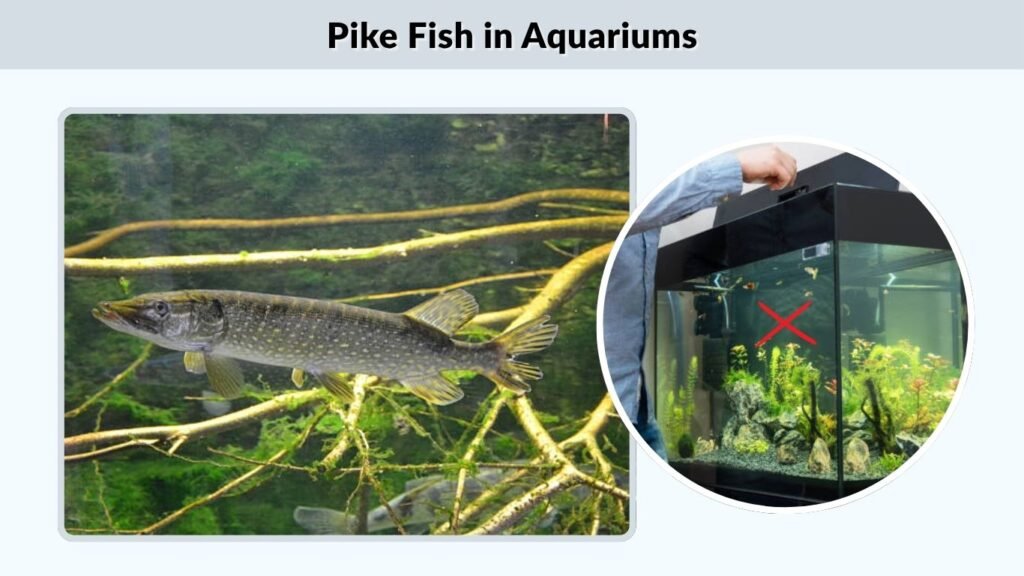
Some people are interested in keeping pike-like fish in aquariums, but true pike are not suitable for most home tanks. They grow large, eat live or meaty foods, and need a lot of space.
Can You Keep Pike as Pets?
Northern pike are not practical aquarium fish for most people. They can grow too large and may be regulated by local laws. They also eat smaller tank mates and require excellent filtration.
Some aquarium species have “pike” in their name, such as pike cichlids, but these are not true northern pike. Always research the exact species before buying.
Pike Fish Role in the Ecosystem
Pike are important predators in freshwater ecosystems. They help control populations of smaller fish and maintain balance in lakes and rivers.
Why Pike Matter
As top predators, pike influence the behavior and numbers of prey fish. Healthy pike populations can be a sign of a productive freshwater habitat with good vegetation, clean water, and enough prey.
However, if introduced into waters where they do not belong, pike can harm native fish populations. This is why fish stocking and transport laws matter.
FAQs
What kind of fish is a pike?
A pike is a freshwater predatory fish from the family Esocidae. The northern pike is the best-known species and is famous for its long body, sharp teeth, and fast ambush attacks.
What do pike fish eat?
Pike mostly eat other fish, including minnows, perch, sunfish, and shiners. They may also eat frogs, crayfish, insects, small birds, and small mammals when available.
Are pike fish good to eat?
Yes, pike can be good to eat. The meat is white and mild, but pike have many Y-shaped bones, so they must be cleaned carefully.
How big do pike fish get?
Many northern pike grow 20 to 30 inches long, but large fish can exceed 40 inches in good habitats. Trophy pike may weigh over 20 pounds.
Are pike dangerous to humans?
Pike are not usually dangerous to people, but their sharp teeth can cause cuts. Anglers should handle them carefully and use pliers when removing hooks.