
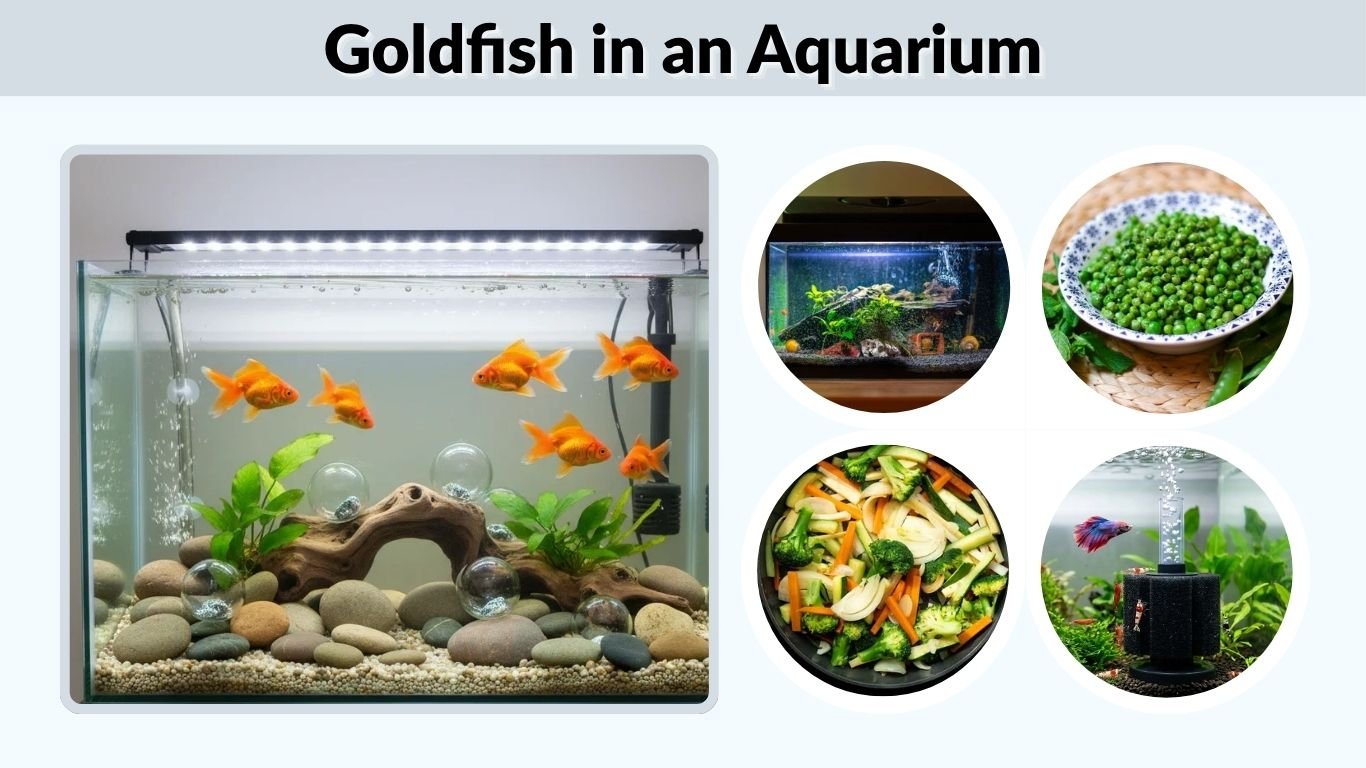
Keeping goldfish in an aquarium is a popular choice for fish enthusiasts because of their beautiful colors, peaceful behavior, and fascinating swimming movements. However, goldfish need more space and maintenance than many beginners expect. A properly maintained aquarium provides clean water, adequate oxygen, and enough room for healthy growth. Whether you plan to keep one goldfish or several together, understanding aquarium size, filtration, feeding, and compatible tank mates is essential. This guide explains everything you need to create a healthy environment for aquarium goldfish.
Best Types of Goldfish for an Aquarium
Goldfish are available in numerous varieties, each with different body shapes, swimming abilities, and space requirements. Some varieties have rounded bodies and flowing double tails, while others possess streamlined bodies designed for active swimming. Choosing the appropriate variety is important because not every goldfish is equally suited to an indoor aquarium, particularly when available space is limited.
Fancy Goldfish for Indoor Aquariums
Fancy Goldfish are generally better suited to spacious indoor aquariums than single-tailed varieties. Popular examples include Fantail, Oranda, Ryukin, Ranchu, and Black Moor Goldfish.
These fish usually grow around 6–8 inches long, although size varies by variety. Their rounded bodies and elaborate fins make them relatively slow swimmers.
Fancy Goldfish generally prefer gentle water currents and compatible companions with similar swimming abilities.
Common and Comet Goldfish
Common and Comet Goldfish have streamlined bodies and are much faster swimmers. They can grow approximately 10–12 inches or larger, requiring significantly more space.
Although juveniles are frequently sold for small aquariums, adult Common and Comet Goldfish are usually better suited to large, properly maintained outdoor ponds.
Their swimming abilities, adult size, and substantial waste production make cramped indoor aquariums unsuitable.
How Many Goldfish Can Live in an Aquarium?
Choosing the correct aquarium size is one of the most important aspects of goldfish care. Goldfish produce considerable waste, and smaller tanks can quickly develop dangerous water conditions. The appropriate number of fish depends on the variety, adult size, filtration, and aquarium dimensions. Planning for adult goldfish rather than their smaller juvenile size helps prevent overcrowding and unnecessary stress.
Goldfish Aquarium Size Chart
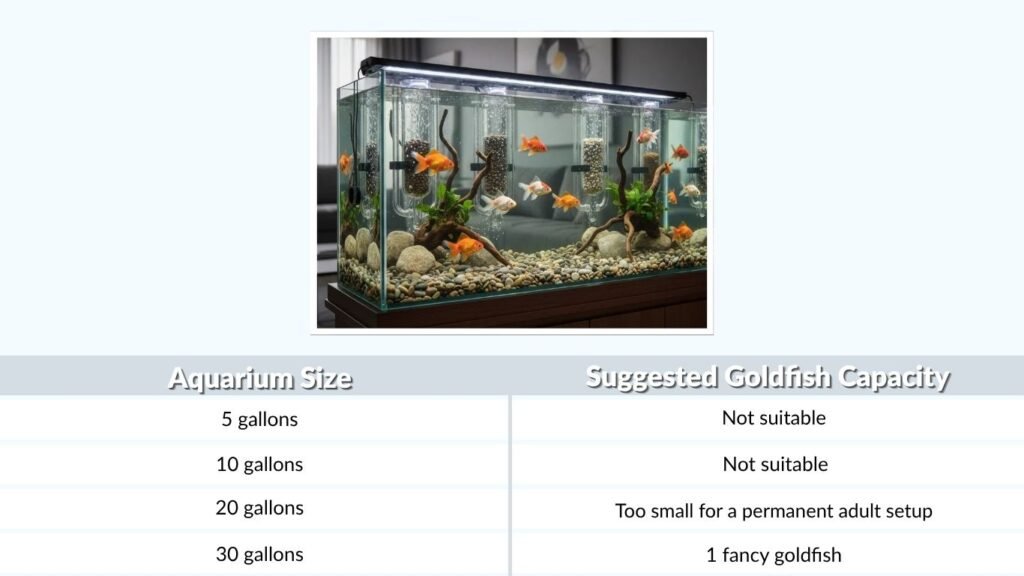
The following table provides conservative planning recommendations for adult goldfish in appropriately filtered aquariums.
| Aquarium Size | Suggested Goldfish Capacity |
| 5 gallons | Not suitable |
| 10 gallons | Not suitable |
| 20 gallons | Too small for a permanent adult setup |
| 30 gallons | 1 fancy goldfish |
| 55 gallons | Around 2 fancy goldfish |
| 75 gallons | Around 3 fancy goldfish, or potentially 1 common goldfish with sufficient swimming length |
These figures are guidelines rather than guaranteed stocking limits. Individual fish size, swimming space, and water quality determine whether a particular aquarium is appropriate.
Why Small Aquariums Are Not Suitable
Keeping goldfish in a 5-gallon or 10-gallon aquarium can cause serious problems as they grow. Waste accumulates quickly, oxygen availability may become limited, and swimming space is insufficient.
A larger aquarium provides more stable water conditions and allows fish to explore naturally. Goldfish bowls are particularly unsuitable for long-term housing because they typically lack adequate filtration and space.
How to Set Up a Goldfish Aquarium
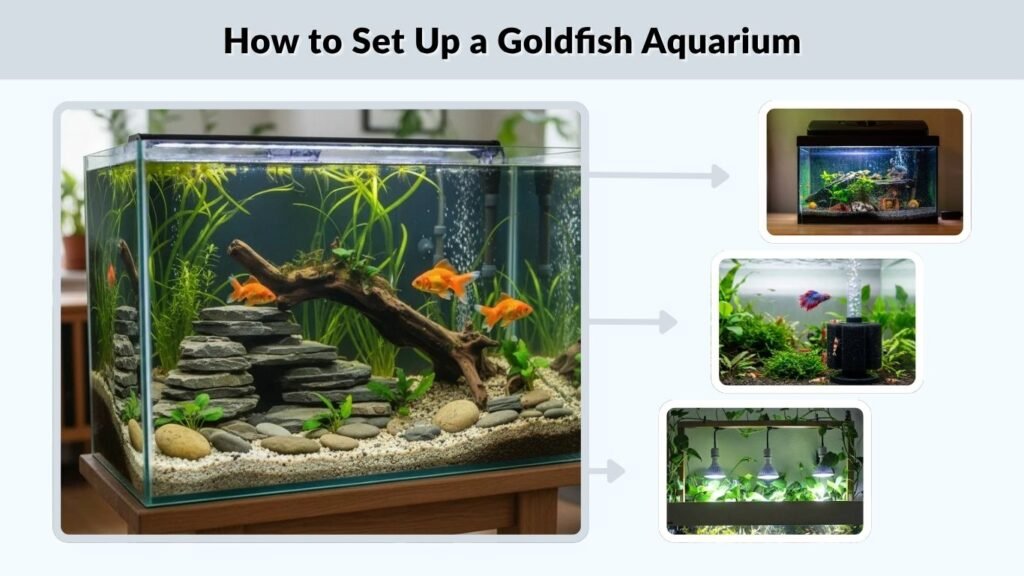
A successful goldfish aquarium requires more than simply adding fish to a tank filled with water. Proper equipment, suitable substrate, biological filtration, and thoughtful decoration all contribute to a healthy environment. Preparing the aquarium before introducing fish allows beneficial bacteria to establish and reduces the likelihood of dangerous ammonia and nitrite accumulation during the early stages of aquarium maintenance.
Essential Goldfish Aquarium Equipment
- Aquarium Tank: A spacious, preferably long aquarium suited to the adult fish.
- Filter: An efficient filtration system capable of handling substantial waste.
- Air Pump: Useful for additional aeration when surface movement is insufficient.
- Water Conditioner: Removes harmful chlorine and chloramine from tap water.
- Water Test Kit: Measures ammonia, nitrite, nitrate, and pH.
- Substrate: Fine aquarium sand or suitable smooth gravel.
- Lighting: Provides a consistent day-and-night cycle.
Aquarium Filtration and Cycling
Goldfish require reliable biological filtration because their waste releases ammonia into the water.
Beneficial bacteria convert ammonia into nitrite and then nitrate through the nitrogen cycle. Ammonia and nitrite are toxic to fish, making a mature biological filter essential.
Before introducing goldfish, establish the aquarium’s nitrogen cycle, ideally through fishless cycling. Adding fish immediately to an uncycled aquarium can expose them to dangerous water conditions.
Plants, Sand, and Decorations
Fine aquarium sand can be an excellent substrate because goldfish naturally search along the bottom for food. Smooth rocks that are too large to swallow are another option.
Hardy aquatic plants, including Anubias and Java Fern, may work well, although goldfish sometimes damage or uproot vegetation.
Avoid sharp decorations and small stones that could become trapped in a fish’s mouth.
Goldfish Aquarium Water Conditions and Maintenance
Maintaining excellent water quality is essential for keeping goldfish healthy over many years. Even a spacious aquarium can develop problems without regular cleaning, water testing, and adequate filtration. Goldfish are generally adaptable to different freshwater conditions, but sudden temperature changes, ammonia buildup, and unstable water chemistry can cause stress and increase susceptibility to disease.
Ideal Water Conditions for Goldfish
- Temperature: Approximately 59–73°F (15–23°C) for many fancy varieties
- pH Level: Generally 6.5–8.5 for fancy goldfish
- Ammonia: 0 ppm
- Nitrite: 0 ppm
- Nitrate: Keep low through regular maintenance
- Water Movement: Gentle to moderate, particularly for fancy varieties
Goldfish usually do not need an aquarium heater when room temperatures remain stable and suitable. However, extreme temperature fluctuations should be avoided.
Weekly Aquarium Maintenance
- Test the Water: Check ammonia, nitrite, nitrate, and pH regularly.
- Change Water: Replace approximately 25% weekly, adjusting according to test results.
- Clean Substrate: Use an aquarium siphon to remove waste and leftover food.
- Check Filtration: Maintain proper water flow and clean clogged equipment.
- Inspect Fish: Observe swimming behavior, appetite, breathing, and appearance.
Never wash biological filter media with untreated tap water. Instead, gently rinse it in removed aquarium water to protect beneficial bacteria.
Goldfish Food, Behavior, and Tank Mates
Goldfish are omnivorous fish with curious personalities and active feeding habits. Providing balanced nutrition and compatible aquarium companions helps support healthy growth and natural behavior. Although goldfish are generally peaceful, differences in swimming speed and feeding ability can create problems when incompatible varieties share the same aquarium. Careful feeding and stocking decisions help reduce competition and unnecessary stress.
What Do Goldfish Eat in an Aquarium?
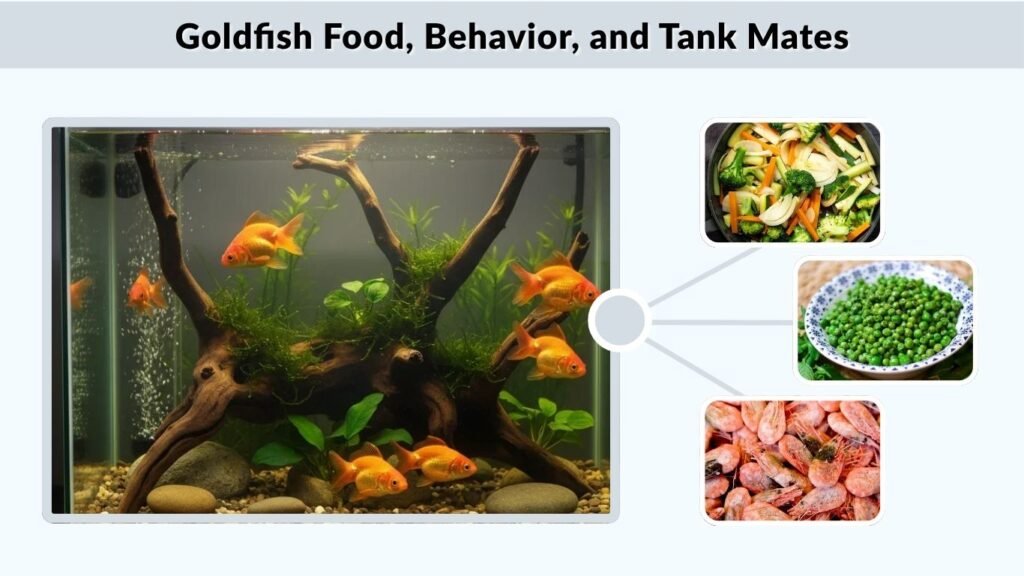
Goldfish primarily consume specially formulated pellets or flakes containing balanced nutrients. Fancy varieties often benefit from sinking pellets because surface feeding may cause them to swallow excess air.
Their diet can be supplemented with blanched vegetables, shelled peas, and occasional frozen foods such as daphnia or brine shrimp.
Most adult goldfish can be fed once daily in portions they finish within a few minutes. Overfeeding contributes to polluted water and poor health.
Can Goldfish Live With Other Fish?
Goldfish are generally peaceful and can coexist with compatible fish when aquarium conditions and available space are appropriate.
Fancy varieties often do best with similarly slow-moving fancy goldfish. Common and Comet Goldfish are more suitable companions for other active single-tailed varieties.
Tropical fish such as Bettas and many Tetras are usually not ideal companions because temperature requirements, feeding competition, or fin-nipping behavior may cause problems.
Goldfish Lifespan and Common Aquarium Problems
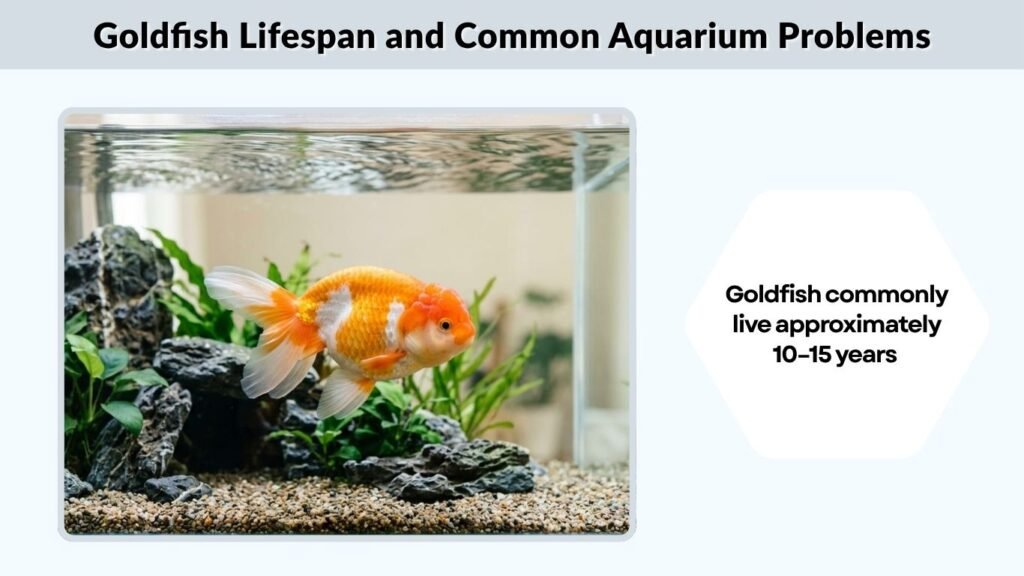
Goldfish can live considerably longer than many people expect. Their lifespan depends heavily on suitable housing, balanced nutrition, genetics, and disease prevention. Poor aquarium conditions can shorten their lives, while consistent maintenance supports normal growth and activity. Learning to recognize early warning signs allows aquarium owners to respond before minor problems develop into serious health concerns.
How Long Do Goldfish Live in an Aquarium?
Goldfish commonly live approximately 10–15 years when kept under suitable conditions. Some individuals can survive for 20 years or longer.
Fancy varieties may have additional health challenges related to their selectively bred body shapes.
A properly sized aquarium, reliable filtration, nutritious food, and regular water changes all contribute to maintaining healthy fish throughout their lives.
Common Goldfish Aquarium Problems
Goldfish may develop fin rot, white spot disease, buoyancy disorders, or stress caused by poor water conditions.
Unusual swimming, loss of appetite, damaged fins, and rapid breathing can indicate underlying problems.
If symptoms appear, immediately test the water and investigate environmental causes. Persistent or serious symptoms require professional aquatic veterinary advice.
FAQs
1. How Many Goldfish Can Live in a 10-Gallon Aquarium?
A 10-gallon aquarium is too small for permanently housing even one adult goldfish. A larger aquarium, preferably at least 30 gallons for one fancy goldfish, provides more appropriate swimming space and water stability.
2. Can Goldfish Live in a 20-Gallon Aquarium?
A 20-gallon aquarium can temporarily accommodate a small juvenile fancy goldfish, but a larger aquarium is preferable for long-term adult care. Common and Comet Goldfish require considerably more swimming space.
3. Can Goldfish Live in Warm Water Aquariums?
Goldfish tolerate a range of temperatures, but consistently warm tropical aquariums are usually not ideal. Many fancy varieties thrive at approximately 59–73°F, and stable temperatures are particularly important for maintaining their health.
4. Can Aquarium Goldfish Live in an Outdoor Pond?
Yes. Healthy Common, Comet, and Shubunkin Goldfish can adapt well to properly maintained outdoor ponds. Fancy varieties are more vulnerable to extreme temperatures, predators, and strong currents, making indoor aquariums generally safer.
5. What Should You Put in a Goldfish Aquarium?
A goldfish aquarium should include efficient filtration, appropriate substrate, smooth decorations, suitable plants or shelter, and adequate open swimming space. Water conditioner and reliable testing equipment are also essential for maintaining safe water conditions.