
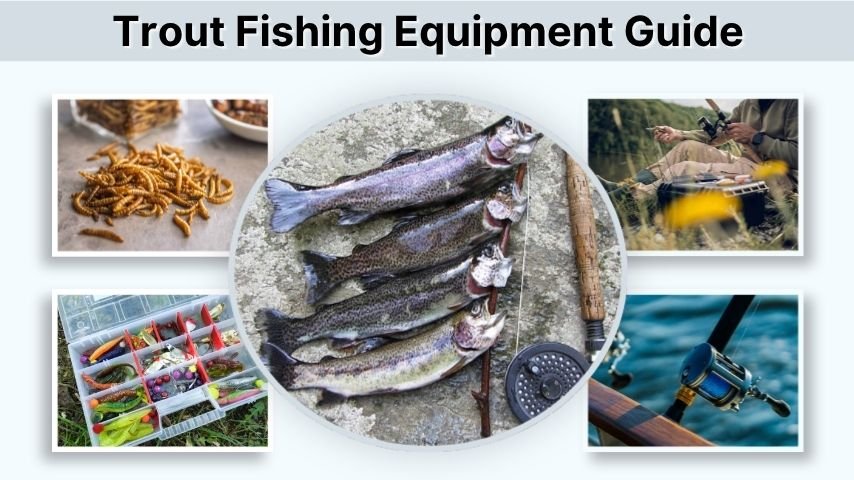
Choosing the right trout fishing equipment can make your first trip easier, more comfortable, and more successful. Trout are often found in clear, cold water, so light tackle, natural presentation, and the right bait or lure matter. Whether you plan to fish in ponds, rivers, lakes, or streams, this guide explains the essential equipment needed for trout fishing.
Why the Right Trout Fishing Equipment Matters
Trout can be exciting to catch, but they are also sensitive to poor presentation. Heavy line, oversized hooks, or the wrong rod can reduce your chances, especially in clear water where trout can easily notice unnatural movement. Good equipment helps you cast accurately, detect light bites, and present bait or lures in a way that looks natural.
The best equipment for trout fishing does not have to be expensive. Most beginners can start with a simple spinning rod, a small reel, light fishing line, hooks, weights, bait, and a few lures. As your skills improve, you can add more specialized gear for fly fishing, lake trout, or different water conditions.
Basic Trout Fishing Equipment List
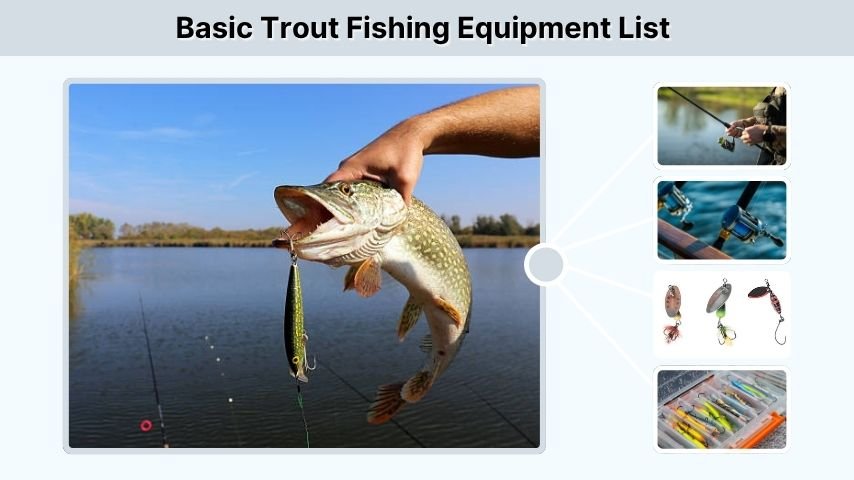
A beginner trout fishing equipment list should focus on practical items. You need gear that is easy to carry, simple to use, and suitable for different fishing spots. A light spinning setup is usually the best starting point because it works well in ponds, small rivers, stocked lakes, and streams.
| Equipment | Best Choice for Trout | Purpose |
| Rod | 5 to 7-foot light or ultralight spinning rod | Helps cast small bait and lures accurately |
| Reel | 1000 to 2500 size spinning reel | Matches light line and small trout tackle |
| Line | 4 to 8 lb monofilament or fluorocarbon | Keeps presentation subtle in clear water |
| Hooks | Size 8 to 14 bait hooks | Fits worms, eggs, corn, and small baits |
| Weights | Small split shots or sliding sinkers | Controls bait depth and drift |
| Bobbers | Small fixed or slip floats | Shows bites and keeps bait suspended |
| Lures | Spinners, spoons, jigs, small crankbaits | Covers water and attracts active trout |
| Bait | Worms, dough bait, salmon eggs, corn | Effective for stocked and wild trout |
| Tackle Box | Small waterproof box | Organizes hooks, lures, and tools |
| Net | Soft rubber landing net | Helps land trout safely |
Choosing a Trout Fishing Rod and Reel
The rod and reel are the foundation of your trout fishing equipment. For most beginners, a light or ultralight spinning combo is the easiest and most versatile option. It allows you to cast small lures, fish with bait, and feel subtle bites.
Best Rod for Trout Fishing
A 5 to 7-foot light-action spinning rod works well for most trout fishing situations. Shorter rods are better for small streams with trees and brush, while longer rods help with casting distance in lakes and larger rivers. If you only want one rod, a 6-foot light rod is a reliable all-around choice.
Ultralight rods are fun because they make small trout feel stronger, but they may not be ideal if you expect larger fish or fish around rocks and current. Light-action rods give beginners a better balance of sensitivity and control.
Best Reel for Trout Fishing
A 1000 to 2500 size spinning reel is usually enough for trout. Smaller reels are lighter and match ultralight rods well, while slightly larger reels hold more line and perform better when fishing bigger water. Look for a smooth drag system because trout often make quick runs after being hooked.
The reel does not need to be complicated. A basic spinning reel with smooth line release, easy handle movement, and reliable drag is enough for most trout anglers.
Best Fishing Line for Trout
Fishing line is one of the most important parts of your setup. Trout often live in clear water, so thick or highly visible line can make them cautious. Light line helps bait and lures move naturally, which can lead to more bites.
For most trout fishing, use:
- 4 lb line for clear streams, small trout, and light presentations
- 6 lb line for general trout fishing in ponds, rivers, and lakes
- 8 lb line for larger trout, deeper water, or areas with cover
- Fluorocarbon leader when water is very clear or trout are pressured
Monofilament is affordable, easy to tie, and beginner-friendly. Fluorocarbon is less visible underwater and works well as a leader. Braided line is not usually necessary for basic trout fishing, but some anglers use it with a fluorocarbon leader for better sensitivity.
Hooks, Weights, Bobbers, and Rigs
Small terminal tackle is essential when building an effective trout setup. Trout have relatively small mouths, so using hooks that are too large can reduce hookups. Your weights and bobbers should also be small enough to avoid making the presentation look unnatural.
Hooks for Trout Fishing
For bait fishing, sizes 8 to 14 are common. Size 10 or 12 hooks are good for worms, salmon eggs, corn, and dough bait. If trout are biting lightly, try going smaller. If you are using larger worms or minnows, a slightly larger hook may be better.
Weights and Sinkers
Split shot weights are useful in streams because they help bait drift near the bottom. In lakes or ponds, sliding sinkers can be used for bottom fishing with floating bait. The key is to use just enough weight to reach the right depth without making the bait look stiff or unnatural.
Bobbers and Floats
Bobbers are useful when trout are feeding above the bottom. A small bobber can suspend bait at a chosen depth and show subtle bites. Slip bobbers are better for deeper water because they allow you to fish at different depths while still casting easily.
Best Bait for Trout Fishing
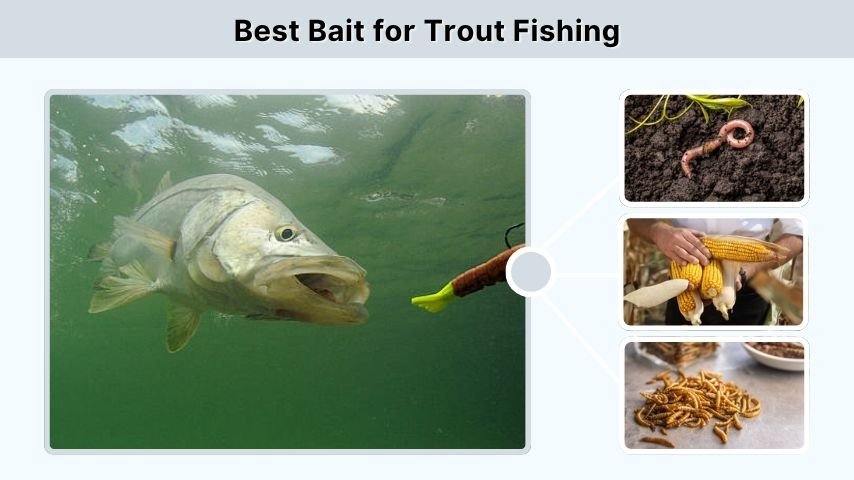
Bait is a strong choice for beginners because it is simple and effective. Many stocked trout are used to feeding near the bottom or around easy food sources, making scented and natural bait very productive.
Good bait options include:
- Worms or nightcrawlers
- Salmon eggs
- Corn
- Dough bait
- Mealworms
- Wax worms
- Small minnows
- Artificial trout nuggets
Worms are one of the most dependable baits because they look natural and move in the water. Dough bait works especially well for stocked trout because it floats and releases scent. Salmon eggs are popular in streams, especially when trout are feeding on drifting eggs.
When bait fishing, avoid using too much bait. A small, natural-looking presentation is usually more effective than a large piece that looks suspicious.
Best Lures for Trout Fishing
Lures are important fishing equipment for trout because they help you cover water and find active fish. They can imitate insects, baitfish, or small prey. Lure fishing is especially useful when trout are moving, chasing food, or spread across a large area.
Reliable Trout Fishing Lures
Some lures work in many different trout fishing conditions:
- Inline spinners
- Small spoons
- Soft plastic jigs
- Marabou jigs
- Small crankbaits
- Trout magnets
- Fly-and-bubble rigs
- Small swimbaits
Inline spinners are a great beginner lure because they create flash and vibration. Spoons work well in lakes and deeper pools where trout chase baitfish. Jigs can be fished slowly, making them useful when trout are less aggressive.
Natural colors such as silver, gold, brown, olive, and white often work well in clear water. Brighter colors can help in stained water, cloudy weather, or low-light conditions.
Lake Trout Fishing Equipment
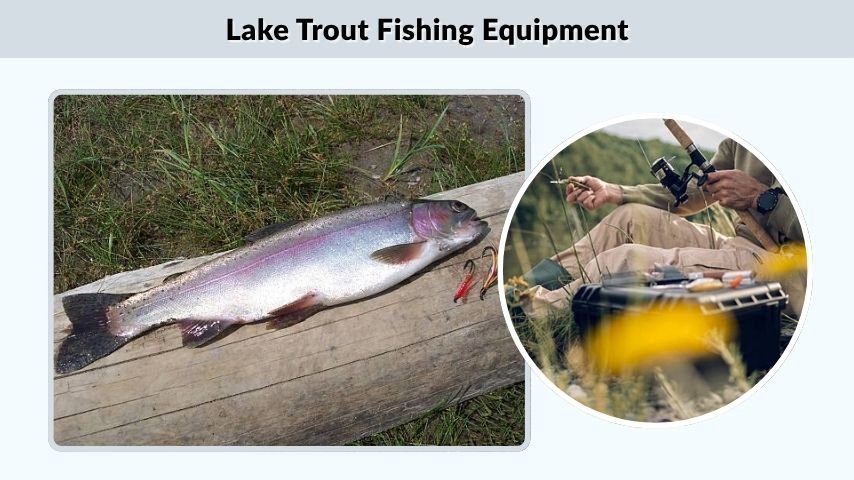
Lake trout fishing equipment is often heavier than standard trout gear because lake trout can grow larger and stay deeper. If you are targeting stocked rainbow trout near shore, a light spinning setup may be enough. But for true lake trout in deep water, you may need stronger rods, heavier line, and deeper-running lures.
Gear for Lake Trout
For lake trout, consider a medium-light to medium spinning rod or trolling rod. Use 8 to 15 lb line depending on fish size and depth. Spoons, deep-diving crankbaits, jigs, and swimbaits are common choices. In deeper lakes, anglers may also use trolling gear, downriggers, or weighted lines.
If you fish from shore, focus on cold-water areas, drop-offs, rocky points, and deeper access points. During cooler months, lake trout may come closer to shore. In warmer months, they often move deeper.
Trout Fly Fishing Equipment
Trout fly fishing equipment is different from spinning gear. Instead of casting the weight of a lure or sinker, fly anglers cast the weight of the fly line. This method is popular in streams and rivers where trout feed on insects.
Basic Fly Fishing Setup
A 4-weight or 5-weight fly rod is a good all-around choice for trout. A matching fly reel, floating fly line, leader, tippet, and a small selection of flies will cover many situations. Dry flies imitate insects on the surface, nymphs imitate underwater insects, and streamers imitate baitfish or larger prey.
Fly fishing has a learning curve, but it can be very rewarding. It is especially useful when trout are feeding on insects and ignoring larger bait or lures.
Rainbow Trout Fishing Equipment
Rainbow trout fishing equipment is usually simple because rainbow trout respond well to both bait and lures. A light spinning rod, small reel, 4 to 6 lb line, small hooks, and basic lures are enough for most situations.
For stocked rainbow trout, dough bait, worms, corn, and salmon eggs are reliable. For wild rainbow trout, small spinners, spoons, flies, and natural bait can work well. In clear streams, use lighter line and a careful approach. In stocked ponds, try bottom rigs or bobber setups near feeding areas.
Rainbow trout are often active and willing to chase lures, so they are a great species for beginners learning different techniques.
Extra Tools and Accessories for Trout Fishing
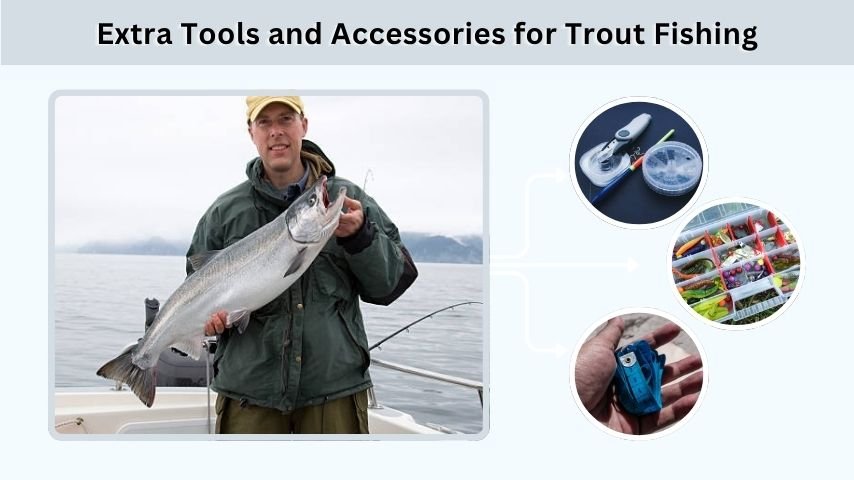
Beyond rods, reels, bait, and lures, a few accessories can make trout fishing easier and safer. These items help you handle fish, organize tackle, and stay comfortable on the water.
Useful trout fishing accessories include:
- Needle-nose pliers or forceps for removing hooks
- Line clippers or small scissors
- Small tackle box or tackle bag
- Rubber landing net
- Polarized sunglasses
- Measuring tape
- Fishing license holder
- Lightweight rain jacket
- Stringer or cooler if keeping fish
- First-aid kit
Polarized sunglasses are especially helpful because they reduce glare and allow you to see fish, rocks, weeds, and underwater structure. A rubber net is better for catch-and-release fishing because it is gentler on trout than rough mesh.
Equipment for Trout Fishing in Ponds and Rivers
Different waters require slightly different gear. In ponds, trout may cruise open areas, stay near the bottom, or gather around stocked zones. In rivers, trout often hold in current seams, pools, riffles, and behind rocks.
Pond Trout Equipment
For ponds, a light spinning rod, 4 to 6 lb line, small hooks, floating bait, bobbers, and spinners are effective. A sliding sinker rig with floating dough bait is one of the easiest setups for stocked trout. Cast to different distances until you find where trout are holding.
River Trout Equipment
For rivers, use light line, small hooks, split shot, and natural bait or small lures. The goal is to make your bait drift naturally with the current. Spinners and small spoons also work well when cast across the current and retrieved steadily.
In clear rivers, stay quiet and avoid standing too close to the fish. Trout can be easily spooked by shadows, noise, and sudden movement.
FAQs
What equipment do you need for trout fishing?
You need a light spinning rod, small spinning reel, 4 to 8 lb fishing line, small hooks, split shot weights, bobbers, bait, and a few lures. A tackle box, pliers, clippers, and a rubber landing net are also useful. This basic setup works for most ponds, lakes, rivers, and streams.
What is the best trout fishing equipment for beginners?
The best beginner setup is a 6-foot light spinning rod, a 1000 to 2500 size spinning reel, and 4 to 6 lb line. Add size 8 to 14 hooks, split shot, small bobbers, worms, dough bait, and inline spinners. This equipment is affordable, simple, and versatile.
Is lake trout fishing equipment different?
Yes, lake trout fishing equipment can be heavier because lake trout often live deeper and grow larger than stocked trout. A medium-light or medium rod, stronger line, spoons, jigs, swimbaits, and deep-diving lures may be needed. For deep lakes, trolling gear or weighted setups can also help.
What equipment is needed for trout fly fishing?
Trout fly fishing equipment usually includes a 4-weight or 5-weight fly rod, matching fly reel, floating fly line, leader, tippet, and flies. Common flies include dry flies, nymphs, and streamers. Fly fishing is especially useful in streams and rivers where trout feed heavily on insects.
Do I need expensive trout fishing equipment?
No, you do not need expensive trout fishing equipment to catch fish. A simple light spinning combo, basic tackle, bait, and a few lures are enough for most beginners. Higher-end gear may improve comfort and performance, but good technique and proper presentation matter more than price.