
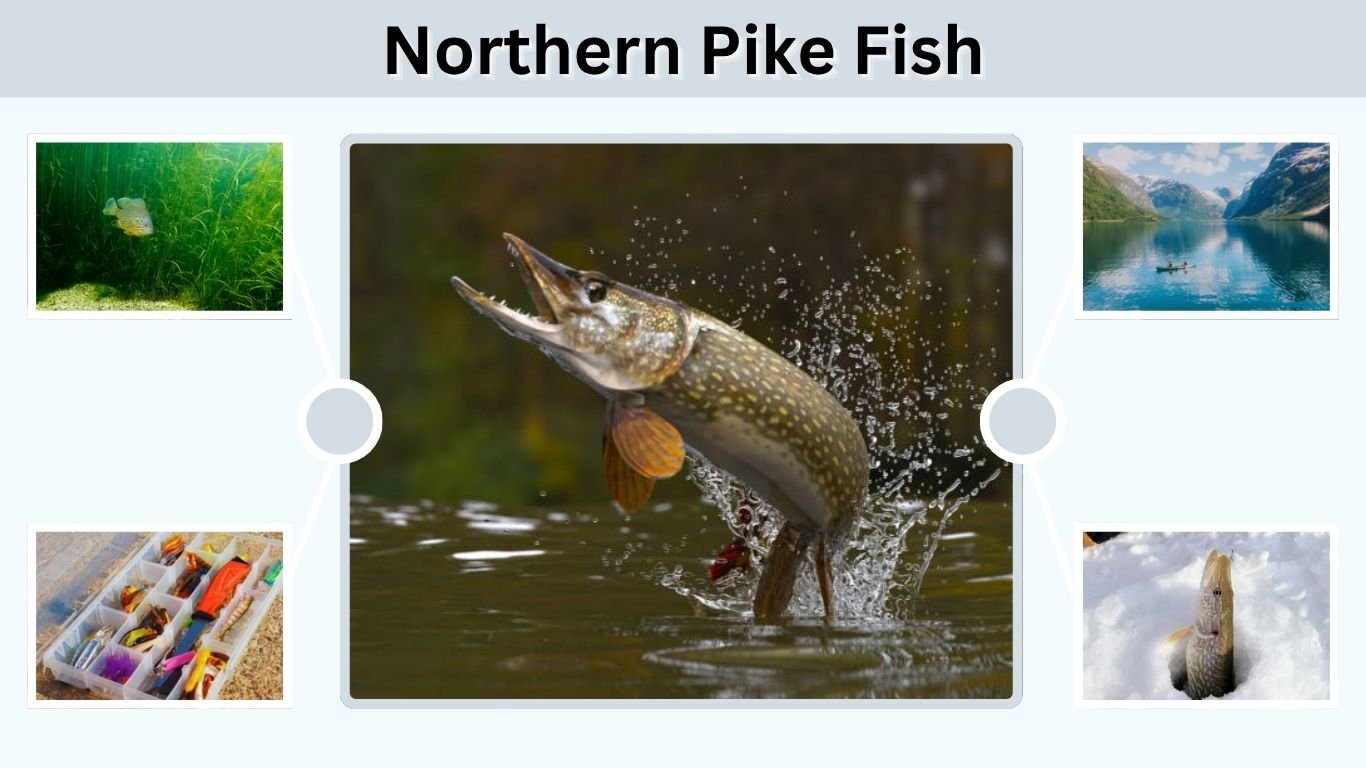
Northern pike fish are powerful freshwater predators known for their long bodies, sharp teeth, fast strikes, and aggressive hunting style. They are popular among anglers because they hit lures hard, fight strongly, and can grow to impressive sizes. Northern pike live in lakes, rivers, reservoirs, marshes, and weedy bays where they hide near cover and ambush prey. This guide explains northern pike facts, habitat, teeth, fishing tips, best lures, ice fishing methods, rods, line, and safe handling.
What Is a Northern Pike Fish?
Northern pike is a large freshwater predatory fish from the pike family. It is one of the most recognized game fish in North America, Europe, and parts of Asia. Anglers often target it because it is bold, fast, and exciting to catch.
Northern Pike Scientific Name
The scientific name of the northern pike is Esox lucius. It belongs to the family Esocidae, which also includes muskellunge and pickerel. These fish share a similar shape: long body, large mouth, sharp teeth, and a dorsal fin set far back near the tail.
Northern pike are ambush predators. They often stay still near weeds or structure, then burst forward quickly when prey comes close.
Northern Pike Fish Facts
- Long, torpedo-shaped body
- Large duckbill-like mouth
- Sharp teeth
- Olive-green body with pale spots
- Strong tail for quick attacks
- Dorsal fin near the back of the body
- Carnivorous diet
- Popular sport fish
- Often found in weedy lakes and slow rivers
Northern pike are built for speed over short distances. They do not usually chase prey for long. Instead, they wait, strike, and grab food with sudden power.
Northern Pike Identification
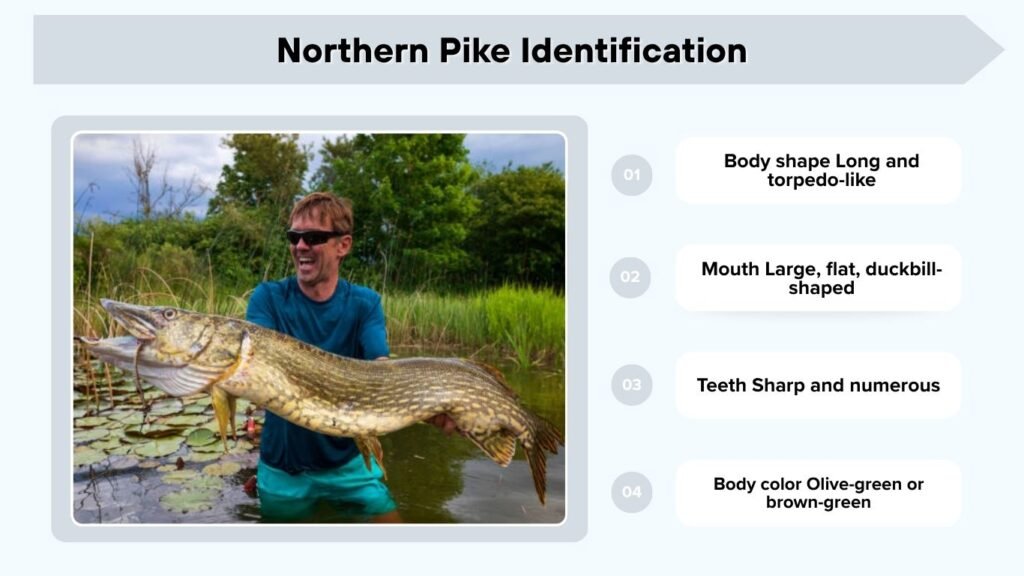
Northern pike are easy to identify once you know their body shape and markings. They look like classic freshwater predators.
What Does a Northern Pike Look Like?
Northern pike usually have a green, olive, or brownish body with light-colored spots or markings. Their belly is pale, often white or cream. The head is long and flat, and the mouth is wide with many sharp teeth.
The body is slim and muscular, helping the fish move quickly through water. The fins are usually reddish, orange, or brownish, depending on the fish and water conditions.
Key Identification Features
| Feature | Description |
| Body shape | Long and torpedo-like |
| Mouth | Large, flat, duckbill-shaped |
| Teeth | Sharp and numerous |
| Body color | Olive-green or brown-green |
| Markings | Light spots or bars |
| Belly | White or pale |
| Dorsal fin | Located far back near tail |
| Behavior | Fast ambush strikes |
Northern pike are sometimes confused with muskies. One quick clue is that northern pike usually have light spots on a darker body, while muskies often have darker markings on a lighter body.
Where Do Northern Pike Fish Live?
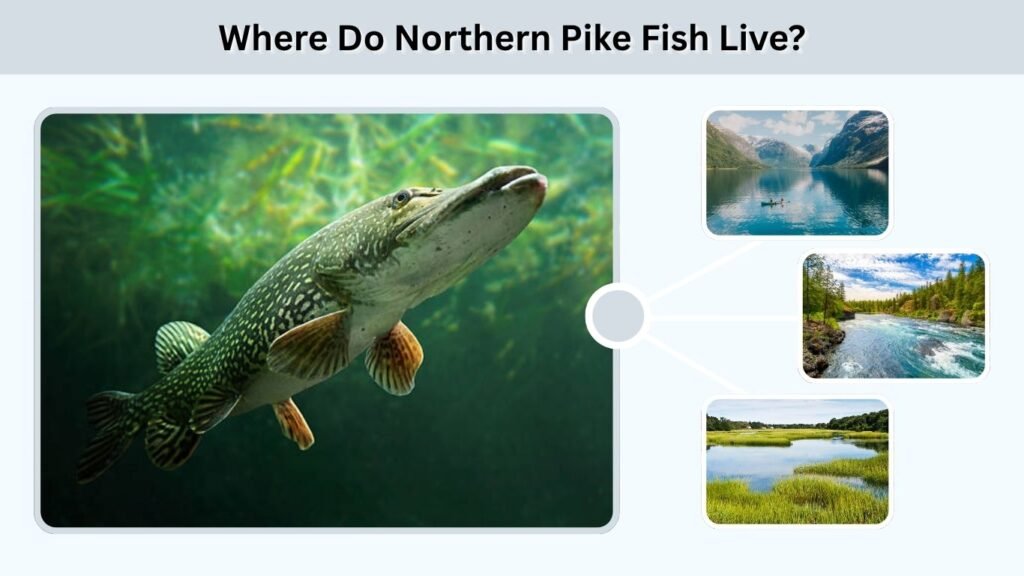
Northern pike live in freshwater habitats with good cover and plenty of prey. They prefer cool waters and are often found in northern regions.
Northern Pike Habitat
Northern pike commonly live in:
- Lakes
- Rivers
- Reservoirs
- Marshes
- Backwaters
- Weedy bays
- Slow-moving channels
- Shallow flats
- Drop-offs near vegetation
- Flooded areas during spring
They like areas with aquatic plants because weeds give them cover for ambushing prey. Small fish also hide in weeds, which makes these places perfect hunting grounds.
Best Places to Find Northern Pike
The best places to fish for northern pike are usually near structure and cover. Look for weed beds, points, bays, fallen trees, docks, and edges where shallow water drops into deeper water.
In spring, pike often move shallow. In summer, they may stay near weed edges or cooler deeper water. In fall, they feed heavily before winter. During winter, ice anglers often target pike near weed lines, flats, and travel routes used by baitfish.
Northern Pike Size and Growth
Northern pike can grow large when they have enough food and good habitat. Their size depends on water quality, prey supply, age, and fishing pressure.
How Big Do Northern Pike Get?
Many northern pike caught by anglers are between 20 and 30 inches long. Larger fish can reach over 40 inches, and trophy pike may grow even bigger in productive waters.
Young pike grow quickly when food is available. They begin eating small fish early in life and become aggressive predators as they mature.
Northern Pike Size Table
| Pike Type | Typical Length |
| Young pike | A few inches |
| Small adult | 18 to 24 inches |
| Average adult | 24 to 30 inches |
| Large pike | 30 to 40 inches |
| Trophy pike | 40+ inches |
Large pike are often found in waters with healthy prey populations and enough deep or cool habitat to survive seasonal changes.
What Do Northern Pike Eat?
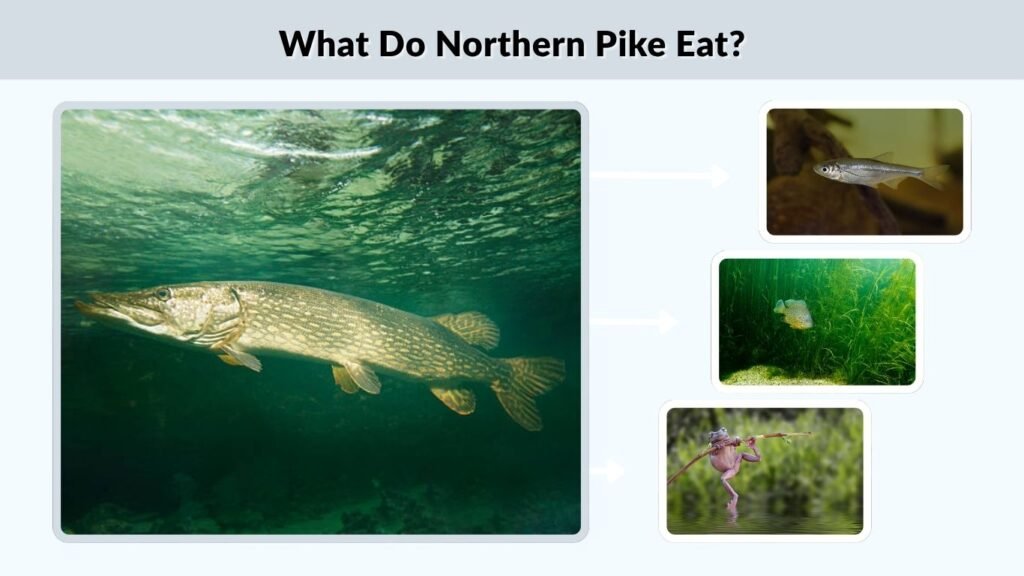
Northern pike are carnivores. Their main food is fish, but they are opportunistic predators and may eat many animals they can catch.
Common Northern Pike Food
Northern pike eat:
- Minnows
- Perch
- Suckers
- Shiners
- Sunfish
- Smaller pike
- Frogs
- Crayfish
- Aquatic insects
- Small birds occasionally
- Small mammals near water occasionally
Fish make up most of their diet. Large pike can swallow surprisingly big prey because their mouths are wide and flexible.
How Northern Pike Hunt
Northern pike hunt by ambush. They hide near weeds, logs, rocks, or other cover. When prey swims close, the pike launches forward and grabs it with sharp teeth.
They often attack from the side and may turn the prey before swallowing it headfirst. Their teeth are designed to hold slippery fish and prevent escape.
Northern Pike Fish Teeth
Northern pike are famous for their teeth. Their mouth contains many sharp teeth that help them grip prey. These teeth are one reason anglers must handle pike carefully.
Are Northern Pike Teeth Dangerous?
Northern pike teeth can cut fingers, fishing line, and soft bait easily. The fish is not usually dangerous to swimmers, but anglers can get injured during hook removal or handling.
Use long-nose pliers, jaw spreaders when necessary, and a strong leader. Never put your fingers inside a northern pike’s mouth.
Safe Handling Tips
- Use long-nose pliers to remove hooks
- Keep fingers away from the teeth
- Use a rubber landing net if possible
- Wet your hands before touching the fish
- Support the fish horizontally
- Do not hold large pike only by the gills or jaw
- Release quickly if practicing catch and release
Safe handling protects both the angler and the fish.
Northern Pike Fishing
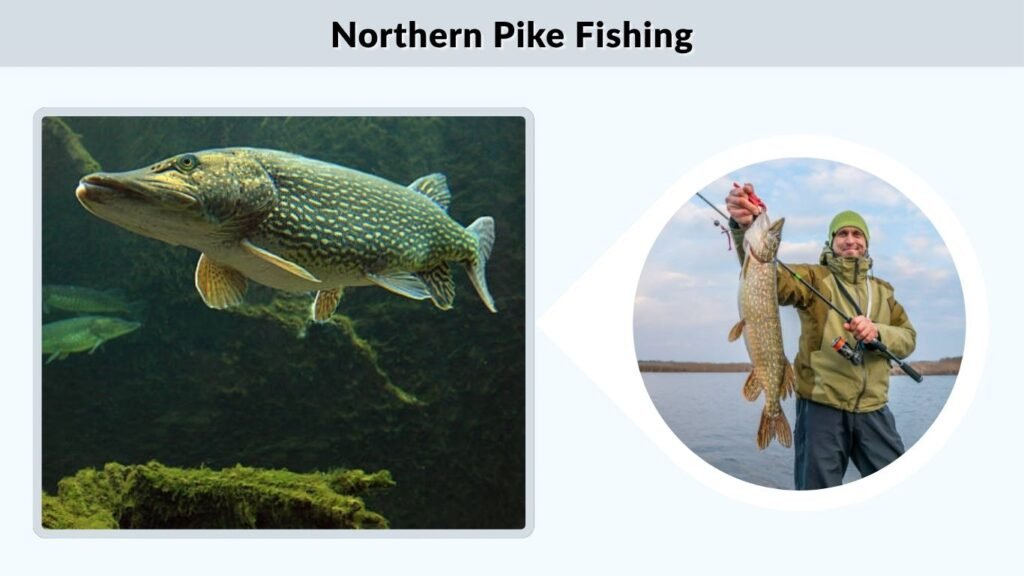
Northern pike fishing is exciting because pike are aggressive and often strike hard. They can be caught with lures, live bait, flies, and ice fishing setups.
How to Fish for Northern Pike
To catch northern pike, focus on cover and movement. Cast near weed edges, shallow bays, docks, fallen trees, and drop-offs. Use lures that create flash, vibration, or an injured-fish action.
Pike often react to fast, bold presentations. However, in cold water, slower retrieves may work better.
Northern Pike Fishing Tips
- Fish near weeds and structure
- Use strong line and a leader
- Try flashy lures in stained water
- Use slower retrieves in cold water
- Cast along weed edges, not only into open water
- Keep pliers ready for hook removal
- Handle large fish carefully
- Follow local fishing regulations
Northern pike often strike when a lure changes speed or direction. Pausing, jerking, or speeding up the lure can trigger a bite.
Best Northern Pike Fishing Lures
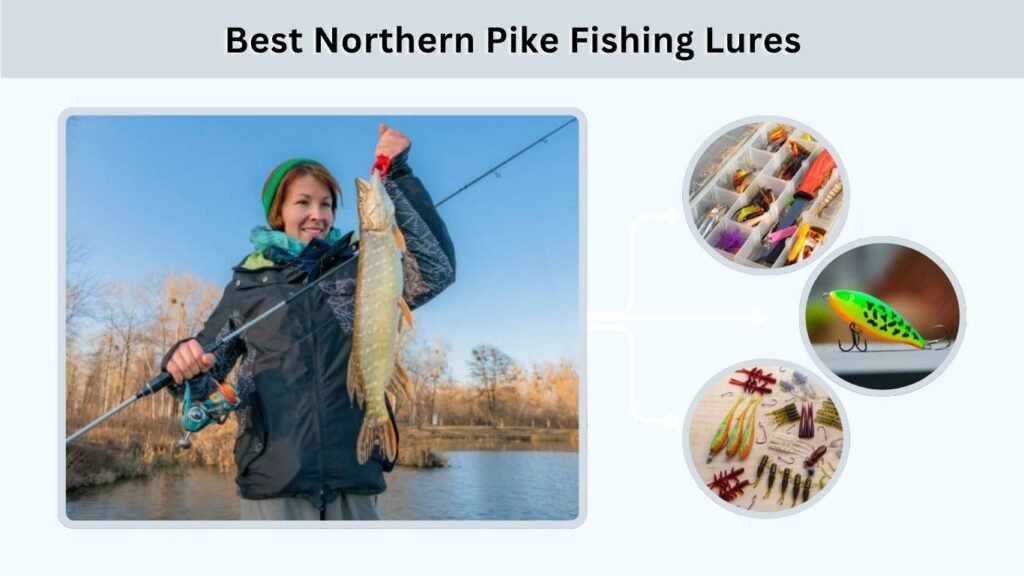
Lure-related keywords show strong interest in gear and tackle. Pike are not usually picky, but some lure types work especially well because they imitate injured fish or create strong movement.
Best Fishing Lures for Northern Pike
Common northern pike lures include:
- Spoons
- Spinnerbaits
- Crankbaits
- Jerkbaits
- Swimbaits
- Bucktail spinners
- Soft plastic minnows
- Topwater lures
- Large inline spinners
- Glide baits
Spoons are classic pike lures because they wobble and flash. Spinnerbaits work well around weeds because they can move through cover better than many treble-hook lures.
Lure Selection Table
| Lure Type | Best Use |
| Spoon | Flashy open-water casting |
| Spinnerbait | Weed edges and shallow cover |
| Crankbait | Covering water quickly |
| Jerkbait | Triggering reaction strikes |
| Swimbait | Imitating baitfish |
| Topwater | Shallow summer action |
| Bucktail spinner | Big pike and fast retrieves |
| Soft plastic | Slow fishing and cold fronts |
Bright colors can work well in stained water. Natural colors can be better in clear water. Pike often respond to movement first, so action matters as much as color.
Northern Pike Fishing Gear
Northern pike fishing gear should be strong enough to handle sharp teeth, hard strikes, and heavy fish. Light gear can work for small pike, but larger fish require stronger tackle.
Best Rod for Northern Pike
A medium-heavy or heavy spinning or baitcasting rod is a good choice for many northern pike anglers. The rod should have enough backbone to cast larger lures and control strong fish.
For smaller lures, a medium-heavy spinning rod can work. For big pike lures, heavy baitcasting gear is often better.
Fishing Line for Northern Pike
Pike can cut weak line with their teeth. Many anglers use braided line because it is strong and sensitive. A wire or heavy fluorocarbon leader is often used to prevent bite-offs.
Good line options include:
- Braided line for strength
- Heavy fluorocarbon leader
- Wire leader for tooth protection
- Strong knots and snaps
- Durable swivels for spoons and spinners
A leader is especially important when using expensive lures.
Northern Pike Fishing With Live Bait
Live bait can be effective for northern pike where legal. Always check local regulations because rules for live bait vary by location.
Best Live Bait for Northern Pike
Common live bait options include large minnows, suckers, shiners, and dead bait in some regions. Pike often respond to struggling or slow-moving baitfish.
Live bait can be fished under a float, near weed edges, or through the ice using tip-ups.
Live Bait Tips
Use bait that matches the size of pike in the water. Big bait can attract bigger fish, but smaller pike may ignore bait that is too large. Keep hooks sharp and set the hook carefully.
Ice Fishing Northern Pike
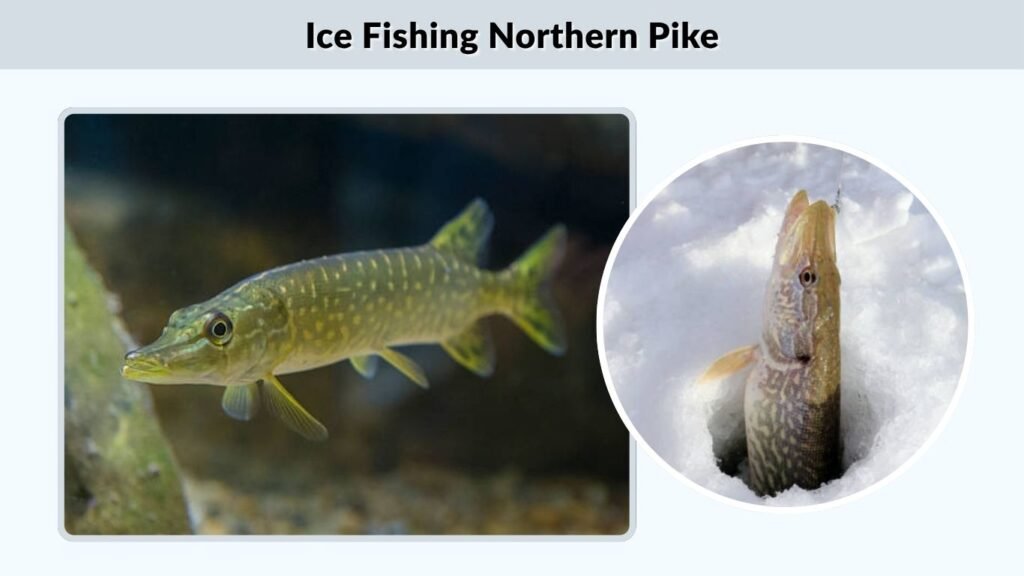
Ice fishing for northern pike is popular in cold regions. Pike remain active under the ice and often patrol weed lines, flats, and shallow bays.
How to Ice Fish for Northern Pike
Ice anglers commonly use tip-ups with live bait or dead bait. The bait is set under the ice, and the flag rises when a pike takes it.
Good ice fishing spots include:
- Weed edges
- Shallow flats
- Drop-offs
- Points
- Bays near spawning areas
- Travel routes near baitfish
Northern pike may bite throughout the day, but morning and late afternoon can be especially productive.
Best Ice Fishing Bait and Lures
For ice fishing, northern pike may take large minnows, suckers, dead bait, spoons, jigging lures, and flashy rattle baits.
Popular ice options include:
- Tip-ups with minnows
- Dead bait rigs
- Jigging spoons
- Rattle baits
- Large soft plastics
- Heavy fluorocarbon or wire leaders
Always follow ice safety rules before fishing. Ice thickness can vary, even on the same lake.
Fly Fishing for Northern Pike
Fly fishing for northern pike is exciting because pike often attack large streamers aggressively. This method is popular in shallow bays, clear lakes, and weedy areas.
Pike Fly Fishing Gear
Fly anglers usually use heavier fly rods because pike flies are large and wind-resistant. Strong leaders are necessary because of pike teeth.
Good fly choices include large streamers that imitate baitfish, perch, leeches, or frogs.
Fly Fishing Tips
Cast near weed edges, pauses, and shallow cover. Use strip retrieves with sudden pauses. Pike often follow a fly before striking, so watch carefully near the boat or bank.
Northern Pike Fishing by Season
Pike behavior changes with season. Understanding seasonal movement helps anglers find more fish.
Spring Pike Fishing
Spring is one of the best times to fish for northern pike. After ice-out, pike move into shallow bays and marshy areas for spawning. After spawning, they feed actively.
Use spoons, jerkbaits, swimbaits, and slow-moving lures in shallow water.
Summer Pike Fishing
In summer, smaller pike may stay shallow around weeds, while larger pike may move deeper to cooler water. Fish weed lines, drop-offs, and shaded cover.
Spinnerbaits, crankbaits, and topwater lures can work well.
Fall Pike Fishing
Fall is excellent for big pike because they feed heavily before winter. Use larger lures that imitate baitfish. Focus on weed edges, points, and areas where prey fish gather.
Winter Pike Fishing
In winter, use tip-ups, large minnows, dead bait, spoons, and rattle baits through the ice. Look for weed beds and flats near deeper water.
Northern Pike Fishing in Canada and the United States
Northern pike fishing is popular in Canada and many northern U.S. states. Canada is especially famous for big pike waters, including lakes in Manitoba, Ontario, Saskatchewan, and northern regions.
Northern Pike Fishing Canada
Canada offers many lakes and rivers with strong northern pike populations. Large remote waters often produce trophy fish because of abundant prey and lower fishing pressure.
Anglers visiting Canada should check local rules for licenses, size limits, catch limits, and barbless hook requirements where applicable.
Northern Pike Fishing in U.S. States
Northern pike can be found in states such as Michigan, Minnesota, Wisconsin, Montana, Colorado, Ohio, Maine, Pennsylvania, and others where suitable waters exist. Availability varies by state and lake.
Always check state fishing regulations before targeting pike. Rules may differ by waterbody.
Can You Keep Northern Pike in a Fish Tank?
Some people search for northern pike fish tanks, but northern pike are not practical aquarium fish for most people. They grow large, eat other fish, and need huge, cold, well-filtered systems.
Why Northern Pike Are Not Good Aquarium Fish
Northern pike are wild predatory fish. They need lots of space, excellent water quality, and meaty food. They may also be regulated by local laws.
A home aquarium is not suitable for an adult northern pike. If you want a predatory aquarium fish, research legal aquarium species that stay smaller and are bred for captivity.
FAQs
What is a northern pike fish?
A northern pike fish is a freshwater predator known for its long body, sharp teeth, olive-green color, and aggressive hunting behavior. Its scientific name is Esox lucius.
What are the best lures for northern pike?
Some of the best northern pike lures include spoons, spinnerbaits, jerkbaits, crankbaits, swimbaits, bucktail spinners, and topwater lures.
What fishing gear do you need for northern pike?
You need a strong rod, durable reel, strong line, and a wire or heavy fluorocarbon leader. Long-nose pliers are also useful for safe hook removal.
How do you catch northern pike ice fishing?
Use tip-ups with minnows or dead bait near weed edges, flats, and drop-offs. Jigging spoons and rattle baits can also catch northern pike through the ice.
Are northern pike teeth dangerous?
Northern pike teeth are very sharp and can cut fingers or fishing line. They are not usually dangerous to people, but anglers should handle them carefully and use pliers when removing hooks.