
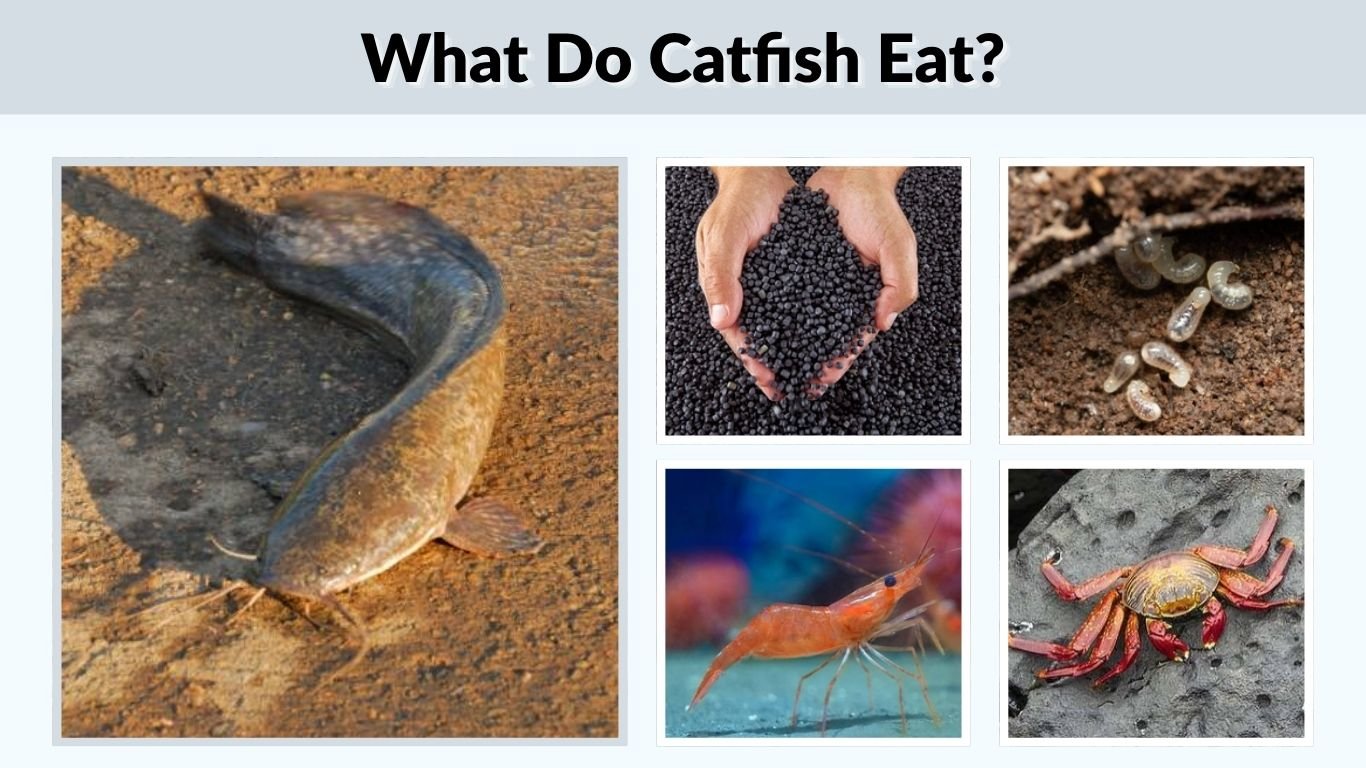
Catfish eat an incredibly varied diet that depends on their species, size, age, and habitat. Most catfish are opportunistic feeders that search along the bottom for insects, crustaceans, worms, plants, dead animals, and smaller fish. However, not every catfish eats the same foods. Cory catfish consume tiny bottom-dwelling organisms, while large flathead and redtail catfish are powerful predators. Understanding these differences is important when feeding aquarium catfish, managing pond fish, or choosing bait for wild catfish.
10 Foods Catfish Eat
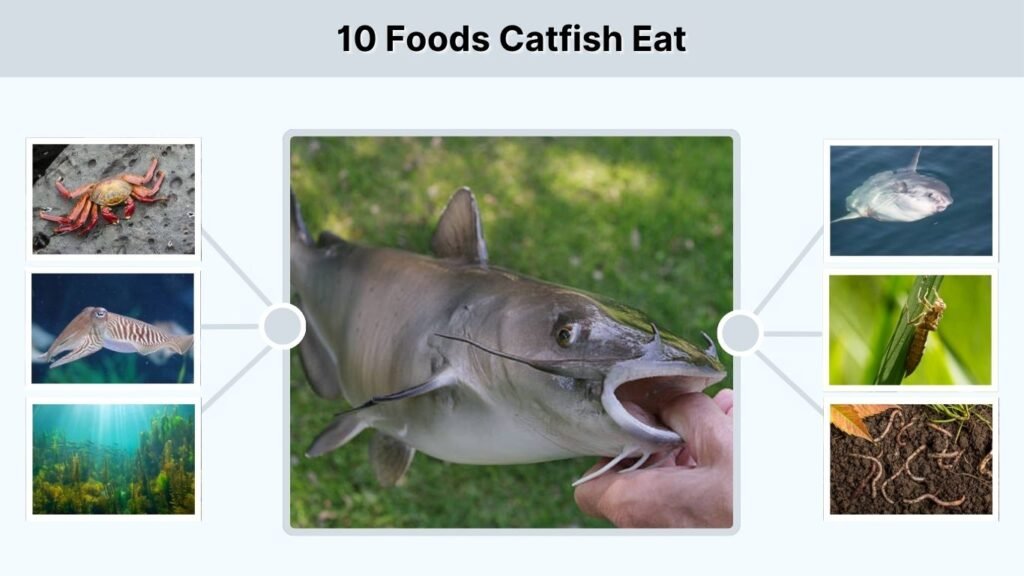
Catfish locate food using their strong sense of smell, taste-sensitive barbels, and ability to detect movement in dark or muddy water. These adaptations allow them to feed during the day or at night.
1. Small Fish
Large predatory catfish commonly eat smaller fish. Flathead catfish are especially active hunters and often target live fish such as sunfish, shad, minnows, and small carp.
Blue catfish and channel catfish also consume fish, although they may eat dead or injured fish as well as live prey. Large redtail, shovelnose, gulper, and wels catfish can swallow surprisingly large fish.
Aquarium owners should never keep predatory catfish with tank mates small enough to fit into their mouths. Even a peaceful-looking juvenile may become a capable hunter as it grows.
2. Aquatic Insects
Aquatic insects are an important food source for many wild catfish. They eat mosquito larvae, mayfly nymphs, dragonfly nymphs, beetle larvae, and other insects found around the bottom.
Young catfish depend heavily on tiny insect larvae because the prey provides protein without being too large to swallow. Corydoras, pictus catfish, bullheads, and channel catfish also search through mud, sand, and plant material for insects.
In aquariums, frozen bloodworms, insect-based pellets, and similar foods can imitate part of this natural diet.
3. Worms
Catfish readily eat earthworms, aquatic worms, and other soft-bodied invertebrates. Worms release strong scents and move actively in the water, making them easy for catfish to locate.
Earthworms and nightcrawlers are also popular fishing bait for channel catfish, bullheads, and smaller blue catfish. They can be offered to some large aquarium catfish, but wild-collected worms may carry contaminants or parasites.
Frozen bloodworms and blackworms are useful foods for smaller aquarium species. However, they should be part of a varied diet rather than the only food offered.
4. Crustaceans
Crayfish, freshwater shrimp, small crabs, amphipods, and other crustaceans are common catfish prey. Their shells provide minerals, while their bodies are rich in protein and fat.
Channel catfish, blue catfish, bullheads, and flatheads may all eat crayfish when they can catch them. Cory catfish consume much smaller crustaceans hidden in the substrate.
Pictus and other medium-sized aquarium catfish can be fed mysis shrimp, brine shrimp, or chopped prawns. Large predatory catfish may accept whole shrimp, although feeding only seafood can create nutritional imbalances.
5. Mollusks
Many catfish eat snails, clams, mussels, and other mollusks. Blue catfish are capable of crushing or swallowing freshwater mussels, while smaller species may consume young snails and exposed soft tissue.
Mollusks are especially important in rivers and lakes where large colonies occur along the bottom. Their smell can attract catfish from nearby areas.
Aquarium catfish may eat pest snails, but they should not be purchased solely for snail control. Some species ignore snails entirely, while others may eat only very small ones.
6. Dead Animals and Carrion
Channel catfish, blue catfish, bullheads, and several other species readily scavenge dead fish and animal remains. Their sensitive barbels help them locate food even when visibility is poor.
This scavenging behavior is why strong-smelling baits such as cut fish, chicken liver, shrimp, and prepared stink bait can attract catfish. However, catfish do not live entirely on rotten food. They regularly consume fresh prey, insects, plants, and commercial feed.
In an aquarium, dead tank mates should be removed immediately. Allowing catfish to eat decomposing animals can expose them to pathogens and pollute the water.
7. Plants and Algae
Not all catfish are strict meat-eaters. Many species consume algae, aquatic plants, seeds, fruits, and decomposing plant material.
Otocinclus catfish graze mainly on soft algae, biofilm, and microscopic organisms growing on surfaces. Bristlenose plecos also eat algae but require additional vegetable-based foods and fiber.
Channel catfish and bullheads may consume seeds, grains, berries, and plant debris when available. The Mekong giant catfish is unusual because adults feed largely on algae and plant material.
8. Frogs and Other Amphibians
Large catfish may eat frogs, tadpoles, salamanders, and other amphibians that enter the water. Flathead, blue, walking, redtail, and wels catfish are capable of capturing amphibians when the opportunity arises.
Tadpoles are easier for smaller catfish to consume because they swim slowly and often remain near shallow vegetation. Adult frogs are more likely to be taken by large predatory species.
Although frogs can attract wild catfish, local fishing regulations may restrict the collection or use of amphibians as bait.
9. Fish Eggs and Fry
Catfish eat fish eggs, newly hatched fry, and other tiny aquatic animals. Bottom-dwelling species may find eggs attached to plants, rocks, or substrate.
In community aquariums, cory catfish and other scavengers may consume unattended eggs. Adult catfish may also eat their own eggs or young under stressful conditions, although some species guard their nests.
Baby catfish initially eat microscopic animals, zooplankton, and tiny invertebrates. As they grow, they begin taking insect larvae, small crustaceans, and appropriately sized prepared foods.
10. Commercial Pellets and Wafers
Farm-raised and aquarium catfish commonly eat formulated pellets. These foods contain protein, fats, vitamins, minerals, and plant ingredients in a balanced form.
Different products suit different feeding styles:
- Sinking wafers for cory catfish
- Algae wafers for otocinclus and bristlenose plecos
- Sinking carnivore pellets for pictus and predatory species
- Floating pellets for pond-raised channel catfish
- Micro-pellets for juveniles and small species
Commercial food should match the catfish’s natural diet. An algae-eating species cannot remain healthy on meat alone, while a predatory catfish may not thrive on vegetable wafers.
What Different Catfish Species Eat
The catfish group contains thousands of species with very different feeding behaviors.
| Catfish | Main foods |
| Channel catfish | Insects, fish, crayfish, worms, plants and carrion |
| Blue catfish | Fish, mussels, crustaceans and carrion |
| Flathead catfish | Mostly live fish and other animal prey |
| Cory catfish | Worms, insect larvae, small crustaceans and sinking foods |
| Pictus catfish | Insects, worms, shrimp, pellets and small fish |
| Otocinclus catfish | Soft algae, biofilm and vegetable-based foods |
| Redtail catfish | Fish, crustaceans and other large animal prey |
| Glass catfish | Zooplankton, tiny insects and small prepared foods |
| Bullhead catfish | Insects, worms, fish, plants and dead animals |
| Bristlenose catfish | Algae, biofilm, vegetables and sinking wafers |
What Do Cory Catfish Eat?
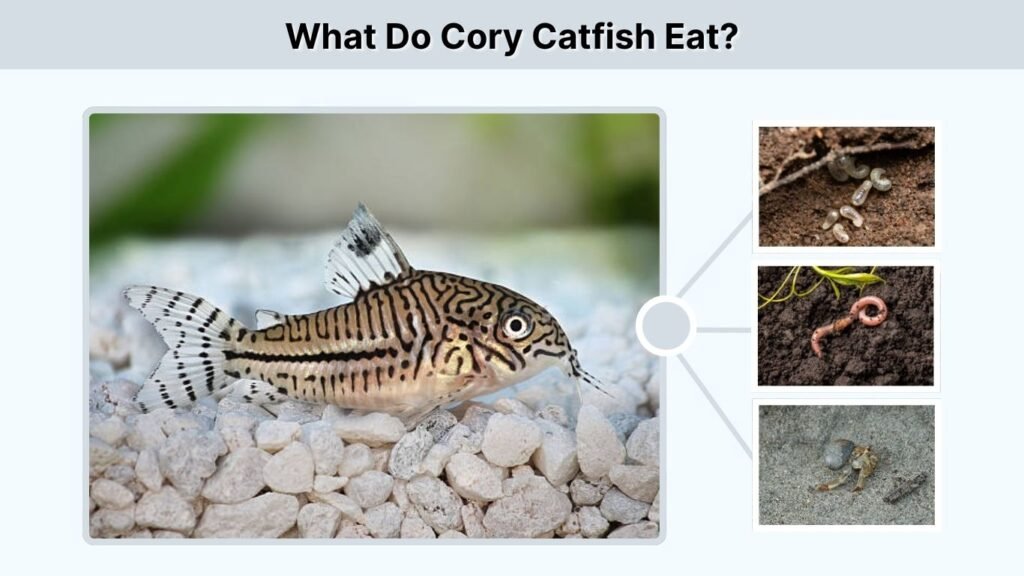
Cory catfish are omnivorous bottom feeders. They eat insect larvae, worms, tiny crustaceans, decaying plant matter, and other edible material found in the substrate.
In an aquarium, feed them sinking pellets or wafers formulated for omnivorous bottom feeders. Supplement these with frozen bloodworms, daphnia, brine shrimp, and occasional vegetable-based foods.
Cory catfish cannot survive only on leftovers from other fish. Food must reach the bottom after the lights are dimmed or while the corys are actively feeding.
What Do Catfish Eat in Ponds and Rivers?
Wild pond and river catfish eat whatever is seasonally available. Common foods include insects, worms, crayfish, mollusks, fish, frogs, seeds, algae, and animal remains.
Pond-raised channel catfish can be given nutritionally complete floating pellets. Feed only an amount they can consume within approximately 10–15 minutes. Excess feed sinks, decomposes, and may reduce water quality.
Wild catfish usually become less active in cold water. They continue feeding during winter, but their metabolism slows and they may eat less frequently.
What Do Aquarium Catfish Eat?
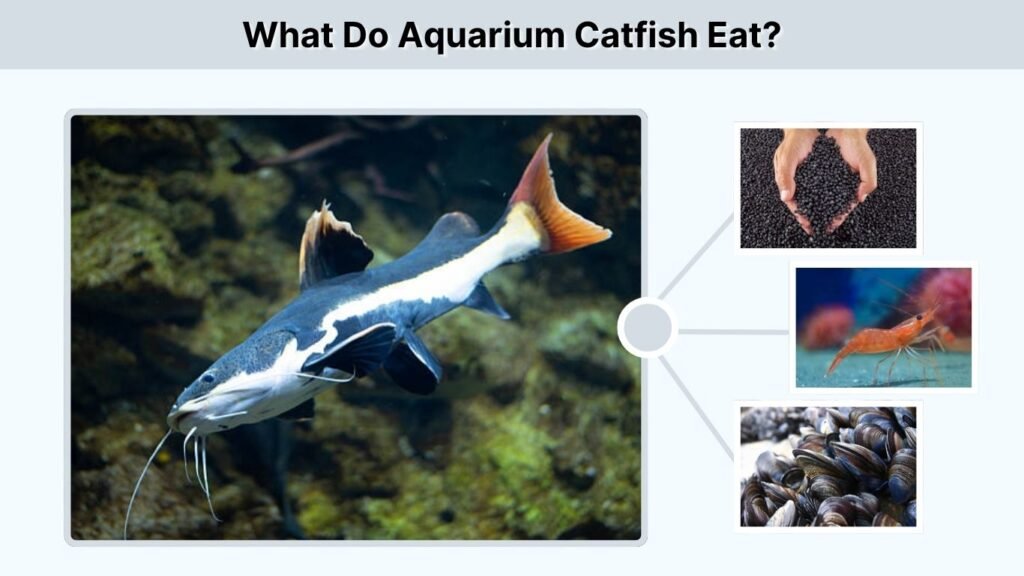
Aquarium catfish should receive food suited to their species rather than a single universal “catfish food.”
Predatory species need protein-rich sinking pellets, shrimp, mussels, insects, and appropriately sized frozen foods. Omnivorous catfish benefit from a combination of pellets, invertebrate foods, and plant ingredients.
Algae-grazing species need algae wafers, biofilm, and vegetables such as zucchini or cucumber. These vegetables should be removed before they begin decomposing.
Avoid routinely feeding mammal or poultry meat. Beef heart, chicken, and similar foods contain fats that many fish cannot process efficiently.
What Do Catfish Like to Eat as Bait?
Effective catfish bait depends on the species being targeted. Flatheads generally respond best to live fish where permitted, while channel catfish often accept worms, cut bait, shrimp, chicken liver, and prepared stink bait.
Blue catfish commonly respond to fresh chunks of oily fish such as shad or skipjack. Bullheads readily take worms, insects, and small pieces of fish.
Always check local rules before using live fish, frogs, game-fish parts, or other natural bait.
FAQs
Do catfish eat other fish?
Yes. Flathead, blue, channel, redtail, and many other catfish eat fish. Large predatory species may actively hunt, while omnivorous catfish often consume injured, dead, or slow-moving fish. Small aquarium tank mates may also be swallowed.
Do catfish eat algae?
Some catfish eat algae, but not all species are effective algae grazers. Otocinclus and bristlenose plecos consume algae and biofilm. Cory, pictus, channel, and predatory catfish need other foods and should not be expected to clean an aquarium.
What do baby catfish eat?
Baby catfish eat zooplankton, microscopic organisms, tiny insect larvae, and small crustaceans. In captivity, they can receive powdered fry food, newly hatched brine shrimp, microworms, or finely crushed pellets suitable for their species.
How often should pet catfish be fed?
Most small aquarium catfish can be fed once or twice daily. Nocturnal species may feed better after the lights dim. Large predatory catfish usually need less frequent meals, while young growing fish may require smaller meals several times daily.
Will catfish eat food from the surface?
Some catfish accept floating food, particularly pond-raised channel catfish. However, many aquarium species prefer sinking pellets because they naturally search near the bottom. Food placement should match the species’ normal feeding behavior.