
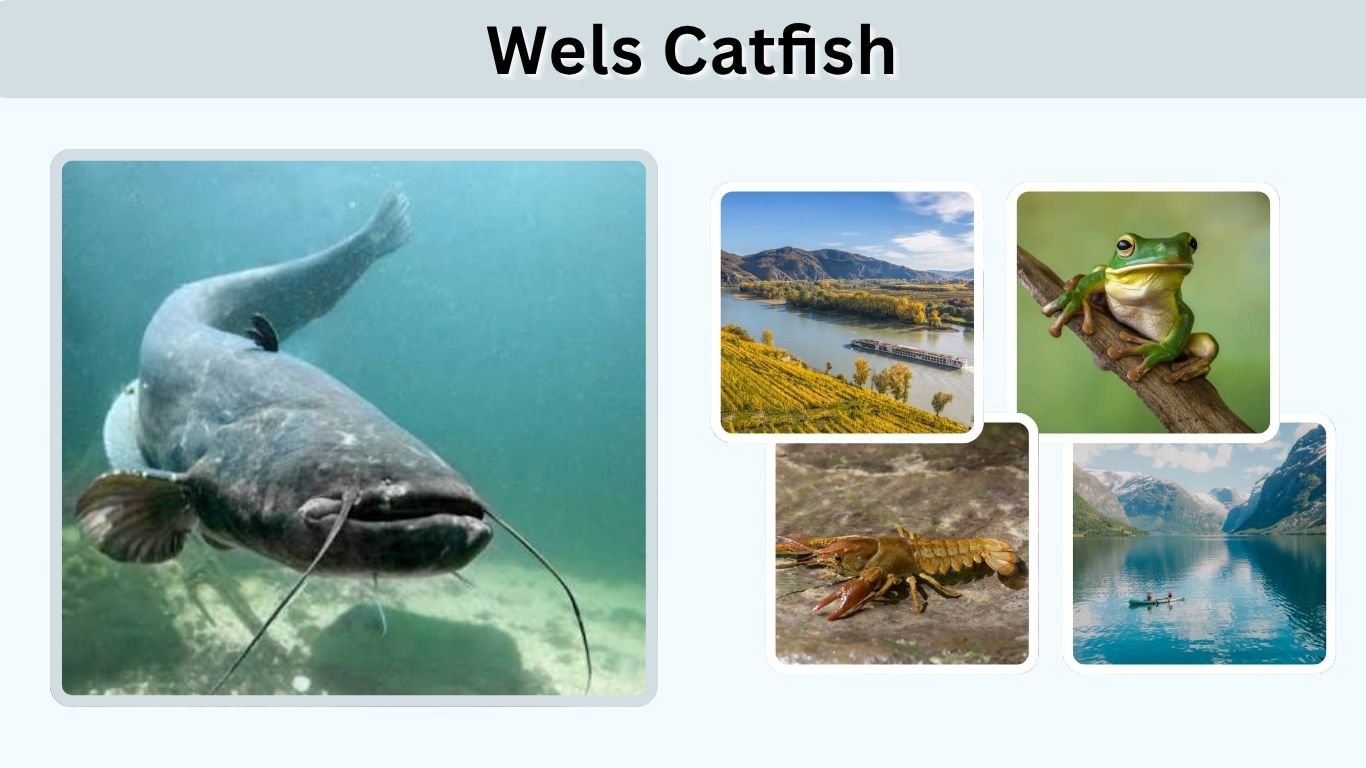
The Wels catfish (Silurus glanis) is a giant freshwater predator native to parts of Europe and western Asia. The name is often misspelled as “Wells catfish,” but Wels catfish is the correct common name. Recognized by its broad head, enormous mouth, long barbels, and scaleless body, this fish can grow longer than an adult human. It inhabits large rivers, lakes, reservoirs, and backwaters, where it feeds on fish, crustaceans, and other available prey.
Wels Catfish Overview
The Wels catfish is also called the European catfish, European sheatfish, Danube catfish, or simply wels. It belongs to the family Siluridae and is considered one of Europe’s largest freshwater fish.
| Feature | Details |
| Scientific name | Silurus glanis |
| Family | Siluridae |
| Native range | Central and eastern Europe and western Asia |
| Maximum verified size | At least 2.73 meters |
| Largest reported rod-and-line catch | 2.92 meters |
| Maximum documented age | Around 70 years or more |
| Diet | Carnivorous and opportunistic |
| Activity | Primarily nocturnal |
| Habitat | Rivers, lakes, reservoirs, and backwaters |
| Temperament | Powerful predatory fish |
| Aquarium suitability | Unsuitable for standard home aquariums |
FishBase lists verified maximum measurements of approximately 2.73 meters and 130 kilograms, while exceptionally large modern catches have exceeded these figures in either length or weight.
What Does a Catfish Wels Look Like?
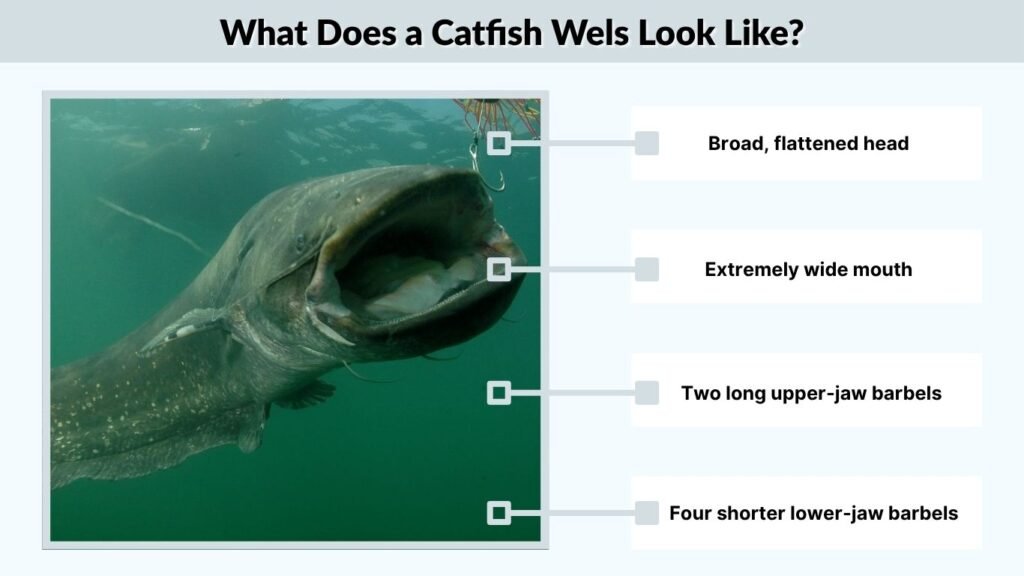
Wels catfish have long, muscular bodies adapted for swimming near the bottom and moving through slow or moderately flowing water.
Identification
- Broad, flattened head
- Extremely wide mouth
- Small eyes positioned high on the head
- Two long upper-jaw barbels
- Four shorter lower-jaw barbels
- Smooth skin without scales
- Small dorsal fin
- Very long anal fin
- Mottled gray, olive, brown, or black coloration
- Pale cream or yellowish underside
The fish’s long barbels contain sensory organs that help it detect food in dark or muddy water. Its mouth contains many small teeth that grip slippery prey rather than cutting it into pieces.
Albino and pale-colored Wels catfish occasionally occur. However, most wild adults have dark, irregular markings that provide camouflage around muddy bottoms, submerged wood, and aquatic vegetation.
How Big Do Catfish Get?
Most Wels catfish never approach the enormous sizes seen in record photographs. Growth depends on water temperature, food availability, age, habitat quality, and population density.
Many mature fish measure approximately 3–5 feet long. A specimen exceeding 6.5 feet is considered exceptionally large, while individuals over 8 feet are extremely rare.
FishBase notes that old claims of 5-meter fish weighing more than 300 kilograms were associated with misidentification and measurement problems. Better-supported biological records place verified maximum size closer to 2.73 meters and 130 kilograms.
World-Record Wels Catfish
Record claims differ because some catches are measured by length, while official angling records may be organized by weight, fishing line class, or tackle type.
The International Game Fish Association lists a 134.97-kilogram specimen as its all-tackle weight record. That fish was caught on July 6, 2025.
In October 2025, anglers in Poland caught and released a Wels catfish measuring 2.92 meters, or about 9 feet 7 inches. Guinness World Records describes this catch as an unofficial record, so it should not be confused with the official IGFA weight record.
Wels Catfish Habitat and Geographic Range
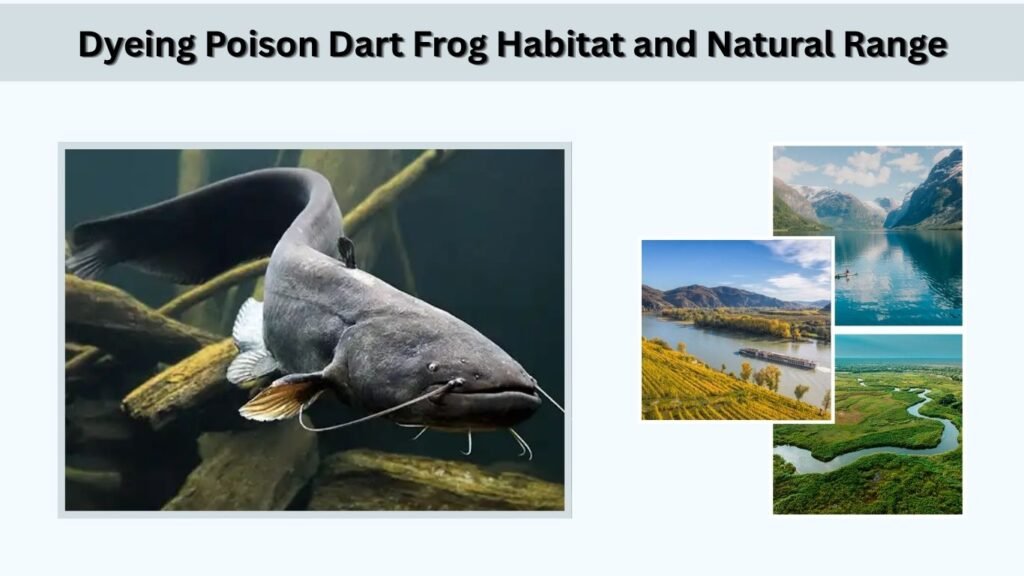
Wels catfish naturally occur across parts of central, southern, and eastern Europe and western Asia. Their native drainage systems include areas connected to the Baltic, Black, and Caspian seas.
They commonly inhabit:
- Large lowland rivers
- Deep river channels
- Warm lakes
- Floodplain backwaters
- Reservoirs
- Slow-flowing tributaries
- Vegetated ponds and wetlands
During daylight, adults often rest near submerged trees, deep holes, steep banks, vegetation, or other sheltered structures. They become more active after dark and search both near the bottom and throughout the water column.
Wels catfish have also been introduced outside portions of their native range, including waters in France, Spain, Italy, the Netherlands, and the United Kingdom. Many introductions were made to establish recreational fisheries.
What Do Wels Catfish Eat?
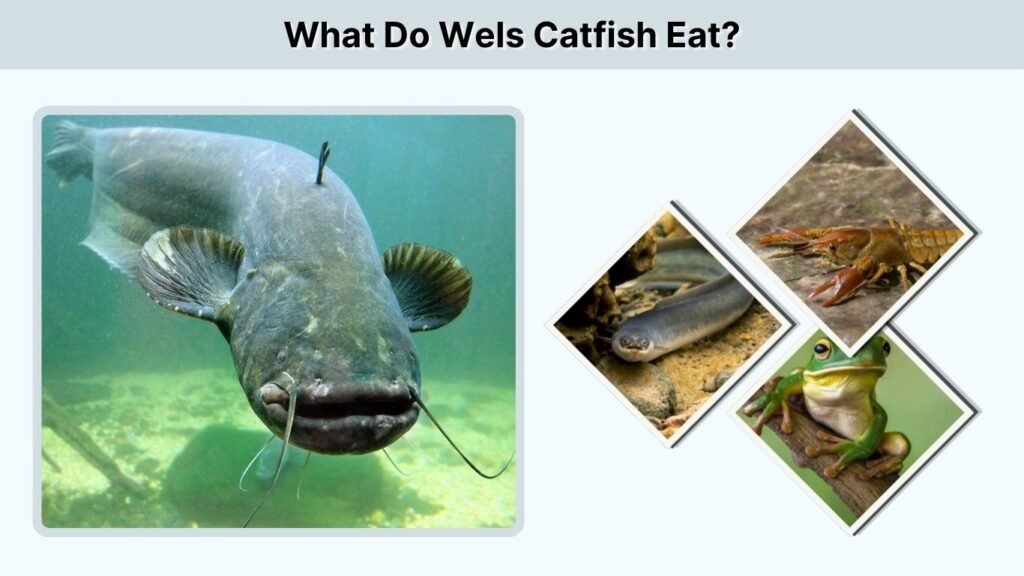
Catfish are opportunistic carnivores. Their diet changes as they grow and depends heavily on which foods are locally abundant.
Diet by Life Stage
Young Wels catfish primarily consume aquatic insects, snails, worms, small crustaceans, mussels, and tiny fish. As their mouths and bodies grow, fish and crayfish become increasingly important.
Large adults may eat:
- Carp and other fish
- Eels
- Crayfish
- Frogs
- Aquatic insects
- Freshwater mussels
- Small waterbirds
- Small mammals near the water
- Carrion
- Other catfish
A large review of the species’ expanding European range found that individuals under 50 centimeters consumed many invertebrates, while fish became more important as the catfish grew. Crayfish were significant prey across multiple size classes.
Do Wels Catfish Eat Pigeons?
Some introduced Wels catfish in France have been documented temporarily stranding themselves along a riverbank to capture pigeons drinking or bathing at the water’s edge.
This remarkable behavior was documented scientifically, but it is associated with a particular introduced population and should not be viewed as normal behavior for every Wels catfish.
Wels Catfish Behavior and Hunting
Catfish are mainly nocturnal predators. They commonly rest during the day before becoming active around dusk and at night.
They locate prey through smell, taste, vibration, hearing, and their sensitive barbels. Their small eyes suggest that vision is less important than sensory information received from the surrounding water.
The fish may hunt by slowly approaching prey before using its broad mouth to create suction. It can also scavenge dead animals and take advantage of temporarily abundant food sources. This flexible feeding behavior helps it survive in many different freshwater habitats.
Reproduction and Lifespan
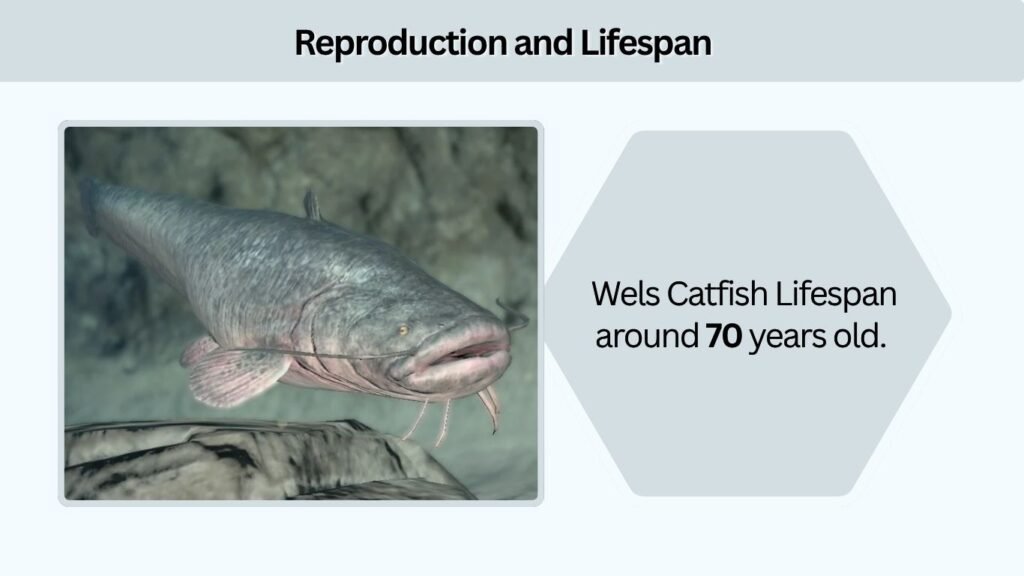
Catfish also generally reproduce in warm weather. Spawning often occurs from May through July when water temperatures reach approximately 18–20°C.
The pair prepares a nest among submerged plants or other suitable material. The female lays thousands of adhesive eggs, and the male remains near the nest to guard the developing eggs and young larvae.
How Long Do Wels Catfish Live?
Catfish can be remarkably long-lived. A scientific study of northern European populations estimated that some individuals approximately 2 meters long were around 70 years old.
Growth may be slower in cold northern waters, but slower growth can be associated with greater longevity. This means a large Wels catfish may have lived through several decades of environmental and habitat changes.
Are Wels Catfish Dangerous?
Catfish are not adapted to hunt humans. However, they are enormous, powerful wild animals with strong jaws and many small teeth.
A large fish may cause injury when:
- Defending a nest
- Being caught or restrained
- Mistaking a hand or foot for food
- Struggling beside a boat
- Being lifted incorrectly
Anglers should use heavy equipment and avoid placing their hands deep inside the fish’s mouth. Swimmers should also avoid deliberately approaching or touching very large catfish, especially near potential nesting areas.
Can Wels Catfish Be Kept as Pets?
A Wels catfish is not suitable for a normal home aquarium. Even a small juvenile can eventually become several feet long and produce an enormous amount of waste.
A lifelong enclosure would require:
- Public-aquarium-scale dimensions
- Thousands of gallons of water
- Powerful mechanical and biological filtration
- Strong oxygenation
- Secure construction
- Professional handling equipment
- A dependable supply of appropriate food
Keeping one in a small tank does not prevent normal growth safely. Instead, confined conditions can lead to stress, injuries, deformities, and poor water quality.
Never release an unwanted Wels catfish into natural water. Introduced populations can establish outside their native range and affect local aquatic communities.
Can You Eat Catfish Wels?
Wels catfish are harvested for food and raised in aquaculture in parts of Europe. Their flesh can be prepared by frying, grilling, baking, smoking, or making soups and stews.
Smaller fish are often considered more desirable for eating because very large, old predators can have fattier flesh. Contaminant levels also depend on the water body, so anglers should follow local consumption advisories and fishing regulations.
Wels Catfish vs. Wallago Catfish
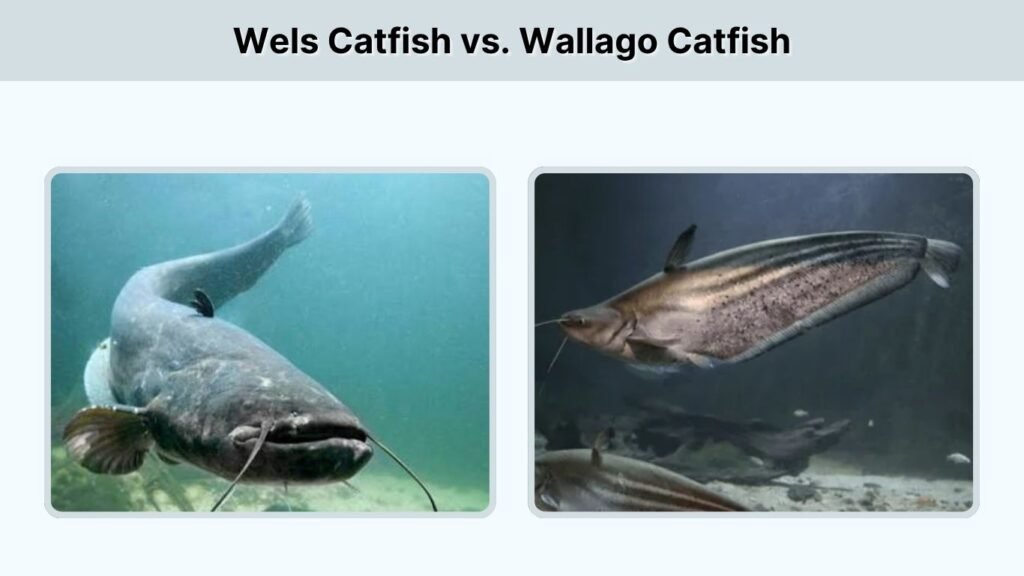
Wels and wallago catfish are different freshwater predators, although they share similarly long bodies and broad mouths.
| Feature | Wels Catfish | Wallago Catfish |
| Scientific name | Silurus glanis | Usually Wallago attu |
| Main range | Europe and western Asia | South and Southeast Asia |
| Head | Broad and flattened | Longer and more pointed |
| Body | Heavy and thick | More elongated |
| Barbels | Six | Usually four |
| Common habitat | European rivers and lakes | Asian rivers, reservoirs, and wetlands |
Scientific names provide the most reliable identification because common names can differ between regions.
FAQs
Is it Wels catfish or Wells catfish?
Wels catfish is the correct spelling. “Wells catfish” is a common search and writing error. The name may come from an old German term for large catfish and is unrelated to water wells.
What is the biggest Wels catfish ever caught?
A 2.92-meter specimen caught in Poland in October 2025 is widely reported as the longest rod-and-line catch, although Guinness describes it as unofficial. The IGFA all-tackle weight record is 134.97 kilograms.
Do Wels catfish attack people?
They do not normally hunt humans. However, defensive bites and accidental encounters may occur, especially near nests or when people attempt to handle large fish. Their size and strength mean they should always be treated cautiously.
Can Wels catfish live in the United States?
The climate may be suitable in some areas, but the fish is not native to North America. Possession, transport, importation, or release may be restricted. Owners must check applicable federal, state, and local regulations.
What is the average Wels catfish length?
Size varies greatly by age and habitat. Many mature individuals are approximately 3–5 feet long, while fish exceeding 6.5 feet are exceptional. The spectacular 8- to 9-foot specimens seen in record catches are extremely uncommon.