
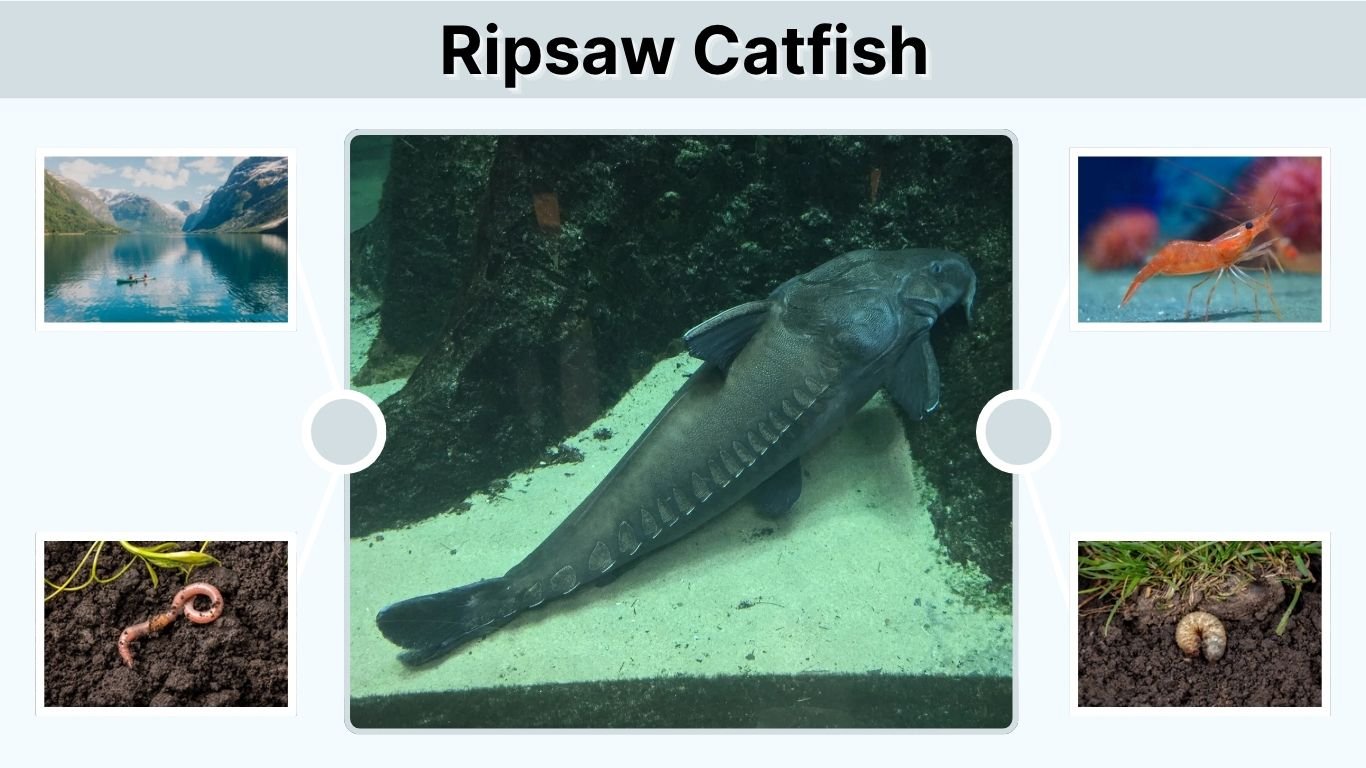
The ripsaw catfish is a massive South American freshwater fish known for its dark body, long barbels, and saw-like row of armored plates. Its scientific name is Oxydoras niger, and it belongs to the thorny catfish family Doradidae. Although juveniles are sometimes sold for home aquariums, a full-grown ripsaw catfish can reach approximately 3 feet or more. It is peaceful but requires a custom aquarium or indoor pond, strong filtration, and a carefully planned long-term home.
Ripsaw Catfish Overview
The ripsaw catfish is also called the Niger ripsaw catfish, black doradid, plated catfish, razorback catfish, or cuiu-cuiu. It should not be confused with the smaller Irwini ripsaw catfish.
| Feature | Details |
| Scientific name | Oxydoras niger |
| Family | Doradidae |
| Origin | Tropical South America |
| Maximum size | Around 39 inches or more |
| Common adult length | About 23 inches |
| Maximum reported weight | Around 24 pounds |
| Diet | Omnivorous bottom feeder |
| Temperament | Generally peaceful |
| Water temperature | Approximately 75–82°F |
| pH range | About 6.0–7.8 |
| Care level | Advanced |
| Suitable home | Custom aquarium or indoor pond |
The species occurs naturally in the Amazon, Essequibo, and São Francisco river systems, with some records also associated with the Orinoco region. It inhabits freshwater streams, lakes, and river areas with muddy bottoms.
Ripsaw Catfish Identification and Appearance
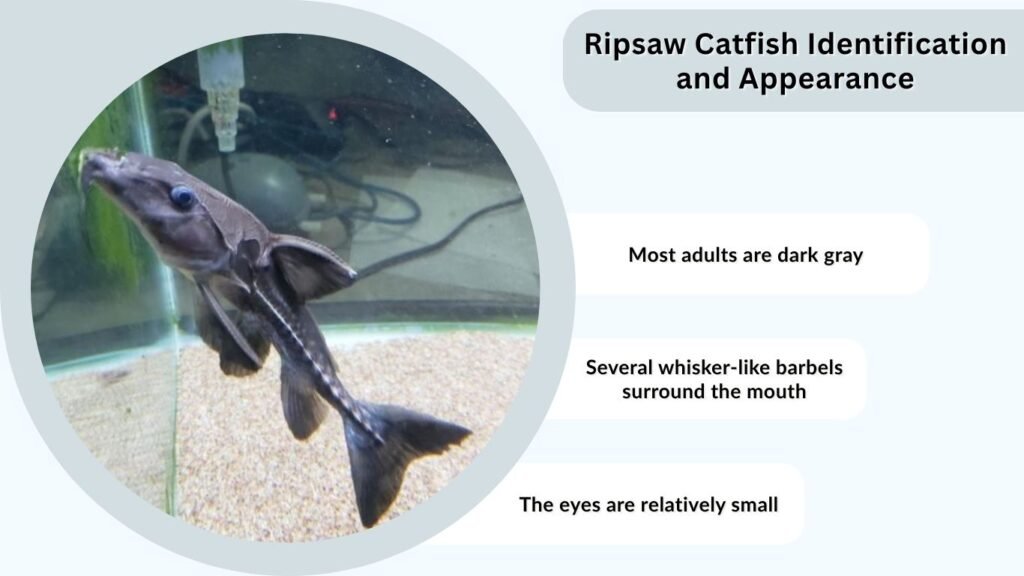
A ripsaw catfish has an elongated, heavily built body with a wide head and a downward-facing mouth. Its shape allows it to search through soft sediment for food.
Color and Body Shape
Most adults are dark gray, charcoal, brownish-black, or almost completely black. Young fish may display slightly lighter patterns, but their overall color generally darkens as they grow.
Several whisker-like barbels surround the mouth. These sensitive structures help the fish locate food when visibility is poor. Its eyes are relatively small compared with its large head and body.
Saw-Like Armored Plates
The most recognizable feature is the row of large bony plates running along each side. Every plate ends in a pointed projection, creating an edge that resembles a saw blade.
These structures are called scutes. They form protective armor that makes the fish difficult for predators to bite or swallow. The scutes can also cut skin, damage aquarium nets, and injure other fish during careless handling.
Never lift a large ripsaw catfish with an ordinary net. Its scutes and fin spines can become tightly tangled in the mesh. A large container, fish sling, or other specialist method is safer.
Why Is It Called a Talking Catfish?
Members of the Doradidae family are commonly called talking catfish because they can produce audible noises. They create sounds by moving specialized fin spines and associated structures.
The noises may resemble clicks, squeaks, grunts, or scraping sounds. A frightened fish may produce them when captured or handled. The sound is defensive rather than evidence that the fish is aggressive.
Full-Grown Ripsaw Catfish Size
The ripsaw catfish is among the largest members of the thorny catfish family. FishBase reports a maximum standard length of approximately 100 centimeters, or 39 inches, with a common length near 59 centimeters, or 23 inches. Published weights reach approximately 11 kilograms, or 24 pounds.
How Fast Do Ripsaw Catfish Grow?
Growth depends on water quality, diet, aquarium size, temperature, genetics, and age. Juveniles may initially appear to grow quickly, while the rate usually slows as the fish becomes larger.
There is no dependable universal growth schedule for the species. Buyers should plan for its maximum potential size rather than assuming that a small aquarium will permanently restrict growth. Keeping a giant fish in cramped conditions can cause stress, poor body development, and declining water quality.
Ripsaw Catfish Lifespan
Reliable species-specific lifespan records are limited. However, giant catfish are generally long-term commitments, and a healthy specimen may remain in captivity for many years.
Owners should consider future aquarium space, filtration expenses, feeding costs, and relocation challenges before purchasing a baby ripsaw catfish.
Ripsaw Catfish Natural Habitat and Behavior
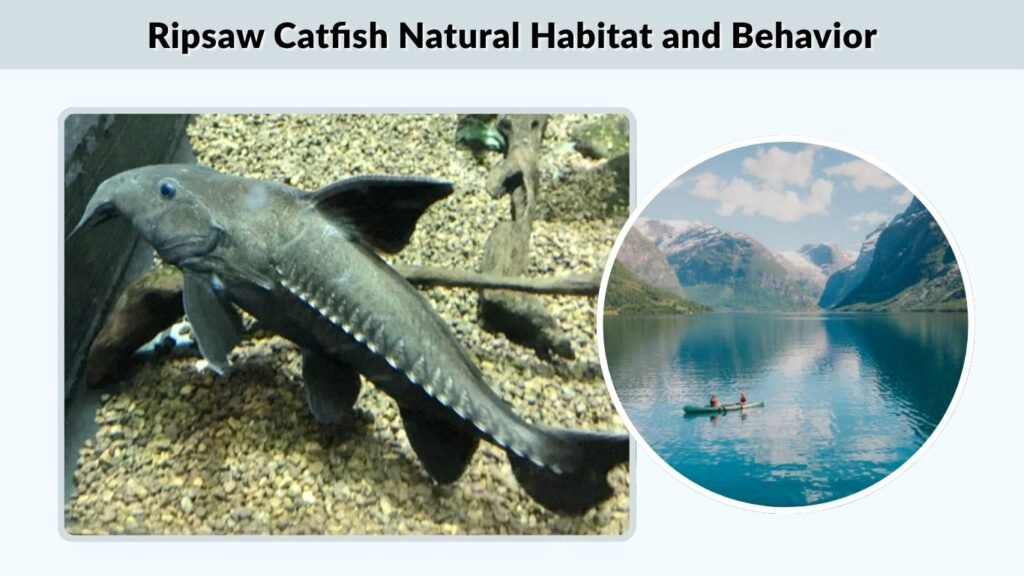
Ripsaw catfish live close to the bottom in large South American freshwater systems. Adults occur over mud in streams and lakes and may form schools in natural habitats.
The fish uses its barbels and downward-facing mouth to detect edible material in sediment. It may sift sand and mud while searching for insect larvae, crustaceans, organic debris, and other food.
Despite its intimidating armor, the species is generally peaceful. It does not normally chase similarly sized fish or actively defend a territory. However, any small fish that fits into its mouth may disappear, especially during nighttime feeding.
Ripsaw Catfish Diet
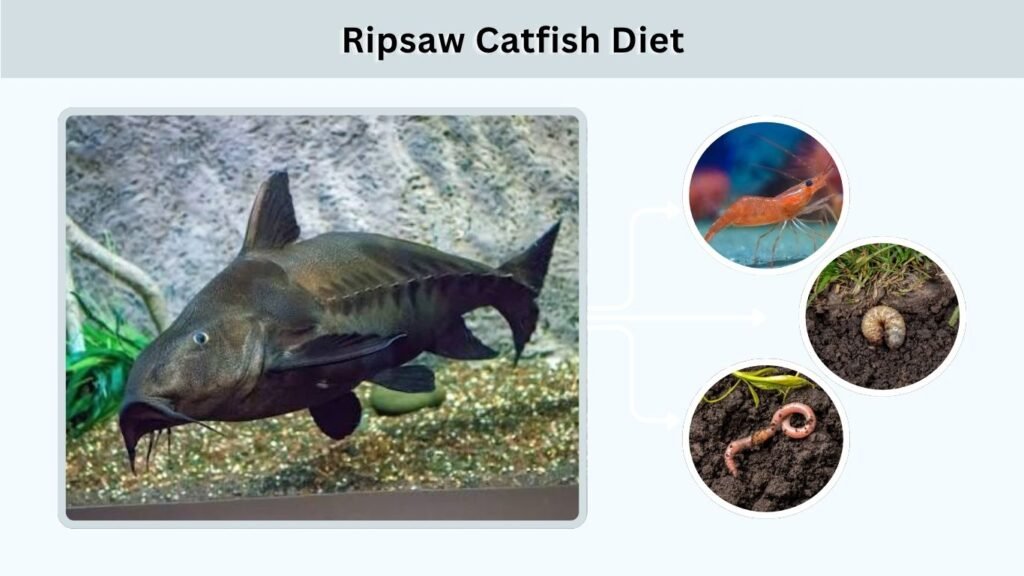
Wild ripsaw catfish eat a mixture of animal material and organic matter. Documented foods include detritus, crustaceans, chironomid larvae, and mayfly larvae.
Suitable Aquarium Foods
A captive ripsaw catfish can be offered:
- Large sinking catfish pellets
- Shrimp and prawns
- Mussel meat
- Earthworms
- Bloodworms
- Insect larvae
- Chopped fish
- Crustacean-based foods
- Spirulina or plant-based sinking wafers
Feed a varied diet rather than relying entirely on fresh meat. Good-quality pellets provide vitamins and minerals that may be missing from an unbalanced seafood-only diet.
Avoid feeding mammal or poultry meat regularly. These foods do not closely resemble the fish’s natural diet and may contain unsuitable levels of fat.
Feeding Schedule
Young fish may be fed once daily. Large adults usually require fewer but more substantial meals. Offer enough food to maintain a healthy body without creating a swollen abdomen.
Remove uneaten food because this large fish produces considerable waste. Overfeeding can quickly increase ammonia and nitrate levels, especially in an undersized aquarium.
Ripsaw Catfish Aquarium Care and Tank Setup
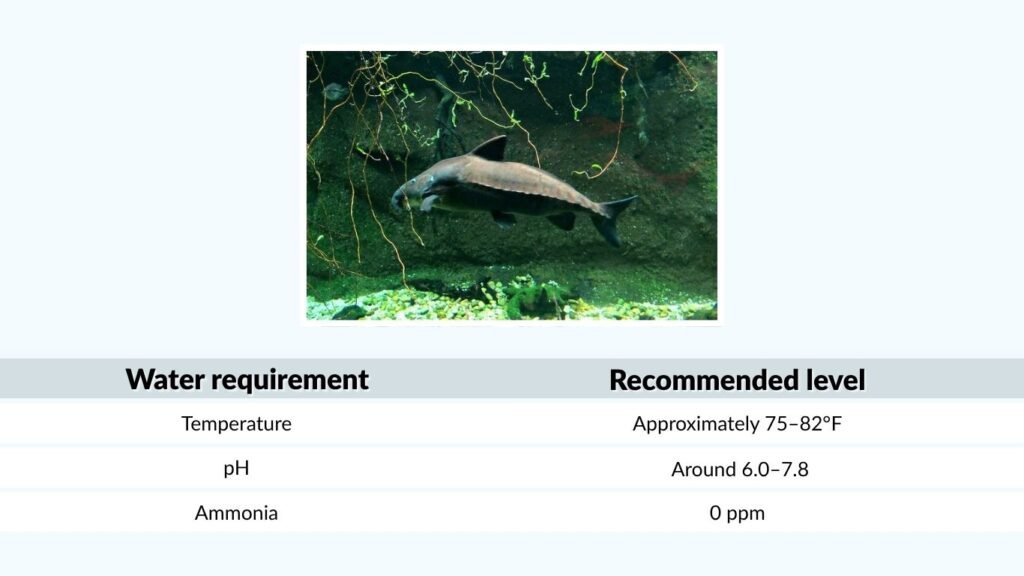
The biggest challenge is not aggression or feeding—it is providing enough permanent space. A juvenile may be only a few inches long when purchased, but the same fish can eventually approach 3 feet.
Ripsaw Catfish Tank Size
A full-grown ripsaw catfish needs one of the following:
- A very large custom-built aquarium
- A heated indoor pond
- A professionally maintained public-aquarium-style enclosure
Some retailers suggest tanks around 150 gallons for smaller specimens, but that volume should not be considered a suitable lifelong home for a fish capable of reaching approximately 39 inches. Large adults need substantial floor space for turning, swimming, and resting. Specialist sellers commonly recommend the largest custom aquariums or indoor ponds.
Substrate and Decorations
Use sand or smooth fine gravel so the fish can search along the bottom without damaging its mouth or barbels. Avoid jagged rocks and narrow caves.
Suitable decorations include large pieces of smooth driftwood, rounded stones, and wide shelters. All decorations must be secure because a powerful adult can move lightweight objects.
Leave a large open area along the bottom. The fish needs more usable floor space than densely packed decoration.
Water and Filtration
Recommended conditions include:
| Water requirement | Recommended level |
| Temperature | Approximately 75–82°F |
| pH | Around 6.0–7.8 |
| Ammonia | 0 ppm |
| Nitrite | 0 ppm |
| Nitrate | Kept as low as practical |
| Current | Moderate |
| Oxygenation | High |
A giant biological filter, strong mechanical filtration, and regular partial water changes are essential. Large catfish produce heavy waste loads, so filtration should be designed for more than the aquarium’s measured volume.
Tank Mates
The ripsaw catfish can live with peaceful or moderately assertive fish that are too large to swallow.
Possible tank mates include large pacu, silver dollars, arowanas, large peaceful cichlids, giant gouramis, freshwater stingrays, and other large catfish. Compatibility depends on enclosure size and individual behavior.
Avoid tiny fish, delicate bottom dwellers, and aggressive species that may attack the catfish’s barbels or eyes. Do not overcrowd the bottom of the aquarium.
Ripsaw Catfish for Sale
Juvenile ripsaw catfish occasionally appear at specialist aquarium stores and online exotic-fish retailers. The price varies according to size, availability, shipping distance, and whether the fish is captive-held or imported.
Before buying one, confirm:
- The fish is truly Oxydoras niger
- You have a permanent adult enclosure
- Your floor can support the aquarium’s weight
- Large-scale filtration is available
- The seller has packed the fish safely
- You have a plan for moving it as it grows
Never release an unwanted aquarium fish into a river, pond, canal, or lake. The species has appeared in the aquarium trade, and reported releases outside its native range have been linked to discarded pets.
Niger vs. Irwini Ripsaw Catfish
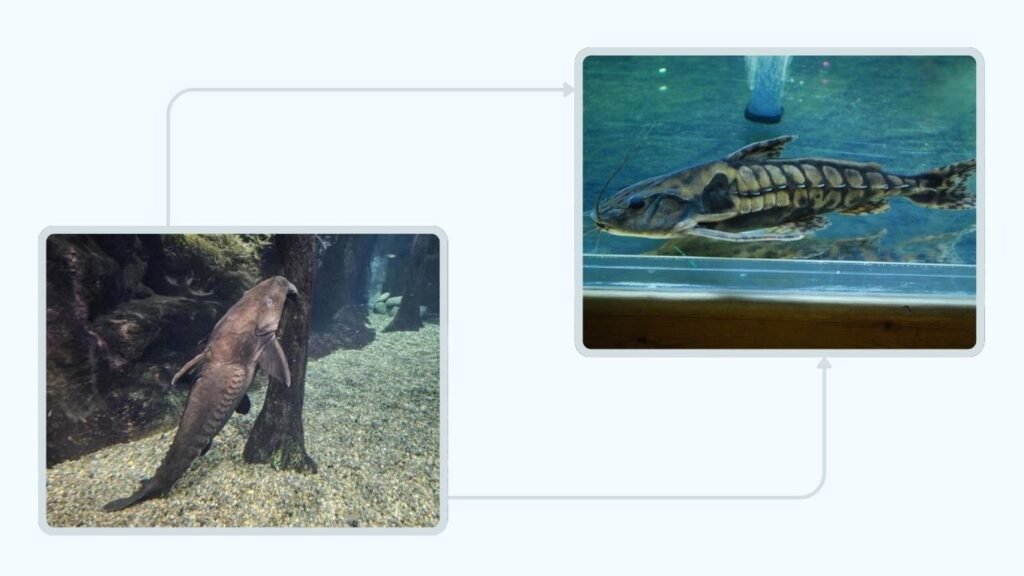
The term “ripsaw catfish” is sometimes applied to more than one armored catfish.
| Feature | Niger Ripsaw | Irwini Ripsaw |
| Scientific name | Oxydoras niger | Megalodoras uranoscopus |
| Maximum size | Around 39 inches | Around 24 inches |
| Color | Mostly dark gray or black | Brown with spotted or banded markings |
| Body | Long and heavily built | Shorter and more patterned |
| Other name | Black doradid | Giant Raphael catfish |
The leopard ripsaw catfish usually refers to the patterned Irwini or giant Raphael catfish rather than Oxydoras niger. Sellers may use common names inconsistently, so always check the scientific name before purchasing.
FAQs
Are ripsaw catfish aggressive?
Ripsaw catfish are generally peaceful despite their large size and armored appearance. They usually ignore fish too large to swallow. However, very small tank mates may be eaten, particularly when the catfish searches for food after dark.
How big does a ripsaw catfish get?
A full-grown specimen can reach approximately 39 inches in standard length, with some reports suggesting even larger individuals. Its common wild length is closer to 23 inches, but aquarium planning should always account for its maximum potential size.
Can a ripsaw catfish live in a 150-gallon tank?
A 150-gallon aquarium may temporarily hold a juvenile, but it is not an ideal permanent home for a fish that can approach 3 feet. An adult needs a much larger custom aquarium or heated indoor pond with extensive floor space.
Are ripsaw catfish spines poisonous?
The scutes and fin spines are sharp but are not considered venomous. They can still cause painful cuts or puncture wounds. Handle the fish carefully and avoid using nets that can become caught on its armored plates.
What is the difference between blue and black ripsaw catfish?
Names such as blue, black, and Turushuki ripsaw catfish are often trade labels for Oxydoras niger. Lighting, age, and individual coloration can make the body appear blue-gray, charcoal, or black. Confirm identification through the scientific name rather than color alone.