
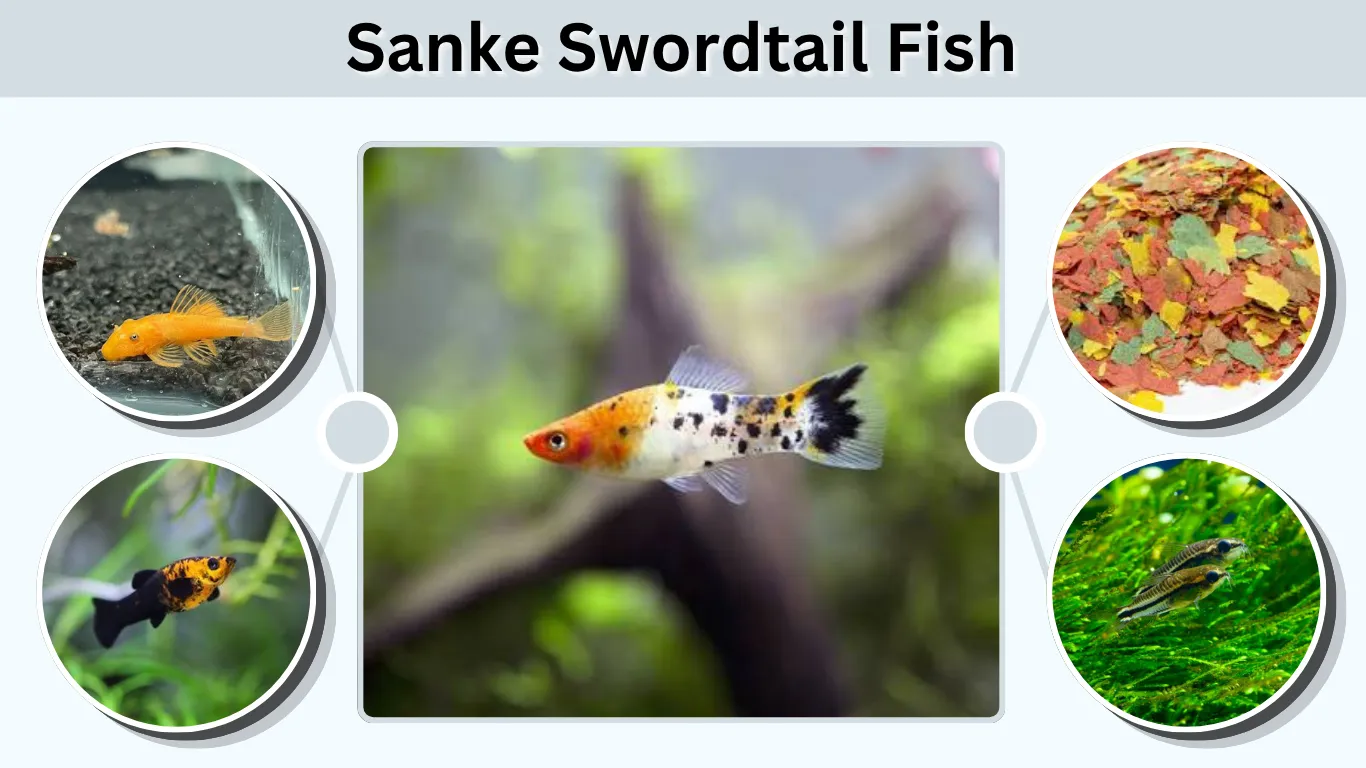
The Sanke Swordtail is a beautiful freshwater aquarium fish recognized for its striking combination of orange, white, and black markings. Also called the Sanke Koi Swordtail, this colorful livebearer is popular among aquarium enthusiasts because of its active personality, attractive appearance, and relatively straightforward care requirements. Male fish develop a distinctive sword-shaped tail extension, while females have fuller bodies and shorter tails. Understanding Sanke Swordtail size, tank requirements, diet, lifespan, breeding habits, and suitable tank mates can help you create a healthy and attractive aquarium environment.
What Is a Sanke Swordtail Fish?
The Sanke Swordtail is a selectively bred ornamental swordtail, generally associated with Xiphophorus hellerii and fancy swordtail breeding lines. It belongs to the Poeciliidae family, which includes guppies, mollies, and platies. The name “Sanke” refers to its tricolor appearance, resembling the distinctive patterns of Sanke koi carp. Unlike wild swordtails, this ornamental variety was developed through selective breeding.
Sanke Swordtail Appearance and Identification
Sanke Swordtails display colorful patterns that make them easy to distinguish from ordinary swordtail varieties.
- Body color: White, orange, or reddish-orange with irregular black markings.
- Body shape: Elongated, streamlined, and slightly flattened along the sides.
- Tail: Mature males develop a long, sword-shaped lower tail extension.
- Fins: Usually transparent, yellowish, orange, or lightly patterned.
- Eyes: Small, round, and positioned near the front of the head.
- Color variation: Individual fish may display different arrangements of black, white, and orange.
Sanke Swordtail Male vs. Female
Male Sanke Swordtails generally have slimmer bodies and a prominent sword-shaped tail extension. They also possess a modified anal fin called a gonopodium, which is used for reproduction.
Females typically have fuller, rounded bodies and fan-shaped anal fins. Their tails lack the characteristic sword extension. Both sexes can display attractive tricolor markings.
Sanke Swordtail Size and Lifespan
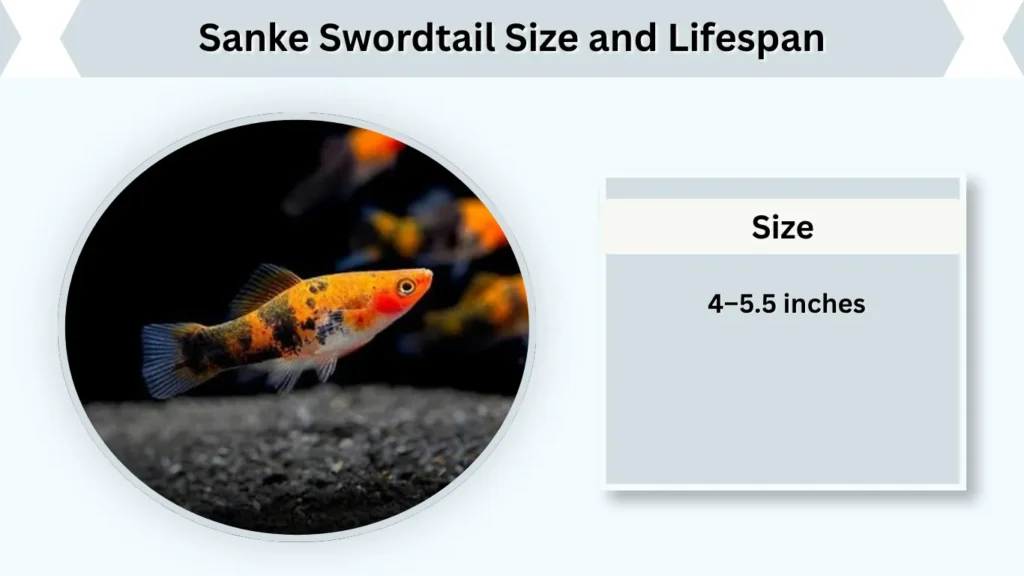
Sanke Swordtails are medium-sized livebearers that require more swimming space than smaller aquarium species such as guppies. Their adult size varies depending on genetics, nutrition, and environmental conditions. With proper care, these fish remain active for several years. Understanding their growth and lifespan helps aquarists choose an appropriately sized aquarium and maintain suitable living conditions.
How Big Do Sanke Swordtails Get?
Adult Sanke Swordtails commonly reach approximately 4–5.5 inches (10–14 cm), including the male’s extended tail. Some selectively bred fish may grow larger.
Females often have heavier bodies, while males appear more elongated. Providing adequate space, balanced nutrition, and stable water conditions supports healthy development.
Sanke Swordtail Lifespan
Sanke Swordtails generally live around three to five years in well-maintained aquariums. Their actual lifespan depends on genetics, diet, water quality, and overall care.
Poor filtration, overcrowding, and incompatible tank mates can create stress and shorten their lives. Regular maintenance and proper feeding help maintain long-term health.
Sanke Swordtail Tank Size and Water Requirements
Sanke Swordtails are active swimmers that need spacious aquariums with clean, well-oxygenated water. Although they are relatively adaptable, they perform best when temperature, pH, and hardness remain stable. A planted aquarium with open swimming areas provides a comfortable environment. These fish can jump, making a properly fitted aquarium lid important for their safety.
Ideal Sanke Swordtail Tank Size
A 30-gallon aquarium is a practical starting point for a small group of Sanke Swordtails. A longer tank is preferable because these fish need horizontal swimming space.
Larger aquariums are recommended when keeping multiple males or other community fish. Avoid small nano tanks that restrict movement and increase aggression.
Sanke Swordtail Water Parameters
Maintaining suitable water conditions is essential for healthy swordtails.
- Temperature: 72–82°F (22–28°C).
- pH level: Approximately 7.0–8.3.
- Water hardness: Around 10–25 dGH.
- Minimum recommended tank: 30 gallons.
- Filtration: Moderate filtration with gentle to moderate water flow.
- Ammonia and nitrite: Zero detectable levels.
- Lighting: Moderate aquarium lighting.
Best Plants and Decorations
Java fern, Anubias, Vallisneria, and Amazon sword plants provide natural shelter and attractive surroundings.
Arrange decorations around the aquarium edges while leaving open swimming areas. Floating plants can offer additional security for young fish. Fine gravel or sand works well as substrate.
Sanke Swordtail Diet and Feeding
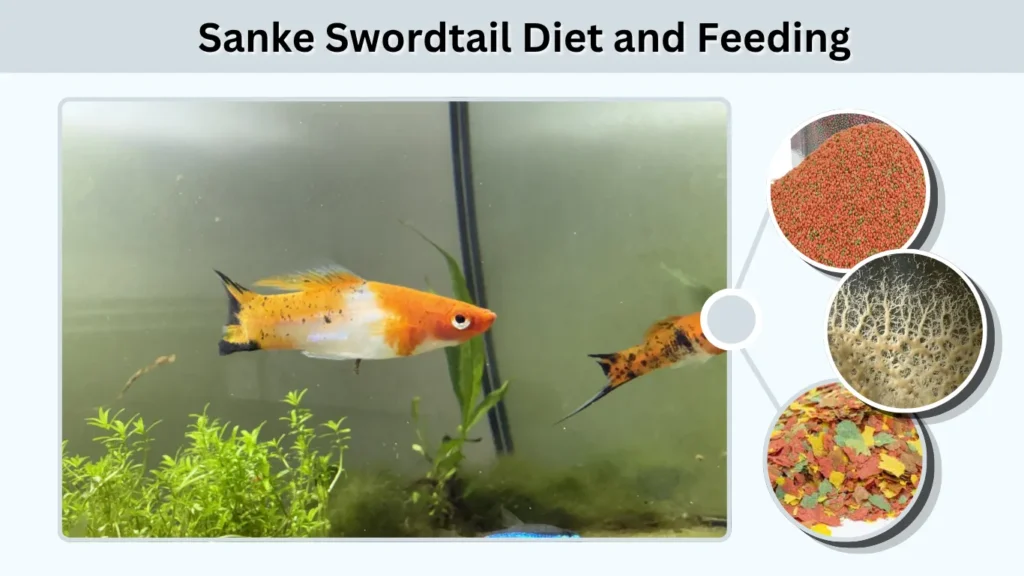
Sanke Swordtails are omnivorous fish that consume both plant-based and animal-based foods. A varied diet helps maintain their colorful appearance, healthy growth, and reproductive condition. In natural habitats, swordtails feed on small aquatic organisms, algae, and organic material. Aquarium specimens readily accept high-quality prepared foods supplemented with vegetables and occasional live or frozen foods.
What Do Sanke Swordtails Eat?
Suitable foods include:
- Tropical flakes: Balanced everyday nutrition.
- Quality pellets: Essential nutrients for healthy growth.
- Brine shrimp: Protein-rich supplemental food.
- Daphnia: Small aquatic crustaceans that encourage natural feeding.
- Bloodworms: Occasional protein-rich treats.
- Blanched vegetables: Spinach, zucchini, and other suitable greens.
- Spirulina-based food: Adds plant-based nutrients to the diet.
How Often Should You Feed Sanke Swordtails?
Feed adult Sanke Swordtails once or twice daily, offering only what they can consume within a short period.
Avoid excessive feeding because leftover food can increase ammonia and reduce water quality. Rotate suitable foods to maintain nutritional balance rather than relying on a single food source.
Sanke Swordtail Tank Mates and Temperament
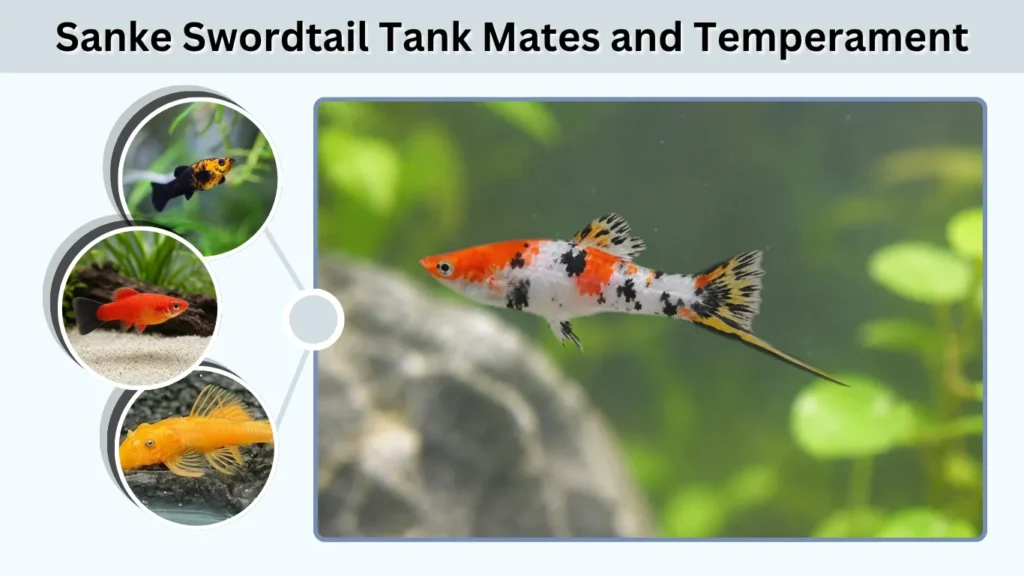
Sanke Swordtails are generally peaceful community fish, although mature males may display territorial behavior. Their active swimming style can stress very timid tank mates, particularly in smaller aquariums. Choosing compatible fish with similar water requirements helps maintain a balanced community. Providing enough space and maintaining appropriate male-to-female ratios can reduce chasing and competition.
Best Tank Mates for Sanke Swordtails
Potential companions include:
- Platies: Peaceful livebearers with similar water preferences.
- Mollies: Active community fish suited to relatively hard water.
- Corydoras catfish: Peaceful bottom-dwellers when water conditions overlap.
- Bristlenose plecos: Generally compatible bottom-dwelling fish.
- Peaceful rainbowfish: Suitable for larger aquariums with adequate swimming space.
- Nerite snails: Useful invertebrate companions.
Are Sanke Swordtails Aggressive?
Sanke Swordtails are usually peaceful, but male fish may chase rivals or persistently court females.
Keeping one male with two or three females can distribute courtship attention. However, even this arrangement requires enough space and hiding places. Avoid keeping them with aggressive fish or persistent fin nippers.
Sanke Swordtail Breeding and Fry Care
Sanke Swordtails are livebearing fish, meaning females give birth to fully developed, free-swimming young rather than laying eggs. They reproduce readily when mature males and females are kept together under favorable conditions. Because adults may eat newborn fry, dense vegetation or a separate nursery can improve survival. Their attractive color patterns also make them popular among selective breeders.
How Do Sanke Swordtails Breed?
Male Sanke Swordtails fertilize females internally using their gonopodium. After fertilization, females carry developing young for approximately four weeks, depending on temperature and other conditions.
A healthy female may produce several dozen fry in one brood. Females can also store sperm, allowing additional broods after separation from males.
How to Raise Sanke Swordtail Fry
Newborn fry need clean water, gentle filtration, and appropriately sized food.
Feed finely crushed flakes, powdered fry food, or newly hatched brine shrimp. Dense Java moss and floating plants offer hiding places. A separate nursery aquarium may provide better survival rates.
Where to Buy Sanke Koi Swordtails
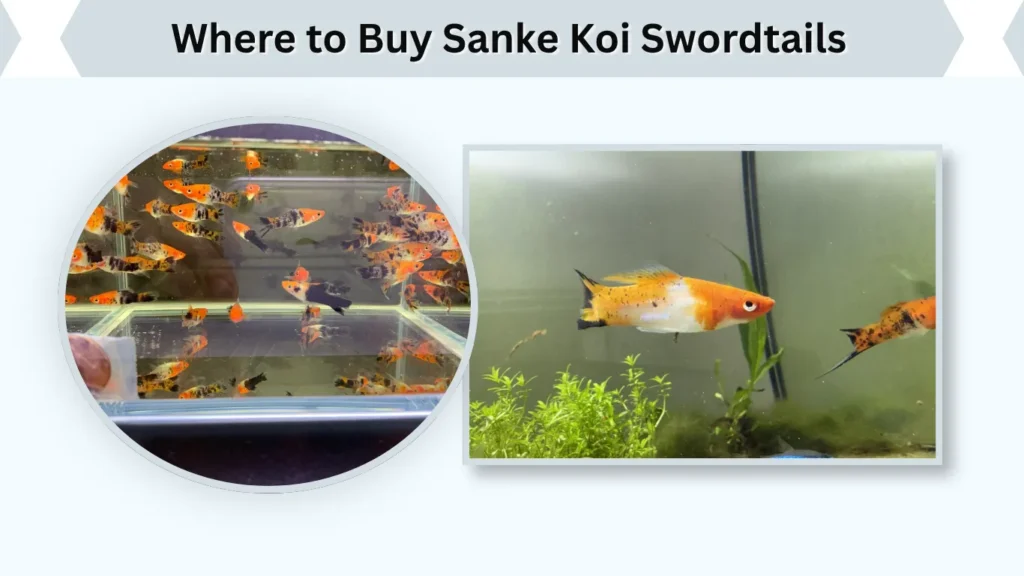
Sanke Koi Swordtails are available through specialty aquarium stores, livebearer breeders, and some online fish retailers. Their unusual tricolor appearance may make them less common than ordinary red swordtails. Prices depend on fish size, pattern quality, breeding line, and availability. Choosing healthy, captive-bred fish from responsible sellers improves the chances of successful aquarium care.
How to Choose Healthy Sanke Swordtails
Look for fish with clear eyes, intact fins, normal swimming behavior, and healthy body proportions.
Avoid individuals showing white spots, unusual swelling, damaged fins, or difficulty swimming. Quarantine newly purchased fish before introducing them to an established community aquarium.
FAQs
1. Are Sanke Swordtails Good for Beginners?
Yes. Sanke Swordtails are relatively hardy fish suitable for beginners who understand aquarium cycling, filtration, and regular maintenance. Their main requirements include stable water conditions, adequate swimming space, compatible tank mates, and a balanced diet.
2. Can Sanke Swordtails Live With Guppies?
Yes, Sanke Swordtails can sometimes live with guppies in spacious community aquariums. However, active swordtails may stress smaller or long-finned guppies. Monitor their interactions and provide sufficient hiding places to prevent harassment.
3. Do Sanke Swordtails Need a Heater?
A heater is recommended when room temperatures fluctuate or fall below their preferred range of approximately 72–82°F. Stable temperatures are more important than maintaining one exact number. Use an aquarium thermometer to monitor conditions.
4. Can Sanke Swordtails Breed With Platies?
Yes. Swordtails and platies belong to the same genus, Xiphophorus, and can hybridize. However, mixing them may produce offspring with unpredictable characteristics and reduce the consistency of selectively bred Sanke coloration.
5. Are Sanke Koi Swordtails Different From Regular Swordtails?
Sanke Koi Swordtails are ornamental swordtails bred for distinctive orange, white, and black patterns. Their basic aquarium care, feeding habits, and reproductive behavior are similar to those of other swordtail varieties, although individual breeding lines may differ.