

Black molly fish are beautiful freshwater aquarium fish recognized for their deep black coloration, active swimming behavior, and relatively peaceful temperament. These popular livebearers are available in several varieties, including black velvet, lyretail, sailfin, and balloon mollies. Their attractive appearance and interesting breeding habits make them popular among aquarium enthusiasts. However, healthy black mollies require suitable water conditions, balanced nutrition, and compatible tank mates. Understanding black molly fish size, lifespan, pregnancy, breeding, and common health problems can help beginners and experienced aquarists maintain a thriving aquarium.
What Is a Black Molly Fish?
The black molly is an ornamental color variety commonly associated with Poecilia sphenops, a freshwater fish belonging to the Poeciliidae family. Some aquarium-bred black mollies also have mixed ancestry involving other molly species. These fish are known for their dark pigmentation, social behavior, and ability to reproduce in captivity. Their wild relatives inhabit freshwater and brackish environments across parts of the Americas.
Black Molly Fish Appearance and Identification
Black mollies have streamlined, moderately deep bodies with rounded tails and relatively small heads. Their dark coloration creates a striking contrast against green aquarium plants.
Their scales may appear completely black or show subtle blue, green, or silver reflections under aquarium lighting. Males usually have slimmer bodies, while females develop fuller abdominal profiles.
Popular Black Molly Fish Types
Several ornamental varieties are commonly available:
- Black Velvet Molly: Features deep, nearly uniform black coloration.
- Black Lyretail Molly: Has elongated upper and lower tail-fin extensions.
- Black Sailfin Molly: Displays a large dorsal fin, particularly in mature males.
- Black Balloon Molly: Has a shortened, rounded body caused by selective breeding.
- Black and Orange Molly: Features contrasting black and orange markings.
- Black and White Molly: Displays spotted or marbled patterns resembling Dalmatian mollies.
Balloon varieties can experience health and swimming difficulties because of their shortened spinal structure.
Black Molly Fish Size and Lifespan

Black mollies are medium-sized aquarium fish that require adequate swimming space for healthy development. Their final size depends on the particular breeding strain, genetics, nutrition, and water conditions. Although often marketed as beginner-friendly fish, they can become stressed in overcrowded or poorly maintained aquariums. Proper husbandry supports their growth and longevity.
How Big Do Black Molly Fish Get?
Adult short-finned black mollies commonly reach approximately 3–4 inches (7.5–10 cm) in length. Females are generally larger and heavier-bodied than males.
Some sailfin and hybrid varieties can grow larger. Their active behavior makes adequate horizontal swimming space more important than their body length alone might suggest.
Black Molly Fish Lifespan
Black molly fish commonly live around three to five years under favorable aquarium conditions.
Their longevity depends on genetics, balanced feeding, stable water chemistry, and effective disease prevention. Poor water quality and repeated stress can significantly shorten their lives.
Black Molly Fish Tank Size and Water Requirements
Black mollies thrive in spacious aquariums with clean, mineral-rich water and reliable filtration. Unlike some freshwater tropical fish, mollies generally prefer relatively hard, alkaline conditions. Their active swimming behavior requires open space, while plants provide shelter and help reduce stress. Maintaining consistent environmental conditions is essential for preventing health problems.
Ideal Black Molly Fish Tank Size
A 20-gallon long aquarium is a reasonable starting point for a small group of short-finned black mollies, while a 30-gallon or larger setup offers greater stability.
These fish benefit from group housing, but breeding can quickly increase the population. Provide enough space for adults and any surviving fry.
Black Molly Fish Temperature and pH
Recommended aquarium parameters include:
- Temperature: 75–80°F (24–27°C).
- pH level: Approximately 7.5–8.5.
- Water hardness: Moderately hard to very hard, ideally around 15–30 dGH.
- Tank size: At least 20 gallons for a small group.
- Filtration: Reliable biological filtration with moderate water circulation.
- Ammonia and nitrite: Zero detectable levels.
- Lighting: Moderate lighting suitable for live plants.
Do Black Mollies Need Aquarium Salt?
Black mollies can live in freshwater without added salt when sufficient calcium, magnesium, and other essential minerals are available.
Although they tolerate brackish conditions, salt is not automatically necessary. Adding it without considering other fish and plants may create unnecessary aquarium problems.
Black Molly Fish Diet and Feeding
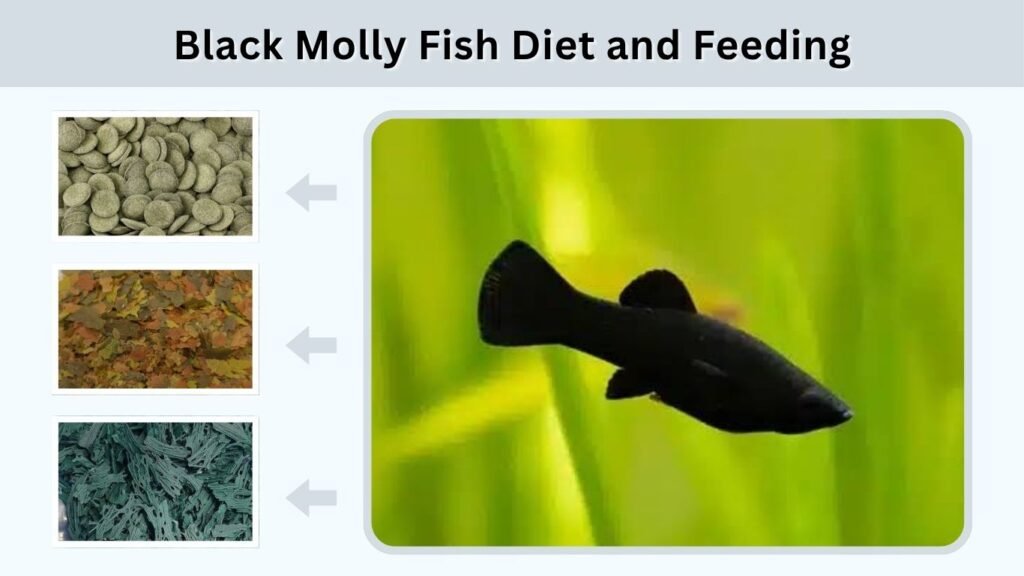
Black mollies are omnivorous fish that consume algae, plant material, small invertebrates, and organic particles. They frequently graze on aquarium surfaces while searching for food. A varied diet containing substantial vegetable matter alongside appropriate protein sources helps maintain coloration, healthy growth, and reproductive condition.
What Do Black Molly Fish Eat?
Suitable food choices include:
- Tropical fish flakes: Provide balanced everyday nutrition.
- Spirulina flakes: Supply plant-based nutrients.
- Algae wafers: Supplement natural grazing behavior.
- Brine shrimp: Offer protein-rich supplemental feeding.
- Daphnia: Encourage natural feeding activity.
- Blanched vegetables: Zucchini and spinach provide additional variety.
How Often Should You Feed Black Mollies?
Feed adult black mollies once or twice daily, providing portions they can consume promptly.
Avoid excessive feeding because leftover food increases waste and can reduce water quality. Rotate suitable foods to maintain balanced nutrition.
Black Molly Fish Tank Mates and Behavior
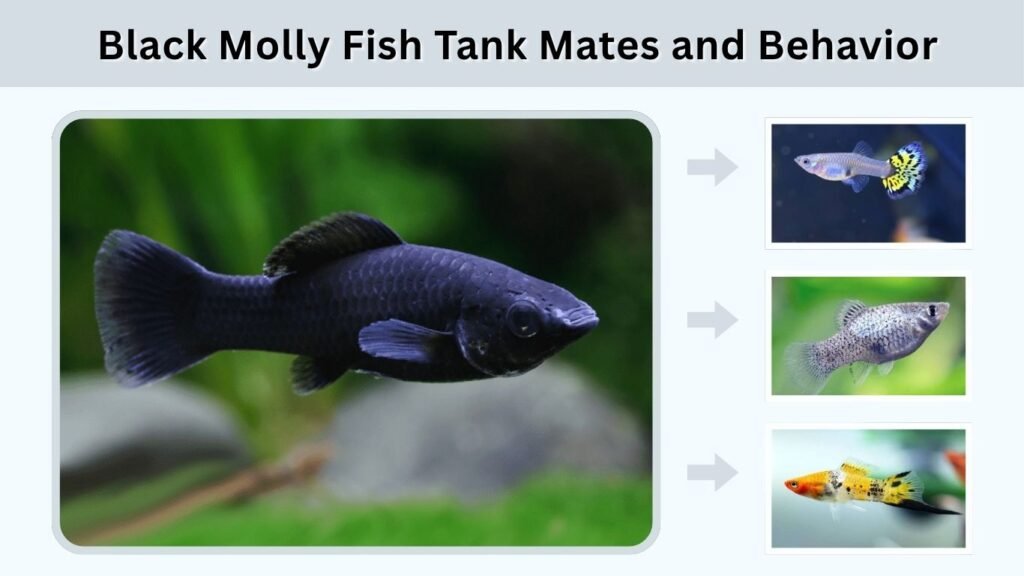
Black mollies are generally peaceful community fish, although males may occasionally chase other fish or compete during breeding. Their active swimming behavior makes them better suited to companions with similar temperaments and environmental requirements. Selecting appropriate tank mates and avoiding overcrowding encourages natural behavior.
Best Tank Mates for Black Mollies
Potential companions include:
- Platies: Peaceful livebearers with similar water preferences.
- Swordtails: Active fish suited to relatively hard water.
- Guppies: Compatible in spacious, well-maintained aquariums.
- Bristlenose Plecos: Generally peaceful bottom-dwelling companions.
- Certain Rainbowfish: Suitable when water conditions and aquarium size overlap.
- Nerite Snails: Usually compatible with molly aquariums.
Are Black Molly Fish Aggressive?
Black mollies are not usually aggressive, but males may persistently chase females or compete with other males.
Keeping approximately two or three females per male can help reduce concentrated courtship pressure. Provide sufficient space and vegetation to minimize stress.
Black Molly Fish Male vs. Female and Pregnancy
Black mollies reproduce through internal fertilization and give birth to living fry rather than laying eggs. Mature males and females differ in body shape and anal-fin structure. Identifying these differences is particularly important when managing breeding groups. Female black mollies can also store sperm and produce additional broods after mating.
Black Molly Fish Male vs. Female
| Feature | Male Black Molly | Female Black Molly |
| Body shape | Usually slimmer | Fuller and rounder |
| Anal fin | Narrow gonopodium | Broad, fan-shaped |
| Adult size | Usually smaller | Usually larger |
| Reproductive role | Fertilizes females | Gives birth to fry |
| Behavior | May chase females | May seek shelter before birth |
How to Tell if a Black Molly Fish Is Pregnant
Pregnant black mollies often develop enlarged, rounded abdomens. Some become less active or spend more time near plants shortly before giving birth.
A gravid spot may be difficult to see because of their dark coloration. Abdominal swelling alone does not confirm pregnancy and may sometimes indicate illness.
Black Molly Fish Giving Birth and Fry Care
Black molly pregnancy commonly lasts approximately four to eight weeks, depending on temperature and individual conditions.
Females may produce dozens of fry during one birth. Dense plants, gentle filtration, and appropriately sized foods help protect newborns because adult fish may eat them.
Common Black Molly Fish Diseases and Health Problems
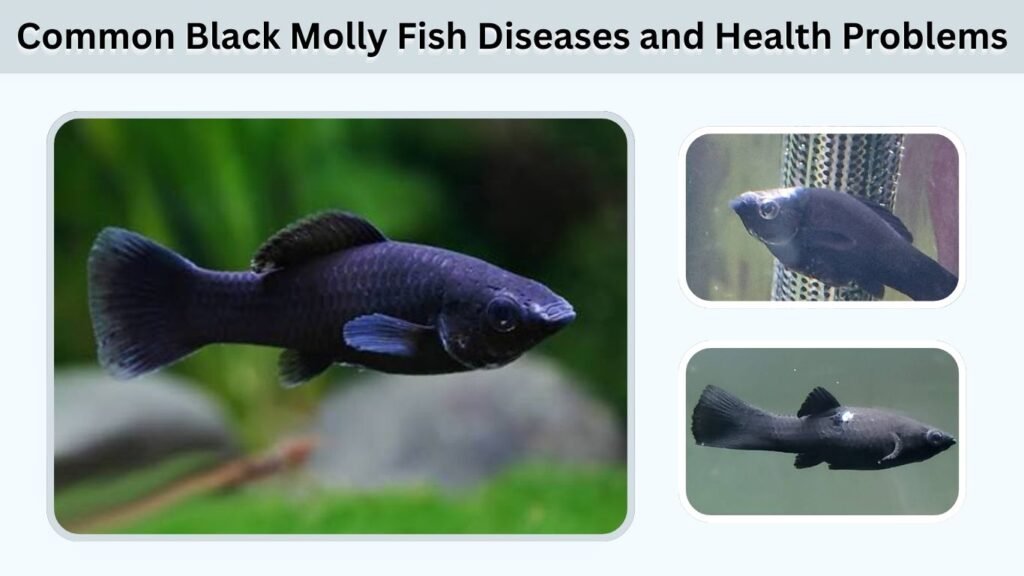
Black mollies can develop health problems when water quality, temperature, or mineral content becomes unsuitable. Early detection is important because changes in swimming behavior, appetite, or appearance may indicate illness. Regular water testing and careful observation help prevent minor problems from becoming serious.
Why Does a Black Molly Have White Spots?
Small white spots resembling grains of salt may indicate ich, a common parasitic disease affecting freshwater fish.
However, white patches can also result from other conditions, including injuries or infections. Confirm the likely cause before beginning treatment, and follow appropriate veterinary or aquarium-health guidance.
Why Is My Black Molly Sitting at the Bottom?
A black molly remaining motionless near the bottom may be stressed, ill, or experiencing unsuitable water conditions.
Test ammonia, nitrite, temperature, pH, and hardness immediately. Persistent inactivity, rapid breathing, or difficulty swimming requires further investigation.
FAQs
1. Are Black Molly Fish Good for Beginners?
Yes. Black mollies can be suitable for beginners who maintain stable, hard, alkaline water and provide adequate swimming space. However, they are sensitive to unsuitable water chemistry and should not be introduced into uncycled aquariums.
2. Do Black Molly Fish Lay Eggs?
No. Black mollies are livebearing fish. Females retain developing embryos inside their bodies and give birth to fully formed, free-swimming fry. They do not normally deposit eggs on aquarium plants or decorations.
3. Can Black Molly Fish Live With Bettas?
Keeping black mollies with bettas is unpredictable and generally not recommended. Their activity levels, temperaments, and preferred water conditions may differ. Fin nipping and territorial disputes can also become problems.
4. How Many Black Molly Fish Should Be Kept Together?
A small group of four or more can work in a suitably sized aquarium. When keeping both sexes, provide two or three females per male to help reduce repeated chasing and breeding-related stress.
5. Are Black Molly Fish Freshwater or Saltwater Fish?
Black mollies are commonly maintained as freshwater aquarium fish, although they can tolerate brackish conditions. Some molly strains can also adapt to marine environments. For ordinary aquarium care, stable, mineral-rich freshwater is usually appropriate.