

Molly fish are colorful freshwater aquarium fish known for their peaceful temperament, active swimming behavior, and easy breeding habits. These popular livebearers come in many beautiful varieties, including black mollies, Dalmatian mollies, sailfin mollies, and balloon mollies. Their attractive colors and adaptability make them popular among beginner and experienced aquarists. However, maintaining healthy mollies requires suitable water conditions, proper nutrition, and compatible tank mates. This comprehensive guide explains molly fish types, size, lifespan, tank requirements, feeding habits, pregnancy, breeding, and essential aquarium care tips.
What Are Molly Fish?
Molly fish are freshwater livebearers belonging to the genus Poecilia and the family Poeciliidae. They are closely related to guppies and are naturally distributed across parts of North, Central, and South America. Wild mollies inhabit freshwater streams, coastal wetlands, and brackish environments. Aquarium varieties have been selectively bred for their distinctive colors, patterns, and fin shapes.
Molly Fish Appearance and Identification
Mollies typically have elongated bodies, rounded tails, and slightly upward-facing mouths. Their coloration ranges from solid black and white to orange, yellow, silver, and spotted combinations.
Male mollies generally have slimmer bodies and a narrow reproductive anal fin called a gonopodium. Females are usually larger, with fuller abdomens and fan-shaped anal fins.
Molly Fish Size and Lifespan
Common short-finned mollies usually grow approximately 3–4 inches (7.5–10 cm), while larger sailfin varieties may reach 5–6 inches (13–15 cm).
Molly fish commonly live around three to five years under suitable aquarium conditions. Their lifespan depends on genetics, water quality, diet, and overall health.
Popular Types of Molly Fish
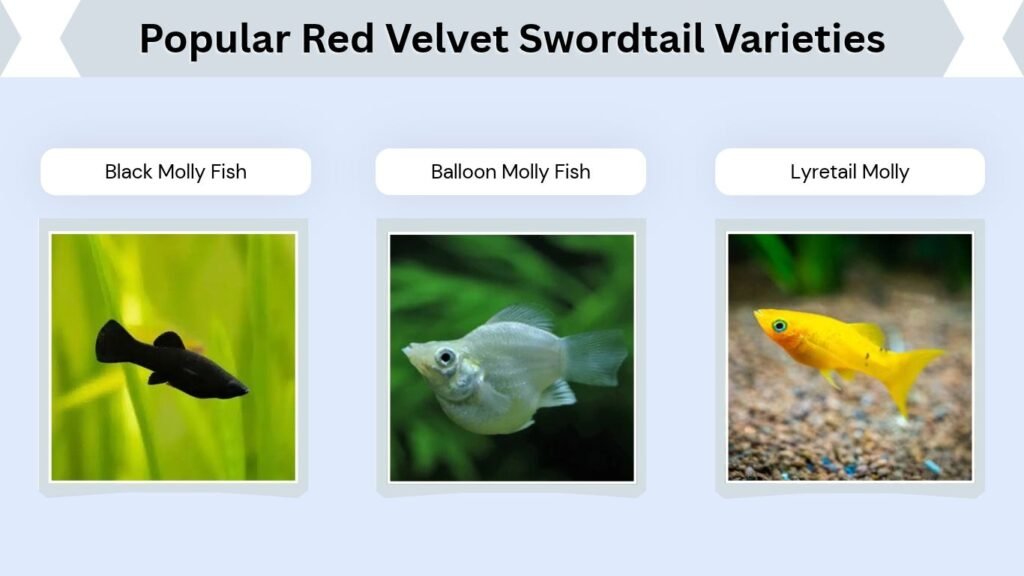
Molly fish are available in numerous ornamental varieties developed through selective breeding. Their differences mainly involve coloration, body shape, and fin structure. Some varieties have sleek, streamlined bodies, while others feature large dorsal fins or unusual patterns. Understanding the different types helps aquarists choose attractive fish that suit their aquarium conditions.
Common Molly Fish Varieties
- Black Molly Fish: Features an elegant, nearly solid black body and fins.
- Dalmatian Molly Fish: Displays black spots scattered across a white or silver body.
- Balloon Molly Fish: Has a short, rounded body caused by selectively bred spinal changes.
- Sailfin Molly Fish: Recognized for its large, sail-like dorsal fin, especially in males.
- Gold Dust Molly: Features yellow or golden coloration with contrasting dark markings.
- Orange Molly Fish: Displays bright orange coloring across its body and fins.
- Lyretail Molly: Has an extended tail with elongated upper and lower tips.
- White Molly Fish: Features pale white or silvery coloration.
Are Balloon Mollies Different From Regular Mollies?
Balloon mollies are ornamental fish bred for unusually short, rounded bodies. Their appearance results from a shortened, curved spine rather than a separate natural species.
This body shape can contribute to swimming and health difficulties. Aquarists should consider these welfare concerns before purchasing balloon varieties.
Molly Fish Tank Size and Water Requirements
Mollies need spacious aquariums with stable water chemistry, reliable filtration, and sufficient swimming space. Although they are relatively hardy, these fish prefer mineral-rich, alkaline water rather than soft, acidic conditions. A properly established aquarium with plants and open swimming areas supports healthy behavior and reduces stress.
Ideal Molly Fish Tank Size
A 20-gallon aquarium is a reasonable starting point for a small group of short-finned mollies. Larger sailfin mollies generally benefit from at least 30 gallons.
Mollies are social fish, so keeping them in compatible groups is preferable. They are not strict schooling fish, but they often swim and interact together.
Molly Fish Temperature and Water Parameters
Recommended aquarium conditions include:
- Temperature: 75–82°F (24–28°C).
- pH level: Approximately 7.5–8.5.
- Water hardness: Around 10–30 dGH.
- Tank size: At least 20 gallons for smaller varieties.
- Filtration: Reliable biological filtration with moderate water movement.
- Ammonia and nitrite: Zero detectable levels.
- Lighting: Moderate aquarium lighting.
Do Molly Fish Need Salt in Their Tank?
Mollies tolerate freshwater and brackish conditions, but aquarium salt is not essential when their freshwater environment contains sufficient minerals.
Stable, hard, alkaline water is more important than routinely adding salt. Adding salt unnecessarily may harm freshwater plants and incompatible tank mates.
Molly Fish Food, Diet, and Feeding
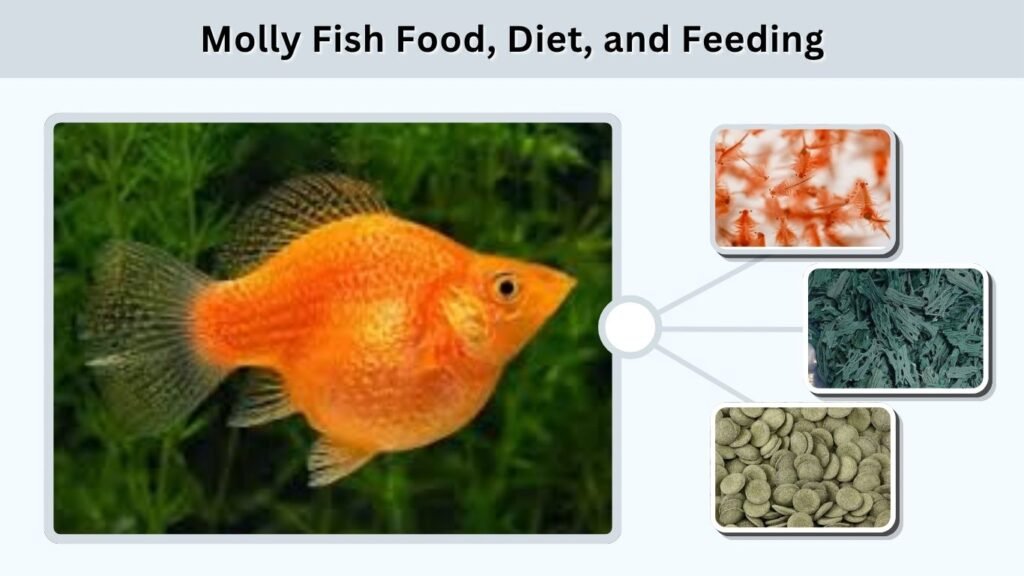
Molly fish are omnivorous, consuming algae, plant material, and small aquatic organisms. They frequently graze on surfaces while searching for edible particles. A balanced aquarium diet should contain substantial plant-based nutrition alongside appropriate protein sources. Providing varied foods helps maintain coloration, growth, and reproductive health.
What Do Molly Fish Eat?
Suitable molly fish foods include:
- Tropical fish flakes: Provide balanced daily nutrition.
- Spirulina flakes: Offer useful plant-based nutrients.
- Algae wafers: Supplement natural grazing behavior.
- Brine shrimp: Provide occasional protein-rich feeding.
- Daphnia: Encourage natural feeding responses.
- Blanched vegetables: Zucchini and spinach provide dietary variety.
How Often Should You Feed Molly Fish?
Feed adult mollies once or twice daily, offering small amounts they can consume within a few minutes.
Avoid overfeeding because leftover food increases waste and affects water quality. A varied diet containing vegetable matter is especially important for their digestive and nutritional needs.
Molly Fish Breeding and Pregnancy
Mollies are livebearing fish, meaning females give birth to fully developed young instead of depositing eggs externally. Breeding can occur readily when mature males and females share suitable aquarium conditions. Female mollies may store sperm and produce multiple broods after mating. Understanding pregnancy signs and fry care helps aquarists manage reproduction successfully.
Male vs. Female Molly Fish
Male mollies have a narrow, pointed anal fin called a gonopodium, which transfers sperm during reproduction. Some males also develop more elaborate dorsal fins.
Females have broader, fan-shaped anal fins and generally fuller bodies. A common breeding-group arrangement is one male for every two or three females to reduce persistent chasing.
How Long Are Molly Fish Pregnant?
Molly fish pregnancy commonly lasts approximately four to six weeks, depending on species, temperature, and environmental conditions.
Pregnant females may develop noticeably rounded abdomens and darker gravid spots. However, these signs are not always visible, particularly in black mollies.
Molly Fish Giving Birth and Fry Care
Female mollies may give birth to several dozen fry, although brood sizes vary considerably.
Newborn fish are immediately capable of swimming and feeding. Provide dense plants, gentle filtration, and finely crushed flakes or baby brine shrimp. A separate nursery can improve survival because adults sometimes eat newborn fry.
Molly Fish Tank Mates and Common Health Problems
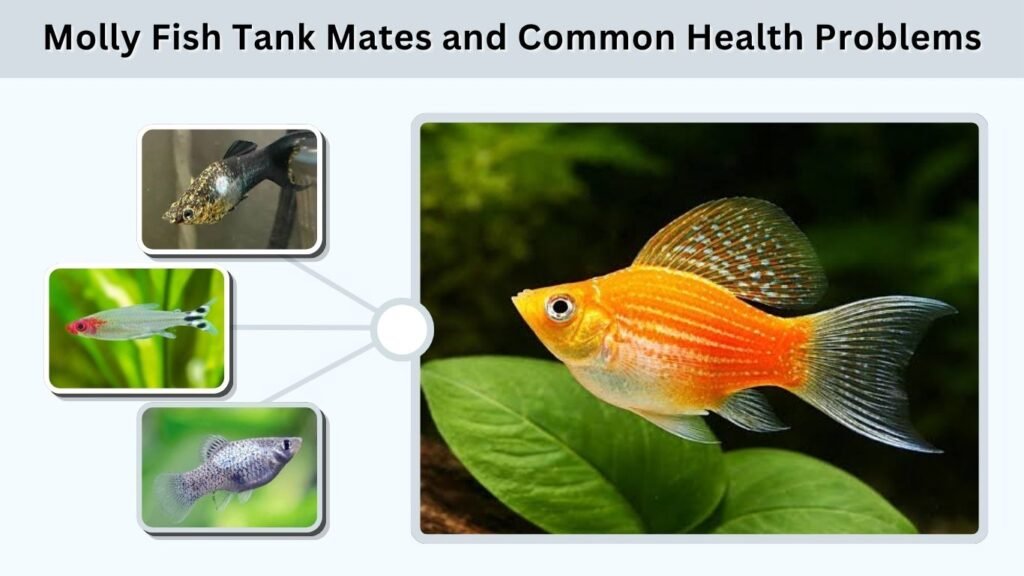
Mollies are generally peaceful community fish, but compatibility depends on aquarium size, temperament, and water requirements. They are active swimmers and may occasionally chase other fish during feeding or breeding. Maintaining proper water quality and selecting compatible companions reduces common health problems.
Best Tank Mates for Molly Fish
Mollies can coexist with several peaceful freshwater species when their requirements overlap. Suitable choices may include platies, swordtails, guppies, bristlenose plecos, and certain Corydoras species.
Avoid aggressive fish and species requiring consistently soft, acidic water. Goldfish are generally unsuitable companions because their temperature, space, and waste-management needs differ.
Common Molly Fish Diseases and Symptoms
Mollies may experience ich, fin rot, internal infections, and stress-related swimming problems. One recognizable symptom is shimmying, where a fish rocks from side to side without swimming normally.
Shimmying may indicate unsuitable water chemistry, temperature stress, or illness. Test aquarium conditions immediately and investigate persistent symptoms rather than treating every problem with aquarium salt.
FAQs
1. Are Molly Fish Good for Beginners?
Yes. Molly fish can be suitable for beginners who provide stable, hard, alkaline water and adequate swimming space. They are generally peaceful and readily accept prepared foods. However, poor water quality and unsuitable tank conditions can quickly affect their health.
2. Do Molly Fish Lay Eggs?
No. Molly fish are livebearers that retain developing embryos inside their bodies before giving birth to swimming fry. They do not normally deposit eggs in aquarium plants or substrate like egg-laying fish.
3. Are Molly Fish Schooling Fish?
Mollies are social fish but are not considered strict schooling fish. They may swim together in loose groups while exploring their environment. Keeping compatible groups provides opportunities for natural social interactions, although males may occasionally compete.
4. How Can You Tell if a Molly Fish Is Pregnant?
Pregnant female mollies often develop larger, rounded abdomens and may show a darker gravid spot near the rear belly. However, swelling alone does not confirm pregnancy and may indicate digestive problems or illness.
5. Can Molly Fish Live With Platy Fish?
Yes. Mollies and platies are generally compatible because they have similar temperaments and can share overlapping water conditions. Provide enough swimming space, suitable group sizes, and a balanced diet while monitoring any chasing or competition.