
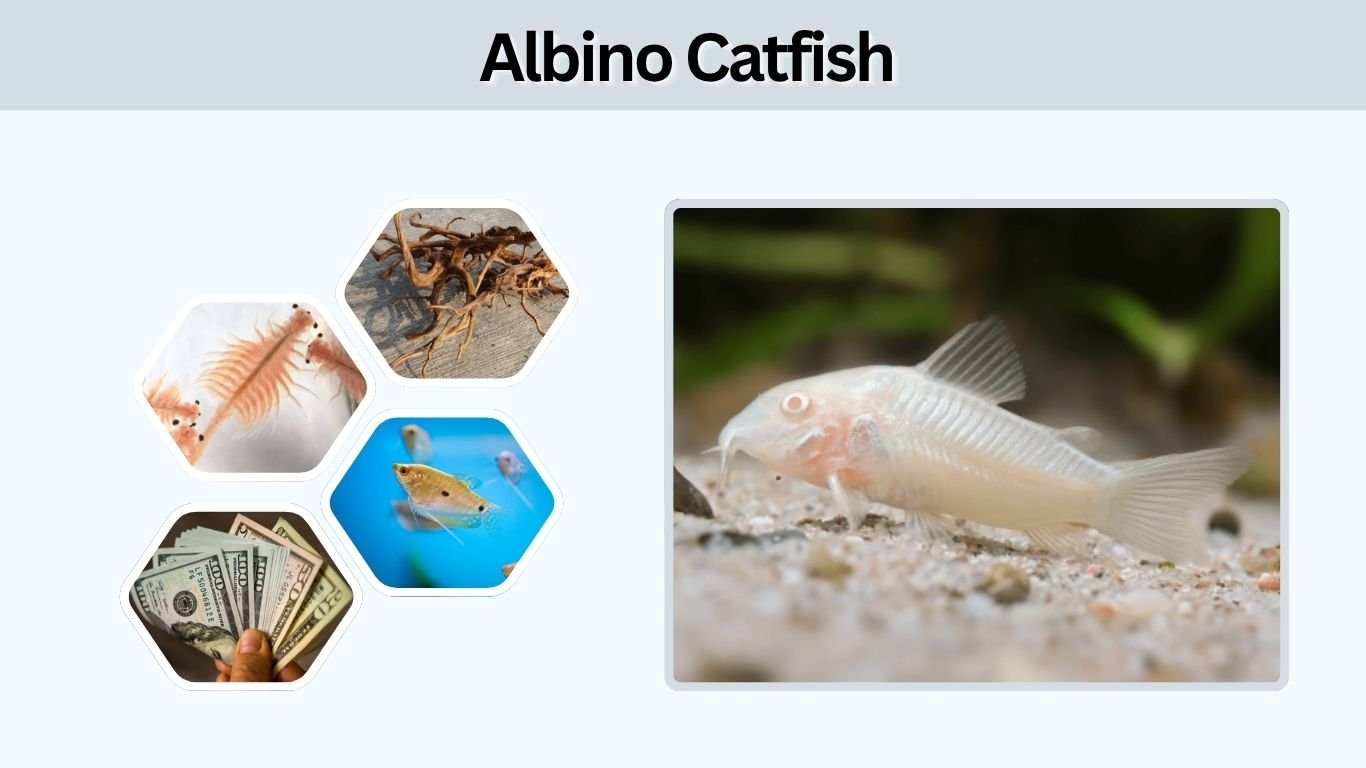
Albino catfish are pale-colored freshwater fish known for their white, cream, or pinkish bodies and reddish eyes. However, “albino catfish” does not describe one species. Several catfish—including corydoras, bristlenose plecos, channel catfish, hoplo catfish, and redtail catfish—can occur in albino forms. The albino cory catfish is the type most commonly kept in home aquariums because it stays small, behaves peacefully, and adapts well to community tanks.
What Is an Albino Catfish?
Albinism is a condition involving reduced or absent normal pigmentation. In fish, it commonly produces a pale body, translucent fins, and pink or red-looking eyes because pigmentation does not conceal the underlying blood vessels.
An albino catfish generally retains the body shape, adult size, diet, and behavior of its normally colored species. Therefore, identifying the exact species is essential before purchasing one. An albino cory may grow only a few inches long, whereas an albino redtail or shark catfish can become far too large for an ordinary aquarium.
Popular Types of Albino Catfish
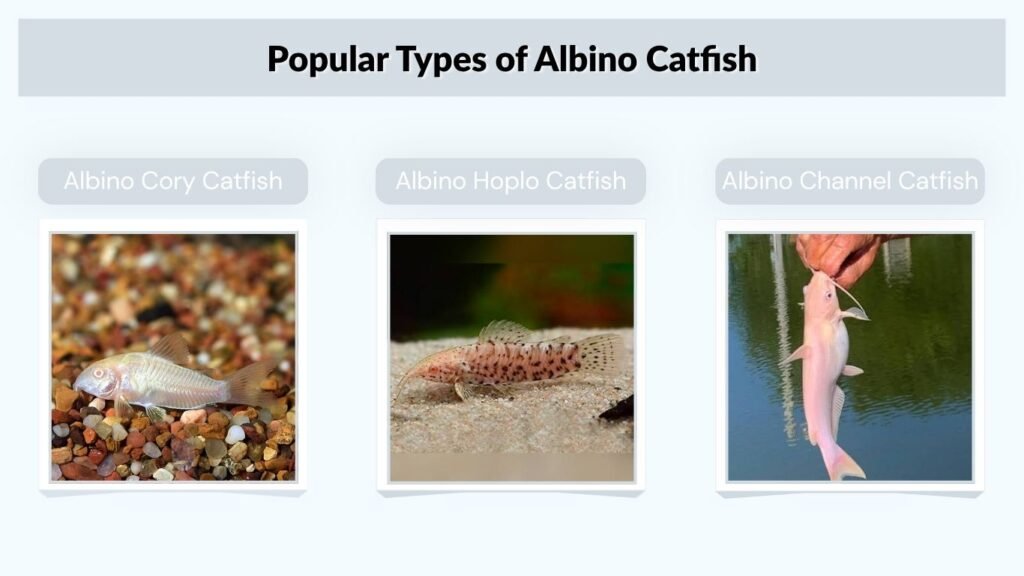
Different albino catfish have dramatically different space and care requirements. The following table provides a quick comparison.
| Type | Approximate adult size | Best environment |
| Albino cory catfish | 2–3 inches | Community aquarium |
| Albino bristlenose catfish | 4–6 inches | Freshwater aquarium |
| Albino hoplo catfish | Around 6 inches | Large community tank |
| Albino channel catfish | Potentially several feet | Outdoor pond |
| Albino shark catfish | More than 3 feet possible | Public-sized system |
| Albino redtail catfish | More than 4 feet possible | Extremely large exhibit |
Albino Cory Catfish
The albino cory is usually an albino form of the bronze cory, traditionally identified in the aquarium trade as Corydoras aeneus. Current taxonomic databases may list the species as Osteogaster aenea. It is an armored bottom-dwelling fish with rows of bony plates, short barbels around its mouth, and a rounded body.
Albino corys are active, social, and generally peaceful. They spend much of their time searching the bottom for edible particles and occasionally swim quickly to the surface to gulp air.
Albino Bristlenose Catfish
Albino bristlenose catfish are pale forms of small suckermouth plecos. Adults develop broad heads, flattened bodies, and underslung mouths used for grazing surfaces. Mature males commonly develop more noticeable bristle-like growths around the snout.
They remain much smaller than common plecos and are suitable for many medium-sized aquariums. However, they still require nutritious food, hiding places, and clean water rather than surviving only on algae.
Albino Hoplo Catfish
Albino hoplo catfish have elongated armored bodies and prominent barbels. They are larger and more robust than corys but can still work in spacious community aquariums with appropriately sized companions.
The species commonly called the hoplo catfish can reach approximately 15.5 centimeters, or just over 6 inches. It is also capable of breathing atmospheric air, an adaptation that helps it survive in oxygen-poor environments.
Albino Channel Catfish
Albino channel catfish are white or yellowish forms of Ictalurus punctatus. They are sometimes stocked in ornamental ponds because their pale coloration makes them easier to see than normally pigmented fish.
Channel catfish become much larger than aquarium corys and produce considerable waste. They are better suited to properly managed outdoor ponds than home fish tanks. Albino channel catfish lack the dark spotting commonly seen on young normally pigmented channel cats.
Albino Redtail and Shark Catfish
Albino redtail catfish are visually striking but unsuitable for nearly all private aquariums. Redtail catfish can reach about 135 centimeters and may weigh more than 40 kilograms. They also eat fish, crustaceans, and fruit, making smaller tank mates potential food.
Albino shark catfish are often coloured forms of striped or iridescent shark catfish. Despite being sold as juveniles, this species can reach approximately 130 centimeters. Its adult size and active swimming behavior require an enormous system.
Albino Cory Catfish Size and Lifespan
A full-grown albino cory catfish typically reaches approximately 2–3 inches. Females usually become wider and more rounded than males, especially when viewed from above. Males tend to remain slimmer and may have more pointed fins.
With proper aquarium care, albino corys commonly live for several years and may survive considerably longer in a stable, well-maintained tank. Their lifespan depends on water quality, genetics, nutrition, group size, and protection from aggressive companions.
Albino Cory Catfish Tank Setup
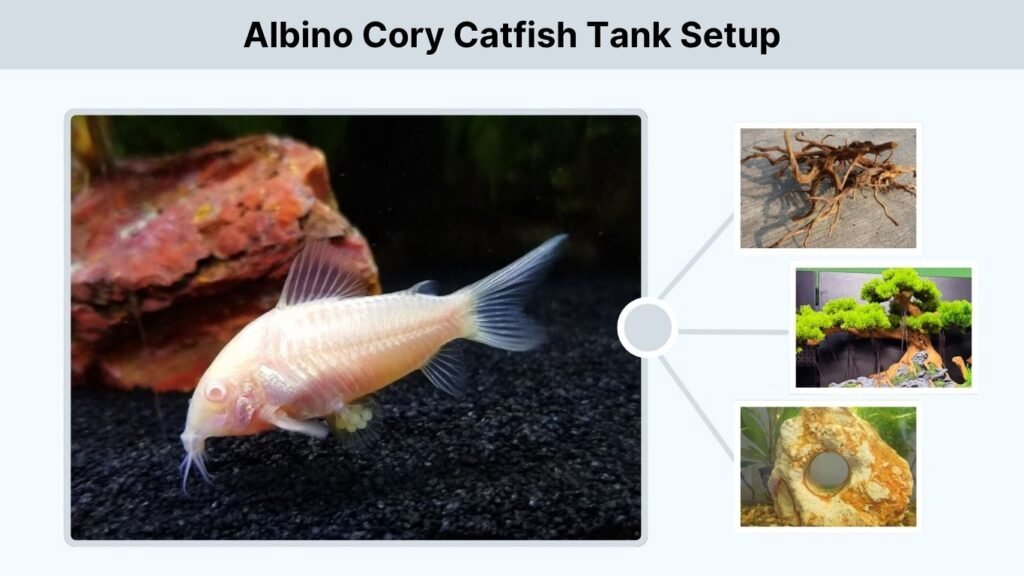
Albino corys are small, but they should not be kept alone in tiny containers. They are social fish that behave more naturally when maintained in a group.
Tank Size and Group Number
A 20-gallon aquarium is a practical starting point for a small group. Keep at least six corys whenever space and filtration permit. They can be albino corys or other compatible corys of similar size, although a group of the same type often schools more consistently.
A longer aquarium is preferable to a tall, narrow one because cory catfish spend most of their time exploring the bottom.
Substrate and Decorations
Use fine sand or smooth, rounded gravel. Corys constantly push their barbels into the substrate while searching for food. Sharp or dirty gravel may damage these sensitive structures and increase the risk of infection.
Suitable decorations include:
- Smooth driftwood
- Live or artificial plants
- Shaded resting areas
- Rounded caves
- Open areas for foraging
- Gentle water movement
Although albino corys may be more noticeable under bright lighting, floating plants and shaded areas allow them to rest comfortably.
Water Conditions
Albino corys adapt to a range of freshwater conditions, but stability is more important than repeatedly adjusting the water. Maintain a tropical temperature of approximately 72–79°F and avoid sudden changes.
Ammonia and nitrite should remain at zero. Control nitrate with regular partial water changes, suitable filtration, moderate feeding, and sensible stocking. Because corys live close to the substrate, accumulated waste can affect them quickly.
What Do Albino Cory Catfish Eat?
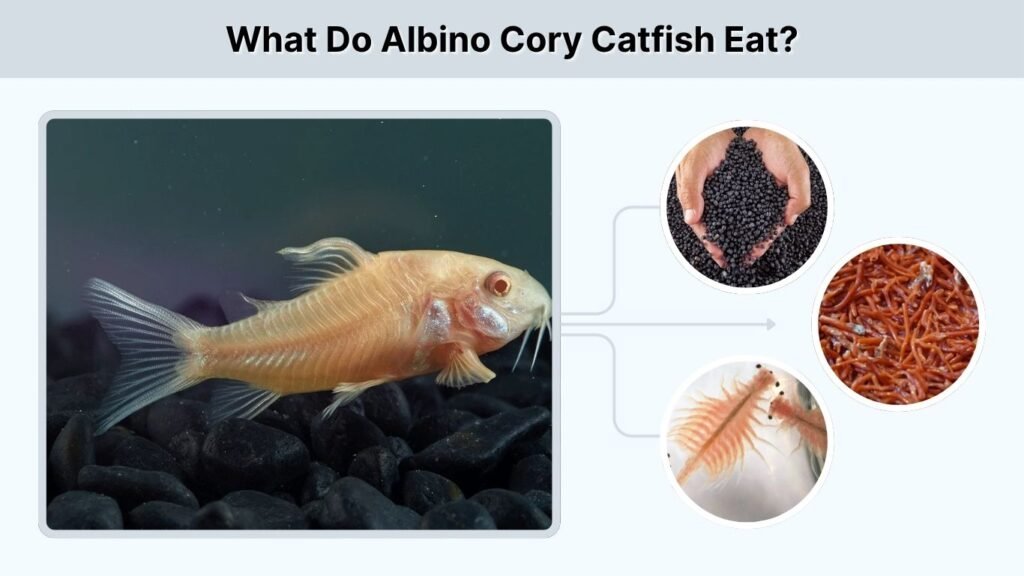
Albino cory catfish are omnivorous bottom feeders. They search for small worms, insect larvae, crustaceans, organic material, and other edible particles. They are not algae-eating cleaning machines and should receive their own balanced meals.
Suitable foods include:
- Sinking catfish pellets
- Omnivore wafers
- Frozen bloodworms
- Brine shrimp
- Daphnia
- Small insect-based foods
- Finely chopped worms
- Occasional vegetable-based wafers
Feed an amount the group can finish without leaving food to decay. Because faster fish may consume food before it reaches the bottom, distribute sinking food in several locations.
Albino corys may eat soft algae or leftover food occasionally, but neither provides a complete diet. Owners should never expect them to survive solely by cleaning the aquarium.
Albino Cory Catfish Behavior
Albino corys are peaceful and energetic. A healthy group may rest together, forage across the substrate, and suddenly swim toward the surface before returning to the bottom.
Occasional surface visits are normal because corys can gulp atmospheric air. However, repeated frantic surfacing by every fish may indicate poor oxygen levels, high temperature, or deteriorating water quality.
A cory that lies still is not necessarily sick. These fish regularly pause and rest. Warning signs include rapid breathing, clamped fins, refusal to eat, damaged barbels, loss of balance, persistent isolation, or remaining motionless for unusually long periods.
Best Tank Mates
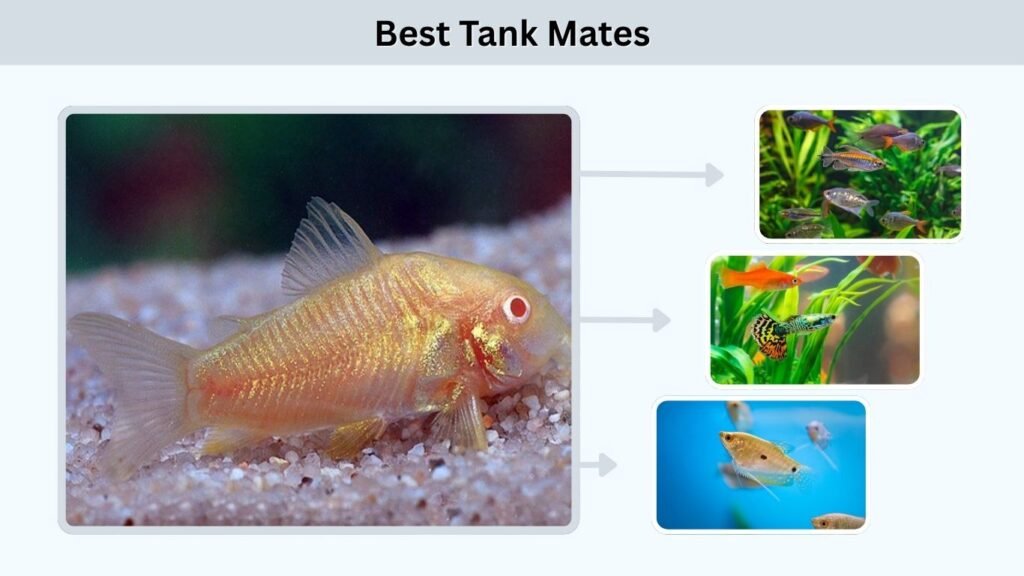
Albino cory catfish work well with peaceful fish that share similar temperature requirements. Good companions may include:
- Small and medium tetras
- Rasboras
- Guppies and platies
- Peaceful gouramis
- Other cory catfish
- Small rainbowfish
- Bristlenose plecos
- Calm dwarf cichlids
Avoid large predatory fish, highly aggressive cichlids, and species likely to harass bottom dwellers. Any fish capable of swallowing a cory should be considered unsafe.
Can Albino Corys Live With Bettas?
Albino cory catfish can often live with a peaceful betta in a sufficiently large, heated aquarium. Corys occupy the bottom while bettas usually spend more time in the middle and upper levels.
Compatibility still depends on the betta’s personality. Provide hiding areas, monitor feeding, and separate the fish if the betta repeatedly attacks or stalks the corys.
Are Albino Cory Catfish Blind?
Albino cory catfish are not normally blind. Their reduced pigmentation makes their eyes look red or pink, but they can still detect movement, obstacles, food, and other fish.
They may be more sensitive to strong lighting than darker fish. Even so, their barbels, sense of smell, and taste receptors also help them locate food when visibility is limited.
Breeding Albino Cory Catfish
Albino corys may breed in a mature aquarium when kept in a healthy group and fed nutritious foods. Females become visibly broader when carrying eggs, while males remain slimmer.
During spawning, the female holds a small number of eggs between her pelvic fins before attaching them to glass, plants, or decorations. Bronze cory relatives may deposit groups of eggs repeatedly during a spawning session.
Adults may eat the eggs, so breeders usually transfer the eggs or breeding group to a separate tank. Gentle aeration, clean water, and protection from fungus improve hatching success. Newly hatched fry require very small foods before progressing to baby brine shrimp and crushed prepared food.
Buying an Albino Catfish
Identify the species before completing a purchase. Never buy a fish simply labeled “albino catfish” without asking for its common and scientific names.
Choose a fish that:
- Swims normally
- Has clear eyes
- Has undamaged barbels
- Breathes steadily
- Has an unbroken body shape
- Shows no white spots or open wounds
- Responds when food is offered
Also research its adult size. A small albino redtail or shark catfish can quickly outgrow a home aquarium, while an albino cory remains manageable.
FAQs
Are albino catfish rare?
True albino individuals are relatively unusual in wild populations, but several albino catfish are deliberately bred in captivity. Albino corys and bristlenose plecos are therefore widely available, while naturally occurring large albino catfish remain much less common.
How big does an albino catfish get?
Size depends entirely on the species. An albino cory usually reaches 2–3 inches, while an albino redtail or shark catfish may exceed 4 feet. Always identify the species before choosing an aquarium.
Do albino cory catfish eat algae?
They may nibble some algae and biofilm, but algae is not their primary food. Albino corys need sinking omnivore pellets and protein-rich foods such as daphnia, brine shrimp, or bloodworms.
How many albino cory catfish should be kept together?
Keep at least six whenever possible. Corys are social fish, and a proper group encourages natural foraging, resting, and schooling behavior while reducing insecurity.
Are albino catfish suitable for beginners?
Albino cory and bristlenose catfish can suit prepared beginners. Giant species such as albino redtail, channel, and shark catfish require specialized facilities and are inappropriate for most home aquariums.