
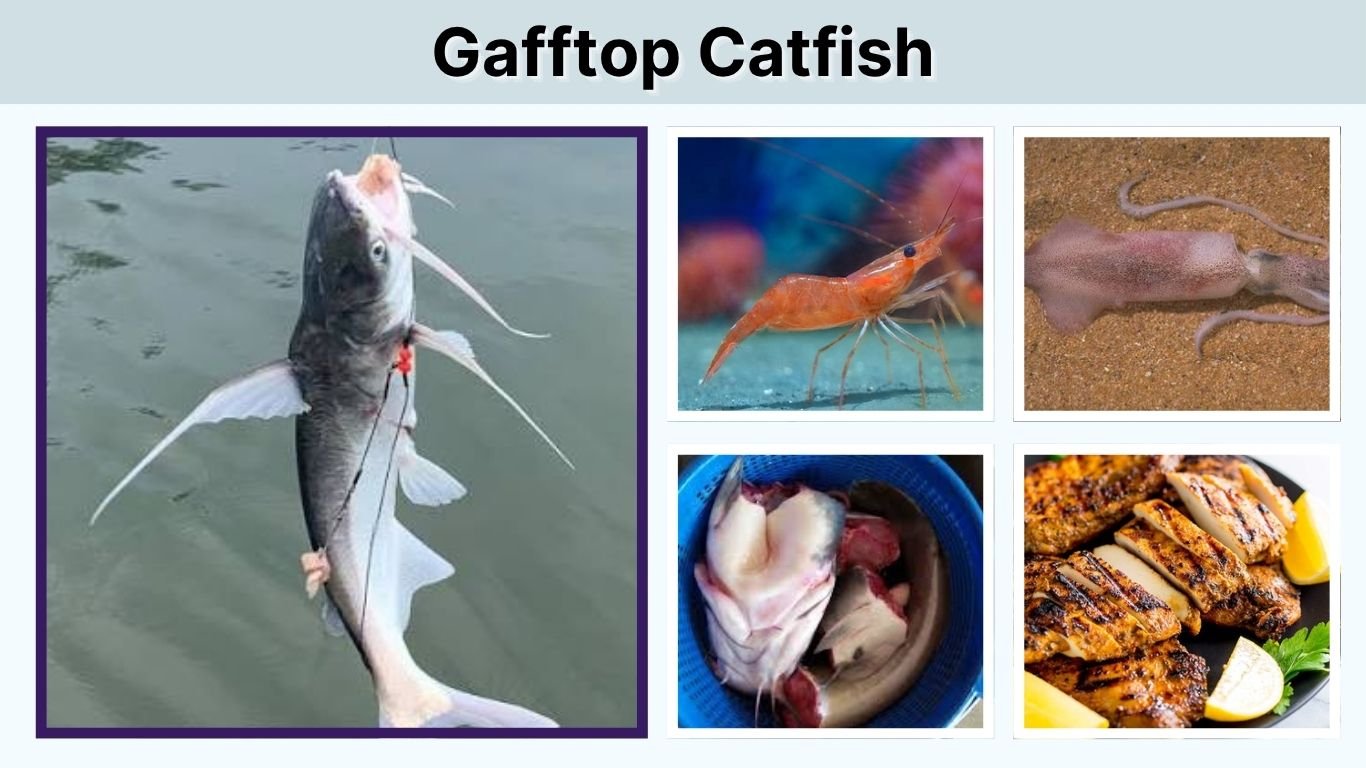
The gafftop catfish, more accurately called the gafftopsail catfish, is a distinctive saltwater catfish recognized by its tall dorsal fin, long whiskers, and smooth silver body. Although some anglers dislike its heavy slime and sharp spines, this fish is a strong fighter and can also provide firm, flavorful fillets. Understanding its identification, habitat, diet, sting risk, and proper cleaning method helps anglers handle and prepare it safely.
What Is a Gafftop Catfish?
The gafftopsail catfish (Bagre marinus) belongs to the sea catfish family Ariidae. Anglers commonly shorten its name to gafftop, gaff catfish, sail catfish, or seacat.
Its name comes from the unusually long dorsal spine and fin ray rising from its back like a sail. The species occurs throughout the Gulf of Mexico, Caribbean Sea, and other parts of the western Atlantic. It mainly inhabits coastal saltwater but may enter bays, estuaries, brackish creeks, and river mouths.
Gafftop Catfish Identification
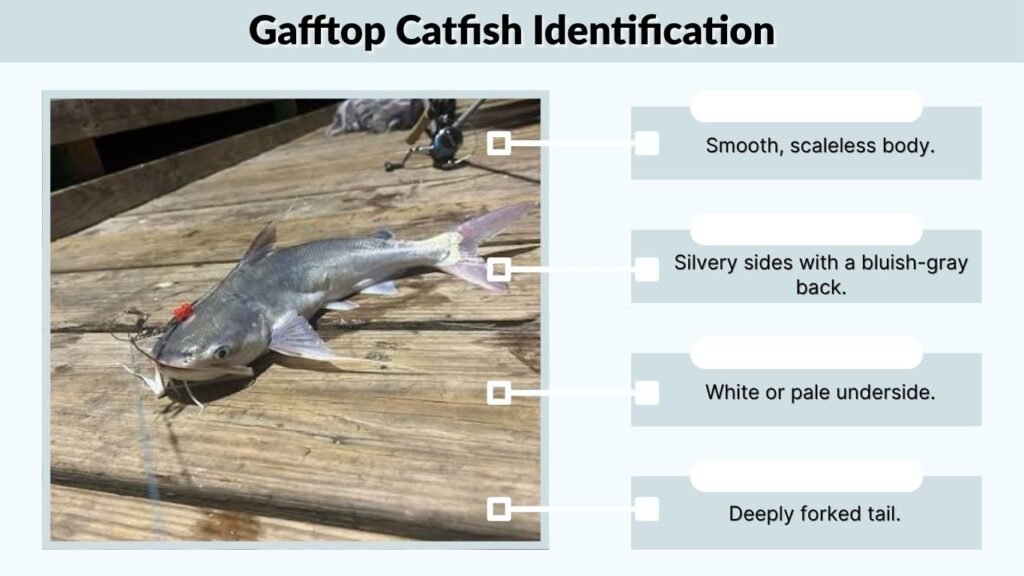
Gafftopsails have a more elegant appearance than many freshwater catfish. Their long fins and streamlined body make them relatively easy to recognize.
Key Identification Features
- Smooth, scaleless body
- Silvery sides with a bluish-gray back
- White or pale underside
- Deeply forked tail
- Long, ribbon-shaped dorsal fin ray
- Extended pectoral fin rays
- Long maxillary barbels near the mouth
- One pair of barbels beneath the chin
- Hard, rough, bony plate on top of the skull
- Sharp dorsal and pectoral spines
The ribbonlike barbels and elongated fin rays are the best features for separating a gafftop from similar saltwater catfish. The long barbels may extend beyond the base of the pectoral fins.
Gafftop Catfish Size and Records
Most gafftop catfish caught by recreational anglers are moderately sized, but larger individuals can put up a surprisingly powerful fight.
| Measurement | Typical or Reported Size |
| Average weight | Around 2–3 pounds |
| Common length | 14–24 inches |
| Maximum reported length | About 27 inches |
| Larger specimens | Approximately 8–10 pounds |
| Texas state record | 13.33 pounds and 34 inches |
Texas Parks and Wildlife reports an average weight of approximately 2.5 pounds, with larger fish often appearing during fall. FishBase lists a reported maximum length of about 69 centimeters, or 27 inches. Record figures can differ among state and international record systems because their certification requirements are not identical.
Gafftop Catfish Habitat and Distribution
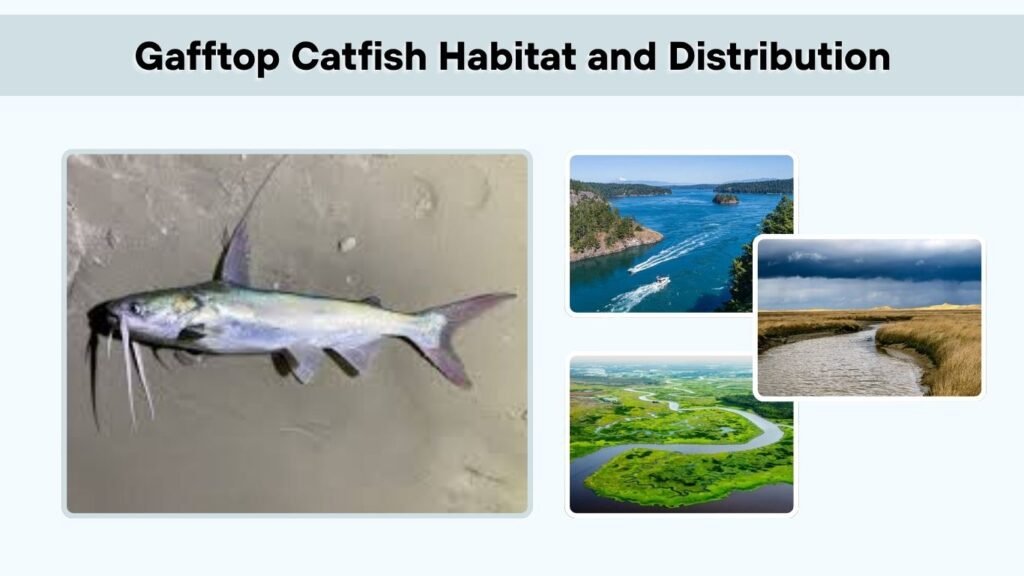
Gafftopsail catfish prefer warm coastal waters. They are commonly found along sandy beaches, passes, bays, tidal channels, estuaries, and areas near docks or piers.
They usually swim near the bottom but can move throughout the water column while following baitfish. They tolerate turbid and brackish conditions, allowing them to travel into coastal rivers and creeks. Their natural range includes the Gulf Coast, Cuba, the Caribbean, and the northern coastline of South America.
Are Gafftop Catfish Sensitive to Cold Water?
Gafftopsails are warm-water marine fish. Their activity generally decreases as coastal water becomes colder, and severe cold events can affect populations in shallow bays. Anglers are more likely to encounter active fish during warmer months and periods when bait is abundant.
What Do Gafftop Catfish Eat?
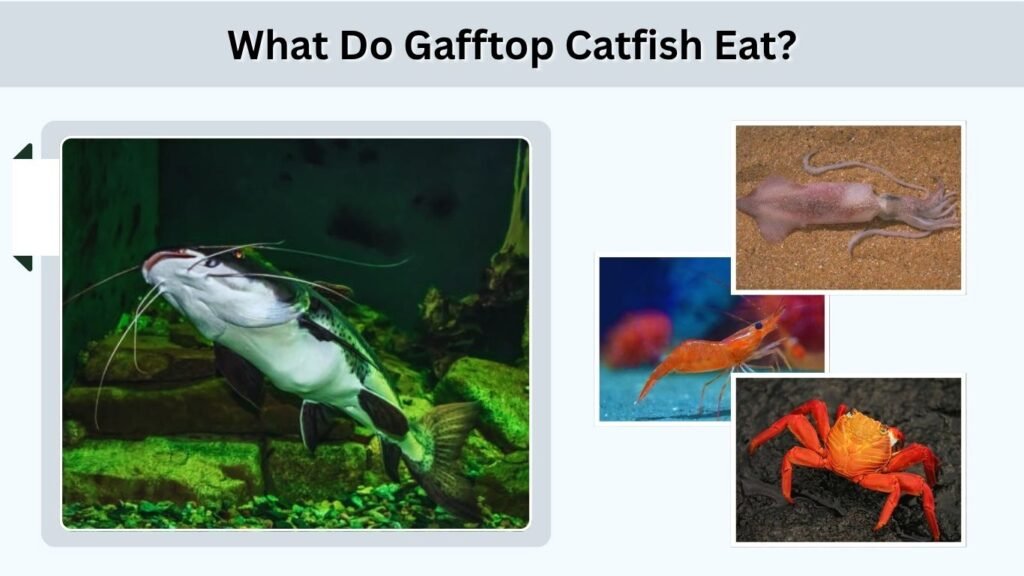
Gafftop catfish are opportunistic predators and bottom feeders. Their barbels help them locate prey in cloudy water and along muddy or sandy bottoms.
Their diet commonly includes:
- Shrimp
- Crabs and other crustaceans
- Small fish
- Squid
- Marine worms
- Mollusks
- Other small bottom-dwelling animals
They may also gather around fishing piers, cleaning stations, docks, or boats where scraps and pieces of bait enter the water. Fish and crustaceans form important parts of their natural diet.
Are Gafftop Catfish Good to Eat?
Yes, gafftop catfish are edible and are considered good food fish when handled promptly and cleaned correctly. Their flesh is generally white, firm, and mild. It can have a slightly stronger coastal flavor than freshwater channel catfish, particularly when the dark bloodline remains attached.
The Florida Fish and Wildlife Conservation Commission describes the gafftopsail as a good food fish. Its reputation is sometimes affected by its thick slime, dangerous spines, and the extra work required to clean it—not by poor-quality meat.
Place the catch on ice as soon as possible. Before keeping fish from a particular area, check local seafood-consumption advisories, especially for polluted bays or waterways.
How to Clean and Fillet a Gafftop Catfish
Gafftopsails should be handled carefully because their dorsal and pectoral spines can cause painful puncture wounds.
Safe Cleaning Method
- Dispatch the fish humanely and place it on ice.
- Wear puncture-resistant gloves and use a secure fish gripper.
- Rinse away excess slime while keeping your hands clear of the spines.
- Place the fish on a stable, nonslip cutting surface.
- Cut behind the gill plate without pushing the knife toward a spine.
- Run the knife along the backbone toward the tail.
- Remove the fillet from the ribs.
- Skin the fillet with the skin facing downward.
- Trim away the dark red bloodline and fatty tissue.
- Rinse briefly and refrigerate or freeze the fillets.
Never try to control a flopping gafftop with your bare hands. Long-handled pliers or a dehooking tool can help keep your fingers away from its fins.
How to Cook Gafftop Catfish
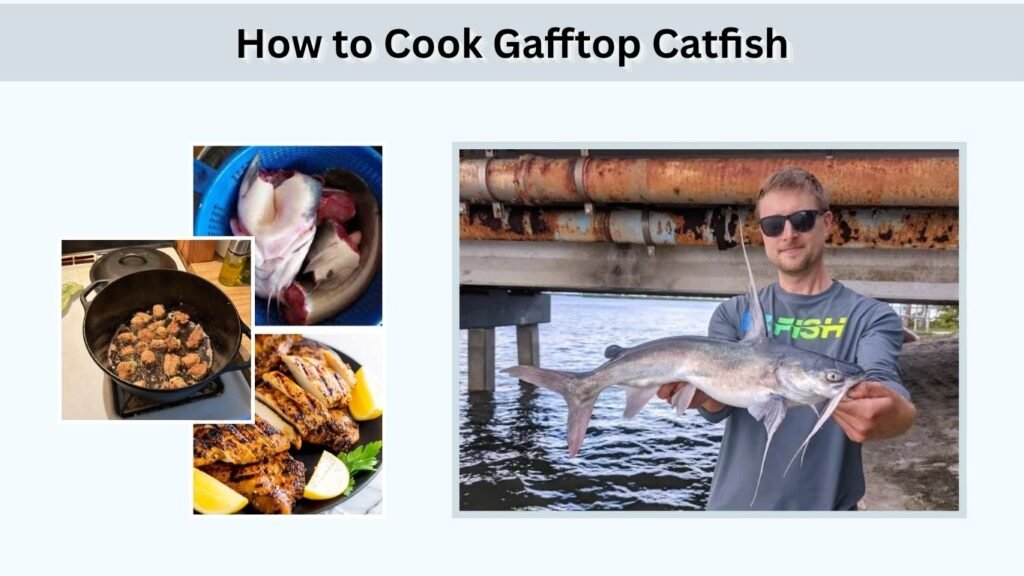
Gafftop fillets work well with simple seasonings because the meat is relatively mild. Removing the skin, bloodline, and any yellowish fat improves the flavor.
Popular cooking methods include:
- Frying in seasoned cornmeal
- Grilling with oil and Cajun seasoning
- Blackening in a cast-iron pan
- Baking with lemon, butter, and garlic
- Adding firm pieces to fish stew
- Making grilled fish tacos
The FDA recommends cooking finfish to an internal temperature of 145°F or 63°C. Properly cooked flesh should appear opaque and separate easily with a fork.
Is a Gafftop Catfish Venomous?
Gafftopsail catfish have sharp dorsal and pectoral spines associated with irritating venomous material. The fish does not inject venom by biting. Instead, an injury occurs when a spine punctures the skin.
A sting can cause immediate pain, swelling, redness, bleeding, and tenderness. A broken piece of spine may remain inside the wound, increasing the risk of inflammation or infection.
What to Do After a Gafftop Sting
Carefully wash and irrigate the wound. Hot-water immersion is widely used for fish-spine injuries and may reduce acute pain, but the water must not be hot enough to burn the skin. Hot water does not remove retained spine fragments or prevent every infection.
Seek medical attention when:
- A spine may be embedded
- Pain is intense or worsening
- Bleeding does not stop
- Redness or swelling spreads
- The wound is near a joint or tendon
- Fever, drainage, numbness, or weakness develops
- The injured person has diabetes or reduced immunity
A healthcare professional may need to inspect the wound, remove foreign material, manage pain, update tetanus protection, or treat an infection.
Gafftop Catfish vs. Hardhead Catfish
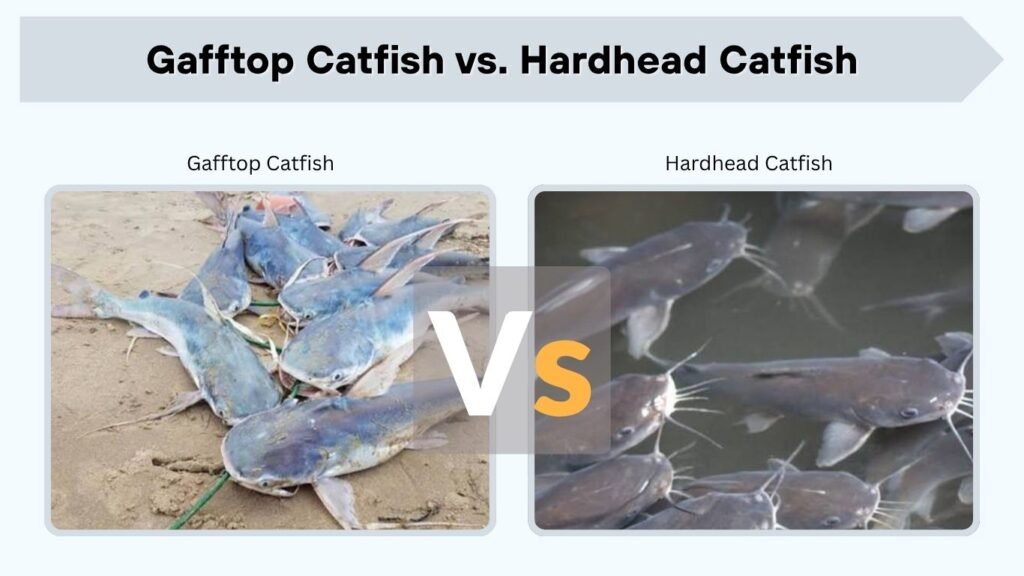
These two saltwater catfish frequently occur in the same coastal habitats, but their appearance and eating quality differ.
| Feature | Gafftop Catfish | Hardhead Catfish |
| Scientific name | Bagre marinus | Ariopsis felis |
| Dorsal fin | Tall with a long filament | Shorter without a long sail |
| Chin barbels | One pair | Two pairs |
| Body shape | More streamlined | Stockier |
| Typical abundance | Less common | Often more abundant |
| Food reputation | Generally considered better | Less commonly kept |
| Spines | Sharp and venomous | Sharp and venomous |
The long dorsal filament is the quickest identification clue. Hardheads also possess two pairs of chin barbels, whereas gafftopsails have one pair.
How to Catch Gafftop Catfish
Gafftopsails respond well to natural bait presented near the bottom. Effective options include fresh shrimp, cut mullet, squid, small crabs, and strips of oily baitfish.
Use a medium spinning or conventional setup with a circle hook and enough weight to hold the bait near the bottom. Productive locations include passes, beaches, channels, piers, jetties, and bay edges. Because these fish produce considerable slime, bring a washable landing net, fish gripper, and long pliers.
Fishing regulations vary by location. For example, current Texas rules list a 14-inch minimum length for gafftopsail catfish and no daily bag limit, but regulations can change. Always check the applicable state rules before keeping a catch.
FAQs
Can You Eat a Gafftop Catfish?
Yes. Gafftop catfish provide firm, white, edible fillets. Their flavor improves when the fish is iced immediately and the skin, bloodline, and fatty tissue are removed. The sharp spines and heavy slime make cleaning more difficult, but they do not make the cooked meat poisonous.
How Big Do Gafftop Catfish Get?
Most gafftops caught by anglers weigh approximately two to three pounds and measure under two feet. However, larger fish can approach or exceed eight pounds. Exceptional specimens may be considerably heavier, depending on the location and record system used.
What Is the Best Bait for Gafftop Catfish?
Fresh shrimp, cut mullet, squid, crab pieces, and oily baitfish are productive choices. Present the bait near the bottom using a circle hook. Fresh bait usually produces better results than old or badly decomposed bait and may attract fewer unwanted scavengers.
Can a Gafftop Catfish Sting Kill You?
Fatal injuries are extremely unusual, but the sting can be intensely painful and may lead to infection, tissue damage, or complications from an embedded spine. Serious punctures, worsening symptoms, allergic reactions, and wounds involving the hands, feet, joints, or tendons require prompt medical evaluation.
Why Are Gafftop Catfish So Slimy?
Their scaleless skin produces a protective mucus layer that reduces friction and helps defend the body against injury and microorganisms. The slime becomes especially noticeable when the fish is handled. Keeping the fish cold and rinsing it carefully makes cleaning easier.