
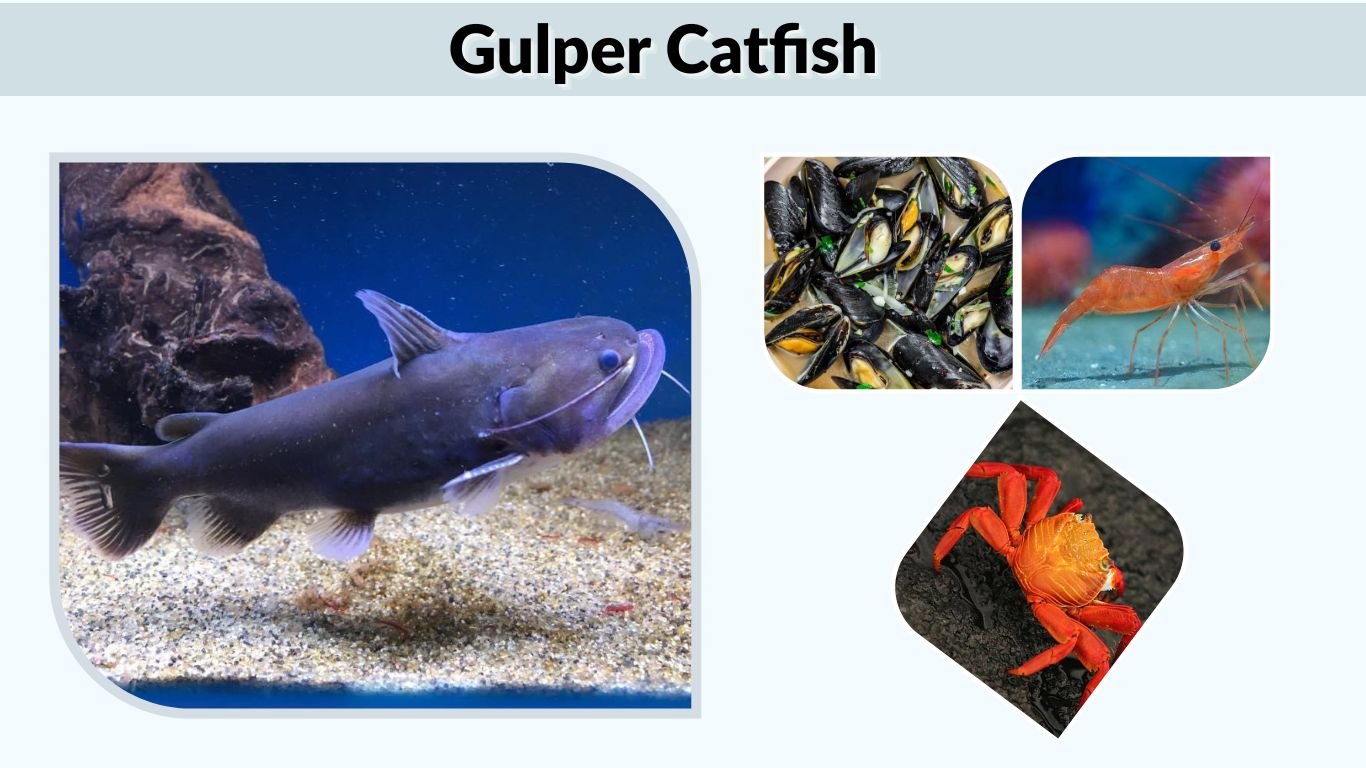
The gulper catfish is an unusual freshwater predator famous for its oversized mouth and ability to swallow surprisingly large prey. Although it usually remains under 14 inches long, it requires much more planning than an ordinary aquarium catfish. Its heavy feeding, large waste output, sensitive scaleless body, and dangerous appetite make it best suited to experienced fishkeepers with a spacious, mature aquarium.
What Is a Gulper Catfish?
The gulper catfish (Asterophysus batrachus) is also called the ogre catfish. It belongs to the driftwood catfish family, Auchenipteridae, and is the only currently recognized species in its genus.
It is a true freshwater fish native to northern South America. Wild populations occur in the Negro and Orinoco river basins of Brazil, Colombia, and Venezuela, especially in slow-moving water containing rocks, submerged wood, and other shelter.
The name “gulper” describes its feeding ability. The fish has an exceptionally expandable mouth and stomach that allow it to engulf prey that appears far too large for its body.
Gulper Catfish Identification and Size
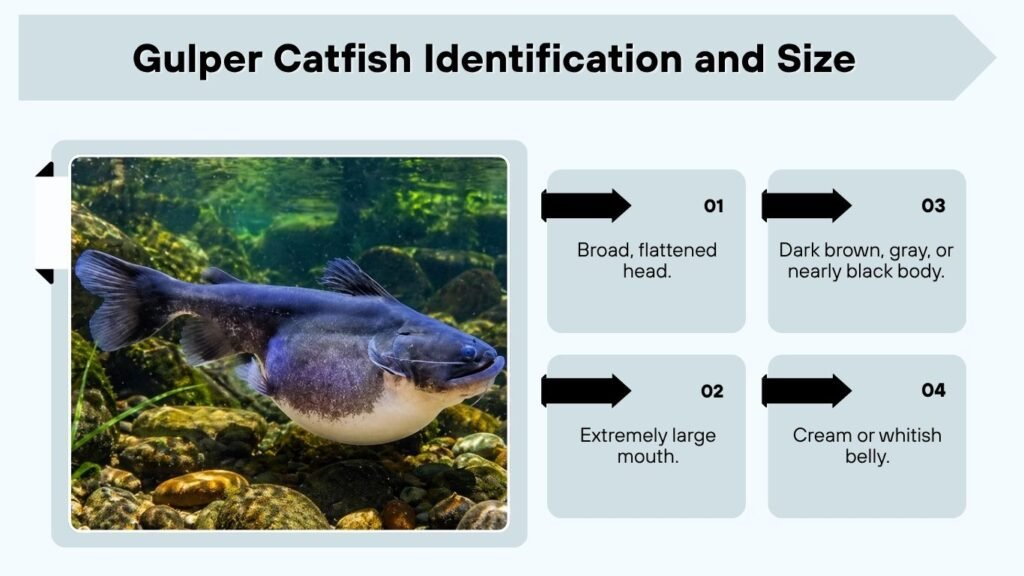
A gulper has a thick, somewhat tadpole-shaped body. Its large head, wide mouth, small eyes, and rounded belly give it an appearance unlike most common aquarium catfish.
Identification Features
- Broad, flattened head
- Extremely large mouth
- Dark brown, gray, or nearly black body
- Cream or whitish belly
- Three pairs of sensory barbels
- Smooth, scaleless skin
- Short, strong dorsal fin
- Broad, rounded tail
- Stocky body that expands after feeding
Young gulpers may look slender, but adults develop a heavy body and noticeably wide head. Their coloration can appear lighter or darker depending on lighting, substrate, stress, and individual variation.
How Big Do Gulper Catfish Get?
FishBase reports a maximum standard length of approximately 25 centimeters, or nearly 10 inches. Aquarium specimens are frequently reported at around 10–14 inches in total length because total length includes the tail.
Their body mass changes dramatically after eating. A recently fed gulper may develop an enormous, balloon-like abdomen, making it appear much larger than it did before the meal.
Gulper Catfish Tank Setup
A gulper is not particularly active, but it still needs a large aquarium because of its adult size, feeding habits, waste production, and need for stable water. Tank footprint is more important than excessive height.
| Care requirement | Recommended range |
| Adult tank size | About 100 gallons or larger |
| Tank length | Ideally around 6 feet |
| Temperature | Approximately 72–78°F |
| pH | Approximately 5.0–7.0 |
| Substrate | Fine sand or smooth material |
| Lighting | Dim to moderate |
| Water movement | Gentle to moderate |
| Care level | Advanced |
Care recommendations vary among keepers and sellers. An established 100-gallon aquarium with a six-foot footprint is commonly recommended, while some specialists advise 125 gallons or more to provide additional water volume and filtration capacity.
Filtration and Water Quality
Gulpers eat protein-rich food and produce substantial waste. Use an oversized canister filter, sump, or similarly powerful filtration system. The tank must be fully cycled before the fish is introduced because ammonia and nitrite can seriously damage aquarium fish.
Test the water regularly and perform consistent partial water changes. Remove uneaten food promptly before it decomposes. Stability is more important than attempting to reach one exact pH value, but sudden changes and extreme conditions should be avoided.
Substrate and Decorations
Fine sand is an appropriate substrate because it is unlikely to damage the gulper’s belly or barbels. Avoid sharp gravel, jagged rocks, and decorations with narrow openings.
Provide large pieces of smooth driftwood, broad caves, or shaded areas where the fish can rest during the day. Leave plenty of unobstructed floor space and secure every decoration so it cannot collapse when the catfish moves underneath it.
Floating plants may help reduce bright lighting. A tight-fitting lid is also sensible for any large, powerful aquarium fish.
What Do Gulper Catfish Eat?
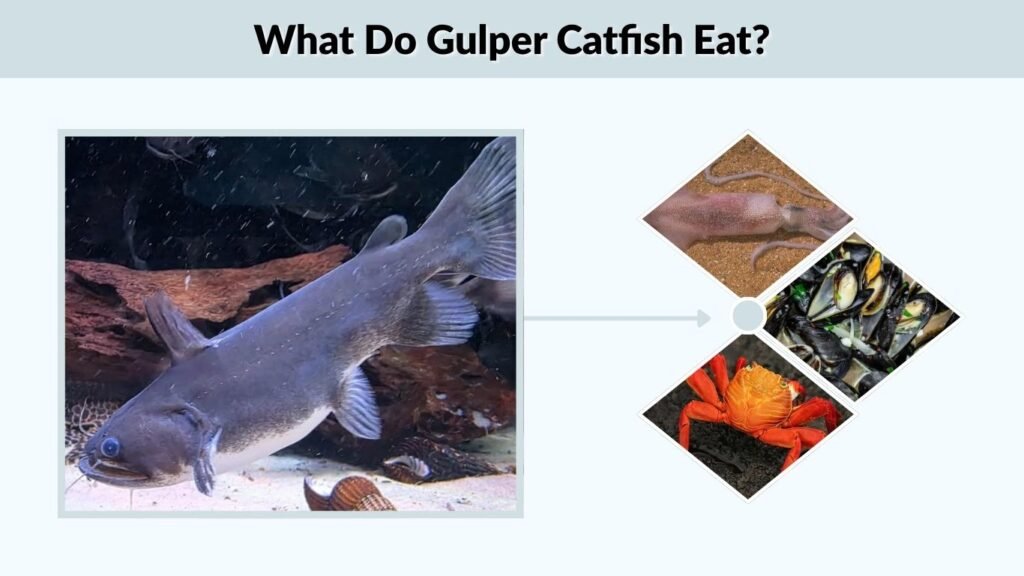
Gulper catfish are predatory carnivores. In nature, they primarily capture other fish by approaching slowly and rapidly scooping the prey into their mouths. Backward-pointing teeth make it difficult for captured prey to escape.
Suitable aquarium foods include:
- Pieces of white fish
- Prawns and shrimp
- Mussels
- Earthworms
- Squid
- Krill
- Carnivore pellets
- Sinking catfish pellets
Train the fish to accept thawed seafood and quality prepared food whenever possible. A varied diet is better than relying on one item.
Feeder fish are generally unnecessary and may introduce parasites or infections. Goldfish and other fatty feeder species are especially unsuitable as a regular diet. Mammal and poultry meat should also be avoided because it is not an appropriate staple for a predatory fish.
How Often Should You Feed a Gulper Catfish?
Juveniles may accept smaller meals several times per week. Healthy adults generally need feeding only once or twice weekly, depending on meal size, body condition, temperature, and activity.
Do not feed another large meal while the abdomen remains heavily swollen. Overfeeding increases waste and may contribute to regurgitation or digestive problems. A gulper does not need to look completely stuffed after every feeding.
How Does a Gulper Digest Large Fish?
Its mouth, throat, body wall, and stomach can stretch considerably. The gulper usually captures prey headfirst and gradually draws it deeper as the prey struggles. Very large prey may become folded inside the expanded stomach.
This ability does not mean owners should intentionally offer oversized fish. A failed swallowing attempt can injure or kill both animals, while a massive meal may impair the catfish’s movement and digestion.
Gulper Catfish Tank Mates
The safest arrangement is a species-only aquarium containing one gulper catfish. Almost any fish within swallowing range must be considered potential food.
A gulper may attack fish close to its own size and can misjudge whether it is capable of swallowing them. This creates a risk of choking, internal injury, or the deaths of both fish. Even much larger companions are not automatically suitable if they are aggressive, territorial, or likely to bite the gulper’s fins and barbels.
Keeping multiple gulpers together is also risky because individuals may attempt to eat one another. A single specimen is therefore the safest and easiest option.
Gulper Catfish Lifespan and Breeding
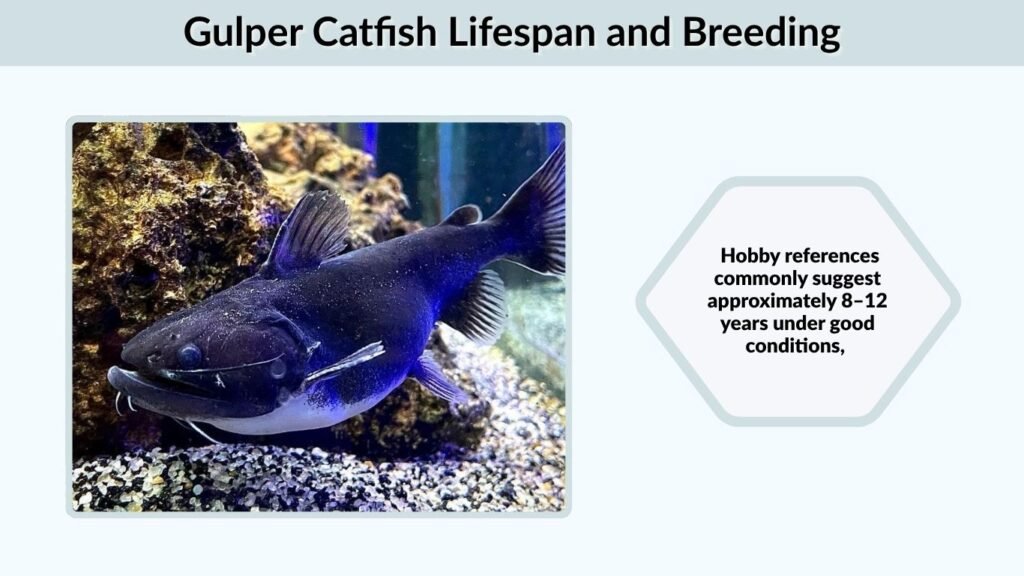
The species’ precise aquarium lifespan is not well documented. Hobby references commonly suggest approximately 8–12 years under good conditions, but individual longevity can vary with diet, water quality, genetics, and long-term care.
Reliable information about captive breeding is extremely limited. There is no widely established home-aquarium breeding method, and most available specimens are believed to originate from wild collection. FishBase does not provide detailed spawning, egg, or larval information for the species.
Because males and females are difficult to distinguish and adults may swallow one another, attempting to pair them is not recommended for an ordinary home aquarium.
Buying a Gulper Catfish
Gulpers are specialty fish rather than standard pet-store catfish. Their price and availability vary substantially according to size, location, shipping costs, and import supply.
Before purchasing one, confirm that:
- The scientific name is Asterophysus batrachus
- The fish has clear skin and intact barbels
- Its breathing appears regular
- It is not severely thin or constantly bloated
- The seller can explain what it currently eats
- A mature adult-sized aquarium is already operating
- Ownership and transport are legal in your location
Do not purchase a baby gulper with plans to upgrade the aquarium later. Prepare its permanent tank first. Also quarantine new fish when practical to reduce the chance of introducing disease.
Gulper Catfish vs. Gulp Catfish Bait
The gulper catfish is not related to Berkley Gulp catfish chunks, dough, shad guts, or artificial nightcrawler products. Those are manufactured fishing baits, while the gulper catfish is a South American aquarium species.
It should also not be confused with a cory catfish gulping air. Corydoras naturally rise to the surface periodically and swallow air as part of their specialized breathing behavior.
FAQs
Are Gulper Catfish Freshwater Fish?
Yes. Gulper catfish are entirely freshwater fish from the Orinoco and Negro river systems of northern South America. They do not require aquarium salt or brackish water. A mature freshwater aquarium with stable chemistry, strong biological filtration, and regular maintenance is appropriate.
Can a Gulper Catfish Eat a Fish Its Own Size?
It may attempt to swallow a fish close to its own size and can sometimes consume remarkably large prey. However, such attempts are dangerous. Oversized prey can cause choking, injury, regurgitation, or death, so keepers should never deliberately test the fish’s swallowing capacity.
What Is the Best Tank Size for a Gulper Catfish?
Plan for approximately 100 gallons or more, preferably with a tank length near six feet. Some keepers recommend 125 gallons for additional stability and filtration capacity. Floor space, water quality, and an unobstructed swimming area matter more than aquarium height.
Can Gulper Catfish Live With Arowanas or Piranhas?
These combinations are not recommended. An arowana may be disturbed or injured, while a piranha could damage the gulper’s scaleless body and barbels. The gulper might also attempt to swallow an unsuitable companion. Keeping one gulper alone is considerably safer.
Are Albino Gulper Catfish Real?
Very pale or unusually colored specimens may be advertised as albino gulpers, but genuine albino fish should lack normal dark pigment and often have pinkish or reddish eyes. Buyers should verify the scientific name and examine the fish carefully because lighting and stress can make ordinary specimens appear pale.