
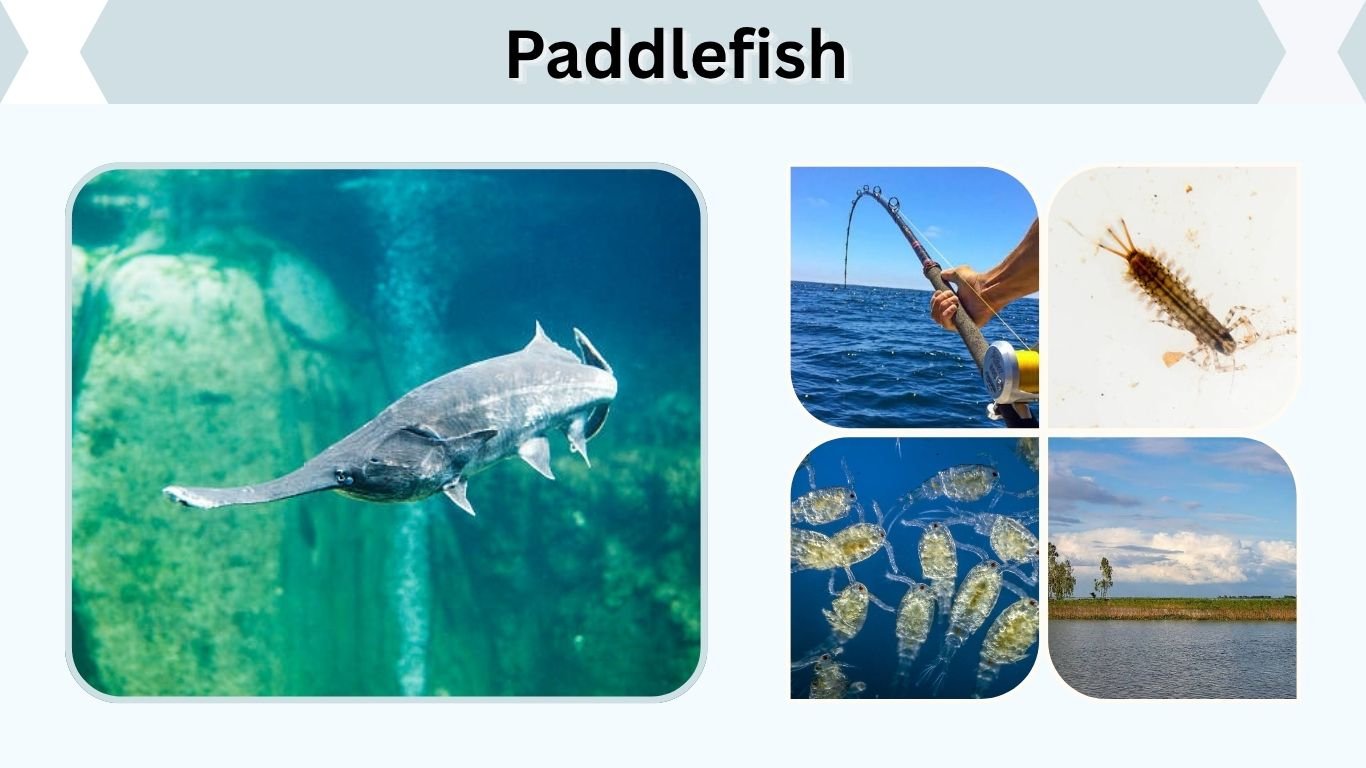
The paddlefish is a large freshwater fish recognised by its long, paddle-shaped snout. It is also commonly called the spoonbill fish, spoonbill, paddle fish, or incorrectly, the spoonbill catfish. The American paddlefish (Polyodon spathula) lives mainly in large rivers and reservoirs connected to the Mississippi River system. Despite its unusual appearance and shark-like body, it is a gentle filter feeder that primarily consumes microscopic aquatic organisms. Paddlefish are also valued as sport fish and for their meat and eggs.
What Is a Paddlefish?
The American paddlefish belongs to the family Polyodontidae. It represents an ancient group of ray-finned fishes whose ancestors existed long before many modern freshwater species.
Paddlefish Classification
| Classification | Name |
| Kingdom | Animalia |
| Phylum | Chordata |
| Class | Actinopterygii |
| Order | Acipenseriformes |
| Family | Polyodontidae |
| Genus | Polyodon |
| Scientific name | Polyodon spathula |
Paddlefish are closely related to sturgeons, not catfish. The names “spoonbill catfish” and “spoon-billed catfish” are common regional nicknames, but they are scientifically inaccurate.
Paddlefish Identification
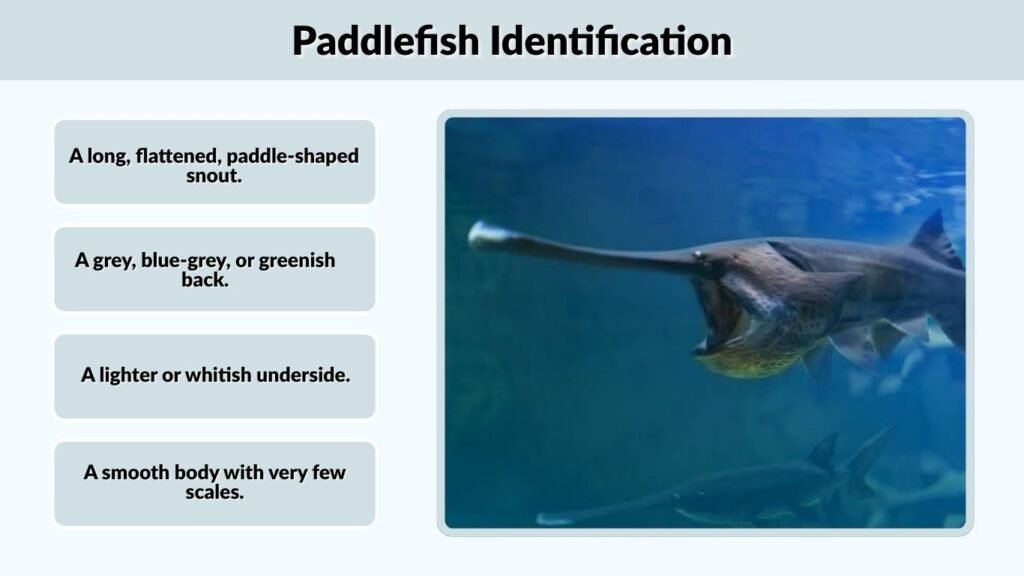
The paddlefish has a smooth, mostly scaleless body and a long snout called a rostrum. Its appearance is so distinctive that adult fish are rarely confused with other native freshwater species.
Important Identification Features
An American paddlefish usually has:
- A long, flattened, paddle-shaped snout
- A grey, blue-grey, or greenish back
- A lighter or whitish underside
- A smooth body with very few scales
- A deeply forked tail
- Small eyes positioned near the base of the rostrum
- A large mouth beneath the head
- A flexible skeleton composed largely of cartilage
Young paddlefish have small teeth, but adults lose most or all of them as they mature. Their large mouths are designed for filtering tiny organisms rather than biting large prey.
What Is the Paddle-Shaped Nose Used For?
The paddlefish’s snout is not used to dig through mud or strike prey. It contains thousands of sensory receptors that detect weak electrical signals produced by small aquatic organisms.
This electrical-sensing ability helps the fish locate concentrations of plankton, even when the water is dark or muddy. The rostrum can also help the fish remain properly positioned while swimming and feeding.
A damaged rostrum may reduce feeding efficiency, although a paddlefish can sometimes survive after losing part of it.
What Do Paddlefish Eat?
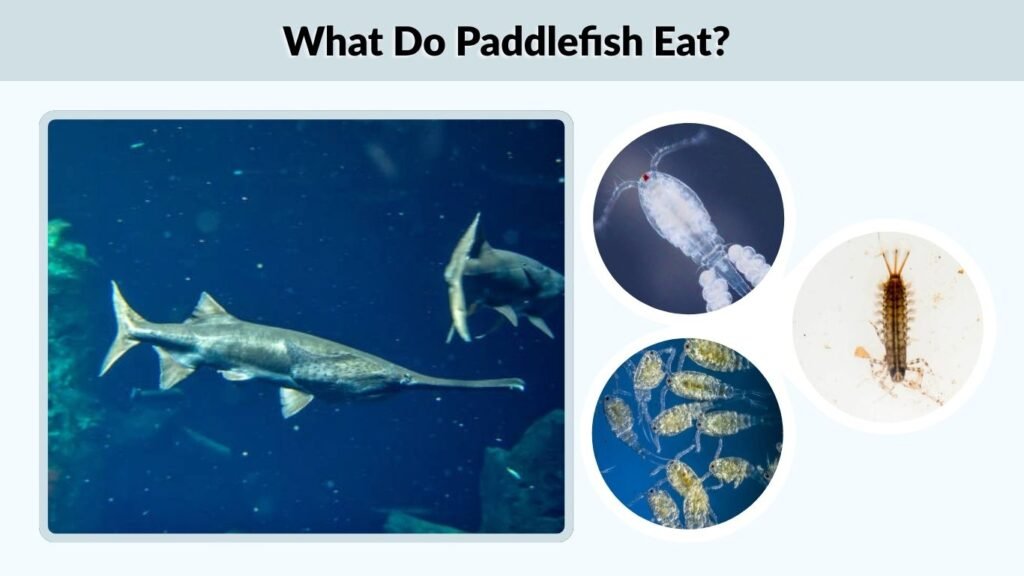
Paddlefish are filter feeders. They swim forward with their mouths open while specialised gill structures strain food from the water.
Their diet mainly includes:
- Zooplankton
- Tiny crustaceans
- Copepods
- Water fleas
- Small aquatic insect larvae
- Occasionally other microscopic organisms
A paddlefish does not normally hunt adult fish. Its diet is one reason ordinary hooks baited with worms, minnows, or artificial lures are generally ineffective.
How Do Paddlefish Feed?
Water enters through the open mouth and passes across numerous gill rakers. These structures act like a fine filter, trapping plankton while allowing water to leave through the gill openings.
Paddlefish may follow areas where currents concentrate plankton. They can spend long periods swimming continuously with their mouths open.
Paddlefish Size and Appearance
American paddlefish are among the largest freshwater fish native to North America. Adults commonly reach approximately three to five feet in length, although some individuals grow longer.
Large paddlefish can weigh more than 100 pounds. Size depends on age, sex, food availability, habitat quality, and local population conditions. Females generally grow larger and live longer than males.
| Feature | Typical description |
| Adult length | Around 3–5 feet |
| Large specimens | Can exceed 6 feet |
| Body colour | Grey, blue-grey, or olive |
| Underside | White or pale grey |
| Body covering | Mostly smooth and scaleless |
| Most distinctive feature | Long paddle-shaped rostrum |
Paddlefish Habitat
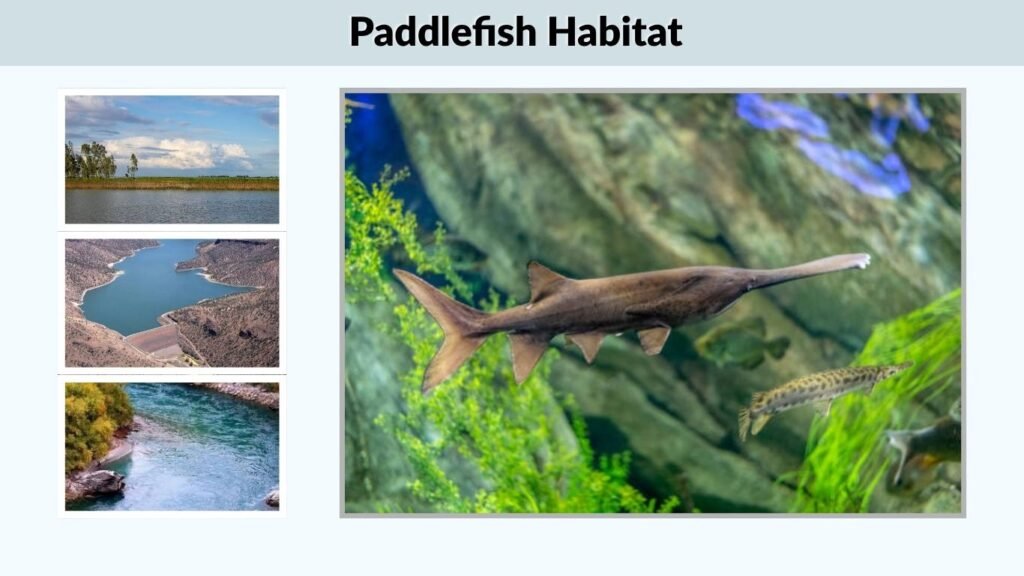
Paddlefish require large freshwater systems with sufficient depth, flowing water, and productive plankton communities.
Common habitats include:
- Large rivers
- Deep reservoirs
- River-connected lakes
- Slow-moving channels
- Backwaters
- Areas below dams
- Open water near strong currents
They frequently occupy deep, open water rather than shallow shoreline habitat. During spawning season, adults migrate into rivers and tributaries containing suitable gravel beds.
Where Are Paddlefish Found?
The American paddlefish is native to the Mississippi River drainage and connected river systems in the central United States. Populations occur in parts of Missouri, Oklahoma, Arkansas, Tennessee, Kentucky, Nebraska, South Dakota, Ohio, and several surrounding states.
Some populations are naturally reproducing, while others are supported through hatchery stocking. Dams, altered river flow, pollution, habitat fragmentation, and illegal harvest have reduced the species in parts of its historical range.
Paddlefish presence and fishing opportunities differ considerably by state. An angler should never assume that catching or possessing one is legal simply because paddlefish occur in the region.
Paddlefish Life Cycle
Paddlefish are slow-growing fish that may take several years to become sexually mature. Females generally mature later than males and do not necessarily spawn every year.
Spawning
Spawning usually occurs during spring when three important conditions come together:
- Water temperatures rise to a suitable level
- River flow increases
- Adults can reach clean gravel or rocky spawning grounds
Females release large numbers of eggs into flowing water, where males fertilise them externally. The sticky eggs attach to gravel until they hatch.
Young Paddlefish
Newly hatched larvae drift downstream into nursery areas. Young fish initially feed on very small organisms and develop rapidly when plankton is abundant.
Their rostrum is relatively short at hatching but becomes proportionally longer as they grow.
Are Paddlefish Endangered?
The conservation situation differs across the fish’s range. Paddlefish remain present in several large river systems, but some historical populations have disappeared or declined.
Major threats include:
- Dams blocking spawning migrations
- Changes in natural river flow
- Sediment covering spawning gravel
- Water pollution
- Accidental capture
- Illegal harvest for eggs
- Slow reproductive maturity
Fishing is tightly regulated or prohibited in many locations. Hatchery programs, habitat restoration, harvest limits, tagging, and law enforcement help protect remaining populations.
The Chinese paddlefish was a separate species and is considered extinct. It should not be confused with the surviving American paddlefish.
How to Catch Paddlefish
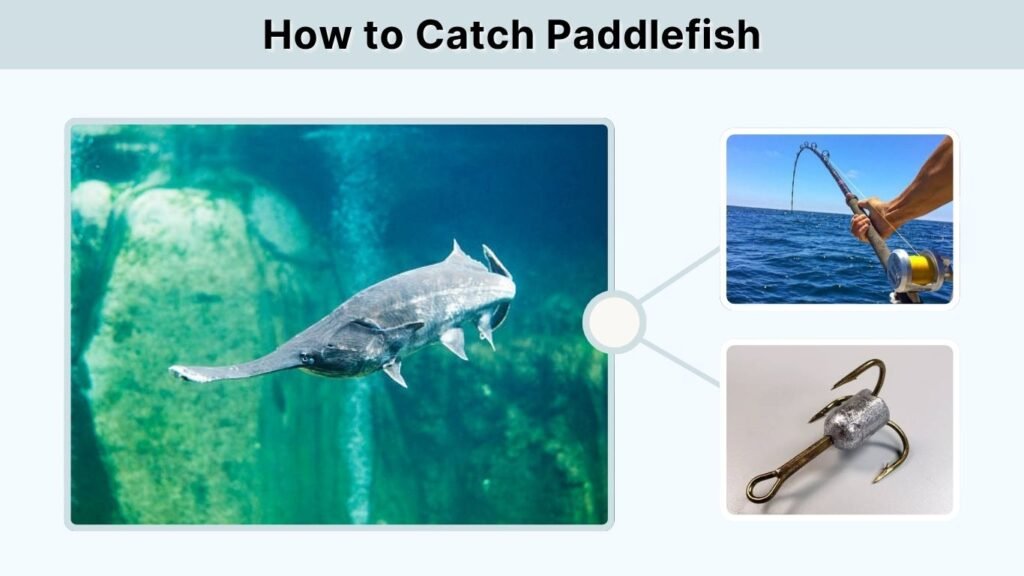
Because paddlefish eat microscopic plankton, they usually do not take conventional bait. Where permitted, anglers commonly catch them by snagging, which involves pulling a large hook through the water to contact the fish externally.
Basic Paddlefish Fishing Equipment
Anglers typically use:
- A heavy fishing rod
- Strong line
- A large legal snagging hook
- A heavy sinker
- Durable reel and terminal tackle
- Gloves for handling line and fish
Snagging can injure fish and is illegal in many waters. Seasons, harvest limits, hook sizes, tagging requirements, legal areas, and handling rules vary by jurisdiction. Always check the current regulations issued by the relevant wildlife agency before fishing.
Can You Eat Paddlefish?
Yes, legally harvested paddlefish can be eaten. The meat is generally firm, pale, and mild when properly cleaned and prepared. Some people compare its texture to other dense freshwater fish.
Common preparation methods include:
- Grilling
- Smoking
- Baking
- Frying
- Making fish cakes
- Cutting into steaks
Removing the dark red tissue and fatty areas during cleaning may improve the flavour. Paddlefish should be kept cold and cleaned promptly after harvest.
Its eggs can be processed as roe or caviar. However, possession, processing, transport, and sale are regulated because illegal caviar harvesting has threatened paddlefish populations. Recreationally caught fish or eggs should never be sold unless local law expressly permits it.
Paddlefish vs Spoonbill Fish
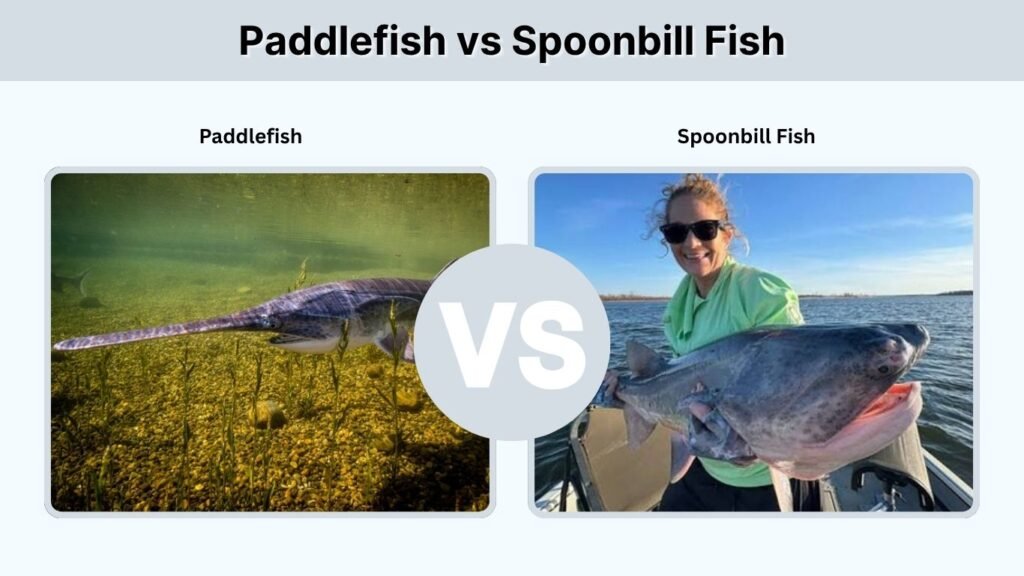
There is no biological difference between an American paddlefish and a spoonbill fish. “Spoonbill” is simply a common nickname based on the fish’s flattened snout.
| Name | Meaning |
| American paddlefish | Standard common name |
| Polyodon spathula | Scientific name |
| Spoonbill fish | Regional nickname |
| Spoonbill | Shortened nickname |
| Spoonbill catfish | Inaccurate regional name |
| Paddle fish | Alternate spelling |
The term “paddlefish vs spoonbill” therefore compares two names for the same fish rather than two separate species.
FAQs
Is a paddlefish a catfish?
No. Paddlefish belong to the family Polyodontidae and are related to sturgeons. The term “spoonbill catfish” is an informal nickname based on the fish’s appearance and freshwater habitat, not its scientific classification.
Are paddlefish dangerous?
Paddlefish are not aggressive toward people and do not have functional adult teeth for biting. However, a large fish can thrash powerfully when caught, so anglers should handle it carefully and follow legal release or harvest procedures.
Why do paddlefish have such large mouths?
Their mouths allow them to process a large volume of water while filter feeding. As water passes across the gills, specialised gill rakers trap zooplankton and other tiny food particles.
How long do paddlefish live?
Paddlefish can live for several decades under favourable conditions. Females often live longer and reach larger sizes than males. Their slow maturity makes populations vulnerable to excessive harvest and habitat loss.
Are paddlefish good to eat?
Many people consider paddlefish good table fare when the fish is cleaned quickly and the darker fatty tissue is removed. The meat can be grilled, smoked, baked, or fried, but the fish must be harvested legally.