
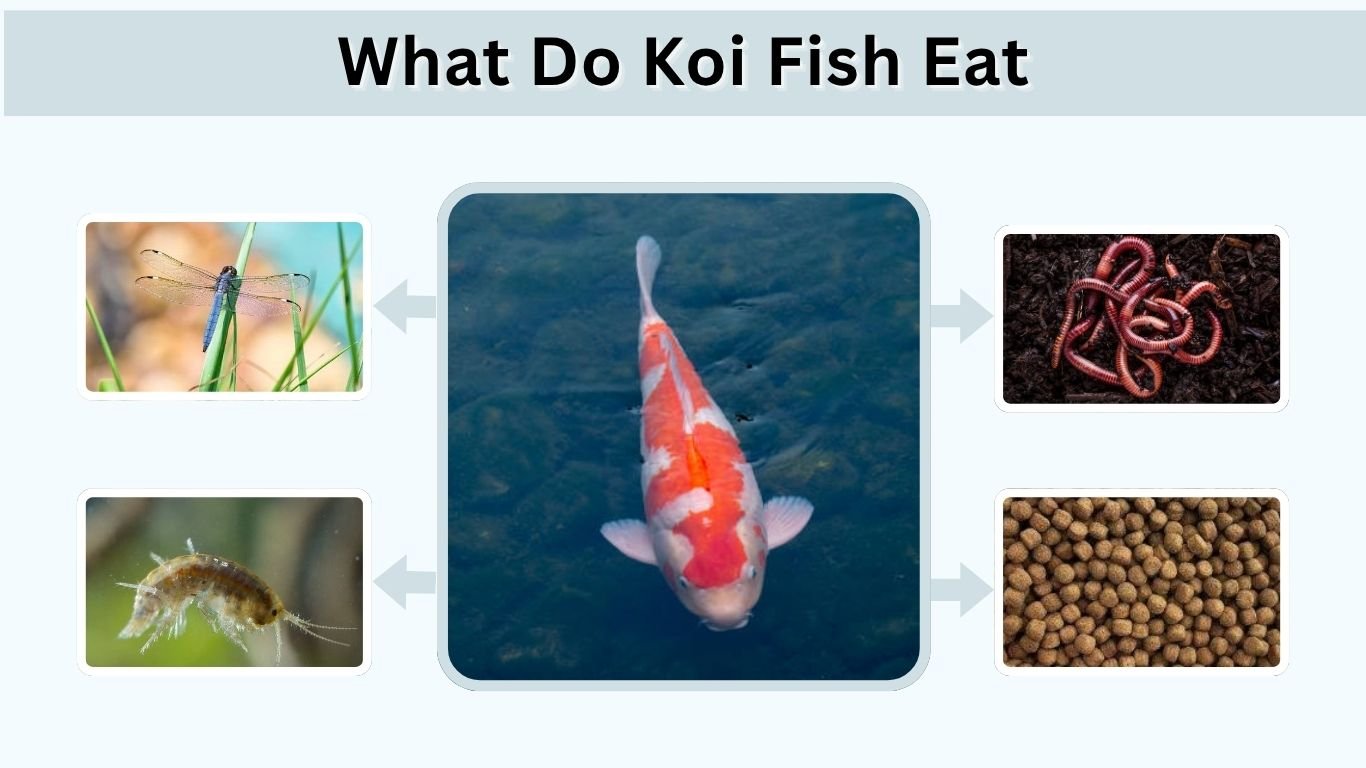
Koi fish are omnivores that enjoy a varied diet of plant material, insects, small aquatic animals, and specially formulated koi food. In ponds, they often search the bottom and surface for anything edible, while pet koi depend more heavily on their owners for balanced nutrition. The best diet changes with the koi’s age, size, water temperature, and season. From commercial pellets and vegetables to shrimp and fruit, here are the 10 best foods koi fish eat and how to feed them properly.
What Do Koi Fish Eat?
Koi are opportunistic omnivores, meaning they consume both plant and animal matter. Their digestive system can handle many different foods, but a balanced diet is important for healthy growth, strong immunity, bright coloration, and normal activity. High-quality koi pellets should normally provide the foundation of a pet koi’s diet, with natural foods and treats added for variety.
What Do Koi Fish Eat Naturally?
In natural or semi-natural ponds, koi may eat:
- Aquatic insects
- Insect larvae
- Worms
- Small crustaceans
- Algae
- Soft aquatic plants
- Seeds
- Plant debris
- Tiny aquatic organisms
- Organic material found on the pond bottom
Koi constantly investigate their environment with their mouths while looking for food.
What Do Koi Fish Like to Eat?
Koi are enthusiastic feeders and often become excited when people approach the pond because they associate humans with food.
They particularly enjoy floating pellets, insects, shrimp, worms, and occasional pieces of fruit or vegetables. However, something a koi eagerly eats is not automatically nutritionally complete.
Treats should complement rather than replace a properly formulated koi diet.
10 Best Foods Koi Fish Eat
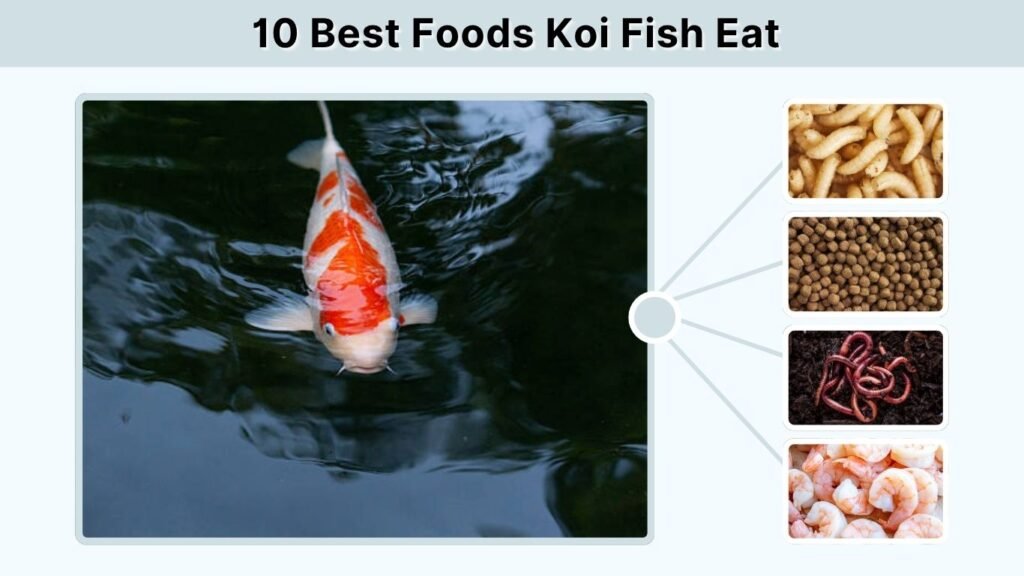
A good koi diet combines complete commercial food with occasional fresh foods. Protein is especially important during warm months and periods of rapid growth, while easily digestible foods become more useful as water temperatures decline. Always offer portions the fish can consume quickly so uneaten material does not pollute the pond.
1. Koi Pellets
High-quality koi pellets are the best everyday food for most pond koi.
Commercial koi foods are designed to provide an appropriate combination of:
- Protein
- Fats
- Carbohydrates
- Vitamins
- Minerals
- Pigments for coloration
Floating pellets are especially convenient because owners can watch the fish eat and quickly notice any koi that appears sick or stops feeding.
Choose pellet size according to the size of your fish. Small koi need smaller pellets, while mature koi can easily consume larger varieties.
2. Shrimp
Shrimp can provide koi with valuable animal protein.
Small dried shrimp, freeze-dried shrimp, or properly prepared shrimp may be offered as an occasional supplement. They can be particularly attractive to active koi during warm weather.
Shrimp contain protein and carotenoid pigments that may support the bright orange and red colors seen in many koi varieties.
They should still be treated as a supplement rather than the sole food source.
3. Earthworms
Earthworms are a natural protein-rich food that koi usually find extremely appealing.
In outdoor environments, koi may encounter worms that fall into the pond after rain. They readily investigate and swallow appropriately sized worms.
Earthworms can be a useful occasional treat for larger koi, but avoid collecting them from areas that may have been treated with pesticides, herbicides, or other chemicals.
4. Insects and Insect Larvae
Insects form an important part of the natural diet of koi and other carp.
Koi may eat:
- Flies
- Mosquito larvae
- Small beetles
- Crickets
- Aquatic insect larvae
- Other small insects that land on the water
This opportunistic feeding behavior is one reason koi frequently patrol the surface.
Insects provide additional protein, but pond owners should not rely on naturally occurring insects alone to provide complete nutrition.
5. Peas
Soft peas can be an occasional vegetable treat for koi.
Cooked or softened peas are easier for fish to consume than hard raw peas. Removing the outer skin can also make them easier to eat, especially for smaller fish.
Vegetables provide dietary variety, but they should only make up a small part of the total diet.
Remove uneaten pieces before they begin decomposing in the pond.
6. Lettuce and Leafy Greens
Koi may nibble on lettuce and other soft leafy vegetables.
Leafy greens can be clipped near the edge of the pond so koi can tear off small pieces. This encourages natural grazing behavior and provides enrichment.
Suitable greens may include:
- Lettuce
- Spinach in small amounts
- Soft leafy vegetables
Wash vegetables thoroughly before feeding and avoid anything coated with sauces, salt, seasoning, or oil.
7. Watermelon
Watermelon is a popular occasional treat for koi.
A small slice placed at the surface can attract several fish at once. Koi may gradually nibble away the soft flesh while leaving most of the rind behind.
Because watermelon contains considerable natural sugar and water, it should be offered as a treat rather than everyday food.
Remove the remaining rind and uneaten fruit after feeding.
8. Oranges
Koi may also eat small pieces of orange.
Orange flesh provides variety and contains vitamin C, although a balanced commercial diet should already supply the vitamins pet koi need.
Remove the peel and separate the fruit into manageable pieces before offering it.
Because citrus fruit is sugary and acidic, feed only small amounts occasionally rather than including oranges as a regular part of the diet.
9. Aquatic Plants
Koi naturally browse on soft vegetation and may eat certain pond plants.
They may consume:
- Tender leaves
- Soft stems
- Algae
- Duckweed
- Other edible aquatic vegetation
This behavior is perfectly natural, although it can become frustrating for pond owners trying to maintain ornamental plants.
Large koi can uproot or damage vegetation while searching for food, so delicate plants may need physical protection.
10. Wheat Germ Food
Wheat germ-based koi food is especially useful during cooler periods when the fish’s digestion begins to slow.
It is generally easier to digest than many high-protein growth foods.
Many pond keepers switch toward wheat germ formulas during spring and autumn when water temperatures are lower but koi remain active enough to eat.
Once temperatures become very cold and koi stop feeding normally, food should be reduced or stopped according to appropriate pond-management practices.
What Do Koi Fish Eat in the Wild?
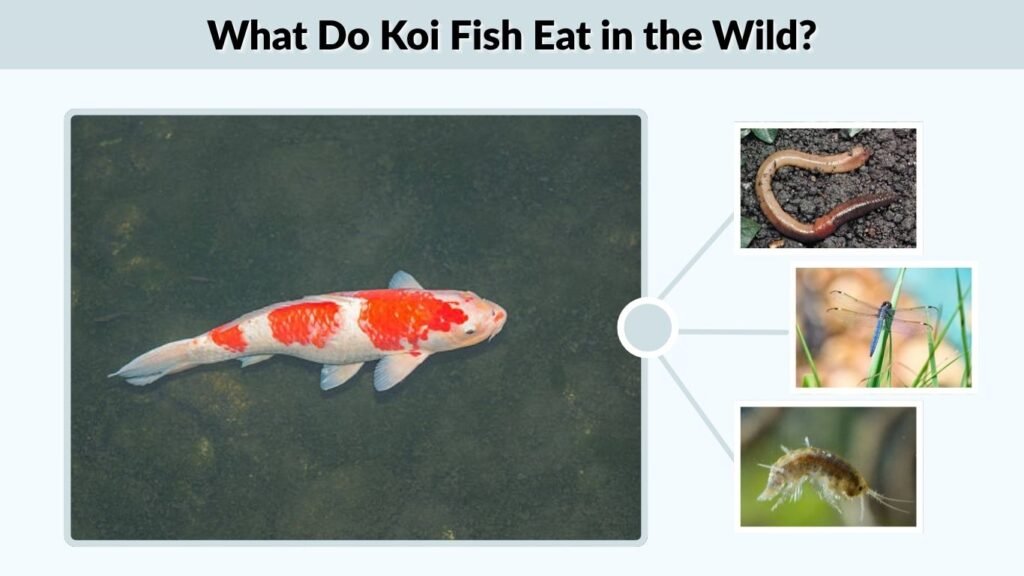
Wild or unmanaged koi relatives survive by constantly searching their environment for available food. Rather than receiving regular meals, they eat whatever suitable plant and animal matter they encounter. This flexible diet is one reason carp are capable of living in many different freshwater habitats.
Natural Foods for Wild Koi
Wild koi and carp may consume:
- Worms
- Insects
- Insect larvae
- Small crustaceans
- Algae
- Seeds
- Aquatic vegetation
- Small aquatic organisms
- Organic debris
They often search muddy or silty bottoms by sucking material into their mouths and separating edible particles from debris.
Do Koi Eat Other Fish?
Koi are not specialized predatory fish, but they are opportunistic feeders.
A large koi may consume very small fish, eggs, larvae, or other tiny aquatic animals if they fit easily into its mouth. However, actively hunting larger fish is not their normal feeding strategy.
Their typical diet contains a much broader mixture of plant matter, invertebrates, and prepared food.
What Do Koi Fish Eat in a Pond?
Pond koi receive food from two sources: their owner and the natural ecosystem. Even regularly fed koi continue looking for insects, algae, plant material, and tiny organisms between meals.
Best Pond Foods
A practical pond diet can include:
- Quality floating koi pellets
- Seasonal wheat germ food
- Occasional shrimp
- Insects
- Worms
- Leafy vegetables
- Small amounts of fruit
Commercial pellets should normally make up most of the diet because they provide more consistent nutrition.
How Often Should You Feed Koi?
Feeding frequency depends heavily on water temperature, koi size, and activity.
During warm weather, healthy koi may eat several small meals per day. It is generally better to provide small portions that disappear within a few minutes than one large meal that leaves food floating or sinking around the pond.
Overfeeding can reduce water quality and create unnecessary health problems.
What Do Baby Koi Fish Eat?
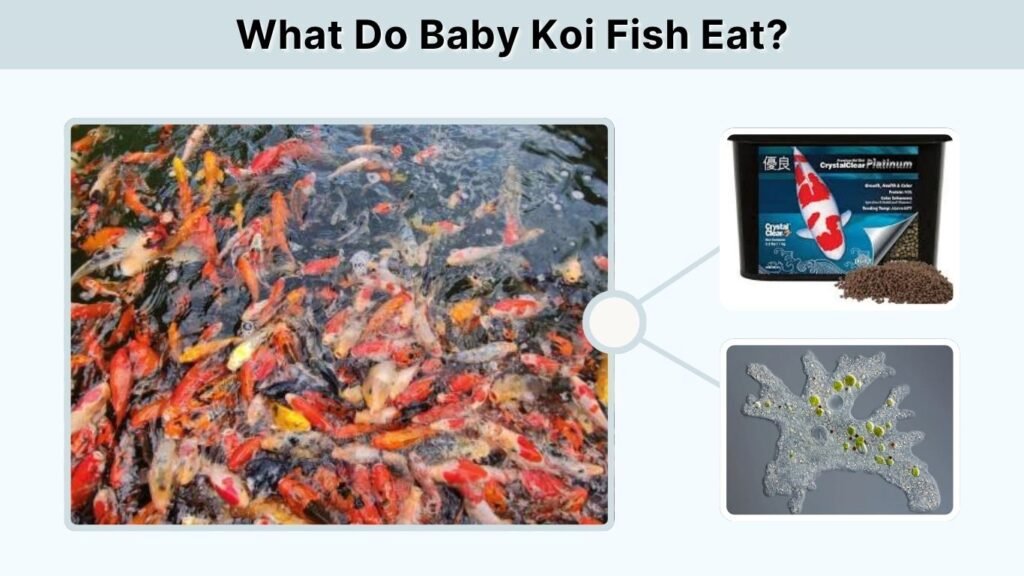
Baby koi require smaller foods and relatively high levels of protein to support rapid development. Their food must also be tiny enough to fit inside their mouths.
Foods for Baby and Small Koi
Appropriate foods can include:
- Crushed koi pellets
- Fine fry food
- Tiny aquatic organisms
- Small insect larvae
- Appropriately sized protein-rich foods
As young koi grow, pellet size can gradually increase.
Regular feeding is important during early development, but maintaining good water quality is equally essential because baby fish can be particularly sensitive to polluted conditions.
What Do Koi Fish Eat in Winter?
Koi are cold-blooded, so their metabolism slows as water temperature falls. They become less active and digest food much more slowly.
During cool conditions, easily digestible wheat germ formulas are often preferred over heavy, high-protein foods.
Feeding Koi During Cold Weather
Remember these basic principles:
- Reduce feeding as water cools.
- Use easily digestible food during transitional temperatures.
- Watch the koi’s activity level.
- Avoid leaving uneaten food in the pond.
- Stop regular feeding when water becomes too cold for normal digestion.
Water temperature, rather than simply the calendar month, should guide seasonal feeding decisions.
Foods You Should Avoid Feeding Koi
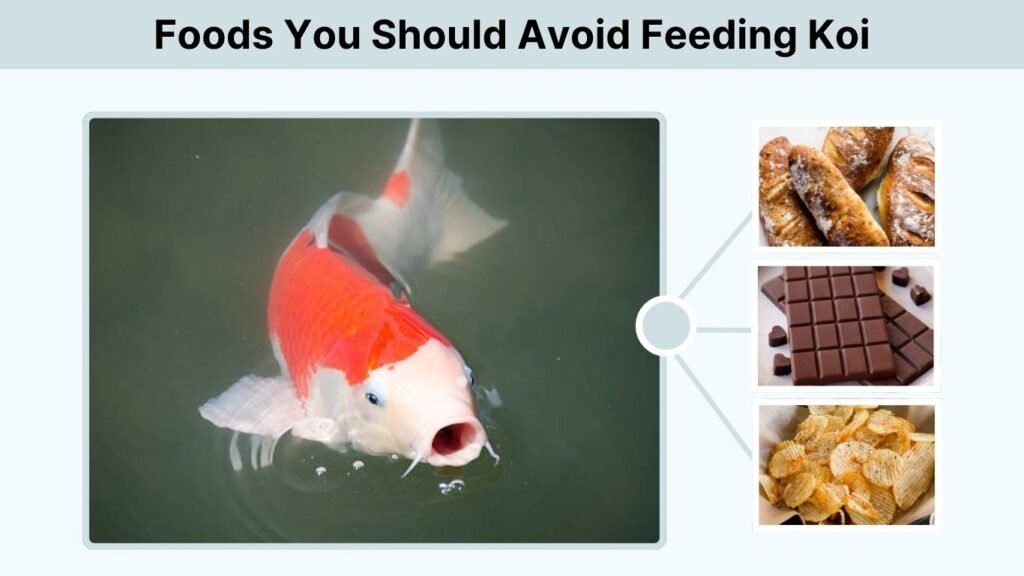
Koi may attempt to eat many foods that are not healthy for them. Human snacks and heavily processed foods should generally stay out of the pond.
Avoid routinely feeding:
- Bread
- Chips
- Candy
- Chocolate
- Salty foods
- Fried foods
- Spicy foods
- Processed meats
- Moldy food
- Foods containing sauces or seasoning
These foods provide poor nutrition and can also contaminate pond water.
FAQs
1. What is the best food for koi fish?
A high-quality commercial koi pellet is generally the best staple food because it provides balanced protein, fats, vitamins, minerals, and other nutrients.
2. What do koi fish eat naturally?
Koi naturally eat insects, larvae, worms, small crustaceans, algae, aquatic plants, seeds, and other small organisms found in freshwater environments.
3. Can koi fish eat vegetables?
Yes. Koi can occasionally eat vegetables such as peas and soft leafy greens. Vegetables should supplement rather than replace complete koi food.
4. What do koi fish eat in winter?
When water becomes cooler, koi need less food and may benefit from easily digestible wheat germ formulas. Feeding should eventually stop when temperatures become too low for normal digestion.
5. Can koi fish eat fruit?
Yes. Koi can occasionally eat small amounts of fruit such as watermelon and oranges. Fruit should remain an occasional treat because it contains natural sugars.