
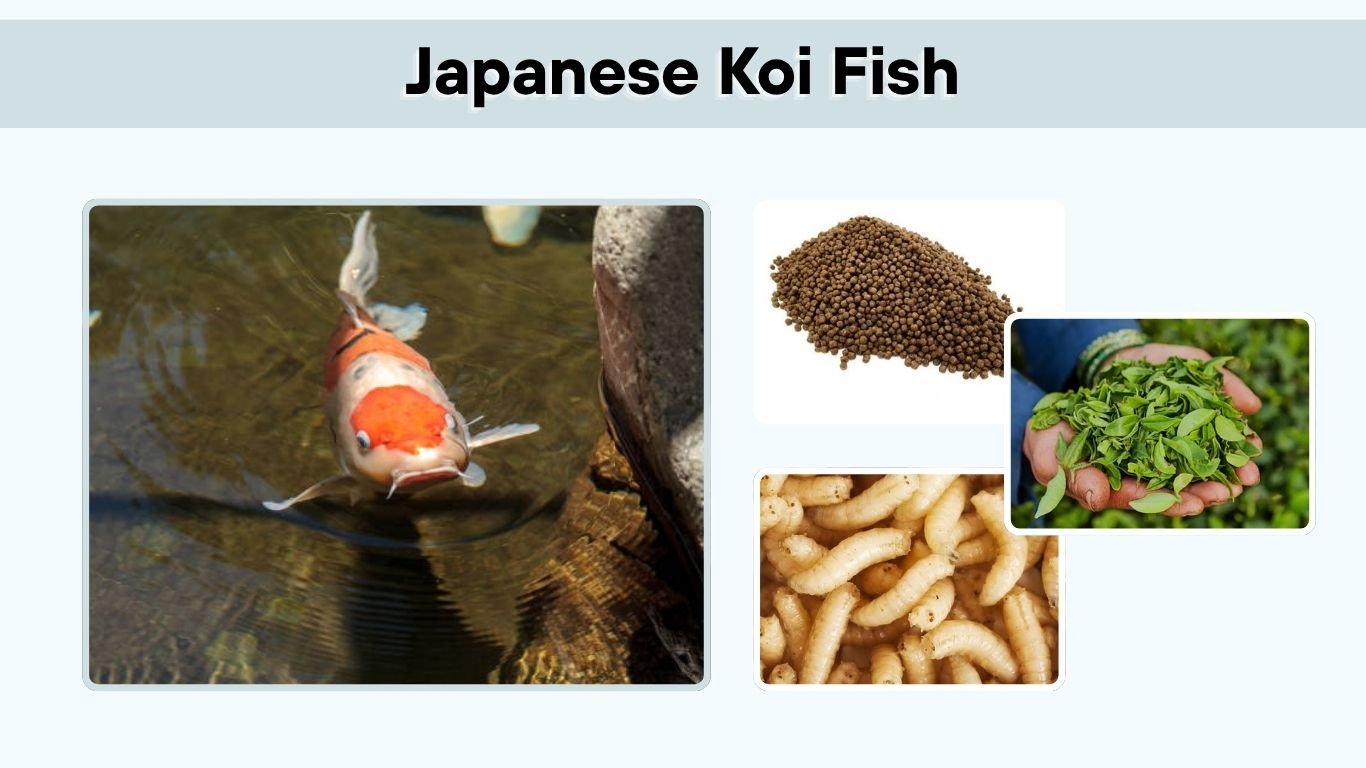
Japanese koi fish are among the world’s most admired ornamental pond fish, valued for their vivid colors, elegant swimming style, and unique patterns. Often called Nishikigoi in Japan, koi have been selectively bred for generations to produce combinations of white, red, black, yellow, blue, orange, and metallic shades. Beyond their beauty, koi have strong cultural associations with perseverance, strength, prosperity, and good fortune. With a spacious pond, clean water, balanced nutrition, and proper care, these remarkable carp can grow large and live for several decades.
What Are Japanese Koi Fish?
Japanese koi are ornamental varieties of the common carp, scientifically known as Cyprinus carpio. They are bred primarily for their appearance rather than for food. Through selective breeding, koi breeders have developed numerous varieties distinguished by color, pattern, scales, and body shape.
In Japan, ornamental koi are commonly known as Nishikigoi, which can be translated as “brocaded carp.” Today, Japanese koi are kept in ornamental ponds throughout the world.
Are Koi Fish Japanese?
Koi are strongly associated with Japan because Japanese breeders played an important role in developing the brightly colored varieties recognized today.
Carp existed outside Japan long before modern ornamental koi appeared. However, Japanese farmers selectively bred naturally occurring color variations over generations. These breeding programs eventually produced the distinctive red, white, black, yellow, and metallic koi seen today.
Japanese Koi vs Common Carp
Japanese koi and common carp belong to the same species, but selective breeding has made their appearances noticeably different.
Japanese koi commonly have:
- Bright and highly visible coloration
- Distinctive markings and patterns
- Carefully selected body shapes
- Numerous recognized varieties
- Greater ornamental value
- More predictable color characteristics
Common carp are generally brown, bronze, olive, or gray, providing camouflage in natural environments.
Popular Types of Japanese Koi
Many varieties of Japanese koi have been developed. Classification usually depends on body color, markings, scale patterns, and the location of different colors.
Some varieties contain only one or two colors, while others have complex combinations.
Kohaku
Kohaku is one of the most famous Japanese koi varieties. It has a white body covered with red markings.
Although the color combination appears simple, high-quality Kohaku are prized for clean white skin, rich red coloration, attractive pattern placement, and balanced body shape.
Taisho Sanke
Taisho Sanke, often simply called Sanke, has white, red, and black coloration.
The body usually has a white base with red patches and smaller black markings. The arrangement of all three colors is important when evaluating the appearance of the fish.
Showa Sanshoku
Showa is another three-colored koi, featuring black, red, and white.
Unlike Sanke, Showa usually has a stronger black presence. Black coloration may also appear on the head, creating dramatic patterns that can change as the koi matures.
Other Japanese Koi Varieties
Other popular varieties include:
- Tancho – Famous for a red marking on the head
- Asagi – Blue-gray scales with red or orange areas
- Shusui – A mostly scaleless variety related to Asagi
- Ogon – Solid metallic-colored koi
- Utsurimono – Black koi with contrasting markings
- Bekko – Colored body with scattered black markings
- Chagoi – Brown or tea-colored koi
- Kikokuryu – Metallic black-and-white koi
Japanese Koi Fish Colors
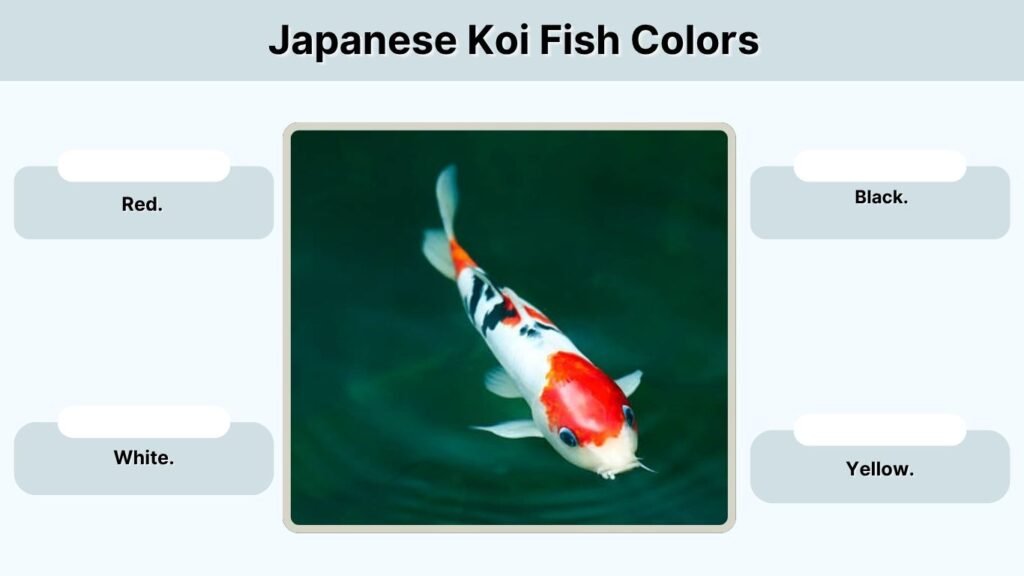
Color is one of the most important characteristics of Japanese koi. Selective breeding has produced an impressive range of shades and combinations.
A koi’s appearance depends largely on genetics, although age, diet, water conditions, stress, and health may influence color intensity.
Common Japanese Koi Colors
Japanese koi can display:
- Red
- White
- Black
- Yellow
- Orange
- Blue
- Gray
- Cream
- Silver
- Gold
Some varieties have solid colors, while others may display two, three, or several colors arranged in complex patterns.
Do Japanese Koi Change Color?
Yes, koi coloration can change as the fish matures.
Young koi may develop stronger black, red, or white areas with age. Some markings may become darker, lighter, larger, or less noticeable.
Genetics largely determine the potential quality of the pattern, but good nutrition and healthy water conditions can help koi maintain strong coloration.
Japanese Koi Fish Size
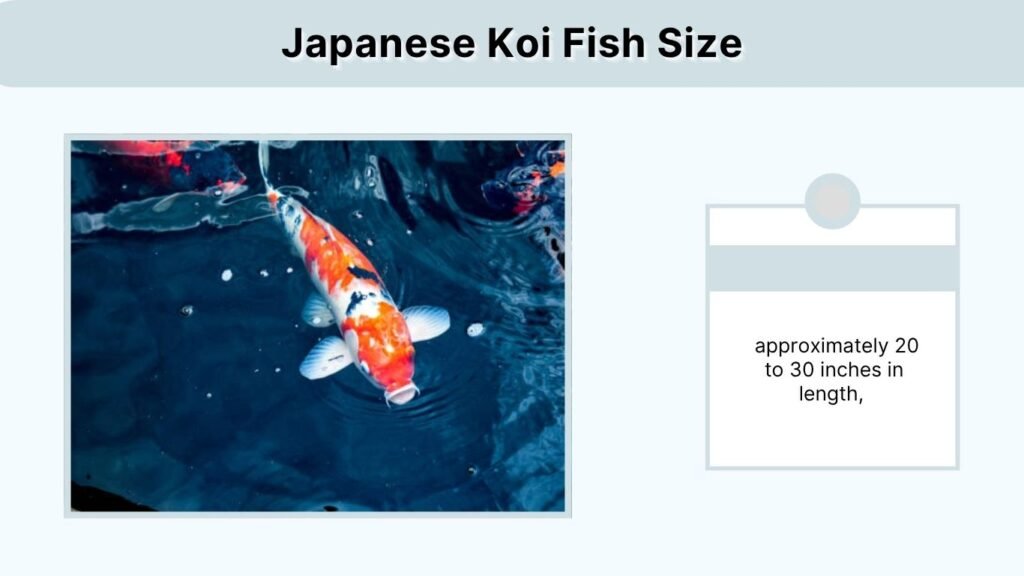
Koi are much larger than most common aquarium fish. Many adult Japanese koi reach approximately 20 to 30 inches in length, although some individuals can grow larger.
Their final size depends on genetics, diet, pond space, water quality, temperature, and overall health.
What Helps Koi Grow Larger?
Several conditions influence koi growth:
- Large swimming area
- High-quality food
- Good genetics
- Strong filtration
- Stable water quality
- Proper oxygen levels
- Suitable temperature
- Low stocking density
A small or overcrowded pond can limit healthy growth and increase stress.
Japanese Koi Fish Lifespan
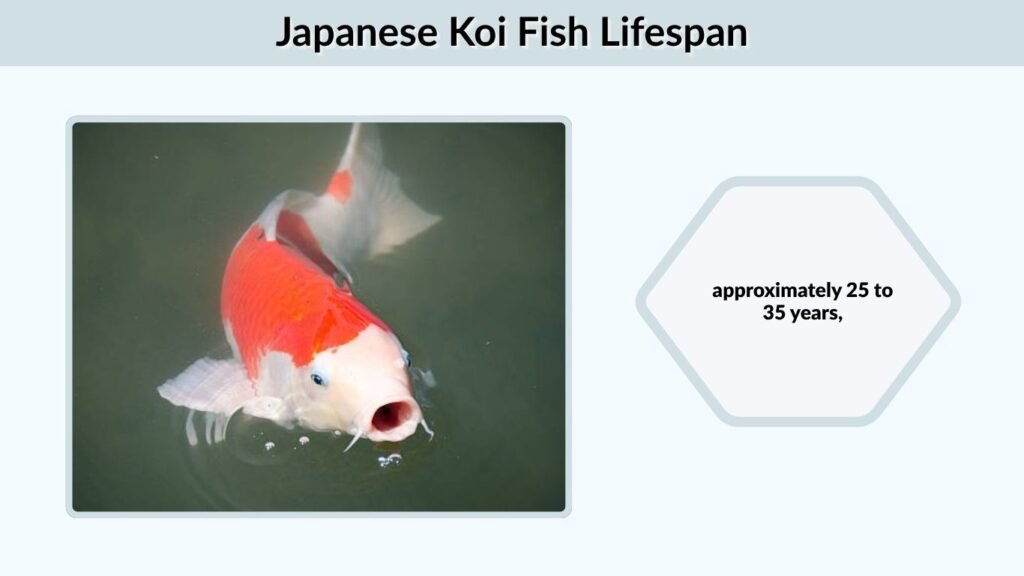
Japanese koi are long-lived fish when properly maintained. Many well-cared-for koi can live approximately 25 to 35 years, while some may survive considerably longer.
Their longevity is one reason koi are often considered long-term pets rather than temporary additions to a garden pond.
What Affects Koi Lifespan?
The most important factors include:
- Genetics
- Water quality
- Pond size
- Nutrition
- Disease prevention
- Oxygen levels
- Temperature stability
- Stress
- Predator protection
Regular pond maintenance can significantly improve a koi’s chance of living a long and healthy life.
Japanese Koi Pond Requirements
A koi pond should provide much more than attractive landscaping. It must function as a healthy aquatic environment capable of supporting large fish.
Koi produce considerable waste, so strong filtration and regular maintenance are essential.
What Does a Koi Pond Need?
A suitable Japanese koi pond should include:
- Plenty of swimming space
- Adequate depth
- Biological filtration
- Mechanical filtration
- Good water circulation
- Proper aeration
- Stable water parameters
- Predator protection
- Routine water testing
Owners should also avoid keeping too many koi in a limited space.
Can Japanese Koi Live in an Aquarium?
Young koi can temporarily live in large indoor tanks, but a typical home aquarium is generally unsuitable for adult koi.
Because koi grow large and produce significant waste, they require much more water and filtration than ordinary aquarium fish.
A spacious outdoor pond is usually the best long-term environment.
What Do Japanese Koi Fish Eat?
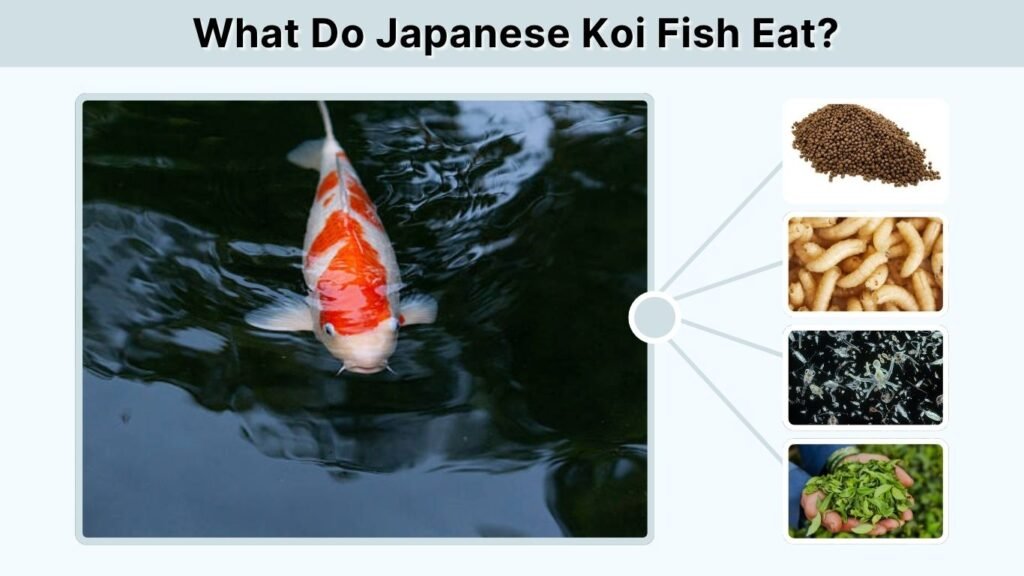
Japanese koi are omnivores, meaning they consume both plant and animal material. Commercial koi pellets are usually the best foundation for a balanced diet because they are formulated to provide essential nutrients.
Suitable Foods for Koi
Koi may eat:
- High-quality koi pellets
- Insect larvae
- Worms
- Small aquatic organisms
- Plant material
- Selected vegetables
- Small amounts of fruit
- Natural pond organisms
Overfeeding should be avoided because uneaten food can decay and reduce water quality.
Japanese Koi Fish Price
The price of Japanese koi varies dramatically. Small pond-quality koi may be relatively affordable, while exceptional fish from prestigious Japanese breeders can be extremely expensive.
Several characteristics determine how much a koi may be worth.
Factors Affecting Koi Price
Price may depend on:
- Variety
- Size
- Age
- Color quality
- Pattern
- Body shape
- Bloodline
- Breeder reputation
- Skin quality
- Show potential
Authentic Japanese koi imported from established breeders may cost more because of breeding quality, transportation, quarantine, and handling requirements.
How to Care for Japanese Koi Fish
Successful koi keeping depends on consistent care rather than occasional maintenance. Water quality should always be a priority because poor conditions can quickly cause stress, disease, and shortened lifespan.
Provide adequate space, effective filtration, good oxygenation, balanced food, and regular water testing.
New koi should ideally be quarantined before being introduced into an established pond. Owners should also observe their fish daily for changes in appetite, swimming behavior, breathing, coloration, or body condition.
FAQs
Are Japanese koi fish easy to keep?
Koi are relatively hardy, but they require more space, filtration, and maintenance than many smaller ornamental fish. A properly designed pond makes long-term care much easier.
What does Japanese koi symbolize?
Japanese koi commonly symbolize perseverance, strength, determination, success, prosperity, good fortune, and longevity.
How big do Japanese koi fish grow?
Many adult Japanese koi reach around 20 to 30 inches long. Some can become larger when genetics and environmental conditions are excellent.
How long do Japanese koi fish live?
Well-cared-for Japanese koi commonly live around 25 to 35 years. Some individuals may live much longer under exceptional conditions.
What is the difference between koi and Japanese koi?
“Koi” generally refers to ornamental carp, while “Japanese koi” usually describes koi bred in Japan or developed from Japanese breeding lines. Japanese koi are particularly valued for carefully selected colors, patterns, body shapes, and bloodlines.