
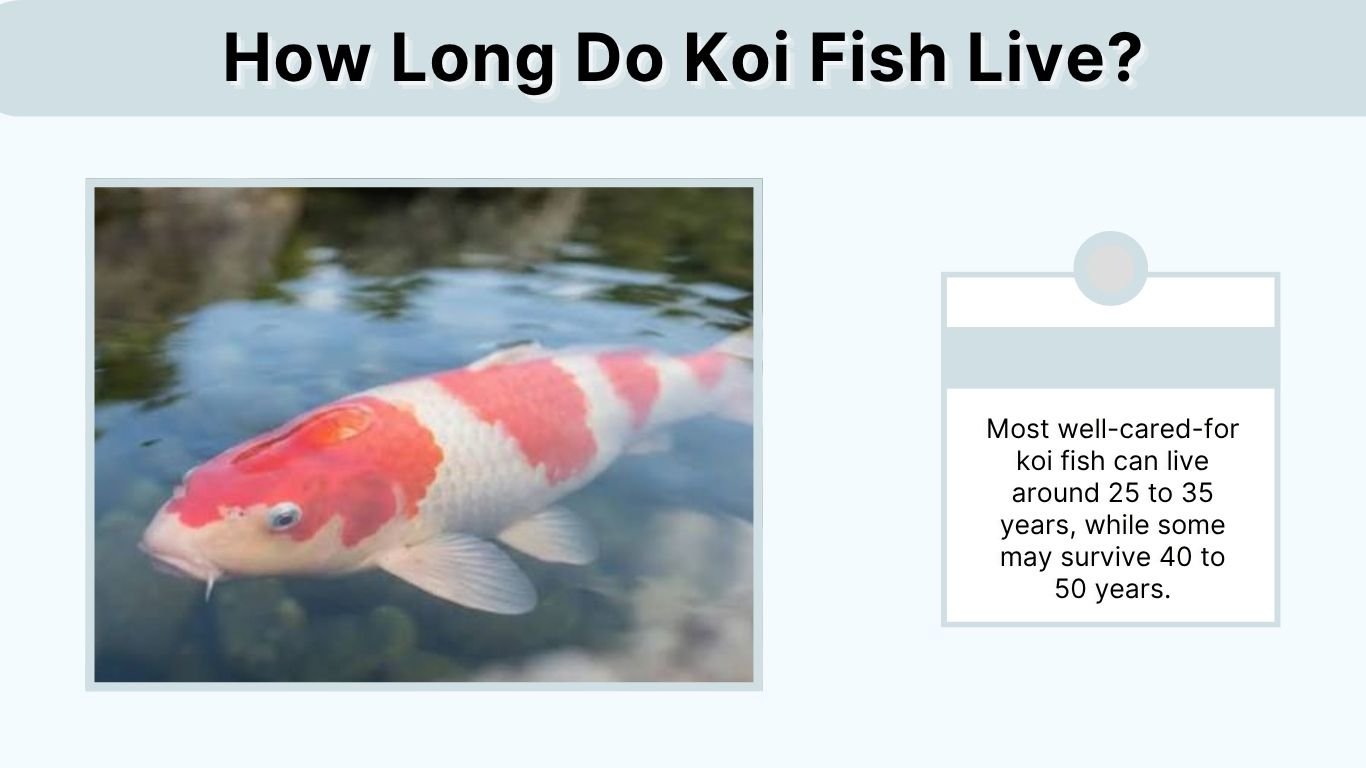
Koi fish are famous for their bright colors, peaceful behavior, and surprisingly long lives. Most well-cared-for koi fish can live around 25 to 35 years, while some may survive 40 to 50 years or longer under excellent conditions. Their lifespan depends heavily on genetics, water quality, diet, pond size, temperature, and disease prevention. Japanese koi are especially known for longevity because they are often bred and raised under carefully controlled conditions. Understanding what affects koi lifespan can help owners keep these beautiful fish healthy for decades.
What Is the Average Lifespan of a Koi Fish?
The average koi fish lifespan is approximately 25 to 35 years when the fish receives proper care. However, there is no single age that applies to every koi. Some live for only 10 to 15 years because of poor water conditions, overcrowding, disease, or nutritional problems, while exceptionally healthy koi may live much longer.
Typical Koi Lifespan
A general lifespan range includes:
- Average koi: 25–35 years
- Well-maintained pond koi: 30–40+ years
- Japanese koi: Often 30–50 years or more
- Poorly maintained koi: Sometimes less than 10–15 years
- Butterfly koi: Commonly around 20–30 years or longer with good care
Genetics play an important role, but environmental conditions often determine whether a koi reaches its natural lifespan.
How Long Do Japanese Koi Fish Live?
Japanese koi are particularly famous for their longevity. High-quality Japanese koi can commonly live for several decades when provided with excellent water conditions, nutrition, and veterinary care.
Traditional Japanese koi-keeping practices also emphasize large ponds, stable water temperatures, selective breeding, and careful feeding. These factors can give Japanese koi an advantage compared with fish kept in smaller or poorly maintained environments.
There have been historical claims of individual koi living for more than 100 years, although the exact ages of exceptionally old koi can be difficult to independently verify.
How Long Do Koi Fish Live in a Pond?
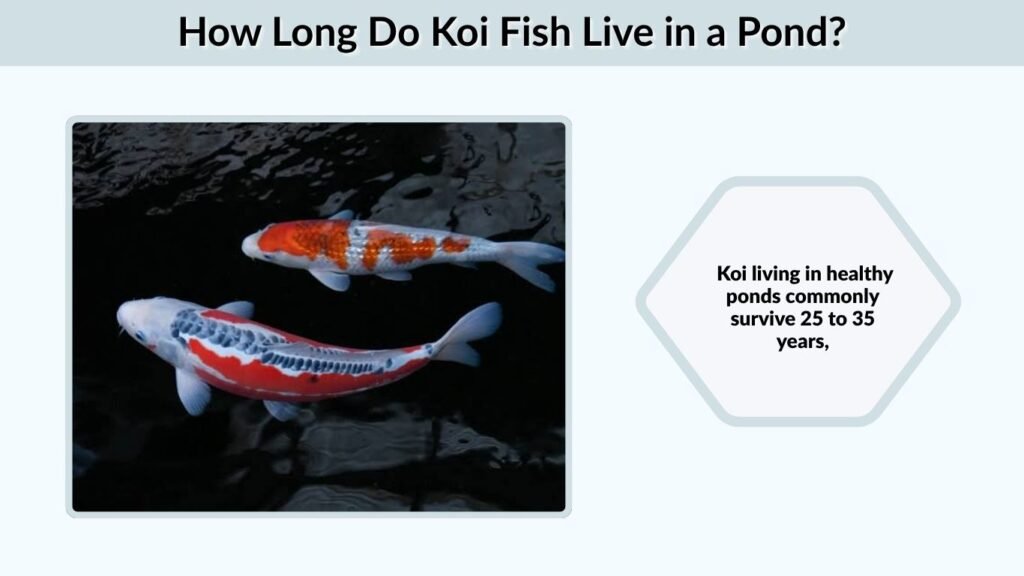
A well-designed outdoor pond is generally one of the best environments for koi. Koi living in healthy ponds commonly survive 25 to 35 years, and some can live considerably longer.
Outdoor ponds provide more swimming space and allow koi to experience natural seasonal cycles. However, simply placing koi in a pond does not guarantee longevity.
Pond Conditions That Support Long Life
For a koi pond to support healthy fish, owners should maintain:
- Adequate pond depth and swimming space
- Effective biological and mechanical filtration
- Good oxygen levels
- Stable water parameters
- Low ammonia and nitrite levels
- Appropriate stocking density
- Protection from predators
- Regular partial water changes
Overcrowding is particularly harmful because larger numbers of fish produce more waste. Poor filtration can then cause ammonia and other harmful substances to accumulate.
Does Pond Size Affect Koi Lifespan?
Yes. Koi are large carp that may grow more than 2 feet long, depending on genetics and care. Small ponds restrict movement and can become polluted more quickly.
Larger ponds usually provide greater water stability, more oxygen, and additional swimming space. These conditions reduce stress and make it easier for koi to reach their full adult size and lifespan.
How Long Do Koi Fish Live in Captivity?
Koi are primarily domesticated fish, so most koi live in captivity rather than naturally established wild populations. Properly maintained captive koi may live several decades.
Captivity can actually provide excellent conditions because owners can control feeding, predators, disease treatment, filtration, and water quality.
However, captivity can shorten lifespan when koi are kept in overcrowded ponds, undersized tanks, or poorly filtered water.
How Long Do Koi Fish Live in a Tank?
Koi can temporarily live in tanks, particularly when they are young, undergoing treatment, or being quarantined. A standard home aquarium, however, is generally not suitable as a permanent home for adult koi.
Koi grow large and produce substantial amounts of waste. Small tanks can cause:
- Poor water quality
- Restricted swimming space
- High ammonia levels
- Low oxygen
- Chronic stress
- Stunted or unhealthy development
Very large indoor holding systems can successfully house koi, but they require powerful filtration and significantly more water than an ordinary aquarium.
Why Do Koi Fish Live So Long?
Koi belong to the carp family and naturally have characteristics that support relatively long lives. Their longevity also reflects centuries of selective breeding and careful husbandry.
Genetics
Genetics influence growth rate, immune health, body structure, and potential lifespan. Koi from healthy breeding lines may have a better chance of reaching an advanced age.
Slow, Steady Growth
Koi continued developing for many years. Their relatively slow maturation compared with many smaller aquarium fish contributes to their long life cycle.
Good Water Quality
Water quality is one of the strongest influences on koi health. Ammonia, nitrite, extreme pH changes, and low oxygen can damage organs and weaken the immune system.
Stable, clean water reduces chronic stress and allows koi to remain healthy for decades.
Proper Nutrition
A balanced koi diet provides protein, healthy fats, vitamins, minerals, and other nutrients needed for growth and immune function.
Constant overfeeding should be avoided because leftover food pollutes the water and excessive nutrition can contribute to health problems.
Factors That Can Shorten a Koi Fish’s Lifespan
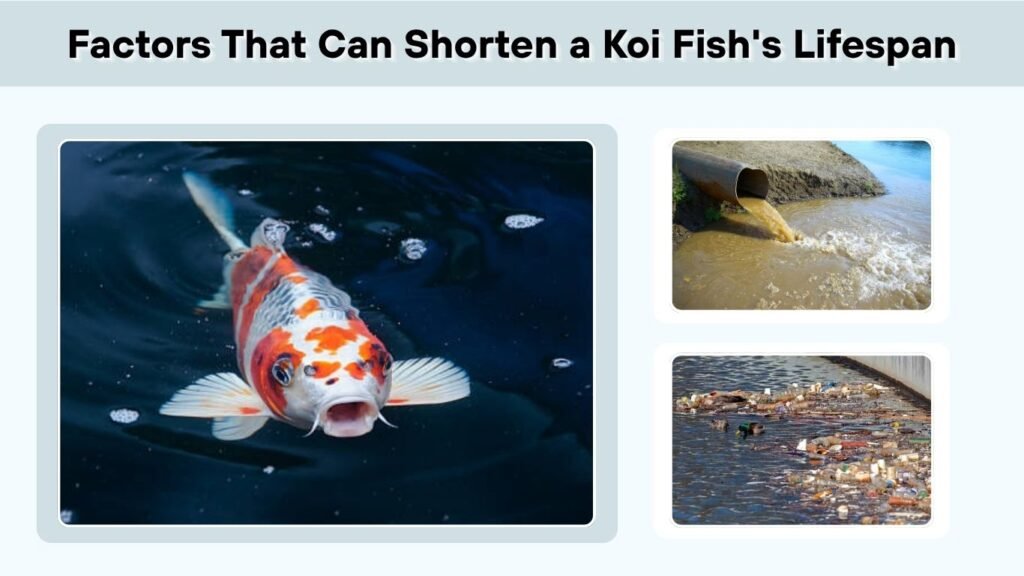
Even genetically healthy koi may die prematurely when their environment is unsuitable. Many lifespan problems can be prevented through proper pond management.
Poor Water Conditions
High ammonia or nitrite levels can seriously damage koi. Dirty water may also encourage bacterial and parasitic problems.
Regular testing allows pond owners to identify dangerous changes before they become severe.
Overcrowding
Too many koi in a small pond increases competition, stress, and waste production. Filtration systems may struggle to handle the resulting biological load.
Disease and Parasites
Koi can suffer from bacterial infections, fungal diseases, parasites, and viruses. Early identification and appropriate treatment can prevent minor health problems from becoming fatal.
Predators
Herons, raccoons, cats, and other predators may attack outdoor koi. Deep areas, pond covers, hiding places, or appropriate barriers can help protect them.
Extreme Temperatures
Koi are hardy cold-water fish, but rapid temperature changes can cause significant stress. A sufficiently deep pond provides more stable temperatures during hot summers and cold winters.
How Long Do Butterfly Koi Fish Live?
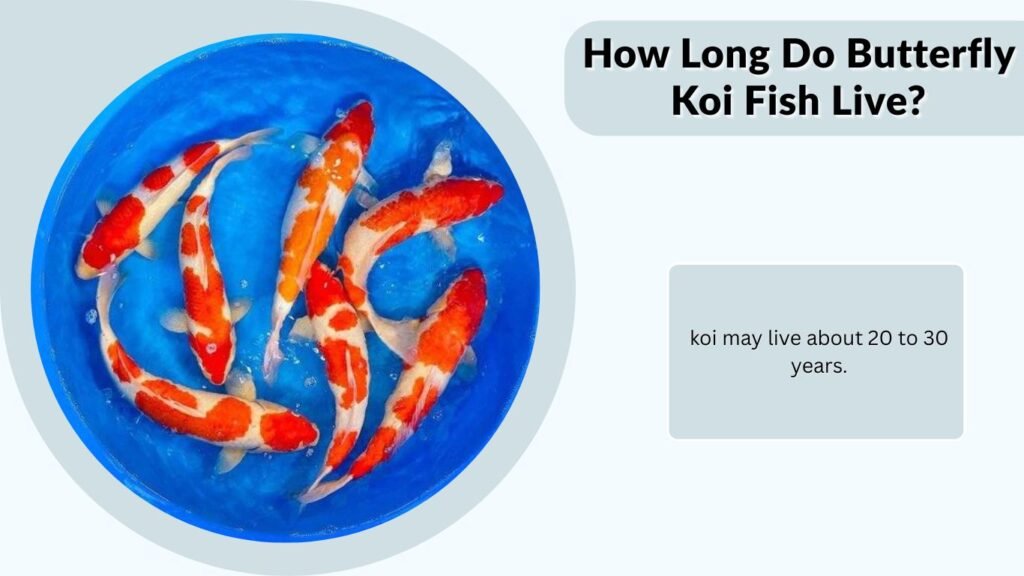
Butterfly koi, also called longfin koi, are known for their elongated fins and graceful appearance. Their lifespan is generally comparable to that of standard koi.
With proper care, butterfly koi may live about 20 to 30 years or longer. Genetics, water quality, diet, disease prevention, and available swimming space remain the major factors determining longevity.
Their long fins should also be monitored for damage or infection, especially in ponds containing sharp rocks or poorly designed equipment.
How Long Do Koi Fish Live in the Wild?
True ornamental koi are domesticated varieties of common carp and are primarily raised in controlled environments. When released into natural waterways, they may survive if conditions are suitable, but their lifespan becomes much less predictable.
Wild or released koi must deal with predators, diseases, food competition, changing water conditions, and extreme weather. These risks can significantly reduce their chances of reaching the ages commonly seen in carefully maintained ponds.
Koi should never be released into local waterways because non-native carp can disrupt natural ecosystems.
How Long Can Koi Fish Live Without Food?
Healthy adult koi can survive periods without feeding, especially during colder weather when their metabolism slows.
During warm, active periods, however, intentionally leaving koi without appropriate nutrition for extended periods is not recommended. A mature, healthy koi may tolerate several days without food, but survival time varies based on temperature, body condition, age, and health.
In cold water, koi naturally eat very little or may stop feeding entirely as their metabolism becomes much slower.
How Long Can Koi Fish Live Outside of Water?
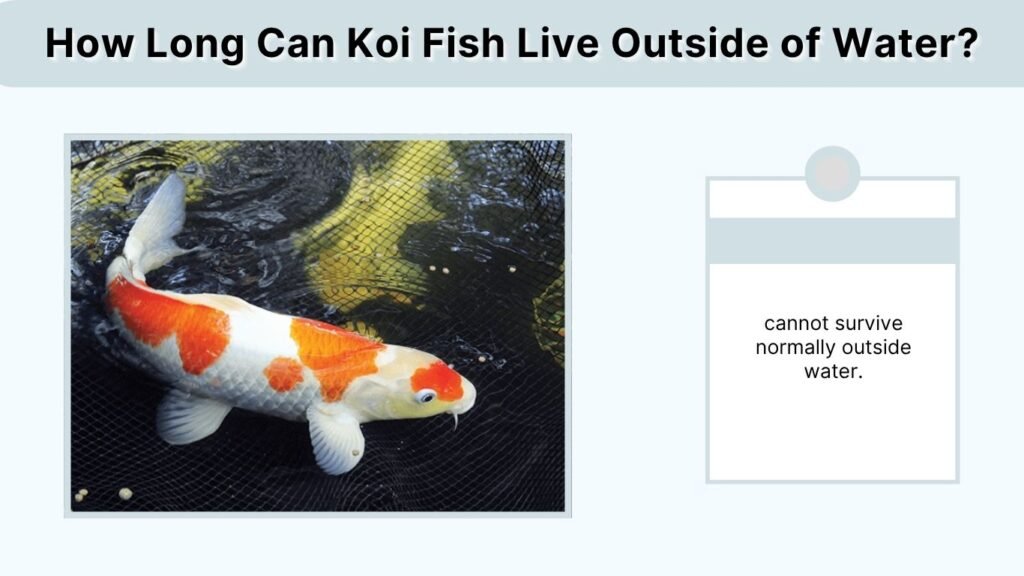
Koi are aquatic animals and cannot survive normally outside water. Their gills must remain wet to exchange oxygen.
A koi removed from water can quickly experience oxygen deprivation, gill damage, and severe stress. Survival time varies with temperature, humidity, fish size, and other conditions, so there is no safe period for keeping koi out of water.
When handling or transferring koi, minimize the amount of time the fish spends outside water.
How to Help Your Koi Live Longer
Long-lived koi usually receive consistent care throughout their lives rather than occasional attention.
Owners can improve longevity by providing a spacious pond, strong filtration, adequate oxygen, routine water testing, high-quality food, and protection from predators. New fish should ideally be quarantined before entering an established pond to reduce the risk of introducing disease.
Observing koi regularly is equally important. Changes in appetite, swimming behavior, coloration, breathing, or body condition can provide early warning of illness.
FAQs
How long do koi fish normally live?
Most properly cared-for koi can live approximately 25 to 35 years. Some individuals may live 40 years or longer under exceptional conditions.
Can koi fish live for 100 years?
There are historical reports of koi reaching extremely old ages, including more than 100 years. However, such ages are exceptional and can be difficult to verify. Most koi live for several decades rather than a century.
Do koi live longer in ponds or tanks?
Koi generally do better in spacious, well-maintained ponds because ponds provide more swimming room and greater water volume. Very large indoor systems can also support koi, but ordinary home aquariums are usually too small for adults.
How long do koi carp fish live?
Koi carp commonly live around 25 to 35 years when provided with good water quality, sufficient space, balanced nutrition, and regular health care.
How long do koi betta fish live?
A koi betta is not a koi carp. It is a color variety of Betta splendens bred to resemble the multicolored patterns of koi. Koi bettas typically live around 3 to 5 years, although some may live longer with excellent care.