
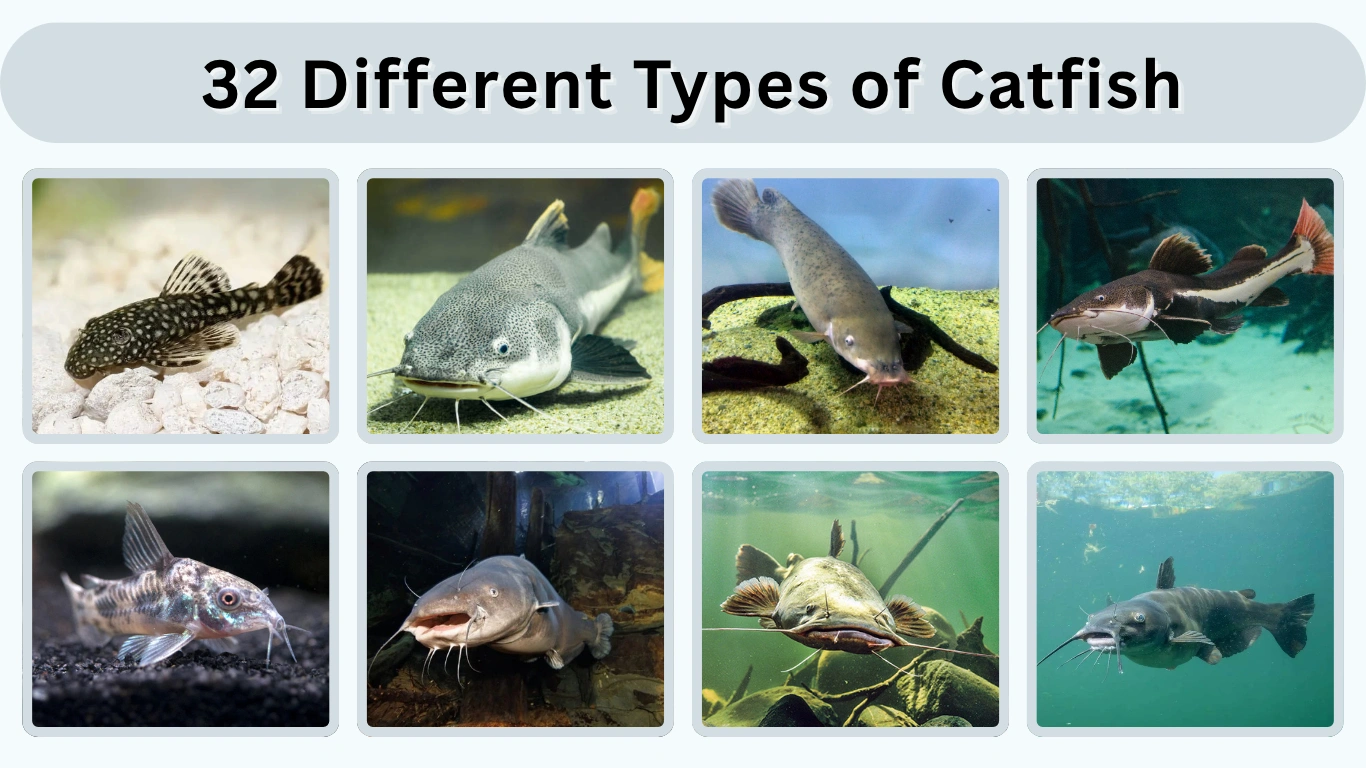
Catfish are a diverse group of fish found in freshwater and marine environments around the world. Known for their whisker-like barbels and bottom-dwelling behavior, they come in a wide variety of shapes, sizes, and colors. From small aquarium species to massive river giants, catfish play important roles in ecosystems and fisheries. This guide highlights 32 different types of catfish using common names only, giving you a clear and simple overview of some of the most well-known and interesting species.
1. Channel Catfish
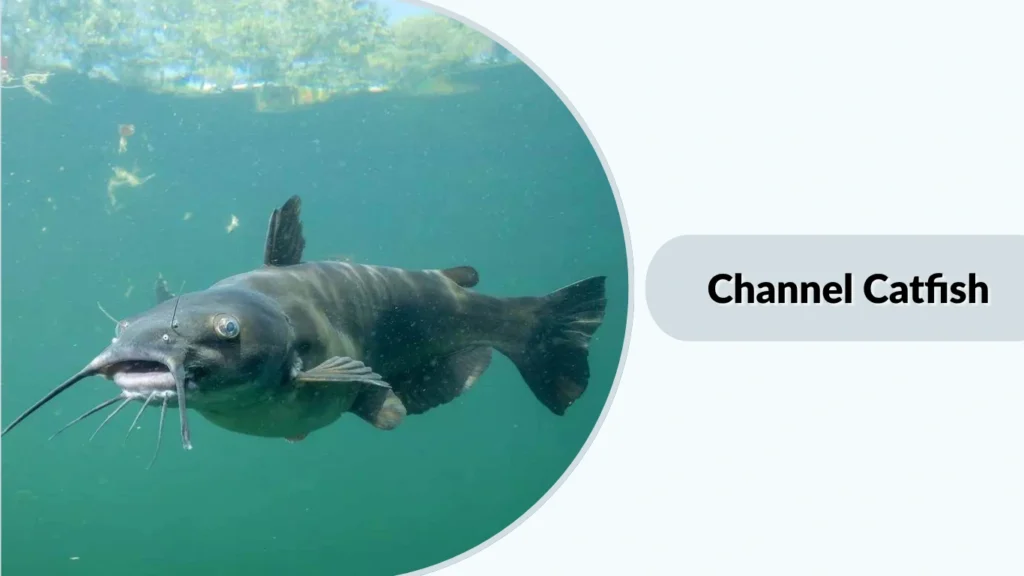
Channel Catfish are one of the most well-known freshwater catfish species, especially popular in North America for both recreational fishing and aquaculture. They are valued for their adaptability, fast growth, and mild-tasting meat. This species can thrive in a wide range of water conditions, making it one of the most widespread and commonly encountered catfish in rivers, lakes, and ponds.
Identification
- Slender, streamlined body shape
- Deeply forked tail fin
- Smooth, scaleless skin
- Bluish-gray to olive coloration
- Small black spots along the sides (more visible in younger fish)
- White to silver underside
- Four pairs of barbels (whiskers) around the mouth
Habitat
Channel Catfish inhabit freshwater systems such as rivers, lakes, ponds, and reservoirs. They prefer slow to moderate currents and are often found near the bottom in deeper pools. These fish commonly gather around submerged structures like logs, rocks, and debris, which provide shelter and feeding opportunities. They are highly tolerant of varying water conditions, including murky or low-oxygen environments.
Diet
Channel Catfish are omnivorous and opportunistic feeders. Their diet includes insects, aquatic larvae, small fish, crustaceans, and plant material. They also scavenge on dead organisms, which helps keep their environment clean. Using their sensitive barbels, they can detect food even in dark or muddy waters where visibility is low.
Behavior
These fish are primarily nocturnal, becoming more active during the night when they search for food. They rely heavily on their sense of smell and taste rather than sight. Channel Catfish are generally solitary but may gather in groups when food is abundant. During spawning season, males guard nests aggressively, ensuring the safety of eggs until they hatch.
2. Blue Catfish
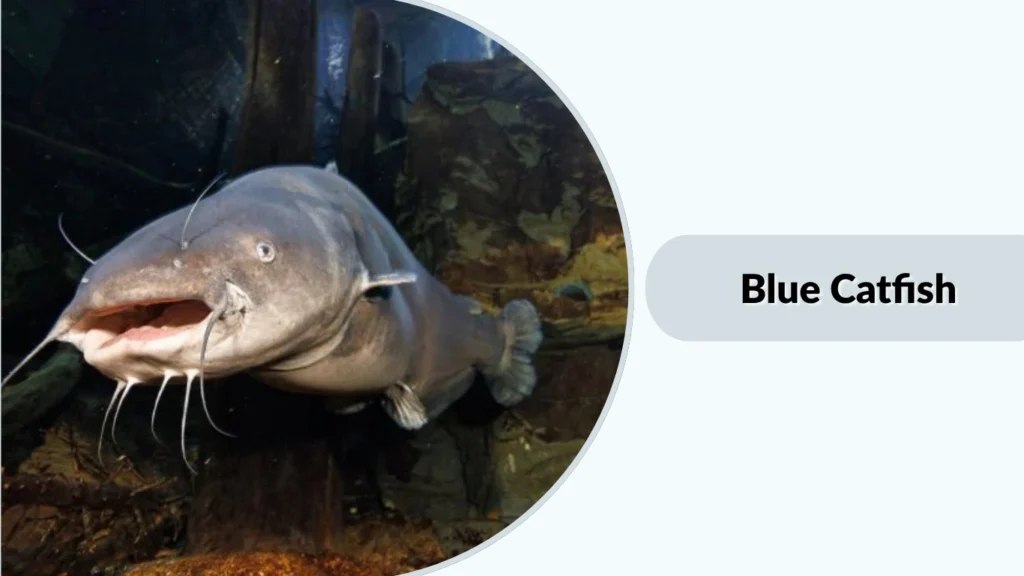
Blue Catfish are among the largest freshwater catfish species in North America, known for their impressive size and strength. They are highly valued by anglers due to their fighting ability and can grow to massive proportions in large river systems. Their name comes from the bluish tint on their body, which distinguishes them from other similar species.
Identification
- Large, elongated body
- Bluish-gray coloration along the sides
- Silvery-white belly
- Deeply forked tail fin
- Smooth, scaleless skin
- No spots on the body
- Four pairs of barbels around the mouth
Habitat
Blue Catfish are commonly found in large rivers, reservoirs, and lakes with strong currents. They prefer deep channels with sandy or rocky bottoms. These fish often stay in deeper waters during the day and move to shallower areas at night to feed. They are highly adaptable and can also tolerate slightly brackish water conditions in some regions.
Diet
They are primarily carnivorous and feed on fish, mussels, insects, and crustaceans. As they grow larger, their diet shifts more toward other fish. Blue Catfish are active hunters but will also scavenge when the opportunity arises. Their strong sense of smell helps them locate food even in murky water.
Behavior
Blue Catfish are generally active and powerful swimmers. They tend to move in groups, especially when younger, but larger individuals are often more solitary. They are most active during low-light conditions, such as dawn, dusk, or nighttime, when they search for food along riverbeds and open waters.
3. Flathead Catfish
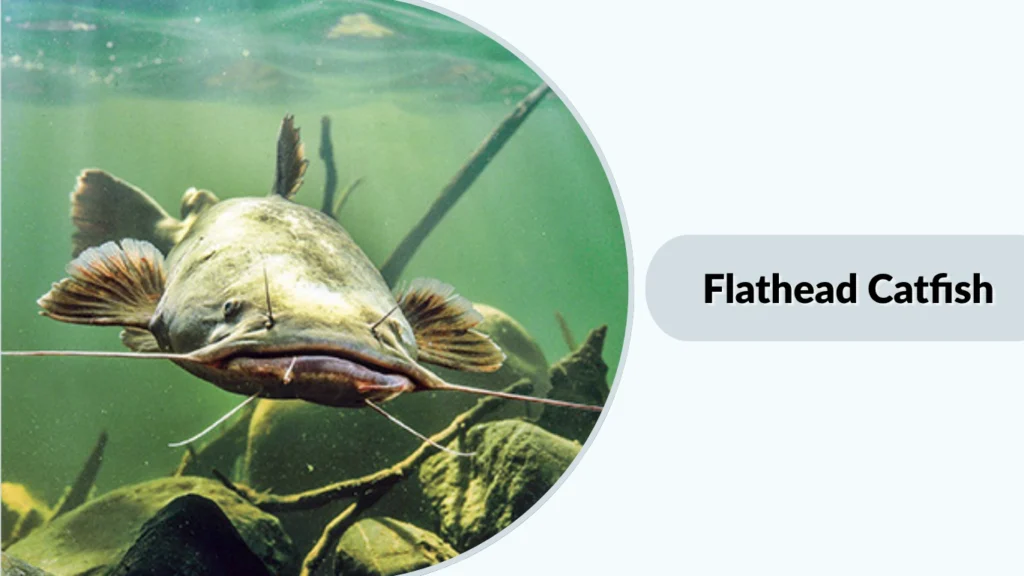
Flathead Catfish are large, powerful freshwater fish known for their broad, flattened head and aggressive predatory nature. They are popular among anglers for their size and strength and are often found in large river systems. Unlike many other catfish species, Flatheads prefer live prey and are considered skilled hunters.
Identification
- Broad, flattened head
- Yellowish-brown to dark olive body
- Mottled or marbled coloration
- Squared or slightly rounded tail (not deeply forked)
- Smooth, scaleless skin
- Lower jaw protrudes beyond the upper jaw
- Long barbels around the mouth
Habitat
Flathead Catfish are typically found in large rivers, lakes, and reservoirs with slow-moving or still water. They prefer deep pools with plenty of cover, such as submerged logs, rock piles, and undercut banks. These fish are bottom dwellers and tend to remain hidden during the day, becoming more active at night.
Diet
They are primarily carnivorous and strongly prefer live prey. Their diet mainly includes fish such as shad, sunfish, and other smaller species. Unlike many catfish, they rarely scavenge and instead rely on ambush hunting. Juveniles may consume insects and smaller aquatic organisms before transitioning to a fish-based diet.
Behavior
Flathead Catfish are solitary and territorial, especially as they grow larger. They are mostly nocturnal, leaving their hiding spots at night to hunt. During spawning season, males guard nests and protect eggs aggressively. Their stealthy movement and strong jaws make them effective predators in their environment.
4. White Catfish
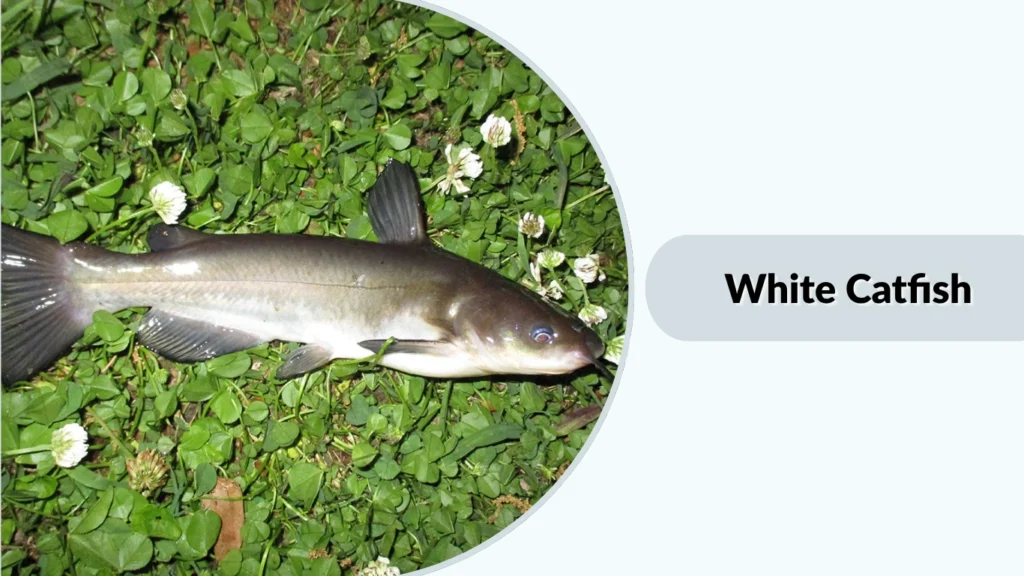
White Catfish are medium-sized freshwater catfish commonly found in rivers and coastal waterways. They are known for their hardy nature and ability to tolerate a wide range of environmental conditions, including slightly brackish water. This adaptability makes them a common species in both inland and estuarine habitats.
Identification
- Moderately slender body
- Gray to bluish-gray coloration on the back
- Distinct white or pale underside
- Slightly forked tail fin
- Smooth, scaleless skin
- Rounded head with a slightly blunt snout
- Four pairs of barbels around the mouth
Habitat
White Catfish are typically found in rivers, lakes, ponds, and estuaries. They prefer slow-moving or still waters with soft bottoms like mud or sand. This species is also tolerant of brackish conditions, allowing it to inhabit coastal areas where freshwater mixes with saltwater. They often stay near the bottom during the day.
Diet
They are omnivorous and feed on a variety of food sources, including insects, small fish, crustaceans, and plant material. White Catfish are also opportunistic scavengers, consuming dead organisms when available. Their sensitive barbels help them locate food in murky or low-visibility water conditions.
Behavior
White Catfish are generally less aggressive compared to larger catfish species. They are mostly active during the night, using their sense of smell and taste to find food. These fish may gather in small groups, especially when feeding, but are not strongly territorial.
5. Black Bullhead
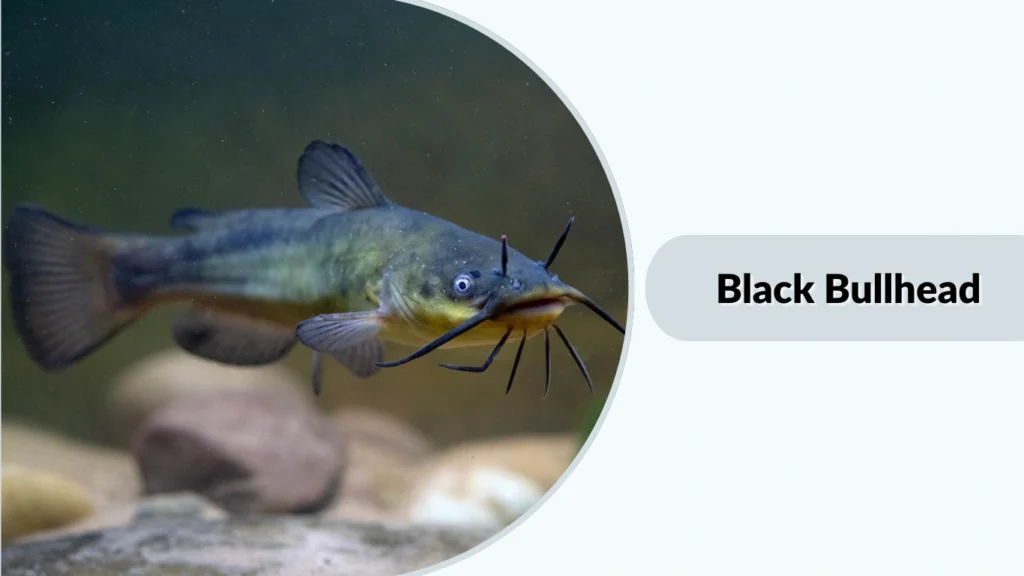
Black Bullhead are small to medium-sized catfish known for their hardy nature and ability to survive in poor water conditions. They are commonly found in North America and are often one of the most abundant catfish species in ponds and slow-moving waters. Their resilience makes them easy to find even in environments where other fish struggle.
Identification
- Stocky, compact body
- Dark brown to black coloration
- Rounded tail (not forked)
- Smooth, scaleless skin
- Light-colored chin barbels (whiskers)
- Broad, flat head
- Short dorsal fin with a strong spine
Habitat
Black Bullhead prefer slow-moving or still freshwater environments such as ponds, lakes, swamps, and sluggish rivers. They thrive in muddy or murky waters and can tolerate low oxygen levels better than many other fish species. These catfish are bottom dwellers and often stay hidden among debris or vegetation during the day.
Diet
They are omnivorous and feed on a wide range of food sources. Their diet includes insects, larvae, small fish, plant material, and organic debris. Black Bullhead are also active scavengers, consuming dead matter found along the bottom. Their ability to eat almost anything contributes to their survival in harsh conditions.
Behavior
Black Bullhead are mostly nocturnal and become more active at night. They rely on their strong sense of smell and taste to locate food in dark or muddy water. These fish are generally not aggressive but can be opportunistic feeders. They often gather in groups, especially in areas with abundant food.
6. Yellow Bullhead
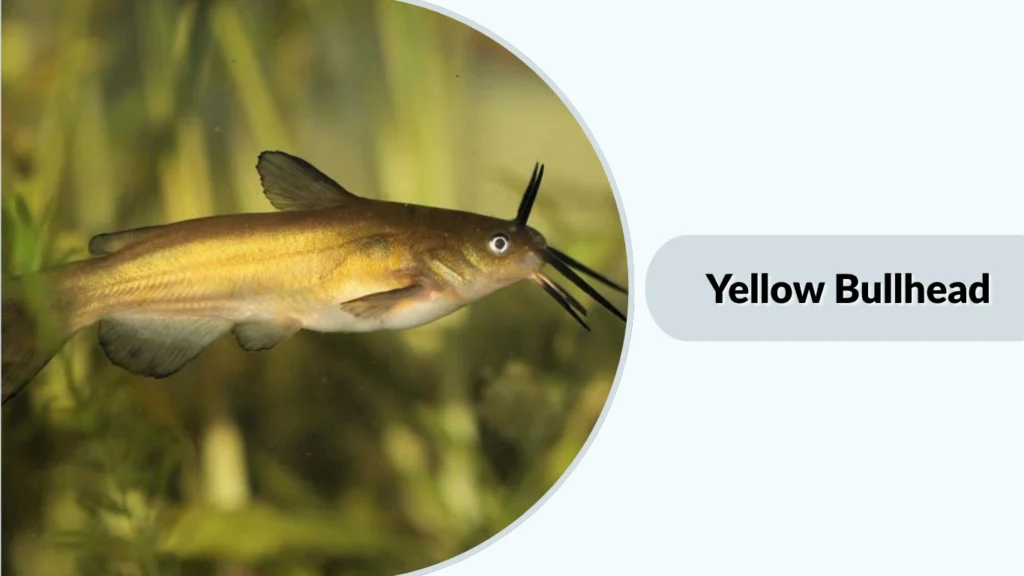
Yellow Bullhead are small, hardy freshwater catfish known for their lighter coloration and tolerance to a variety of environments. They are commonly found in calm waters and are popular among beginner anglers due to their abundance and ease of capture. This species is less aggressive compared to other bullheads and adapts well to different habitats.
Identification
- Stocky, rounded body
- Yellow to olive-brown coloration
- Pale yellow or white belly
- Rounded tail fin (not forked)
- Smooth, scaleless skin
- Light-colored chin barbels (usually white or yellow)
- Broad, slightly flattened head
Habitat
Yellow Bullhead prefers slow-moving or still waters such as ponds, lakes, marshes, and backwaters of rivers. They are often found in areas with soft, muddy bottoms and plenty of vegetation. These fish can tolerate low oxygen levels and poor water quality, making them common in shallow and warm environments.
Diet
They are omnivorous and feed on insects, larvae, small crustaceans, plant material, and organic debris. Yellow Bullhead are also scavengers, consuming dead matter found on the bottom. Their flexible diet allows them to survive in a wide range of conditions where food sources may vary.
Behavior
Yellow Bullhead are generally less aggressive and more sluggish compared to other catfish species. They are mostly active during the night, using their barbels to detect food in dark or murky water. They tend to stay near the bottom and may gather in small groups, especially in areas with abundant food.
7. Brown Bullhead
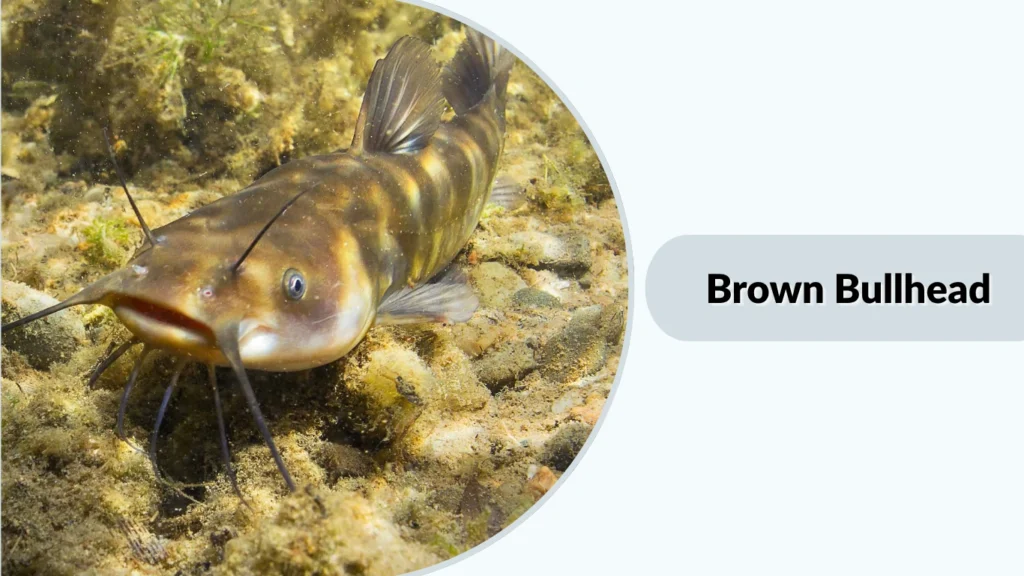
Brown Bullhead are small, adaptable catfish commonly found in freshwater habitats across North America. They are known for their mottled brown appearance and ability to survive in low-quality water conditions. This species is often found in ponds and slow-moving waters, making it one of the more accessible catfish for anglers.
Identification
- Stocky, compact body
- Brown to dark olive coloration
- Mottled or blotchy pattern on the sides
- Rounded tail fin (not forked)
- Smooth, scaleless skin
- Dark chin barbels (a key distinguishing feature)
- Broad, slightly flattened head
Habitat
Brown Bullhead prefer calm freshwater environments such as ponds, lakes, swamps, and slow-moving rivers. They are especially common in muddy or heavily vegetated areas. This species can tolerate low oxygen levels and polluted waters, allowing it to thrive in habitats where other fish may not survive.
Diet
They are omnivorous and feed on a variety of food sources, including insects, larvae, small fish, algae, and plant matter. Brown Bullhead are also scavengers, consuming organic debris and dead organisms from the bottom. Their diverse diet helps them adapt to different environments.
Behavior
Brown Bullhead are mostly nocturnal and become active at night when searching for food. They rely heavily on their sense of smell and taste rather than vision. These fish are generally peaceful and often gather in small groups, especially in areas with plenty of food and shelter.
8. Walking Catfish
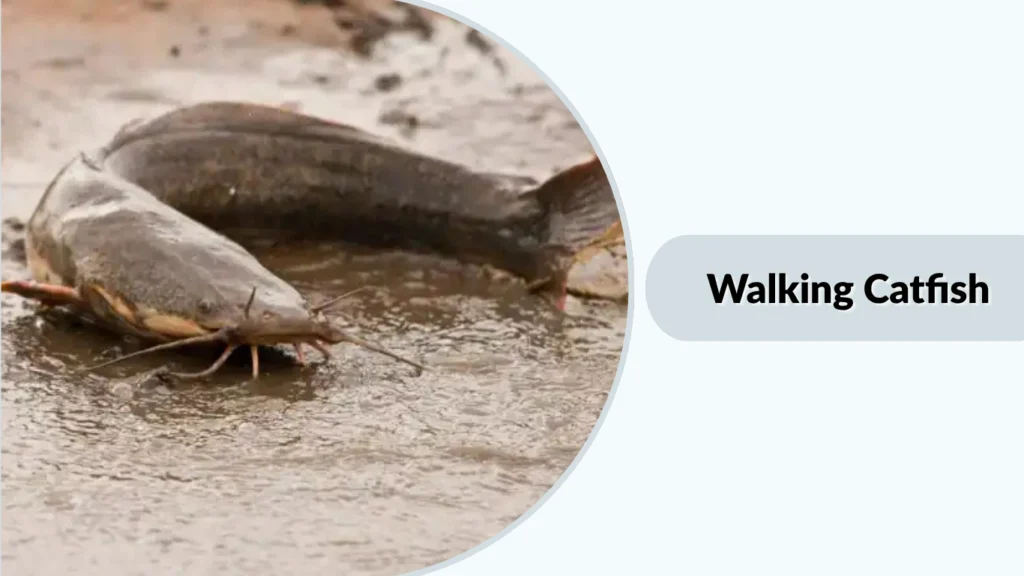
Walking Catfish are unique freshwater fish known for their unusual ability to move across land for short distances. Native to Southeast Asia, they have gained attention for their survival skills and adaptability. This species can breathe air directly, allowing it to live in low-oxygen waters and even travel between water bodies.
Identification
- Elongated, cylindrical body
- Dark gray to brown coloration
- Long dorsal and anal fins extending along the body
- Rounded tail fin
- Smooth, scaleless skin
- Prominent barbels around the mouth
- Strong pectoral fins used for movement on land
Habitat
Walking Catfish are commonly found in swamps, ponds, ditches, and slow-moving rivers. They prefer warm, shallow waters with muddy bottoms. Due to their ability to breathe air, they can survive in oxygen-poor environments where many other fish cannot. They may leave drying water bodies to find new habitats.
Diet
They are omnivorous and opportunistic feeders. Their diet includes insects, small fish, crustaceans, plant material, and organic debris. Walking Catfish will eat almost anything available, which helps them survive in harsh and changing environments.
Behavior
This species is best known for its ability to “walk” on land using its pectoral fins and body movements. They are mostly active at night and can travel short distances to locate new water sources. Walking Catfish are highly resilient and can survive out of water for extended periods if kept moist.
9. Glass Catfish
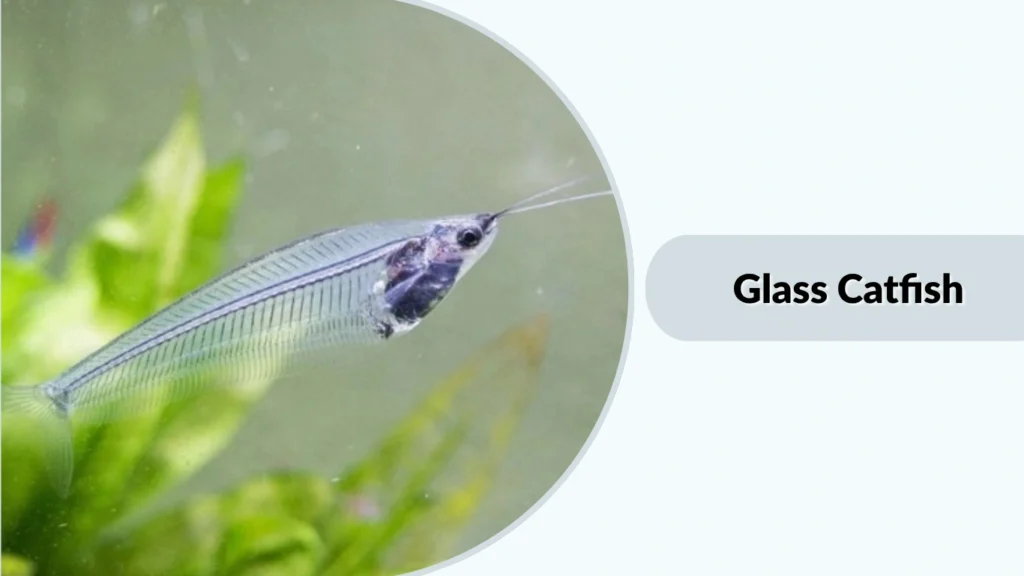
Glass Catfish are fascinating freshwater fish known for their almost completely transparent bodies, which make their internal organs and spine visible. Native to Southeast Asia, they are popular in aquariums due to their unique appearance and peaceful nature. Their delicate look and schooling behavior make them especially attractive to fish keepers.
Identification
- Transparent, glass-like body
- Visible internal organs and backbone
- Slender, elongated body shape
- Small, forked tail fin
- Long barbels extending from the mouth
- Silvery head with reflective sheen
- No visible scales
Habitat
Glass Catfish are typically found in slow-moving rivers, streams, and floodplains. They prefer clean, well-oxygenated water with gentle currents. In the wild, they often stay in mid-water levels and gather in groups. They thrive in environments with submerged plants and natural cover.
Diet
They are carnivorous and mainly feed on small invertebrates, insect larvae, and tiny aquatic organisms. In captivity, they accept live or frozen foods such as brine shrimp and bloodworms. Their feeding behavior relies more on sight compared to many other catfish species.
Behavior
Glass Catfish are peaceful and social, often seen swimming in schools. They are active during the day and prefer to stay in groups for security. Unlike many catfish, they are not bottom dwellers and instead occupy mid-water zones. They can be sensitive to poor water conditions and require a stable environment.
10. Pictus Catfish
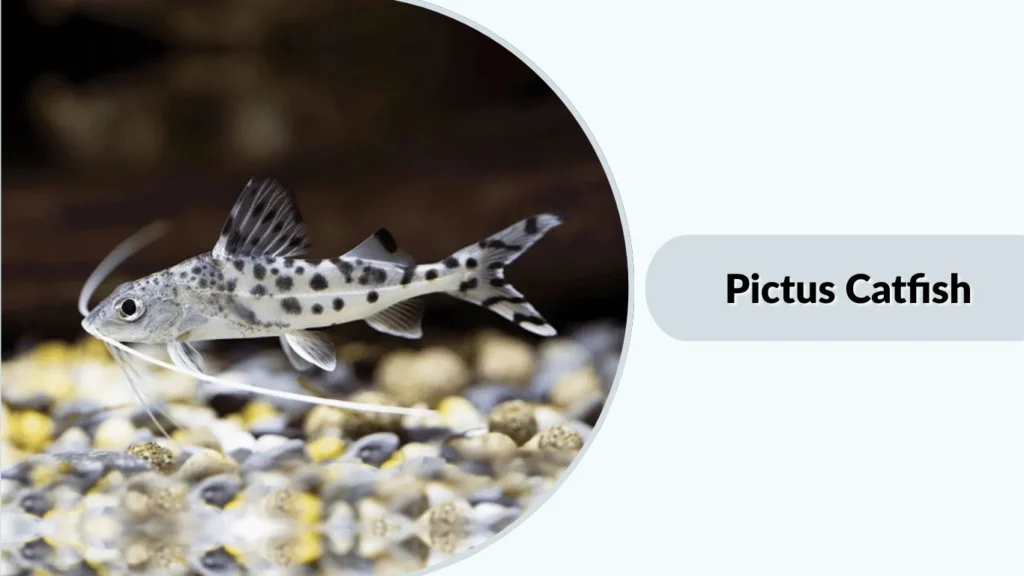
Pictus Catfish are small, active freshwater fish known for their striking spotted pattern and energetic behavior. Native to South America, they are popular in aquariums due to their attractive appearance and lively nature. Their long whiskers and fast swimming make them stand out among other catfish species.
Identification
- Slender, streamlined body
- Silver body with distinct black spots
- Deeply forked tail fin
- Long, flowing barbels (whiskers)
- Smooth, scaleless skin
- Small head with large eyes
- Slightly translucent fins
Habitat
Pictus Catfish are commonly found in rivers and streams with moderate currents. They prefer well-oxygenated water and environments with sandy or rocky bottoms. In the wild, they often stay near the bottom but are also active swimmers throughout the water column, especially in open areas.
Diet
They are carnivorous and feed on insects, larvae, small fish, and crustaceans. In aquariums, they accept a variety of foods such as pellets, frozen foods, and live prey. Their strong sense of smell helps them locate food, especially during low-light conditions.
Behavior
Pictus Catfish are very active, especially at night. They are fast swimmers and require plenty of space to move around. While generally peaceful, they may eat very small fish due to their predatory instincts. They often do well in groups and are more confident when kept with other similar-sized fish.
11. Cory Catfish
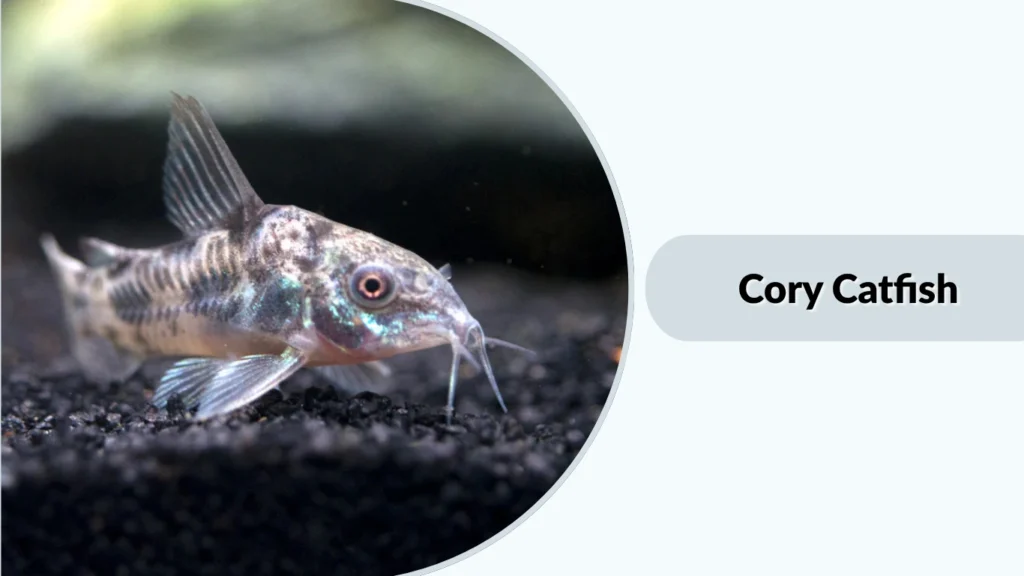
Cory Catfish, often called “Corydoras,” are small, peaceful freshwater catfish widely in aquariums. They are known for their gentle nature, bottom-dwelling habits, and social behavior. Native to South America, these fish are excellent cleaners, helping maintain tank hygiene by feeding on leftover food.
Identification
- Small, compact body
- Rounded shape with a slightly arched back
- Light to dark coloration depending on species
- Often patterned with spots or stripes
- Short barbels around the mouth
- Armored plates along the body instead of scales
- Rounded tail fin
Habitat
Cory Catfish are found in slow-moving rivers, streams, and shallow waters with sandy or muddy bottoms. They prefer calm environments with plenty of hiding places such as plants, driftwood, and rocks. In aquariums, they thrive in clean, well-maintained water with soft substrate to protect their barbels.
Diet
They are omnivorous and primarily feed on small food particles found at the bottom. Their diet includes insects, larvae, plant matter, and leftover food. In captivity, they accept sinking pellets, flakes, and live or frozen foods like bloodworms.
Behavior
Cory Catfish are highly social and prefer to live in groups. They are peaceful and get along well with other non-aggressive fish. These catfish are active during the day and often seen foraging along the bottom. They occasionally swim to the surface to gulp air, which helps them survive in low-oxygen conditions.
12. Upside-Down Catfish
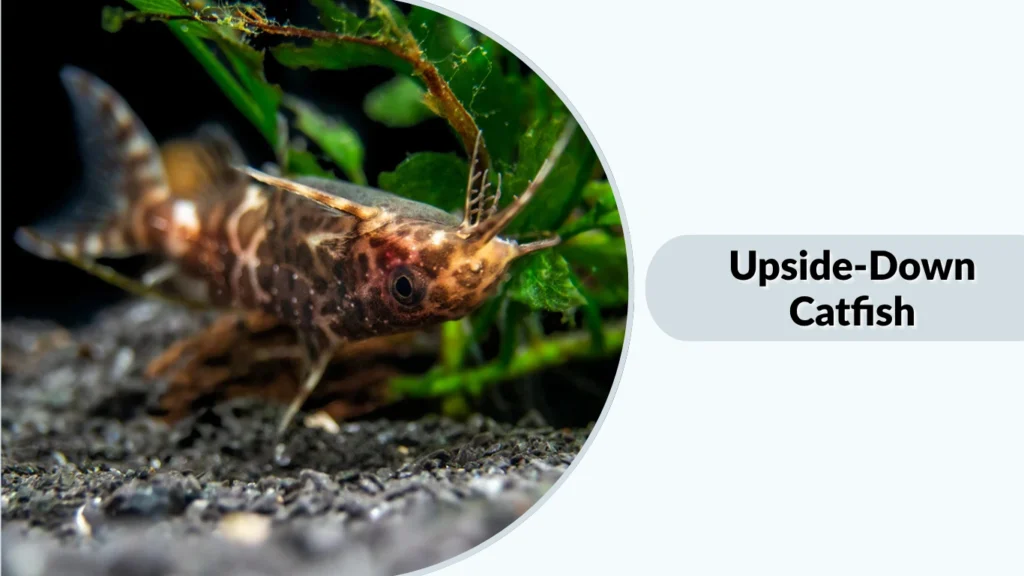
Upside-Down Catfish are unique freshwater fish best known for their unusual swimming behavior—often swimming and resting upside down. Native to Africa, they are popular in aquariums due to their distinctive habits and interesting appearance. This behavior helps them feed more easily from the water’s surface.
Identification
- Medium-sized, slightly flattened body
- Light brown to gray coloration with darker markings
- Belly darker than the back (reverse of most fish)
- Forked tail fin
- Smooth, scaleless skin
- Prominent barbels around the mouth
- Slightly curved body adapted for inverted swimming
Habitat
Upside-Down Catfish are commonly found in rivers, streams, and floodplains with slow to moderate currents. They prefer areas with plenty of hiding spots such as submerged wood, rocks, and vegetation. These fish often stay under cover during the day and become more active in dim lighting.
Diet
They are omnivorous and feed on insects, larvae, algae, and small invertebrates. Their upside-down swimming allows them to graze on food from the underside of surfaces or near the water’s surface. In aquariums, they accept a variety of foods including flakes, pellets, and live or frozen options.
Behavior
This species is social and usually does well in small groups. They are mostly active during low-light conditions and are known for their calm temperament. Their upside-down swimming is not only unique but also practical, helping them access food sources that other fish may overlook.
13. Redtail Catfish
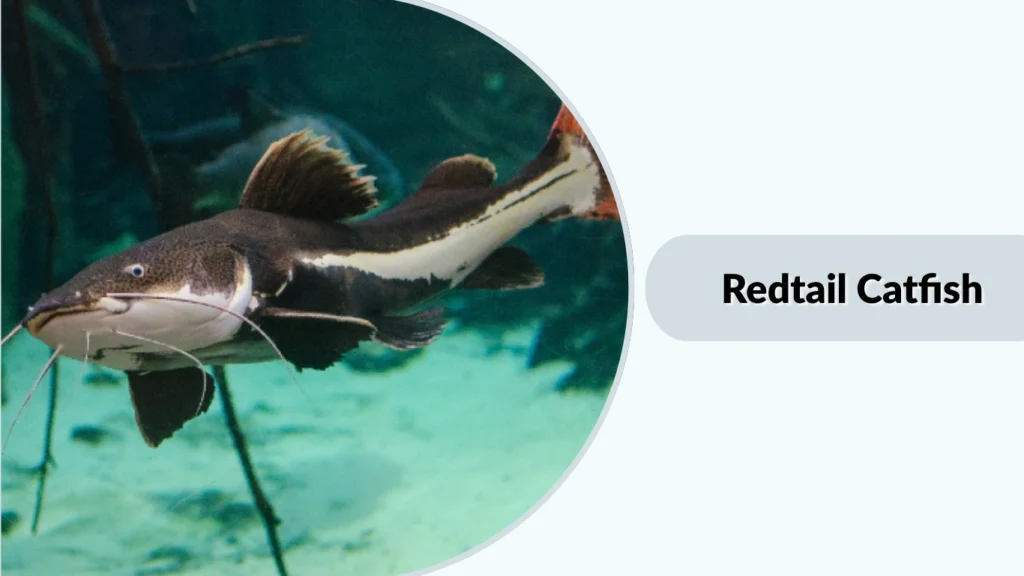
Redtail Catfish are large, striking freshwater fish known for their bold coloration and impressive size. Native to South America, they are popular in the aquarium trade when young but quickly outgrow most tanks due to their rapid growth. Their powerful build and vivid tail make them one of the most recognizable catfish species.
Identification
- Large, thick-bodied shape
- Dark gray to black upper body
- Bright orange or red tail fin
- White underside
- Long, prominent barbels
- Broad, flat head
- Smooth, scaleless skin
Habitat
Redtail Catfish are typically found in large rivers, lakes, and flooded forests. They prefer slow-moving or still waters with soft, muddy bottoms. In the wild, they often stay near the bottom during the day and move into open water at night. They require large spaces due to their size and active nature.
Diet
They are carnivorous and have a strong appetite. Their diet includes fish, crustaceans, insects, and other aquatic animals. Redtail Catfish are opportunistic feeders and will consume almost anything they can fit into their mouths. In captivity, they are fed a variety of protein-rich foods.
Behavior
Redtail Catfish are generally solitary and can be aggressive toward smaller fish. They are mostly nocturnal, becoming active at night to hunt. Despite their size, they are relatively calm when not feeding but require plenty of space to thrive.
14. Tiger Shovelnose Catfish
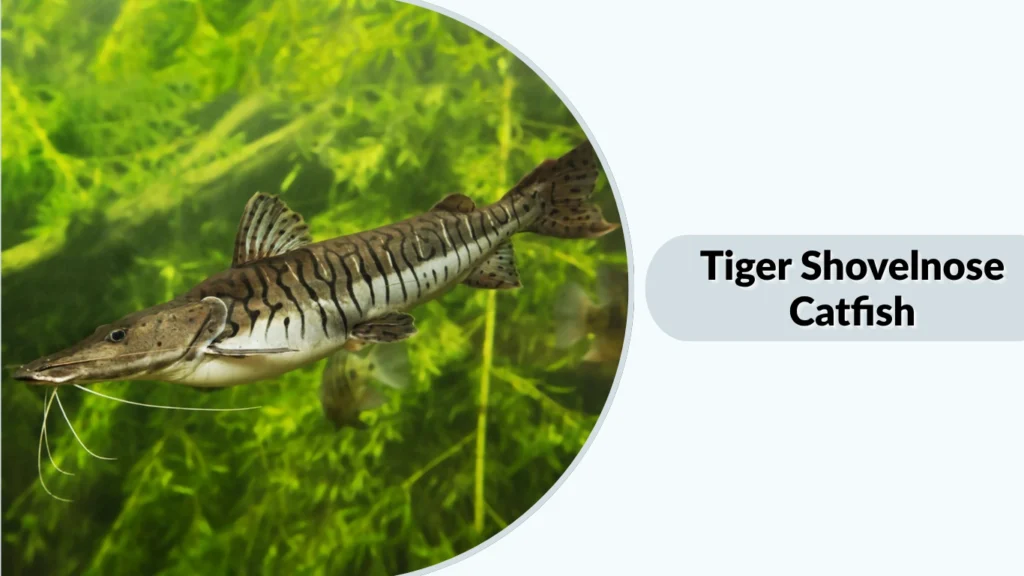
Tiger Shovelnose Catfish are large, visually striking freshwater fish known for their bold striped patterns and elongated bodies. Native to South America, they are popular among experienced aquarists and anglers. Their fast growth and active nature make them both fascinating and challenging to keep.
Identification
- Long, slender body
- Distinct black vertical stripes on a silver or gray background
- Deeply forked tail fin
- Long, pointed snout resembling a shovel
- Smooth, scaleless skin
- Long barbels around the mouth
- Streamlined shape for active swimming
Habitat
Tiger Shovelnose Catfish are commonly found in large rivers and river basins with moderate to strong currents. They prefer open water areas but also stay near the bottom. These fish require spacious environments and are often associated with sandy or muddy substrates.
Diet
They are carnivorous and primarily feed on fish and other aquatic animals. Their diet includes smaller fish, insects, and crustaceans. Tiger Shovelnose Catfish are active hunters and rely on their speed and sensory barbels to detect prey in low-visibility conditions.
Behavior
These catfish are active swimmers and tend to move throughout the water column, especially at night. They are generally solitary and can be aggressive toward smaller fish. Due to their size and energy, they need large habitats and are not suitable for small aquariums.
15. Raphael Catfish
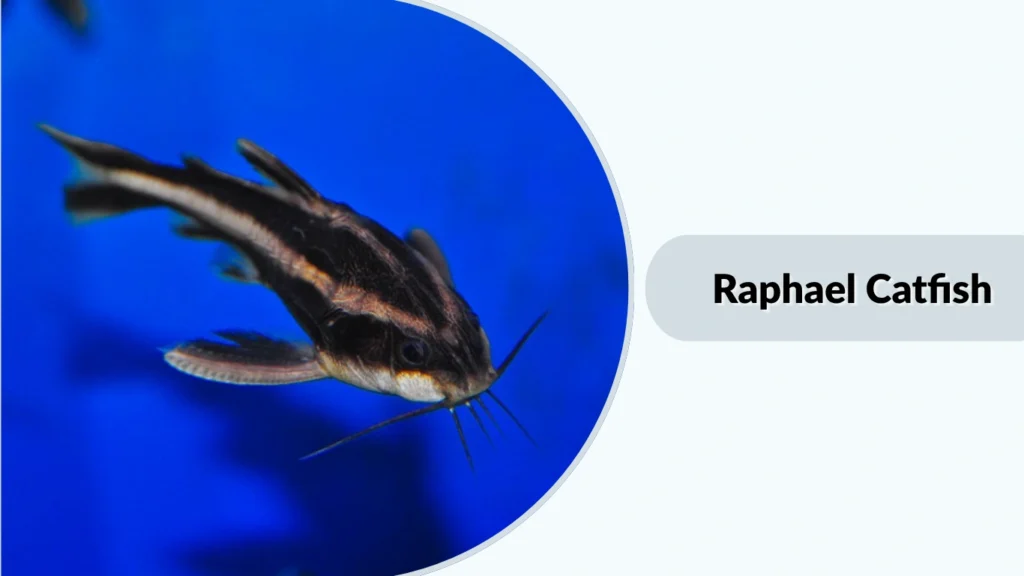
Raphael Catfish are medium-sized freshwater fish known for their tough, armored bodies and ability to produce sounds. Native to South America, they are often called “talking catfish” because they can make clicking or croaking noises. Their hardy nature and unique appearance make them popular in aquariums.
Identification
- Stout, armored body with bony plates
- Dark brown to black coloration
- Light stripes or spots along the body
- Slightly flattened underside
- Rounded tail fin
- Strong pectoral fins with sharp spines
- Long barbels around the mouth
Habitat
Raphael Catfish are typically found in slow-moving rivers, streams, and flooded forest areas. They prefer environments with soft, sandy bottoms and plenty of hiding places such as driftwood, rocks, and dense vegetation. These fish are bottom dwellers and spend most of their time hiding during the day.
Diet
They are omnivorous and feed on insects, crustaceans, small fish, and plant matter. Raphael Catfish are also effective scavengers, consuming leftover food and organic debris. In aquariums, they accept a variety of foods including sinking pellets, frozen foods, and live prey.
Behavior
Raphael Catfish are mostly nocturnal and become active at night. They are peaceful but can be shy, often hiding in caves or under cover during the day. When disturbed, they may produce sounds using their pectoral fins. They are generally solitary but can coexist with other non-aggressive fish.
16. Banjo Catfish
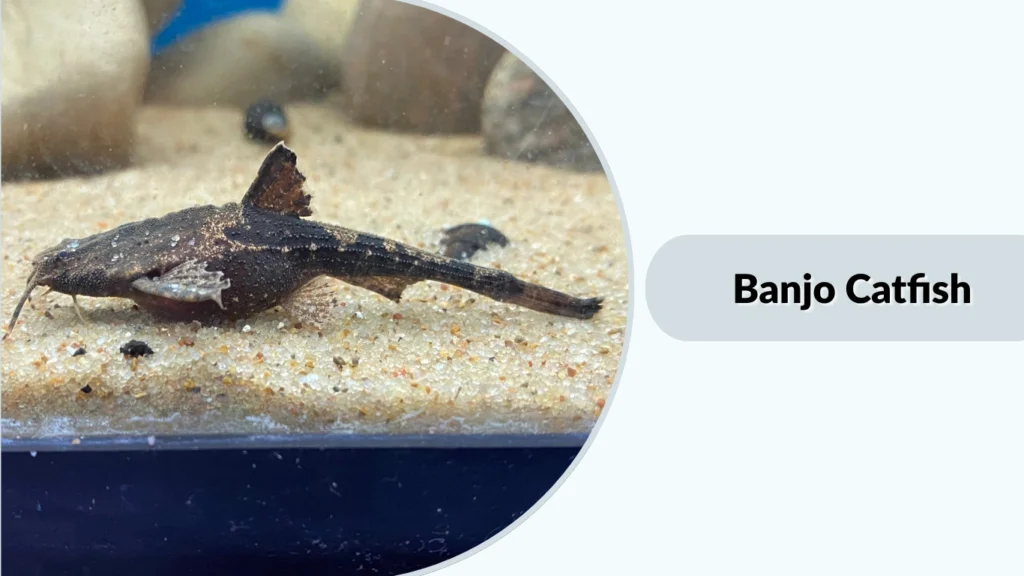
Banjo Catfish are unusual freshwater fish known for their flattened, leaf-like appearance that helps them blend perfectly into their surroundings. Native to South America, they are masters of camouflage and are often difficult to spot in the wild or even in aquariums.
Identification
- Extremely flattened, broad body
- Brown to mottled coloration resembling dead leaves
- Wide head with a tapering tail
- Rough, textured skin
- Small eyes positioned on top of the head
- Short barbels around the mouth
- Body shape similar to a banjo instrument
Habitat
Banjo Catfish are typically found in slow-moving rivers, streams, and swampy areas with soft, sandy or muddy bottoms. They prefer habitats with leaf litter and debris, where they can easily bury themselves. These fish spend most of their time partially hidden in the substrate for protection.
Diet
They are carnivorous and feed mainly on small invertebrates, insect larvae, and tiny aquatic organisms. Banjo Catfish are ambush feeders, waiting patiently for prey to come close before striking. In aquariums, they accept sinking foods and small live or frozen prey.
Behavior
Banjo Catfish are very calm and secretive. They are mostly nocturnal and remain buried or motionless during the day. Their excellent camouflage helps them avoid predators. They are non-aggressive and usually ignore other fish, making them suitable for peaceful tank environments.
17. Bumblebee Catfish
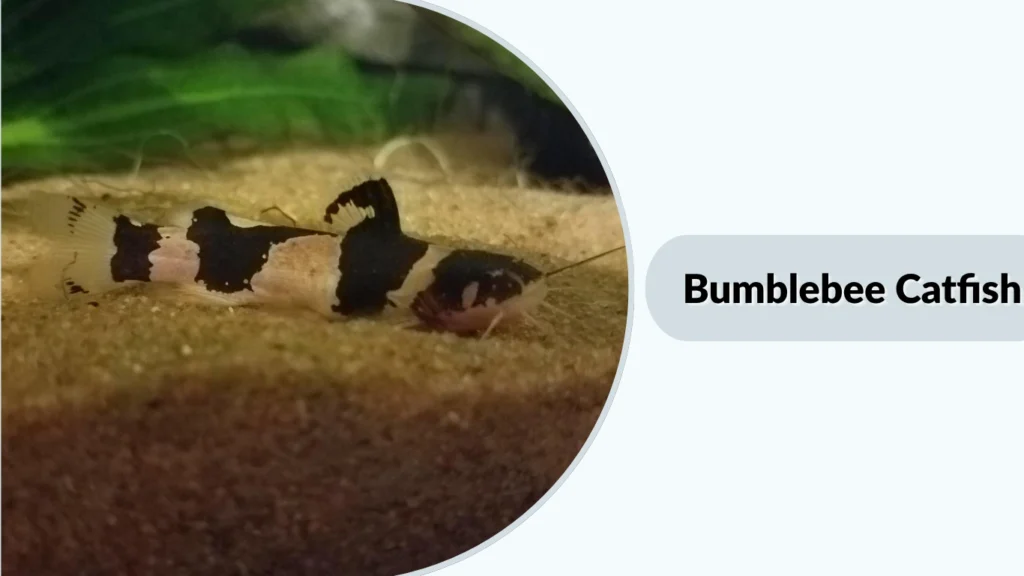
Bumblebee Catfish are small, attractive freshwater fish known for their bold black and yellow banded pattern, resembling a bumblebee. Native to South America and parts of Asia (depending on species), they are popular in aquariums due to their striking appearance and relatively manageable size.
Identification
- Small, compact body
- Distinct black and yellow or orange bands
- Slightly elongated shape
- Rounded tail fin
- Smooth, scaleless skin
- Short barbels around the mouth
- Pattern may vary slightly between species
Habitat
Bumblebee Catfish are typically found in rivers and streams with slow to moderate currents. They prefer environments with plenty of hiding places such as rocks, driftwood, and dense vegetation. These fish are bottom dwellers and often stay hidden during the day, especially in shaded or sheltered areas.
Diet
They are carnivorous and mainly feed on small invertebrates, insect larvae, and tiny fish. In aquariums, they accept sinking pellets, frozen foods, and live prey. Their feeding behavior is mostly nocturnal, and they rely on their sense of smell to locate food.
Behavior
Bumblebee Catfish are generally shy and secretive. They are most active at night and tend to hide during the day. While they are peaceful toward similar-sized fish, they may prey on very small tank mates. They usually do best in calm environments with minimal disturbance.
18. Electric Catfish
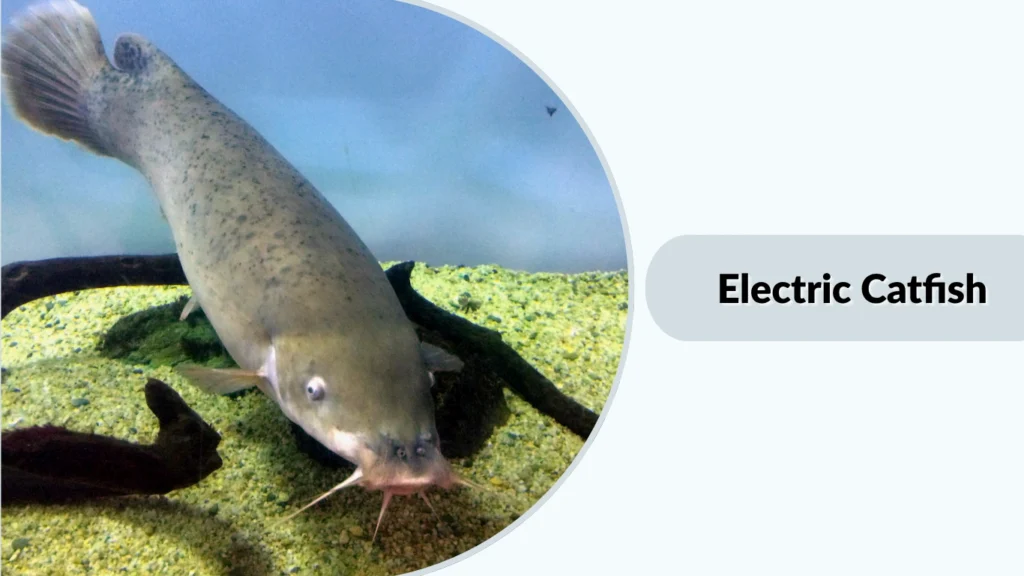
Electric Catfish are fascinating freshwater fish known for their ability to generate electric shocks. Native to Africa, they use this unique ability for both hunting and self-defense. Their unusual capability makes them one of the most distinctive catfish species in the world.
Identification
- Thick, cylindrical body
- Smooth, scaleless skin
- Dark brown to gray coloration
- Rounded head with small eyes
- No dorsal fin
- Rounded tail fin
- Short barbels around the mouth
Habitat
Electric Catfish are typically found in slow-moving rivers, swamps, and muddy waters. They prefer calm environments with plenty of hiding places such as submerged logs and vegetation. These fish are bottom dwellers and are often found resting during the day in shaded areas.
Diet
They are carnivorous and primarily feed on fish and other small aquatic animals. Electric Catfish use their electric discharge to stun prey before consuming it. This ability allows them to hunt effectively even in dark or murky water where visibility is low.
Behavior
Electric Catfish are mostly nocturnal and remain inactive during the day. They are solitary and can be aggressive, especially when threatened. Their electric shock can be quite strong, making them both effective predators and well-protected from potential threats.
19. Goonch Catfish
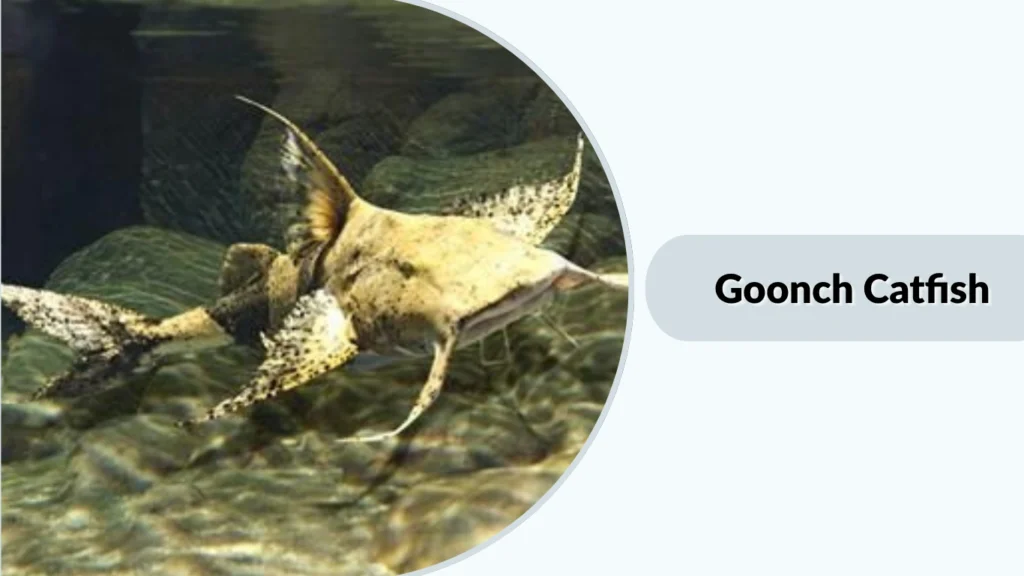
Goonch Catfish are large, powerful freshwater fish found in fast-flowing rivers of South Asia. They are known for their strength and mysterious reputation, often associated with deep river habitats. This species can grow quite large and is highly respected among anglers for its size and fighting ability.
Identification
- Large, muscular body
- Gray to brown coloration
- Broad, flattened head
- Wide mouth with strong jaws
- Smooth, scaleless skin
- Long barbels around the mouth
- Slightly forked tail fin
Habitat
Goonch Catfish are typically found in deep, fast-flowing rivers with rocky or sandy bottoms. They prefer strong currents and are often located in deep pools or near submerged structures. These fish are well adapted to turbulent waters and are commonly associated with large river systems.
Diet
They are carnivorous and feed on fish, crustaceans, and other aquatic animals. Goonch Catfish are powerful predators and may also scavenge when necessary. Their strong jaws and size allow them to consume relatively large prey compared to many other catfish species.
Behavior
Goonch Catfish are generally solitary and highly territorial. They are more active during low-light conditions, such as dusk or nighttime. Known for their strength, they can be difficult to catch and are considered a prized species among experienced anglers.
20. Wels Catfish
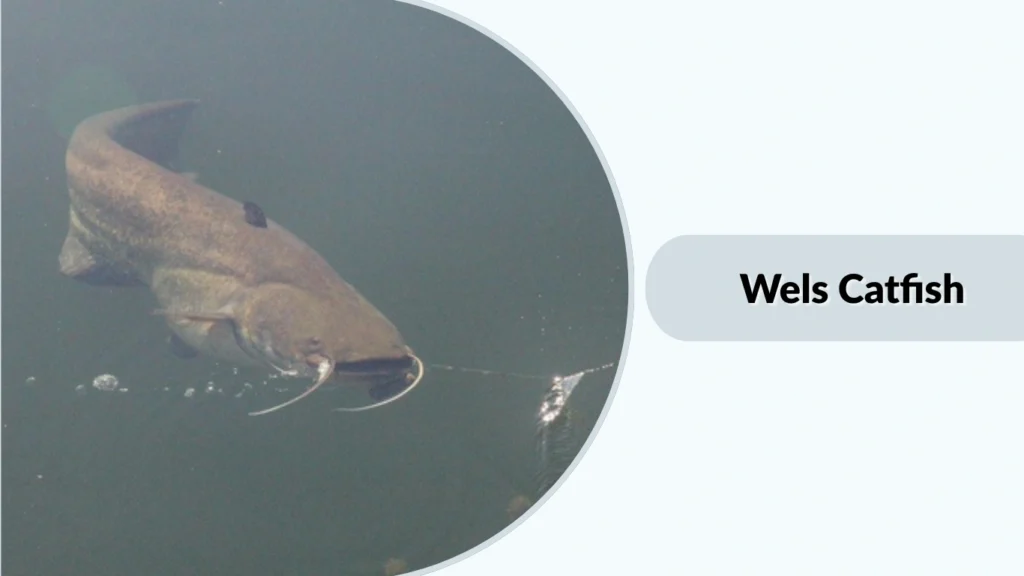
Wels Catfish are one of the largest freshwater fish species in Europe, known for their massive size and long lifespan. They are powerful predators and can grow to impressive lengths, making them highly sought after by anglers. Their smooth body and long barbels give them a distinctive appearance.
Identification
- Very large, elongated body
- Dark green to brown coloration
- Pale or whitish underside
- Broad, flattened head
- Wide mouth with small teeth
- Long barbels, especially two prominent ones on the upper jaw
- Rounded tail fin
Habitat
Wels Catfish are commonly found in large rivers, lakes, and reservoirs across Europe and parts of Asia. They prefer slow-moving or still waters with muddy or sandy bottoms. These fish often stay in deep holes or near submerged structures such as logs and rocks during the day.
Diet
They are carnivorous and feed on fish, frogs, crustaceans, and even small birds or mammals. Wels Catfish are opportunistic predators and will consume a wide range of prey depending on availability. Their large size allows them to target bigger animals than most other catfish.
Behavior
Wels Catfish are mostly nocturnal and become active at night when hunting. They are generally solitary and can be quite territorial. Despite their size, they often remain hidden during the day, relying on stealth and patience to ambush prey in low-light conditions.
21. Mekong Giant Catfish
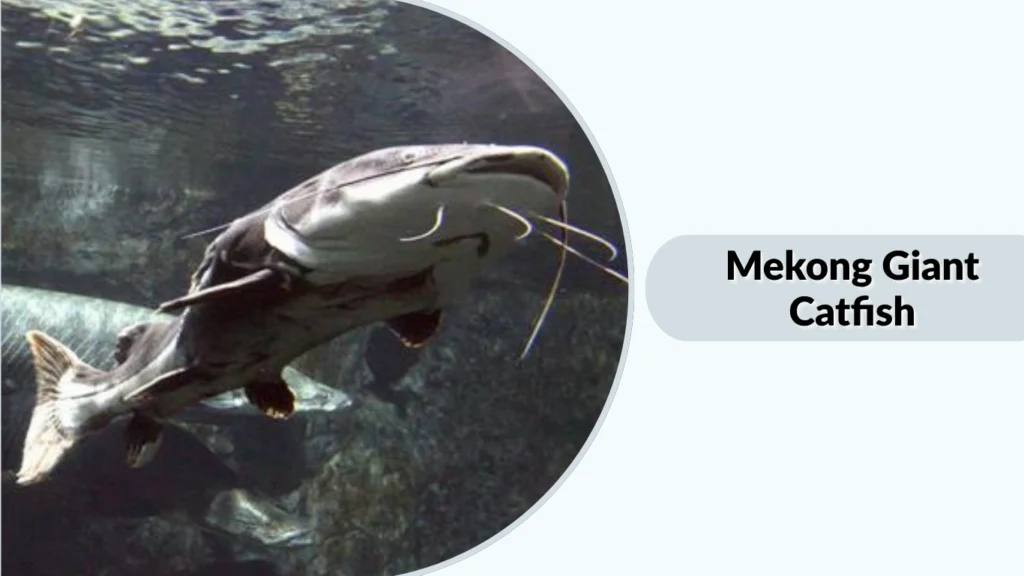
Mekong Giant Catfish are among the largest freshwater fish in the world, native to the Mekong River in Southeast Asia. They are known for their enormous size and gentle nature. Unlike many other catfish, they are not aggressive predators and are considered a rare and endangered species.
Identification
- Extremely large, heavy body
- Gray to pale coloration
- Smooth, scaleless skin
- Broad, rounded head
- Small eyes
- No visible barbels in adults
- Rounded tail fin
Habitat
Mekong Giant Catfish are found in large, deep sections of the Mekong River. They prefer strong currents and deep waters, especially during migration periods. These fish travel long distances along the river for spawning and are highly dependent on natural river systems.
Diet
Unlike most large catfish, Mekong Giant Catfish are primarily herbivorous. They feed on algae, plankton, and plant material. Their diet changes as they grow, with juveniles consuming smaller organisms before shifting to plant-based food.
Behavior
Mekong Giant Catfish are generally peaceful and non-aggressive. They are migratory fish, moving upstream to spawn during certain seasons. Due to their size and environmental needs, they are rarely seen in captivity. Their population has declined due to habitat loss and overfishing.
22. Striped Catfish
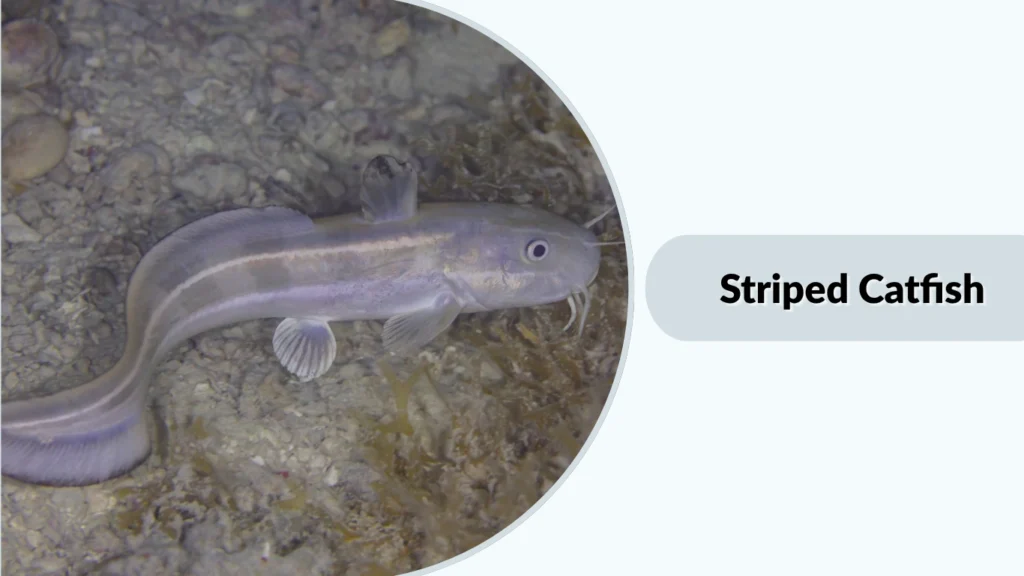
Striped Catfish are large, fast-growing freshwater fish commonly found in Southeast Asia. They are widely farmed for food due to their adaptability and economic importance. This species is well known for its sleek body and distinctive striped pattern during its early life stages.
Identification
- Long, streamlined body
- Dark gray to bluish coloration
- Two pale horizontal stripes (more visible in juveniles)
- Forked tail fin
- Smooth, scaleless skin
- Small head with a slightly pointed snout
- Short barbels around the mouth
Habitat
Striped Catfish are typically found in large rivers and floodplains, especially in the Mekong and Chao Phraya river systems. They prefer deep, flowing waters but also move into flooded areas during the rainy season. These fish are highly adaptable and can tolerate a wide range of water conditions.
Diet
They are omnivorous and feed on a variety of food sources, including algae, plant material, insects, and small fish. In aquaculture, they are often fed formulated feeds. Their flexible diet helps them grow quickly and survive in different environments.
Behavior
Striped Catfish are active swimmers and often move in groups, especially when young. They are migratory and travel long distances for breeding and feeding. This species is generally peaceful and spends much of its time swimming in open water rather than staying at the bottom.
23. Clown Catfish
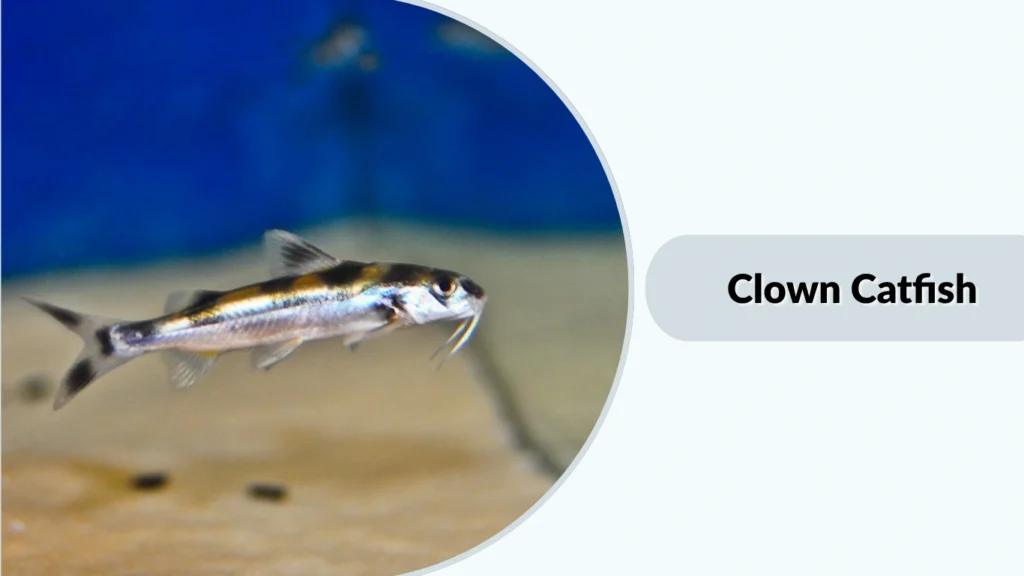
Clown Catfish are visually striking freshwater fish known for their bold patterns and active behavior. Native to South America, they are appreciated in the aquarium trade for their unique appearance and lively nature. Their name comes from their colorful markings, which give them a “clown-like” look.
Identification
- Slender, elongated body
- Dark body with light or contrasting bands
- Forked tail fin
- Smooth, scaleless skin
- Prominent barbels around the mouth
- Slightly pointed snout
- Distinctive striped or banded pattern
Habitat
Clown Catfish are typically found in rivers and streams with moderate currents. They prefer well-oxygenated water and environments with sandy or rocky bottoms. In the wild, they often stay near the bottom but are also active swimmers in open areas.
Diet
They are carnivorous and feed on insects, larvae, small fish, and crustaceans. In aquariums, they accept a variety of foods such as sinking pellets, frozen foods, and live prey. Their feeding behavior is more active compared to many bottom-dwelling catfish.
Behavior
Clown Catfish are energetic and active, especially during low-light conditions. They may be semi-aggressive and can chase smaller fish. These catfish require space to swim and are best kept with similarly sized tank mates.
24. Whale Catfish
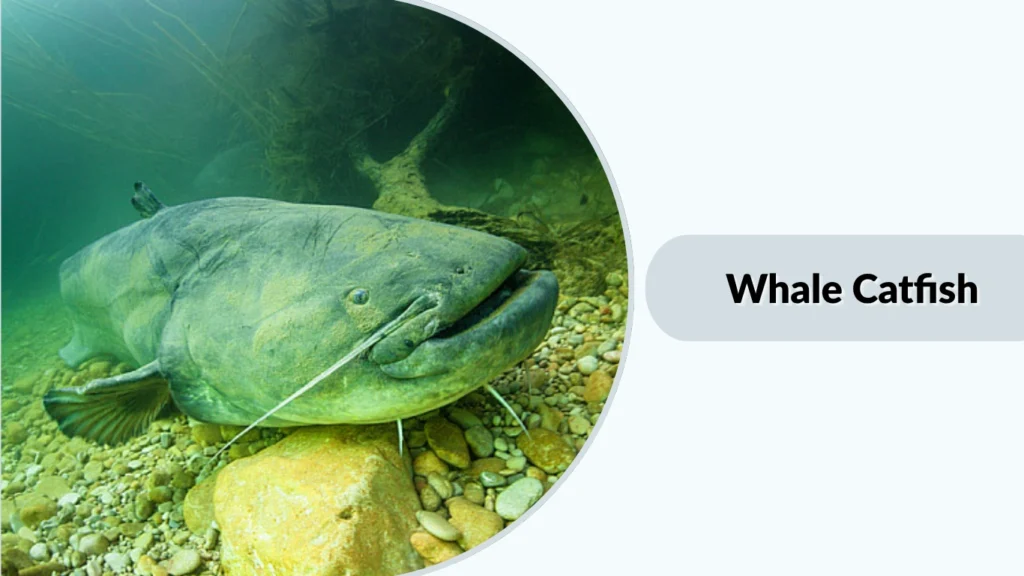
Whale Catfish are large, powerful freshwater fish known for their strong build and active swimming behavior. Native to South America, they are sometimes confused with other large catfish species due to their size and shape. They are popular among experienced aquarists but require significant space.
Identification
- Large, elongated body
- Gray to dark coloration
- Lighter underside
- Broad head with a wide mouth
- Forked tail fin
- Smooth, scaleless skin
- Long barbels around the mouth
Habitat
Whale Catfish are typically found in large rivers and deep water systems. They prefer areas with moderate to strong currents and open swimming space. These fish are often located near the bottom but are also known to move through mid-water levels, especially when active.
Diet
They are carnivorous and feed on fish, insects, and crustaceans. Whale Catfish are strong predators and will hunt actively for prey. In captivity, they require a protein-rich diet and can consume a variety of live or prepared foods.
Behavior
Whale Catfish are active swimmers and need plenty of space to move around. They can be aggressive, especially toward smaller fish. These catfish are generally more active during low-light conditions and may become territorial as they grow larger.
25. Hardhead Catfish
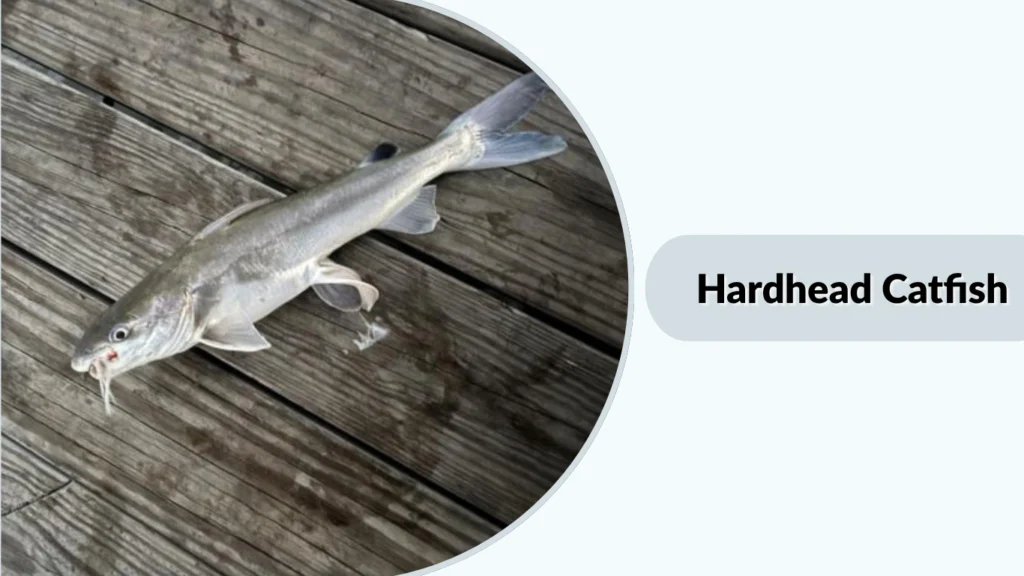
Hardhead Catfish are saltwater and brackish water catfish commonly found along coastal regions. They are known for their tough skin and sharp spines, which can deliver a painful sting if handled carelessly. This species is widespread and often encountered by anglers in shallow coastal waters.
Identification
- Medium-sized, sturdy body
- Gray to bluish-gray coloration
- Silvery or pale underside
- Slightly forked tail fin
- Smooth, tough skin
- Strong dorsal and pectoral spines
- Prominent barbels around the mouth
Habitat
Hardhead Catfish are typically found in coastal waters, estuaries, and bays. They prefer shallow areas with sandy or muddy bottoms. This species can tolerate both saltwater and brackish conditions, making it common in areas where rivers meet the sea.
Diet
They are omnivorous and feed on a variety of food sources, including small fish, crustaceans, mollusks, and organic debris. Hardhead Catfish are also scavengers, often feeding along the bottom where food is easily available.
Behavior
Hardhead Catfish are generally active and often move in groups. They are more active during warmer months and can be found feeding throughout the day and night. Their sharp spines serve as a defense mechanism against predators, making them less vulnerable in the wild.
26. Sea Catfish
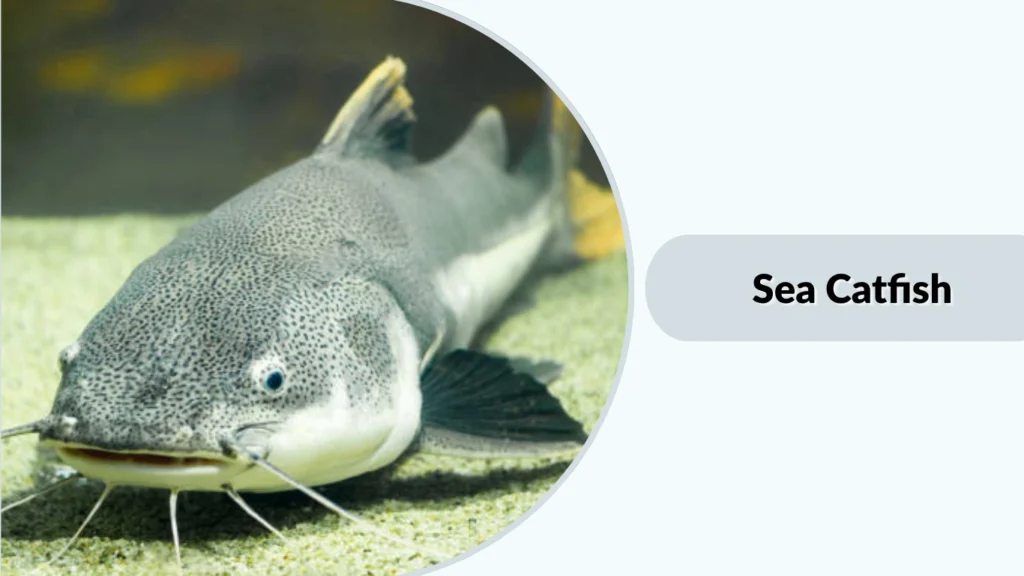
Sea Catfish are a group of catfish species that live primarily in marine and brackish environments. They are commonly found along coastlines and are well adapted to saltwater conditions. These fish are known for their strong bodies and ability to survive in changing salinity levels.
Identification
- Medium to large, elongated body
- Gray, silver, or bluish coloration
- Lighter underside
- Forked or slightly forked tail fin
- Smooth, scaleless skin
- Strong dorsal and pectoral spines
- Long barbels around the mouth
Habitat
Sea Catfish are typically found in coastal waters, estuaries, and shallow seas. They prefer sandy or muddy bottoms and are often seen near river mouths where freshwater mixes with saltwater. Some species may also move into rivers for short periods.
Diet
They are omnivorous and feed on fish, crustaceans, mollusks, and organic matter. Sea Catfish are effective bottom feeders and scavengers, using their barbels to detect food in murky water. Their diet varies depending on availability in their environment.
Behavior
Sea Catfish are generally active and may travel in groups. They are capable of adapting to different salinity levels, allowing them to move between marine and brackish waters. Some species are known for unique reproductive behaviors, such as mouthbrooding, where males carry eggs in their mouths until they hatch.
27. Tadpole Catfish
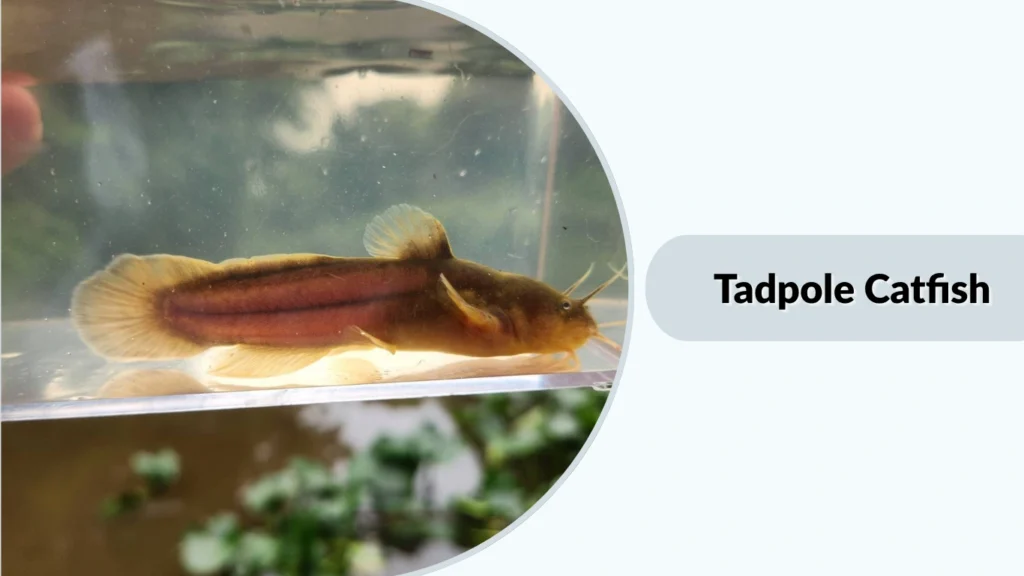
Tadpole Catfish are small, uniquely shaped freshwater catfish known for their rounded bodies and narrow tails, resembling a tadpole. Native to South America, they are rarely seen but are interesting due to their unusual appearance and secretive lifestyle.
Identification
- Rounded, bulbous front body
- Narrow, tapering tail
- Brown to dark coloration
- Smooth, scaleless skin
- Small eyes
- Short barbels around the mouth
- Body shape similar to a tadpole
Habitat
Tadpole Catfish are typically found in slow-moving rivers, streams, and swampy areas. They prefer environments with soft, muddy bottoms where they can hide easily. These fish often stay close to the substrate and may bury themselves partially for protection.
Diet
They are carnivorous and mainly feed on small invertebrates, insect larvae, and tiny aquatic organisms. Tadpole Catfish are bottom feeders and rely on their sense of smell to locate food in murky water. In captivity, they accept small sinking foods and live prey.
Behavior
Tadpole Catfish are shy and secretive. They are mostly nocturnal and remain hidden during the day. Their unusual body shape helps them stay concealed from predators. They are non-aggressive and tend to avoid interaction with other fish.
28. Bristlenose Catfish
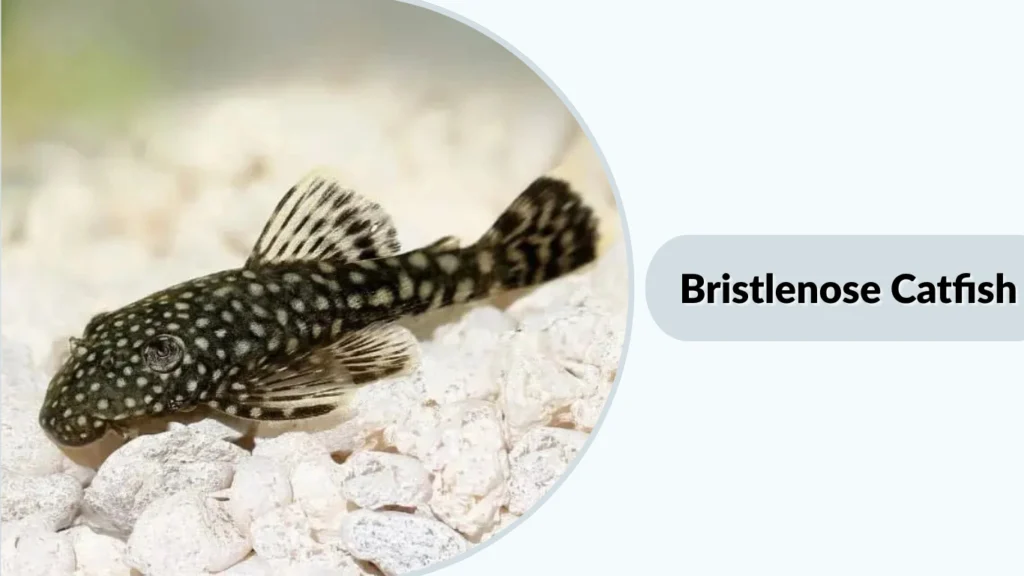
Bristlenose Catfish are small, hardy freshwater fish widely popular in aquariums for their algae-eating abilities. Native to South America, they are easy to care for and help keep tanks clean. Their name comes from the bristle-like growths found on the faces of adult males.
Identification
- Small, compact body
- Dark brown, gray, or mottled coloration
- Flat underside with a sucker mouth
- Bristle-like appendages on the face (especially in males)
- Broad head
- Rounded fins
- Armored body plates instead of scales
Habitat
Bristlenose Catfish are typically found in rivers and streams with moderate currents. They prefer well-oxygenated water and environments with rocks, driftwood, and vegetation. In aquariums, they require hiding spots and surfaces where algae can grow.
Diet
They are primarily herbivorous and feed on algae, plant matter, and biofilm. In captivity, they are often given algae wafers, vegetables, and occasional protein-rich foods. Their constant grazing helps maintain a clean environment.
Behavior
Bristlenose Catfish are peaceful and mostly nocturnal. They spend much of their time attached to surfaces using their sucker mouth. They are generally solitary but can coexist with other non-aggressive fish. Males may become territorial during breeding.
29. Featherfin Catfish
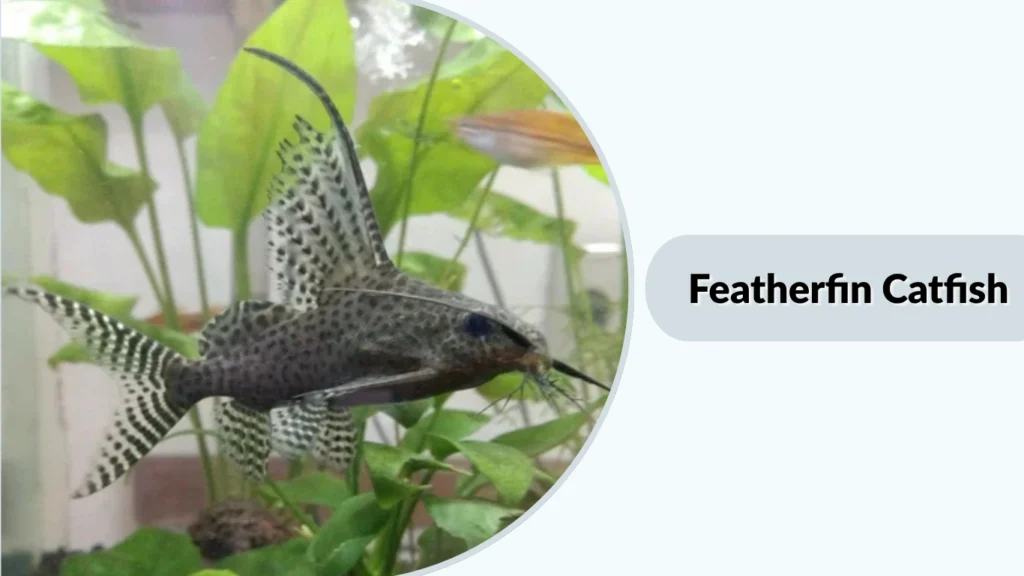
Featherfin Catfish are attractive freshwater fish known for their elegant fins and distinctive spotted patterns. Native to Africa, they are popular in aquariums due to their unique appearance and relatively peaceful nature. Their name comes from the long, feather-like dorsal fin that stands out prominently.
Identification
- Medium-sized, elongated body
- Brown to gray coloration with darker spots
- Long, feather-like dorsal fin
- Forked tail fin
- Smooth, scaleless skin
- Prominent barbels around the mouth
- Slightly flattened underside
Habitat
Featherfin Catfish are typically found in rivers and lakes with slow to moderate currents. They prefer environments with sandy or rocky bottoms and plenty of hiding places such as caves, driftwood, and rock formations. These fish are bottom dwellers but may explore other levels of the water.
Diet
They are omnivorous and feed on insects, small crustaceans, plant matter, and organic debris. In aquariums, they accept a wide variety of foods including sinking pellets, flakes, and live or frozen options. Their adaptable diet helps them thrive in different environments.
Behavior
Featherfin Catfish are generally peaceful but can be slightly territorial, especially with their own species. They are mostly active at night and spend the day hiding in sheltered areas. These fish are hardy and adaptable, making them suitable for community aquariums.
30. Driftwood Catfish
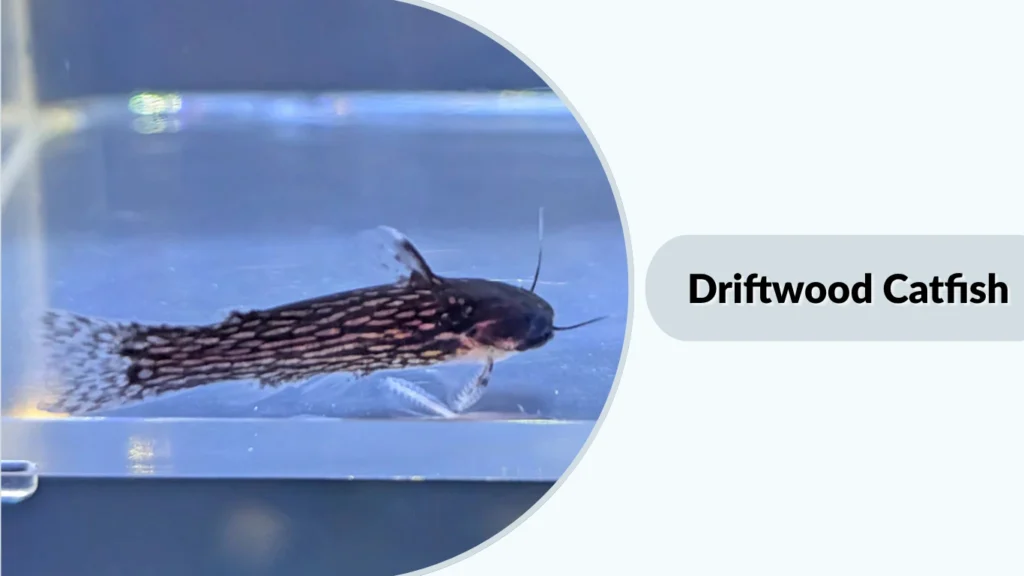
Driftwood Catfish are small, slender freshwater fish known for their twig-like appearance, which helps them blend in with branches and debris. Native to South America, they are often found in groups and are popular in aquariums for their unusual shape and peaceful behavior.
Identification
- Very slender, stick-like body
- Light brown to tan coloration
- Elongated shape resembling a twig
- Small, rounded fins
- Smooth, scaleless skin
- Short barbels around the mouth
- Subtle markings that enhance camouflage
Habitat
Driftwood Catfish are typically found in slow-moving rivers and streams with plenty of submerged wood and vegetation. They prefer calm waters where they can cling to branches and remain hidden. These fish often stay among driftwood, which provides both shelter and protection from predators.
Diet
They are omnivorous and feed on small insects, larvae, algae, and organic matter. In aquariums, they accept fine foods such as micro pellets, flakes, and small live or frozen prey. Their diet is generally light, and they feed quietly in their environment.
Behavior
Driftwood Catfish are peaceful and highly social, usually seen in groups. They are mostly active at night but may remain still during the day, blending into their surroundings. Their camouflage and calm nature make them non-aggressive and suitable for community tanks.
31. Marble Catfish
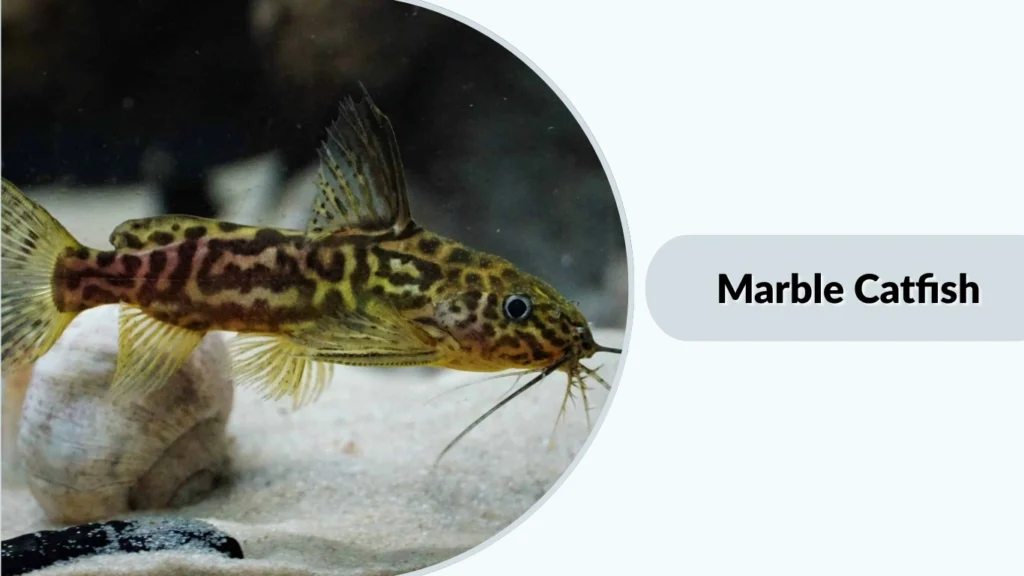
Marble Catfish are freshwater fish known for their attractive marbled patterns and hardy nature. They are commonly found in African river systems and are appreciated in aquariums for their unique appearance and adaptability. Their patterned body helps them blend into natural surroundings.
Identification
- Medium-sized, robust body
- Marbled pattern with dark and light patches
- Gray, brown, or black coloration
- Smooth, scaleless skin
- Rounded or slightly forked tail fin
- Broad head with a wide mouth
- Prominent barbels around the mouth
Habitat
Marble Catfish are typically found in rivers, lakes, and floodplains with slow to moderate currents. They prefer areas with muddy or sandy bottoms and plenty of hiding places such as rocks, vegetation, and submerged structures. These fish are bottom dwellers and often stay close to cover.
Diet
They are omnivorous and feed on insects, small fish, crustaceans, and plant material. Marble Catfish are also scavengers, consuming organic debris found along the bottom. Their flexible diet allows them to adapt to different environments.
Behavior
Marble Catfish are generally calm but can become territorial, especially in confined spaces. They are mostly nocturnal and spend the daytime hiding. These fish are hardy and adaptable, making them suitable for a variety of freshwater conditions.
32. Spotted Catfish
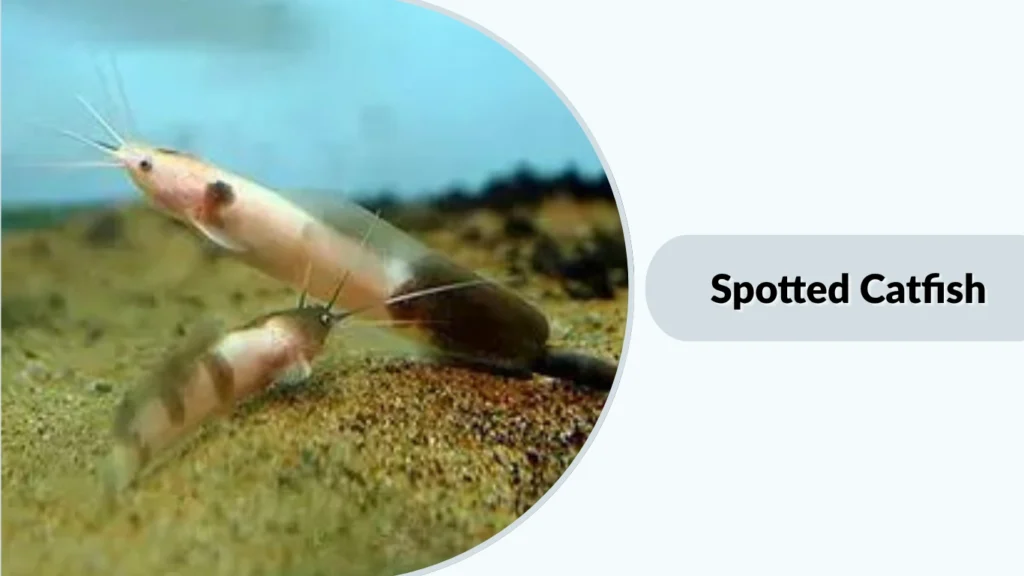
Spotted Catfish are freshwater fish recognized for their distinctive spotted patterns and adaptable nature. They are found in various regions and are appreciated for their unique markings and ability to thrive in different environments. Their appearance and behavior make them interesting for both anglers and aquarium enthusiasts.
Identification
- Medium-sized, elongated body
- Light to dark base color with scattered spots
- Smooth, scaleless skin
- Slightly forked or rounded tail fin
- Broad head with a wide mouth
- Prominent barbels around the mouth
- Pattern varies depending on species
Habitat
Spotted Catfish are typically found in rivers, lakes, and ponds with slow to moderate water flow. They prefer areas with soft bottoms such as mud or sand and often stay near submerged structures like rocks and vegetation. These fish are bottom dwellers and remain close to shelter during the day.
Diet
They are omnivorous and feed on insects, small fish, crustaceans, and plant material. Spotted Catfish are also opportunistic scavengers, consuming organic debris from the bottom. Their varied diet helps them survive in a wide range of habitats.
Behavior
Spotted Catfish are generally calm and adaptable. They are mostly active at night, using their barbels to locate food in low-light conditions. While usually peaceful, they may show mild territorial behavior, especially when competing for food or space.
FAQs
What do catfish eat?
Catfish are generally omnivorous, though some species are more carnivorous. They eat insects, small fish, crustaceans, plant matter, and organic debris. Many species are also scavengers, using their sensitive barbels to locate food in murky or dark water environments.
Where do catfish usually live?
Catfish are found in a wide range of habitats, including freshwater rivers, lakes, ponds, and even brackish or saltwater environments. Most species prefer slow-moving water and tend to stay near the bottom, often hiding around rocks, logs, or vegetation.
Are catfish dangerous to humans?
Most catfish are not dangerous to humans. However, some species have sharp spines on their fins that can cause painful injuries if handled improperly. A few, like the Electric Catfish, can produce shocks, but they are rarely a threat unless disturbed.
Why do catfish have whiskers?
Catfish have whisker-like structures called barbels that help them detect food. These barbels are highly sensitive to taste and smell, allowing catfish to find food even in dark or muddy water where visibility is very low.
Are catfish good for aquariums?
Many smaller species, such as Cory Catfish and Bristlenose Catfish, are excellent for aquariums due to their peaceful nature and cleaning habits. However, larger species require significant space and are not suitable for typical home tanks.