
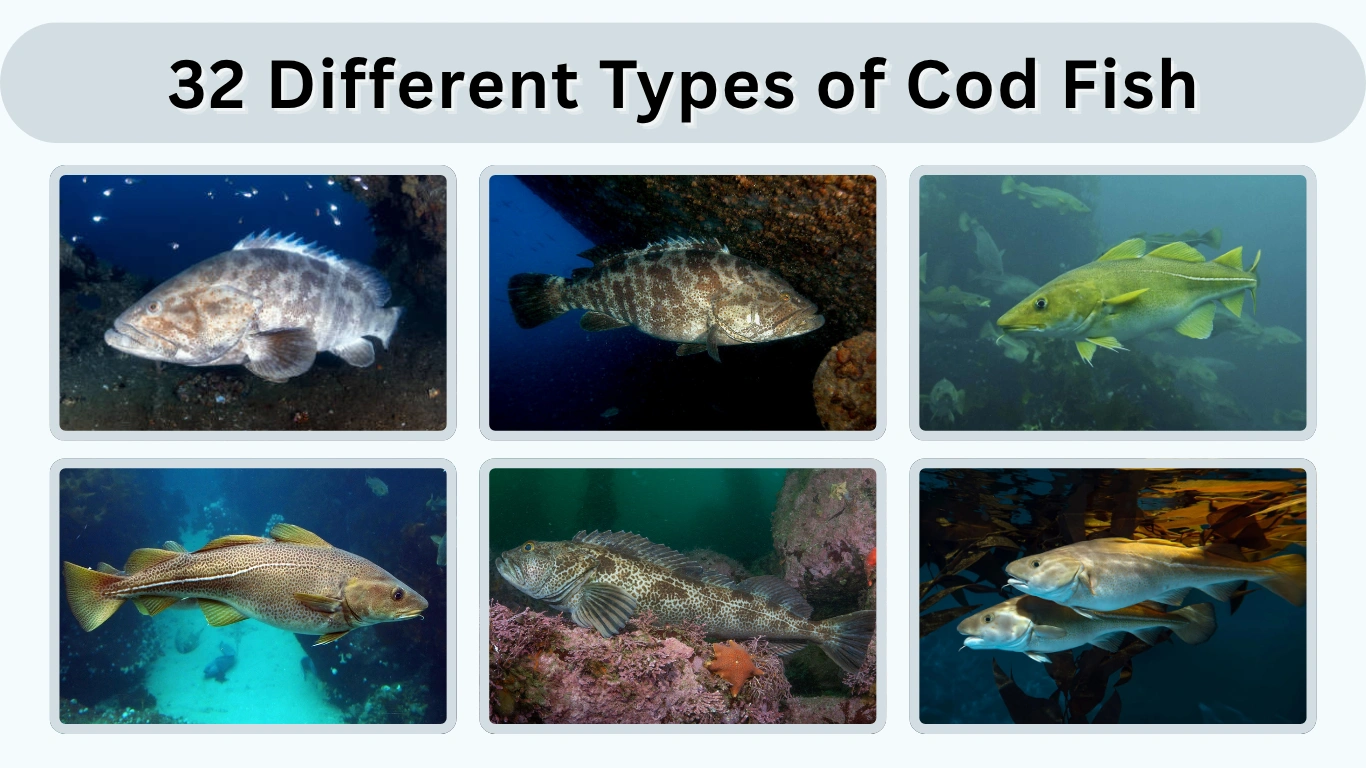
Cod fish are an important group of marine species found in cold and temperate oceans around the world. They are well known for their ecological role, diverse habitats, and economic value in global fisheries. From well-known species like Atlantic Cod to lesser-known varieties adapted to deep or coastal waters, cod fish display a wide range of characteristics. In this guide, you will explore 32 different types of cod fish, each with unique features, habitats, behaviors, and feeding patterns that highlight their diversity and importance in marine ecosystems.
1. Atlantic Cod
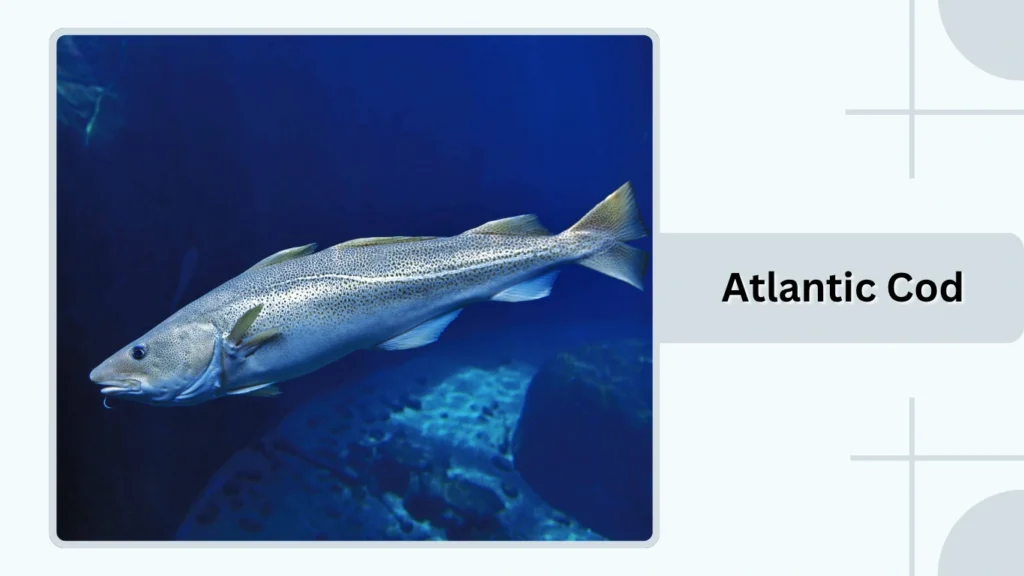
Atlantic Cod is one of the most well-known and commercially important cod species, found in the cold waters of the North Atlantic Ocean. It has played a major role in global fisheries for centuries due to its mild taste, firm texture, and high nutritional value. This species is widely recognized not only for its economic importance but also for its adaptability to various marine environments, making it a key species in marine ecosystems.
Identification
- Greenish-brown to gray body with scattered lighter spots
- Prominent pale lateral line running along the sides
- Three separate dorsal fins and two anal fins
- Broad head with a slightly rounded body shape
- Distinct chin barbel used for sensing food
Habitat
Atlantic Cod inhabit cold marine waters across the North Atlantic, from coastal zones to deeper offshore regions. They are commonly found at depths ranging from shallow waters to over 600 meters. This species prefers temperatures between 0–10°C and often stays close to the seabed, especially in areas with rocky, sandy, or gravel substrates where food is abundant.
Behavior
Atlantic Cod are generally social fish that form schools, particularly during migration and spawning periods. They are opportunistic predators and adjust their depth and location based on food availability. Seasonal migration is common, as they move to specific areas for breeding and feeding.
Diet
Atlantic Cod are carnivorous and feed on a wide range of prey. Their diet includes small fish such as herring and capelin, along with crustaceans like crabs and shrimp. Younger cod mainly consume smaller invertebrates, while adults target larger prey as they grow.
2. Pacific Cod
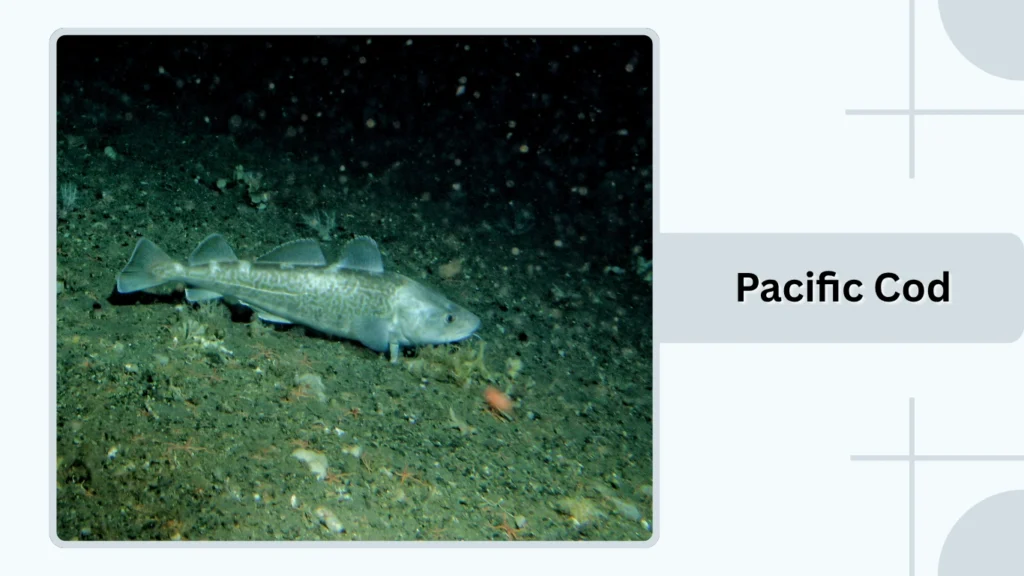
Pacific Cod is a widely distributed species found in the northern Pacific Ocean, known for its importance in commercial fisheries and its mild, white flesh. It is similar in appearance to Atlantic Cod but has distinct differences in habitat and behavior. This species plays a vital role in marine ecosystems and is valued both economically and ecologically.
Identification
- Gray to brown body with darker mottled patterns
- Lighter underside with a visible lateral line
- Three dorsal fins and two anal fins
- Slender body with a slightly pointed head
- Small chin barbel present
Habitat
Pacific Cod inhabit cold waters of the North Pacific, commonly found along continental shelves and coastal regions. They prefer depths ranging from shallow coastal waters to around 500 meters. This species thrives in temperatures between 2–8°C and is often associated with sandy or muddy seabeds where food sources are abundant.
Behavior
Pacific Cod are generally bottom-dwelling fish but can move through different depths depending on feeding and seasonal changes. They are less migratory than Atlantic Cod but still travel to spawning grounds during breeding seasons. They tend to form loose groups rather than tight schools.
Diet
Pacific Cod are carnivorous and feed on a variety of marine organisms. Their diet includes fish such as herring and pollock, along with crabs, shrimp, and worms. Juveniles mainly consume smaller invertebrates, while adults prey on larger fish and crustaceans.
3. Greenland Cod
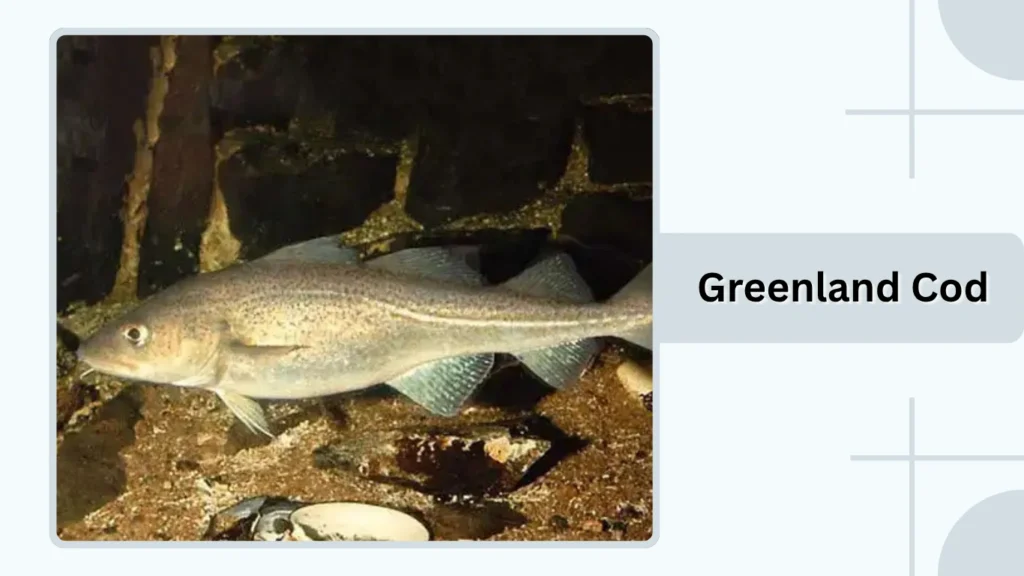
Greenland Cod is a cold-water species found in the Arctic and North Atlantic regions. It is closely related to Pacific Cod but is adapted to much colder environments. This species is important in northern ecosystems and is often found in remote, icy waters where few other fish thrive.
Identification
- Brown to gray body with darker mottled markings
- Lighter underside with a visible lateral line
- Three dorsal fins and two anal fins
- Slender body with a slightly rounded head
- Small chin barbel present
Habitat
Greenland Cod inhabit extremely cold waters of the Arctic and nearby North Atlantic areas. They are commonly found in coastal regions, fjords, and continental shelves, often at depths ranging from shallow waters to around 200 meters. This species thrives in near-freezing temperatures and is well adapted to icy marine conditions.
Behavior
Greenland Cod are relatively slow-moving and tend to stay close to the seabed. They may form small groups but are often found alone or in loose gatherings. Seasonal movement occurs, especially during spawning periods, but they are generally less migratory than other cod species.
Diet
Greenland Cod are carnivorous and feed on small fish, crustaceans, and marine invertebrates. Their diet typically includes shrimp, amphipods, and small fish species. Younger individuals consume smaller prey, while adults expand their diet as they grow.
4. Arctic Cod
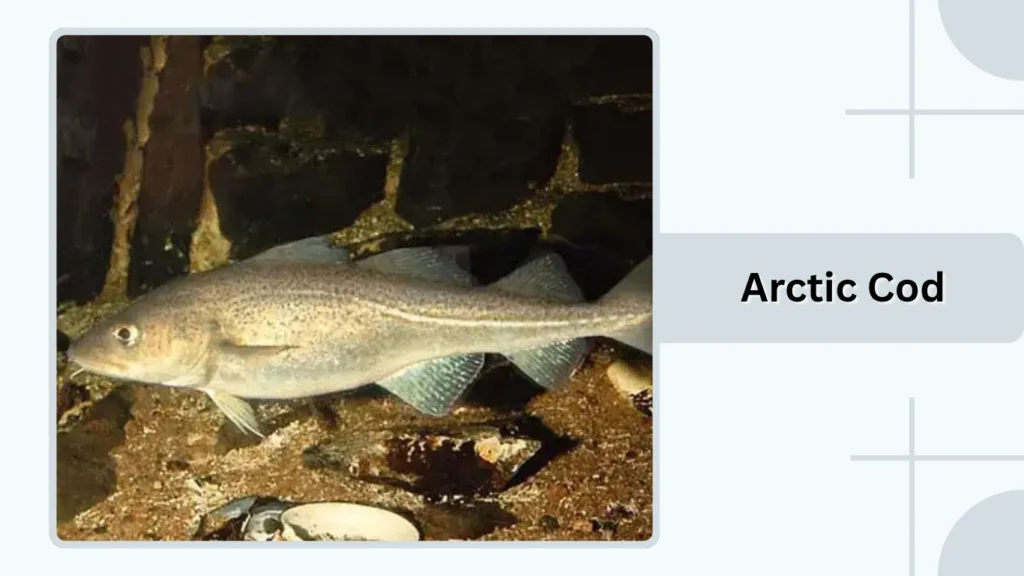
Arctic Cod is a key species in polar marine ecosystems, commonly found in the icy waters of the Arctic Ocean. It plays a crucial role in the food chain, serving as an important food source for seals, whales, and seabirds. This species is well adapted to extreme cold conditions.
Identification
- Slender, elongated body with a pale brown to silvery coloration
- Light underside with subtle markings along the body
- Small head with a slightly pointed snout
- Reduced or less prominent chin barbel
- Typically grows smaller than many other cod species
Habitat
Arctic Cod inhabit extremely cold Arctic waters, often near sea ice and coastal regions. They are usually found at depths ranging from shallow waters to around 300 meters. This species thrives in near-freezing temperatures and is closely associated with ice-covered environments where it finds both shelter and food.
Behavior
Arctic Cod are known to gather in large schools, especially under sea ice. They are highly adapted to cold environments and can survive in temperatures that would be unsuitable for many other fish. Seasonal movements occur in response to ice conditions and food availability.
Diet
Arctic Cod are carnivorous and mainly feed on small crustaceans such as copepods and amphipods. They also consume small fish and other planktonic organisms. Their diet plays a key role in transferring energy from lower to higher levels of the Arctic food chain.
5. Polar Cod
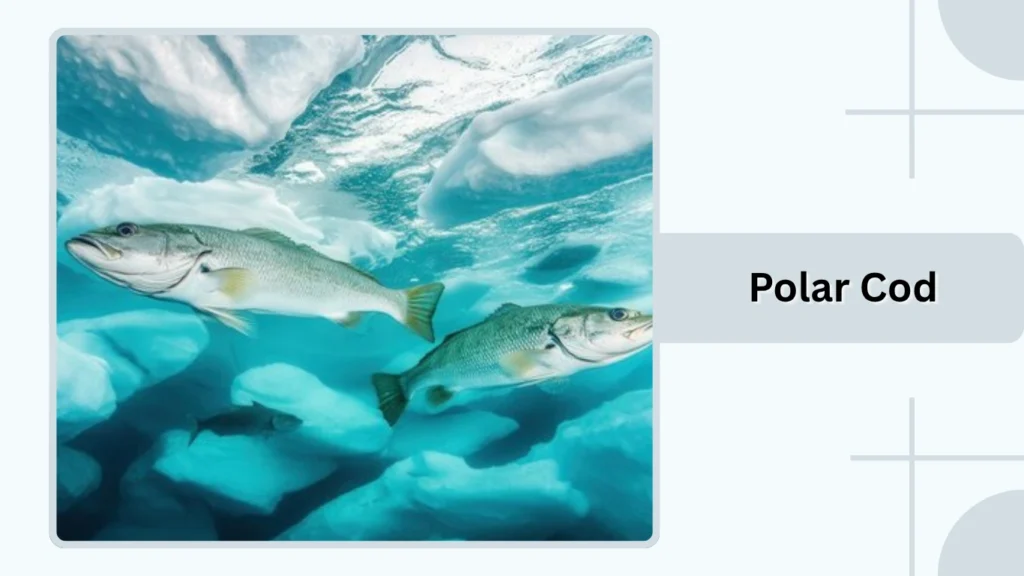
Polar Cod is a cold-adapted species commonly found in Arctic and sub-Arctic waters. It is closely related to Arctic Cod and plays a vital role in marine ecosystems by serving as a major food source for larger predators such as seals, whales, and seabirds.
Identification
- Slender body with a silvery to light brown coloration
- Slightly darker back and lighter underside
- Small head with a short snout
- Reduced or nearly absent chin barbel
- Generally smaller in size compared to larger cod species
Habitat
Polar Cod inhabit extremely cold waters of the Arctic Ocean and surrounding seas. They are often found near sea ice and in coastal areas, typically at depths ranging from shallow waters to about 300 meters. This species thrives in near-freezing temperatures and is highly adapted to icy environments.
Behavior
Polar Cod are schooling fish that often gather in large numbers beneath sea ice. They are highly mobile and adjust their position based on ice movement and food availability. Their behavior is closely tied to seasonal changes in the Arctic environment.
Diet
Polar Cod are carnivorous and primarily feed on small crustaceans such as copepods and amphipods. They also consume zooplankton and occasionally small fish. Their feeding habits make them an essential link in the Arctic food web.
6. Norwegian Coastal Cod
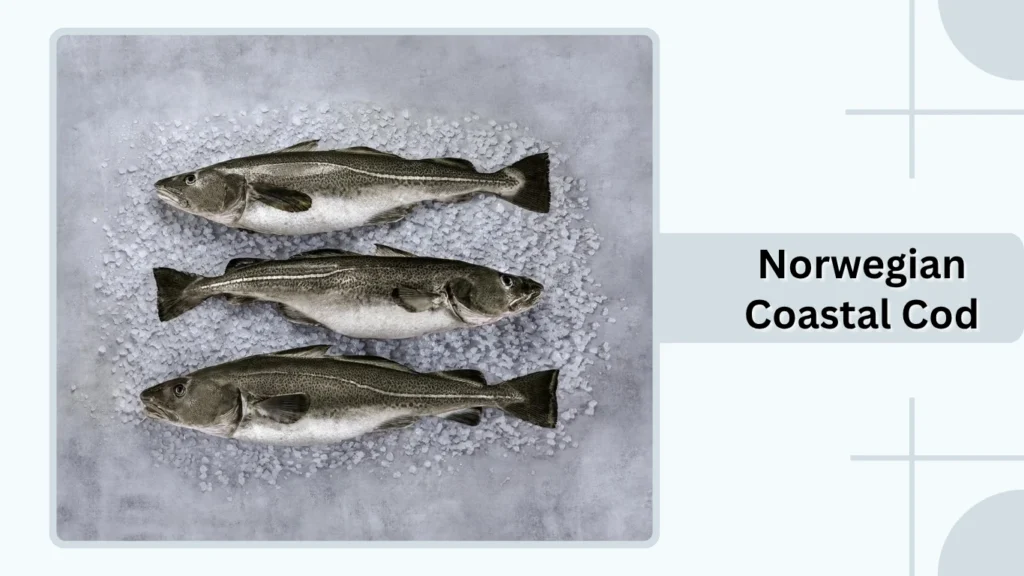
Norwegian Coastal Cod is a regional population of Atlantic Cod found along the coast of Norway. It is well adapted to coastal environments and plays an important role in local fisheries and ecosystems. Compared to migratory cod, this type tends to remain closer to its home range.
Identification
- Brown to gray body with darker spots
- Lighter underside with a clear lateral line
- Three dorsal fins and two anal fins
- Medium-sized body with a slightly robust shape
- Distinct chin barbel
Habitat
Norwegian Coastal Cod inhabit coastal waters, fjords, and shallow offshore areas along Norway. They are usually found at depths ranging from shallow zones to around 200 meters. This species prefers cold, clean water and is often associated with rocky seabeds, kelp forests, and structured habitats.
Behavior
This cod type is generally less migratory than other cod species and tends to stay within coastal regions year-round. It may form small groups but is often found alone or in loose gatherings. Spawning occurs locally, and populations are closely tied to specific coastal areas.
Diet
Norwegian Coastal Cod are carnivorous and feed on a variety of marine organisms. Their diet includes small fish, crustaceans, and worms. They adapt their feeding habits based on local food availability, making them effective and opportunistic predators.
7. Baltic Cod
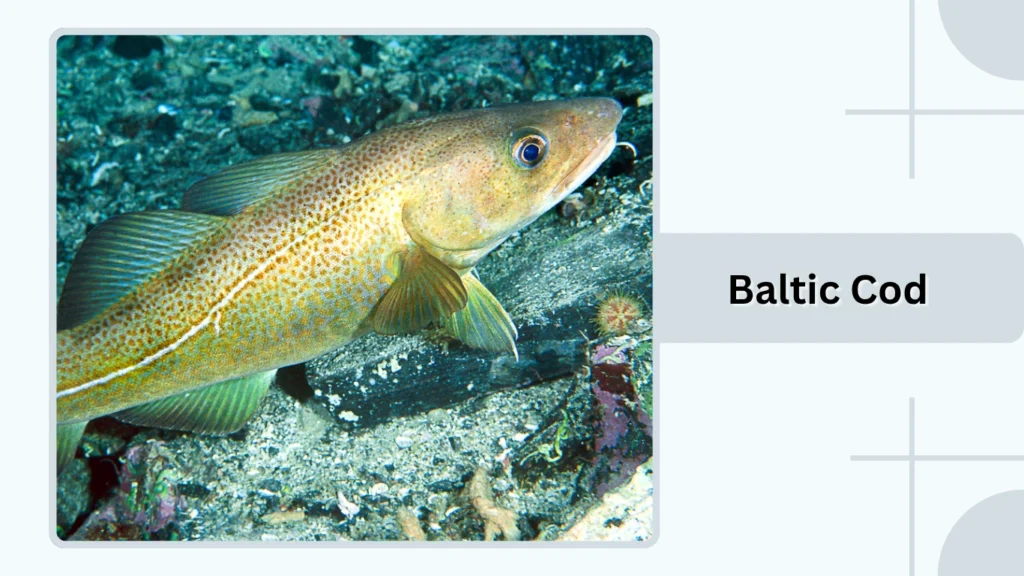
Baltic Cod is a unique population of Atlantic Cod adapted to the brackish waters of the Baltic Sea. It is an important species for regional fisheries and has developed specific traits to survive in lower salinity environments compared to other cod species.
Identification
- Gray to brown body with a slightly darker back
- Lighter underside with a visible lateral line
- Three dorsal fins and two anal fins
- Compact, somewhat smaller body compared to oceanic cod
- Distinct chin barbel
Habitat
Baltic Cod inhabit the brackish waters of the Baltic Sea, where salinity levels are lower than in open oceans. They are commonly found at depths between 20–100 meters, often near the seabed. This species prefers cooler water and areas with adequate oxygen levels, which are essential for survival.
Behavior
Baltic Cod are generally less migratory and tend to stay within specific regions of the Baltic Sea. They may form small groups, especially during spawning. Their behavior is influenced by oxygen levels and water conditions, which can affect movement and distribution.
Diet
Baltic Cod are carnivorous and feed on small fish such as herring and sprat, along with crustaceans and marine invertebrates. Their diet varies depending on availability, and they play a key role as predators within the Baltic marine ecosystem.
8. White Cod
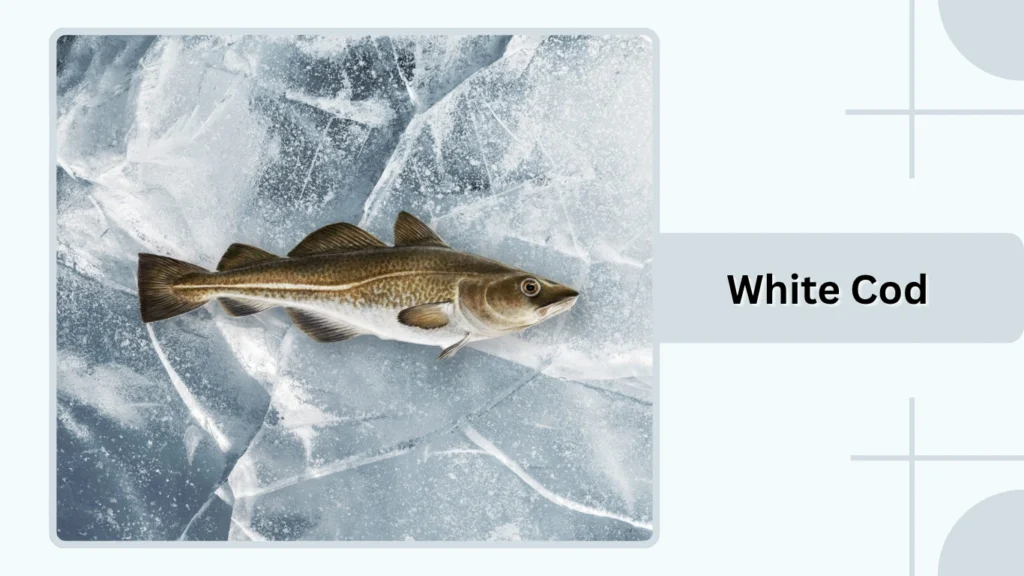
White Cod is a lesser-known cod variety often recognized for its lighter body coloration. It is typically found in colder marine environments and shares many physical and behavioral traits with other cod species, making it part of the broader cod family.
Identification
- Pale gray to whitish body coloration
- Light underside with a faint lateral line
- Three dorsal fins and two anal fins
- Medium, slightly elongated body shape
- Small chin barbel present
Habitat
White Cod inhabit cold ocean waters, usually in coastal and offshore regions. They are commonly found near the seabed at moderate depths, often ranging from shallow waters to a few hundred meters. This species prefers cool temperatures and environments with sandy or rocky bottoms.
Behavior
White Cod are generally bottom-dwelling and may form small groups. They are not highly migratory but can move locally in response to feeding and seasonal changes. Their behavior is similar to other cod species, with a focus on staying near food-rich areas.
Diet
White Cod are carnivorous and feed on small fish, crustaceans, and marine invertebrates. Their diet includes shrimp, worms, and smaller fish species. Like other cod, they are opportunistic feeders and adjust their diet based on availability.
9. Gray Cod
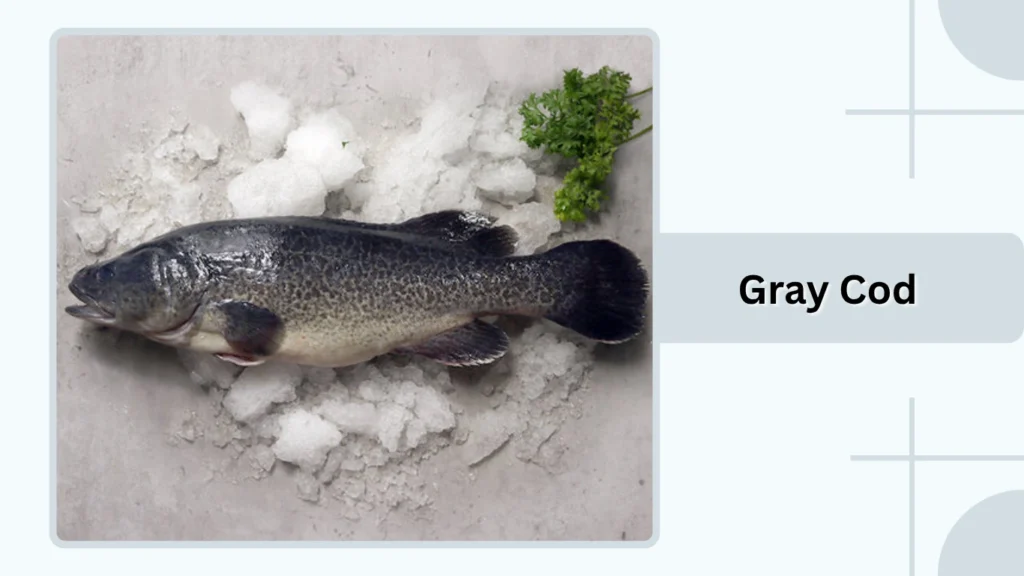
Gray Cod is a general term used for cod-like fish with a grayish body coloration. It is commonly found in cold marine waters and shares many similarities with other cod species in terms of structure and behavior. This type is often recognized for its adaptability and presence in various ocean regions.
Identification
- Gray to dark gray body with subtle mottled patterns
- Lighter underside with a visible lateral line
- Three dorsal fins and two anal fins
- Moderately elongated body shape
- Small chin barbel present
Habitat
Gray Cod typically inhabit cold ocean waters, ranging from coastal zones to deeper offshore regions. They are often found near the seabed at depths varying from shallow areas to several hundred meters. This species prefers cool temperatures and environments with sandy, muddy, or rocky substrates.
Behavior
Gray Cod are generally bottom-dwelling and may form small groups or remain solitary. They are not strongly migratory but can move locally in search of food. Their behavior is influenced by environmental conditions and food availability.
Diet
Gray Cod are carnivorous and feed on a variety of marine organisms. Their diet includes small fish, crustaceans, and worms. Like other cod species, they are opportunistic feeders and adapt their diet based on what is available in their habitat.
10. Rock Cod
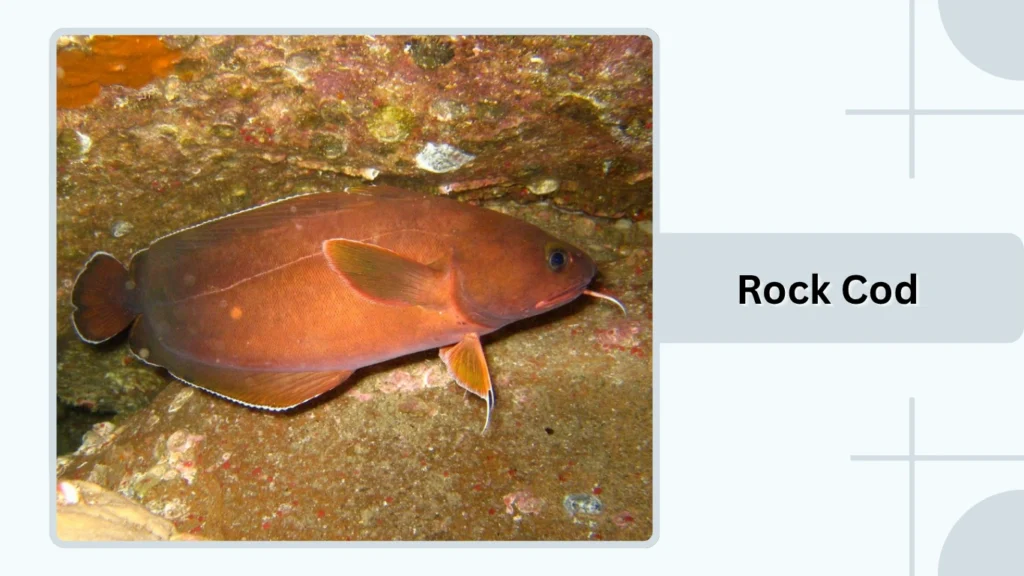
Rock Cod is a common name often used for cod-like fish that inhabit rocky marine environments. These fish are well adapted to structured habitats and are known for their ability to blend into their surroundings, making them effective predators.
Identification
- Brown, gray, or mottled body for camouflage
- Patterned skin that blends with rocky surroundings
- Three dorsal fins and two anal fins
- Moderately robust, slightly elongated body
- Small chin barbel present
Habitat
Rock Cod are typically found in coastal waters with rocky seabeds, reefs, and underwater structures. They prefer shallow to moderate depths where they can hide among rocks and crevices. These environments provide both protection and access to food sources.
Behavior
Rock Cod are generally bottom-dwelling and tend to stay close to rocky structures. They may be solitary or found in small groups. Their camouflage helps them avoid predators and ambush prey effectively.
Diet
Rock Cod are carnivorous and feed on small fish, crustaceans, and marine invertebrates. They rely on stealth and quick movements to catch prey, often hunting in areas where food is abundant among rocks and reef structures.
11. Saffron Cod
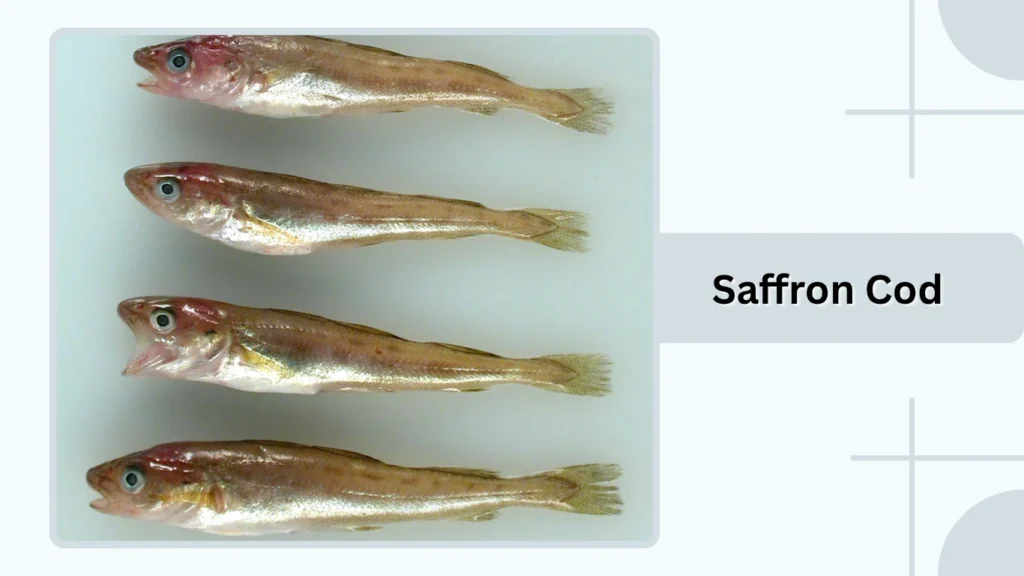
Saffron Cod is a coastal species found mainly in the North Pacific, especially around Alaska and parts of Asia. It is known for its smaller size compared to larger cod species and its importance in local fisheries. This species is well adapted to cold, shallow marine environments.
Identification
- Light brown to yellowish body with a slight saffron tint
- Slender body with a smooth appearance
- Three dorsal fins and two anal fins
- Small head with a noticeable chin barbel
- Typically smaller, growing up to about 1–2 feet
Habitat
Saffron Cod inhabit cold coastal waters, often found in shallow areas such as bays, estuaries, and nearshore zones. They usually stay at depths less than 100 meters and prefer sandy or muddy seabeds. This species can also tolerate brackish water conditions.
Behavior
Saffron Cod are generally found in small groups and are less migratory than larger cod species. They tend to remain in coastal regions year-round, moving locally in response to temperature and food availability.
Diet
Saffron Cod are carnivorous and feed on small marine organisms. Their diet includes crustaceans, worms, and small fish. They are opportunistic feeders and adjust their diet based on available prey in their environment.
12. Poor Cod
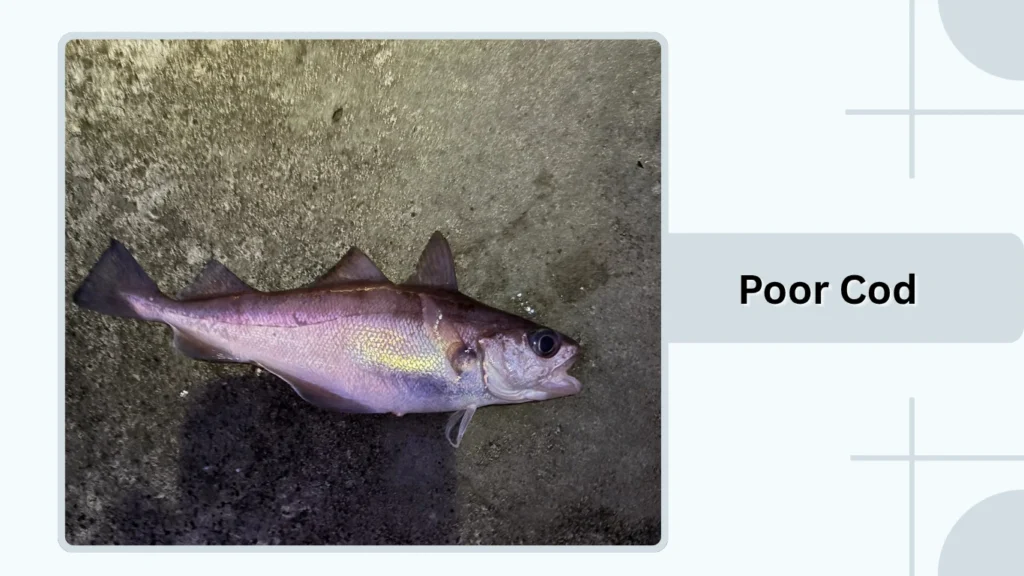
Poor Cod is a small cod species commonly found in the eastern Atlantic Ocean and parts of the Mediterranean Sea. Despite its name, it is an important part of local ecosystems and is known for its compact size and resemblance to juvenile cod.
Identification
- Light brown to gray body with darker vertical bands
- Slender and relatively small body shape
- Three dorsal fins and two anal fins
- Large eyes compared to body size
- Small chin barbel present
Habitat
Poor Cod inhabit coastal and offshore waters, usually at depths between 10–200 meters. They prefer sandy or muddy seabeds and are often found in areas with moderate water temperatures. This species is commonly associated with continental shelf regions.
Behavior
Poor Cod are generally bottom-dwelling and may form small groups. They are not highly migratory but can move locally depending on food availability. Due to their small size, they are often prey for larger fish.
Diet
Poor Cod are carnivorous and feed mainly on small invertebrates. Their diet includes worms, crustaceans, and tiny fish. They are opportunistic feeders and play a role in the food chain as both predator and prey.
13. Tadpole Cod
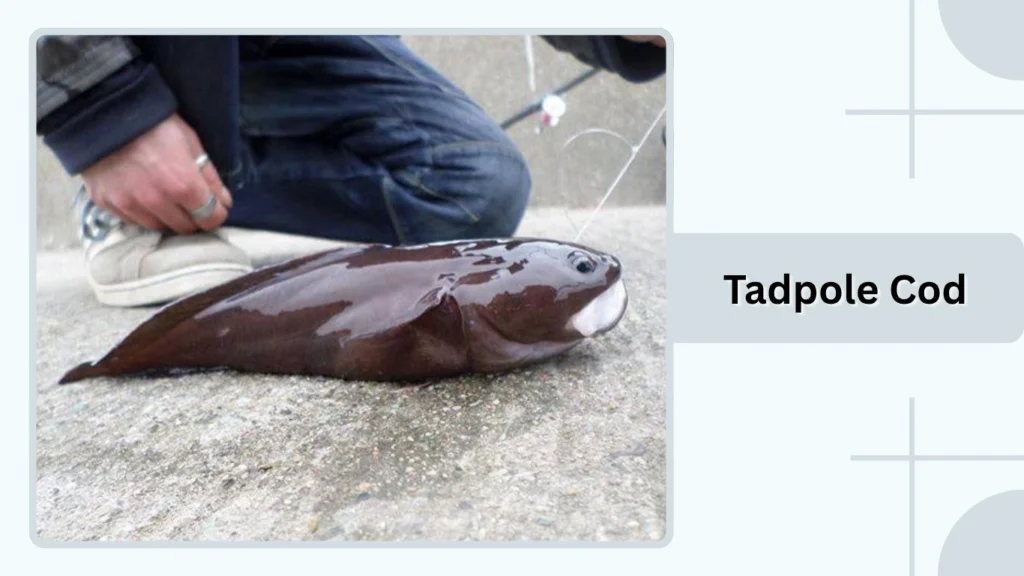
Tadpole Cod is a lesser-known species recognized for its unusual body shape, which resembles that of a tadpole with a larger head and tapering body. It is typically found in deep, cold marine environments and is adapted to life near the ocean floor.
Identification
- Large head with a tapering, narrow body
- Brown to gray coloration for camouflage
- Three dorsal fins and two anal fins
- Soft, elongated body structure
- Small chin barbel present
Habitat
Tadpole Cod are usually found in deep, cold waters of the North Atlantic. They inhabit depths ranging from around 100 to over 500 meters, often near the seabed. This species prefers soft, muddy or sandy bottoms where it can remain hidden.
Behavior
Tadpole Cod are bottom-dwelling and relatively slow-moving. They tend to remain close to the ocean floor and are often solitary. Their body shape helps them conserve energy and adapt to deep-water conditions with limited food availability.
Diet
Tadpole Cod are carnivorous and feed on small marine organisms. Their diet includes worms, crustaceans, and small fish. They rely on ambush and slow movements to capture prey in their deep-sea environment.
14. Longtail Cod
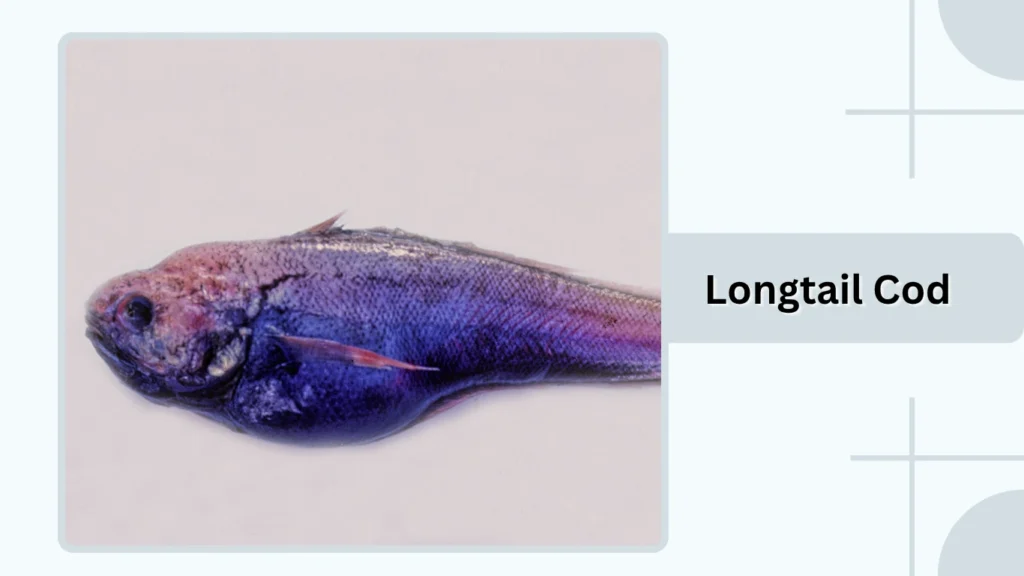
Longtail Cod is a lesser-known cod type recognized for its relatively elongated tail region compared to other cod species. It is typically found in cold marine waters and shares many structural and behavioral traits with other members of the cod family.
Identification
- Elongated body with a noticeably longer tail section
- Brown to gray coloration with subtle mottling
- Lighter underside with a visible lateral line
- Three dorsal fins and two anal fins
- Small chin barbel present
Habitat
Longtail Cod inhabit cold ocean waters, often found in coastal and offshore regions. They usually stay near the seabed at moderate depths, ranging from shallow areas to several hundred meters. This species prefers cool temperatures and environments with sandy or rocky substrates.
Behavior
Longtail Cod are generally bottom-dwelling and may be found alone or in small groups. They are not highly migratory but can move locally in search of food. Their behavior is similar to other cod species, focusing on staying close to feeding areas.
Diet
Longtail Cod are carnivorous and feed on a variety of marine organisms. Their diet includes small fish, crustaceans, and worms. Like other cod species, they are opportunistic feeders and adapt their diet based on availability.
15. Shortfin Cod
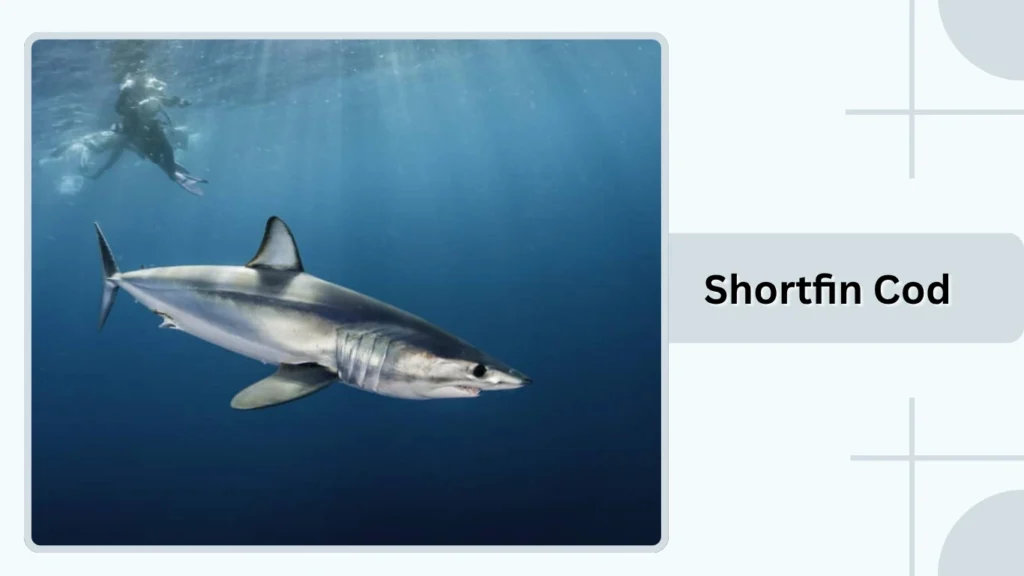
Shortfin Cod is a cod variety distinguished by its relatively shorter fins compared to other cod species. It is typically found in cold marine environments and shares many characteristics with other members of the cod family, including its bottom-dwelling habits and carnivorous diet.
Identification
- Compact body with noticeably shorter fins
- Gray to brown coloration with subtle patterns
- Lighter underside with a visible lateral line
- Three dorsal fins and two anal fins
- Small chin barbel present
Habitat
Shortfin Cod inhabit cold ocean waters, usually in coastal and offshore regions. They are commonly found near the seabed at moderate depths, ranging from shallow waters to several hundred meters. This species prefers cool temperatures and environments with sandy, muddy, or rocky bottoms.
Behavior
Shortfin Cod are generally bottom-dwelling and may be found alone or in small groups. They are not strongly migratory but can move locally depending on food availability. Their behavior is similar to other cod species, focusing on feeding and staying near suitable habitats.
Diet
Shortfin Cod are carnivorous and feed on a variety of marine organisms. Their diet includes small fish, crustaceans, and worms. Like other cod species, they are opportunistic feeders and adapt their feeding habits based on available prey.
16. Deepwater Cod
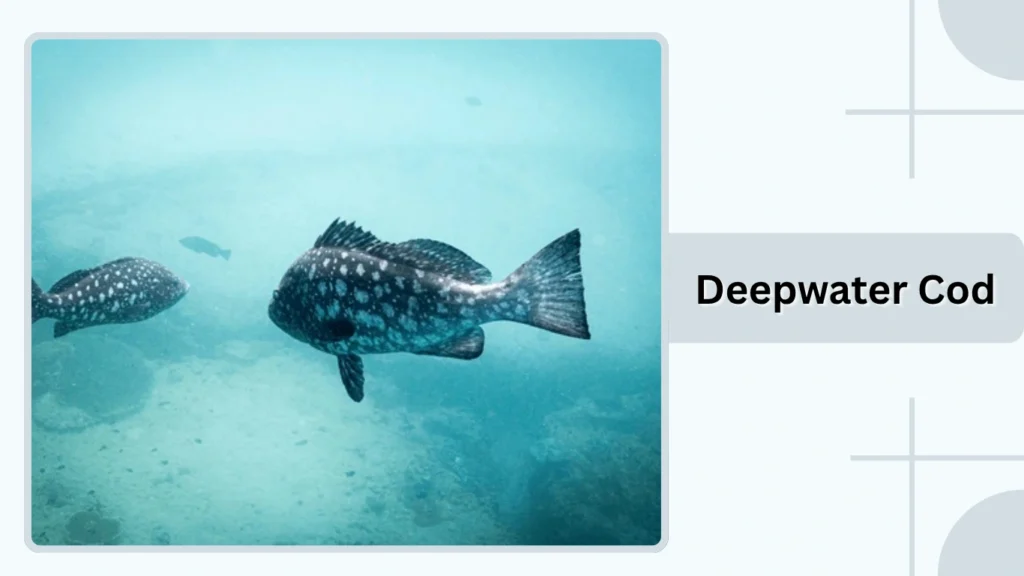
Deepwater Cod refers to cod species adapted to life in deeper parts of the ocean, where light is limited and pressure is higher. These fish are important in deep-sea ecosystems and are often less studied due to the difficulty of accessing their habitats.
Identification
- Dark gray to brown body suited for low-light environments
- Slightly elongated and streamlined body shape
- Three dorsal fins and two anal fins
- Larger eyes adapted for dim conditions
- Small but noticeable chin barbel
Habitat
Deepwater Cod inhabit deeper regions of the ocean, often found at depths ranging from 200 to over 1000 meters. They prefer cold, stable environments with minimal light penetration. These fish are commonly associated with continental slopes and deep seabeds composed of mud or fine sediment.
Behavior
Deepwater Cod are generally slow-moving and adapted to conserve energy in environments where food can be scarce. They are often solitary or found in small groups. Movement is usually limited, with occasional vertical or horizontal shifts in search of food.
Diet
Deepwater Cod are carnivorous and feed on available deep-sea organisms. Their diet includes small fish, crustaceans, and benthic invertebrates. They rely on opportunistic feeding strategies, consuming whatever prey is accessible in their environment.
17. Shallowwater Cod
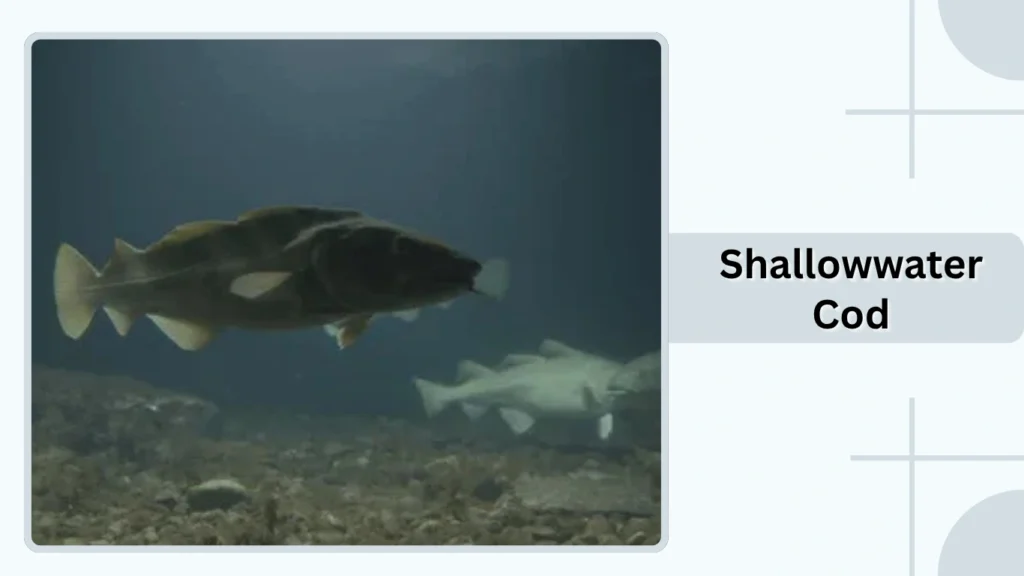
Shallowwater Cod refers to cod species that inhabit coastal and nearshore environments where water depth is relatively low. These fish are commonly found in accessible marine areas and play an important role in local ecosystems and fisheries.
Identification
- Light brown to gray body with subtle patterns
- Slightly more compact body compared to deepwater types
- Three dorsal fins and two anal fins
- Clear lateral line along the body
- Small chin barbel present
Habitat
Shallowwater Cod are typically found in coastal waters, bays, and nearshore regions at depths ranging from just a few meters to around 200 meters. They prefer cooler waters and are often associated with sandy, rocky, or vegetated seabeds where food is readily available.
Behavior
These cod are generally more active than deepwater species due to higher food availability. They may form small groups and are known to move locally in response to tides, temperature changes, and feeding opportunities.
Diet
Shallowwater Cod are carnivorous and feed on a variety of marine organisms. Their diet includes small fish, crabs, shrimp, and worms. They are opportunistic feeders and take advantage of abundant prey found in coastal environments.
18. Red Cod
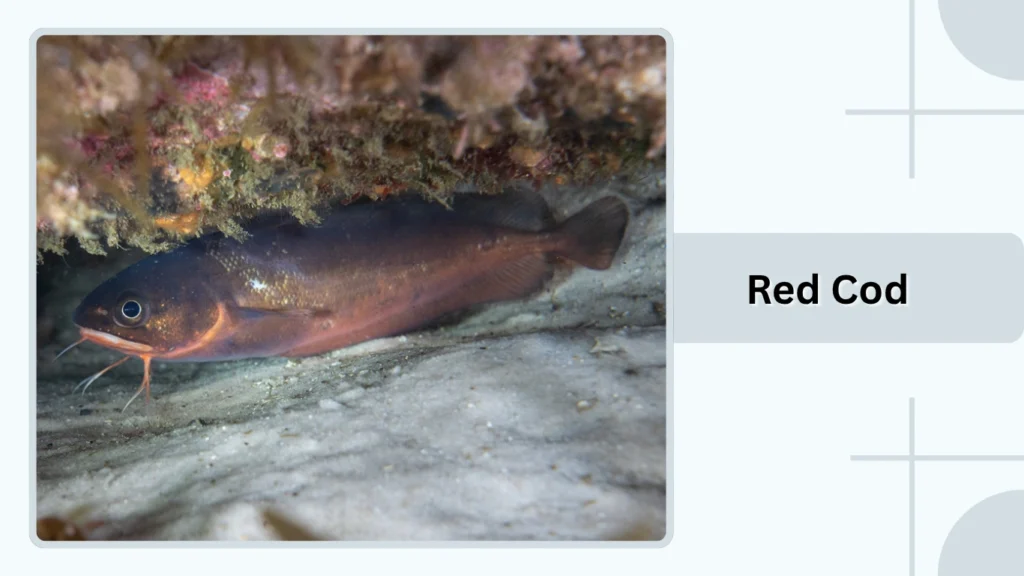
Red Cod is a distinctive species commonly found in southern ocean regions, particularly around New Zealand. It is known for its reddish coloration and is often associated with coastal marine environments. This species is important for local fisheries and marine ecosystems.
Identification
- Reddish to pinkish body coloration
- Slender, elongated body shape
- Pale underside with a faint lateral line
- Three dorsal fins and two anal fins
- Small chin barbel present
Habitat
Red Cod inhabit coastal and offshore waters, typically found at depths ranging from shallow areas to about 150 meters. They prefer cooler marine environments and are often associated with sandy or muddy seabeds where they can find food easily.
Behavior
Red Cod are generally bottom-dwelling and may be found alone or in small groups. They are moderately active and move locally in response to feeding opportunities. Seasonal movements may occur, especially during spawning periods.
Diet
Red Cod are carnivorous and feed on a variety of marine organisms. Their diet includes small fish, crustaceans, and worms. Like other cod species, they are opportunistic feeders and adjust their diet based on availability.
19. Blue Cod
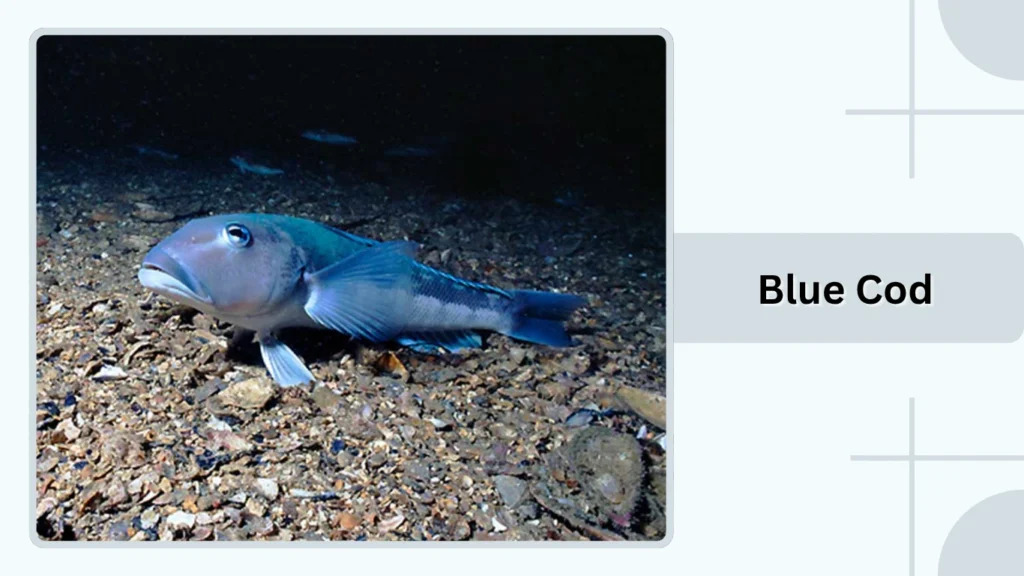
Blue Cod is a well-known coastal species, especially around New Zealand, recognized for its bluish coloration and importance in local fisheries. It is a hardy fish that thrives in cooler coastal waters and is popular among both commercial and recreational fishers.
Identification
- Blue to bluish-green body coloration
- Lighter underside with subtle patterning
- Robust, slightly elongated body shape
- Large head with a noticeable mouth
- Small chin barbel present
Habitat
Blue Cod are typically found in coastal waters, especially around rocky reefs, kelp forests, and structured seabeds. They usually inhabit shallow to moderate depths, ranging from a few meters to about 150 meters. This species prefers cool, clean water with plenty of shelter.
Behavior
Blue Cod are generally territorial and often found alone or in small groups. They tend to stay close to rocky structures where they can hide and hunt. Unlike some cod species, they are less migratory and remain within a defined area.
Diet
Blue Cod are carnivorous and feed on a range of marine organisms. Their diet includes crabs, shellfish, small fish, and other invertebrates. They are active feeders and rely on quick movements to capture prey among rocks and reefs.
20. Black Cod
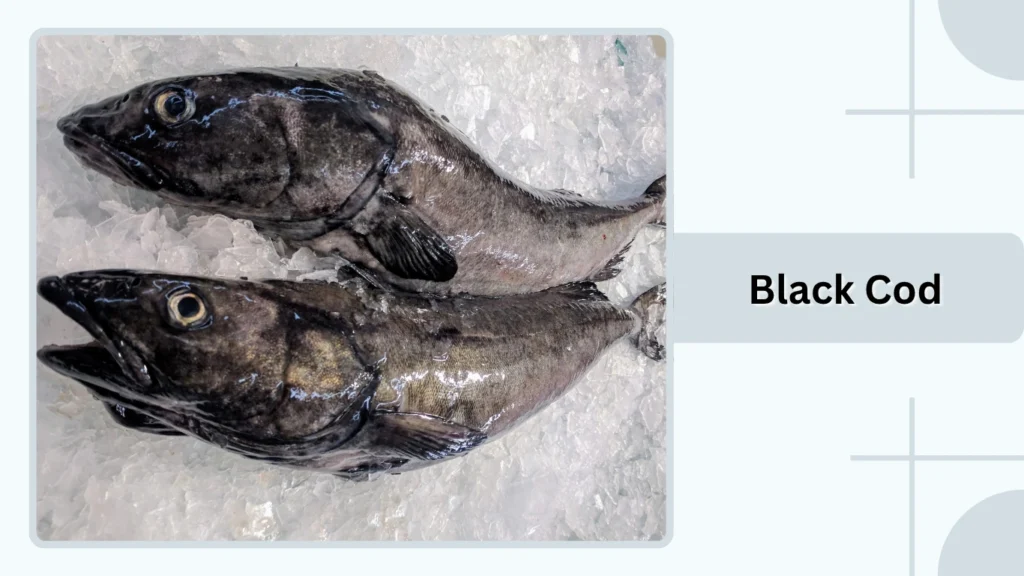
Black Cod, also known as sablefish, is a deep-water species valued for its rich, oily flesh and high commercial importance. Despite its common name, it is not a true cod but shares similarities in appearance and habitat. It is widely found in the North Pacific Ocean.
Identification
- Dark gray to black body coloration
- Smooth, elongated body with a slightly tapering tail
- Large mouth with small, sharp teeth
- Two dorsal fins (unlike true cod with three)
- No prominent chin barbel
Habitat
Black Cod inhabit deep, cold waters of the North Pacific, often found at depths ranging from 300 to over 2000 meters. They are commonly associated with continental slopes and deep seabeds, preferring stable, low-temperature environments.
Behavior
Black Cod are generally solitary and slow-moving, adapted to deep-sea conditions. They may migrate vertically depending on age, with younger fish found in shallower waters and adults moving deeper as they grow.
Diet
Black Cod are carnivorous and feed on a variety of marine organisms. Their diet includes fish, squid, and crustaceans. They are opportunistic predators and consume prey available in their deep-water environment.
21. Ling Cod
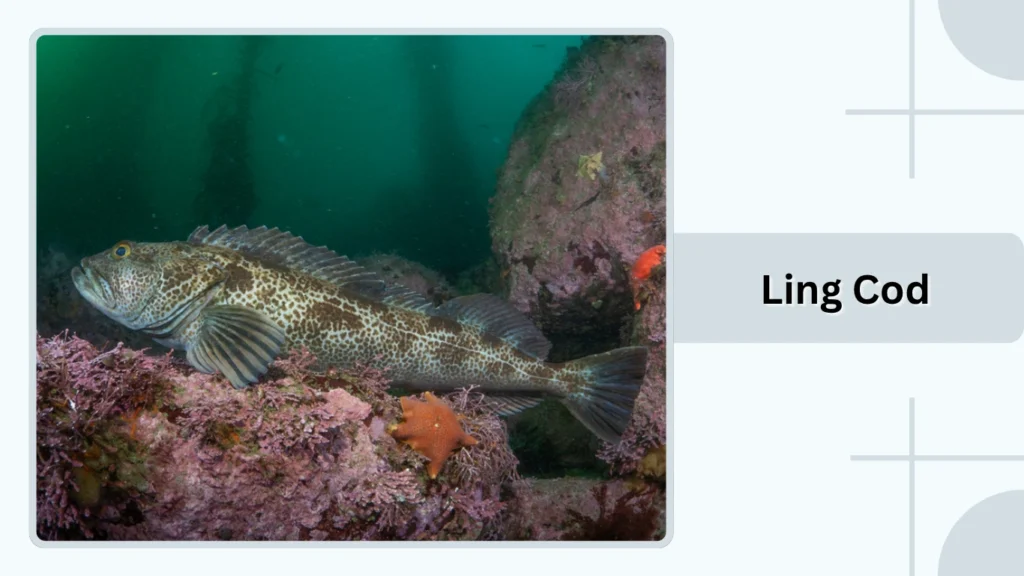
Ling Cod is a large predatory fish found along the Pacific coast of North America. Despite its name, it is not a true cod but belongs to a different family. It is known for its aggressive behavior and is popular in both commercial and recreational fishing.
Identification
- Brown, gray, or greenish body with mottled patterns
- Long, robust body with a large head
- Wide mouth with sharp teeth
- Two dorsal fins (not three like true cod)
- No chin barbel
Habitat
Ling Cod are typically found in coastal waters, especially around rocky reefs, kelp forests, and underwater structures. They inhabit depths ranging from shallow areas to over 300 meters and prefer cool, oxygen-rich waters.
Behavior
Ling Cod are territorial and often solitary. They tend to stay near rocky structures where they can hide and ambush prey. They are highly aggressive predators and will defend their territory from other fish.
Diet
Ling Cod are carnivorous and feed on a wide variety of prey. Their diet includes fish, squid, octopus, and crustaceans. They are ambush predators, using their speed and strong jaws to capture prey quickly.
22. Hake Cod
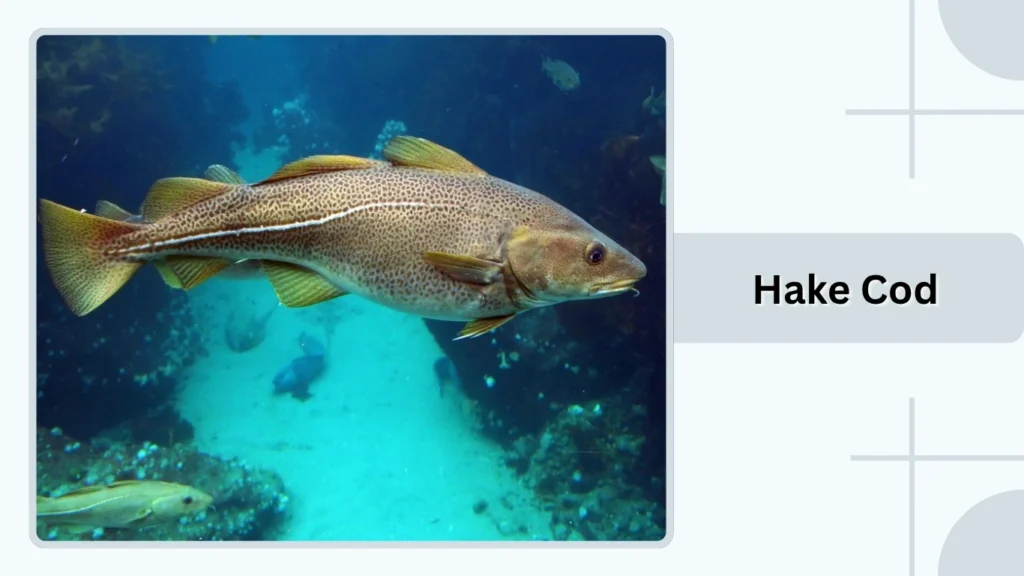
Hake Cod is a general term sometimes used for cod-like fish within the hake family. These fish are commonly found in deep and temperate marine waters and are important in commercial fisheries due to their mild-tasting flesh.
Identification
- Slender, elongated body with a smooth texture
- Gray to silver coloration with a lighter underside
- Large head with a wide mouth
- Two dorsal fins (unlike true cod with three)
- No prominent chin barbel
Habitat
Hake Cod are typically found in deeper offshore waters, often along continental shelves and slopes. They inhabit depths ranging from 100 to over 1000 meters and prefer cool to moderately cold temperatures. They are commonly associated with soft seabeds such as mud or sand.
Behavior
Hake Cod are generally more active at night and may move closer to the surface during feeding. They can form loose schools and are known for vertical movements in the water column depending on light and prey availability.
Diet
Hake Cod are carnivorous and feed mainly on fish, squid, and crustaceans. They are active predators and rely on quick movements to catch prey, especially during nighttime feeding periods.
23. Ice Cod
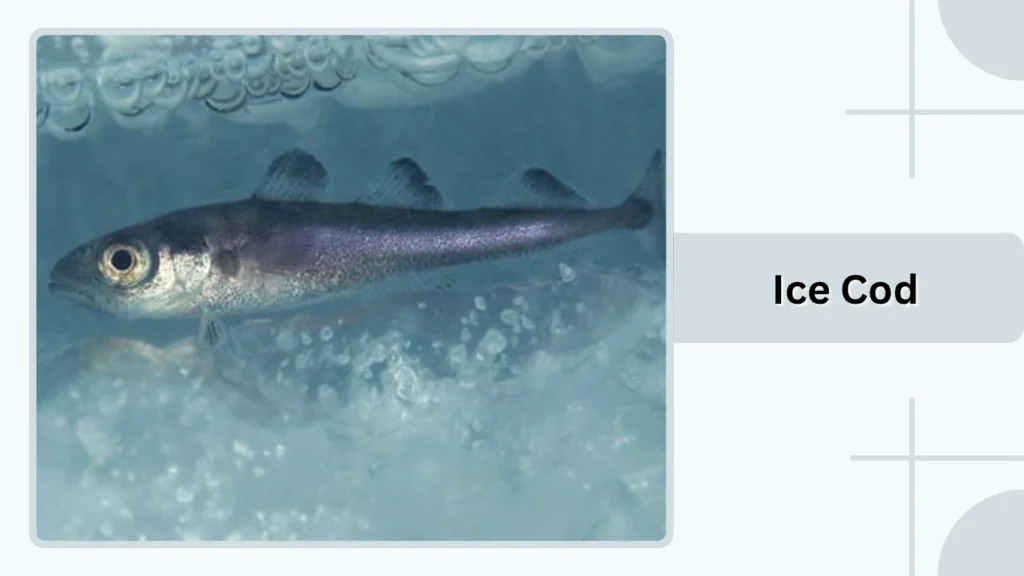
Ice Cod is a cold-water species adapted to icy marine environments, often found in polar and subpolar regions. It is well suited to extreme conditions and plays an important role in cold-water ecosystems, serving as both predator and prey.
Identification
- Pale, silvery to light brown body coloration
- Slender and slightly elongated body shape
- Lighter underside with a faint lateral line
- Three dorsal fins and two anal fins
- Small chin barbel present
Habitat
Ice Cod inhabit extremely cold waters, often near sea ice in polar regions. They are typically found at depths ranging from shallow coastal areas to around 300 meters. These fish thrive in near-freezing temperatures and are closely associated with icy environments.
Behavior
Ice Cod are generally schooling fish and may gather in groups beneath ice formations. Their movement is influenced by seasonal ice changes and food availability. They are well adapted to survive in low-temperature, low-light conditions.
Diet
Ice Cod are carnivorous and feed mainly on small marine organisms. Their diet includes crustaceans, zooplankton, and small fish. They are opportunistic feeders and play a key role in transferring energy within cold-water food chains.
24. Silver Cod
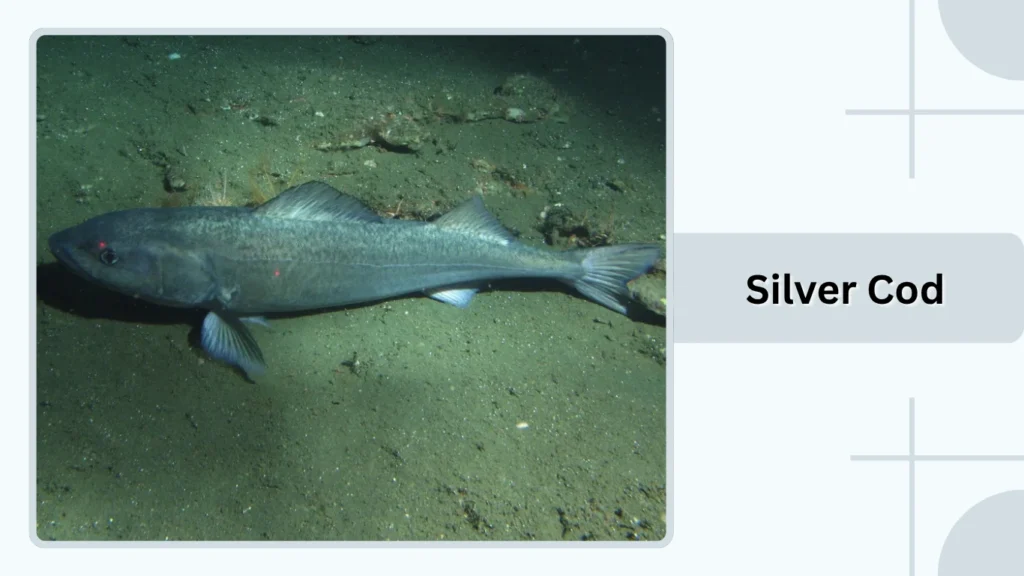
Silver Cod is a cod-like fish known for its shiny, metallic appearance. It is typically found in cold marine waters and is valued in some regions for its mild flavor. Its reflective body helps it blend into open water environments.
Identification
- Bright silver body with a reflective sheen
- Slender, elongated body shape
- Lighter underside with a visible lateral line
- Three dorsal fins and two anal fins
- Small chin barbel present
Habitat
Silver Cod are usually found in cold ocean waters, ranging from coastal areas to deeper offshore regions. They prefer moderate depths and are often associated with sandy or muddy seabeds. Cool temperatures and stable marine conditions support their survival.
Behavior
Silver Cod are generally active and may form small groups. They move through different depths depending on feeding opportunities and environmental conditions. Their reflective body helps them avoid predators in open water.
Diet
Silver Cod are carnivorous and feed on a variety of marine organisms. Their diet includes small fish, crustaceans, and invertebrates. They are opportunistic feeders and adapt their feeding habits based on available prey.
25. Golden Cod
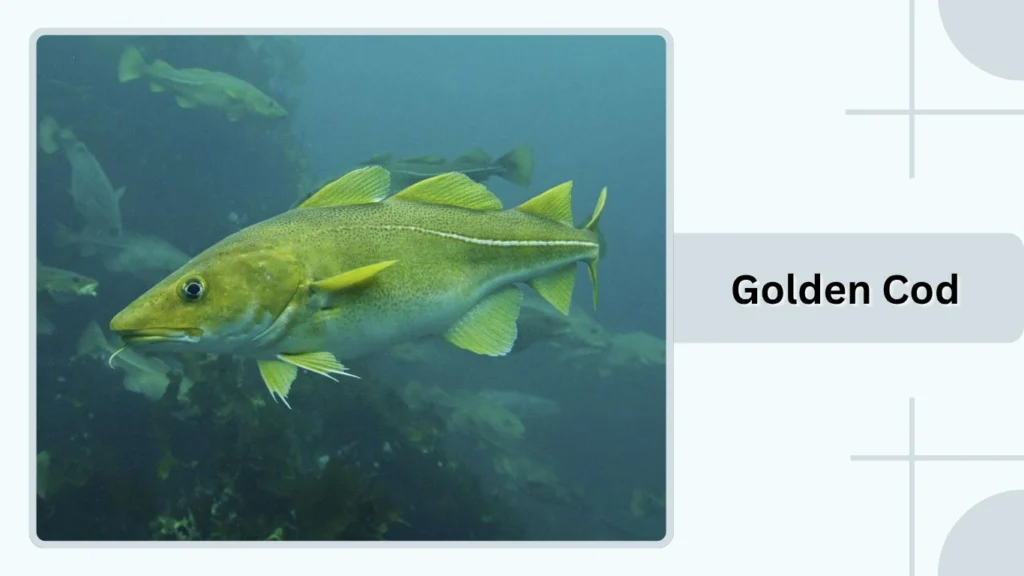
Golden Cod is a visually distinctive cod-like fish recognized for its warm golden coloration. It is typically found in marine environments where its color helps it blend with sandy or sunlit seabeds. This type is appreciated for both its appearance and ecological role.
Identification
- Golden-yellow to light brown body coloration
- Smooth, slightly elongated body shape
- Lighter underside with a faint lateral line
- Three dorsal fins and two anal fins
- Small chin barbel present
Habitat
Golden Cod inhabit coastal and offshore marine waters, often found near sandy or rocky seabeds. They are usually present at moderate depths, ranging from shallow waters to a few hundred meters. This species prefers cool to moderately cold temperatures and stable ocean conditions.
Behavior
Golden Cod are generally bottom-dwelling and may be found alone or in small groups. They move locally in search of food and are not highly migratory. Their coloration helps them remain less visible to predators and prey.
Diet
Golden Cod are carnivorous and feed on a variety of marine organisms. Their diet includes small fish, crustaceans, and worms. Like other cod species, they are opportunistic feeders and adapt to the availability of prey in their environment.
26. Spotted Cod
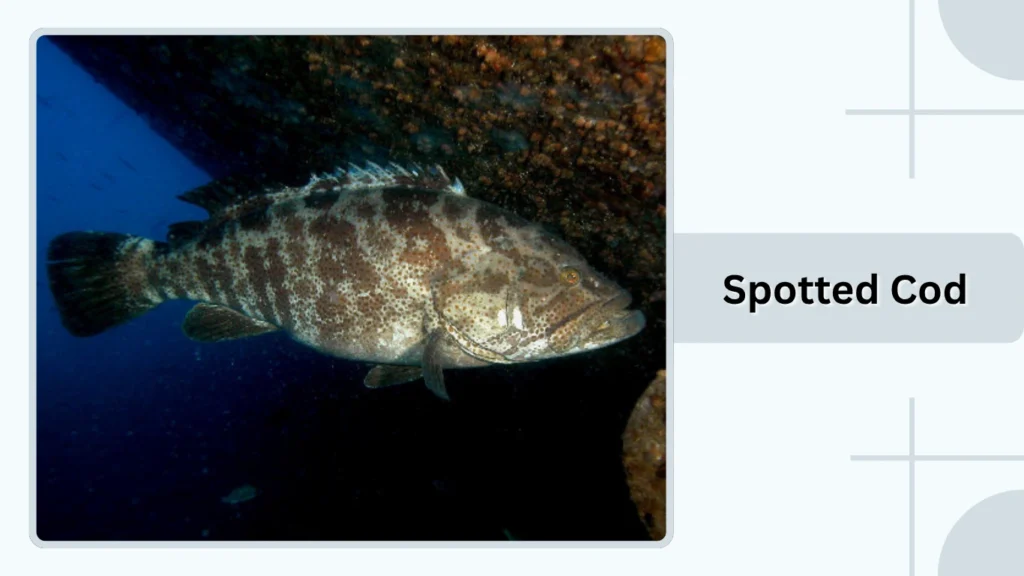
Spotted Cod is a cod-like fish known for its distinct spotted pattern across the body. These markings help it blend into its surroundings, making it well adapted to life near the ocean floor. It is commonly found in cold marine environments.
Identification
- Light to dark body covered with noticeable spots
- Brown, gray, or greenish coloration
- Slightly elongated body with a smooth texture
- Three dorsal fins and two anal fins
- Small chin barbel present
Habitat
Spotted Cod are typically found in coastal and offshore waters, often near rocky or sandy seabeds. They inhabit depths ranging from shallow areas to several hundred meters. This species prefers cool marine temperatures and structured habitats that provide both shelter and feeding opportunities.
Behavior
Spotted Cod are generally bottom-dwelling and may be found alone or in small groups. They rely on camouflage to avoid predators and to ambush prey. Their movements are usually limited to local areas where food is available.
Diet
Spotted Cod are carnivorous and feed on a variety of marine organisms. Their diet includes small fish, crustaceans, and invertebrates. They are opportunistic feeders and adjust their feeding habits based on available prey in their environment.
27. Striped Cod
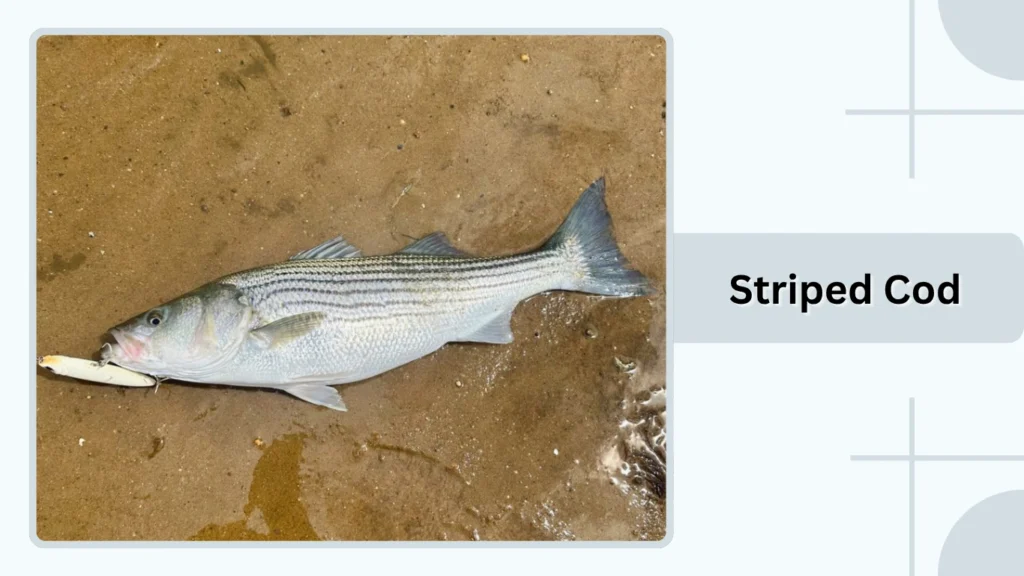
Striped Cod is a cod-like fish recognized for its linear patterns running along the body. These stripes provide camouflage in structured marine environments, helping the fish blend with underwater features such as rocks and vegetation.
Identification
- Distinct horizontal or vertical stripes along the body
- Brown, gray, or greenish base coloration
- Slender, elongated body shape
- Three dorsal fins and two anal fins
- Small chin barbel present
Habitat
Striped Cod are typically found in coastal and offshore waters, especially in areas with rocky reefs or structured seabeds. They inhabit depths from shallow regions to several hundred meters and prefer cool marine temperatures with stable conditions.
Behavior
Striped Cod are generally bottom-dwelling and may live alone or in small groups. Their striped pattern helps them stay hidden from predators and prey. They tend to remain in areas with good shelter and food availability rather than migrating long distances.
Diet
Striped Cod are carnivorous and feed on small fish, crustaceans, and marine invertebrates. They are opportunistic feeders and rely on both camouflage and quick movements to catch prey in their environment.
28. Reef Cod
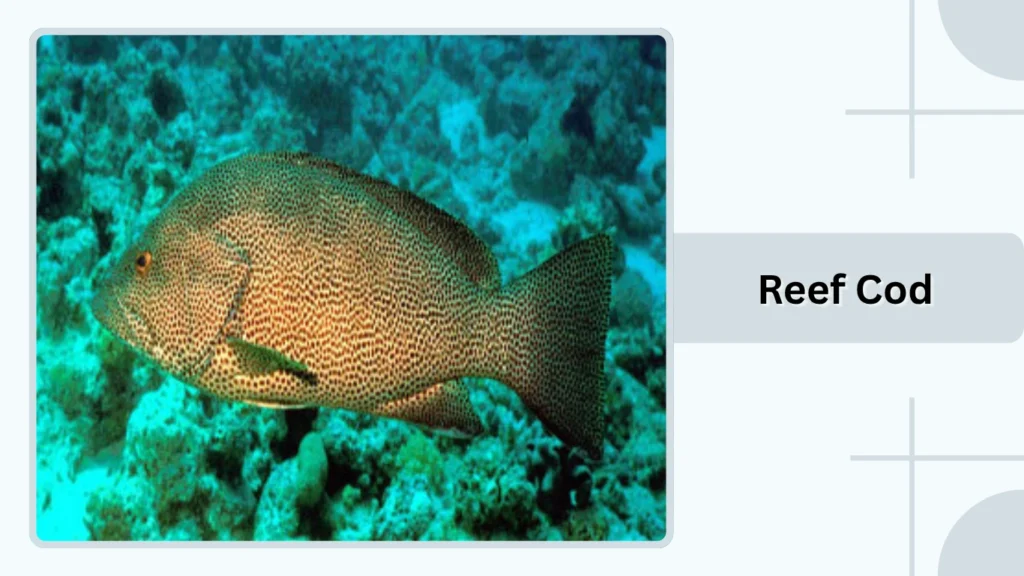
Reef Cod is a cod-like fish commonly associated with reef environments, where it benefits from the shelter and abundant food sources provided by coral and rocky structures. It is well adapted to complex habitats and plays a role as a mid-level predator.
Identification
- Brown, gray, or mottled coloration for camouflage
- Patterned body that blends with reef surroundings
- Moderately elongated, sturdy body shape
- Three dorsal fins and two anal fins
- Small chin barbel present
Habitat
Reef Cod are typically found in coral reefs, rocky reefs, and structured coastal environments. They inhabit shallow to moderate depths, often staying close to crevices and sheltered areas. These habitats provide protection as well as access to a wide range of prey.
Behavior
Reef Cod are usually territorial and prefer to stay within a defined area of the reef. They may be solitary or found in small groups. Their behavior is closely tied to reef structures, which they use for hiding and ambushing prey.
Diet
Reef Cod are carnivorous and feed on a variety of reef-dwelling organisms. Their diet includes small fish, crustaceans, and invertebrates. They rely on stealth and quick strikes to capture prey within the reef environment.
29. Sand Cod
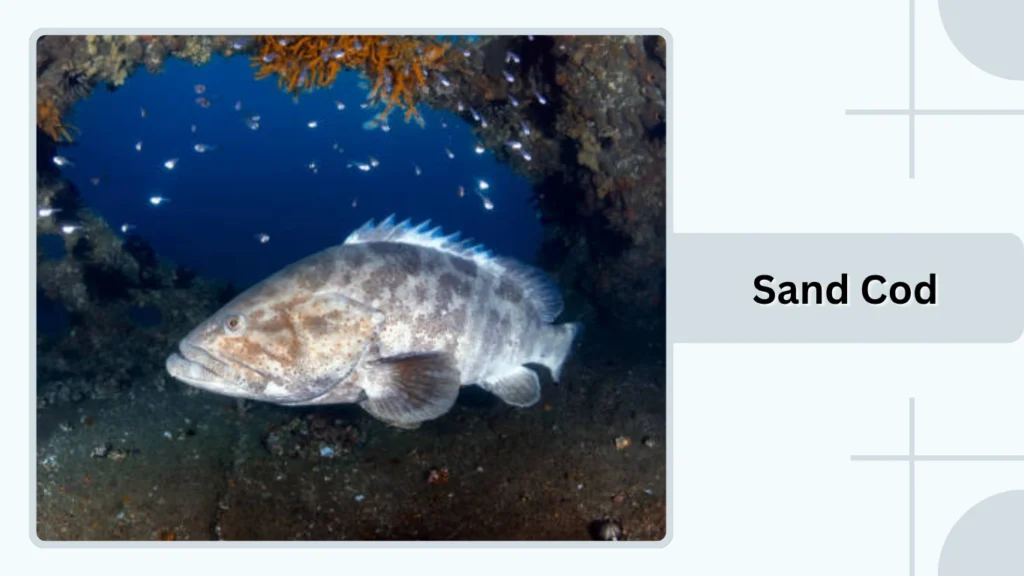
Sand Cod is a cod-like fish adapted to sandy seabed environments, where its coloration helps it blend into the surroundings. It is commonly found in coastal marine areas and plays a role as both predator and prey within its ecosystem.
Identification
- Light brown to sandy-colored body
- Smooth, slightly elongated body shape
- Faint patterns that match sandy environments
- Three dorsal fins and two anal fins
- Small chin barbel present
Habitat
Sand Cod are typically found in coastal and offshore waters with sandy bottoms. They inhabit shallow to moderate depths, often burying or resting close to the seabed. These environments provide both camouflage and access to food sources.
Behavior
Sand Cod are bottom-dwelling and often remain close to the substrate. They may be solitary or found in small groups. Their behavior includes staying partially hidden in sand to avoid predators and ambush prey.
Diet
Sand Cod are carnivorous and feed on small marine organisms. Their diet includes worms, crustaceans, and small fish. They rely on camouflage and quick movements to capture prey in sandy habitats.
30. Mud Cod
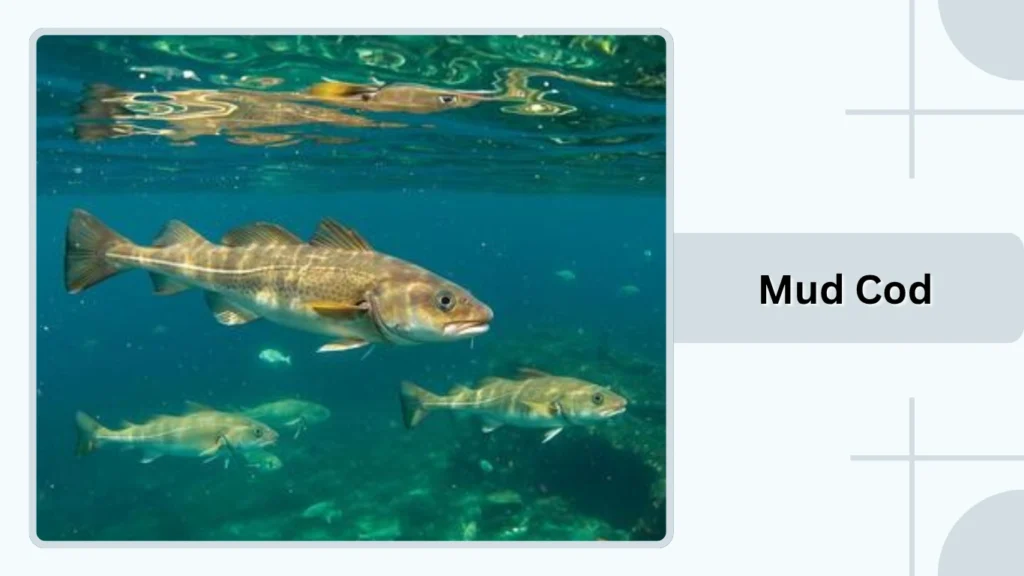
Mud Cod is a cod-like fish adapted to soft, muddy seabeds where it can easily blend into its surroundings. It is commonly found in coastal and offshore areas with fine sediment and plays an important role in bottom-dwelling marine ecosystems.
Identification
- Brown to dark gray body suited for muddy environments
- Smooth, slightly elongated body shape
- Subtle mottled patterns for camouflage
- Three dorsal fins and two anal fins
- Small chin barbel present
Habitat
Mud Cod are typically found in coastal and offshore waters with muddy or silty bottoms. They inhabit shallow to moderate depths, often remaining close to the seabed. These environments provide both protection and access to food sources.
Behavior
Mud Cod are bottom-dwelling and usually remain close to or partially buried in the substrate. They are often solitary but may occasionally be found in small groups. Their movements are generally slow and focused around feeding areas.
Diet
Mud Cod are carnivorous and feed on a variety of organisms found in soft sediments. Their diet includes worms, small crustaceans, and tiny fish. They rely on camouflage and subtle movements to capture prey in their habitat.
31. Coastal Cod
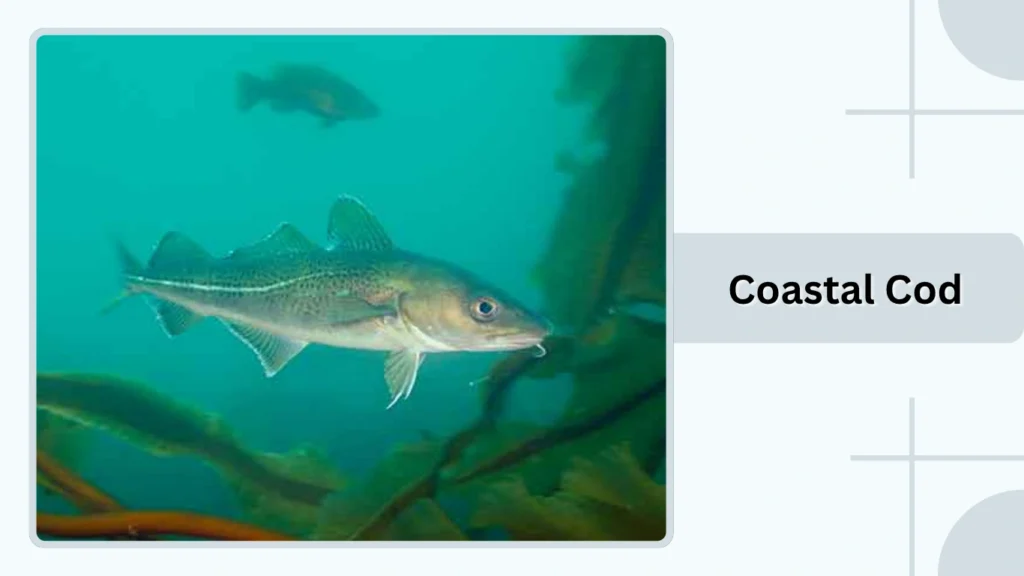
Coastal Cod is a general term used for cod species that live close to shorelines rather than deep offshore waters. These fish are important in local ecosystems and fisheries, as they are more accessible and often interact with diverse coastal habitats.
Identification
- Gray to brown body with subtle patterns
- Lighter underside with a visible lateral line
- Three dorsal fins and two anal fins
- Medium-sized, slightly robust body
- Small chin barbel present
Habitat
Coastal Cod are typically found in shallow marine environments such as bays, estuaries, and nearshore waters. They prefer depths ranging from a few meters to around 200 meters. These fish are often associated with rocky, sandy, or vegetated seabeds where food is plentiful.
Behavior
Coastal Cod are generally less migratory and tend to stay within a limited range. They may form small groups or remain solitary depending on conditions. Their behavior is influenced by tides, temperature, and food availability.
Diet
Coastal Cod are carnivorous and feed on a wide range of prey. Their diet includes small fish, crustaceans, and marine invertebrates. They are opportunistic feeders and adjust their diet based on what is available in their coastal environment.
32. Ocean Cod
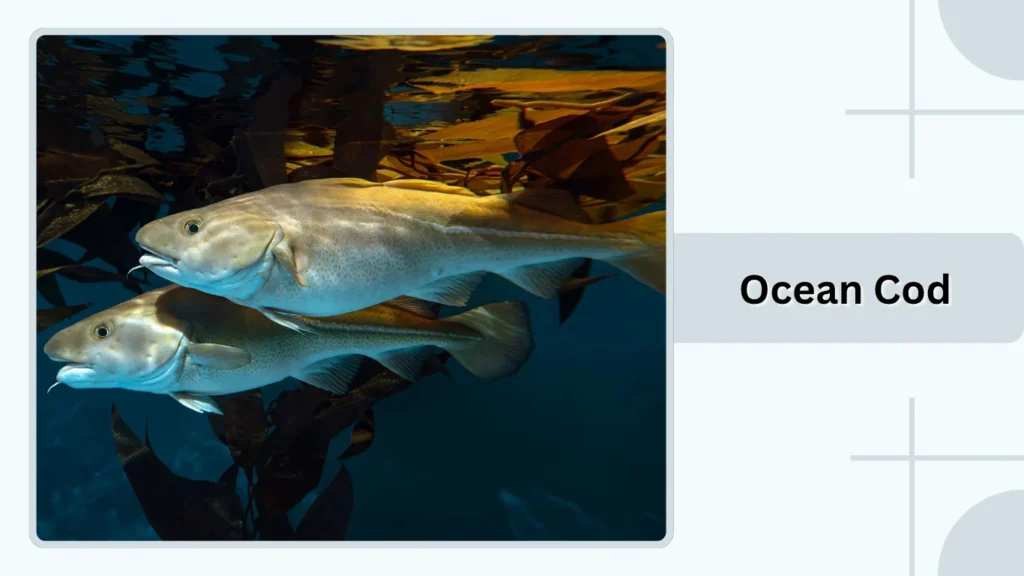
Ocean Cod is a general term used for cod species that inhabit deeper offshore waters. These fish are adapted to life in open marine environments and are important both ecologically and commercially due to their role as predators and their value in fisheries.
Identification
- Gray to brown body with a streamlined shape
- Lighter underside with a clear lateral line
- Three dorsal fins and two anal fins
- Elongated body suited for open water movement
- Small chin barbel present
Habitat
Ocean Cod are typically found in offshore marine environments, often at moderate to deep depths ranging from 100 to over 600 meters. They prefer cold, stable waters and are commonly associated with continental shelves and slopes where food is abundant.
Behavior
Ocean Cod are more migratory compared to coastal types, often moving long distances for feeding and spawning. They may form schools, especially during breeding seasons, and adjust their depth based on environmental conditions and prey availability.
Diet
Ocean Cod are carnivorous and feed on a variety of marine organisms. Their diet includes fish, crustaceans, and invertebrates. They are active predators and play a key role in maintaining balance within marine ecosystems.
FAQs
What is the most common type of cod fish?
Atlantic Cod is the most well-known and widely recognized cod species. It has been a major part of global fisheries for centuries due to its availability, mild flavor, and economic importance in many regions.
Where are cod fish usually found?
Cod fish are mainly found in cold marine waters of the Atlantic and Pacific Oceans. They prefer temperatures between 0–10°C and are commonly located near the seabed in coastal areas, continental shelves, and deeper offshore regions.
What do cod fish eat?
Cod fish are carnivorous and feed on a variety of marine organisms. Their diet typically includes small fish, crustaceans, worms, and other invertebrates. They are opportunistic feeders and adjust their diet based on availability.
Are all cod fish the same?
No, cod fish vary in size, color, habitat, and behavior depending on the species. While they share common features like multiple dorsal fins and a chin barbel, different types have unique adaptations to their environments.
Why are cod fish important?
Cod fish play a key role in marine ecosystems as both predators and prey. They are also economically important for commercial fishing industries worldwide. Sustainable management is essential to protect cod populations and maintain ecological balance.