
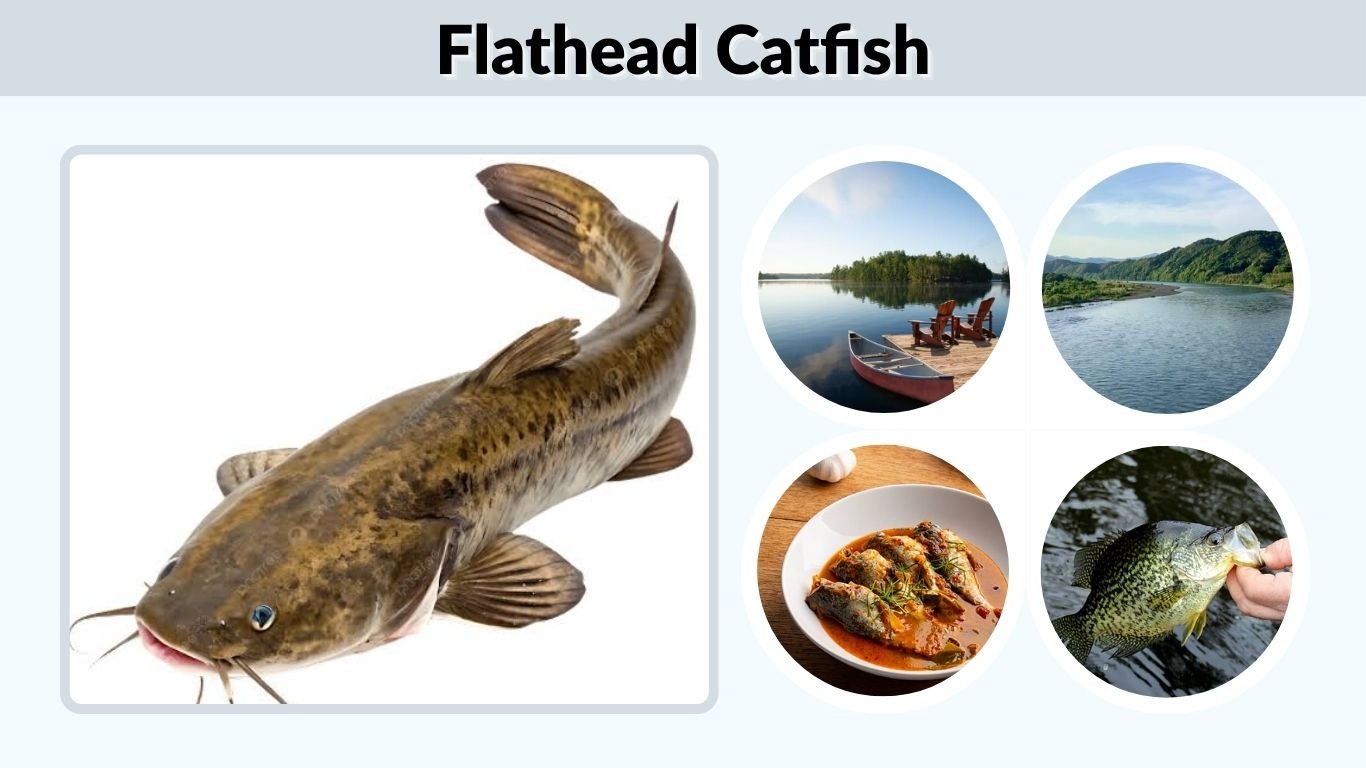
The flathead catfish is a powerful freshwater predator recognized by its broad head, projecting lower jaw, mottled body, and square tail. Anglers prize this species for its enormous potential size, strong fight, and preference for live bait. However, its predatory behavior can create ecological problems when it is introduced outside its natural range. This guide covers flathead catfish identification, habitat, diet, lifespan, spawning, aquarium needs, fishing methods, record size, and differences from channel catfish.
Flathead Catfish Quick Facts
| Feature | Information |
| Scientific name | Pylodictis olivaris |
| Family | Ictaluridae |
| Other names | Yellow cat, shovelhead, mudcat |
| Average length | About 20–30 inches |
| Maximum potential length | More than 50 inches |
| Diet | Primarily fish and crayfish |
| Tail shape | Square or slightly notched |
| Native region | Lower Great Lakes, Mississippi basin and Gulf drainages |
| Typical habitat | Deep rivers, reservoirs, lakes and large streams |
| Lifespan | Commonly 15–20 years; sometimes longer |
Flathead catfish are native to parts of the lower Great Lakes, Mississippi River basin, and Gulf Slope. They have also been introduced into many waters outside that natural range.
What Does a Flathead Catfish Look Like?
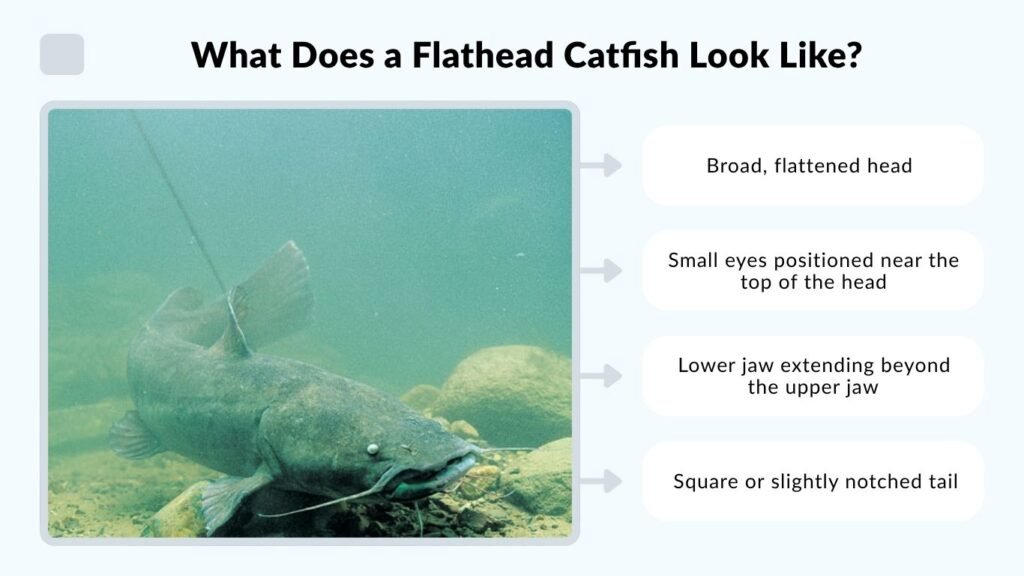
The flathead catfish has a long, heavy body with smooth skin and no scales. Its coloration varies from yellowish brown to dark olive, usually with irregular brown or black mottling along the back and sides.
Key Identification Features
- Broad, flattened head
- Small eyes positioned near the top of the head
- Lower jaw extending beyond the upper jaw
- Square or slightly notched tail
- Yellow, brown or olive mottled body
- Pale yellow, cream or gray underside
- Eight whisker-like barbels around the mouth
- Short anal fin containing approximately 14–17 rays
Juveniles usually show stronger mottling, while large adults may become more evenly colored. Fish living over light-colored bottoms sometimes develop a yellow or pale tan appearance, leading to the common name “yellow cat.”
Are Flathead Catfish Whiskers Dangerous?
The whiskers, properly called barbels, do not sting. They contain sensory structures that help the fish locate prey in dark or muddy water.
The dorsal and pectoral fins have hard spines that can puncture skin, however. Smaller fish should be held carefully behind the pectoral spines. Large flatheads should be controlled with suitable landing and handling equipment.
How Big Do Flathead Catfish Get?
Most flathead catfish caught by anglers are considerably smaller than the species’ maximum size. A typical adult may measure 20–30 inches, but older fish can surpass 50 inches and weigh more than 60 pounds. Exceptional individuals can exceed 100 pounds.
Their growth depends on:
- Water temperature
- Prey availability
- Habitat quality
- Population density
- Fishing pressure
- Age and genetics
World-Record Flathead Catfish
The current IGFA all-tackle world record is 123 pounds. Angler Ken Paulie caught the fish from Elk City Reservoir in Kansas on May 19, 1998. The record fish weighed 55.79 kilograms and was caught using 12-pound-test line.
State records can change when new catches are certified. Anglers should check the appropriate state wildlife agency for the latest Michigan, Idaho, Ohio, Texas, North Carolina, or other state record.
Flathead Catfish Habitat and Range
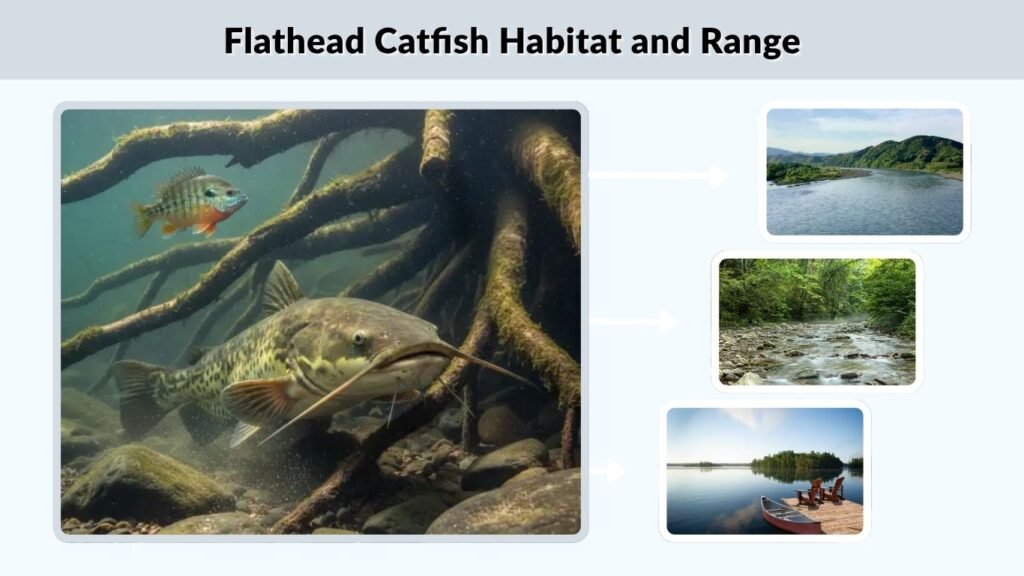
Flathead catfish favor deep, slow-moving water with abundant cover. They live in large rivers, streams, lakes, reservoirs, canals, and connected backwaters.
Common hiding places include:
- Submerged logs
- Brush piles
- Fallen trees
- Rock ledges
- Undercut banks
- Deep pools
- Old river channels
- Bridge structures
Adults frequently stay near cover during daylight and move into shallower water after dark to hunt. Young fish may occupy sandy or rocky runs and areas beneath stones.
What Do Flathead Catfish Eat?
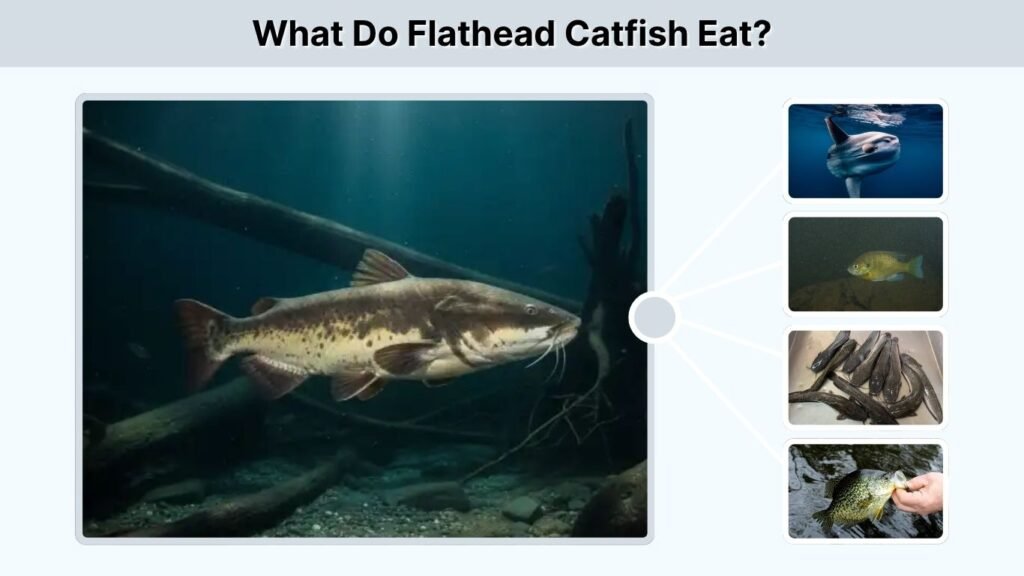
Flathead catfish become strongly predatory as they grow. Unlike channel catfish, which readily consume plant material, insects, carrion and prepared foods, adult flatheads usually prefer live prey.
Common Foods
- Shad
- Sunfish
- Bluegill
- Carp
- Bullheads
- Suckers
- Crappie
- Small catfish
- Crayfish
- Aquatic insects
Juveniles consume insects, crayfish and small fish. Larger adults increasingly depend on fish, although research shows that crayfish may remain an important part of their diet in some waters.
Flatheads are usually ambush predators. They wait near submerged timber or other cover before attacking prey that moves within reach.
Flathead Catfish Spawning and Lifespan
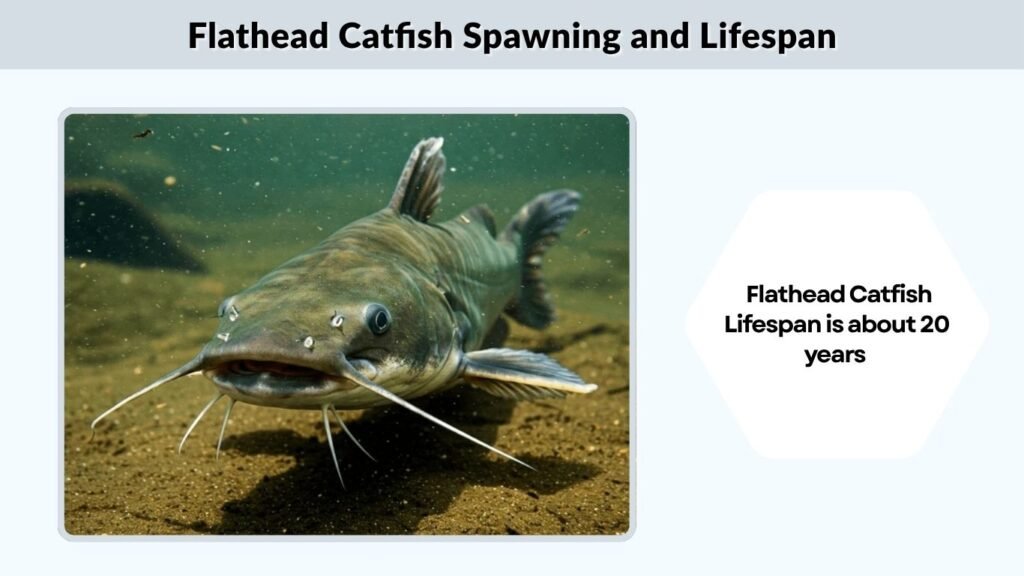
Flathead catfish generally spawn during late spring or early summer when water temperatures become warm. Timing varies with latitude, local weather and water conditions.
Nesting Behavior
The male selects or prepares a protected nesting cavity, such as:
- A hollow log
- An undercut bank
- A rock opening
- A cavity beneath debris
- An abandoned animal burrow
After the female deposits the eggs, the male guards the nest, fans the eggs with his fins, and protects the newly hatched young. Flatheads usually spawn once annually.
Flathead catfish are relatively long-lived. Virginia wildlife authorities report an average lifespan of about 20 years in the state, although actual longevity varies among populations.
Best Bait for Flathead Catfish
Live bait is normally the best choice because flatheads are active predators. Fresh, lively bait creates movement and natural vibrations that help attract nearby fish.
Effective Live Baits
- Bluegill
- Green sunfish
- Bullheads
- Shad
- Suckers
- Large minnows
- Carp
- Crayfish
Only use bait species and collection methods permitted by local regulations. Some areas restrict transporting live fish, using game fish as bait, or releasing unused bait.
Cut bait can catch flatheads, but live fish generally produce more consistent results when targeting large adults.
Best Flathead Catfish Rig and Gear
Flatheads are powerful fish that often retreat into timber immediately after being hooked. Heavy equipment helps anglers control them before the line becomes wrapped around submerged cover.
Basic Bottom Rig
A practical setup includes:
- Medium-heavy or heavy fishing rod
- Strong reel with reliable drag
- Heavy monofilament or braided line
- Sliding sinker
- Strong swivel
- Abrasion-resistant leader
- Large circle hook
- Live bait
Pass the main line through a sliding sinker, attach it to a swivel, and add a leader and circle hook. The sliding design allows a fish to move with the bait without immediately feeling the full sinker weight.
Fish near deep holes, logjams, outside river bends, submerged trees, rock piles and current breaks. Evening, nighttime and early morning are often productive because flatheads commonly leave cover to hunt after dark.
Flathead Catfish vs Channel Catfish
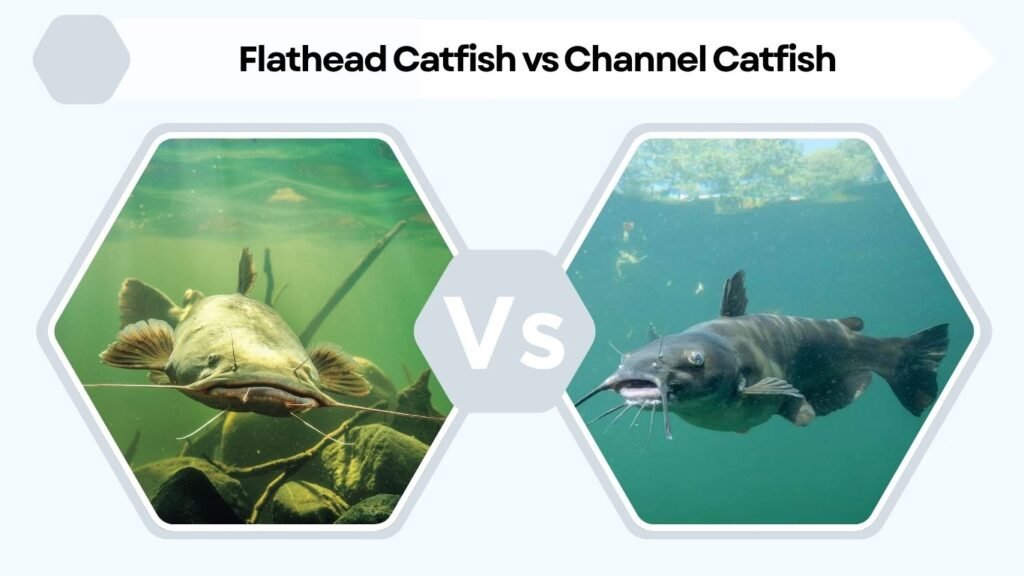
Although both species have barbels and smooth skin, their head shape, tail and feeding behavior make them relatively easy to separate.
| Feature | Flathead catfish | Channel catfish |
| Head | Broad and flattened | Narrower and rounded |
| Lower jaw | Extends beyond upper jaw | Upper jaw usually extends slightly farther |
| Tail | Square or slightly notched | Deeply forked |
| Color | Mottled yellow, olive or brown | Gray, silver or olive with possible spots |
| Anal-fin rays | About 14–17 | Usually 24–29 |
| Adult diet | Primarily live fish | Omnivorous and opportunistic |
| Maximum size | Commonly grows larger | Usually smaller |
The square tail and projecting lower jaw are the easiest features for distinguishing a flathead from a channel catfish.
Can Flathead Catfish Live in an Aquarium?
A juvenile flathead may appear manageable, but it can eventually grow longer than four feet and become a powerful predator. There is no practical minimum-gallon recommendation for keeping an adult in an ordinary home aquarium.
A permanent enclosure would need:
- Public-aquarium or large-pond dimensions
- Extremely powerful biological filtration
- High oxygen levels
- Strong construction
- Large shelters
- Space to turn and swim naturally
- A steady supply of suitable food
Small fish placed in the same enclosure will likely become prey. Flathead catfish are displayed in some public aquariums, but they are generally unsuitable for private indoor tanks.
Are Flathead Catfish Invasive?
Flathead catfish are native and valued sport fish within their historical range. However, they are considered invasive in some waters where people introduced them.
As large predators, they can consume native fish and affect local food webs. The U.S. Fish and Wildlife Service has documented harmful effects on native species in introduced locations, while the USGS tracks non-native populations throughout the country. Never move or release flathead catfish into another waterway.
Are Flathead Catfish Good to Eat?
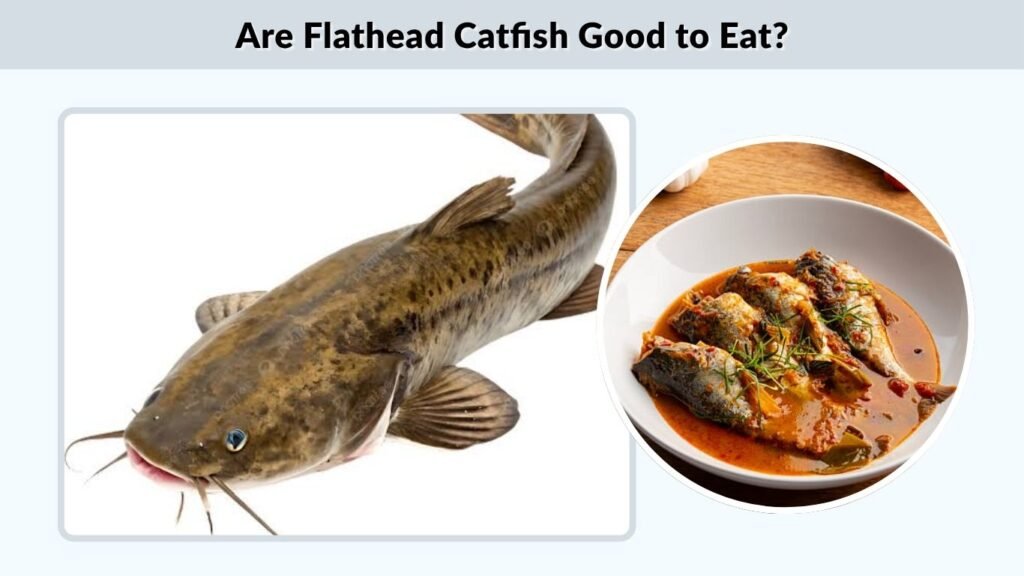
Flathead catfish are widely considered good table fish. Their flesh is firm, mild and suitable for frying, grilling, baking or making fish stew.
Smaller legal-sized fish are often preferred because very large predatory fish can accumulate more contaminants over time. Fish-consumption rules vary by location and water body, so anglers should check local advisories before eating their catch.
FAQs
Why are flathead catfish called yellow cats?
Many flatheads have yellowish, golden-brown or olive coloration, especially when they live over sand or light-colored bottoms. Their color varies with age, habitat and water conditions, so some individuals appear much darker than others.
When is the best time to catch flathead catfish?
Evening, nighttime and early morning are usually productive. During daylight, flatheads often remain near logs, rocks or deep cover. After dark, they move into nearby flats, creek mouths and shallow feeding areas to hunt fish.
Can you catch flathead catfish with cut bait?
Yes, cut bait can catch flatheads, particularly when it is fresh. However, live bluegill, sunfish, shad, bullheads or other legal baitfish are generally more reliable because flatheads strongly prefer moving prey.
Do flathead catfish attack people?
Flathead catfish do not normally hunt or attack people. Large individuals may struggle forcefully when handled, and their fin spines can cause puncture wounds. Use appropriate landing equipment and keep hands away from the spines.
What is the minimum tank size for a flathead catfish?
No standard home aquarium provides appropriate permanent housing for a full-grown flathead. Adults require an enormous, highly filtered enclosure comparable to a large pond or public-aquarium exhibit rather than a conventional gallon-rated fish tank.