
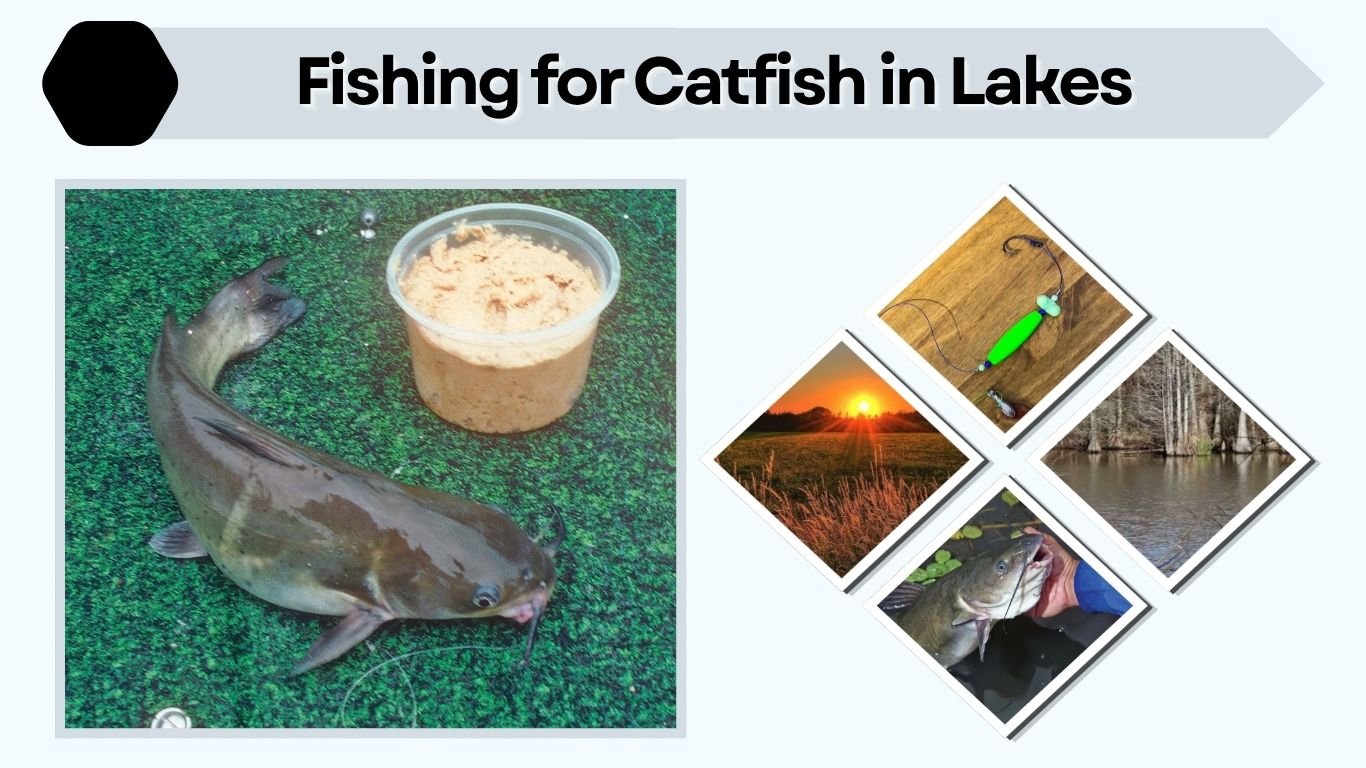
Fishing for catfish in lakes is one of the most accessible ways to enjoy freshwater angling. Catfish can be caught from boats, fishing piers, and shorelines using relatively simple equipment. However, finding consistent success requires understanding where catfish gather, when they feed, and which bait presentations work best. Channel catfish, blue catfish, and flathead catfish behave differently, but all three species commonly use creek channels, drop-offs, submerged structures, and shallow feeding areas within lakes.
How to Fish for Catfish in a Lake
Lake catfishing usually involves presenting bait near the bottom and waiting for scent to attract nearby fish. Unlike rivers, most lakes have limited current, so anglers often need less weight to hold their bait in place.
Begin by identifying a promising location rather than casting randomly. Look for changes in depth, underwater channels, points, submerged trees, rocky banks, and areas where streams enter the lake.
Choose the Right Depth
Catfish frequently change depth according to light, temperature, oxygen levels, and food availability. During bright daytime conditions, they may remain in deeper water or near shaded cover. At night, they often move onto shallow flats and shorelines to feed.
When using several rods, place each bait at a different depth. One rod can cover shallow water, another can target a drop-off, and a third can reach the deeper channel.
Keep the Bait Near the Bottom
Most catfish search for food close to the lakebed. A bottom rig allows the bait to remain within their feeding zone while releasing scent into the surrounding water.
After casting, allow the sinker to settle before tightening the line. Keep enough tension to notice a bite, but avoid dragging the rig through rocks, weeds, or submerged timber.
Allow Enough Time at Each Spot
Catfish often locate bait by following its scent. Give a productive-looking area enough time before moving. Around 20 to 40 minutes may be reasonable, depending on fish activity and water conditions.
When no bites occur, change the bait, casting distance, depth, or location rather than waiting indefinitely.
Best Places to Catch Catfish in Lakes
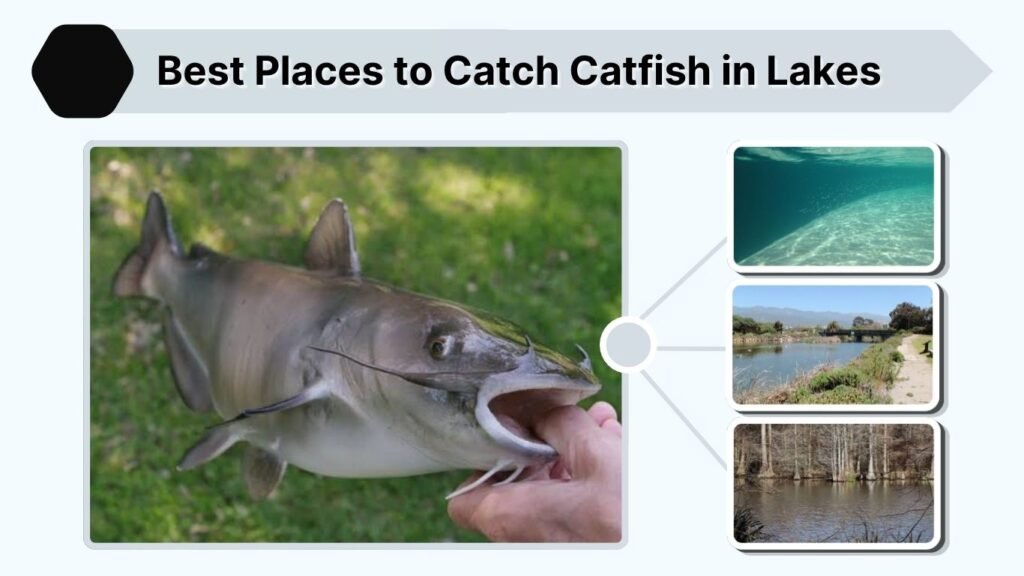
Catfish gather in places that offer food, comfortable water, cover, and access to different depths. Understanding underwater structure is often more important than making an extremely long cast.
| Lake location | Why catfish use it |
|---|---|
| Creek channels | Provide deep travel routes |
| Drop-offs | Connect feeding and resting areas |
| Submerged timber | Offers shade and protection |
| Creek mouths | Carry food into the lake |
| Rocky points | Attract baitfish and crayfish |
| Shallow flats | Become nighttime feeding areas |
| Dam areas | Usually provide deeper water |
Creek Channels and Ledges
Old creek beds running through reservoirs are natural pathways for catfish. Fish may travel along the bottom of the channel or rest where it meets a ledge, point, or flat.
Channel bends can be especially productive because they create changes in depth and often collect natural food. Boat anglers can locate these areas with sonar, while bank anglers can target places where channels pass close to shore.
Submerged Trees and Brush
Flooded timber, fallen trees, stumps, and brush piles provide shelter for baitfish and catfish. Flathead catfish are strongly associated with heavy cover, although blue and channel catfish may also gather nearby.
Use heavy tackle when fishing close to wood. Once a fish is hooked, maintain steady pressure so it cannot wrap the line around branches.
Inlets and Creek Mouths
Water entering a lake often carries worms, insects, baitfish, and other food. These areas may become particularly productive following moderate rain.
Cast along the edge of the incoming water rather than directly into heavy debris. Catfish often wait near the transition between moving water and the calmer lake.
Shallow Flats Near Deep Water
A shallow flat next to a creek channel or steep drop-off gives catfish easy access to both feeding and resting areas. During warm evenings, fish may leave deeper water and spread across the flat.
Bank anglers should not assume every catfish is far offshore. Large fish may move surprisingly close to the bank after dark.
Best Time to Fish for Catfish in a Lake
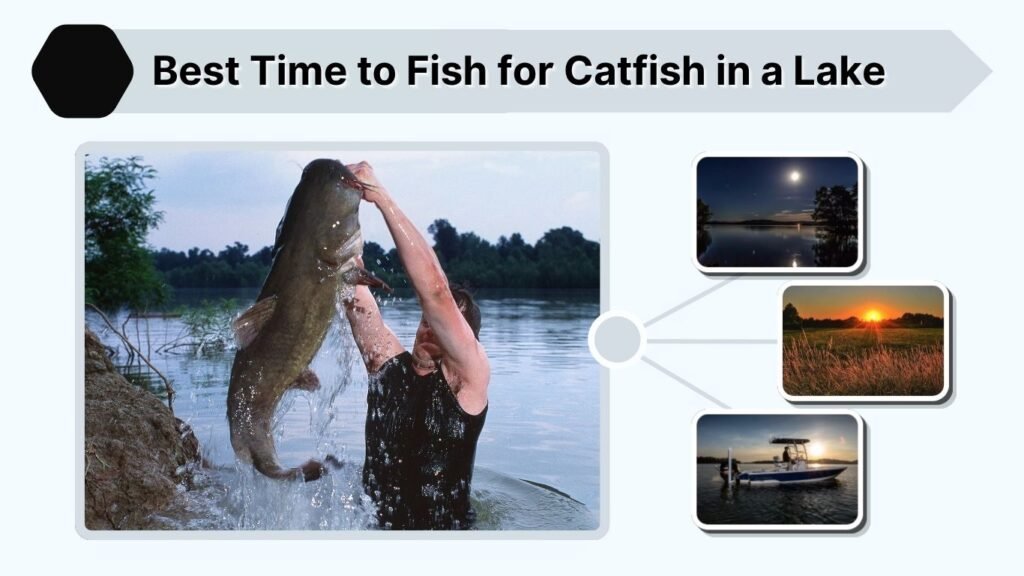
Catfish can feed throughout the day, but certain periods usually offer better opportunities. The most productive time varies with season, weather, water temperature, and the species being targeted.
Early Morning and Evening
Sunrise and sunset are dependable fishing periods because light levels are low and catfish often become more active. Fish may move from deeper daytime cover toward points, flats, creek mouths, and shorelines.
Begin near a drop-off before sunset and gradually move your bait shallower as darkness arrives.
Night Fishing
Night is often the best time for lake bank fishing during warm weather. Channel and flathead catfish may roam shallow areas while searching for prey.
Choose a safe shoreline before dark and organize your equipment in advance. Use secure rod holders, a headlamp, a landing net, and sufficient lighting for handling hooks and fish safely.
Daytime Fishing
Daytime fishing can still be productive, especially in deep water. Concentrate on creek channels, shaded cover, steep ledges, dam areas, and submerged timber.
Cloudy days may encourage catfish to remain active in shallower water for longer periods.
Best Time to Catch Catfish at Cooper Lake
For anglers asking about the best time to catch catfish at Cooper Lake, evening and early morning are generally productive starting points during warmer months. Night fishing can also be effective when catfish leave deeper areas and move toward shoreline flats and points.
In colder weather, late morning and afternoon may become more productive as sunlight warms the water slightly. Anglers should check the conditions and regulations for the specific Cooper Lake they intend to visit because several lakes share this name.
Lake level, recent rainfall, wind direction, stocking schedules, and local baitfish movement can all affect fishing quality.
Best Catfish Rig for Lake Fishing
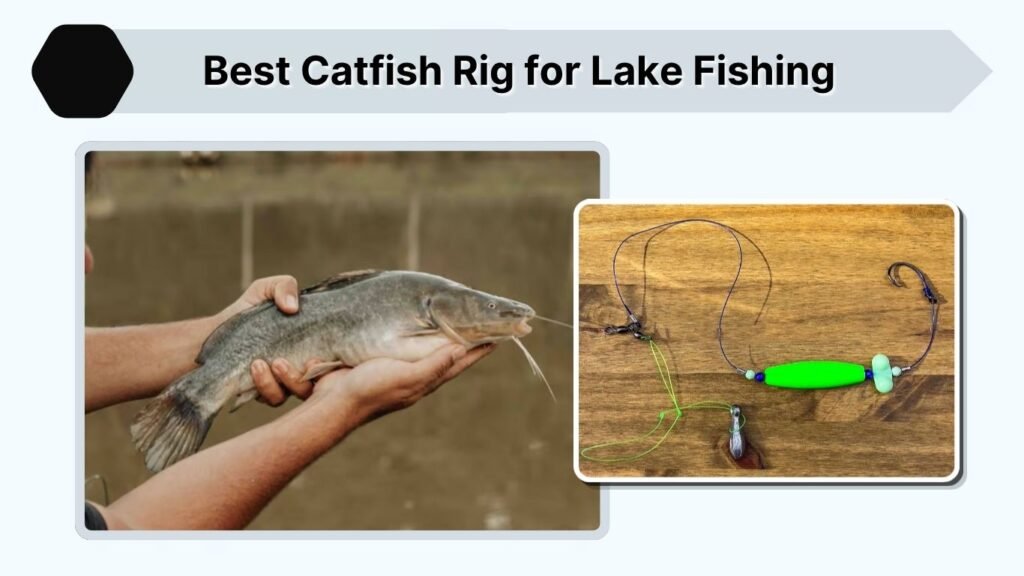
The right rig should place bait close to the bottom without creating unnecessary resistance. Lake anglers can often use lighter weights than river anglers because they do not need to fight strong current.
Slip-Sinker Rig
The slip-sinker rig is one of the most reliable catfish rigs for lake fishing. It includes:
- A sliding egg or no-roll sinker
- A bead protecting the knot
- A barrel swivel
- A 12- to 24-inch leader
- A circle hook
Because the line slides through the sinker, a catfish can pick up the bait without immediately feeling the full weight.
Santee Cooper Rig
The Santee Cooper rig adds a small float to the leader. The float lifts the bait slightly above the lake bottom, making it easier for catfish to see and smell.
This rig is useful over mud, leaves, low vegetation, and scattered debris. It is also popular for drift fishing from a boat.
Three-Way Rig
A three-way rig works well near steep ledges, deep channels, and rocky bottoms. One dropper holds the sinker while a second leader presents the bait.
Using a lighter line for the sinker dropper allows the weight to break away if it becomes trapped between rocks.
Best Bait for Lake Catfish
Different catfish species respond to different types of bait. Fresh local bait is often more effective because it matches the fish’s natural food supply.
| Target species | Recommended bait |
|---|---|
| Channel catfish | Worms, shrimp, cut bait, prepared bait |
| Blue catfish | Fresh cut shad, herring, or other baitfish |
| Flathead catfish | Live baitfish where legally permitted |
| Stocked catfish | Dough bait, liver, worms, or stink bait |
Fresh Cut Bait
Fresh cut bait is one of the best choices for blue and channel catfish. Shad, herring, perch, and other legal baitfish can be cut into strips, chunks, or fillets.
Use smaller pieces for eating-size catfish and larger pieces when targeting trophy fish. Keep bait cool so it remains fresh and releases a strong natural scent.
Nightcrawlers and Shrimp
Nightcrawlers are inexpensive, easy to use, and effective for channel catfish. They are particularly useful in smaller lakes and stocked ponds.
Raw shrimp also produces a noticeable scent and usually stays on the hook better than soft liver. It may be used whole or cut into pieces.
Prepared Baits
Dip bait, punch bait, stink bait, and dough bait can be productive for stocked channel catfish. These baits release scent quickly and often perform well in warm water.
They may attract smaller fish faster than large pieces of natural bait, making them useful for anglers seeking frequent action.
Bank Fishing for Lake Catfish
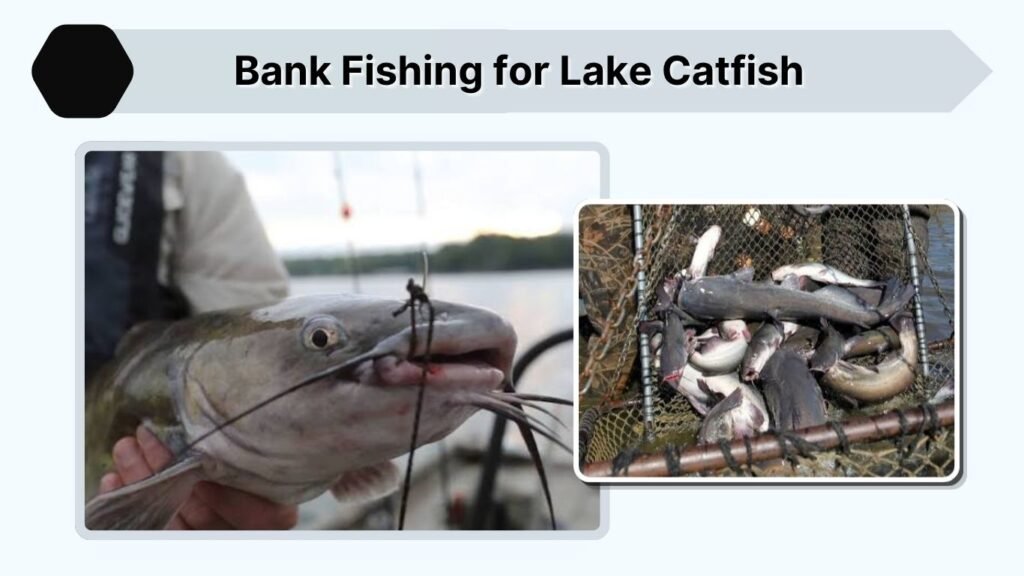
Bank fishing can be highly effective when the shoreline provides access to structure or deeper water. Productive areas include rocky points, dam banks, bridges, fishing piers, creek mouths, and steep shorelines.
A long rod can help reach drop-offs, but casting as far as possible is not always necessary. Catfish frequently move close to shore during low-light periods.
Use a strong rod holder and adjust the reel drag properly. Large catfish can pull unsecured equipment into the lake very quickly.
Before fishing after dark, inspect the bank for loose rocks, mud, steep edges, and submerged obstacles. Choose a location where a hooked fish can be landed safely.
Drift Fishing for Catfish in Lakes
Drift fishing allows boat anglers to cover large flats and channel edges while searching for active catfish. Baits are pulled slowly across or just above the bottom as the boat moves with the wind.
A Santee Cooper rig is commonly used because its float helps prevent the bait from dragging directly through debris.
Control boat speed with a drift sock, trolling motor, or careful positioning. Moving too quickly can make the bait look unnatural and increase snagging.
Drifting works best across open flats and channel edges. Anchoring may be more suitable when fish are concentrated around timber, deep holes, or specific ledges.
Seasonal Lake Catfishing Tips
Spring
As the water warms, catfish become more active and may move into shallow coves, creek arms, and rocky shorelines. Rainfall can improve fishing around inlets and flooded areas.
Summer
Fish early morning, evening, or nighttime. During hot daylight hours, target deeper channels, shaded timber, and steep drop-offs.
Fall
Cooling water often triggers increased feeding. Follow baitfish toward creek channels, points, and medium-depth flats.
Winter
Catfish commonly gather in deep holes and channels. Use fresh cut bait, slow presentations, and allow more time for fish to respond.
FAQs
What is the best way to fish for catfish in a lake?
Present fresh bait near the bottom using a slip-sinker or Santee Cooper rig. Target creek channels, drop-offs, submerged timber, rocky points, and shallow flats near deep water. Fish several depths until you find an active feeding area.
What is the best bait for lake catfish?
Fresh cut shad or another legal local baitfish is highly effective for blue and channel catfish. Nightcrawlers, shrimp, stink bait, and dough bait also work well. Flathead catfish are commonly targeted with live bait where regulations permit it.
What time of day is best for lake catfishing?
Early morning, evening, and nighttime are usually best during warm months. Catfish often move shallow when light levels decrease. In winter, midday can be productive because sunlight may warm the water and increase feeding activity.
Where do catfish hide in lakes?
Catfish commonly hold in creek channels, deep holes, submerged timber, shaded cover, and along steep drop-offs. They may remain in these areas during daylight before moving toward shallow flats, creek mouths, and shorelines to feed after dark.
What is the best catfish rig for lake bank fishing?
A slip-sinker rig is a simple and effective choice. It keeps the bait near the bottom while allowing a catfish to move without feeling excessive resistance. Use a sinker heavy enough to hold position against wind or minor water movement.