
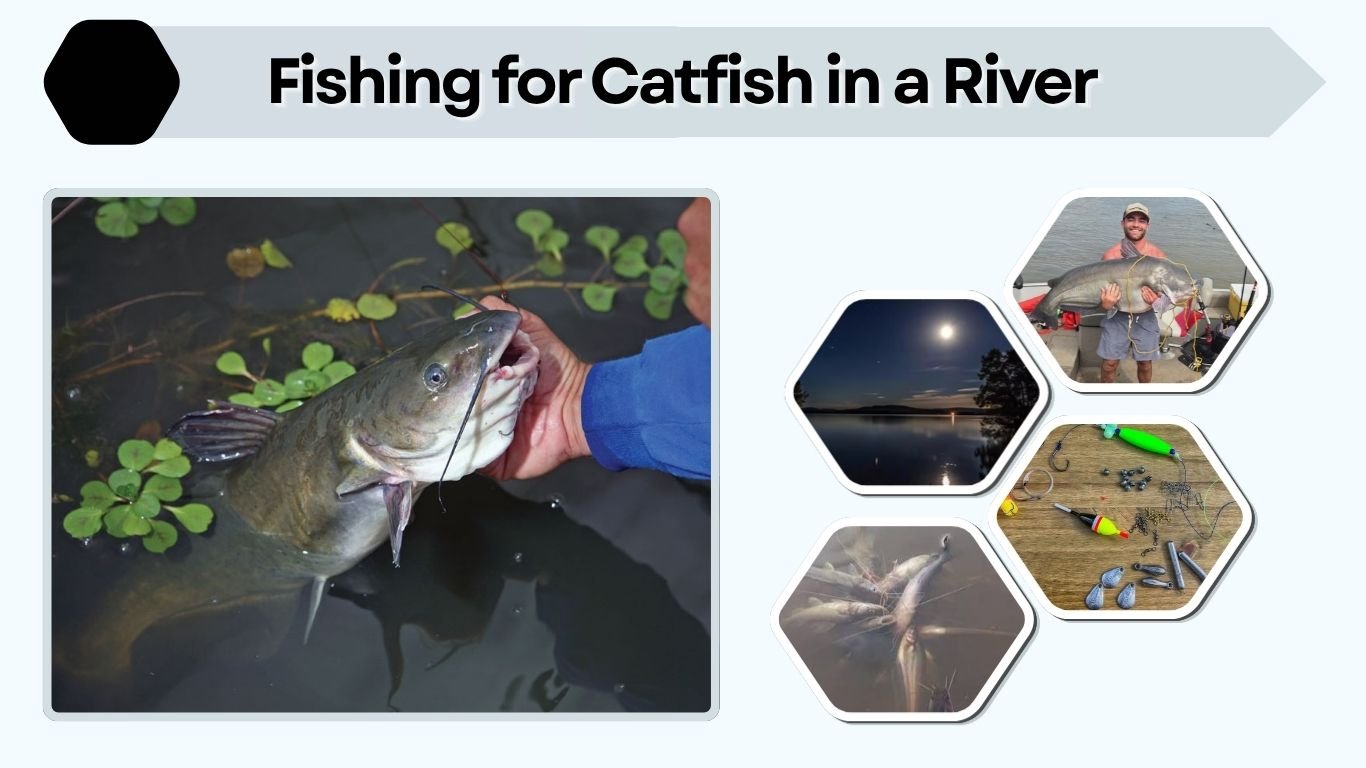
Fishing for catfish in a river can produce exciting action and some impressively large catches. However, river catfishing requires more than simply placing bait on the bottom. Current speed, water depth, structure, bait movement, and seasonal conditions all influence where catfish feed. Anglers must choose a suitable rig, use enough weight to hold the bottom, and place bait where fish naturally travel. With the right setup and location, both bank and boat anglers can consistently catch river catfish.
How to Fish for Catfish in a River
Successful river catfishing begins with understanding how catfish use moving water. They often avoid fighting the strongest current and instead rest near structures that reduce water pressure.
Look for current breaks, deep holes, submerged timber, bridge supports, rocky banks, channel edges, and creek mouths. These areas allow catfish to conserve energy while waiting for food to drift past.
Identify Slower Water Near Strong Current
Catfish commonly stay along the edge of fast-moving water rather than directly in the strongest flow. A seam where fast and slow water meet can become a productive feeding lane.
Cast slightly upstream of the target area and allow the bait to settle near the current break. The scent will travel downstream and may attract fish resting nearby.
Keep the Bait Close to the Bottom
Channel catfish, blue catfish, and flathead catfish spend much of their time near the riverbed. Your bait should normally remain close to the bottom, where catfish use their sense of smell and taste to locate food.
A properly weighted rig keeps the bait in place without allowing it to roll continuously downstream.
Fish More Than One Depth
River depth can change dramatically within a short distance. Catfish may occupy shallow flats at night but move into deeper holes during bright daylight or rapidly changing weather.
When possible, place several rods at different distances from shore. This helps you determine whether the fish are feeding near the bank, along a drop-off, or in the main channel.
Best Places to Catch Catfish in a River
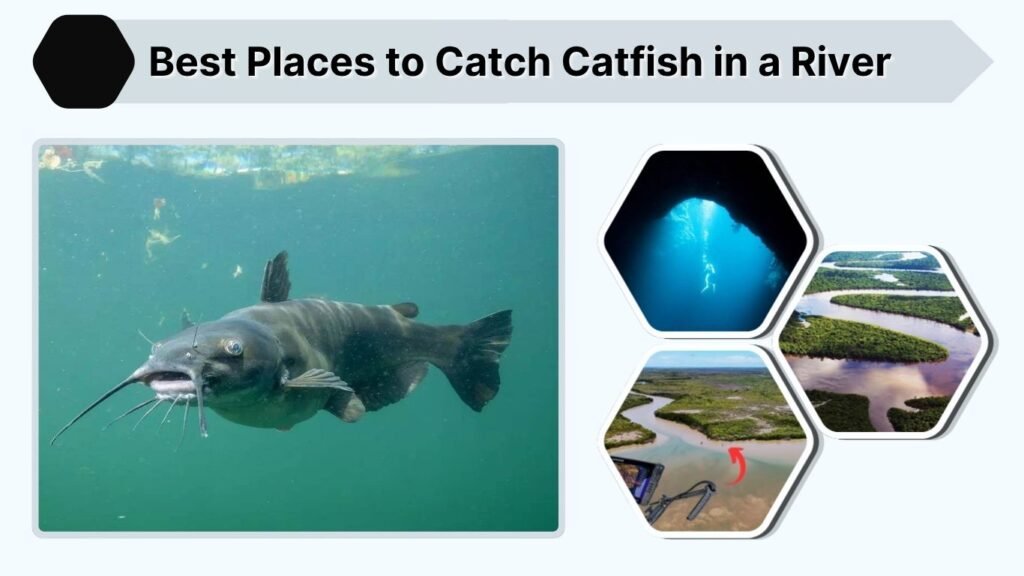
Choosing the right location is often more important than using a particular bait. Catfish concentrate in areas where current carries food while nearby structure provides shelter.
| River location | Why catfish gather there |
|---|---|
| Deep holes | Provide stable water and protection |
| Outside bends | Current creates deeper channels |
| Creek mouths | Bring food and oxygenated water |
| Bridge pilings | Break current and collect debris |
| Submerged trees | Offer cover and ambush points |
| Dam tailwaters | Concentrate baitfish and food |
| Current seams | Allow easy feeding beside fast water |
Deep Holes and Channel Edges
Deep river holes are particularly productive during daylight, winter, and periods of unstable weather. Catfish may rest at the upstream entrance, inside the hole, or near the downstream lip.
Do not automatically cast into the deepest point. Begin by fishing the edges, where catfish can move between deep and shallow water.
Outside River Bends
The outside of a bend usually contains deeper water because the current cuts into the bank. Fallen trees, undercut banks, and washed-out holes may also be present.
These areas can hold large blue and flathead catfish, but anglers should use heavier tackle because fish can quickly reach submerged cover.
Creek Mouths and Tributaries
A creek entering a larger river creates changes in current, temperature, oxygen, and food availability. After rainfall, tributaries may wash worms, insects, small fish, and other food into the main river.
Fish the downstream side of the creek mouth, where catfish can wait without remaining in the strongest current.
Bridge Supports and Wing Dikes
Bridge supports, wing dikes, and similar structures redirect water and create slack-water zones. Food often collects behind these structures, attracting both baitfish and catfish.
Exercise caution when fishing around strong current, boat traffic, steep banks, or slippery rocks.
Best Catfish Rig for River Fishing
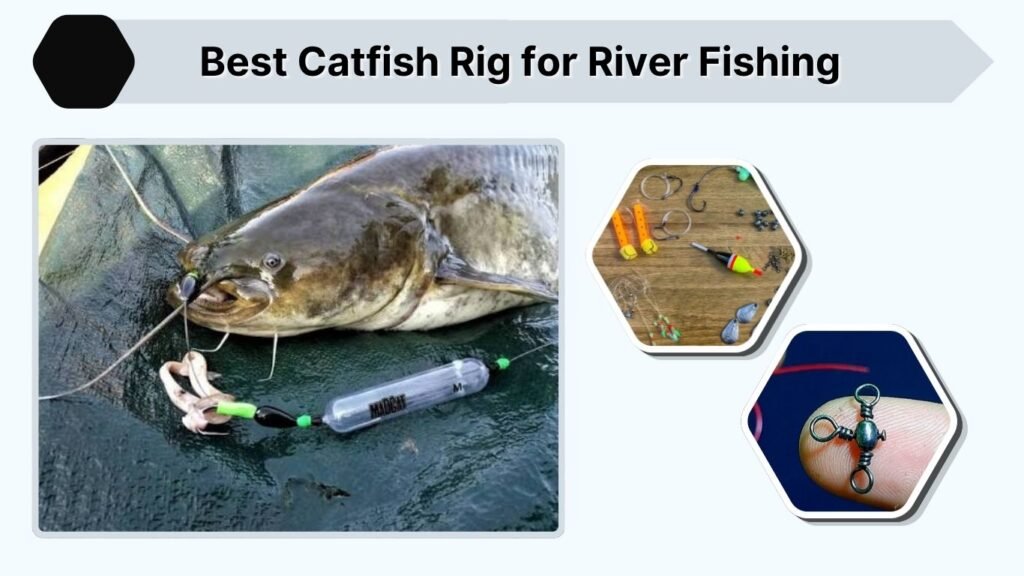
The best catfish rig for river fishing should keep the bait near the bottom while allowing a fish to move away without immediately feeling heavy resistance. The slip-sinker rig is one of the most reliable choices.
Slip-Sinker Rig
A basic slip-sinker rig includes:
- A sliding sinker placed on the main line
- A bead to protect the knot
- A strong barrel swivel
- A leader approximately 12 to 24 inches long
- A circle hook matched to the bait and fish size
The sinker remains on the riverbed while the line moves through it. This allows a catfish to pick up the bait naturally.
Three-Way Rig
A three-way rig uses one short dropper line for the sinker and a longer leader for the hook. It works well around rocky bottoms, heavy current, and deep channels.
Use a lighter line for the sinker dropper. If the weight becomes lodged between rocks, the lighter line may break while preserving the rest of the rig.
Santee Cooper Rig
The Santee Cooper rig is similar to a slip-sinker rig but includes a small float on the leader. The float raises the bait slightly above the bottom, helping prevent it from becoming buried in mud or hidden by debris.
This setup is particularly useful for blue catfish and channel catfish feeding just above the riverbed.
Choosing the Right Sinker
Current speed determines how much weight is required. A sinker that is too light will tumble downstream, while an excessively heavy sinker can reduce sensitivity and make casting difficult.
| River condition | Suggested starting weight |
|---|---|
| Slow current | 1–2 ounces |
| Moderate current | 2–4 ounces |
| Strong current | 4–8 ounces |
| Very deep or powerful current | 8 ounces or more |
No-roll sinkers are excellent for river bank fishing because their flat shape helps them remain stationary. Bank sinkers and pyramid sinkers can also work, depending on the bottom and current.
Use only enough weight to hold the rig securely. Conditions may change throughout the day, so carry several sinker sizes.
Best Bait for River Catfish
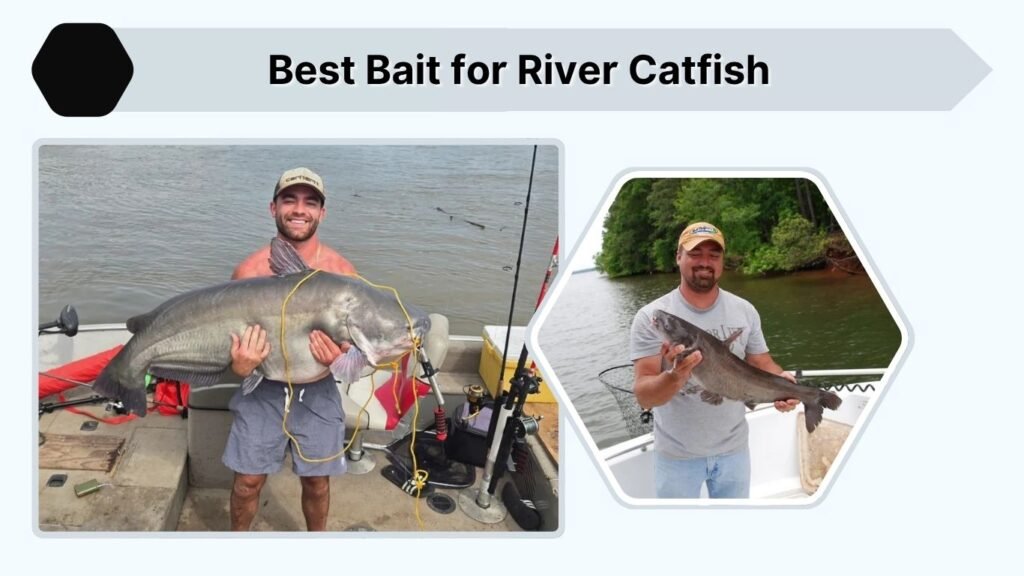
The best bait depends on the catfish species, water temperature, and available natural food. Fresh bait usually produces stronger scent and movement than old or poorly stored bait.
Bait for Channel Catfish
Channel catfish readily feed on:
- Nightcrawlers
- Chicken liver
- Shrimp
- Cut bait
- Prepared stink bait
- Dip bait
- Small pieces of fish
Nightcrawlers and shrimp work well for smaller fish, while fresh cut bait may attract larger channel catfish.
Bait for Blue Catfish
Blue catfish are active predators and scavengers. Fresh cut shad, skipjack herring, mullet, or other locally abundant baitfish are commonly effective.
Cut the bait into chunks or fillets and keep it cool until use. Fresh, oily bait releases a strong scent trail into the current.
Bait for Flathead Catfish
Flathead catfish strongly prefer live prey. Common choices include live bluegill, sunfish, shad, or other legal baitfish.
Place live bait near submerged timber, deep holes, rocky ledges, and current breaks. Always check local fishing regulations because baitfish rules vary by location.
River Bank Fishing for Catfish
River bank fishing can be highly productive when anglers choose accessible locations near deep water. You do not always need to cast into the center of the river.
Catfish frequently travel close to shore during low-light conditions, especially when the bank has rocks, vegetation, flooded cover, or an immediate drop-off.
Use sturdy rod holders and keep the reel drag properly adjusted. Strong current and large fish can pull unsecured equipment into the water.
Clear enough space to land a fish safely before casting. Steep mud banks, sharp rocks, and submerged branches can make landing large catfish difficult.
Best Time for River Catfishing
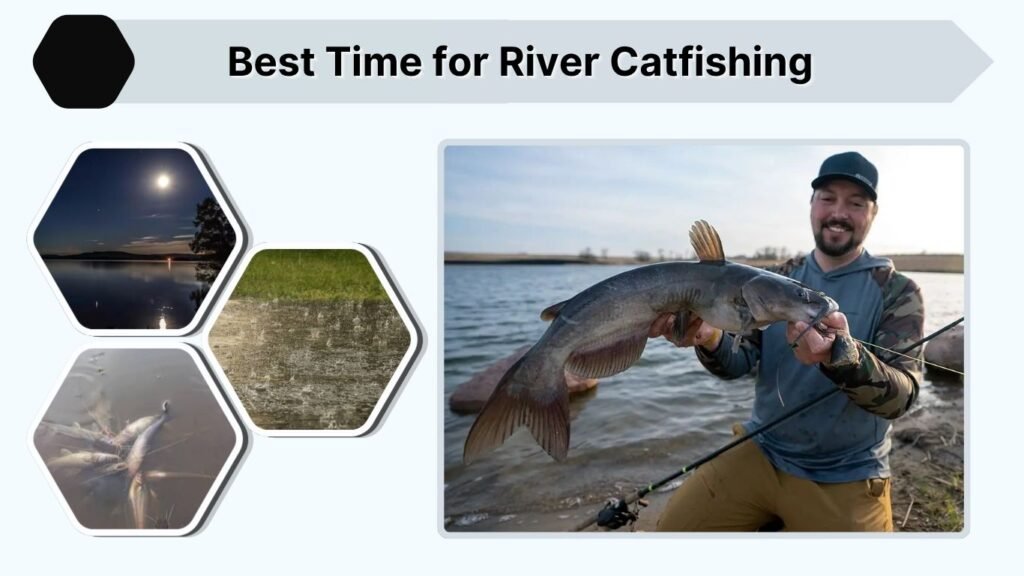
Catfish can be caught throughout the day, but feeding activity often increases during periods of reduced light.
Night and Low-Light Periods
Evening, nighttime, and early morning are excellent times for river bank fishing. Catfish often leave deep daytime cover and move toward shallow flats, creek mouths, and shoreline feeding areas.
Use lights carefully so that you can see your equipment without constantly illuminating the water.
After Rainfall
Moderate rainfall can improve fishing by washing food into the river and increasing current. Creek mouths, storm drains, flooded banks, and newly covered vegetation may become productive.
However, rapidly rising rivers can be dangerous. Avoid fishing during floods, severe storms, or conditions involving floating debris and unstable banks.
Seasonal Conditions
Spring catfish often move toward warming shallows and tributaries. Summer fishing is productive during early morning and at night. During fall, catfish frequently feed heavily before colder conditions arrive.
Winter catfish commonly gather in deep holes where water conditions are more stable.
Tackle for River Catfish
Medium-heavy or heavy rods are suitable for most river situations. Long rods can improve casting distance and help keep the line above rocks or shoreline vegetation.
A typical river catfish setup includes:
- A 7- to 10-foot medium-heavy or heavy rod
- A strong spinning or baitcasting reel
- 20- to 50-pound monofilament or braided line
- Abrasion-resistant leader material
- Circle hooks
- Heavy-duty swivels
- Several sinker sizes
- A landing net and fish-handling gloves
Circle hooks are popular because they often hook fish near the corner of the mouth. When using one, avoid aggressively jerking the rod. Allow the fish to load the rod, then reel steadily.
River Fishing Tips for Catfish
Cast upstream or across the current so that your bait settles naturally near the target. Avoid repeatedly casting into the same unproductive spot for hours. If no bites occur, adjust the distance, depth, bait, or location.
Keep fresh bait in a cooler and replace pieces that have lost their scent. Check the hook after missed bites because small fish may strip or damage the bait.
Use a leader strong enough to resist rocks, shells, wood, and the rough mouth of a catfish. In snag-filled areas, inspect the line regularly for abrasion.
Finally, review local fishing licenses, size limits, possession limits, hook restrictions, and bait regulations before fishing a particular river.
FAQs
What is the best way to fish for catfish in a river?
Use a bottom rig with enough weight to remain stationary in the current. Place fresh bait near deep holes, current seams, creek mouths, outside bends, or submerged timber. Test several depths and move when a location does not produce bites.
What is the best catfish rig for river bank fishing?
A slip-sinker rig with a no-roll sinker is one of the best options. It holds the bait near the bottom while allowing line to move through the weight. A three-way rig may perform better in strong current or rocky areas.
What bait catches the most river catfish?
Fresh cut bait is highly effective for blue and channel catfish, while live bait is commonly preferred for flathead catfish. Nightcrawlers, shrimp, prepared bait, and chicken liver can also catch channel catfish in many rivers.
Where do catfish hide in a river?
Catfish often hold in deep holes, behind bridge supports, beside wing dikes, under submerged trees, near undercut banks, and along current seams. These locations provide protection from strong flow while giving fish access to drifting food.
Is river catfishing better during the day or at night?
Both can be productive, but nighttime is often better for bank anglers because catfish move into shallower water to feed. During daylight, focus on deeper holes, shaded cover, channel edges, and areas with reduced current.