
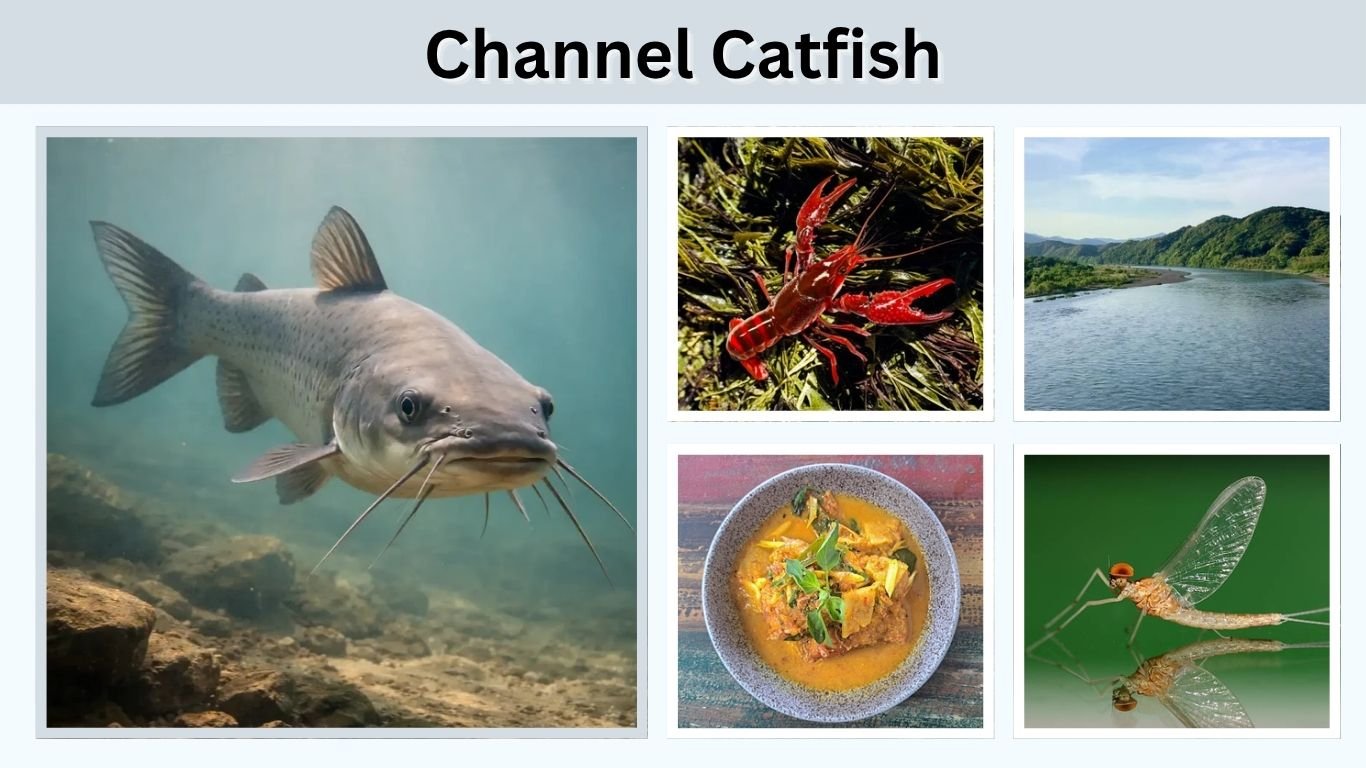
The channel catfish is one of North America’s most familiar freshwater fish. Anglers value it for its strong fight, willingness to take many types of bait, and mild-tasting meat. It is also widely raised in ponds and commercial fish farms. Recognizable by its whisker-like barbels, smooth skin, forked tail, and often-spotted body, this adaptable catfish lives in rivers, lakes, reservoirs, streams, and ponds. Here is everything you need to know about its appearance, size, habitat, diet, spawning behavior, fishing methods, and safe handling.
Channel Catfish Quick Facts
| Feature | Information |
| Scientific name | Ictalurus punctatus |
| Family | Ictaluridae |
| Common length | 12–32 inches |
| Common weight | 1–15 pounds |
| Maximum reported length | About 52 inches |
| Diet | Omnivorous |
| Habitat | Rivers, streams, ponds, lakes and reservoirs |
| Tail shape | Deeply forked |
| Activity | Most active around dusk and at night |
| Native range | Southern Canada to northern Mexico |
Channel catfish commonly measure 12–32 inches and weigh 1–15 pounds, although exceptionally large individuals are possible. The U.S. Fish and Wildlife Service reports a maximum recorded length of approximately 52 inches.
What Does a Channel Catfish Look Like?
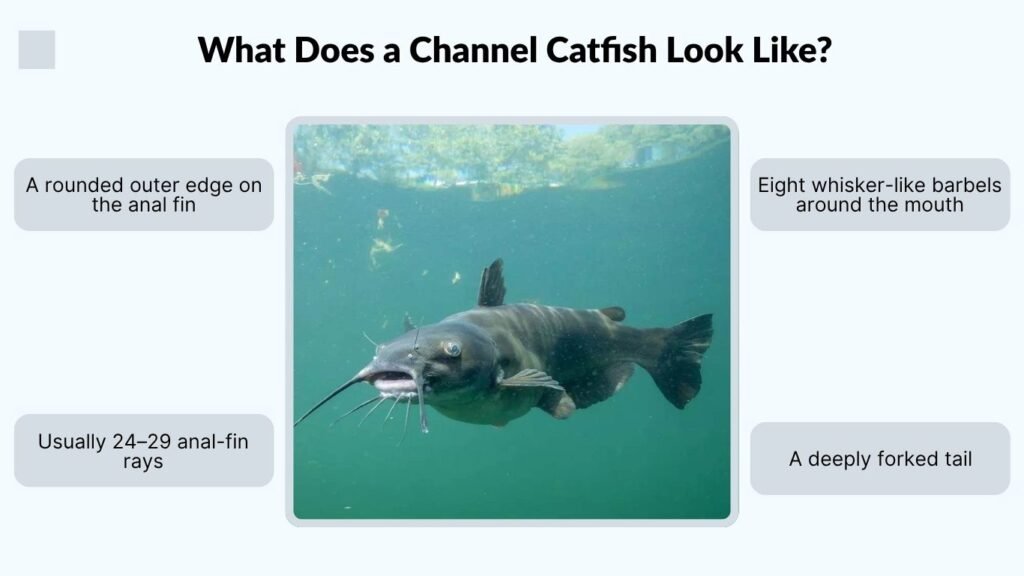
Channel catfish have long, rounded bodies covered with smooth, scaleless skin. Their backs may appear olive, slate blue, gray, or brown, while the underside is usually silvery white.
Key Identification Features
- Eight whisker-like barbels around the mouth
- A deeply forked tail
- A rounded outer edge on the anal fin
- Usually 24–29 anal-fin rays
- Scattered dark spots on the back and sides
- Sharp spines at the front of the dorsal and pectoral fins
- A small, fleshy adipose fin between the dorsal fin and tail
Young and medium-sized channel catfish usually display the clearest black spots. These markings may fade or disappear in very large adults. Breeding males can become much darker and develop a swollen, muscular-looking head.
Channel Catfish Whiskers
The “whiskers” are called barbels. They do not sting. Instead, they help the fish locate food through touch, taste, and chemical signals, particularly in dark or muddy water. Channel catfish also have taste receptors across much of their body, helping them detect food without relying entirely on sight.
How Big Do Channel Catfish Get?
Most channel catfish caught by anglers weigh only a few pounds. Fish weighing more than 10 pounds are considered large in many waters, while individuals approaching 40 pounds are uncommon.
Growth depends on water temperature, food availability, population density, habitat quality, age, and local fishing pressure. The species can reach approximately 52 inches, although most adults remain considerably smaller.
World-record categories can differ according to fishing line class, angler category, catch method, and whether the record is based on weight or length. The International Game Fish Association maintains the current official listings, so its database should be checked before describing any catch as a world record.
Channel Catfish Habitat and Range
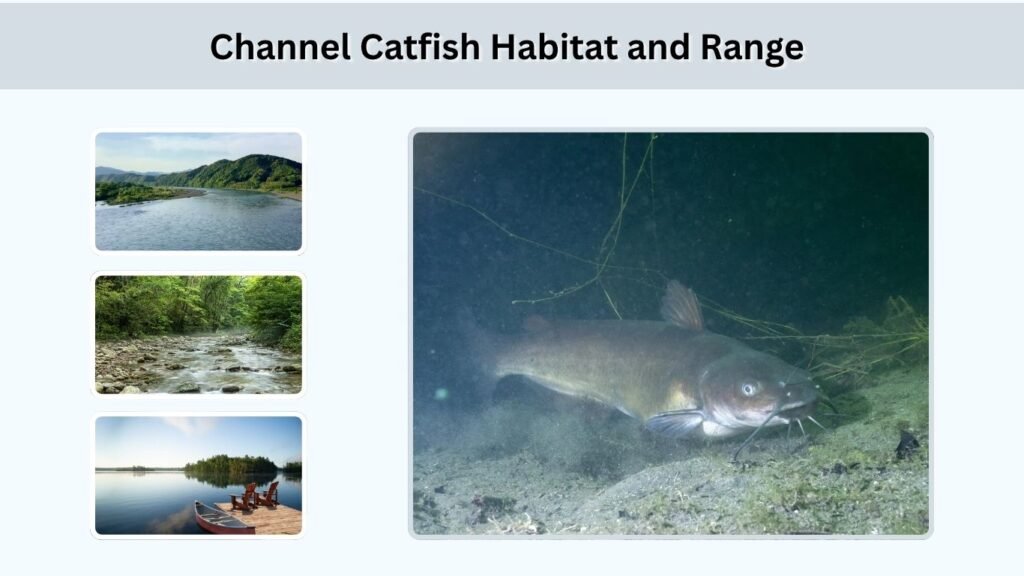
The natural range of the channel catfish extends from southern Canada through central and eastern areas of the United States and into northern Mexico. The species has also been introduced well beyond its original range for recreational fishing and aquaculture.
Channel catfish may live in:
- Large and medium-sized rivers
- Slow-moving streams
- Natural lakes
- Man-made reservoirs
- Farm ponds
- Backwaters and deeper pools
- Areas near submerged logs, rocks and drift piles
Adults often rest in deeper water or around cover during daylight. Around dusk, they may move into shallower pools, riffles, flats, or shoreline areas to feed. They tolerate moderately muddy water but generally benefit from adequate oxygen and suitable shelter.
What Do Channel Catfish Eat?
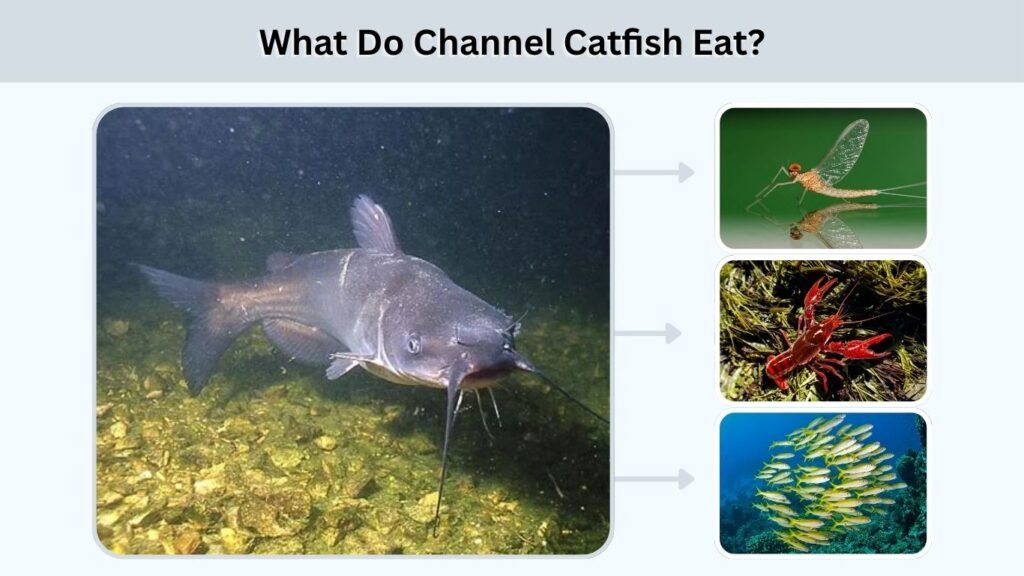
Channel catfish are opportunistic omnivores. Their diet changes according to their size, season, habitat, and available food.
Common Foods
- Aquatic insects and larvae
- Crayfish
- Small fish
- Clams and snails
- Worms
- Plant material
- Dead animal matter
- Small crustaceans
Very young channel catfish feed mainly on small insects and other tiny organisms. Larger fish consume a wider range of prey, including crayfish, mollusks and fish. They commonly search along the bottom, but they can also feed throughout the water column when food is available.
Channel Catfish Spawning and Life Cycle
Channel catfish usually spawn during late spring or summer. The exact period varies by latitude, but spawning often occurs from April through July as water temperatures rise above roughly 72°F.
Nesting and Egg Care
The male chooses or prepares a protected nest. Typical nesting locations include:
- Hollow logs
- Undercut banks
- Rock cavities
- Submerged containers
- Spaces beneath debris
- Burrows previously made by other animals
The female lays a sticky, golden-yellow mass of eggs inside the nest. The male then guards and aerates the eggs. Hatching generally takes about one week, depending on temperature. The male continues protecting the young until they leave the nest.
Channel catfish often reach maturity at around four or five years of age, although growth and maturity vary among populations. Some individuals can live for more than ten years.
Best Bait for Channel Catfish
Channel catfish readily take natural, prepared, live, and cut baits. Strong-smelling bait can be especially effective because the fish rely heavily on taste and smell.
Effective Channel Catfish Baits
- Nightcrawlers
- Chicken liver
- Cut shad or other legal baitfish
- Shrimp
- Crayfish
- Grasshoppers
- Prepared stink bait
- Cheese-based bait
- Commercial dip bait
- Small live fish where permitted
Worms and prepared baits work well for smaller eating-size catfish. Cut bait and small fish may attract larger individuals. Local fishing laws should always be checked before using live fish, multiple-hook lines, jugs, or other specialized methods.
How to Catch Channel Catfish
Channel catfish are often easiest to catch during the evening, at night, or after rising and slightly muddy water following rainfall.
Simple Fishing Setup
A basic bottom rig can include:
- Medium or medium-heavy fishing rod
- Strong monofilament or braided line
- Sliding sinker
- Swivel and leader
- Circle hook or bait-holding hook
- Fresh natural or prepared bait
Cast near drop-offs, deep holes, creek channels, submerged timber, riprap, river bends, or the edges of current. Allow the bait to rest close to the bottom. Circle hooks are useful because the angler can let the line tighten gradually instead of making a hard hookset.
Channel catfish may also be caught using jug lines, bank lines, and trotlines where those methods are legal. Regulations can vary significantly between states and individual waters.
Channel Catfish vs Blue Catfish
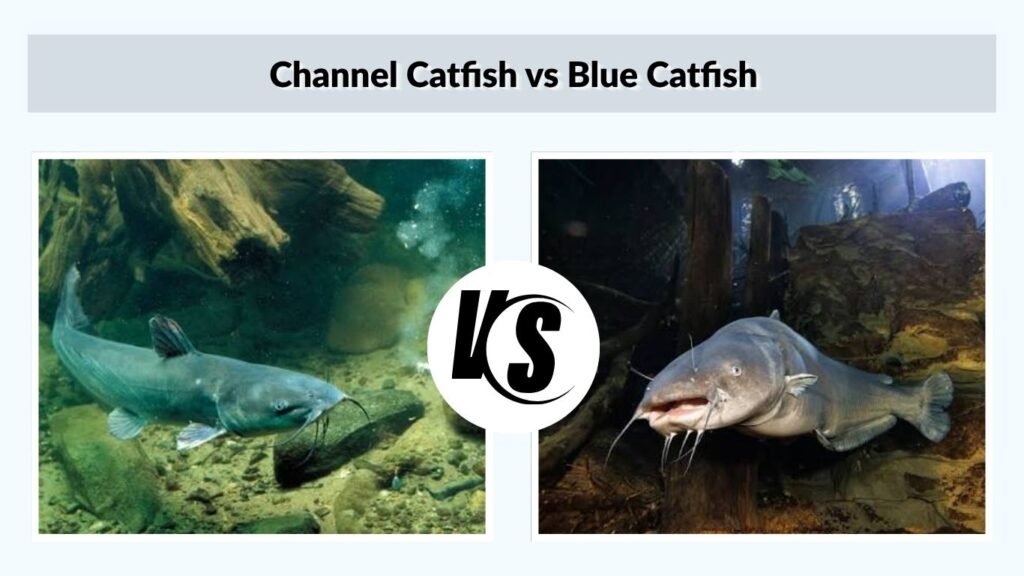
Channel and blue catfish both have forked tails, which makes small individuals easy to confuse.
| Feature | Channel catfish | Blue catfish |
| Body markings | Often has dark spots | Normally lacks dark spots |
| Anal-fin edge | Rounded outward | Relatively straight |
| Anal-fin rays | Usually 24–29 | Usually 30–35 |
| Body shape | Rounded profile | More wedge-shaped |
| Adult size | Usually smaller | Can grow much larger |
Spots alone are not always reliable because large channel catfish may lose them. The shape and ray count of the anal fin provide better identification.
Channel Catfish vs Flathead Catfish
A channel catfish has a deeply forked tail, while a flathead catfish has a mostly square tail with only a slight notch. Flatheads also have broad, flattened heads, projecting lower jaws, and mottled brown or olive bodies.
Adult flatheads mainly hunt live fish and crayfish. Channel catfish have a more varied diet and readily consume insects, plants, dead organisms, and prepared fishing bait.
Do Channel Catfish Sting?
Channel catfish do not possess a stinger in their whiskers. However, they have hard, sharp dorsal and pectoral spines that can puncture the skin when the fish twists or is held carelessly.
A puncture can be painful, and mucus or bacteria on the spine may contribute to infection. Handle the fish behind the pectoral spines, keep control of its body, and clean any wound promptly. Seek medical attention for a deep puncture, severe pain, spreading redness, swelling, or other signs of infection.
Can Channel Catfish Live in an Aquarium?
Small channel catfish are sometimes sold as aquarium fish, including pale or albino forms. However, their potential adult size makes them unsuitable for an ordinary home aquarium.
Because the species can exceed four feet in exceptional cases, a mature fish requires an extremely large, heavily filtered system or an outdoor pond. Small community fish may eventually be eaten. Based on their potential size, purchasing one for a normal indoor tank is generally impractical.
Are Channel Catfish Good to Eat?
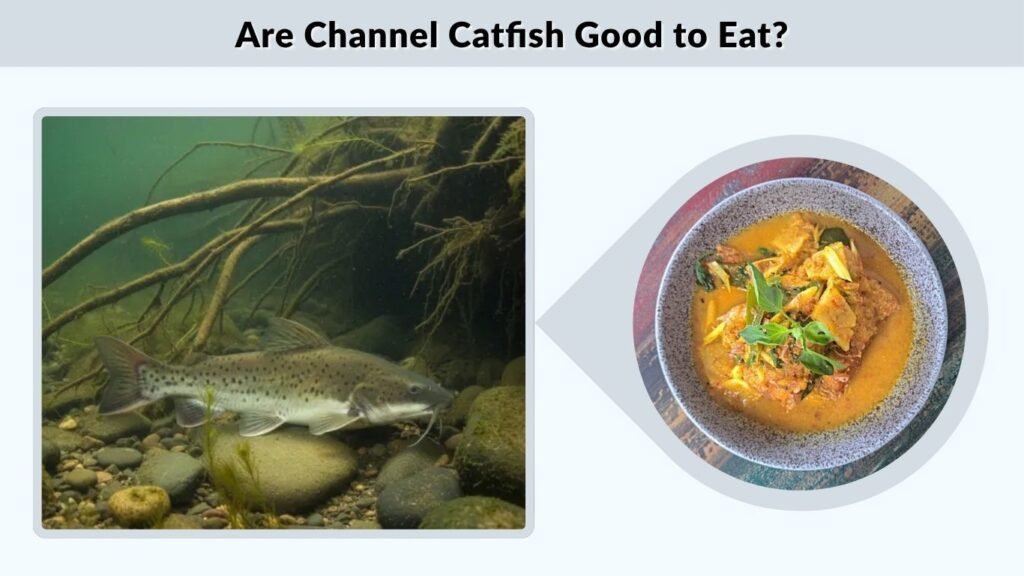
Channel catfish are widely valued as food and are one of the most commonly farmed catfish in the United States. Their flesh is generally mild, firm, and suitable for frying, baking, grilling, or making stews.
Only keep fish from clean water, follow local size and possession limits, and check regional fish-consumption advisories. Smaller legal-sized fish are often preferred for eating because they are easier to clean and may have a milder flavor.
FAQs
What is the scientific name of the channel catfish?
The scientific name is Ictalurus punctatus. It belongs to Ictaluridae, the family of North American freshwater catfishes. Its species name refers to the spotted appearance commonly seen on young and medium-sized fish.
How long do channel catfish live?
Many channel catfish live approximately six to ten years, although some survive longer under favorable conditions. Lifespan is affected by food, temperature, habitat, disease, predation and fishing pressure.
When is the best time to fish for channel catfish?
Dusk, nighttime, and early morning are commonly productive because channel catfish often leave deep cover to feed in shallower water. Fishing may also improve after rainfall causes water levels to rise.
Can channel catfish and blue catfish breed?
Channel catfish can hybridize with blue catfish. Hatcheries also produce channel-blue hybrids for some aquaculture and stocking uses because the offspring may combine characteristics of both parent species.
Are albino channel catfish a separate species?
No. Albino channel catfish are color forms of the same species rather than a separate species. Their pale bodies and reddish or pink eyes result from reduced pigmentation, but their potential size and basic care requirements remain similar.