
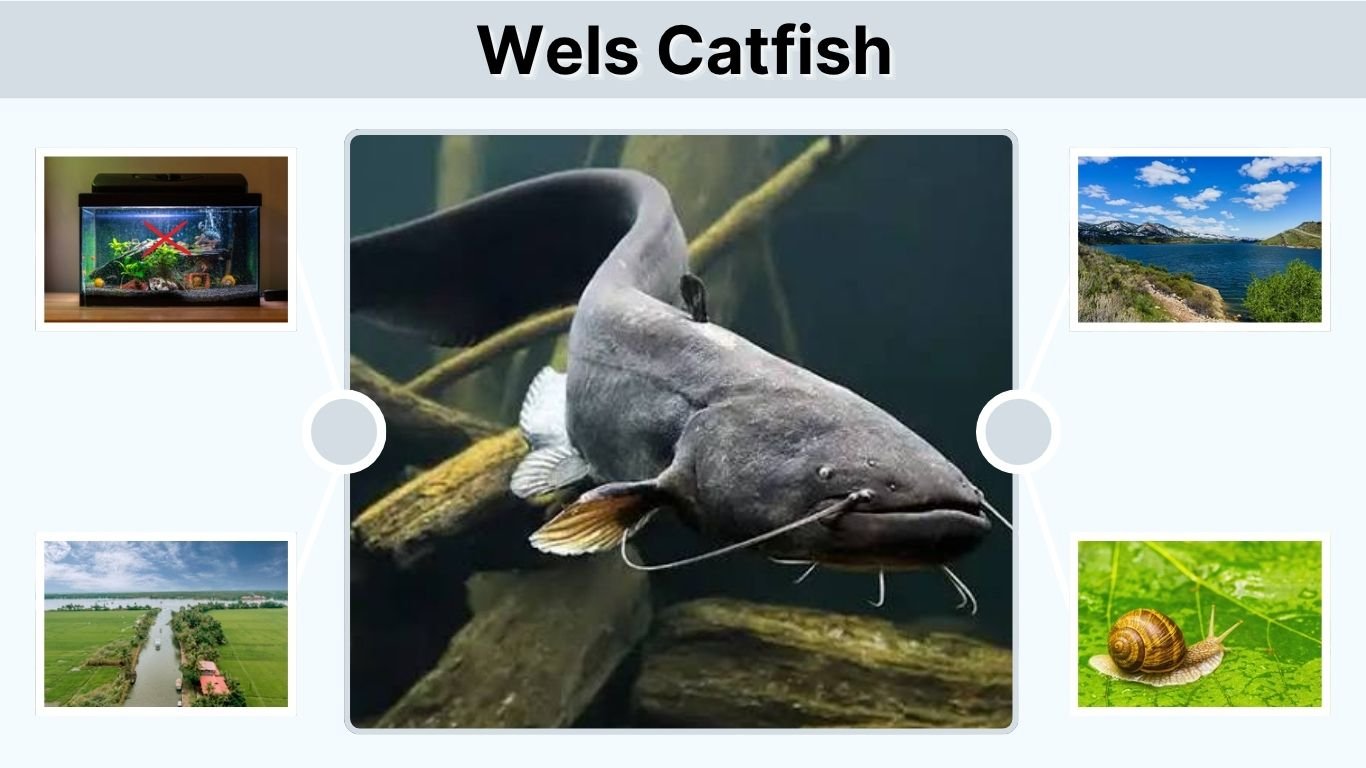
The wels catfish is a massive freshwater predator native to parts of Europe and western Asia. Recognized by its broad head, long barbels, scaleless body, and enormous mouth, it is among the largest freshwater fish associated with European rivers. Wels catfish inhabit deep rivers, lakes, reservoirs, and backwaters, where they hunt fish and other animals—usually after dark. Their exceptional size has inspired stories about human attacks, radiation-created monsters, and record-breaking catches. This guide covers wels catfish identification, size, lifespan, habitat, diet, behavior, danger to humans, Chernobyl myths, fishing, and aquarium suitability.
What Is a Wels Catfish?
The wels catfish, Silurus glanis, is also known as the European catfish, European wels, sheatfish, or simply wels. It belongs to the Siluridae family and is Europe’s largest primarily freshwater fish, although sturgeons can grow larger.
Identification
- Long, thick, eel-like body
- Broad and flattened head
- Large mouth with numerous small teeth
- Two long barbels on the upper jaw
- Four shorter barbels beneath the mouth
- Tiny eyes positioned high on the head
- Scaleless skin covered by protective mucus
- Very long anal fin extending toward the tail
- Dark olive, brown, blackish, or mottled upper body
- Pale yellowish or white underside
Its six barbels help detect chemical and physical signals in dark or muddy water. The scaleless, slime-covered body and arrangement of the barbels are particularly useful identification features.
Wels Catfish Size and Lifespan
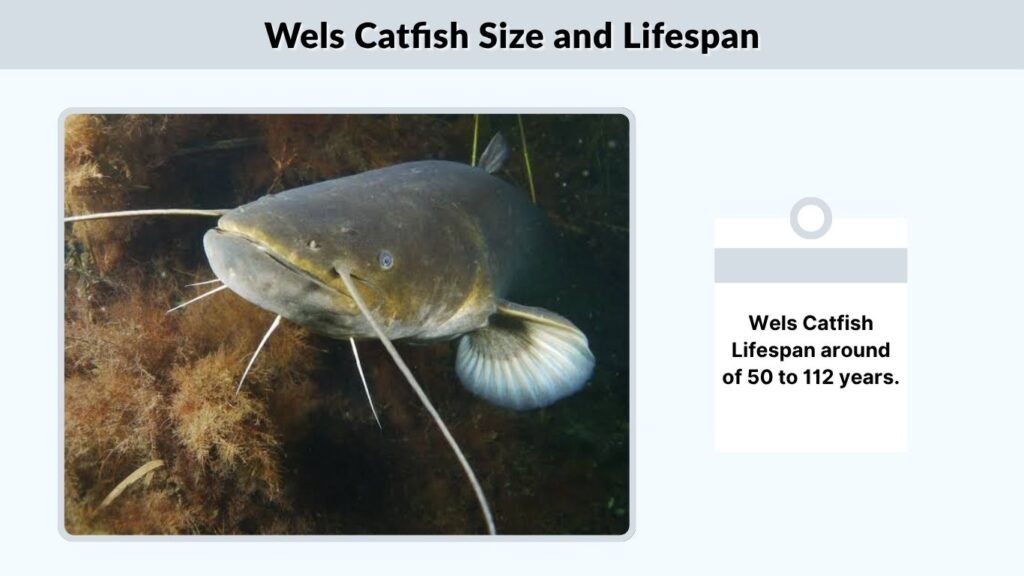
Wels catfish continue growing for many years, although growth rates depend on temperature, food availability, habitat quality, and population density. Warm, productive waters tend to support the largest specimens.
How Big Do Wels Catfish Get?
Many mature wels catfish measure approximately 1.3 to 1.6 metres, or 4.3 to 5.2 feet. Fish exceeding 2 metres are exceptional but regularly attract attention from anglers in Italy, Spain, France, Poland, and other European countries.
FishBase lists documented biological maxima of approximately 2.73 metres and 130 kilograms. Historical claims of 5-metre, 300-kilogram fish are considered unreliable because of measurement errors, unit confusion, or misidentification.
Biggest Wels Catfish Record
Record claims must be interpreted carefully because some organizations measure length, others require a verified weight, and many giant fish are released without being officially weighed.
In October 2025, anglers in Poland reportedly caught a 2.92-metre wels catfish from the Rybnik Reservoir. Its weight was estimated at 120–130 kilograms, and the fish was released. It was widely reported as the longest wels caught using rod and line, surpassing a 2.85-metre Italian catch from 2023. However, its estimated rather than certified weight means “world record” can vary by category and record-keeping organization.
How Long Do Wels Catfish Live?
Wels catfish are remarkably long-lived. A scientific study of northern populations estimated one recaptured 195-centimetre individual to be approximately 70 years old, with a broad confidence range of 50 to 112 years. Many fish in warmer, heavily fished waters probably live much shorter lives.
Wels Catfish Habitat and Natural Range
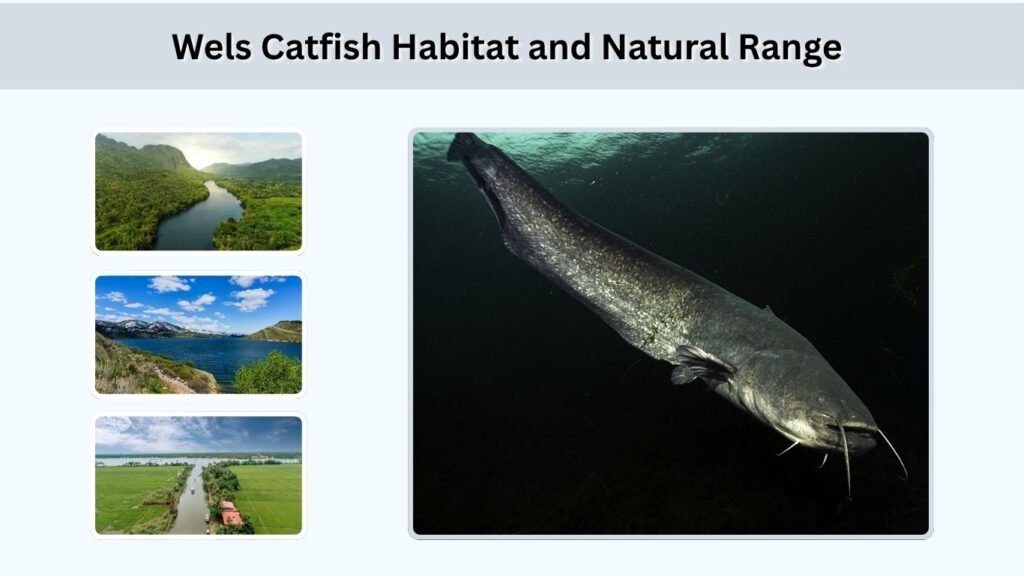
Wels catfish prefer large freshwater environments offering deep shelter, warm seasonal temperatures, abundant prey, and suitable spawning areas.
Where Do Wels Catfish Live?
Typical habitats include:
- Large lowland rivers
- Deep, slow-flowing river sections
- Lakes and reservoirs
- Backwaters and connected channels
- Vegetated lake margins
- Areas containing submerged trees and deep holes
They often rest in protected locations during daylight and become more active around dusk or at night.
Native and Introduced Locations
The species is native to central, eastern, and southeastern Europe and western Asia, particularly waters connected to the Baltic, Black, Caspian, and Aral Sea basins. It has been introduced elsewhere for sport fishing and aquaculture, including rivers and reservoirs in Spain, Italy, France, and the United Kingdom.
Introduced populations can affect local ecosystems. An 11-year Spanish reservoir study linked the arrival and expansion of European catfish with substantial changes in the fish community, including declines in Iberian barbel abundance and biomass.
Are Wels Catfish Found in America?
Wels catfish are not native to North America. The USGS states that importing and selling the species in the United States has been federally prohibited under the Lacey Act since 2016. Unverified private specimens may exist, but the fish should never be released into natural waterways.
Wels Catfish Diet and Hunting Behavior
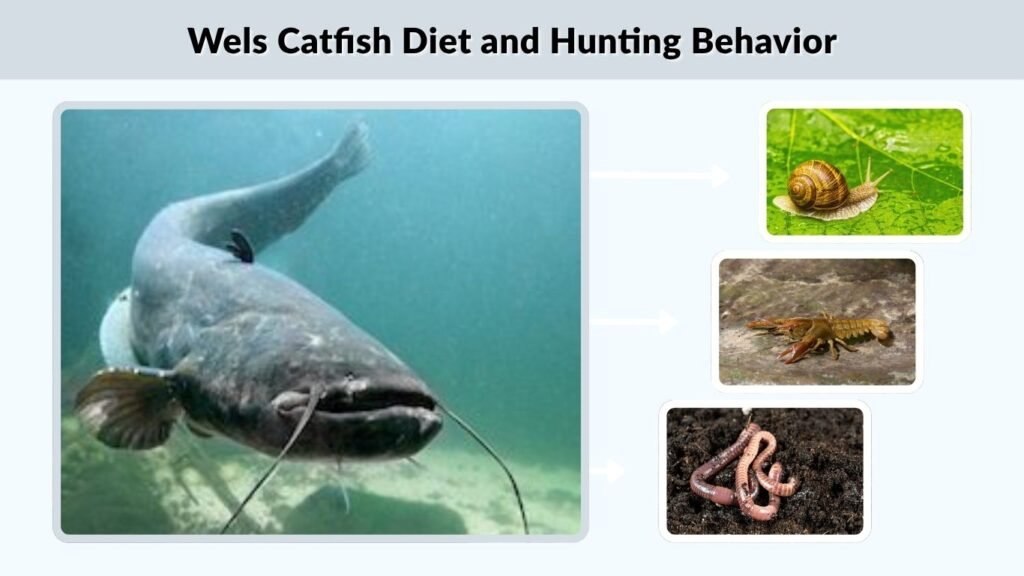
Wels catfish are adaptable predators whose diet changes as they grow. Juveniles consume smaller invertebrates, while large adults increasingly target fish and other vertebrates.
What Do Wels Catfish Eat?
Young fish commonly eat insects, snails, worms, freshwater shrimp, crayfish, and small fish. Large adults primarily consume fish but may also take frogs, small mammals, waterbirds, and other animals encountered near the water. Diet studies show that prey selection varies considerably between rivers, lakes, seasons, and fish sizes.
How Do They Hunt?
Wels catfish rely heavily on smell, taste, vibration, and signals detected through their barbels. Their relatively small eyes are less important in muddy water or darkness. They may ambush prey near the bottom, pursue fish through open water, or investigate struggling animals at the surface.
An introduced population in France became famous for partially beaching itself to capture pigeons along a riverbank. This unusual hunting strategy demonstrates the species’ ability to exploit new food sources, but it is not normal behavior throughout its native range.
Are Wels Catfish Dangerous?
Their enormous mouths and intimidating appearance have generated exaggerated stories. A mature fish deserves caution, but humans are not part of its normal documented diet.
Do Wels Catfish Attack Humans?
Wels catfish generally avoid people and do not normally regard humans as prey. A large individual could nevertheless bite, ram, or injure someone if cornered, stepped on, handled improperly, or disturbed around a nesting area. Swimmers should avoid approaching very large fish, especially in murky water.
Do Wels Catfish Have Teeth?
They do have teeth, but not the large cutting fangs found in sharks. Their mouths contain many small teeth used to grip slippery prey before swallowing it. These teeth and the fish’s powerful body can cause abrasions or punctures during careless handling.
There is no credible evidence that wels catfish routinely hunt, swallow, or kill adult humans. Stories describing them as human-eating monsters usually rely on speculation rather than documented feeding evidence.
Chernobyl Wels Catfish
Large catfish living near Chernobyl are real, but they are not radiation-created mutants. Fish occur in the former power plant’s cooling pond and connected waterways, where reduced fishing pressure and long lifespans allow some individuals to become conspicuous.
Did Radiation Make Them Giant?
Research examining fish from the Chernobyl cooling pond did not find a positive relationship between individual radiation exposure and chromosomal damage in the studied catfish. Their size is more reasonably explained by age, food availability, reduced human disturbance, and the natural ability of the species to grow large.
This does not mean fish from contaminated areas are safe to eat. Radiation contamination and biological mutation are separate questions, and fishing or consuming wildlife from restricted zones should not be attempted.
Wels Catfishing
The species is prized by anglers because of its strength, size, and long battles. Famous destinations include Italy’s Po River, Spain’s Ebro system, France’s major rivers, the Danube basin, and productive reservoirs in Poland.
Bait and Fishing Methods
Anglers commonly use legal fish-based baits, worms, pellets, or other strongly scented offerings. Heavy rods, strong line, large hooks, and secure landing equipment are necessary because even a medium-sized wels can be extremely powerful.
Fishing regulations vary by country and waterway. Anglers should check licensing, bait, transport, retention, and release rules before fishing. Introduced populations may be protected as valuable sport fish in one location but managed as invasive predators in another.
Can Wels Catfish Live in an Aquarium?
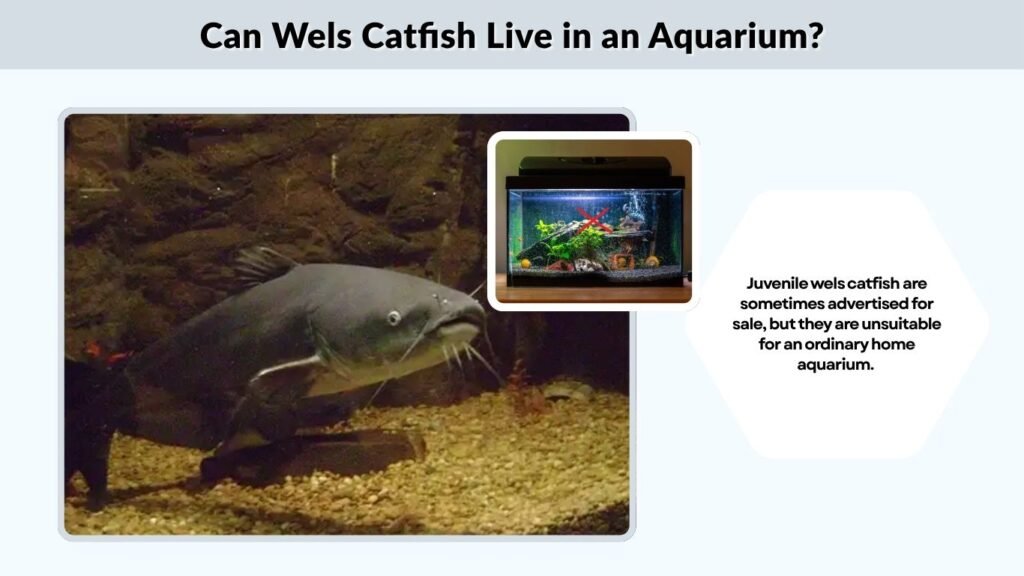
Juvenile wels catfish are sometimes advertised for sale, but they are unsuitable for an ordinary home aquarium. Their rapid growth, adult size, heavy waste production, predatory diet, and ability to swallow tank mates make them appropriate only for enormous private ponds, specialist facilities, or public aquariums.
Ownership and trade may also be restricted. In the United States, federal import and sale restrictions apply, while other countries may require permits for keeping, transporting, or introducing non-native fish.
FAQs
Is the wels catfish the largest catfish in the world?
No. It is Europe’s largest primarily freshwater fish and one of the world’s biggest catfish, but species such as the Mekong giant catfish can reach greater documented weights.
Can you eat wels catfish?
Yes, wels catfish are eaten in parts of Europe. Smaller fish are generally preferred because large, old specimens may have tougher, fattier flesh and can accumulate more environmental contaminants.
Why do wels catfish have whiskers?
Their whisker-like barbels contain sensory structures that help them locate prey, detect chemicals, and navigate in dark or muddy water. They are especially valuable during nighttime feeding.
Are albino wels catfish a separate species?
No. Albino or pale golden individuals are color variations of Silurus glanis. They have reduced pigmentation but otherwise share the same general anatomy and growth potential.
What is the difference between wels and Mekong giant catfish?
Wels catfish are predatory European and western Asian fish with long barbels. Mekong giant catfish are native to Southeast Asia, lack prominent barbels as adults, and mainly consume plant material and algae after the juvenile stage.