
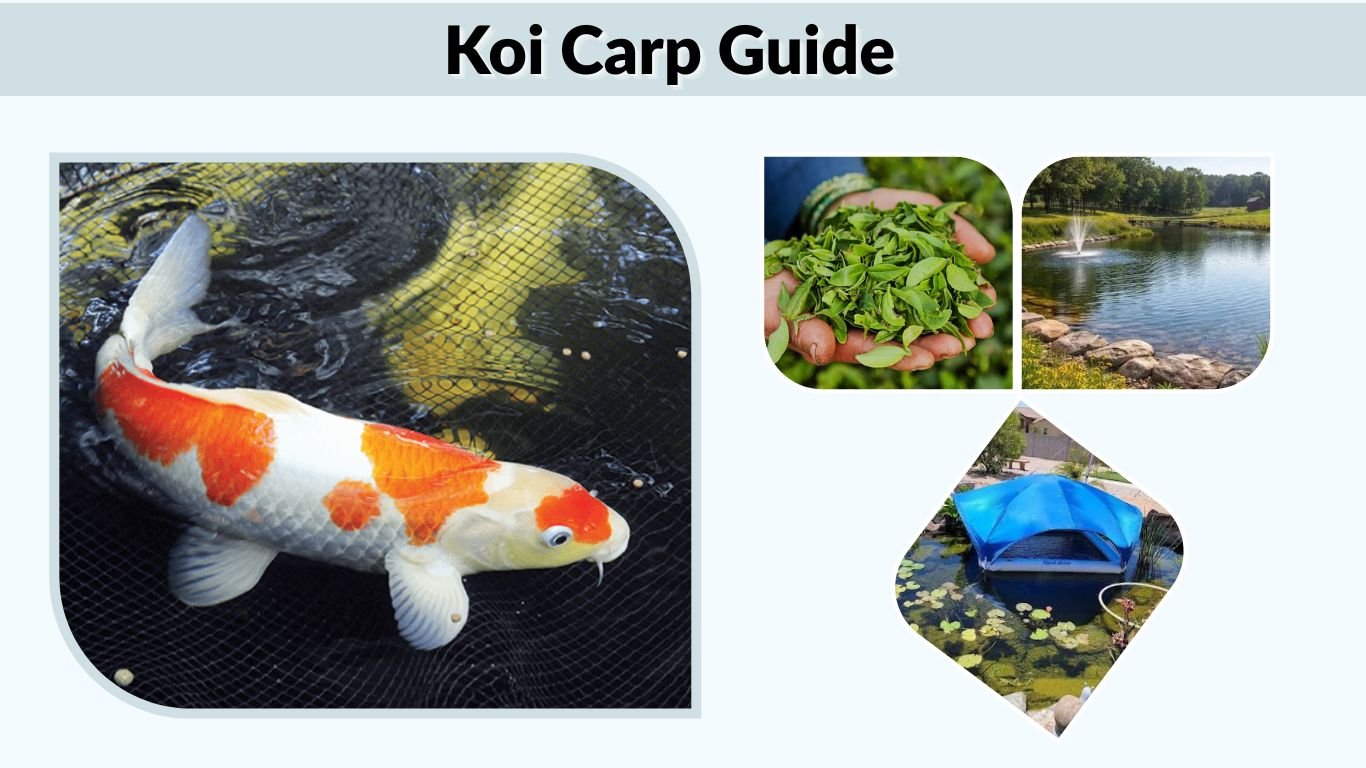
Koi carp are colorful ornamental fish prized for their beauty, patterns, and long lifespan. Originally developed from common carp, koi are now kept in ponds around the world and are available in many distinctive varieties. Their care requires more space and filtration than many beginners expect, especially as they can grow quite large. This guide explains koi carp size, growth, lifespan, identification, popular types, feeding habits, pond requirements, aquarium suitability, behavior, and other useful facts for anyone interested in keeping these striking freshwater fish.
What Is a Koi Carp?
Koi are domesticated ornamental varieties of common carp, Cyprinus carpio. Selective breeding has produced fish with striking red, white, black, yellow, blue, orange, and metallic colors. Although koi are commonly treated as decorative pond fish, they retain many characteristics of ordinary carp, including their body shape, feeding habits, barbels, hardy nature, and ability to grow quite large.
Koi vs Carp
The main difference between koi and ordinary common carp is selective breeding. Wild carp usually have brown, bronze, gray, or olive coloring that provides camouflage. Koi have been bred specifically for attractive colors, patterns, scale types, and body quality.
Biologically, koi are carp. Both have similar feeding behavior and can reach impressive sizes under suitable conditions.
Are Koi Carp Goldfish?
Koi are not goldfish. Goldfish come from Carassius auratus, whereas koi are varieties of common carp.
One easy difference is the mouth. Koi have small whisker-like barbels around their mouths, while goldfish do not. Koi also generally develop longer bodies and can grow considerably larger than most goldfish.
Koi Carp Identification and Appearance
Koi carp vary greatly in color, but their overall physical structure remains recognizable. Examining the mouth, body shape, scales, fins, and pattern can help distinguish koi from similar ornamental fish. Their appearance also changes with age, and some colors become deeper or more defined as the fish grows under suitable water and feeding conditions.
Key Identification Features
- Body: Long, sturdy, torpedo-shaped body.
- Barbels: Small whisker-like barbels around the mouth.
- Scales: Usually overlapping scales, although some varieties have reduced scaling.
- Colors: Red, white, orange, black, yellow, gray, blue, or metallic shades.
- Patterns: Solid, two-colored, or complex multicolored markings.
- Fins: Strong tail with broad pectoral fins.
- Mouth: Flexible, slightly downward-facing mouth suited to bottom feeding.
Koi Carp Colors and Patterns
Koi carp patterns are among their most valued characteristics. Some fish have a clean white body covered with red patches, while others combine black, white, and red. Metallic varieties may appear gold, silver, or bright yellow.
Genetics largely determines pattern quality, but age, diet, water conditions, and health can affect how bright or defined the colors appear.
Koi Carp Size and Growth
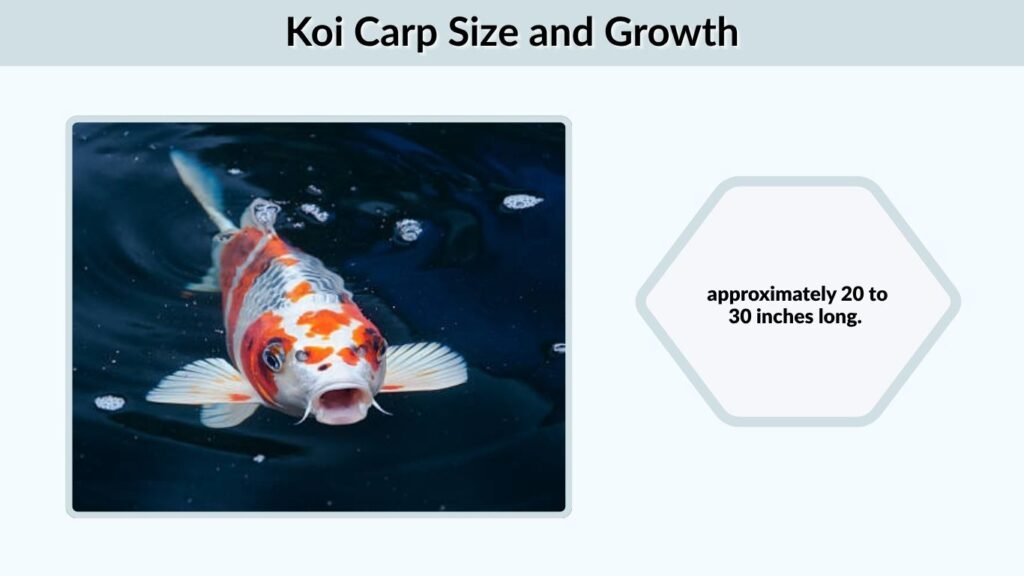
Koi can become surprisingly large compared with most ornamental fish. A small juvenile may fit comfortably in an aquarium at first but eventually require considerably more swimming space. Genetics, food quality, water temperature, pond size, stocking density, oxygen, and overall health influence both koi carp size and how quickly an individual fish develops.
How Big Do Koi Carp Get?
Many mature koi grow approximately 20 to 30 inches long. Well-bred fish living in excellent conditions can exceed 30 inches, while exceptional individuals may approach or surpass 36 inches.
Females commonly develop larger, fuller bodies than males. Koi tend to grow fastest while young, although they may continue gaining length and body mass for several years.
Factors That Affect Koi Growth
- Genetics and bloodline
- Pond size
- Stocking density
- Water temperature
- Water quality
- Oxygen availability
- Diet and protein quality
- Feeding frequency
- Parasites and disease
- Stress and seasonal conditions
A crowded pond cannot usually produce the same growth as a spacious, well-filtered environment. Maintaining water quality is therefore just as important as providing nutritious food.
Koi Carp Lifespan and Behavior
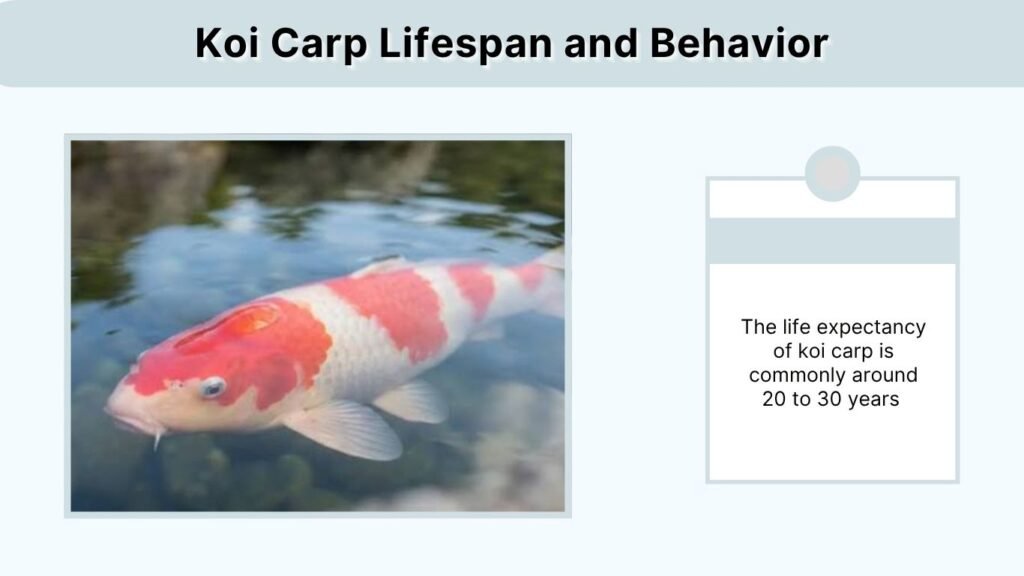
One reason koi are popular among long-term pond keepers is their impressive life expectancy. With suitable care, these fish can remain part of a pond for decades. Koi are also social and observant. They often recognize feeding routines, gather near familiar people, and may eventually become comfortable taking food directly from a keeper’s hand.
How Long Do Koi Carp Live?
The life expectancy of koi carp is commonly around 20 to 30 years when they receive proper care, although some individuals can live much longer.
Genetics, water quality, nutrition, climate, disease prevention, and seasonal care all influence lifespan. Poor filtration, overcrowding, repeated disease, or chronically unsuitable water conditions can greatly reduce how long a koi survives.
Do Koi Carp Have Teeth?
Koi have teeth, but they are not located along the front of the jaws. They have pharyngeal teeth farther back in the throat, which help crush and grind food.
Koi therefore do not have the type of visible biting teeth associated with predatory fish. They may gently mouth a person’s fingers during hand feeding, but they are not considered dangerous to people.
Popular Types of Koi Carp
There are many different types of koi carp, classified mainly according to body color, markings, metallic appearance, and scale pattern. Some traditional Japanese varieties are especially prized by breeders and collectors. The value of an individual koi can vary dramatically depending on genetics, size, body shape, color intensity, skin quality, pattern balance, age, and breeding history.
Common Koi Varieties
- Kohaku: White body with red markings.
- Showa: Black base with red and white patterns.
- Sanke: White body carrying red and black markings.
- Asagi: Blue-gray scales with reddish areas.
- Ogon: Solid metallic gold, yellow, or silver koi.
- Shusui: Mostly scaleless koi related to Asagi.
- Bekko: Light-colored body with black markings.
- Utsuri: Black body with contrasting white, red, or yellow.
- Tancho: Usually white with a distinctive red head marking.
- Ghost Koi: Often gray, silver, dark, or metallic with noticeable scales.
Why Are Some Koi Carp So Expensive?
Expensive koi usually combine exceptional genetics, body shape, skin quality, vivid colors, and highly desirable patterns. Breeder reputation, variety, age, size, and show potential also influence the price.
Most koi sold for backyard ponds are reasonably affordable. However, rare Japanese show-quality specimens can command extremely high prices because collectors judge them as outstanding examples of their varieties.
Koi Carp Pond and Aquarium Care
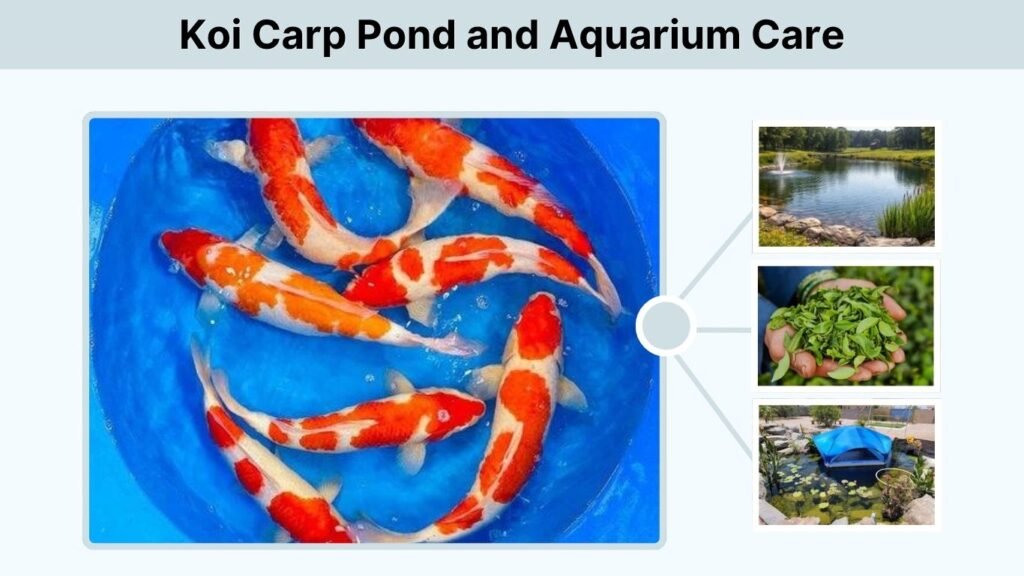
A suitable koi carp pond must provide enough swimming space while maintaining stable, oxygen-rich water. Mature koi produce considerable waste, making effective filtration particularly important. Pumps, filters, aeration, sensible stocking levels, and routine water testing all contribute to healthier fish. Owners should plan for the koi’s adult size instead of designing their setup only for small juveniles.
Basic Koi Pond Requirements
- Adequate swimming space and depth
- Strong mechanical and biological filtration
- Properly sized pond pumps
- Good water circulation
- Reliable aeration
- Stable water temperature
- Regular ammonia, nitrite, nitrate, and pH testing
- Partial shade during hot weather
- Protection from predators when necessary
- Appropriate stocking density
Koi carp pond filters and pumps should be selected according to water volume and fish load. Undersized equipment can result in deteriorating water quality as koi grow.
Can Koi Carp Live in an Aquarium?
Young koi can temporarily live in a large aquarium, but a normal home fish tank is rarely suitable for fully grown koi.
Their adult size, active swimming habits, oxygen requirements, and high waste production make long-term indoor aquarium care difficult. Anyone buying small koi for a fish tank should already have a plan to move them into a substantially larger system or pond.
What Do Koi Carp Eat?
Koi are omnivores. Their main food in managed ponds is usually a high-quality commercial koi pellet, although they may also consume insects, aquatic organisms, plant material, and other edible items.
Koi can eat fish eggs, fry, or very small fish if they encounter them, but they are not specialized predators. Feeding amounts should also be adjusted according to season and water temperature.
FAQs
People considering koi often have questions about their growth, diet, compatibility, and suitability for ponds or tanks. Because these fish can become large and live for decades, understanding their basic needs before buying them is important. The following answers cover five common questions about koi carp and clarify several misconceptions surrounding these popular ornamental freshwater fish.
Can You Eat Koi Carp?
Koi are biologically edible because they are varieties of common carp. However, they are primarily bred as ornamental fish, so they are rarely raised for food. Pond fish that have received medications should also never be assumed safe for human consumption.
How Fast Do Koi Carp Grow?
Young koi can grow relatively quickly when water is warm and food is plentiful. Their growth rate varies significantly according to genetics, diet, pond space, water quality, temperature, and health.
Do Koi Carp Eat Other Fish?
Koi are generally peaceful rather than active predators. However, large koi may accidentally or opportunistically eat fish eggs, newly hatched fry, or extremely small fish that fit into their mouths.
What Is the Biggest Koi Carp Size?
Large koi can exceed 30 inches in length, while exceptional fish may reach around 36 inches or more. Achieving such a size generally requires favorable genetics, considerable space, excellent nutrition, and years of quality care.
Can Koi Carp Live With Goldfish?
Koi and goldfish can live together in a sufficiently large pond because their environmental requirements are similar. However, koi become much larger and may outcompete smaller goldfish during feeding. Pond capacity, filtration, stocking levels, and differences in fish size should therefore be considered carefully.