
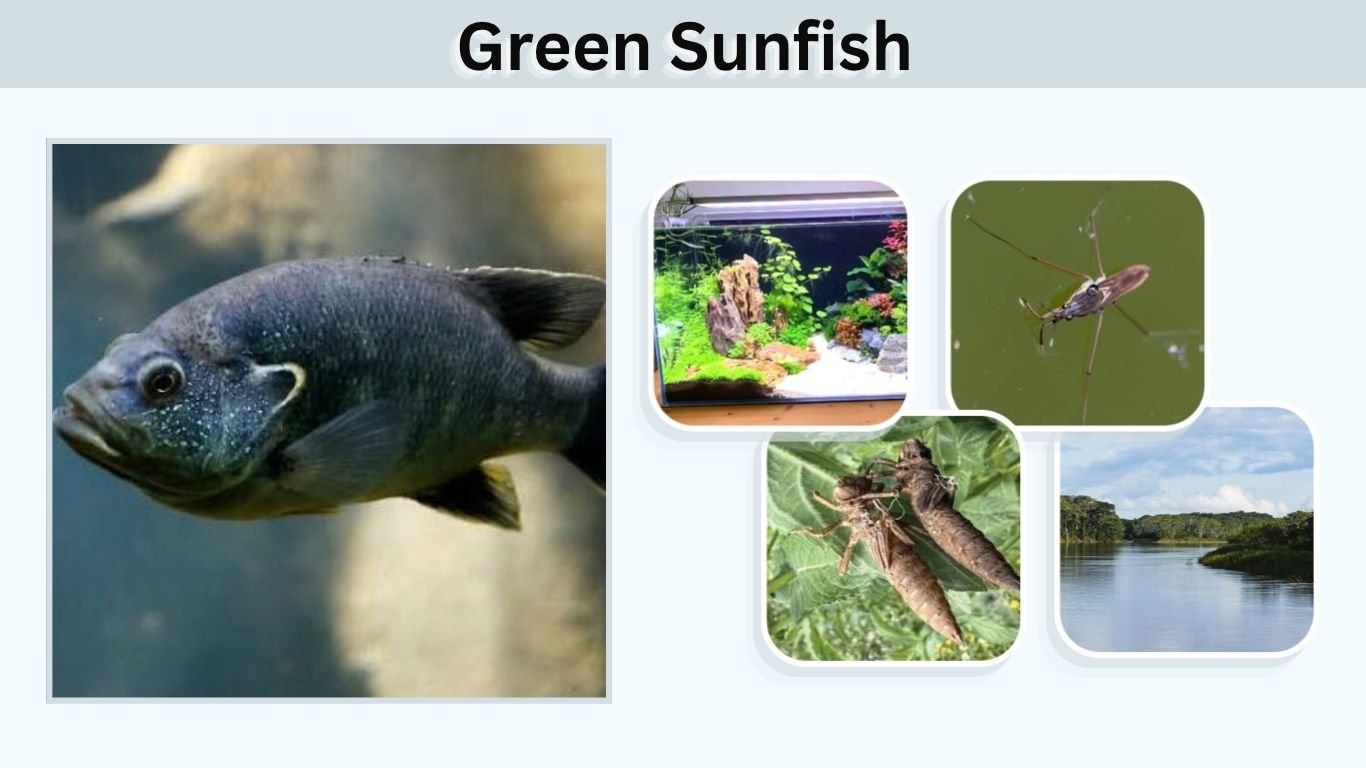
The green sunfish is a colorful freshwater fish found throughout much of North America. Known for its large mouth, blue-green markings, and aggressive feeding behavior, this sunfish often lives in ponds, creeks, rivers, and reservoirs. Anglers sometimes confuse it with bluegill, warmouth, or hybrid sunfish because of their similar body shapes. This guide explains green sunfish identification, size, habitat, diet, behavior, reproduction, and key differences from bluegill, along with information about keeping them in aquariums and whether they are good to eat.
What Is a Green Sunfish?
The green sunfish belongs to the freshwater sunfish family Centrarchidae and is closely related to bluegill, pumpkinseed, and several other popular panfish. Its scientific name is Lepomis cyanellus. Despite its common name, the fish is not completely green. Its body usually combines olive, blue-green, yellow, and orange markings that become especially noticeable on mature individuals.
Green Sunfish Identification
Look for these common characteristics:
- Scientific name: Lepomis cyanellus
- Body: Thick and somewhat elongated
- Color: Olive-green to blue-green
- Mouth: Large compared with most other sunfish
- Fins: Often have yellow, orange, or white edging
- Cheeks: May display blue-green streaks
- Ear flap: Dark with a lighter margin
- Belly: Yellowish or pale
- Tail: Slightly rounded or moderately forked
The relatively large mouth is one of the easiest characteristics to use when identifying this species.
Juvenile Green Sunfish
Juvenile green sunfish generally have a more subdued appearance than mature adults. Their bodies may show vertical bars or mottled patterns that help camouflage them around vegetation, rocks, and submerged structure.
As the fish matures, the characteristic blue-green markings around the face become easier to see. Fin margins may also develop stronger yellow or orange coloration.
Green Sunfish Size and Growth
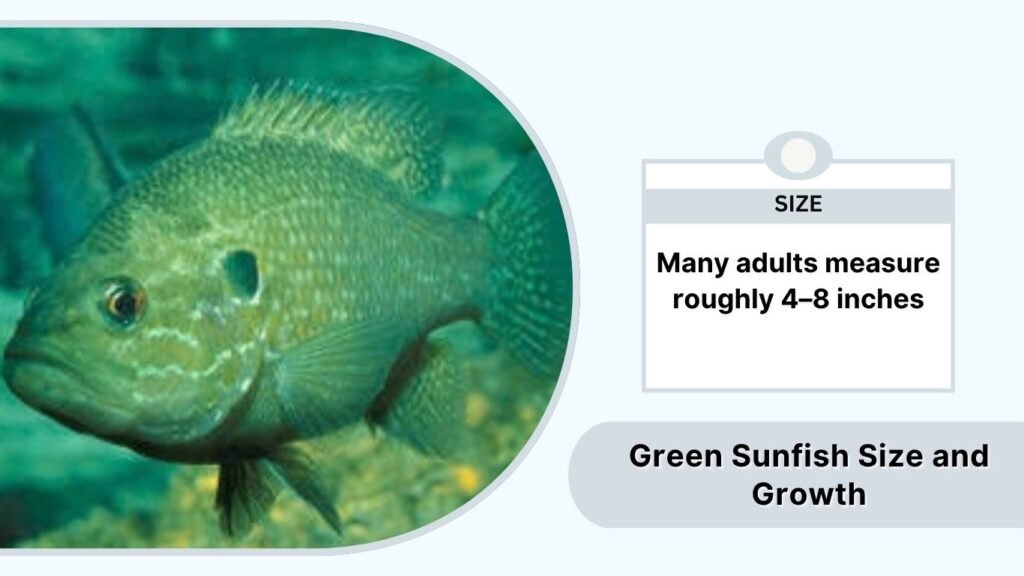
Green sunfish are usually smaller than largemouth bass and many other sport fish, but they can become surprisingly stocky. Growth depends on food availability, water temperature, competition, and population density. Fish living in overcrowded ponds may remain small because numerous individuals compete for limited resources, while specimens in productive waters can grow considerably larger.
How Big Do Green Sunfish Get?
Typical size characteristics include:
- Many adults measure roughly 4–8 inches
- Larger individuals may exceed 10 inches
- Well-fed fish develop deep, thick bodies
- Males may appear especially robust during breeding season
- Growth rates vary greatly between different bodies of water
Exceptional specimens can become much larger than the average fish anglers encounter.
What Affects Their Size?
Food availability is one of the biggest influences on green sunfish growth. Waters containing abundant insects, small fish, crayfish, and other prey can support faster growth.
Competition also matters. Green sunfish reproduce successfully and can become numerous in small ponds. When populations become overcrowded, individual growth may slow because the available food must be shared among too many fish.
Green Sunfish Habitat and Distribution
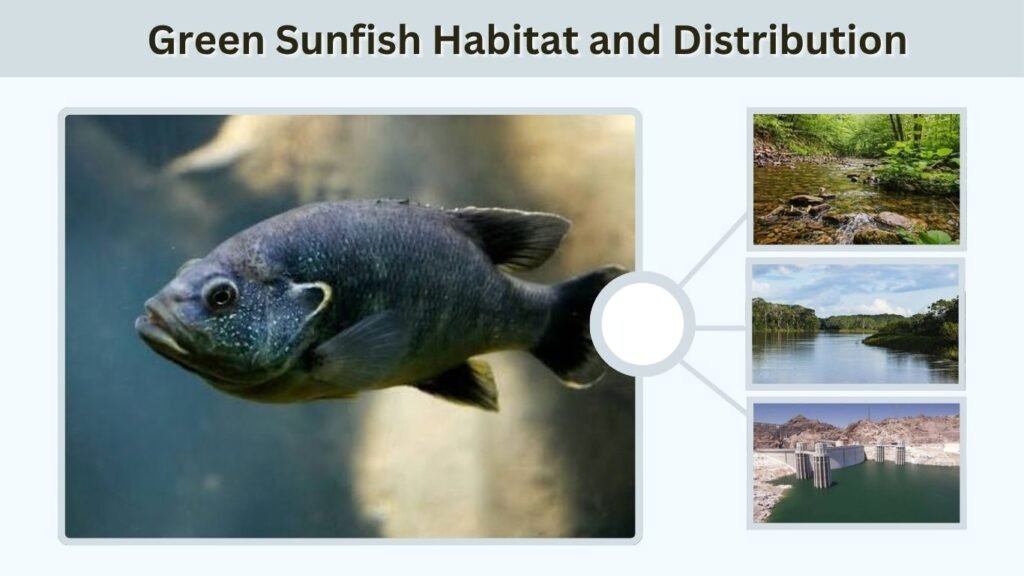
Green sunfish are highly adaptable and tolerate conditions that may be challenging for some other freshwater fish. They can inhabit clear streams as well as muddy ponds and slow-moving waterways. Their adaptability has helped them become widespread in North America, including areas beyond parts of their original natural distribution.
Where Do Green Sunfish Live?
Common green sunfish habitats include:
- Farm ponds
- Small lakes
- Creeks
- Rivers
- Reservoirs
- Backwaters
- Drainage channels
- Slow-moving pools
They frequently stay close to rocks, logs, vegetation, docks, and other underwater structures that provide cover.
Preferred Water Conditions
Green sunfish are often associated with shallow water and areas that have relatively slow currents. They can tolerate warmer and more turbid conditions than many sensitive freshwater species.
This adaptability makes them capable of surviving in small or disturbed bodies of water. During periods of extreme heat or low water, they may concentrate in deeper pools where suitable oxygen and cover remain available.
What Do Green Sunfish Eat?
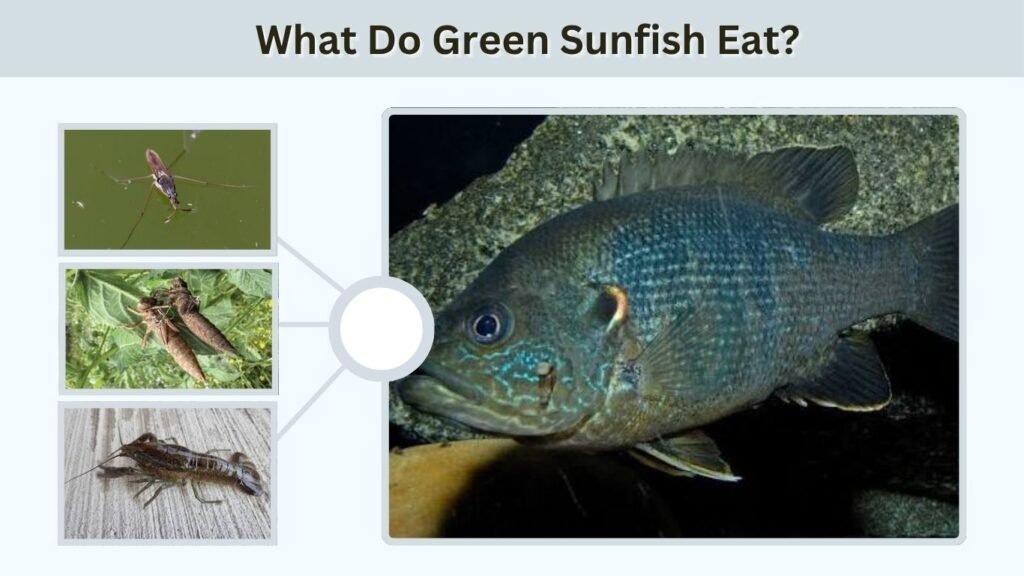
Green sunfish are opportunistic predators with surprisingly large mouths for their body size. They consume whatever suitable prey is abundant and easy to capture. Younger fish focus heavily on small aquatic organisms, while larger adults can consume insects, crayfish, and other fish.
Common Green Sunfish Foods
Their diet can include:
- Aquatic insects
- Insect larvae
- Crayfish
- Small minnows
- Fish fry
- Worms
- Small crustaceans
- Zooplankton
- Tadpoles
- Other small aquatic animals
This varied diet helps green sunfish survive in many different freshwater habitats.
Feeding Behavior
Green sunfish frequently wait near cover and attack prey that moves within striking distance. Their large mouth allows them to take relatively large prey compared with similarly sized bluegill.
They can also be aggressive feeders, which is one reason anglers often catch them using worms, small artificial lures, insects, and other common panfish baits.
Green Sunfish vs. Bluegill
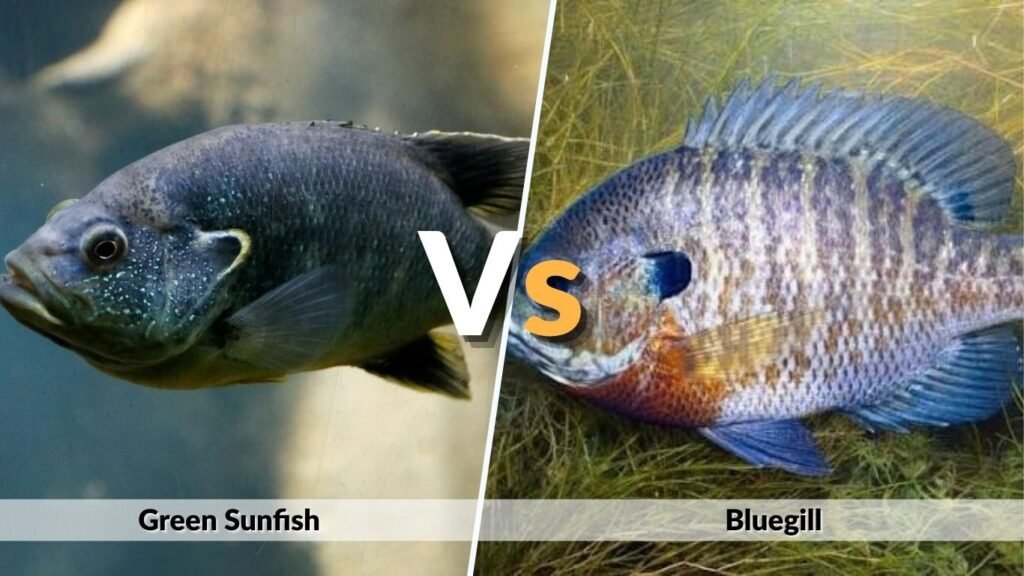
Green sunfish and bluegill belong to the same genus and often share the same waters. They may even hybridize, making identification more complicated. However, several physical characteristics can help separate typical green sunfish from bluegill when examining adult fish.
Main Differences
- Mouth: Green sunfish have a noticeably larger mouth.
- Body: Bluegill usually have a deeper, more rounded body.
- Color: Green sunfish often show blue-green facial streaks.
- Fin edges: Green sunfish commonly have yellow or orange margins.
- Pectoral fins: Bluegill generally have longer, more pointed pectoral fins.
- Behavior: Green sunfish often appear more aggressive around prey and territory.
Green Sunfish Bluegill Hybrid
Green sunfish can naturally or intentionally hybridize with bluegill. Hybrid offspring may display characteristics from both parents, including a deep body combined with a relatively large mouth.
Hybrid sunfish are sometimes stocked in managed ponds because certain crosses can grow quickly and readily accept artificial feed. However, identification can be difficult when hybrids closely resemble either parent species.
Green Sunfish Reproduction and Behavior
Breeding usually occurs during warmer months when water temperatures rise sufficiently. Like other Lepomis sunfish, males construct nests in shallow water. Several nests may occur close together where suitable spawning habitat is available.
Spawning Behavior
The male creates a shallow, circular depression by sweeping away debris with his tail. After attracting a female, eggs are deposited in the nest and fertilized.
The male generally remains near the nest afterward, defending the eggs and newly hatched fry against potential predators. This defensive behavior can make males particularly aggressive during spawning periods.
Are Green Sunfish Aggressive?
Green sunfish can be territorial, especially around spawning sites or when kept in confined spaces. They may chase smaller fish and compete strongly for food.
Their aggressive feeding behavior is useful for anglers but can create problems in aquariums or small ponds when they are housed with smaller or less assertive species.
Can You Keep Green Sunfish in an Aquarium?
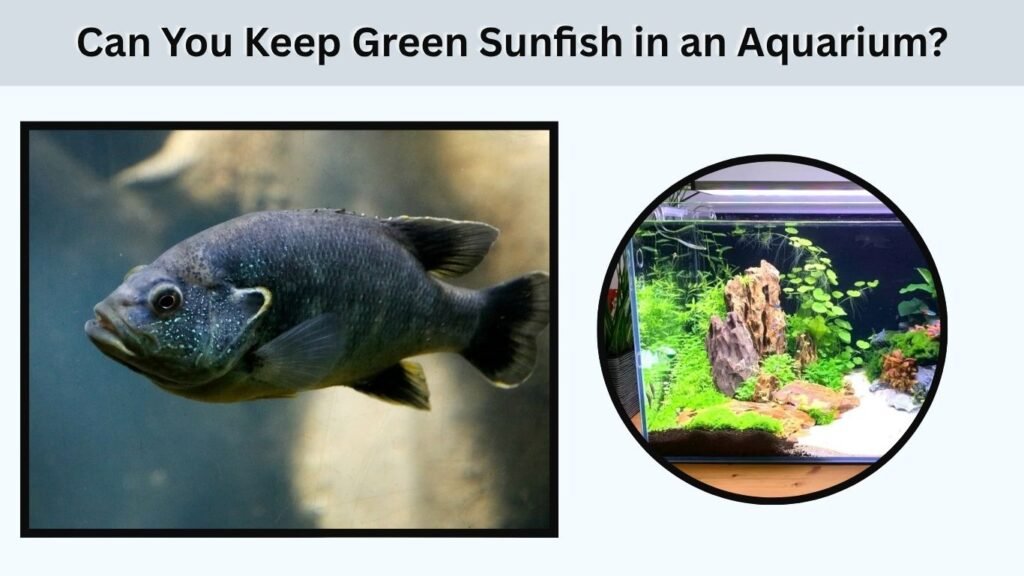
Green sunfish can be maintained in appropriately sized aquariums, but they require more planning than small community fish. They grow larger, produce substantial waste, eat animal-based foods, and may behave aggressively toward tank mates.
Green Sunfish Aquarium Care
Important considerations include:
- Use a spacious aquarium.
- Provide strong biological filtration.
- Maintain good water quality.
- Include rocks, wood, and hiding areas.
- Avoid very small tank mates.
- Provide appropriately sized protein-rich foods.
- Monitor territorial behavior.
- Check local wildlife regulations before collecting wild fish.
A juvenile may initially fit comfortably in a smaller setup, but aquarium size should account for the fish’s adult dimensions and activity.
Are Green Sunfish Good to Eat?
Green sunfish are edible and can be prepared similarly to other freshwater panfish. Their relatively small average size means that larger specimens are generally more practical for preparing as food. Flavor and quality can vary according to habitat, water quality, diet, and preparation method.
What Does Green Sunfish Taste Like?
The flesh is generally mild and can resemble other sunfish such as bluegill. Because the fish are often relatively small, they may be cooked whole after cleaning or prepared as small fillets when individuals are large enough.
Anyone planning to keep fish for food should follow local fishing regulations and check applicable fish-consumption advisories for the specific water body.
FAQs
Green sunfish are frequently confused with other panfish because several species share overlapping habitats, colors, and body shapes. Mouth size, body proportions, fin markings, and facial coloration are among the most useful features for identification.
1. What is the scientific name of the green sunfish?
The scientific name of the green sunfish is Lepomis cyanellus. It belongs to the Centrarchidae family, which also includes bluegill, largemouth bass, and other freshwater sunfish.
2. How big do green sunfish get?
Many green sunfish measure around 4–8 inches, although larger individuals can exceed 10 inches under favorable conditions. Food availability and population density strongly influence growth.
3. What do green sunfish eat?
Green sunfish eat insects, larvae, worms, crayfish, small fish, fish fry, crustaceans, and other small aquatic animals. They are opportunistic predators with relatively large mouths.
4. What is the difference between green sunfish and bluegill?
Green sunfish generally have larger mouths, more elongated bodies, and colorful fin margins. Bluegill typically have deeper bodies, smaller mouths, and longer pointed pectoral fins.
5. Are green sunfish good to eat?
Yes. Green sunfish are edible and have mild flesh similar to other panfish. Larger individuals are generally easier to prepare, and anglers should always follow local fishing limits and consumption advisories.