
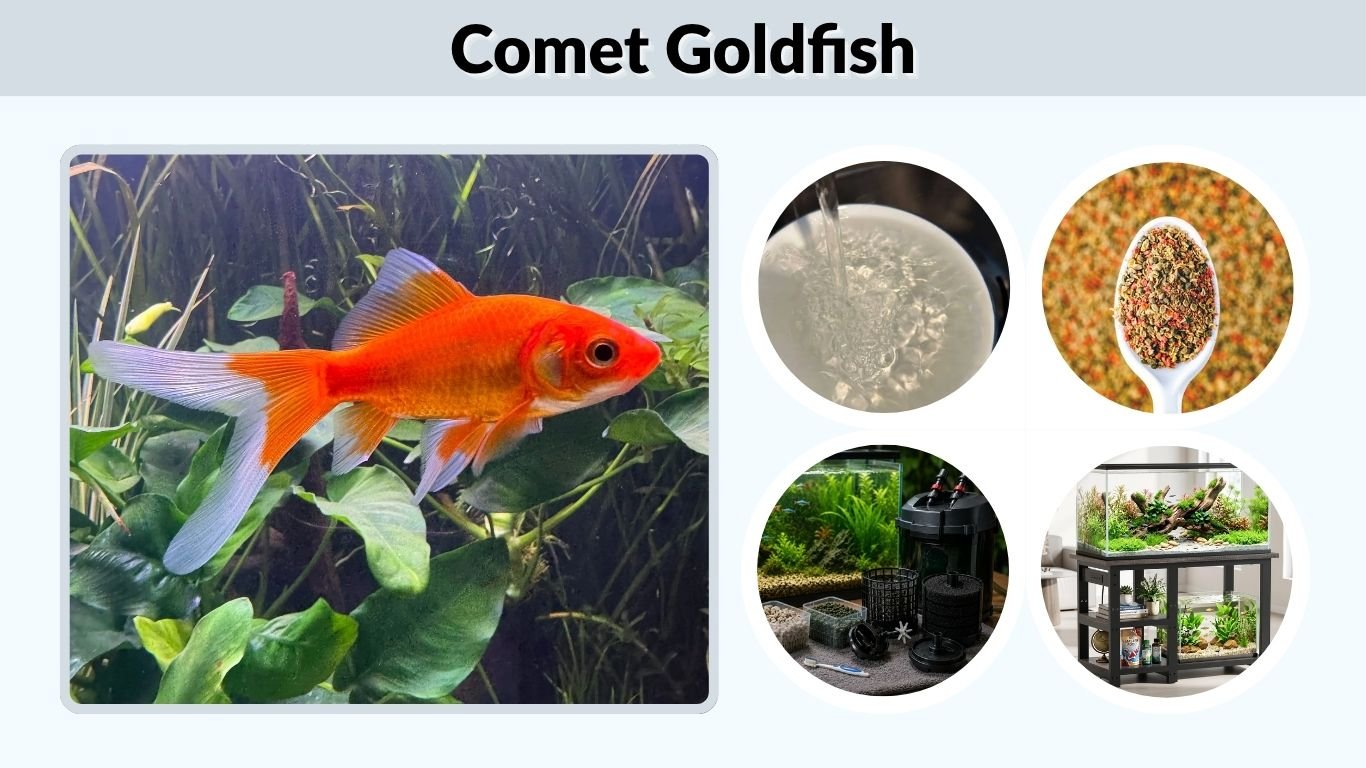
Comet goldfish are popular freshwater fish known for their bright colors, streamlined bodies, and long, flowing tails. These active swimmers are commonly kept in spacious aquariums and outdoor ponds because they grow considerably larger than many beginners expect. With proper care, comet goldfish can live for many years and become attractive additions to freshwater environments. Understanding their adult size, lifespan, feeding habits, tank requirements, and preferred water conditions will help you provide a suitable home and maintain healthy fish throughout their lives.
What Is a Comet Goldfish?
The comet goldfish (Carassius auratus) is a single-tailed variety of domesticated goldfish. It is recognized for its slender body, energetic swimming behavior, and deeply forked tail. Unlike many fancy goldfish, comets are strong swimmers that require substantial open space.
Comet Goldfish Identification
Comet goldfish have several recognizable physical characteristics:
- Body shape: Long, streamlined body designed for active swimming.
- Tail: Deeply forked, flowing single tail.
- Colors: Orange, red, yellow, white, and mixed patterns.
- Fins: Relatively long, pointed fins that complement the tail.
- Behavior: Active, social, and generally peaceful.
Comet Goldfish vs. Common Goldfish
Comet goldfish and common goldfish look similar, but their tails differ noticeably.
Comets have longer, more deeply forked tails, while common goldfish typically have shorter, less dramatic tail fins. Both varieties are active swimmers and require spacious environments.
How Big Do Comet Goldfish Get?
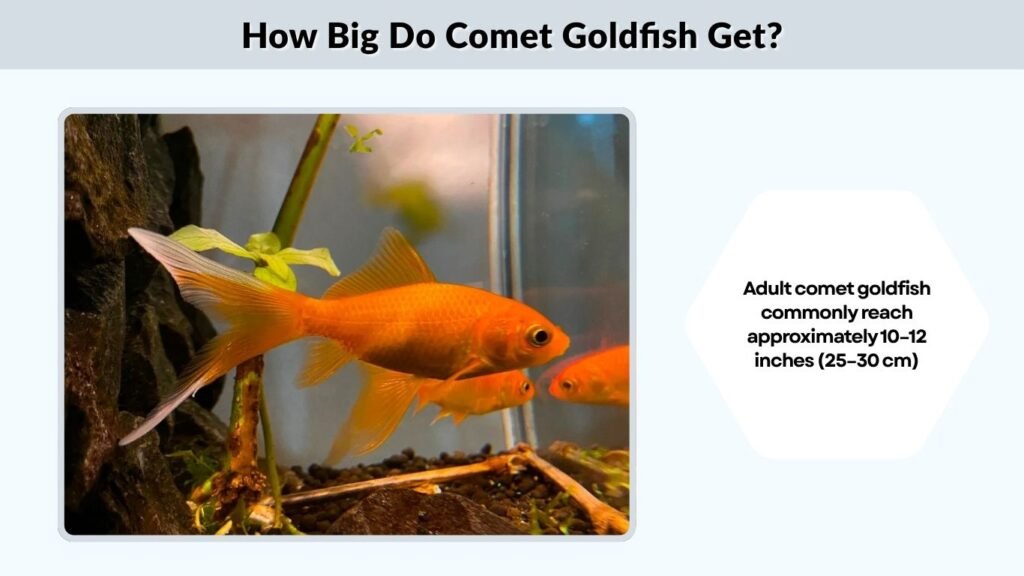
Comet goldfish grow significantly larger than their juvenile appearance suggests. Their adult size depends on genetics, nutrition, water quality, and available swimming space. Although small specimens are frequently sold in pet stores, they should never be treated as permanently small aquarium fish.
Full-Grown Comet Goldfish Size
Adult comet goldfish commonly reach approximately 10–12 inches (25–30 cm), including their tails. Some individuals may grow larger under favorable conditions.
Their substantial size makes small aquariums unsuitable for permanent housing. Large tanks or outdoor ponds provide more appropriate swimming space.
How Fast Do Comet Goldfish Grow?
Young comet goldfish may grow rapidly during their first year when provided with adequate nutrition and clean water.
Growth generally slows as they mature, although individual development varies. Poor conditions can restrict healthy growth without making a small tank suitable.
Comet Goldfish Lifespan and Life Expectancy
Comet goldfish are long-lived freshwater fish when maintained under suitable conditions. Their life expectancy depends on habitat quality, nutrition, disease prevention, and consistent aquarium maintenance. Providing sufficient space from an early age supports healthier development throughout adulthood.
How Long Do Comet Goldfish Live?
Comet goldfish commonly live approximately 10–15 years, with some reaching 20 years or longer under excellent conditions.
Overcrowding, poor filtration, and unsuitable water conditions may shorten their lifespan. Consistent care helps reduce avoidable health problems.
Comet Goldfish Colors and Varieties
Comet goldfish appear in several attractive color variations. Selective breeding has produced different combinations of orange, red, white, and yellow. Their coloration can also change naturally as they mature, making individual fish visually distinctive.
Popular Comet Goldfish Colors
- Orange comet goldfish: Features the familiar bright orange coloration.
- Sarasa comet goldfish: Displays striking red-and-white patterns.
- White comet goldfish: Has predominantly white or silvery scales.
- Yellow comet goldfish: Shows golden-yellow or lemon-colored shades.
- Black or gray comet goldfish: May display dark juvenile coloration that changes with age.
Sarasa Comet Goldfish
Sarasa comet goldfish are particularly popular because of their contrasting red-and-white coloration.
They have the same streamlined body and flowing tail characteristics as other comets. Their care requirements, adult size, and swimming needs are also similar.
Best Tank Size and Pond Setup for Comet Goldfish
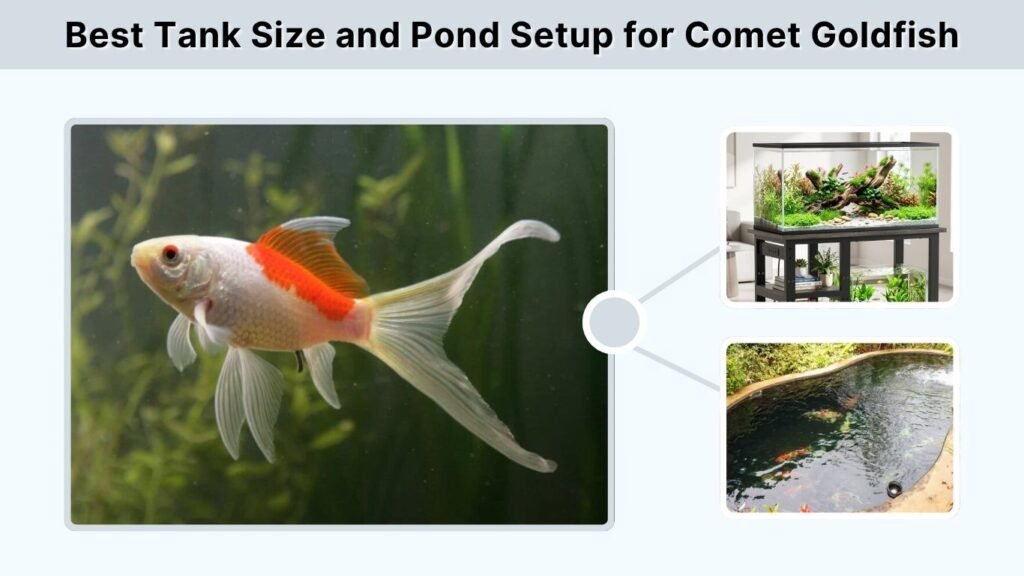
Comet goldfish require spacious aquatic environments because of their adult size and energetic swimming behavior. An appropriate habitat should provide sufficient horizontal swimming room, dependable filtration, and stable water conditions. Outdoor ponds are often the most practical long-term choice.
Minimum Comet Goldfish Tank Size
A 75-gallon aquarium is a practical starting recommendation for one adult comet goldfish, although larger tanks provide better swimming space.
Keeping multiple comets requires considerably more room. Long, rectangular aquariums are preferable to tall, narrow tanks.
Traditional fishbowls and small aquariums are unsuitable for permanent comet goldfish housing.
Keeping Comet Goldfish in Outdoor Ponds
Comet goldfish are well suited to properly maintained outdoor ponds. Their strong swimming abilities allow them to explore large open areas.
A suitable pond should provide biological filtration, adequate oxygen, predator protection, and sufficient depth for seasonal temperature changes.
Pond owners should also avoid overcrowding and regularly monitor water quality.
Comet Goldfish Temperature and Water Conditions
Comet goldfish tolerate a relatively broad temperature range compared with tropical aquarium fish. However, stable water conditions remain essential. Sudden temperature changes, harmful nitrogen compounds, and inadequate oxygen can cause stress and illness.
Ideal Water Temperature
For indoor comet goldfish, approximately 65–75°F (18–24°C) is a suitable temperature range.
They can tolerate cooler pond temperatures when properly acclimated. Avoid rapid temperature fluctuations and excessive summer heat.
A thermometer helps monitor aquarium conditions throughout the year.
Water Quality Requirements
Maintain zero detectable ammonia and nitrite, while controlling nitrate through appropriate filtration and regular water changes.
A stable, approximately neutral to slightly alkaline pH is generally suitable.
Comet goldfish produce substantial waste, making reliable biological filtration especially important.
What Do Comet Goldfish Eat?
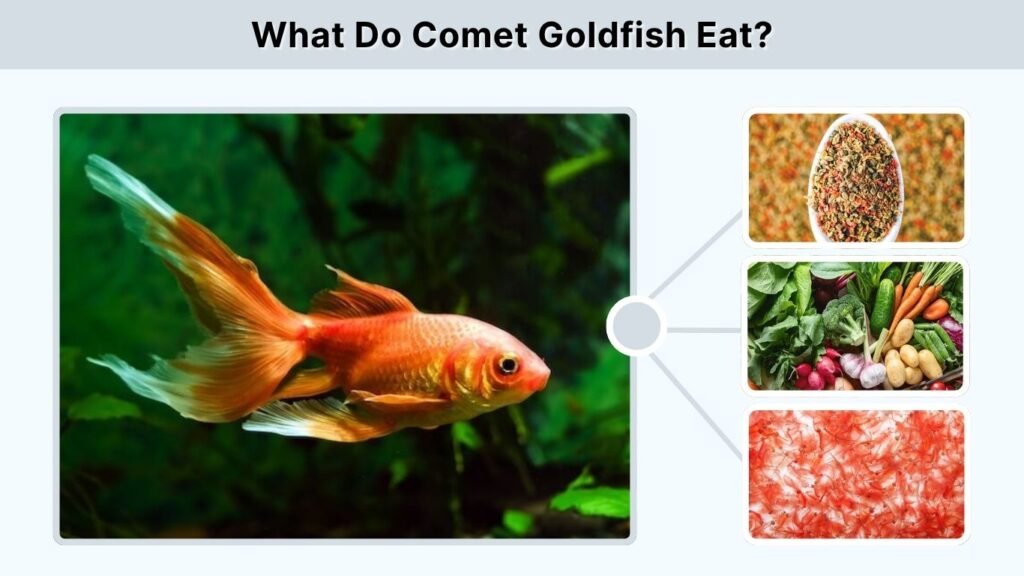
Comet goldfish are omnivorous fish that consume both plant and animal-based foods. A balanced diet supports healthy growth, natural coloration, and immune function. Feeding appropriate portions also helps prevent water pollution from leftover food.
Best Food for Comet Goldfish
Suitable foods include:
- Goldfish pellets: Provide balanced daily nutrition.
- Vegetables: Offer occasional soft leafy greens or shelled peas.
- Brine shrimp: Supply additional animal-based nutrients.
- Daphnia: Provide dietary variety.
- Quality goldfish flakes: Offer an alternative staple food when appropriately formulated.
How Often Should You Feed Comet Goldfish?
Adult comet goldfish can usually be fed once or twice daily in small portions.
Offer only food they can consume promptly and remove leftovers. Younger fish may need more frequent feeding, depending on their growth stage.
Are Salvinia Minima Plants Good for Comet Goldfish?
Salvinia minima is a floating aquatic fern that can provide shade and absorb dissolved nutrients in freshwater environments. However, it grows quickly and may cover the water surface if unmanaged.
Excessive coverage can restrict light and interfere with surface gas exchange. Furthermore, this plant is invasive or prohibited in some locations, including Florida. Check local regulations before introducing it, and never release aquarium plants into natural waterways.
Best Tank Mates for Comet Goldfish
Comet goldfish are generally peaceful, but compatible tank mates must tolerate similar temperatures and have suitable swimming abilities. Other common goldfish, comets, and shubunkins of comparable size are usually appropriate companions when sufficient space is available.
Slow-swimming fancy goldfish may struggle to compete with faster comets during feeding.
Avoid tropical fish requiring warmer temperatures and small species that adult goldfish may swallow.
How to Care for Comet Goldfish
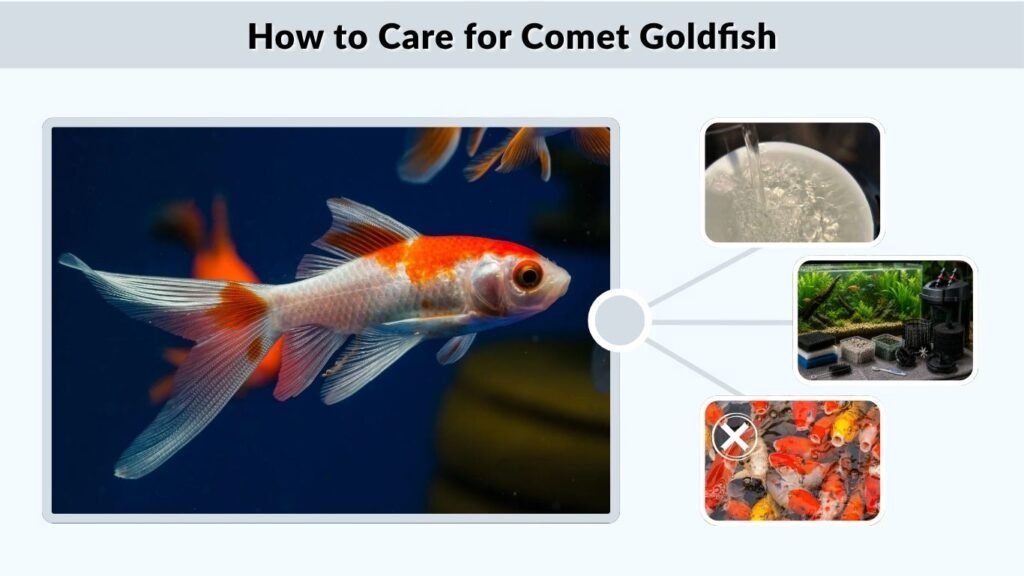
Regular maintenance keeps comet goldfish healthy and prevents common aquarium problems. Their substantial waste production makes water testing and cleaning especially important. Observing their behavior also helps identify early signs of illness.
Essential Comet Goldfish Care Tips
- Perform water changes: Replace approximately 20–25% weekly as a starting point, adjusting based on water tests.
- Maintain filtration: Keep biological filtration functioning efficiently.
- Monitor water quality: Test ammonia, nitrite, nitrate, and pH.
- Avoid overcrowding: Provide sufficient space for adult fish.
- Observe behavior: Watch for unusual swimming, reduced appetite, or damaged fins.
FAQs
1. How Big Can Comet Goldfish Get?
Adult comet goldfish commonly reach 10–12 inches, although some individuals may grow larger.
2. How Long Do Comet Goldfish Live?
Comet goldfish typically live 10–15 years, with some surviving 20 years or longer under excellent conditions.
3. Can Comet Goldfish Live in a 20-Gallon Tank?
A 20-gallon tank is unsuitable as a permanent home for adult comet goldfish because they need considerably more swimming space.
4. Are Comet Goldfish Good for Outdoor Ponds?
Yes. Their active swimming behavior and substantial adult size make properly maintained outdoor ponds an excellent option.
5. Can Comet Goldfish Live With Fancy Goldfish?
It is generally better to separate them because fast-swimming comets may outcompete slower fancy goldfish during feeding.