
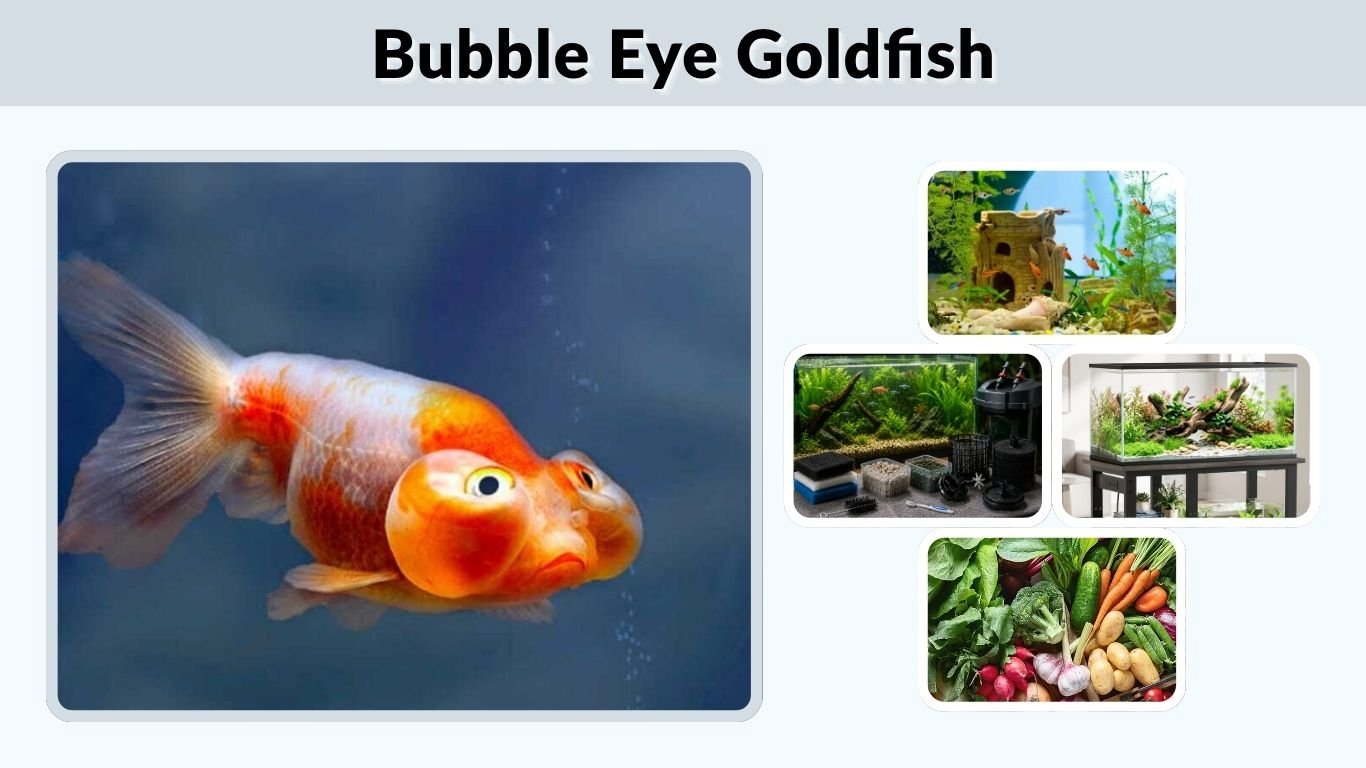
Bubble eye goldfish are distinctive freshwater fish recognized for their large, fluid-filled sacs beneath their eyes. These unusual features make them popular among ornamental fish enthusiasts, but they also require special attention and careful aquarium maintenance. Unlike many other goldfish varieties, bubble eyes have delicate eye sacs, limited vision, and relatively poor swimming abilities. Understanding their adult size, lifespan, feeding habits, tank requirements, and potential health problems is essential for responsible ownership. This guide explains how to provide a safer environment for these sensitive fish.
What Is a Bubble Eye Goldfish?
The bubble eye goldfish is a selectively bred variety of the domestic goldfish (Carassius auratus). It is distinguished by two prominent fluid-filled sacs positioned beneath its upward-facing eyes. These ornamental fish originated through selective breeding in China and are not naturally occurring wild fish.
Bubble Eye Goldfish Identification
Bubble eye goldfish have several recognizable physical characteristics:
- Eye sacs: Two large, fluid-filled pouches beneath the eyes.
- Body shape: Rounded, egg-shaped body typical of fancy goldfish.
- Dorsal fin: Usually absent, affecting swimming stability.
- Tail: Paired tail fins with a flowing appearance.
- Swimming behavior: Slow, sometimes unsteady movement.
- Coloration: Orange, red, white, black, and mixed patterns.
Why Do Bubble Eye Goldfish Have Bubbles?
The prominent bubbles developed through selective breeding for unusual physical characteristics. They are fluid-filled sacs beneath the eyes rather than enlarged eyeballs.
These sacs usually become more noticeable as young fish develop. Although visually distinctive, they are vulnerable to damage and may interfere with normal swimming and navigation.
How Big Do Bubble Eye Goldfish Get?
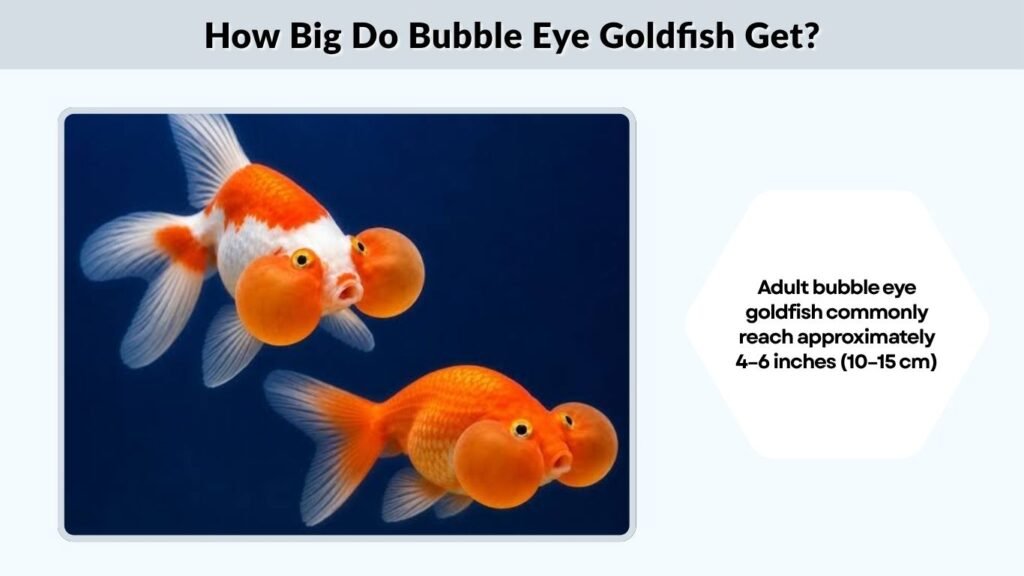
Bubble eye goldfish remain smaller than many common or comet goldfish, but they still require spacious aquariums. Their adult size depends on genetics, nutrition, and environmental conditions. Providing appropriate swimming space is important because their unusual body structure already makes movement more difficult.
Full-Grown Bubble Eye Goldfish Size
Adult bubble eye goldfish commonly reach approximately 4–6 inches (10–15 cm), although individual sizes vary.
Their rounded bodies and delicate eye sacs make narrow tanks unsuitable. A wide aquarium with unobstructed swimming space helps reduce accidental injuries.
Bubble Eye Goldfish Lifespan
Bubble eye goldfish may live approximately 10–15 years with attentive care, although their lifespan varies considerably.
Poor water conditions, injury, and infections may shorten their lives. Consistent maintenance and carefully arranged aquarium environments are particularly important for this sensitive variety.
Bubble Eye Goldfish Colors and Varieties
Bubble eye goldfish occur in several ornamental color variations. Their coloration depends on inherited characteristics and may change as they mature. Although some colors are less common than others, all bubble eye varieties share similar care requirements and physical vulnerabilities.
Popular Bubble Eye Goldfish Colors
- Orange bubble eye goldfish: Displays traditional bright orange coloration.
- Black bubble eye goldfish: Features dark pigmentation that may change with age.
- Red bubble eye goldfish: Shows deeper red or reddish-orange coloring.
- White bubble eye goldfish: Has predominantly pale or white scales.
- Calico bubble eye goldfish: Displays a combination of colors and irregular patterns.
Black Bubble Eye Goldfish
Black bubble eye goldfish are especially recognizable because their dark bodies contrast with their prominent eye sacs.
Some individuals gradually develop bronze, orange, or other coloration as they mature. Black bubble eyes require the same gentle filtration, spacious aquarium, and injury prevention measures as other varieties.
Best Tank Size and Setup for Bubble Eye Goldfish
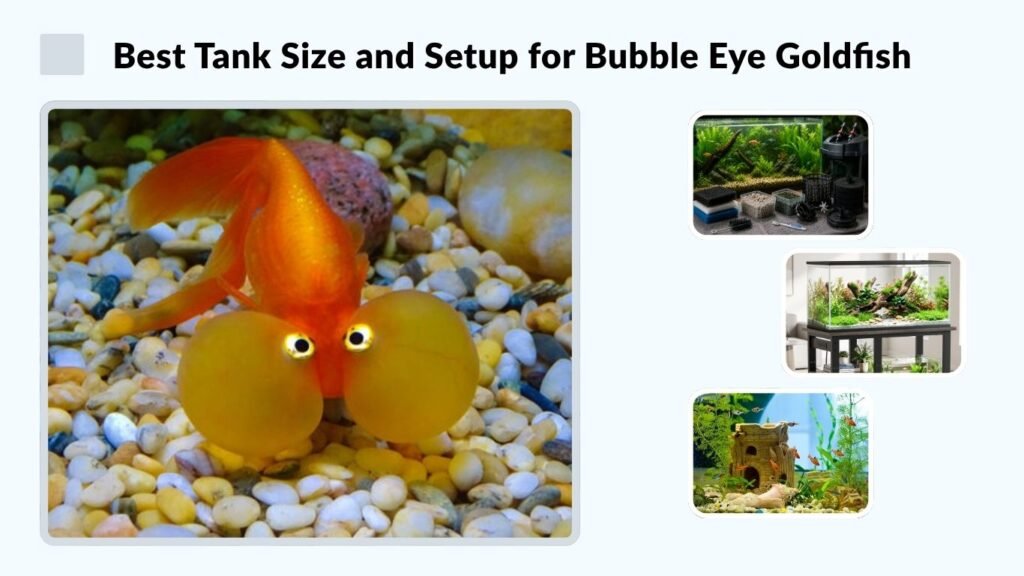
Bubble eye goldfish need spacious, carefully arranged aquariums that minimize injury risks. Their limited vision and delicate eye sacs make sharp decorations, powerful water currents, and exposed filter intakes particularly dangerous. A simple tank design is usually safer than an elaborate aquarium filled with ornaments.
Recommended Bubble Eye Goldfish Tank Size
A 30–40-gallon aquarium is a practical starting recommendation for one adult bubble eye goldfish. Keeping multiple individuals requires additional space and effective filtration.
Choose a wide rectangular aquarium rather than a tall, narrow tank. Small fishbowls and compact decorative tanks are unsuitable for long-term care.
How to Set Up a Bubble Eye Goldfish Tank
Follow these important setup steps:
- Choose a spacious aquarium: Select an appropriately sized rectangular tank.
- Use soft substrate: Fine sand or a bare-bottom setup reduces abrasion risks.
- Install gentle filtration: Protect filter intakes with suitable sponge guards.
- Add safe decorations: Use smooth ornaments without sharp edges or narrow openings.
- Prepare conditioned water: Remove chlorine and chloramine before adding fish.
- Cycle the aquarium: Establish biological filtration before introducing goldfish.
Ideal Water Temperature and Aquarium Conditions
Bubble eye goldfish need clean, well-oxygenated freshwater with stable water chemistry. Sudden environmental changes can increase stress, while poor water quality may contribute to infections and other health problems. Regular water testing is essential for maintaining a safe environment.
Bubble Eye Goldfish Temperature
A temperature of approximately 68–75°F (20–24°C) is suitable for many bubble eye goldfish.
Maintaining consistent temperatures is more important than frequent adjustments. Avoid excessive heat because warmer water contains less dissolved oxygen.
Filtration and Water Quality
Maintain zero detectable ammonia and nitrite, and control nitrate through regular partial water changes.
A stable pH around 7.0–8.0 is generally suitable. Use gentle filtration that provides biological waste processing without creating strong currents.
What Do Bubble Eye Goldfish Eat?
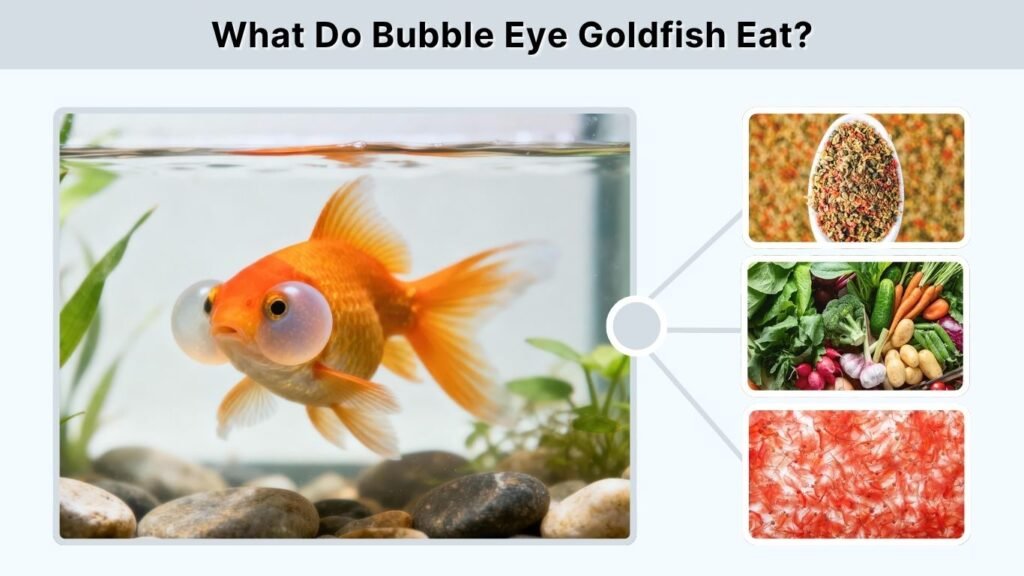
Bubble eye goldfish are omnivores that require balanced nutrition. Their limited vision and slow swimming abilities can make feeding more challenging than with common goldfish. Food should be easy to locate, appropriately sized, and offered in manageable portions.
Best Food for Bubble Eye Goldfish
High-quality sinking goldfish pellets are a practical staple food. Occasional soft vegetables, daphnia, and brine shrimp can provide dietary variety.
Feed small portions once or twice daily, adjusting according to appetite and water quality. Remove uneaten food to prevent waste accumulation.
Best Tank Mates for Bubble Eye Goldfish
Other bubble eye goldfish are generally the safest companions when enough space is available.
Some similarly slow-swimming fancy varieties may be compatible, but careful observation is necessary. Avoid fast common or comet goldfish because they may outcompete bubble eyes for food.
What Happens If a Bubble Eye Goldfish Pops Its Bubble?
The delicate eye sacs can rupture after contact with sharp decorations, rough surfaces, or unprotected aquarium equipment. A damaged sac may collapse, leaving the fish vulnerable to secondary infection and additional complications.
Can a Popped Bubble Eye Sac Heal?
A damaged sac may gradually heal and sometimes refill with fluid. However, full recovery is not guaranteed, and the sac may remain smaller or permanently altered.
If a sac ruptures, check water quality, remove potential injury hazards, and seek prompt advice from an aquatic veterinarian.
Never intentionally puncture, drain, or manipulate the eye sacs.
Are Bubble Eye Goldfish Ethical to Keep?
Bubble eye goldfish raise animal welfare concerns because selective breeding has created physical characteristics that may impair normal movement and vision. Their vulnerable eye sacs also increase injury and infection risks.
Are Bubble Eye Goldfish in Pain?
The presence of eye sacs does not establish whether an individual fish is experiencing pain. However, injuries, infections, and impaired movement can cause serious welfare problems.
Animal welfare organizations, including the RSPCA, discourage breeding ornamental fish with exaggerated features that compromise their health.
Bubble Eye Goldfish Price and Availability
Bubble eye goldfish prices vary according to size, color, condition, breeder, and location.
Before considering a purchase, examine the fish for swimming difficulties, damaged sacs, and signs of illness. Its long-term welfare requirements should take priority over unusual coloration or appearance.
Bubble Eye Goldfish Care and Maintenance
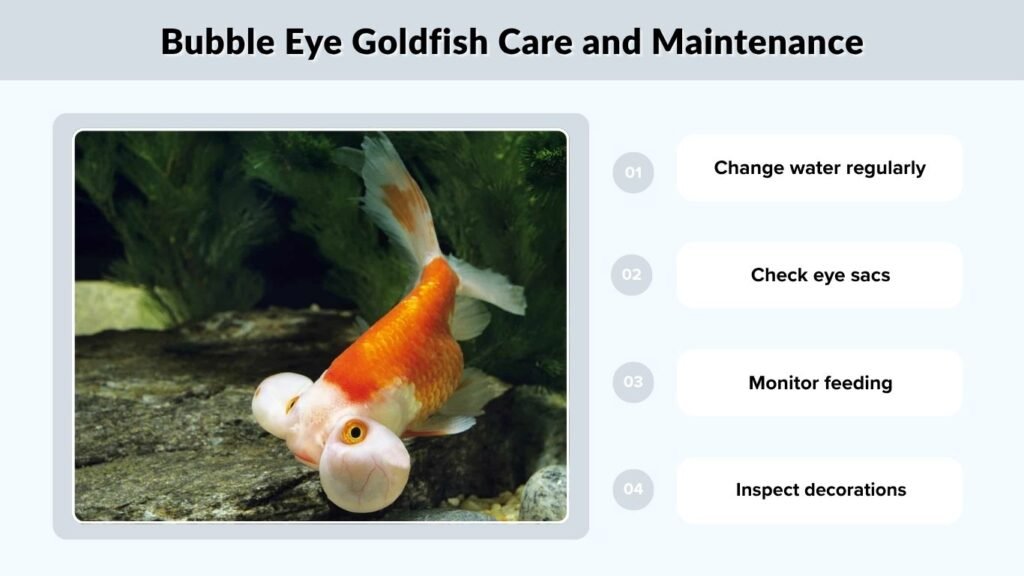
Regular aquarium maintenance is essential for protecting bubble eye goldfish from poor water quality and preventable injuries. Their delicate anatomy makes daily observation particularly important. A consistent care routine helps identify developing problems before they become serious.
Essential Bubble Eye Goldfish Care Tips
- Change water regularly: Perform partial water changes based on water testing.
- Check eye sacs: Look for swelling, wounds, discoloration, or asymmetry.
- Monitor feeding: Ensure each fish can locate and consume food.
- Inspect decorations: Remove sharp objects and hazardous equipment.
- Observe swimming: Watch for unusual balance problems or persistent inactivity.
FAQs
1. How Big Do Bubble Eye Goldfish Get?
Adult bubble eye goldfish commonly reach approximately 4–6 inches (10–15 cm), depending on genetics and care.
2. How Long Do Bubble Eye Goldfish Live?
They may live around 10–15 years under suitable conditions, although individual lifespans vary.
3. Can Bubble Eye Goldfish Regrow Their Bubbles?
Damaged sacs sometimes heal and partially refill with fluid, but complete regrowth is not guaranteed.
4. Do Bubble Eye Goldfish Need Special Tanks?
Yes. They need spacious aquariums with gentle filtration, smooth decorations, protected filter intakes, and minimal injury hazards.
5. Can Bubble Eye Goldfish Live With Other Goldfish?
They are best housed with similarly slow and peaceful fish, particularly other bubble eyes, provided adequate space is available.