

The Balloon Molly Fish is a colorful freshwater aquarium fish recognized for its unusually rounded belly and compact body. Available in black, white, orange, yellow, and Dalmatian patterns, these tropical fish attract aquarium enthusiasts with their distinctive appearance and generally peaceful behavior. However, their selectively bred body shape requires additional attention to swimming ability, feeding, and overall health. Understanding Balloon Molly fish care, tank size, lifespan, diet, breeding, and social behavior will help you create a comfortable environment for these popular aquarium fish.
What Is a Balloon Molly Fish?
Balloon mollies are ornamental varieties of molly fish belonging to the genus Poecilia. Unlike naturally streamlined mollies, they have short, deep bodies with noticeably rounded abdomens. This appearance results from selective breeding for a shortened, curved spine rather than simply having a large belly.
Balloon mollies are not a separate species. They are commercially bred forms of mollies, sometimes involving multiple molly species or breeding lines. They are popular in home aquariums because of their bright colors and social behavior.
Balloon Molly Fish Size and Lifespan
Most adult Balloon Molly fish measure approximately 2–3.5 inches long, although size varies between breeding lines. Females are generally larger and fuller-bodied than males.
Balloon mollies are commonly reported to live around 2–4 years under suitable aquarium conditions. Individual lifespans vary, and reliable scientific comparisons with standard-bodied mollies remain limited.
Types and Colors of Balloon Molly Fish
Several color and fin varieties are available in aquarium stores:
- Black Balloon Molly: Solid black body with a rounded belly.
- Dalmatian Balloon Molly: White or silver body with irregular black spots.
- Orange Balloon Molly: Bright orange coloration.
- Platinum Balloon Molly: Shiny white or silver appearance.
- Yellow Balloon Molly: Golden-yellow coloration.
- Lyretail Balloon Molly: Rounded body with extended upper and lower tail tips.
These varieties have similar basic care requirements, although individual breeding lines may differ in size, swimming ability, and health.
Balloon Molly Fish Care and Tank Requirements

Balloon Molly fish need a stable, well-maintained freshwater aquarium to remain healthy. Their compact body shape makes it particularly important to provide clean water, moderate water movement, and enough room for comfortable swimming. Although they share most environmental requirements with standard mollies, they may be less adaptable to stressful aquarium conditions.
Ideal Tank Size and Water Conditions
A 20-gallon aquarium is a reasonable minimum for a small group of Balloon mollies. However, a 30-gallon tank offers more swimming space and better flexibility when keeping several adults.
Recommended water conditions include:
- Tank size: 20 gallons minimum; 30+ gallons preferred
- Water temperature: 75–82°F (24–28°C)
- pH level: 7.5–8.5
- Water hardness: 12–25 dGH
- Ammonia and nitrite: 0 ppm
- Lighting: Moderate aquarium lighting
- Water flow: Gentle to moderate
Balloon mollies prefer hard, alkaline freshwater. Aquarium salt is not routinely required when the water has appropriate mineral content.
Aquarium Setup and Maintenance
Add live plants, smooth decorations, and sheltered resting areas while preserving open swimming space. Anubias, Java fern, and hornwort can provide cover without overcrowding the aquarium.
Use reliable filtration and perform regular partial water changes, typically around 20–30% weekly. Test water parameters regularly, especially in newly established aquariums.
Balloon Molly Fish Behavior and Temperament
Balloon mollies are generally peaceful, active, and social aquarium fish. They commonly explore plants, graze on surfaces, and swim around the middle and upper aquarium levels. However, their shorter bodies may affect swimming efficiency, making them less competitive than faster fish. Understanding their social behavior helps prevent stress, aggression, and unnecessary competition.
Are Balloon Molly Fish Aggressive?
Balloon mollies are not typically aggressive, although males may chase females during courtship. Occasional territorial disputes can also occur, particularly in overcrowded aquariums.
Persistent chasing, hiding, and fin damage may indicate social stress. Maintaining approximately one male for every two or three females can reduce repeated mating pressure.
Best Tank Mates for Balloon Mollies
Suitable companions include peaceful guppies, platies, and standard mollies with compatible water requirements. Nerite snails and other calm aquarium inhabitants can also work well.
Avoid aggressive fish, frequent fin nippers, and powerful swimmers that prevent Balloon mollies from reaching food. Balloon mollies are social but are not true schooling fish, so they do not swim in tightly synchronized groups.
What Do Balloon Molly Fish Eat?

Balloon mollies are omnivorous fish that require a varied diet containing substantial plant-based nutrition. They naturally graze on algae and consume small aquatic organisms. A balanced feeding routine supports growth, coloration, and digestion. Because their compact body shape may complicate digestive problems, avoid excessive feeding and provide nutritious food in manageable portions.
Best Food for Balloon Molly Fish
Recommended foods include:
- High-quality spirulina flakes
- Vegetable-based tropical fish food
- Algae wafers
- Blanched zucchini and spinach
- Frozen or live brine shrimp
- Daphnia
Feed small portions once or twice daily. Make sure each fish can reach the food, particularly when faster tank mates are present. Remove uneaten food to protect water quality.
Balloon Molly Fish Male vs. Female
Male and female Balloon mollies share the same rounded body shape, making visual identification slightly challenging for beginners. However, mature fish have distinctive anal fins that provide a reliable way to determine their sex. Females often grow larger, while males tend to be smaller and more persistent during courtship.
| Feature | Male Balloon Molly | Female Balloon Molly |
| Body size | Usually smaller | Usually larger |
| Body shape | Compact and rounded | Fuller and rounded |
| Anal fin | Narrow gonopodium | Fan-shaped |
| Behavior | Often pursues females | May avoid persistent males |
| Reproductive role | Fertilizes females | Gives birth to live fry |
The anal fin is the most reliable distinguishing feature. A naturally rounded belly alone does not indicate that a Balloon molly is female or pregnant.
Balloon Molly Fish Breeding and Pregnancy
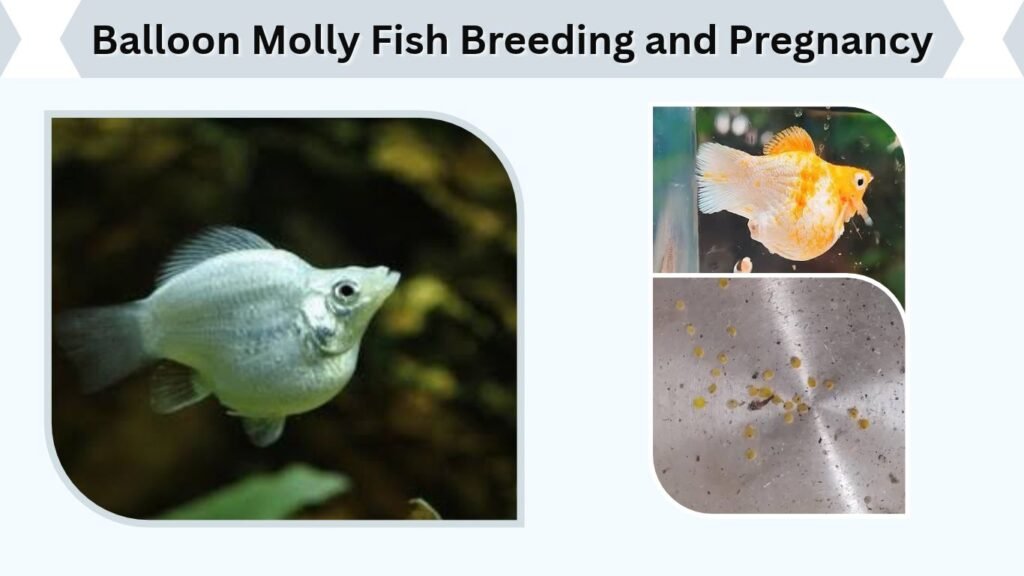
Balloon mollies are livebearing fish that reproduce through internal fertilization. Females give birth to fully developed, free-swimming young rather than laying eggs. Their breeding behavior resembles that of other mollies, although the shortened body structure can raise additional reproductive welfare concerns. Breeding fish with visible spinal or swimming problems is best avoided.
Signs of a Pregnant Balloon Molly
Pregnancy can be difficult to recognize because these fish already have enlarged abdomens. Some females develop additional abdominal fullness, spend more time near sheltered areas, or become less active before giving birth.
The gestation period commonly lasts approximately four to six weeks, although individual pregnancies vary. Females can also retain sperm and produce additional broods without mating again.
Balloon Molly Fish Giving Birth and Fry Care
Females may produce dozens of babies during a single pregnancy. Fry are capable of swimming immediately after birth, but adult fish may eat them.
Dense plants provide protection for newborn fish. If fry are being raised separately, use a properly cycled nursery aquarium with gentle sponge filtration. Offer powdered fry food or appropriately sized baby brine shrimp and maintain excellent water quality.
Common Balloon Molly Fish Health Problems
Balloon mollies require careful observation because their shortened, curved spinal structure is a recognized animal-welfare concern. The body shape may affect swimming and complicate health problems, although the exact frequency of medical complications in commercial Balloon mollies has not been firmly established.
Watch for difficulty maintaining balance, unusual floating, loss of appetite, clamped fins, rapid breathing, or remaining motionless near the aquarium bottom. These symptoms may indicate water-quality problems, infection, or other underlying conditions.
Check temperature, ammonia, nitrite, pH, and hardness immediately when symptoms appear. Avoid automatically treating every swimming abnormality as a swim-bladder disorder. Persistent problems warrant assessment by a veterinarian experienced with aquatic animals.
FAQs
1. How Long Do Balloon Molly Fish Live?
Balloon Molly fish commonly live around 2–4 years in captivity, although individual outcomes vary. Stable aquarium conditions, suitable food, and proper water quality support longevity. Their selectively bred body shape raises welfare concerns, but there is limited controlled research establishing their exact average lifespan.
2. Can Balloon Molly Fish Live With Guppies?
Yes, Balloon mollies can usually live with guppies when their water requirements are compatible. Both prefer warm freshwater and are generally peaceful. However, provide enough swimming space and monitor feeding because faster guppies may compete with slower-moving Balloon mollies.
3. How Many Balloon Molly Fish Should Be Kept Together?
A group of at least three Balloon mollies is commonly recommended, with larger groups possible in spacious aquariums. For mixed-sex groups, keeping two or three females per male can reduce persistent courtship. Always consider filtration capacity and the possibility of breeding.
4. Why Is My Balloon Molly Fish Staying at the Bottom?
Remaining at the bottom may indicate stress, poor water quality, illness, or difficulty swimming. Test ammonia, nitrite, temperature, and other water parameters first. If the fish also displays rapid breathing, reduced appetite, or abnormal balance, seek appropriate aquatic veterinary advice.
5. Do Balloon Molly Fish Lay Eggs?
No, Balloon mollies are livebearing fish. Females carry developing embryos internally and give birth to free-swimming babies. Pregnancy usually lasts several weeks, and females can produce multiple broods. Protect newborn fry with dense vegetation or a suitable separate rearing aquarium.