
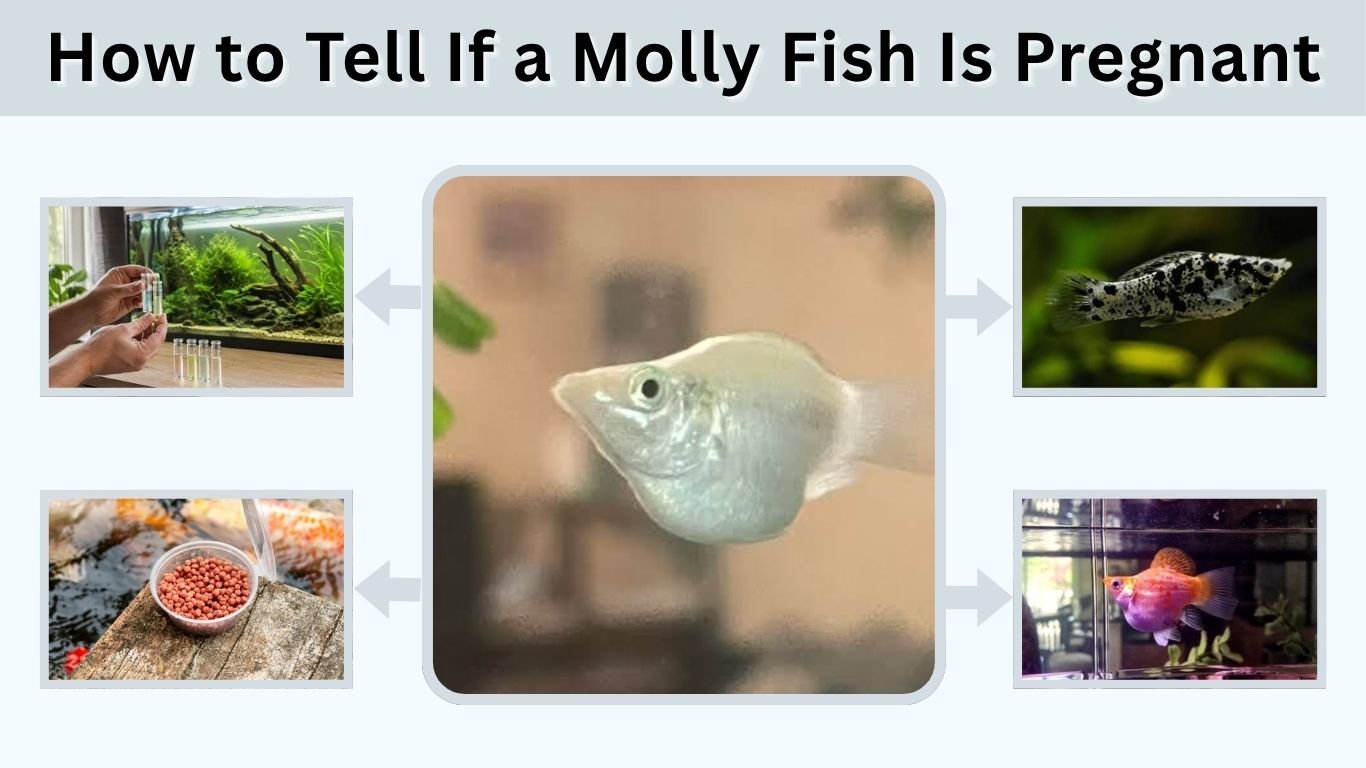
Molly fish are popular freshwater aquarium fish known for their peaceful behavior, colorful appearance, and ability to reproduce easily. However, identifying a pregnant molly can be confusing, especially for beginners. A swollen belly, darker gravid spot, and changes in swimming behavior may indicate that a female is carrying babies. These signs can also resemble certain health problems, making careful observation important. This guide explains how to tell if a molly fish is pregnant, identify male and female mollies, recognize signs of approaching birth, and care for pregnant fish.
7 Signs That Your Molly Fish Is Pregnant
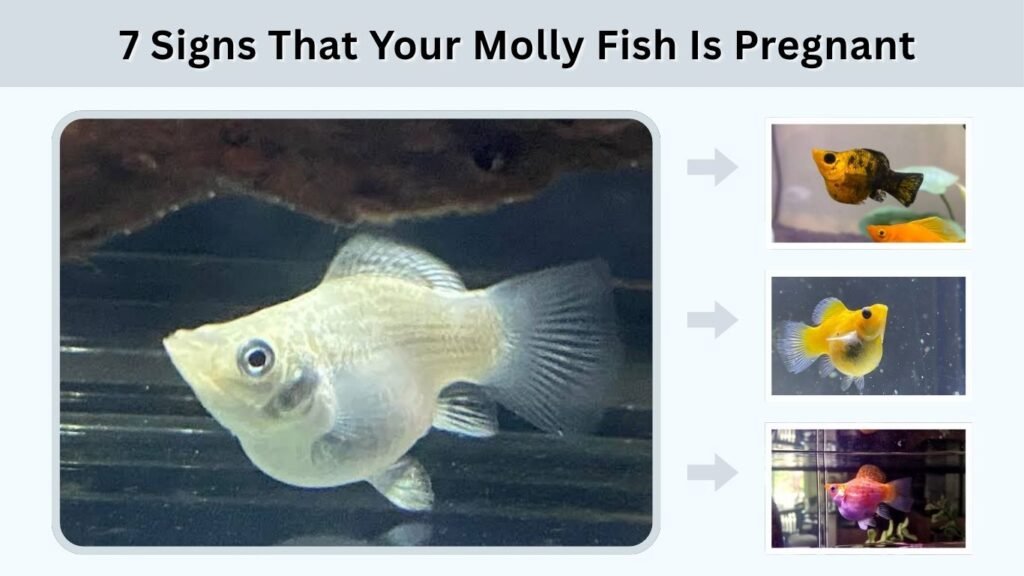
A pregnant molly fish usually develops noticeable physical changes as her babies grow. However, no single external sign can confirm pregnancy in every fish. The most useful approach is to observe several changes together, particularly gradual abdominal growth, the appearance of a gravid spot, and normal feeding and swimming behavior.
Common Signs of Pregnancy in Molly Fish
- Swollen Belly: A pregnant female gradually develops a larger, rounder abdomen over several weeks. This is often the easiest change to notice.
- Dark Gravid Spot: Some females develop a dark patch near the rear of the abdomen, just above and in front of the anal fin.
- Square-Shaped Abdomen: As birth approaches, the lower belly may appear broader or more box-shaped instead of evenly rounded.
- Increased Hiding: Some pregnant mollies spend more time among plants, decorations, or other sheltered areas.
- Changes in Swimming Behavior: A female may become less active or spend more time swimming slowly near a preferred hiding place.
- Changes in Appetite: Some pregnant females continue eating normally, while others show temporary changes in feeding behavior.
- Avoiding Other Fish: A heavily pregnant molly may move away from persistent males or other active tankmates.
These observations become more meaningful when several occur together.
What Is a Gravid Spot on a Molly Fish?
A gravid spot is a darkened area near the lower rear portion of a female molly’s abdomen.
It can become more noticeable as pregnancy progresses, particularly in lighter-colored fish.
However, the spot may be difficult or impossible to distinguish on black mollies. Its visibility also varies between individual fish, so the absence of an obvious gravid spot does not rule out pregnancy.
How to Tell Male and Female Molly Fish Apart
Before determining whether a molly is pregnant, you need to identify its sex. Male and female mollies have different reproductive anatomy, which is generally more reliable than judging body size or color. Females are often larger and rounder, while males possess a specialized reproductive fin used during mating.
| Feature | Male Molly Fish | Female Molly Fish |
| Anal Fin | Narrow, pointed gonopodium | Broad, fan-shaped fin |
| Body Size | Often smaller | Often larger |
| Body Shape | Usually slimmer | Typically fuller |
| Reproductive Role | Transfers sperm | Carries and gives birth to fry |
| Pregnancy | Cannot become pregnant | Can become pregnant |
Check the Anal Fin
The easiest way to distinguish male and female mollies is to examine the anal fin underneath the body.
A male has a narrow, modified anal fin called a gonopodium. It points backward and helps transfer sperm during mating.
A female has a broader, triangular or fan-shaped anal fin.
This method is more dependable than relying on color or body size, although very young fish can be difficult to identify.
How to Tell If Molly Fish Are Mating
Male mollies often follow females around the aquarium and attempt to position their gonopodium near the female’s reproductive opening.
This behavior may indicate courtship or mating attempts.
However, seeing a male chase a female does not prove fertilization occurred. Excessive chasing can also stress females, so providing adequate space and a suitable male-to-female ratio is important.
How to Identify Pregnancy in Different Molly Varieties

Black, Dalmatian, balloon, white, and orange mollies reproduce through the same basic livebearing process. Nevertheless, different colors and body shapes can make pregnancy more difficult to recognize. Dark pigmentation may conceal a gravid spot, while naturally rounded bodies can make abdominal enlargement less obvious.
| Molly Variety | Most Useful Pregnancy Indicators |
| Black Molly | Gradually enlarged abdomen and changes in body shape |
| Dalmatian Molly | Growing belly and possibly visible gravid spot |
| Balloon Molly | Changes from its usual rounded body shape |
| White Molly | Enlarged abdomen and potentially visible dark patch |
| Orange Molly | Increasing abdominal size and a visible gravid spot when present |
How to Tell If a Black Molly Is Pregnant
Black mollies can be difficult to assess because their dark coloration conceals the gravid spot.
Instead, observe the fish’s abdomen over several weeks.
A female that gradually becomes fuller while continuing to eat and swim normally may be pregnant, especially if she has previously lived with males.
How to Tell If a Balloon Molly Is Pregnant
Balloon mollies have a naturally shortened, rounded body, making pregnancy harder to recognize.
Compare the female’s current appearance with her normal body shape rather than relying on belly size alone.
A progressively enlarged abdomen may suggest pregnancy, but sudden or unusual swelling should not automatically be considered normal.
How Long Are Molly Fish Pregnant?
Common molly fish often carry developing young for approximately four weeks, although the duration varies among species, individuals, and aquarium conditions. Some pregnancies may take considerably longer. Mollies are livebearers, meaning fertilization and development take place inside the female before she gives birth to free-swimming babies called fry.
Understanding Molly Fish Pregnancy Stages
During the early part of pregnancy, the female may show few obvious changes.
As the developing fry grows, her abdomen typically becomes larger. A gravid spot may also become easier to notice.
Near the expected delivery period, some females develop a noticeably heavier, more squared-looking abdomen.
Because the exact mating date is often unknown, body shape alone cannot accurately predict the delivery date.
Can a Molly Fish Become Pregnant Without a Male?
Yes. Female mollies can store sperm from previous matings.
This means a female may produce additional broods even after being separated from males.
A newly purchased female can therefore give birth in an aquarium containing no male mollies.
Separating males and females does not necessarily prevent immediate future pregnancies.
How to Tell When a Molly Fish Is About to Give Birth
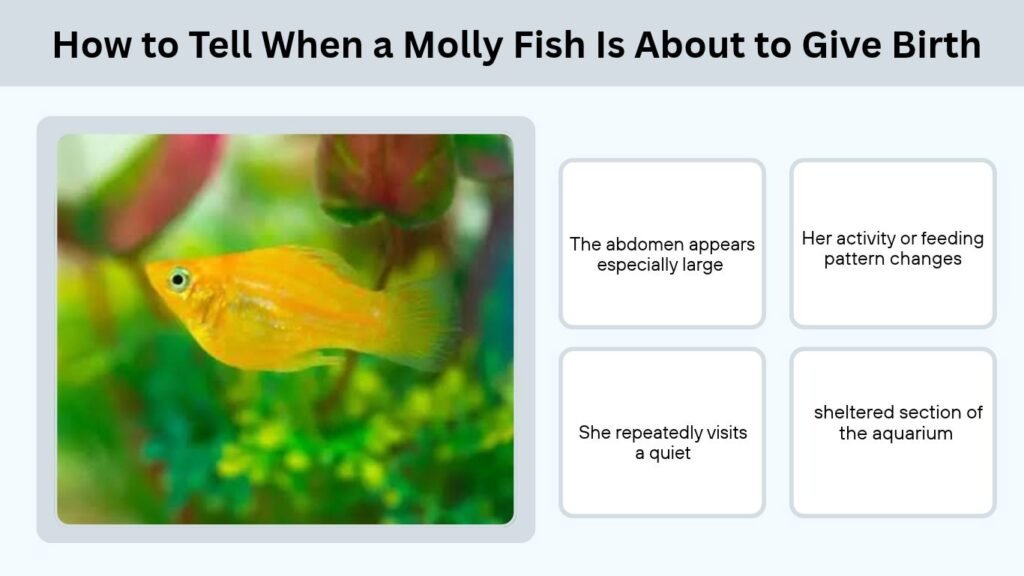
A heavily pregnant molly may show additional behavioral changes as delivery approaches. However, these signs are not reliable countdowns, and different fish behave differently. Some females continue swimming and feeding normally until shortly before giving birth. Others may seek quiet areas or become less active.
Signs a Molly Fish May Give Birth Soon
Look for the following changes:
- The abdomen appears especially large or squared toward the rear.
- The female spends more time hiding among plants.
- She avoids persistent attention from other fish.
- Her activity or feeding pattern changes.
- She repeatedly visits a quiet, sheltered section of the aquarium.
These behaviors may occur before birth but can also indicate stress or illness.
How Long Does Molly Fish Birth Take?
Molly fish typically release their young over a period that may last several hours.
The number of fry and the female’s condition can influence the delivery process.
Newborn fry are capable of swimming immediately, although they remain vulnerable to larger fish.
Avoid repeatedly moving or disturbing the female during delivery. If she shows prolonged distress, abnormal breathing, or difficulty swimming, seek advice from an aquatic veterinarian.
Pregnant Molly Fish vs. Bloated or Sick Molly Fish
A swollen abdomen does not always mean a molly fish is pregnant. Overfeeding, digestive problems, fluid accumulation, and other illnesses may create a similar appearance. Pregnancy usually involves gradual abdominal enlargement in an otherwise healthy female. Illness may produce additional symptoms, including unusual swimming, appetite loss, or visibly raised scales.
Signs That Your Molly Fish May Be Sick
Watch for these warning signs:
- Raised Scales: Scales protruding outward can indicate fluid accumulation associated with dropsy.
- Sudden Swelling: Rapid abdominal enlargement without other pregnancy indicators may suggest a health problem.
- Loss of Appetite: A fish that consistently refuses food may be ill.
- Abnormal Swimming: Difficulty maintaining balance or persistent inactivity can indicate distress.
- Rapid Breathing: Unusually fast gill movement may indicate poor water quality or disease.
If these symptoms appear, test the aquarium water and seek guidance from an aquatic veterinarian.
Do not automatically treat abdominal swelling as pregnancy or administer medication without identifying the underlying problem.
How to Care for a Pregnant Molly Fish
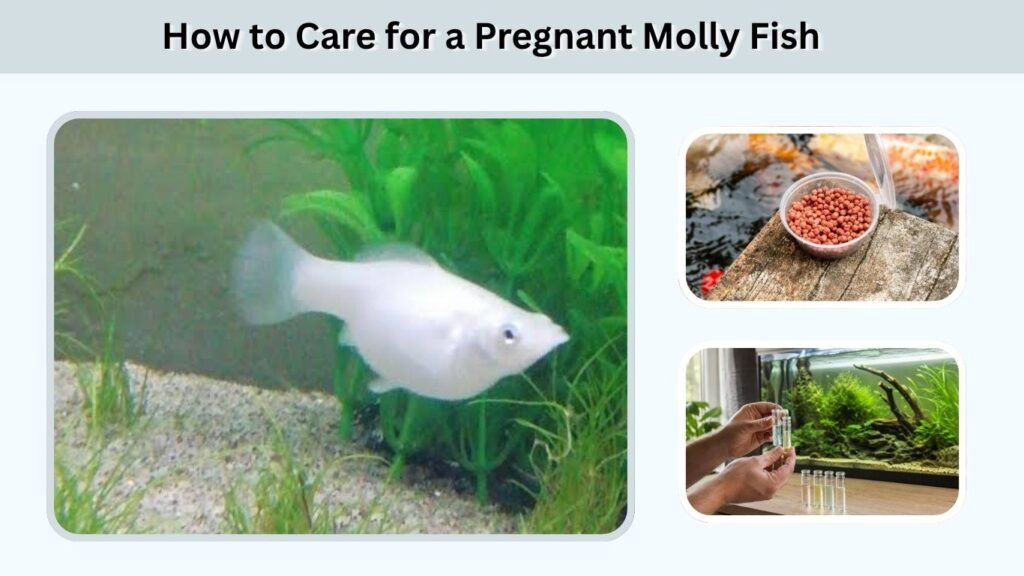
Pregnant mollies benefit from stable water conditions, suitable nutrition, and minimal unnecessary stress. Frequent handling, overcrowding, and sudden environmental changes can negatively affect their health. Preparing an appropriate breeding environment also helps protect newborn fry once delivery occurs.
Essential Pregnant Molly Fish Care Tips
- Maintain Water Quality: Keep ammonia and nitrite at zero and monitor other water parameters regularly.
- Provide Stable Temperatures: Avoid sudden changes in aquarium temperature.
- Offer Balanced Nutrition: Feed high-quality foods containing suitable plant-based and protein ingredients.
- Reduce Aggression: Prevent other fish from continuously chasing or harassing the female.
- Add Hiding Places: Use live plants, floating vegetation, or suitable decorations.
- Prepare for Fry: Have a safe, established nursery aquarium or protected area available if you plan to raise the babies.
Should You Separate a Pregnant Molly Fish?
Separating the female is not always necessary.
A peaceful, planted aquarium can provide adequate shelter. However, adult fish, including mollies, may eat newborn fry.
A separate, properly maintained breeding aquarium can improve fry survival. Avoid transferring the mother repeatedly or confining her for extended periods in a cramped breeding box, as this may increase stress.
FAQs
How Can You Tell If a Molly Fish Is Pregnant or Just Fat?
A pregnant female usually develops gradual abdominal enlargement over several weeks, sometimes accompanied by a gravid spot. A fish that has simply eaten too much may appear temporarily fuller. However, sudden swelling, raised scales, or abnormal behavior can indicate illness rather than pregnancy.
How Can You Tell If a Black Molly Fish Is Pregnant?
A black molly’s dark pigmentation can make the gravid spot difficult to see. Look for a steadily enlarging abdomen and changes in body shape over time. A female previously kept with males may be pregnant even without a visible spot.
How Do You Tell If a Molly Fish Is Male or Female?
Examine the anal fin beneath the fish. Males have a narrow, pointed reproductive fin called a gonopodium, while females have a broader, fan-shaped anal fin. Females are also often larger, but the anal fin provides a more reliable identification method.
How Do You Know When a Molly Fish Will Give Birth?
A female approaching birth may develop a heavier, more squared-looking abdomen and spend additional time hiding. However, these changes cannot reliably establish the exact delivery date. Monitoring her condition and maintaining stable aquarium water are more useful than attempting to predict a specific hour.
Can a Molly Fish Be Pregnant Without a Gravid Spot?
Yes. Some pregnant mollies have no clearly visible gravid spot, especially black or heavily pigmented varieties. Pregnancy may still be suspected when a female gradually develops a larger abdomen after exposure to males. The absence of a visible spot does not establish that she is not pregnant.