
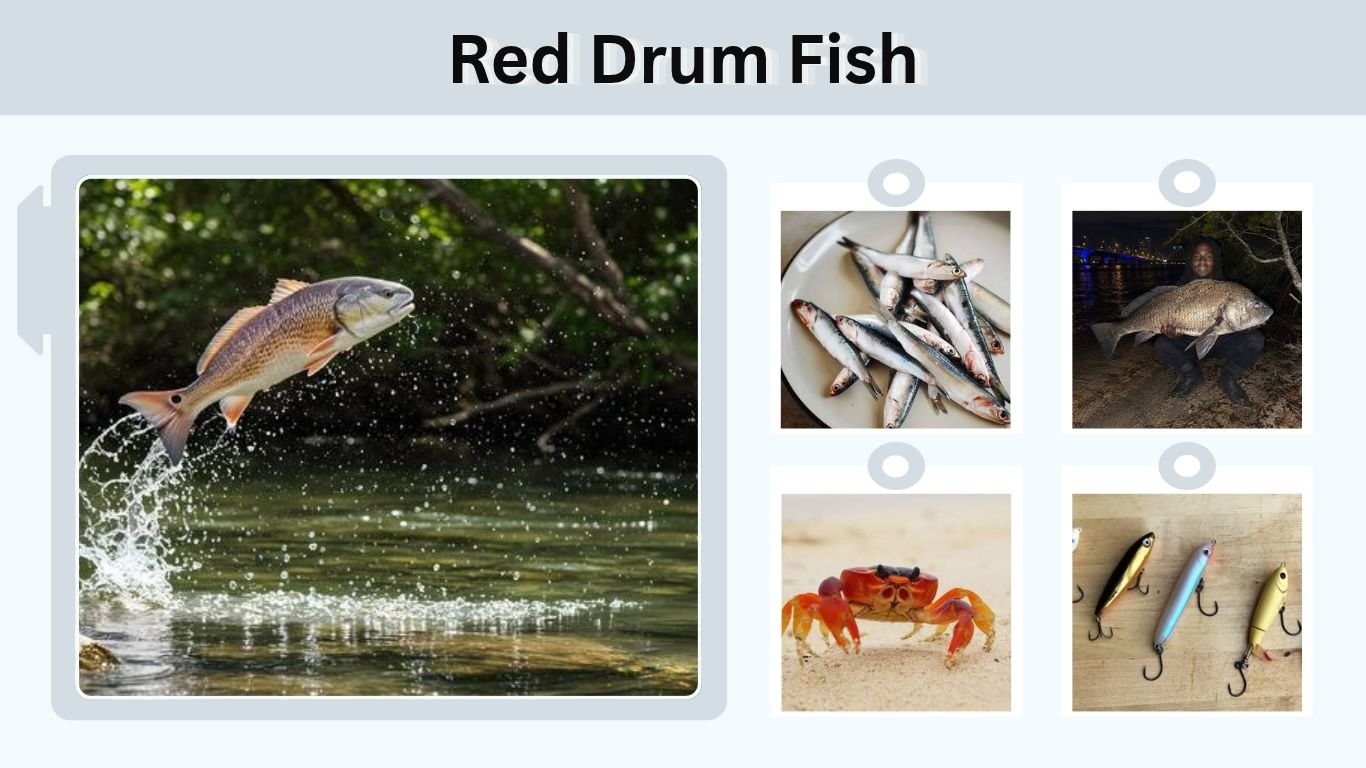
Red drum fish (Sciaenops ocellatus), commonly called redfish, are popular saltwater fish found along the Atlantic and Gulf coasts of the United States. Known for their copper-red bodies, distinctive black tail spots, and powerful fighting ability, red drum are favorites among recreational anglers. These fish inhabit coastal bays, estuaries, grass flats, and shallow waters, where they feed on shrimp, crabs, and smaller fish. Red drum can grow remarkably large and live for several decades. Understanding their identification, size, habitat, diet, lifespan, and fishing techniques can help anglers and wildlife enthusiasts learn more about this fascinating coastal species.
What Is a Red Drum Fish?
The red drum is a saltwater fish belonging to the family Sciaenidae, commonly known as the drum or croaker family. Its scientific name is Sciaenops ocellatus.
Red drum get their name from the low drumming sounds they produce by vibrating specialized muscles against their swim bladder. These sounds are particularly important during spawning.
The species is also called redfish, channel bass, spottail bass, and puppy drum, depending on its size and location.
| Characteristic | Red Drum Fish Facts |
| Scientific name | Sciaenops ocellatus |
| Family | Sciaenidae |
| Common names | Redfish, channel bass, puppy drum |
| Habitat | Coastal saltwater and brackish water |
| Diet | Shrimp, crabs, and small fish |
| Maximum length | Approximately 60 inches |
| Lifespan | Can exceed 40 years |
| Distribution | Atlantic and Gulf coasts of North America |
Red Drum Fish Identification
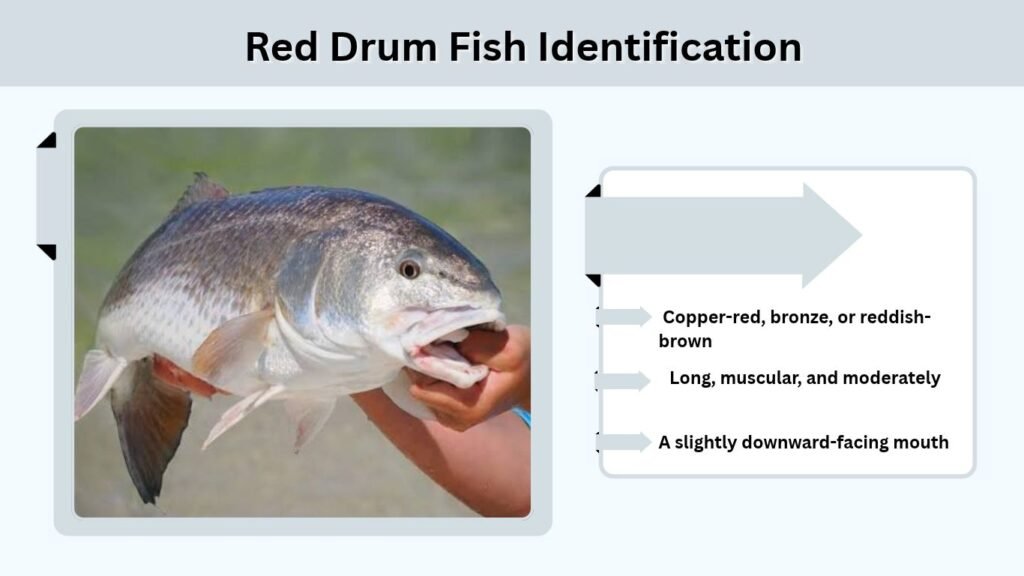
Red drum fish have several distinctive physical characteristics that make them relatively easy to identify. Their copper-colored bodies and dark spots near the tail are particularly recognizable.
Physical Characteristics
- Body color: Copper-red, bronze, or reddish-brown, with a lighter silver-white belly.
- Tail spots: Usually one prominent black spot near the base of the tail, although some individuals have multiple spots.
- Body shape: Long, muscular, and moderately compressed.
- Scales: Large, noticeable scales covering the body.
- Mouth: A slightly downward-facing mouth adapted for feeding near the bottom.
- Fins: A long dorsal fin and a relatively broad tail fin.
- Chin: No barbels beneath the lower jaw, unlike black drum.
The tail spot may help confuse predators by drawing attacks away from the fish’s head.
Juvenile vs. Adult Red Drum
Young red drums are generally smaller and often display bright copper or bronze coloration. They remain in shallow coastal nurseries, where vegetation and underwater structures provide protection.
Adult red drum develop stronger bodies and may become darker or more silvery depending on their environment.
Large mature individuals, commonly called bull red drum, often move into deeper coastal waters.
How Big Do Red Drum Fish Get?
Red drum fish can reach impressive sizes, although their growth depends on age, habitat, food availability, and environmental conditions.
Young fish grow relatively quickly during their first several years. A one-year-old red drum may measure approximately 11 inches and weigh around one pound.
Many red drum encountered by recreational anglers measure between 18 and 30 inches, but older individuals can become considerably larger.
Large bull red drum may exceed 40 inches and weigh more than 30 pounds.
Exceptional specimens can approach 60 inches and exceed 90 pounds.
Because larger red drum are important breeding fish, many fishing regulations restrict their harvest.
Where Do Red Drum Fish Live?
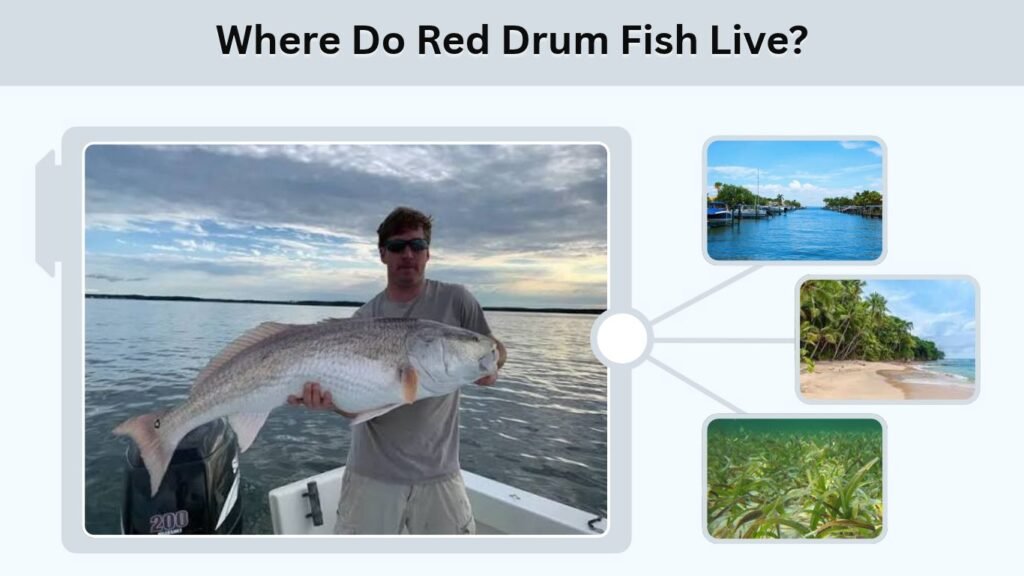
Red drum inhabit coastal waters along the western Atlantic Ocean and Gulf of Mexico. Their distribution extends from parts of the northeastern United States southward around Florida and along the Gulf Coast into Mexico.
Preferred Habitat
Red drum commonly inhabit:
- Shallow coastal bays
- Brackish estuaries
- Seagrass beds
- Oyster reefs
- Muddy and sandy flats
- Tidal creeks
- Coastal inlets
- Beaches and surf zones
Juveniles prefer protected shallow environments where food is abundant and predators are less common.
Adults frequently move into deeper coastal waters, particularly around inlets and offshore spawning areas.
Where Are Red Drum Found in the United States?
Red drum fishing is particularly popular in Florida, Texas, Louisiana, South Carolina, and North Carolina.
North Carolina’s Outer Banks are famous for large bull red drum, especially during seasonal migrations.
Florida offers extensive inshore fishing opportunities around grass flats, mangroves, and oyster bars.
Texas and Louisiana are also important red drum fishing destinations because of their extensive coastal bays and estuaries.
What Do Red Drum Fish Eat?
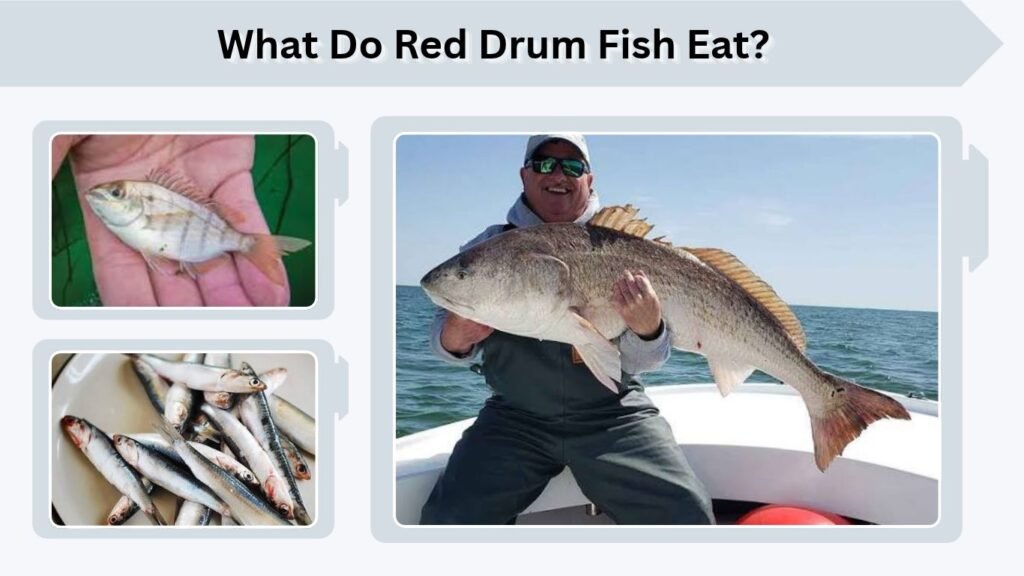
Red drum are carnivorous fish that primarily feed on crustaceans and smaller fish. Their diet changes as they grow and encounter different prey.
Common red drum foods include:
- Shrimp
- Blue crabs and other small crabs
- Mullet
- Menhaden
- Anchovies
- Pinfish
- Small marine worms
- Other small fish
Young red drum initially consume tiny crustaceans and other small aquatic organisms.
Larger individuals hunt bigger prey, including crabs and baitfish.
Red drum frequently search for food along sandy bottoms, oyster beds, and shallow grass flats. Their feeding behavior sometimes produces a distinctive activity called tailing, where their tails become visible above the water’s surface.
Red Drum Fish Lifespan and Reproduction
Red drum are relatively long-lived fish. Some individuals survive for more than 40 years under favorable conditions.
Their lifespan depends on environmental quality, predation, fishing pressure, and food availability.
Red Drum Breeding and Life Cycle
Red drum generally reach sexual maturity after several years.
Spawning commonly occurs during late summer and fall, although the exact season varies by region.
Adult fish gather near coastal inlets and passes to reproduce.
During spawning, males produce drumming sounds that help attract females.
Females release large quantities of eggs into the water, where fertilization occurs externally.
After hatching, young larvae are transported by currents toward protected estuaries.
These shallow nursery habitats provide food and shelter until juvenile red drum become large enough to move into more exposed coastal waters.
How to Catch Red Drum Fish
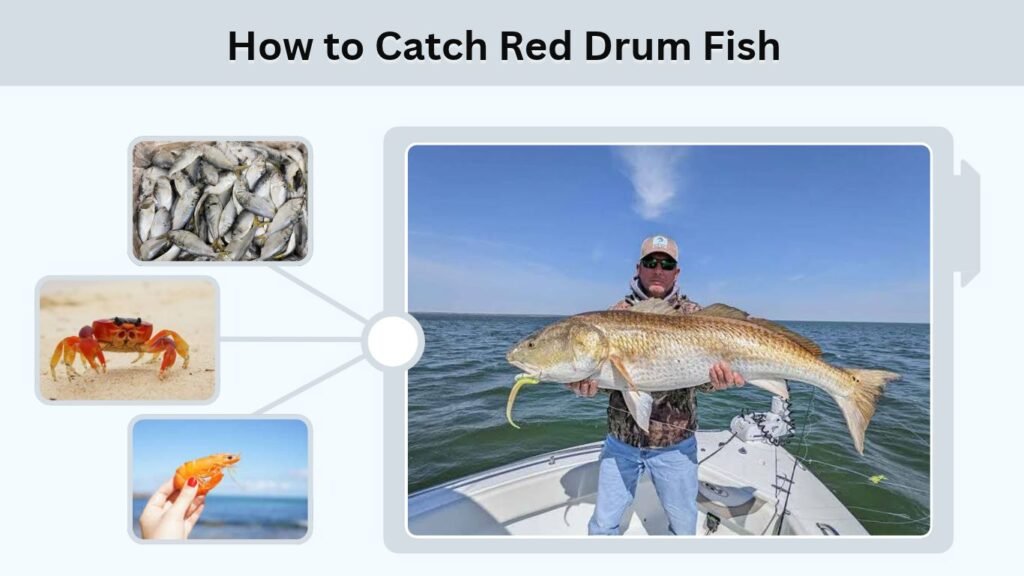
Red drum fishing is popular because these fish are powerful fighters and can be targeted using several fishing methods.
Successful anglers focus on tidal movements, feeding activity, suitable bait, and locations where red drum regularly hunt.
Best Bait for Red Drum Fishing
Natural bait is highly effective for catching red drum.
Popular choices include live shrimp, cut mullet, menhaden, crabs, and other locally available baitfish.
Live shrimp can be presented beneath a popping cork, while cut bait often works well when fishing near the bottom.
Fresh bait is particularly useful when targeting larger red drum in deeper channels or surf zones.
Best Fishing Lures for Red Drum
Artificial lures can be effective when red drum actively chase prey.
Soft plastic paddle tails, shrimp imitation lures, gold spoons, and topwater plugs are commonly used.
Soft plastics work well around grass flats and sandy channels.
Topwater lures can attract aggressive strikes in shallow water, especially during low-light conditions.
Surf Fishing for Red Drum
Surf fishing is a popular technique along beaches in North Carolina and other Atlantic coastal areas.
Anglers often use bottom-fishing rigs with fresh bait to target fish moving through troughs and channels.
A fish finder rig allows the bait to remain near the bottom while providing a natural presentation.
Look for deeper troughs, sandbar openings, and areas where waves create moving water.
Best Red Drum Fishing Gear
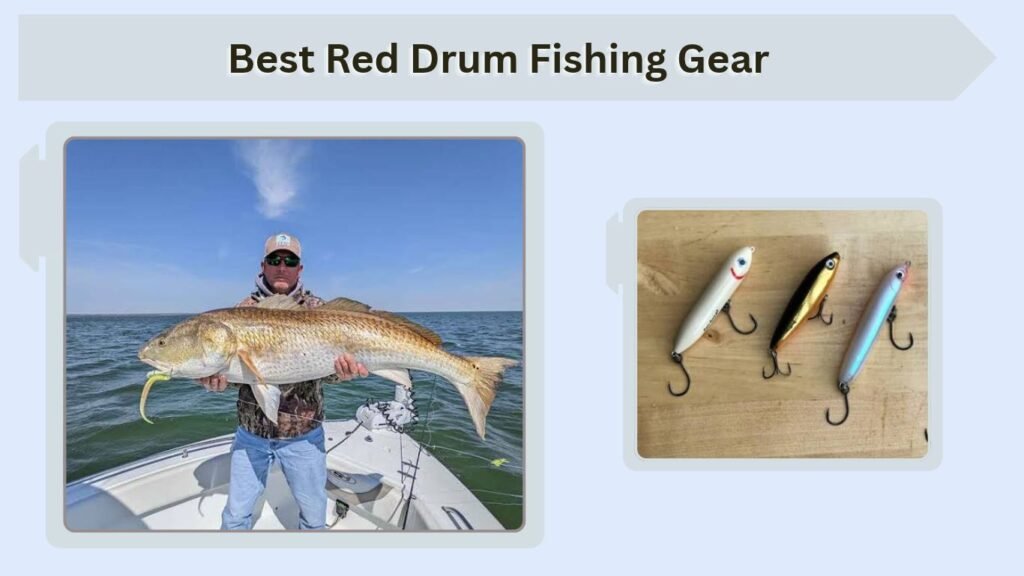
Choosing suitable fishing equipment improves casting accuracy, bait presentation, and control when fighting powerful fish.
For general inshore fishing, a medium or medium-heavy spinning rod paired with a saltwater-resistant reel is commonly used.
Braided fishing line provides strength and sensitivity, while an appropriate leader helps resist abrasion.
Circle hooks are popular for natural bait fishing because they can reduce deep hooking when used correctly.
For surf fishing, anglers typically choose longer rods capable of casting heavier sinkers and bait beyond breaking waves.
Gear selection should match the expected fish size, fishing location, water conditions, and local regulations.
Best Time to Fish for Red Drum
Red drum can be caught throughout much of the year, but fishing success changes with seasonal temperatures and local conditions.
Spring and fall are often productive because red drum become active in coastal feeding areas.
Early morning and late afternoon can provide excellent opportunities, especially when fish move into shallow water.
Moving tides are particularly important because currents transport food through channels and around oyster bars.
During summer, fishing near deeper channels or shaded coastal structures may be productive.
In colder months, red drum may gather in deeper holes, tidal creeks, and warmer protected waters.
Are Red Drum Fish Good to Eat?
Yes, red drum are considered excellent food fish when harvested legally and handled properly.
Their flesh is generally white, firm, and mildly sweet, with a relatively delicate flavor.
Smaller legal-sized red drums are often preferred for cooking because their texture tends to be tender and versatile.
Red drum can be grilled, baked, pan-fried, or blackened.
The fish absorbs seasonings well without losing its natural flavor.
However, anglers should follow local harvest regulations and check regional fish-consumption advisories before keeping fish for food.
How to Cook Red Drum Fish
Red drum can be prepared using several cooking methods.
Blackened Red Drum
Blackened red drum is a popular preparation, particularly in Gulf Coast cuisine.
Coat the fillets with oil or melted butter and season with paprika, garlic powder, black pepper, cayenne, and other preferred spices.
Cook in a hot skillet until the outside develops a dark, flavorful crust and the fish is cooked through.
Grilled Red Drum
Grilling works well for red drum fillets, especially when the skin remains attached.
Season the fish with olive oil, lemon juice, salt, and herbs.
Place it on a clean, lightly oiled grill and cook carefully to prevent sticking.
For food safety, fish should reach an internal temperature of 145°F (63°C).
Red Drum vs. Black Drum
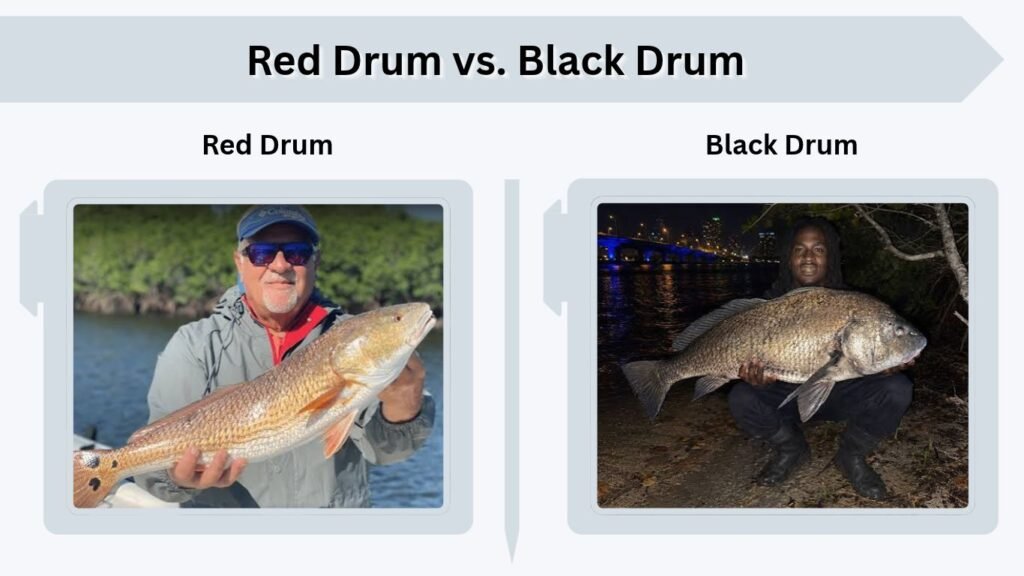
Red drum and black drum belong to the same fish family, but they differ in appearance and certain feeding characteristics.
| Feature | Red Drum | Black Drum |
| Body color | Copper-red or bronze | Gray, silver, or dark |
| Tail spot | Usually present | Generally absent |
| Chin barbels | Absent | Present |
| Main diet | Crabs, shrimp, and fish | Shellfish, crabs, and other bottom-dwelling animals |
| Habitat | Bays, flats, estuaries, coastal waters | Bays, oyster beds, channels, coastal waters |
Although the two species may occupy similar habitats, the presence of chin barbels is one of the easiest ways to distinguish black drum from red drum.
Red Drum Fishing Regulations and Conservation
Red drum populations depend heavily on healthy coastal ecosystems.
Seagrass beds, estuaries, oyster reefs, and tidal wetlands provide essential nursery and feeding habitats.
Habitat destruction, declining water quality, and excessive fishing pressure can negatively affect their populations.
Fishing regulations often include minimum and maximum size limits, daily bag limits, and special protections for large breeding fish.
These rules vary among states and may change over time.
Anglers should consult current local fishing regulations before keeping red drum. When releasing fish, minimize handling time, support the body properly, and return the fish to the water promptly.
FAQs
1. Are Red Drum and Redfish the Same Fish?
Yes. Red drum and redfish are commonly used names for the same species, Sciaenops ocellatus. Other regional names include channel bass, spottail bass, and puppy drum. However, the name redfish can sometimes refer to unrelated fish species in other parts of the world.
2. Is Red Drum a Saltwater or Freshwater Fish?
Red drum are primarily saltwater fish, although they frequently inhabit brackish coastal environments where freshwater mixes with seawater. They can tolerate changes in salinity and sometimes enter freshwater-influenced rivers. Their natural habitat is mainly coastal rather than inland freshwater lakes.
3. What Is a Bull Red Drum?
A bull red drum is a large, mature redfish, generally referring to an individual measuring approximately 30 inches or longer. These powerful fish are popular among recreational anglers because of their size and fighting ability. Many large specimens must be released under local fishing regulations.
4. What Is the Best Bait for Red Drum Surf Fishing?
Fresh cut mullet, menhaden, crabs, and other locally available natural baits are popular for surf fishing. Larger red drum frequently feed near the bottom, so anglers often use fish finder rigs or other suitable bottom-fishing setups. Bait effectiveness depends on local prey availability and conditions.
5. Can You Eat Red Drum Fish?
Yes, red drum are edible and valued for their mild flavor and firm white flesh. They can be grilled, baked, fried, or blackened. Only legally harvested fish should be kept, and anglers should follow applicable size restrictions, possession limits, and local seafood consumption advisories.