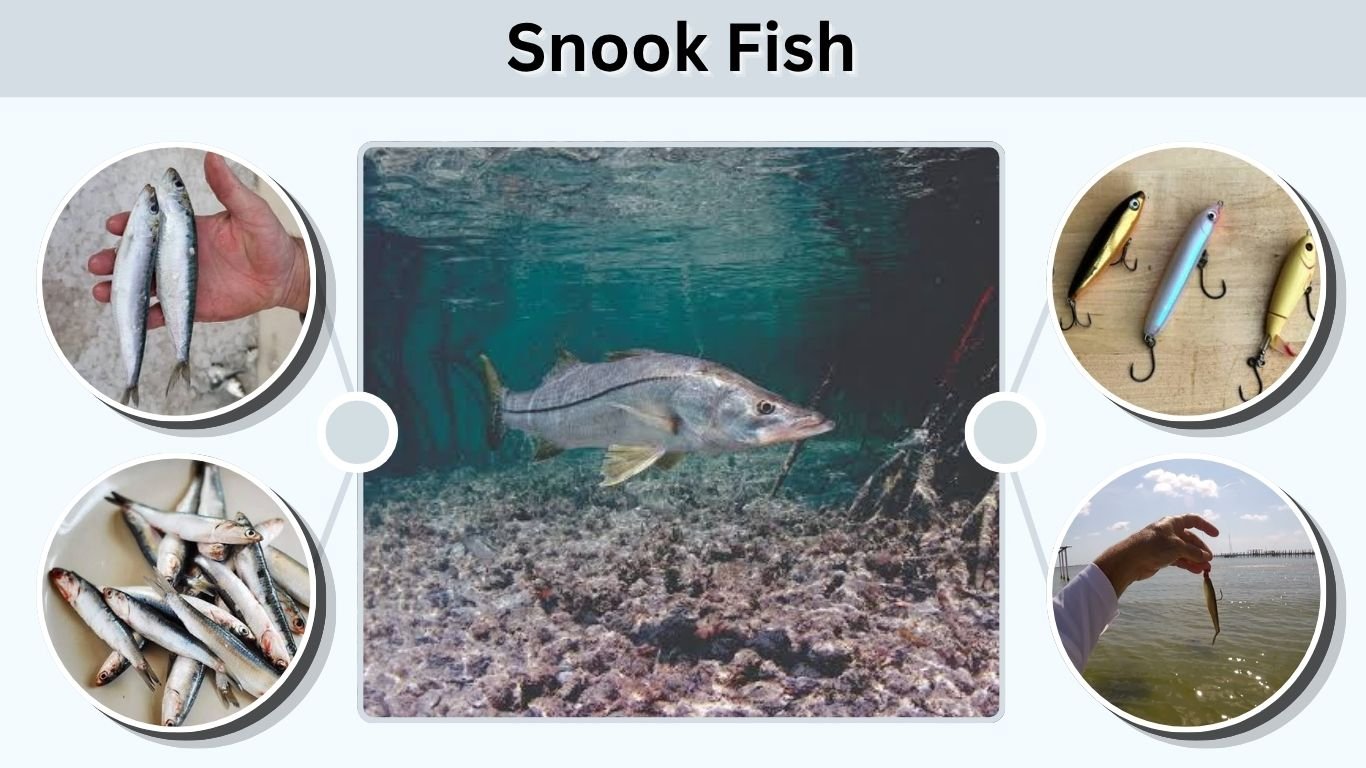
Snook fish are popular coastal game fish known for their powerful strikes, impressive jumping ability, and distinctive black lateral line. Found mainly in warm coastal waters, snook inhabit mangrove shorelines, estuaries, rivers, beaches, and tidal channels. The common snook (Centropomus undecimalis) is especially famous among Florida anglers because of its fighting strength and excellent eating quality. These predatory fish feed on smaller fish, shrimp, and other crustaceans. They can grow surprisingly large and display unusual reproductive behavior. This guide covers snook fish identification, size, habitat, diet, lifespan, fishing techniques, and other important facts about this fascinating species.
What Is a Snook Fish?
Snook are predatory fish belonging to the family Centropomidae. Several snook species occur in tropical and subtropical waters, but the common snook is the largest and best-known species in Florida.
Common snook are also called linesiders and robalo. They are prized for their speed, strength, and ability to escape into underwater structures.
Unlike fish that primarily inhabit open oceans, snook frequently move between saltwater, brackish water, and freshwater environments.
| Characteristic | Snook Fish Facts |
| Scientific name | Centropomus undecimalis (common snook) |
| Family | Centropomidae |
| Common names | Common snook, linesider, robalo |
| Habitat | Coastal waters, rivers, and estuaries |
| Diet | Fish, shrimp, and crustaceans |
| Maximum length | Approximately 48 inches |
| Maximum weight | Around 50 pounds |
| Lifespan | Approximately 15–20 years or longer |
| Popular fishing location | Florida |
Snook Fish Identification
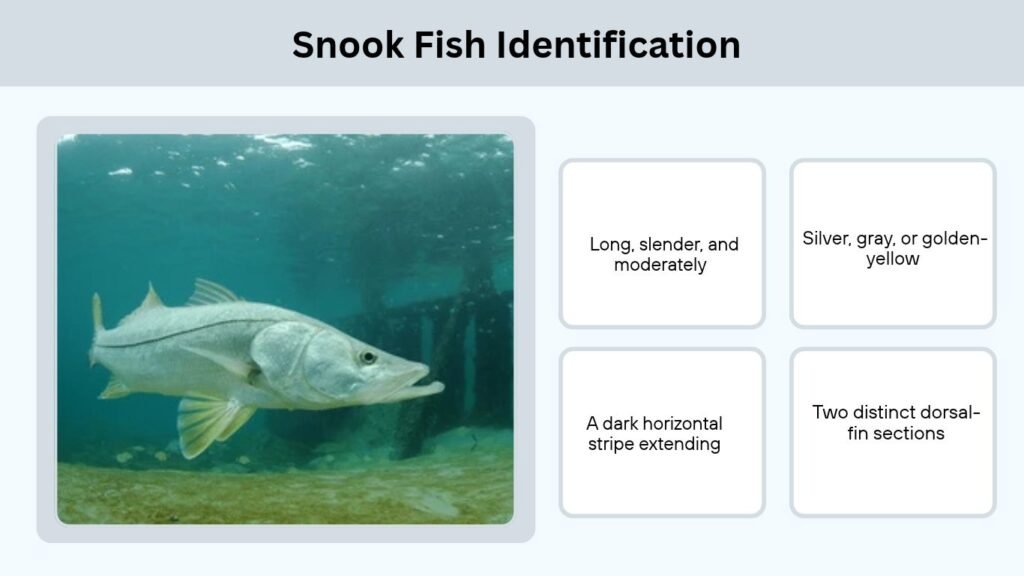
Snook have a distinctive appearance that separates them from most other coastal fish. Their elongated bodies, prominent black lateral lines, and large mouths make them relatively easy to recognize.
Physical Characteristics
- Body shape: Long, slender, and moderately compressed.
- Body color: Silver, gray, or golden-yellow, depending on habitat and water conditions.
- Black lateral line: A dark horizontal stripe extending from the head to the tail.
- Mouth: Large mouth with a projecting lower jaw.
- Forehead: Noticeably sloping toward the mouth.
- Dorsal fins: Two distinct dorsal-fin sections with prominent spines.
- Pelvic fins: Often yellowish.
- Gill covers: Sharp edges that can injure anglers during handling.
The black lateral line is one of the most reliable features for identifying common snook.
Do Snook Fish Have Teeth?
Yes, snook have numerous small teeth that help them grip prey. However, they do not have large, prominent teeth like barracudas.
Their sharp gill-cover edges are generally a greater handling concern than their teeth.
Anglers should avoid gripping snook near the gills and use appropriate fish-handling techniques.
Where Do Snook Fish Live?
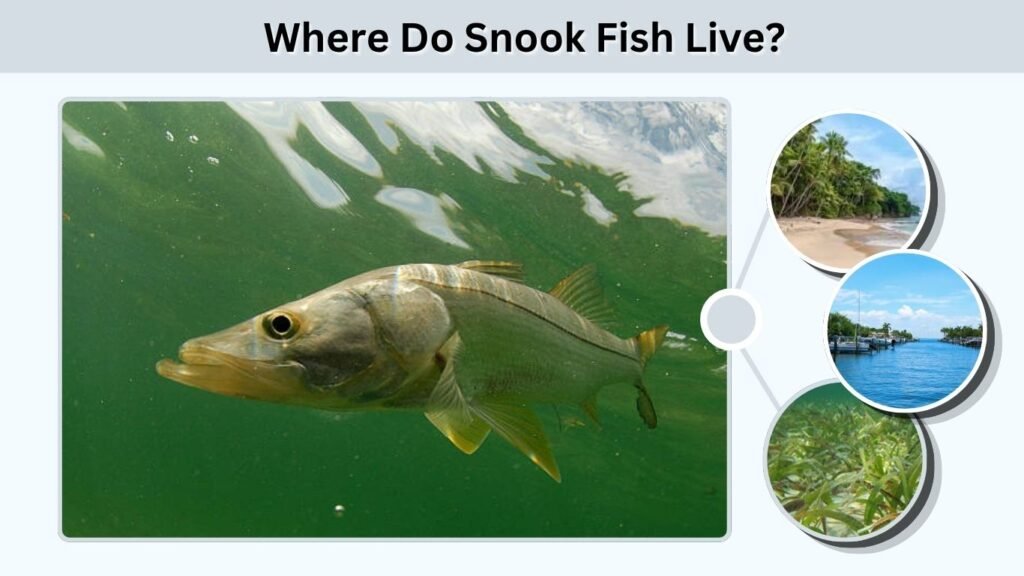
Snook prefer warm tropical and subtropical waters. Common snook occur along the Atlantic and Gulf coasts of the Americas, with particularly well-known populations in Florida.
Preferred Habitat
Snook frequently inhabit:
- Mangrove shorelines
- Coastal estuaries
- Tidal rivers and creeks
- Saltwater canals
- Seagrass beds
- Sandy beaches
- Bridge pilings and docks
- Coastal inlets
Juvenile snook often remain in protected shallow environments where vegetation provides shelter from predators.
Larger adults frequently move around beaches, deeper channels, and coastal structures.
Snook are sensitive to cold temperatures, which helps explain their preference for warmer coastal regions.
Can Snooks Live in Freshwater?
Yes. Snook can tolerate freshwater, saltwater, and brackish water.
They sometimes travel considerable distances upstream into rivers and freshwater canals.
However, their reproductive activities generally occur in coastal environments connected to saltwater.
How Big Do Snook Fish Get?
Snook size varies according to species, age, food availability, and environmental conditions.
Common snook grow considerably larger than Florida’s smaller snook species.
Adult common snook frequently measure between 20 and 35 inches, although individuals can become much larger.
Exceptional common snook can approach 48 inches and weigh approximately 50 pounds.
Females generally reach larger sizes than males.
Large snook are especially prized by recreational anglers, but many must be released because of fishing regulations designed to protect breeding populations.
What Do Snook Fish Eat?
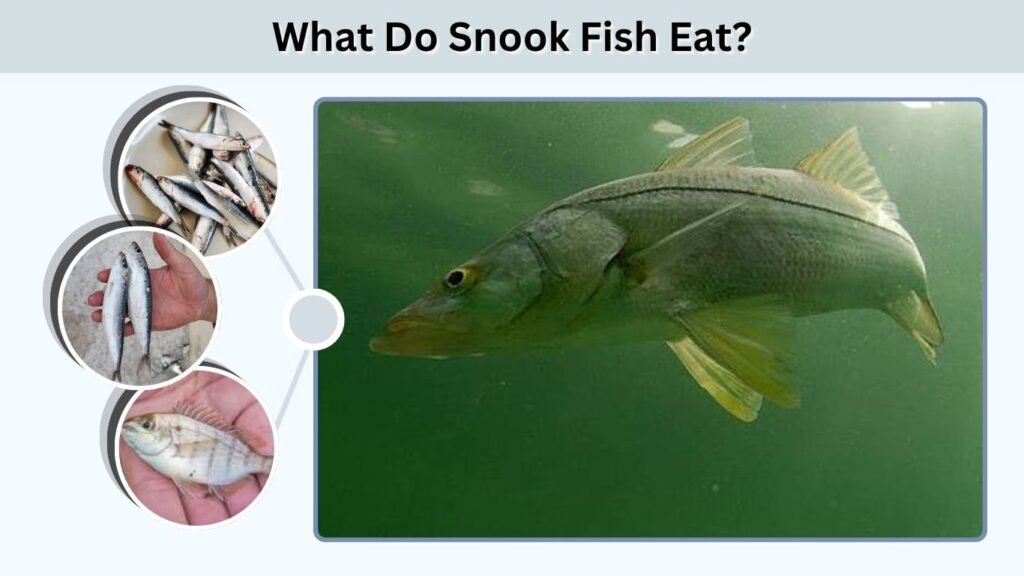
Snook are carnivorous predators that primarily consume smaller fish and crustaceans.
Their feeding behavior depends on age, habitat, water movement, and prey availability.
Common snook foods include:
- Mullet
- Pinfish
- Sardines
- Anchovies
- Shrimp
- Small crabs
- Other small coastal fish
Young snook begin by eating tiny crustaceans and planktonic organisms.
As they grow, their diet increasingly includes larger fish and shrimp.
Snook are ambush predators. They frequently position themselves near structures or moving currents and wait for prey to approach.
Their powerful mouths allow them to capture prey quickly before returning to cover.
Snook Fish Lifespan and Reproduction
Common snook can live for approximately 15–20 years, with some females surviving longer under favorable conditions.
Their growth and survival depend on water temperature, habitat quality, food availability, and fishing pressure.
Snook Breeding and Life Cycle
One of the most fascinating characteristics of common snook is their ability to change sex.
Many individuals begin life as males, and some later develop into females.
This reproductive adaptation is known as protandry.
In Florida, spawning generally occurs during warmer months, often from late spring through early fall.
Adult snook gather around coastal passes, inlets, and river mouths to reproduce.
Females release eggs into the water, where fertilization occurs externally.
After hatching, young snook move into protected nursery habitats, including mangrove-lined creeks and shallow estuaries.
These areas provide food and shelter during early development.
How to Catch Snook Fish
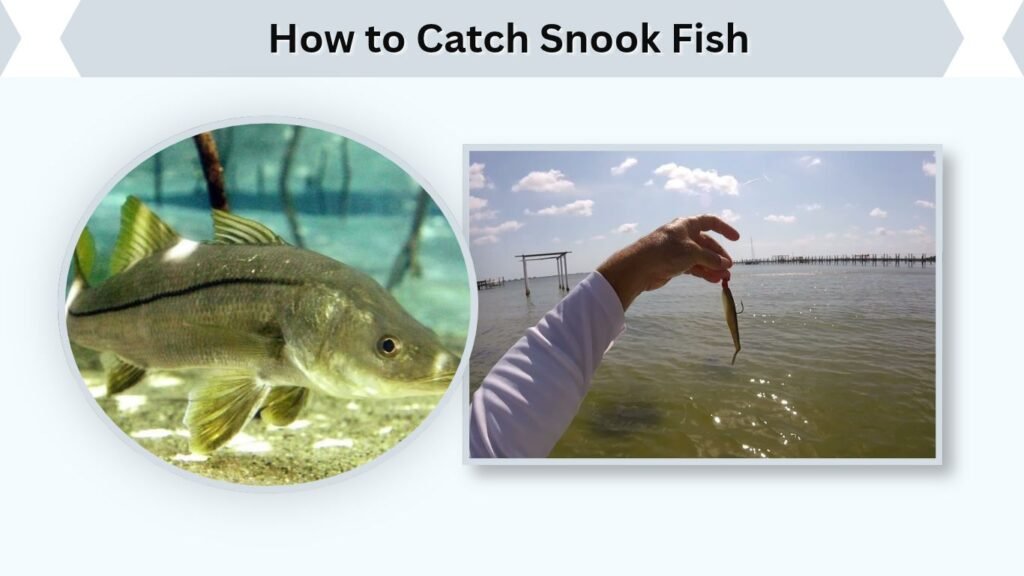
Snook fishing requires understanding the fish’s feeding behavior and preferred habitat.
Because snook are ambush predators, anglers often find success around underwater structures and areas with strong tidal movement.
Best Bait for Snook Fishing
Live bait is highly effective for catching snook.
Popular natural baits include live mullet, pinfish, sardines, and shrimp.
Free-lining live bait allows it to move naturally through the water.
Anglers may also use fish finder rigs when targeting snook near deeper channels or structures.
Fresh, lively bait generally produces better results than poorly presented bait.
Best Fishing Lures for Snook
Artificial lures can be effective when they imitate the fish’s natural prey.
Popular snook fishing lures include:
- Soft plastic paddle tails
- Jerkbaits
- Topwater plugs
- Shrimp imitation lures
- Bucktail jigs
- Swimming plugs
Soft plastics work well around mangroves, while topwater lures can attract exciting strikes in shallow water.
Jigs and swimming plugs are useful when fishing deeper channels and moving currents.
Best Snook Fishing Gear
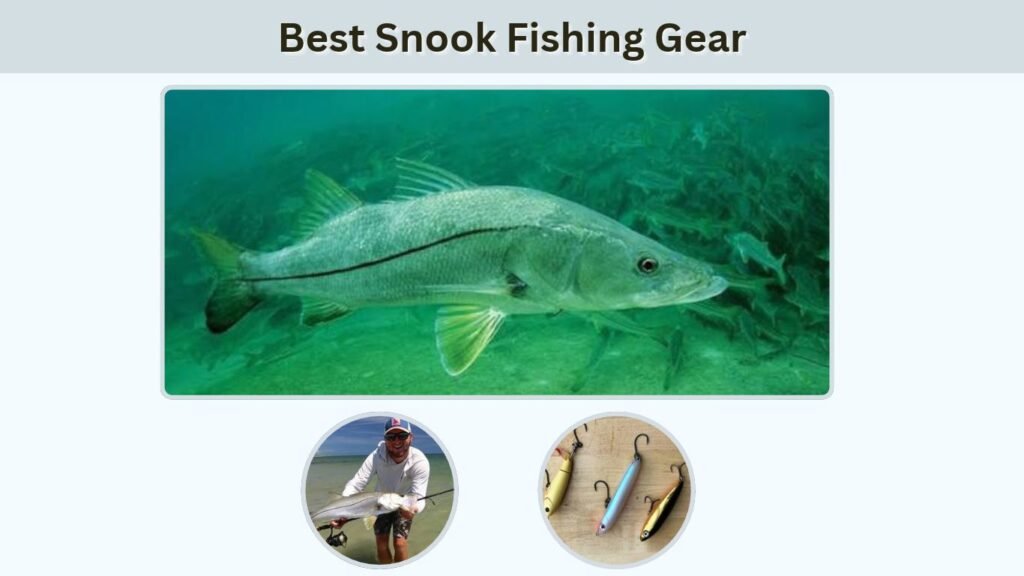
Snook are powerful fish capable of making sudden runs toward mangrove roots, bridge pilings, and other underwater obstacles.
Appropriate fishing equipment helps anglers control these movements.
A medium-heavy spinning rod is a common choice for general inshore snook fishing.
Saltwater-resistant spinning reels, braided line, and abrasion-resistant leaders are also useful.
For larger snook around bridges, heavier equipment may be necessary.
Circle hooks can be effective when fishing with natural bait.
The ideal rod, reel, line, and hook combination depends on fish size, fishing conditions, and nearby underwater structures.
Best Time to Fish for Snook
Snook fishing is often most productive during warmer periods when fish are actively feeding.
Early morning and late afternoon are popular fishing times because reduced sunlight can encourage snook to move into shallower water.
However, tidal movement is frequently more important than the time of day.
Snook often position themselves near flowing currents where baitfish and shrimp are carried past their hiding places.
Outgoing tides can be particularly productive around bridges, inlets, and tidal channels.
During cooler months, snook may move into deeper rivers and protected canals where water temperatures remain relatively stable.
Snook Fishing at Night
Night fishing is an effective method for targeting snook, especially around illuminated docks and bridges.
Artificial lights attract small fish and other aquatic organisms, creating feeding opportunities for larger predators.
Snook frequently wait along the darker edges of illuminated areas.
Anglers can cast shrimp imitation lures, small swimming plugs, or live bait near these boundaries.
Moving tides can improve nighttime fishing success.
When fishing near docks, avoid disturbing private property and follow local access restrictions.
Snook Fishing in Florida
Florida is one of the most popular destinations for recreational snook fishing in the United States.
The state’s warm climate, mangrove shorelines, extensive coastal waterways, and abundant baitfish provide suitable snook habitats.
Popular fishing regions include:
- Tampa Bay: Bridges, mangroves, and coastal channels.
- Sebastian Inlet: Strong currents and opportunities to encounter large snook.
- Jupiter: Coastal inlets and productive structure fishing.
- Florida Keys: Warm-water fishing around bridges and coastal channels.
- Naples: Mangrove shorelines and tidal waterways.
- South Florida: Rivers, canals, beaches, and coastal structures.
The best fishing conditions vary by location, season, water temperature, and tidal movement.
Anglers should check regional regulations before harvesting snook.
Are Snook Fish Good to Eat?
Yes, snook are considered excellent eating fish.
Their flesh is generally white, firm, and mildly sweet, making them suitable for several cooking methods.
Snook have a relatively delicate flavor that works well with simple seasonings.
Popular preparations include grilling, baking, pan-frying, and blackening.
Freshness and proper handling significantly influence the final taste.
However, recreational harvest is regulated in Florida, and snook cannot legally be sold there.
Only fish harvested during an open season and meeting applicable size requirements may be kept.
How to Cook Snook Fish
Snook can be prepared using simple ingredients that complement their natural flavor.
Grilled Snook
Grilled snook is a popular preparation.
Lightly coat the fillets with olive oil, lemon juice, garlic, salt, and black pepper.
Place them on a clean, lightly oiled grill and cook until the flesh is opaque and flakes easily.
For food safety, fish should reach an internal temperature of 145°F (63°C).
Pan-Fried Snook
Pan-frying produces a flavorful outer crust while keeping the interior moist.
Season the fillets with salt, pepper, and paprika.
Lightly coat them with flour if desired, then cook in a skillet with a small amount of oil.
Serve with lemon wedges and fresh vegetables.
Snook Fishing Regulations in Florida
Snook fishing is regulated to protect breeding populations and maintain sustainable recreational fisheries.
Florida has regional snook management rules that may include:
- Closed harvest seasons
- Minimum and maximum size limits
- Daily bag limits
- Recreational fishing license requirements
- Snook permit requirements for harvest
Snooks may often be targeted for catch-and-release during closed harvest seasons, subject to applicable rules.
Florida prohibits commercial harvest and sale of snook.
Because regulations vary between management regions and can change, anglers should verify current requirements before fishing or keeping a snook.
FAQs
1. Is Snook a Saltwater or Freshwater Fish?
Snook can survive in saltwater, freshwater, and brackish environments. They commonly inhabit coastal rivers, estuaries, and mangrove-lined waterways. However, their reproductive activities generally depend on coastal saltwater habitats.
2. What Does Snook Fish Taste Like?
Snook has mild, slightly sweet white flesh with a firm texture. Its flavor is generally less pronounced than that of many oily fish. Grilling, baking, and pan-frying are popular preparation methods.
3. Is Snook Fishing Good for Beginners?
Yes, beginners can successfully catch snook using live shrimp, small baitfish, or artificial lures. However, larger snooks can be challenging because they frequently make powerful runs toward underwater structures.
4. Is It Illegal to Catch Snook in Florida?
Catching snook is not generally illegal in Florida, but strict regulations control recreational harvest. Anglers must follow regional seasons, size limits, bag limits, and licensing requirements. Keeping snooks outside applicable regulations can result in penalties.
5. What Is the Best Bait for Snook Fishing?
Live shrimp, mullet, pinfish, and sardines are among the most effective natural baits for snook. The best option depends on local prey availability, fishing location, tidal conditions, and the size of the fish being targeted.