
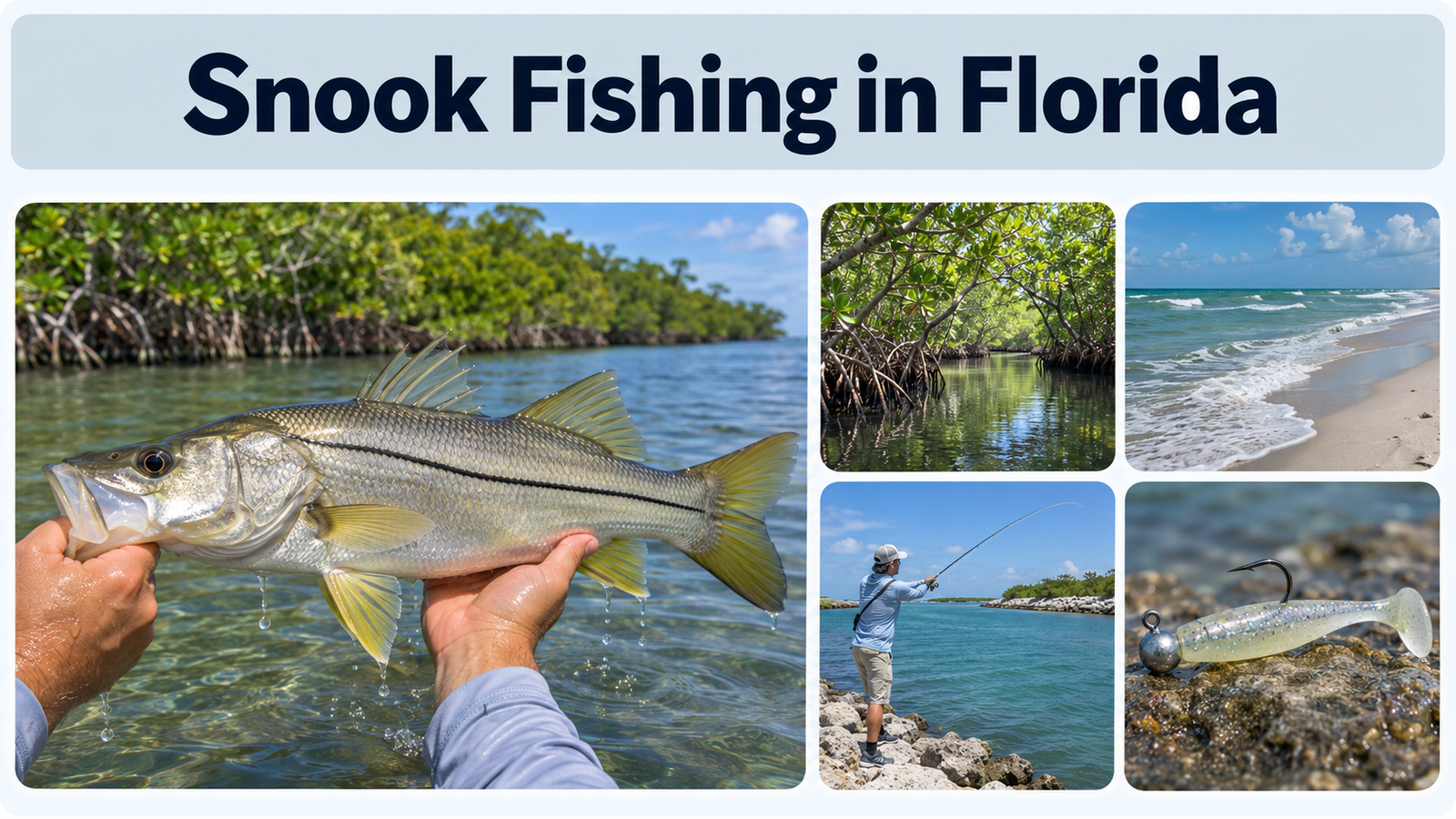
You can catch snook in Florida from a sandy beach, a fishing pier, or a kayak tucked into a mangrove creek. The best place to start depends on water temperature, tidal current, and where baitfish are moving. In summer, snook often cruise beaches and gather near inlets. In winter, deeper canals and coastal rivers can be more productive. Wherever you fish, look for a place where the current carries food past a point, piling, or drop-off. This guide covers where to find snook, what to cast, and what to check before keeping one.
Where to Catch Snook in Florida
Snook are ambush feeders. They often hold beside structure where they can wait in slower water and dart into the current to grab passing prey. Mangrove points, dock pilings, bridge supports, and the edges of sandbars are good places to start. If you see small baitfish scattering near one of these features, work that area before moving on.
| Florida fishing area | Where to look for snook |
|---|---|
| Tampa Bay | Bridge pilings, mangrove points, and channels crossing shallow flats |
| Sarasota Bay | Docks, grass-flat edges, and sandy drop-offs near passes |
| Charlotte Harbor and Pine Island Sound | Tidal creek mouths, mangrove shorelines, and oyster-bar edges |
| Southwest Florida and the Everglades | Coastal rivers, deep creek bends, and cuts between mangrove islands |
| Indian River Lagoon | Seawalls, dock rows, and channel edges near inlets |
| Southeast Florida | Inlet shorelines, Intracoastal bridges, and dock-light shadow lines |
Fishing for Snook From Shore
On a calm beach, watch the first trough, the slightly deeper strip of water just off the sand. Snook can travel close enough that a short cast reaches them. Polarized sunglasses help you spot fish moving across the sandy bottom. If you see one cruising, cast a few feet ahead and retrieve the lure across its path.
At a pier or seawall, make your first few casts parallel to the structure. A lure retrieved along the wall stays near fish that are holding tight to it. If there’s a corner or a piling that interrupts the current, let the lure sink beside it before starting your retrieve.
Best Time of Year and Tide for Snook Fishing
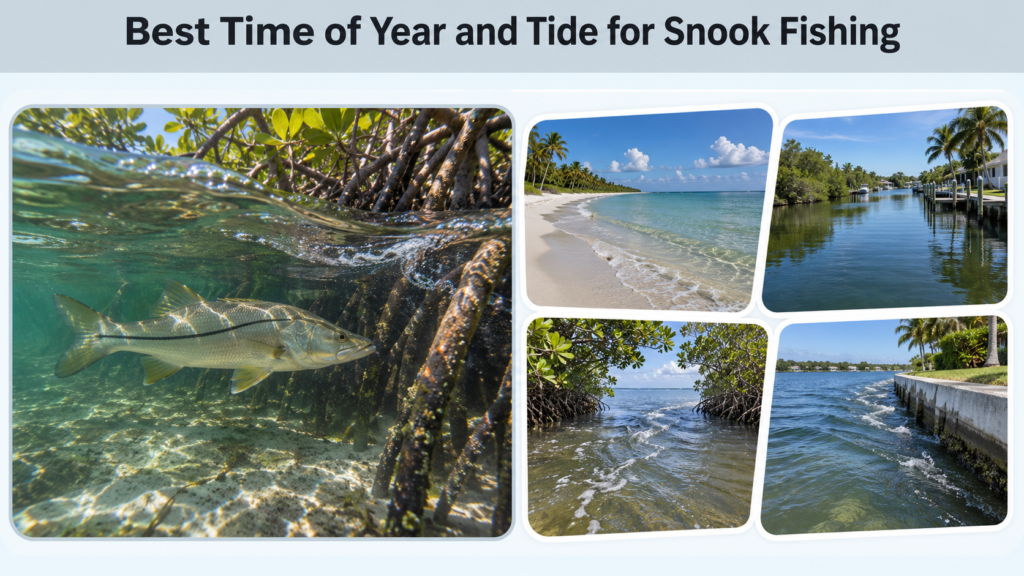
Spring and fall offer opportunities to fish a mix of flats, creek mouths, and residential canals. Summer is a good time to look near Gulf beaches, passes, and Atlantic inlets, where adult snook often gather during the spawning season. In winter, especially after a cold front, focus on deeper, protected water in canals, rivers, and backwater bends.
How to Fish a Moving Tide
On an outgoing tide, start at a creek mouth or a cut between flats. Baitfish and shrimp leaving the shallows pass through these narrow openings. Cast slightly upcurrent and let your bait sweep across the edge of the flow. Pay attention to the slower water beside the main current, where a snook can hold with less effort.
On an incoming tide, try a point, seawall, or channel edge where water pushes bait toward structure. Watch the direction of drifting foam or floating grass before casting. That gives you a better feel for how your lure will travel past the spot you want to fish.
Fishing at Dawn or After Dark
Early morning can be productive on shallow flats and beaches, especially when bait is active near the surface. In clear water on a calm day, you can also sight-fish after the sun rises and the light lets you see into the first trough.
After dark, cast a live shrimp or small swimbait just beyond the edge of a dock light and bring it through the shadow line. Around bridges, work the current break beside a piling. Choose a position with enough room to steer a hooked fish away from the structure and land it safely.
Best Baits, Lures, and Tackle for Florida Snook
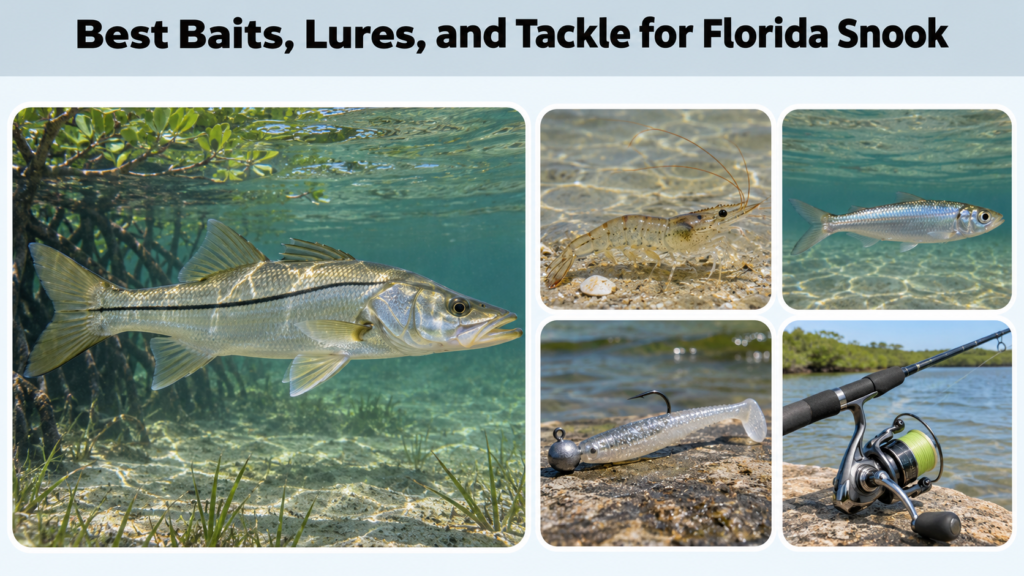
Live shrimp and paddle-tail swimbaits are two practical starting choices. A live shrimp works well when you can drift it naturally past a dock or creek mouth. A paddle tail lets you cover more shoreline and adjust how deep you fish by changing the jighead weight or letting the lure sink longer before retrieving it.
Live Bait and Artificial Lures
Live pilchards, also called whitebait, and threadfin herring are useful when snook are feeding on small schooling fish. In moderate current, try free-lining a baitfish so it can swim naturally. Add a small weight if you need to get it down to fish holding near a channel edge or the base of a piling.
For artificial lures, start with a 3- to 4-inch paddle tail or a suspending jerkbait. A weedless soft plastic is handy when casting along mangroves. On a beach, use a light jighead that keeps the lure above the sand. If you’re working a deeper inlet or pass, add enough weight to reach the fish while maintaining control of the retrieve.
A Simple Spinning Setup
A 7-foot medium or medium-heavy spinning rod paired with a 3000- or 4000-size reel works for many inshore situations. Start with 15- to 20-pound braided line and a 25- to 30-pound leader. Around bridge pilings, barnacles, or oyster bars, a heavier leader gives you more abrasion resistance.
Set your drag before casting, especially around structure. When a snook runs toward a piling or mangrove root, use steady side pressure to guide it toward open water. Check the leader for rough spots after landing a fish or pulling free of a snag.
Florida Snook Regulations and Catch-and-Release

Florida’s snook harvest rules vary by management region. When harvest is open, the recreational bag limit is generally one fish per person per day. Legal slot limits are 28–32 inches or 28–33 inches in total length, depending on the region. Check the Florida Fish and Wildlife Conservation Commission’s current rules for your exact fishing location before keeping a snook.
Licenses, Permits, and Legal Gear
Snook harvest is limited to hook and line. To keep one, you generally need a Florida recreational saltwater fishing license and a snook permit, unless an exemption applies. A legally harvested snook must remain whole until landed ashore. During a harvest closure, release every snook you catch.
How to Release a Snook
Have pliers ready so you can remove the hook quickly. Keep the fish in the water when possible. If you lift it briefly, wet your hands, support its belly, and return it promptly. If the fish has trouble staying upright, gently support it facing into the current until it regains its balance and swims away.
Frequently Asked Questions
What is the best month to catch snook from a Florida beach?
June through August is a good window for beach snook, particularly near passes and inlets. A calm day with clear water makes it easier to spot fish in the surf.
Can you catch snook in freshwater in Florida?
Yes. Common snook can move into freshwater stretches of coastal rivers and canals. Look around deeper bends, creek junctions, and structure that creates a break in the current.
What is the easiest snook bait for beginners?
Live shrimp is a good starting bait. Let it drift past a dock piling or creek mouth. Use a small weight if the current keeps the shrimp above the depth you want to fish.
Can you fish for snook during a closed season?
Yes. Florida’s seasonal snook closures apply to harvest. You can fish for them on a catch-and-release basis during those closures.
Why do snook follow a lure without biting?
The lure may be moving at the wrong speed or depth. Try pausing a jerkbait or letting a paddle tail sink briefly. If the water is clear, cast farther ahead of the fish and bring the lure across its path.