
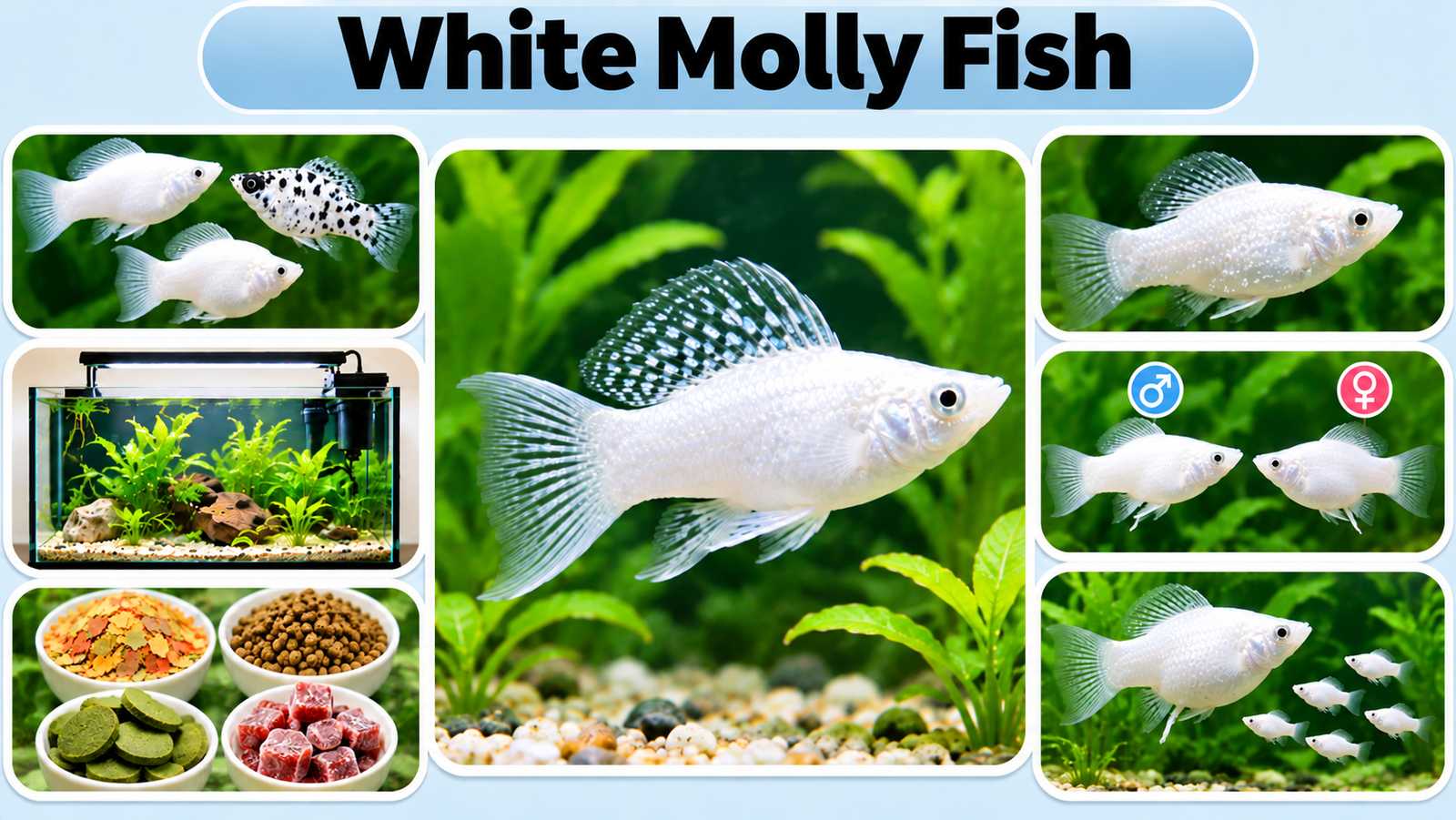
White molly fish are beautiful freshwater aquarium fish known for their bright white bodies, peaceful behavior, and active swimming habits. These attractive fish are popular among beginners and experienced aquarists because they are relatively easy to maintain when provided with suitable water conditions. White mollies come in several varieties, including platinum, balloon, and sailfin types. Understanding their tank requirements, feeding habits, breeding behavior, and common health problems helps owners keep them healthy. This guide covers everything you need to know about white molly fish care.
What Is a White Molly Fish?
The white molly fish is a selectively bred color variety of molly belonging to the genus Poecilia. Many aquarium varieties originate from common mollies (Poecilia sphenops), sailfin mollies, or hybrids. Their white or silvery appearance makes them particularly attractive in planted aquariums.
White mollies are generally peaceful, social fish that prefer warm, mineral-rich water. Depending on the variety, adults commonly reach 3–5 inches in length and may live approximately 3–5 years with proper care.
White Molly Fish Appearance
White mollies have pale white, silver, or platinum-colored scales with translucent fins. Some display a metallic shine, while others have creamy white bodies and rounded bellies.
Their body shape varies considerably. Standard mollies have elongated bodies, balloon mollies have noticeably rounded bodies, and sailfin varieties possess large dorsal fins.
White Molly Fish Behavior
White mollies are active swimmers that frequently explore the middle and upper areas of an aquarium. They generally coexist peacefully with other compatible tropical fish.
However, males may repeatedly chase females during breeding. Maintaining enough space and an appropriate male-to-female ratio helps reduce stress.
Types of White Molly Fish
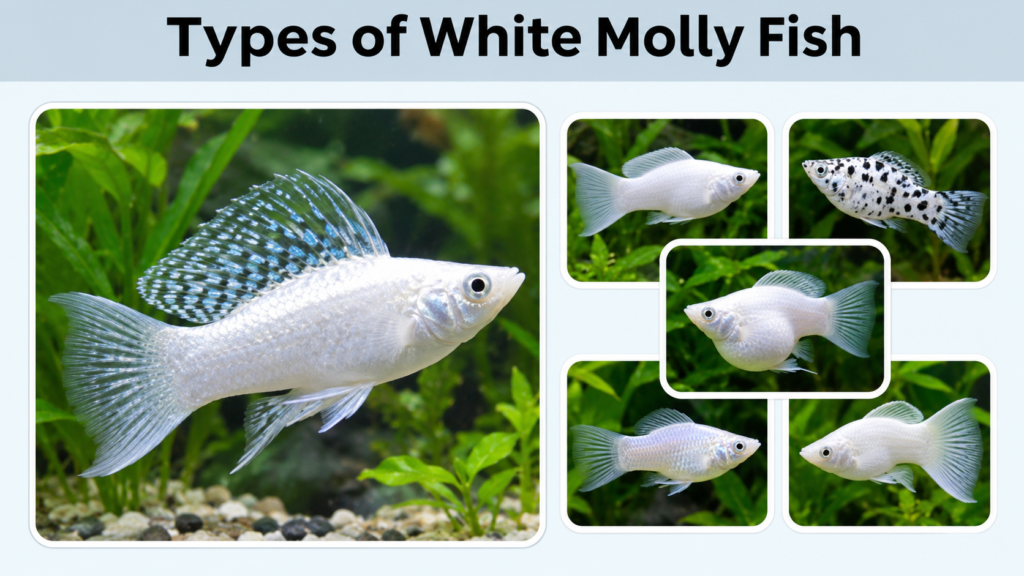
White molly fish are available in several attractive varieties. Their differences usually involve body shape, fin structure, and color patterns rather than entirely separate species. Most require similar aquarium conditions, although larger sailfin varieties need additional swimming space. Understanding these differences can help you choose the right fish for your aquarium.
1. Platinum White Molly Fish
Platinum white mollies have bright, metallic-looking scales that reflect aquarium lighting. Their bodies may appear almost entirely white or slightly silver.
These fish are popular in freshwater community aquariums. Their reflective coloration creates an attractive contrast against dark substrates and green aquatic plants.
2. Black and White Molly Fish
Black and white molly fish have contrasting patches or spots across their bodies. Many are sold as Dalmatian mollies because their markings resemble those of a Dalmatian dog.
Some fish have mostly white bodies with black spots, while others display larger black patches. The distribution of colors varies between individuals.
3. White Balloon Molly Fish
White balloon mollies have short, rounded bodies and noticeably curved profiles. Their compact appearance comes from selective breeding for an unusually compressed body shape.
These fish require careful husbandry because their body structure can contribute to swimming and health difficulties. Stable water conditions and appropriate feeding are especially important.
4. White Sailfin Molly Fish
White sailfin mollies are recognized by their large dorsal fins, particularly in mature males. Their appearance makes them popular centerpiece fish.
They can grow larger than standard short-fin mollies. A spacious aquarium with open swimming areas is recommended.
White Molly Fish Care and Tank Requirements
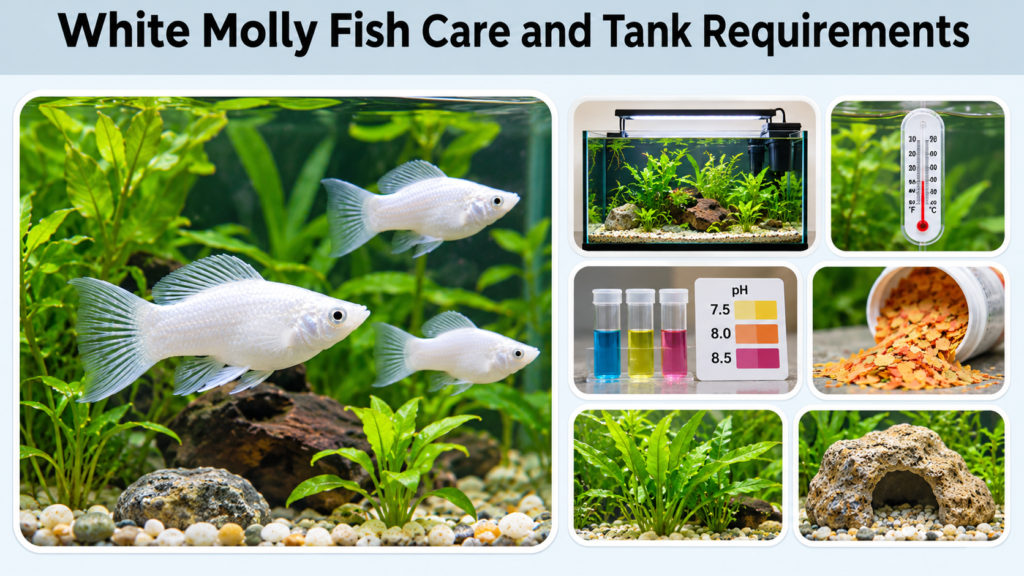
Proper aquarium conditions are essential for keeping white molly fish healthy. Although mollies are often described as beginner-friendly, they can become stressed in soft, acidic, or poorly maintained water. They prefer stable temperatures, effective filtration, and plenty of swimming space. A planted aquarium with suitable tank mates provides an excellent environment.
Tank Size and Water Parameters
A 20-gallon aquarium is a reasonable starting point for a small group of standard white mollies. Larger sailfin mollies or heavily stocked communities benefit from tanks of 30 gallons or more.
| Water Parameter | Recommended Range |
| Tank size | 20 gallons minimum for a small group |
| Temperature | 75–82°F (24–28°C) |
| pH level | 7.5–8.5 |
| Water hardness | Approximately 10–30 dGH |
| Ammonia | 0 ppm |
| Nitrite | 0 ppm |
| Lifespan | Approximately 3–5 years |
Use an aquarium heater to maintain stable temperatures. Mollies also benefit from mineral-rich water with adequate calcium and magnesium.
Routine salt addition is unnecessary when suitable freshwater conditions are maintained. Avoid adding salt without considering the needs of other aquarium inhabitants.
Best Tank Mates for White Mollies
White mollies can share an aquarium with peaceful species that tolerate similar water conditions. Compatible options may include:
- Other molly varieties
- Platies
- Guppies
- Swordtails
- Peaceful rainbowfish
- Other similarly sized, compatible community fish
Avoid aggressive fish and species requiring very different water chemistry. Provide plants and hiding spaces so less dominant fish can escape unwanted attention.
What Do White Molly Fish Eat?

White mollies are omnivores that consume algae, plant matter, and small animal-based foods. A varied diet supports healthy growth, natural coloration, and successful reproduction. High-quality commercial fish food should form the foundation of their diet, supplemented with vegetable matter and occasional protein-rich treats.
Best Foods for White Molly Fish
Suitable foods include:
- High-quality tropical fish flakes
- Small omnivore pellets
- Spirulina-based food
- Algae wafers
- Blanched zucchini
- Small portions of spinach
- Frozen or live brine shrimp
- Daphnia and other appropriate small invertebrates
Feed small portions once or twice daily. Offer only amounts the fish can consume quickly, and remove excessive leftovers to protect water quality.
Male and Female White Molly Fish Differences
Identifying male and female white mollies is important when planning a peaceful aquarium or breeding group. Although females generally have fuller bodies, appearance alone is not always reliable. The most dependable difference is the shape of their anal fins, which becomes easier to identify as the fish mature.
How to Identify Male and Female White Mollies
Male white mollies have a narrow, pointed anal fin called a gonopodium. They are often slimmer and may display larger decorative fins depending on the variety.
Female white mollies have a broader, fan-shaped anal fin and typically develop rounder abdomens. Mature females may also grow larger than males.
For breeding groups, keeping approximately two or three females per male helps distribute male attention and reduce persistent chasing.
Pregnant White Molly Fish and Breeding
White molly fish are livebearers, meaning females give birth to living fry rather than laying eggs. Healthy adults can reproduce frequently under suitable aquarium conditions. Females can also store sperm, allowing additional pregnancies without a male being continuously present. Understanding pregnancy signs and breeding behavior helps owners prepare for newborn fish.
Signs of a Pregnant White Molly Fish
Common pregnancy signs include:
- Gradually enlarging abdomen
- Fuller or somewhat squared-off belly near delivery
- Increased interest in sheltered areas
- Changes in activity or feeding behavior
- A possible visible gravid area in some individuals
Pregnancy should not be diagnosed from a swollen abdomen alone. Constipation, illness, and other health conditions can produce similar changes.
White Molly Fish Giving Birth
Molly pregnancies generally last around 30–60 days, depending on temperature, genetics, and other conditions. Females may deliver dozens of fry, although brood sizes vary.
Newborn mollies can swim and feed immediately. Dense floating plants or a separate, properly maintained nursery tank improve survival because adult fish may eat their young.
Common White Molly Fish Health Problems
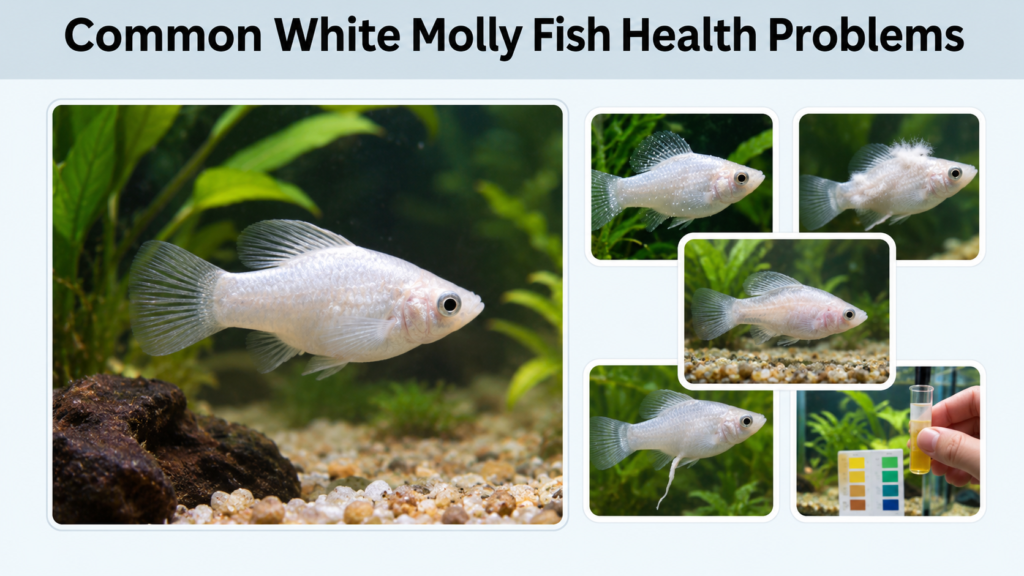
White mollies can develop health problems when exposed to unsuitable water conditions, stress, or infectious organisms. Changes in coloration, unusual white patches, or abnormal waste deserve attention. However, not every white mark indicates the same disease, and appearance alone cannot always establish a diagnosis.
Why Does My Molly Fish Have White Spots?
Tiny white dots resembling grains of salt may indicate ich, a parasitic disease affecting freshwater fish. Infected mollies may also rub against objects, clamp their fins, or become lethargic.
Check water quality promptly and seek appropriate treatment guidance. Do not assume larger white patches or natural color markings are rich.
White Fungus or White Fuzz on Molly Fish
Cotton-like white growths can indicate a water-mold infection such as Saprolegnia. However, certain bacterial infections, including columnaris, can produce similar-looking lesions.
Because treatment depends on the cause, avoid randomly combining medications or raising the water temperature. Rapidly spreading lesions or breathing difficulties require prompt professional attention.
Why Is My Molly Fish Turning White?
A molly turning pale may be experiencing stress, environmental problems, disease, or changes in pigmentation. Some natural variation also occurs as fish mature.
Test the aquarium’s ammonia, nitrite, pH, and temperature. If color loss occurs alongside lethargy, damaged fins, or unusual behavior, investigate further.
White Stringy Poop in Molly Fish
Occasional pale or stringy waste does not automatically indicate parasites. Diet, reduced feeding, and intestinal mucus can influence the appearance of feces.
Persistent abnormal waste accompanied by weight loss, poor appetite, or bloating may require veterinary evaluation.
FAQs
1. How Long Do White Molly Fish Live?
White molly fish generally live around three to five years with suitable aquarium care. Their lifespan depends on genetics, water quality, nutrition, and environmental stability. Providing clean, mineral-rich water and a balanced diet supports long-term health.
2. Are White Molly Fish Easy to Care For?
White mollies are relatively easy to care for when their water requirements are met. They need warm temperatures, adequate filtration, and mineral-rich, slightly alkaline water. They may struggle in very soft or poorly maintained aquariums.
3. Can Black and White Molly Fish Breed Together?
Yes. Black, white, and Dalmatian mollies can often breed together when they are compatible varieties of closely related mollies. Their offspring may inherit different color patterns. Crossbreeding can produce black, white, spotted, or mixed-color young.
4. How Many Babies Can a White Molly Fish Have?
Female mollies can produce anywhere from a few to more than 50 fry in a brood, depending on their size, age, and condition. Healthy mature females may produce larger broods. Dense plants help protect newborn fry from adults.
5. Why Does My Black Molly Fish Have White Spots?
Small white spots on a black molly may indicate ich, particularly when accompanied by scratching or unusual behavior. However, natural Dalmatian markings or other skin conditions can look similar. Examine the spots carefully and check water conditions before selecting treatment.