
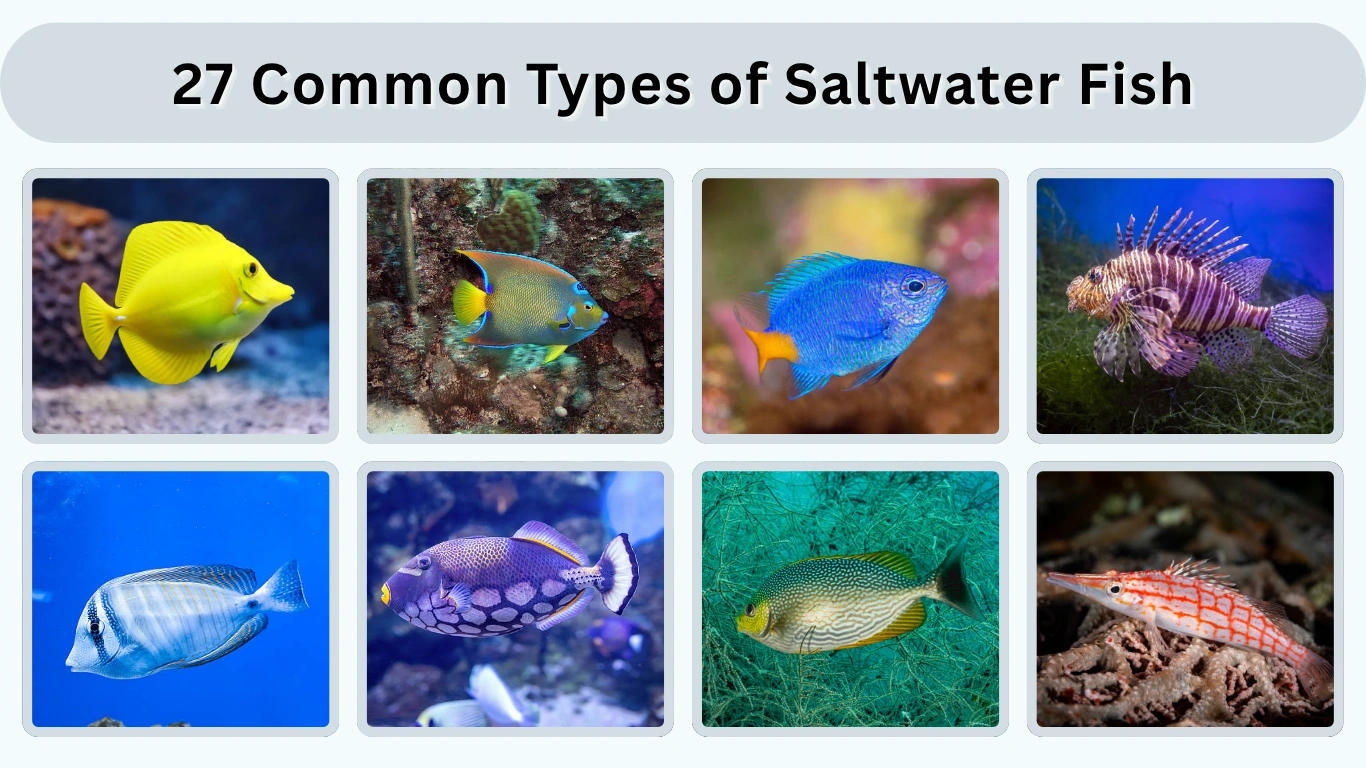
Saltwater fish are some of the most colorful and fascinating creatures found in the ocean. From vibrant reef dwellers to powerful open-water swimmers, they come in a wide variety of shapes, sizes, and behaviors. These fish play a vital role in maintaining marine ecosystems, especially coral reefs, where they help control algae, support food chains, and contribute to overall ocean health.
In this guide, you’ll discover 27 common types of saltwater fish, each with unique characteristics, habitats, and behaviors. Whether you’re a marine enthusiast, student, or aquarium hobbyist, this list will give you a clear and structured overview of some of the most popular and important saltwater species.
1. Clownfish
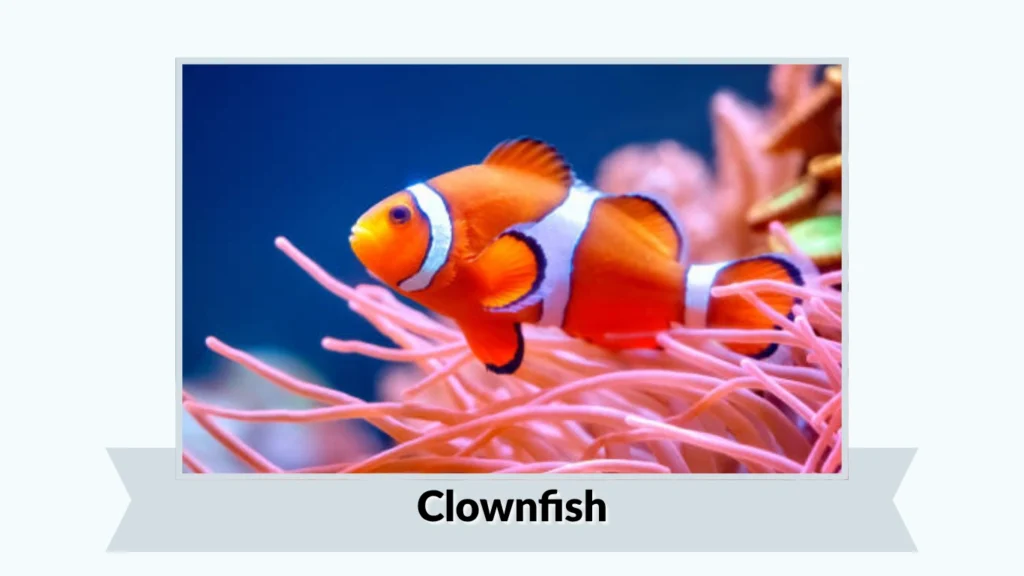
Clownfish are among the most recognizable saltwater fish, known for their vibrant orange color and distinctive white bands. They have gained global popularity due to their appearance in movies and their fascinating partnership with sea anemones. These fish are relatively small, peaceful, and widely kept in home aquariums. Their adaptability and hardy nature make them a favorite choice for beginners in marine fishkeeping. Clownfish also display interesting social behaviors and a unique reproductive system, making them scientifically intriguing as well.
Identification
- Bright orange body with three white vertical stripes
- Thin black outlines around stripes and fins
- Oval-shaped, laterally compressed body
- Small size, usually 3–4 inches in length
- Rounded fins and a slightly protruding face
Habitat
Clownfish are naturally found in the warm waters of the Pacific and Indian Oceans, especially around coral reefs. They are most commonly associated with sea anemones, where they live safely among the tentacles. These environments are typically shallow and rich in marine biodiversity. The anemone provides both shelter and protection from predators. Clownfish have a special mucus layer that prevents them from being stung, allowing them to thrive in this otherwise dangerous habitat. Their range includes areas like the Great Barrier Reef and coastal regions of Southeast Asia.
Behavior
Clownfish are social fish that live in structured groups dominated by a single breeding female. They are known for their territorial nature, especially around their host anemone. One of their most fascinating traits is their ability to change sex; if the dominant female dies, the largest male will transform into a female. Clownfish are generally peaceful but may show aggression toward intruders. Their symbiotic relationship with sea anemones benefits both species—clownfish get protection, while anemones receive cleaning and food scraps.
Diet
Clownfish are omnivorous and have a varied diet in the wild. They primarily feed on small zooplankton, algae, and tiny crustaceans. They also consume leftover food from their host anemone, which helps maintain a clean environment. In aquariums, they can be fed a mix of high-quality pellets, flakes, frozen foods, and live feed like brine shrimp. Their diet should be balanced to maintain their bright coloration and overall health. Regular feeding in small amounts ensures proper digestion and reduces waste in tank environments.
Lifespan
Clownfish typically live between 6 to 10 years in the wild, depending on environmental conditions and predation risks. In a well-maintained aquarium, they can live even longer, sometimes exceeding 10 years. Proper care, including clean water, a balanced diet, and a stress-free environment, plays a crucial role in their longevity. Providing a host anemone or a suitable substitute can also improve their quality of life. Regular monitoring and disease prevention are essential to ensure a healthy lifespan in captivity.
2. Blue Tang
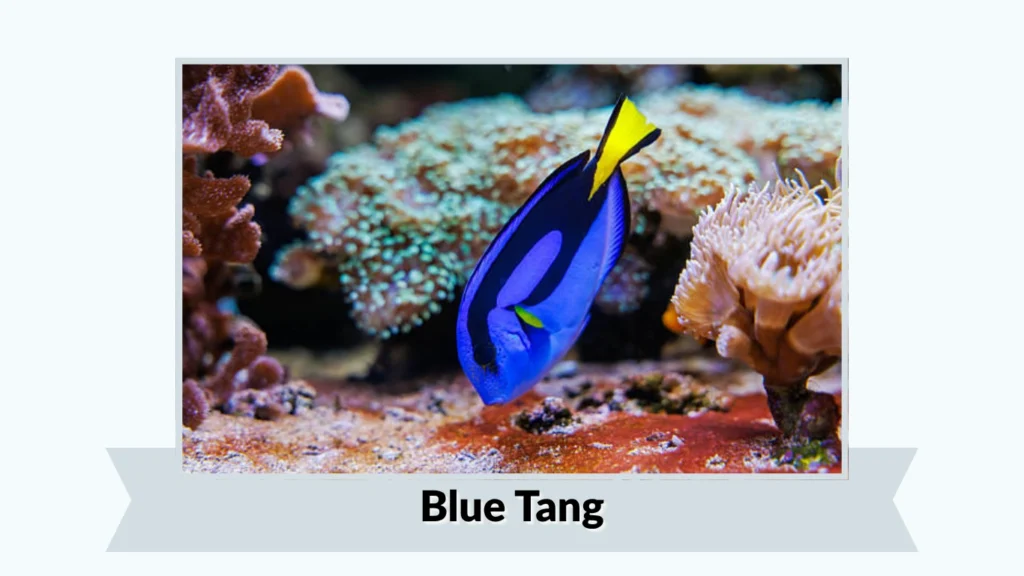
Blue Tang fish are vibrant marine species known for their brilliant blue bodies and striking yellow tails. Popularly recognized from animated films, they are active swimmers and a favorite among saltwater aquarium enthusiasts. These fish are not only visually appealing but also play an important ecological role in maintaining coral reef health by grazing on algae. Despite their beauty, they require specific care conditions, making them more suitable for experienced aquarists. Their energetic nature and constant movement make them a lively addition to reef environments.
Identification
- Bright blue body with a black palette-shaped pattern
- Vivid yellow tail fin
- Flat, oval-shaped body
- Sharp spine near the tail (used for defense)
- Grows up to 10–12 inches in length
Habitat
Blue Tangs are commonly found in coral reefs across the Indo-Pacific region, including areas like the Philippines, Indonesia, and the Great Barrier Reef. They prefer clear, shallow waters rich in coral growth. These environments provide ample hiding spaces and abundant algae for feeding. Juveniles often stay in more protected reef areas, while adults roam more openly. Coral reefs are essential to their survival, offering both food and shelter from predators.
Behavior
Blue Tangs are highly active and spend most of their time swimming and grazing. They are generally peaceful but can become territorial, especially with other tangs. When threatened, they use the sharp spine near their tail as a defense mechanism. These fish may also form small groups, particularly during feeding. Their constant movement and alert nature help them avoid predators in the wild. In aquariums, they require plenty of space to swim freely.
Diet
Blue Tangs are primarily herbivores, feeding mainly on algae found on rocks and coral surfaces. This grazing behavior helps keep reef ecosystems clean and balanced. They may occasionally consume small invertebrates or plankton. In captivity, their diet should include marine algae, seaweed sheets, and vegetable-based foods, along with some protein sources. Providing a varied diet helps maintain their bright coloration and supports overall health.
Lifespan
In the wild, Blue Tangs can live up to 20 years under ideal conditions. In aquariums, their lifespan typically ranges from 8 to 15 years, depending on the level of care they receive. Clean water, a proper diet, and a spacious tank are essential for their longevity. Stress and poor conditions can significantly shorten their lifespan. With attentive care, they can thrive and remain active for many years.
3. Yellow Tang
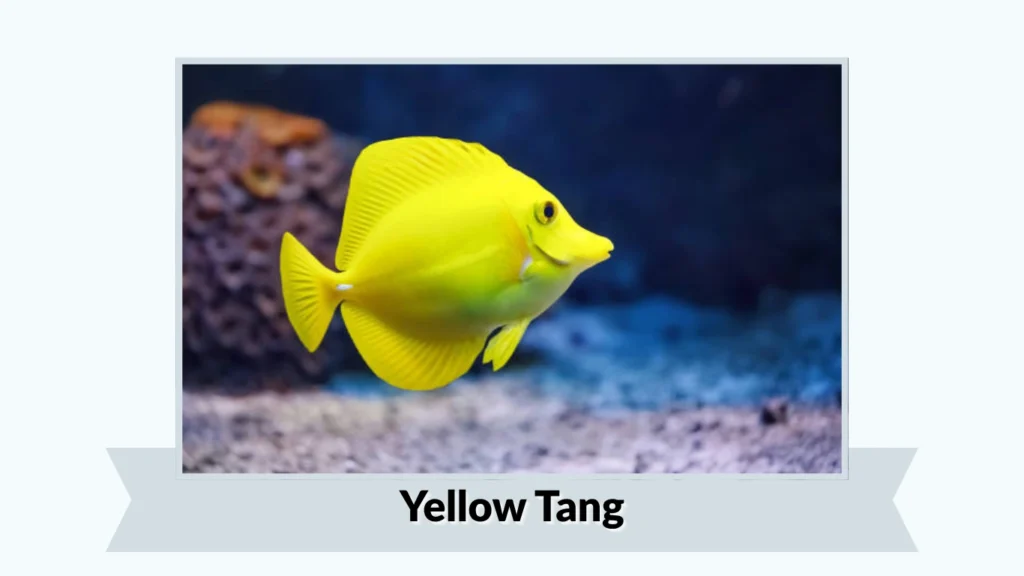
Yellow Tang fish are easily recognized by their bright, solid yellow coloration and graceful swimming style. They are one of the most popular saltwater fish in the aquarium trade due to their beauty and relatively manageable care requirements. Native to tropical waters, these fish are active grazers that contribute to maintaining healthy reef ecosystems by feeding on algae. Their vibrant color and peaceful nature make them a standout addition to marine tanks.
Identification
- Bright, solid yellow body
- Laterally compressed, oval-shaped body
- Continuous dorsal and anal fins
- Small mouth adapted for grazing
- Grows up to 7–8 inches in length
Habitat
Yellow Tangs are primarily found in the Pacific Ocean, especially around Hawaii and nearby islands. They inhabit coral reefs and rocky coastal areas with abundant algae growth. These environments provide both food and shelter. Juveniles often stay in shallow waters for protection, while adults may venture into deeper reef zones. Clean, warm waters with strong sunlight are essential for the algae they depend on.
Behavior
Yellow Tangs are active swimmers and spend much of their day grazing on algae. They are generally peaceful but can become territorial, especially toward other tangs or similarly shaped fish. In the wild, they may form loose groups, but in aquariums, they often establish a specific territory. They are alert and quick, using their speed to avoid predators. Like other tangs, they possess a sharp spine near the tail for defense.
Diet
Yellow Tangs are herbivores and primarily feed on marine algae. Their constant grazing helps prevent excessive algae growth on reefs. In captivity, they should be provided with seaweed, algae-based foods, and occasional vegetable matter. Supplementing their diet with small amounts of protein can support overall health. A consistent feeding routine is important to maintain their energy levels and vibrant color.
Lifespan
In the wild, Yellow Tangs can live around 20 years. In aquariums, they typically live between 10 to 15 years with proper care. Their longevity depends on factors such as diet, water quality, and tank size. Providing a spacious environment and stable conditions greatly enhances their lifespan. Regular monitoring helps prevent stress-related health issues.
4. Angelfish
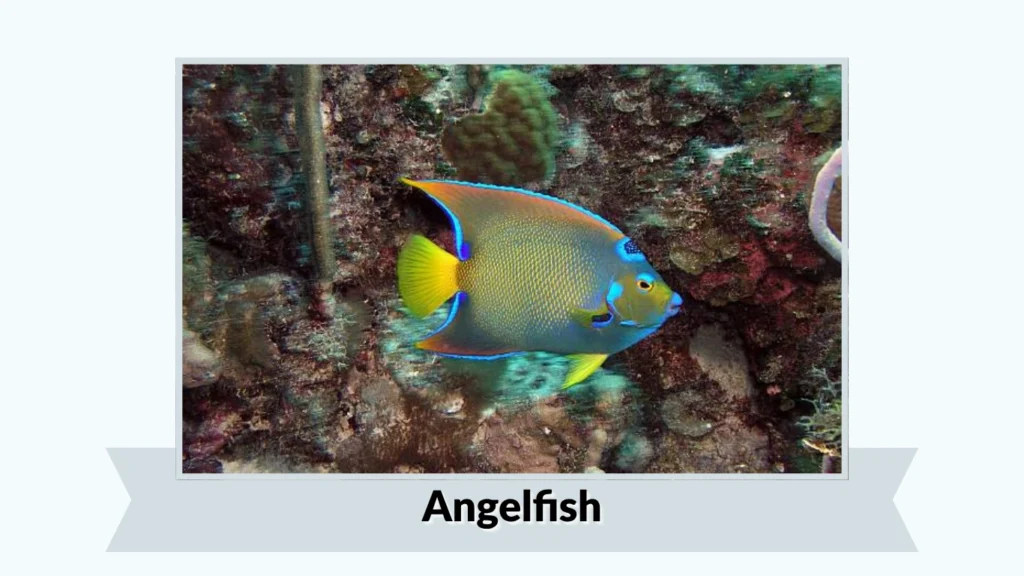
Angelfish are among the most striking and elegant saltwater fish, known for their vibrant colors and unique body shapes. They come in a wide variety of species, each displaying bold patterns and vivid hues such as blue, yellow, black, and orange. These fish are highly admired in both natural reef environments and aquariums. While beautiful, many angelfish species require experienced care due to their sensitivity and specific dietary needs. Their graceful movements and eye-catching appearance make them a centerpiece in any marine setting.
Identification
- Flattened, disk-shaped body
- Bright and varied color patterns
- Long, flowing dorsal and anal fins
- Small mouth with pointed snout
- Can grow between 4 to 12 inches depending on species
Habitat
Angelfish are commonly found in tropical coral reefs across the Atlantic, Indian, and Pacific Oceans. They prefer areas with plenty of coral formations, which provide shelter and feeding opportunities. These fish often inhabit reef slopes, lagoons, and outer reef areas. Juveniles tend to stay in more protected zones, while adults explore wider reef territories. The complex reef structure is essential for their survival, offering both hiding spots and food sources.
Behavior
Angelfish are generally territorial, especially as they mature. Some species are peaceful, while others can be aggressive toward smaller fish or similar-looking species. They are often seen swimming gracefully around coral formations. Certain angelfish species form pairs, particularly during breeding. In aquariums, their behavior can vary depending on tank size and tank mates. They require space and stable conditions to reduce stress and aggression.
Diet
Angelfish have diverse diets depending on the species. Many are omnivores, feeding on algae, small invertebrates, and sponges. Some species rely heavily on sponge-based diets, making them more difficult to care for in captivity. In aquariums, they are typically fed a mix of algae, marine flakes, frozen foods, and specially formulated angelfish diets. A balanced and varied diet is crucial for maintaining their color and health.
Lifespan
Angelfish can live between 10 to 15 years in the wild, with some species living even longer under ideal conditions. In aquariums, their lifespan depends on proper care, including diet, water quality, and tank environment. With good maintenance and a suitable habitat, they can live for over a decade. Stress and poor nutrition can significantly shorten their lifespan.
5. Butterflyfish
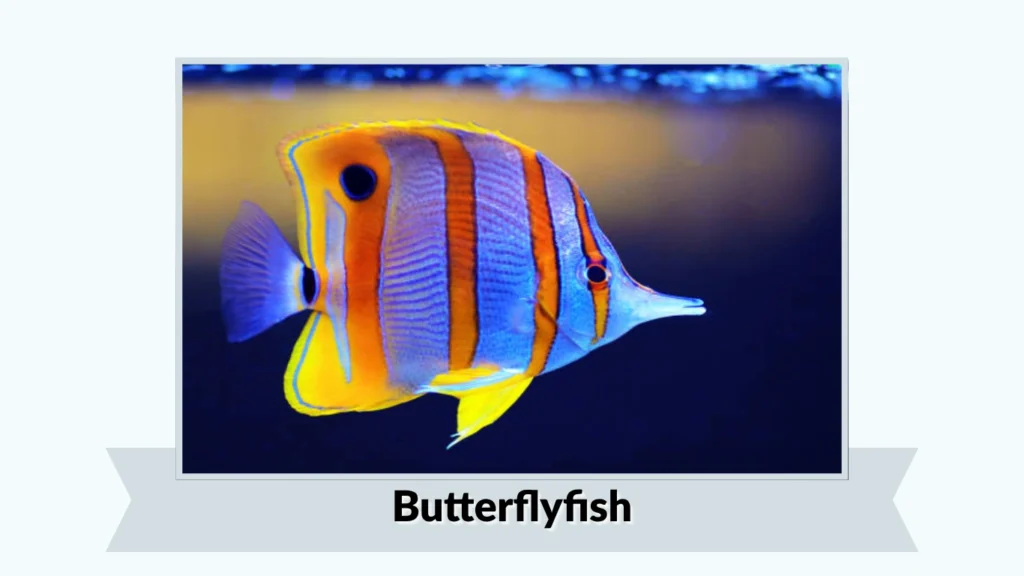
Butterflyfish are beautifully patterned saltwater fish known for their bright colors and delicate, disk-shaped bodies. They often feature bold patterns such as stripes, spots, and eye-like markings, which make them stand out in coral reef environments. These fish are closely related to angelfish and are admired for their graceful swimming and peaceful nature. While they are visually stunning, many species can be challenging to keep in aquariums due to their specialized diets and sensitivity to environmental changes.
Identification
- Thin, disk-shaped body
- Bright colors with stripes, spots, or eye patterns
- Long, narrow snout
- Continuous dorsal fin
- Typically grows 5–9 inches in length
Habitat
Butterflyfish are commonly found in tropical and subtropical coral reefs across the Atlantic, Indian, and Pacific Oceans. They prefer shallow reef areas with abundant coral growth, where they can easily find food and shelter. These fish are often seen swimming in pairs or small groups near reef structures. Coral reefs provide both protection from predators and access to their primary food sources, making them essential to their survival.
Behavior
Butterflyfish are generally peaceful and often form monogamous pairs, especially during breeding. They are active during the day and spend much of their time exploring reef surfaces for food. Some species are territorial, particularly when defending feeding areas. Their slow, graceful swimming style makes them easy to observe. In aquariums, they may become shy and require a calm environment to thrive.
Diet
Butterflyfish have varied diets depending on the species. Many feed on coral polyps, small invertebrates, and plankton. Some species are highly specialized coral feeders, which makes them difficult to maintain in captivity. In aquariums, they may accept frozen foods, flakes, and live feed, but replicating their natural diet can be challenging. Proper nutrition is essential for their survival and health.
Lifespan
In the wild, Butterflyfish typically live around 5 to 10 years. Their lifespan in captivity can vary widely depending on the species and level of care. With proper diet and stable water conditions, they can live several years in an aquarium. However, sensitive species may have shorter lifespans if their needs are not fully met.
6. Damselfish
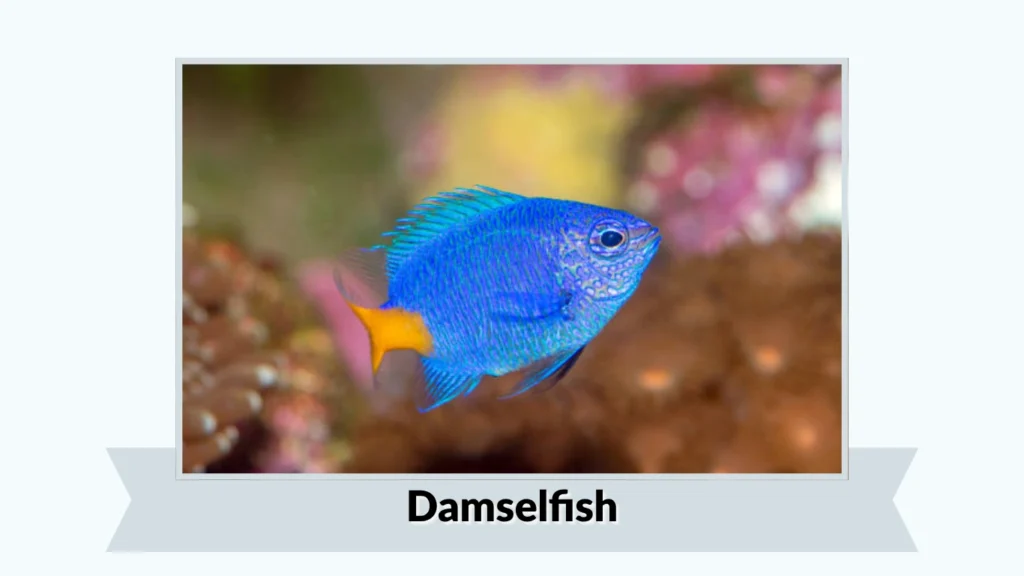
Damselfish are small, hardy saltwater fish known for their bright colors and energetic nature. They are commonly found in coral reefs and are popular among beginner aquarists due to their resilience and adaptability. Despite their small size, damselfish can be quite bold and territorial. Their vibrant appearance, often in shades of blue, yellow, or black, makes them an attractive addition to marine environments. They are also known for their ability to thrive in a wide range of conditions.
Identification
- Small, oval-shaped body
- Bright colors such as blue, yellow, or black
- Short fins with a rounded tail
- Typically grows 2–4 inches in length
- Smooth scales with a glossy appearance
Habitat
Damselfish are widely distributed across tropical and subtropical oceans, especially in the Indo-Pacific region. They are commonly found in shallow coral reefs, lagoons, and rocky coastal areas. These fish prefer environments with plenty of hiding spots such as coral branches and crevices. Juveniles often stay close to sheltered areas, while adults may establish territories within the reef. Their adaptability allows them to survive in various reef conditions.
Behavior
Damselfish are known for their aggressive and territorial behavior, especially toward other fish entering their space. They actively defend their territory, which may include a small patch of algae or a hiding spot. Despite their aggression, they are highly active and constantly swim around their environment. Some species form small groups, while others prefer to live alone. Their bold nature makes them both entertaining and challenging in aquariums.
Diet
Damselfish are omnivores and have a flexible diet. In the wild, they feed on algae, plankton, and small crustaceans. Some species even farm algae within their territory, protecting it as a food source. In aquariums, they readily accept flakes, pellets, and frozen foods. A balanced diet helps maintain their color and overall health. They are not picky eaters, which makes them easy to feed.
Lifespan
Damselfish typically live around 5 to 8 years in the wild. In aquariums, they can live even longer with proper care, sometimes reaching up to 10 years. Their hardy nature contributes to their longevity, especially when provided with stable water conditions and a suitable diet. Regular tank maintenance and proper feeding play a key role in ensuring a healthy lifespan.
7. Lionfish
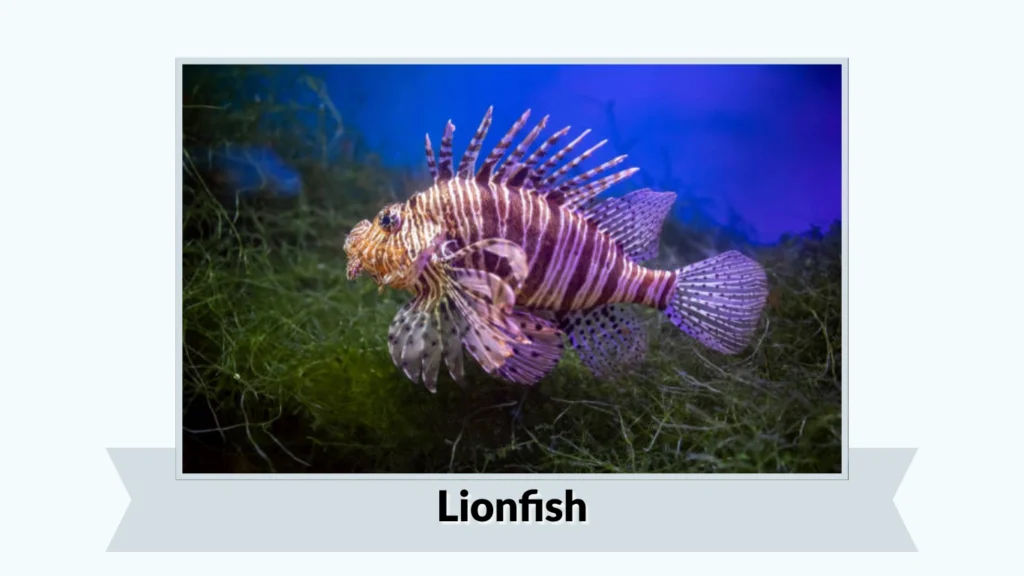
Lionfish are striking saltwater fish known for their dramatic appearance and long, flowing venomous spines. They display bold patterns of red, white, and brown stripes, making them one of the most visually unique marine species. Native to the Indo-Pacific, lionfish have also become invasive in other regions like the Atlantic. While beautiful, they require careful handling due to their venomous spines. Their slow, graceful movement and hunting style make them fascinating to observe.
Identification
- Distinct red, white, and brown striped body
- Long, fan-like pectoral fins
- Venomous spines along the dorsal fin
- Wide, flowing fins giving a “feathered” look
- Typically grows 12–15 inches in length
Habitat
Lionfish are commonly found in coral reefs, rocky crevices, and lagoons in the Indo-Pacific region. They prefer warm, shallow waters but can also be found at deeper depths. These fish often hide in caves or under ledges during the day and become more active at night. Their adaptability allows them to survive in a variety of marine environments, including areas outside their native range.
Behavior
Lionfish are slow-moving but highly effective predators. They use their large fins to corner prey and strike quickly. They are mostly solitary and active during the night. Despite their calm appearance, they are aggressive hunters. Their venomous spines serve as a strong defense against predators. In aquariums, they require careful handling and should not be mixed with small fish that could become prey.
Diet
Lionfish are carnivores and primarily feed on small fish, shrimp, and other crustaceans. In the wild, they use stealth and precision to catch their prey. In captivity, they are often fed live or frozen foods such as shrimp and small fish. Providing a protein-rich diet is essential for their health. Overfeeding should be avoided to maintain proper balance.
Lifespan
Lionfish can live up to 10 to 15 years in the wild. In aquariums, their lifespan depends on proper care, diet, and tank conditions. With good maintenance and a suitable environment, they can live for many years. Their hardy nature helps them adapt well, but they still require responsible care due to their size and predatory behavior.
8. Goby
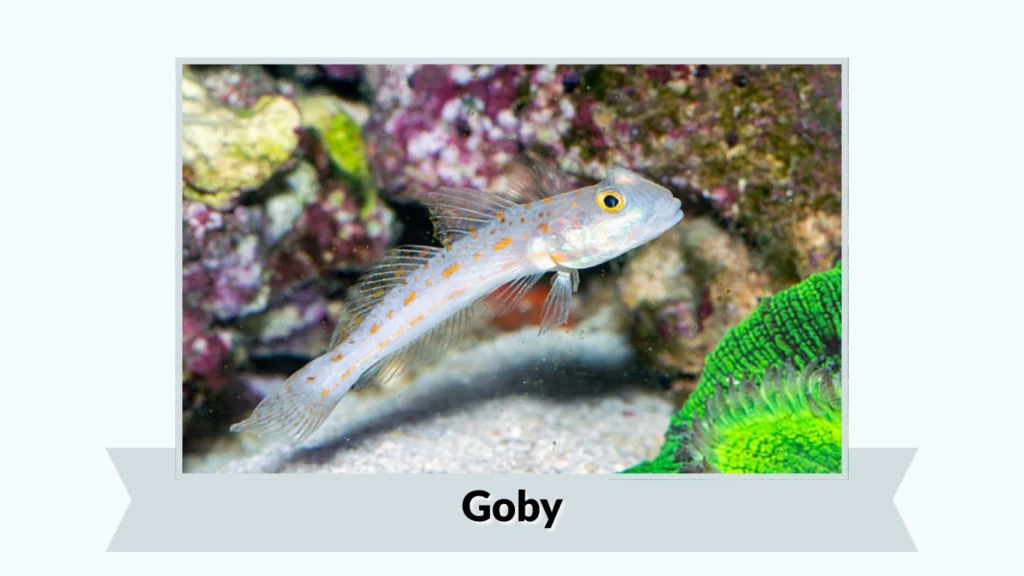
Goby fish are small, bottom-dwelling saltwater species known for their peaceful nature and unique behaviors. They are commonly found resting on sand or rocks and are popular in aquariums due to their manageable size and interesting personalities. Many gobies form symbiotic relationships with other marine creatures, such as shrimp. Their subtle colors and patterns, combined with their calm demeanor, make them a great addition to reef tanks.
Identification
- Small, slender body
- Often muted colors with patterns or spots
- Large eyes relative to body size
- Fused pelvic fins forming a suction-like structure
- Typically grows 1–4 inches in length
Habitat
Goby fish are widely distributed in tropical and subtropical oceans, especially in coral reefs, sandy bottoms, and lagoons. They prefer areas close to the substrate where they can hide in burrows or crevices. Some species live in partnership with shrimp, sharing burrows for protection. These habitats provide safety from predators and easy access to food. Their adaptability allows them to thrive in various reef environments.
Behavior
Gobies are generally peaceful and spend most of their time near the bottom of the tank or ocean floor. Many species exhibit fascinating symbiotic behavior, especially with pistol shrimp, where the shrimp digs a burrow and the goby acts as a lookout. They are not aggressive and do well in community tanks. Their calm nature and interesting habits make them enjoyable to observe.
Diet
Gobies are omnivores, feeding on small invertebrates, plankton, and algae. In the wild, they pick food from sand and rocks. In aquariums, they accept a variety of foods including flakes, pellets, frozen foods, and live feed. A balanced diet helps maintain their health and activity. Regular feeding in small portions is recommended.
Lifespan
Gobies typically live around 3 to 6 years in the wild. In aquariums, they can live longer with proper care, stable water conditions, and a suitable diet. Their small size and peaceful nature contribute to their adaptability. Providing hiding spaces and a stress-free environment helps extend their lifespan.
9. Blenny
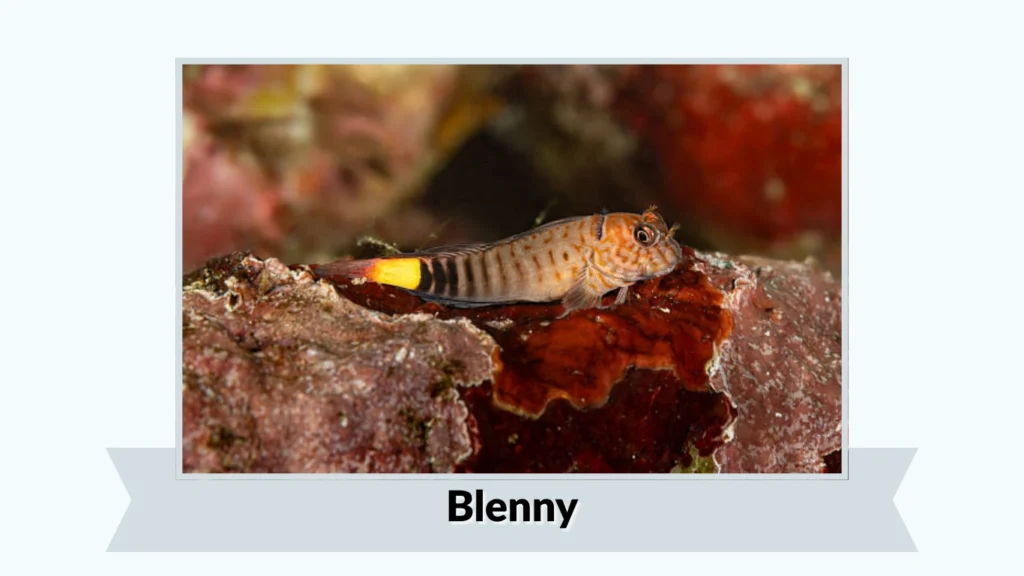
Blenny fish are small, charming saltwater species known for their curious expressions and playful behavior. They often have elongated bodies and are commonly seen resting on rocks or darting between crevices. Blennies are popular in aquariums due to their peaceful nature and algae-eating habits. Their unique personalities and comical appearance make them a favorite among marine hobbyists.
Identification
- Elongated, slender body
- Large head with expressive eyes
- Often has small cirri (hair-like structures) on the head
- Smooth skin with subtle patterns or colors
- Typically grows 2–5 inches in length
Habitat
Blennies are commonly found in shallow coastal waters, coral reefs, and rocky shorelines across tropical and subtropical oceans. They prefer habitats with plenty of hiding spots such as crevices, holes, and coral structures. These environments provide safety from predators and easy access to food sources like algae. Blennies often stay close to the substrate and rarely venture far from their chosen hiding place.
Behavior
Blennies are generally peaceful but can be territorial toward other blennies or similar-looking fish. They spend much of their time perched on rocks, observing their surroundings. These fish are known for their curious and sometimes bold behavior. They may hop from one spot to another rather than swim continuously. Their playful nature makes them entertaining to watch in aquariums.
Diet
Blennies are mostly herbivores, feeding primarily on algae growing on rocks and surfaces. Some species may also consume small invertebrates. In aquariums, they are often valued for their ability to control algae growth. Their diet should include algae-based foods, vegetable matter, and occasional protein sources. A balanced diet helps maintain their health and activity.
Lifespan
Blennies typically live around 3 to 6 years in the wild. In aquariums, they can live longer with proper care, stable water conditions, and a suitable diet. Providing plenty of hiding spaces and a stress-free environment contributes to their longevity. Their hardy nature makes them relatively easy to maintain.
10. Wrasse
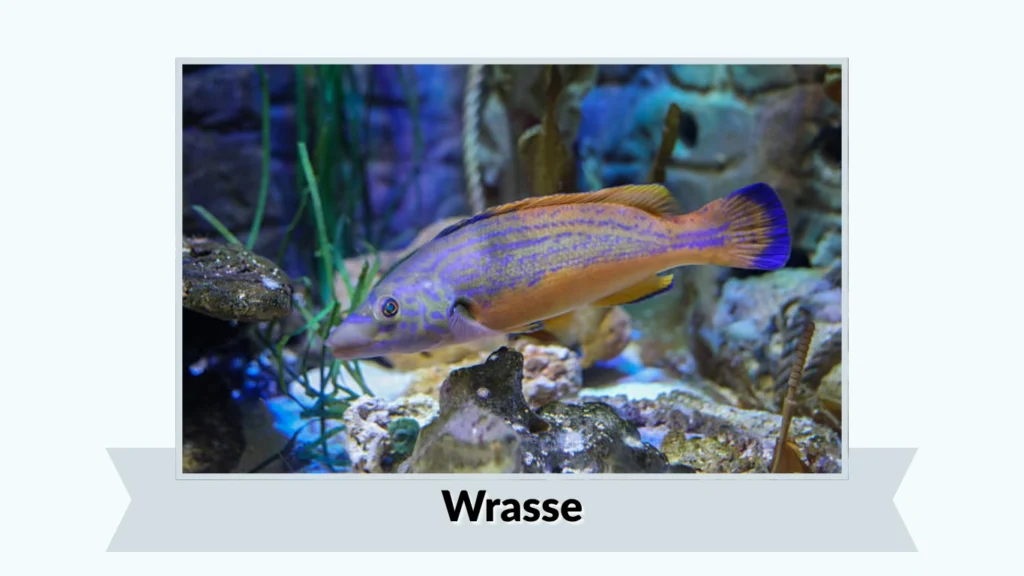
Wrasse are colorful and diverse saltwater fish known for their active swimming and wide variety of patterns. With hundreds of species, they range in size, color, and behavior, making them one of the most varied groups of reef fish. Many wrasses are valued in aquariums for their vibrant appearance and ability to control pests. Their energetic nature and constant movement bring life to coral reef environments.
Identification
- Slender, elongated body
- Bright and varied colors depending on species
- Pointed snout with small mouth
- Smooth scales with a glossy appearance
- Size ranges from 2 to 12 inches or more
Habitat
Wrasse are commonly found in tropical and subtropical coral reefs around the world. They prefer shallow reef areas with plenty of hiding spots such as rocks, coral formations, and sandy bottoms. Some species bury themselves in the sand for protection, especially at night. These environments provide both food and shelter, allowing them to thrive in diverse reef ecosystems.
Behavior
Wrasse are highly active fish that spend most of their time swimming and searching for food. They are generally peaceful but can be territorial depending on the species. Some wrasses are known for their unique behavior of changing sex during their lifetime. Many species bury themselves in sand to sleep or hide from predators. Their lively nature makes them a dynamic presence in aquariums.
Diet
Wrasse are mostly carnivorous, feeding on small invertebrates such as worms, crustaceans, and mollusks. Some species also help control pests like parasites on other fish. In aquariums, they are fed a variety of foods including frozen shrimp, flakes, and pellets. A protein-rich diet is essential to support their energy levels and health.
Lifespan
Wrasse typically live between 5 to 10 years in the wild, depending on the species. In aquariums, their lifespan can vary based on care, diet, and tank conditions. With proper maintenance and a suitable environment, they can live for several years. Providing enough space and hiding spots helps reduce stress and supports longevity.
11. Parrotfish
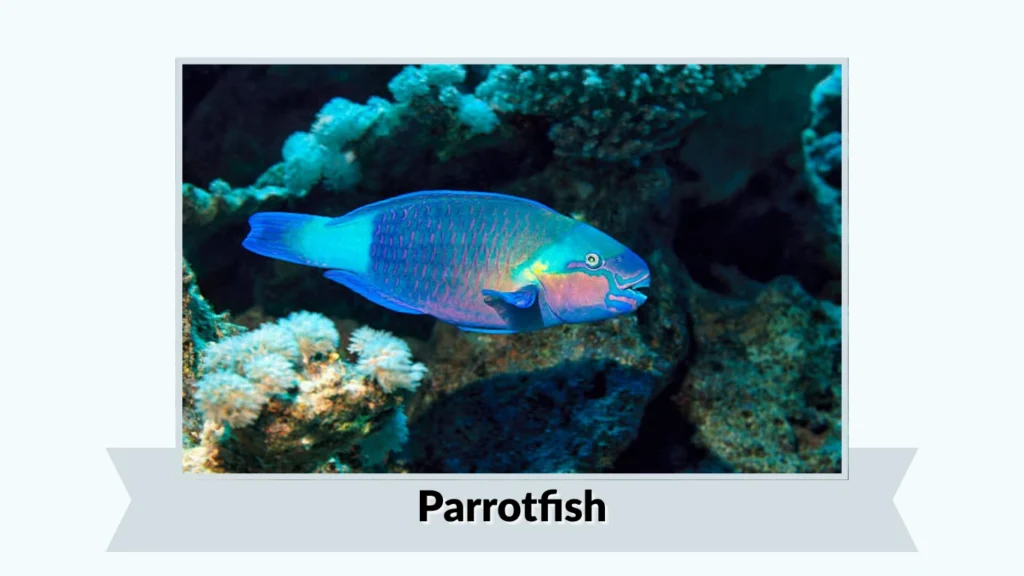
Parrotfish are colorful and unique saltwater fish named for their beak-like teeth, which resemble a parrot’s beak. They are important for coral reef ecosystems as they help maintain reef health by feeding on algae and dead coral. Their bright colors and unusual feeding habits make them fascinating to observe in the wild. Parrotfish are commonly found in tropical waters and are known for their role in producing sand through their feeding process.
Identification
- Bright, vibrant colors such as blue, green, pink, and yellow
- Beak-like fused teeth used for scraping surfaces
- Thick, elongated body
- Large scales with a smooth appearance
- Can grow from 12 inches up to 4 feet depending on species
Habitat
Parrotfish are found in tropical and subtropical coral reefs across the Atlantic, Indian, and Pacific Oceans. They prefer shallow reef areas where algae is abundant. These environments provide both food and shelter. Parrotfish are often seen grazing on coral surfaces during the day. Healthy coral reefs are essential for their survival and ecological role.
Behavior
Parrotfish are active during the day and spend most of their time grazing on algae. They are generally peaceful and may travel alone or in small groups. Some species create a protective mucus cocoon at night to hide their scent from predators. Their constant feeding helps prevent algae overgrowth on reefs, supporting coral health.
Diet
Parrotfish are herbivores that primarily feed on algae growing on coral and rocks. While feeding, they also ingest bits of coral, which are later excreted as fine sand. This process contributes significantly to sand formation in tropical beaches. In captivity, they require algae-based diets and are rarely kept in home aquariums.
Lifespan
Parrotfish can live up to 20 years in the wild, depending on the species and environmental conditions. Their lifespan in captivity is less common due to their specialized needs. Healthy reef environments and abundant food sources are key factors in their longevity.
12. Surgeonfish
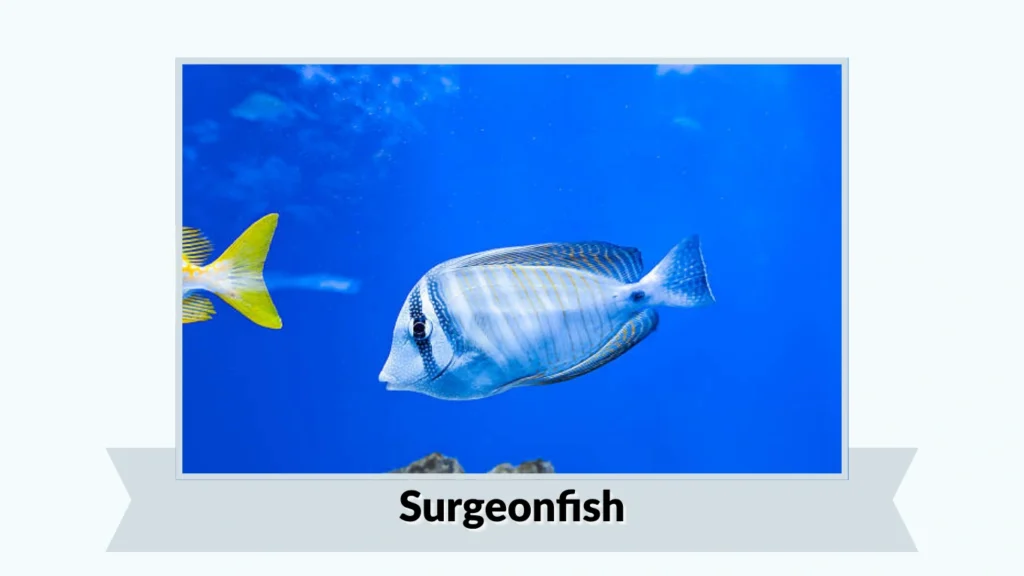
Surgeonfish are vibrant saltwater fish known for their sharp, scalpel-like spines located near the base of their tails. These fish are closely related to tangs and are commonly found in coral reef environments. Their bright colors and active swimming behavior make them popular in marine aquariums. Surgeonfish play an important role in maintaining reef health by feeding on algae, helping to keep coral ecosystems balanced and clean.
Identification
- Flattened, oval-shaped body
- Bright colors such as blue, yellow, or brown
- Sharp, blade-like spine near the tail
- Small mouth adapted for grazing
- Typically grows 7–15 inches depending on species
Habitat
Surgeonfish are widely distributed across tropical and subtropical oceans, especially in the Indo-Pacific region. They inhabit coral reefs, lagoons, and coastal waters with abundant algae growth. These environments provide both food and shelter. They are often found in shallow waters but may also explore deeper reef areas. Coral reefs are essential for their survival and daily activity.
Behavior
Surgeonfish are active swimmers that spend most of their time grazing on algae. They are generally peaceful but can become territorial, especially toward other fish of the same species. Some species form schools, particularly when feeding. Their sharp tail spine is used for defense against predators. In aquariums, they require plenty of swimming space and stable conditions.
Diet
Surgeonfish are primarily herbivores, feeding on algae found on rocks and coral surfaces. This feeding behavior helps maintain the balance of reef ecosystems. In captivity, they should be given a diet rich in marine algae, seaweed, and plant-based foods. Occasional protein supplements can support overall health. A consistent diet helps maintain their coloration and energy.
Lifespan
Surgeonfish can live up to 10 to 20 years in the wild, depending on the species and environmental conditions. In aquariums, their lifespan typically ranges from 8 to 15 years with proper care. Clean water, a balanced diet, and sufficient space are key factors for their longevity. Regular monitoring helps prevent stress and disease.
13. Triggerfish
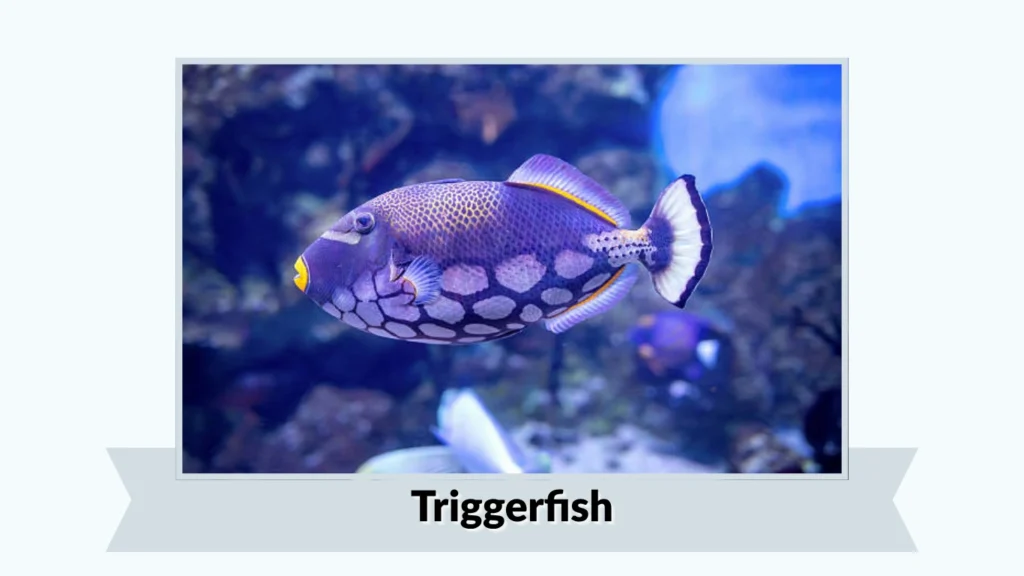
Triggerfish are bold and uniquely shaped saltwater fish known for their strong jaws and striking colors. They are named for their “trigger” mechanism— a spine on their dorsal fin that can lock into place for protection. These fish are intelligent and often display curious behavior. While visually appealing, many triggerfish species can be aggressive, making them more suitable for experienced aquarists.
Identification
- Oval, laterally compressed body
- Bright colors with patterns such as spots or lines
- Strong jaws with prominent teeth
- Distinct dorsal “trigger” spine
- Typically grows 8–20 inches depending on species
Habitat
Triggerfish are found in tropical and subtropical oceans around the world, especially in coral reefs and lagoons. They prefer areas with sandy bottoms, rocks, and coral structures where they can hide and hunt. Some species are also found in open waters near reefs. These environments provide both shelter and a variety of prey, supporting their active lifestyle.
Behavior
Triggerfish are known for their bold and sometimes aggressive behavior. They are territorial and may defend their space fiercely, especially during breeding. Despite this, they are intelligent and can recognize their surroundings and even their caretakers in aquariums. They use their dorsal spine to wedge themselves into crevices for protection from predators.
Diet
Triggerfish are carnivores and have a strong diet consisting of hard-shelled prey such as crustaceans, sea urchins, and mollusks. Their powerful jaws allow them to crush shells easily. In aquariums, they are fed shrimp, squid, and other meaty foods. A protein-rich diet is essential for maintaining their strength and health.
Lifespan
Triggerfish typically live around 10 to 15 years in the wild. In aquariums, their lifespan depends on proper care, diet, and tank conditions. With a suitable environment and regular feeding, they can live for many years. Their hardy nature helps them adapt well, but their aggressive behavior must be managed carefully.
14. Pufferfish
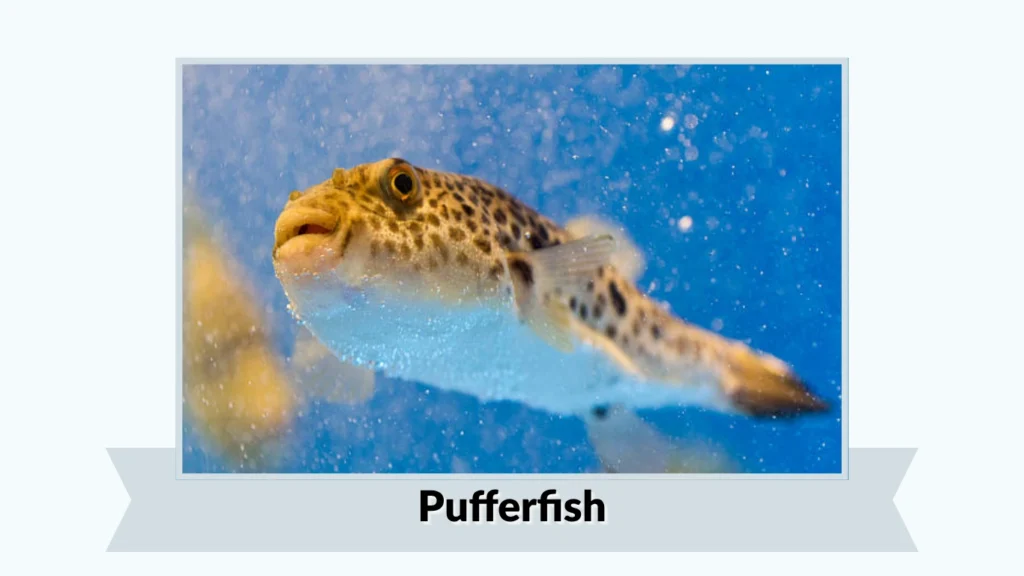
Pufferfish are unique and fascinating saltwater fish known for their ability to inflate their bodies when threatened. They have a rounded appearance and are often covered in small spines. These fish are highly intelligent and display curious behavior, making them popular among experienced aquarists. Despite their cute look, many species contain toxins that can be dangerous if consumed, adding to their distinct reputation.
Identification
- Rounded, expandable body
- Ability to inflate when threatened
- Small spines covering the body
- Beak-like teeth for crushing food
- Typically grows 4–24 inches depending on species
Habitat
Pufferfish are found in tropical and subtropical oceans around the world, especially in coral reefs, lagoons, and coastal waters. They prefer environments with plenty of hiding spots such as rocks and coral formations. Some species are also found in open waters or even brackish environments. These habitats provide both protection and access to food sources.
Behavior
Pufferfish are generally slow-moving and curious. They use their ability to inflate as a defense mechanism against predators. While some species are peaceful, others can be territorial or aggressive. They are intelligent fish and can recognize their environment and caretakers in aquariums. Their calm but alert nature makes them interesting to observe.
Diet
Pufferfish are carnivores and primarily feed on hard-shelled prey such as snails, crabs, and shellfish. Their strong beak-like teeth continuously grow, so they need hard foods to keep them trimmed. In aquariums, they are fed shrimp, clams, and other meaty foods. A proper diet is essential for maintaining their dental health.
Lifespan
Pufferfish can live between 10 to 20 years in the wild, depending on the species. In captivity, their lifespan varies based on care, diet, and tank conditions. With proper maintenance and a suitable environment, they can live for many years. Regular feeding and monitoring are important for their long-term health.
15. Seahorse
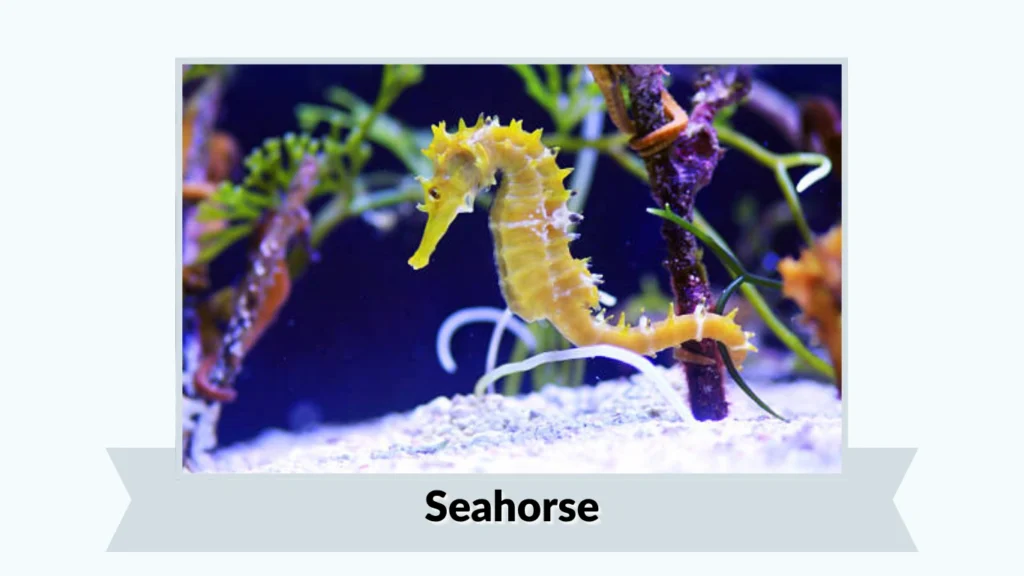
Seahorses are small, delicate saltwater fish known for their upright posture and horse-like head shape. Unlike most fish, they swim vertically and use their tails to grasp objects like coral and seagrass. They are slow swimmers and rely heavily on camouflage to avoid predators. Seahorses are unique not only in appearance but also in behavior, especially their unusual reproductive process where males carry the eggs.
Identification
- Upright, horse-like head and curved neck
- Prehensile tail used for gripping
- Bony body with a rough texture
- Small dorsal fin used for movement
- Typically grows 1–6 inches in length
Habitat
Seahorses are commonly found in shallow tropical and temperate waters around the world. They prefer seagrass beds, coral reefs, mangroves, and sheltered coastal areas. These habitats provide plenty of places to anchor themselves using their tails. Calm waters are important because seahorses are weak swimmers and can struggle in strong currents.
Behavior
Seahorses are slow-moving and rely on camouflage to blend into their surroundings. They often stay anchored to plants or coral using their tails. One of their most unique behaviors is reproduction—males carry fertilized eggs in a pouch until they hatch. Seahorses are generally peaceful and often form monogamous pairs, staying close to their partners.
Diet
Seahorses are carnivores and feed mainly on tiny crustaceans such as brine shrimp and plankton. They do not have teeth, so they suck in food through their snout. In aquariums, they require frequent feeding with small live or frozen foods. Due to their slow feeding habits, they need a calm environment to eat properly.
Lifespan
Seahorses typically live between 1 to 5 years in the wild, depending on the species and environmental conditions. In captivity, their lifespan can vary based on care and diet. Providing a stress-free environment and proper nutrition is essential for their survival.
16. Mandarin Fish
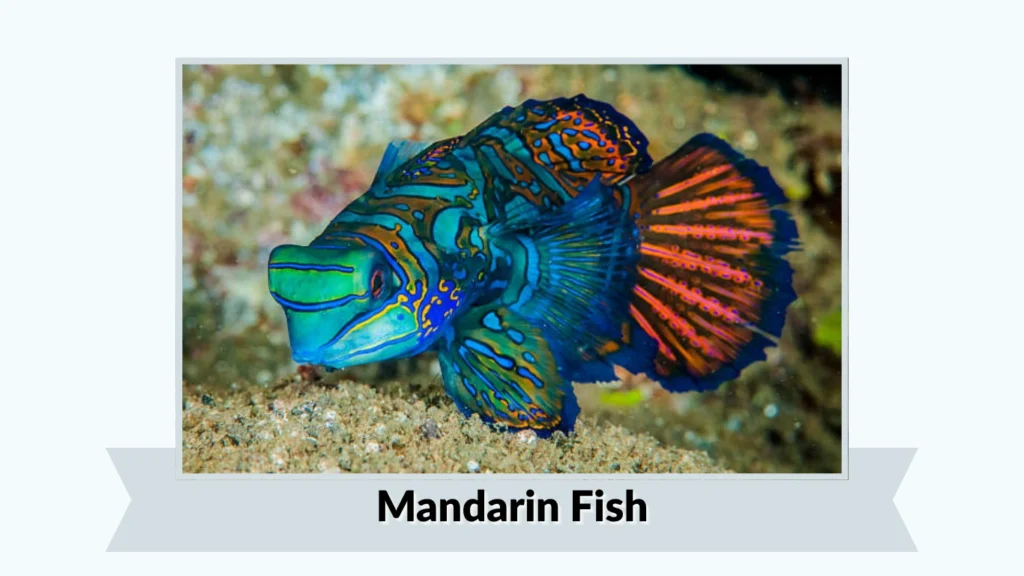
Mandarin Fish are among the most colorful and visually stunning saltwater fish, known for their intricate patterns and bright hues of blue, green, orange, and red. They are highly prized in the aquarium trade for their beauty, but they require specialized care due to their specific dietary needs. These small, peaceful fish are often found slowly moving along the ocean floor, making them fascinating to observe.
Identification
- Bright, psychedelic patterns with blue, green, and orange colors
- Small, elongated body
- Large, rounded pectoral fins used for movement
- Scaleless skin with a smooth texture
- Typically grows 2–3 inches in length
Habitat
Mandarin Fish are found in the Pacific Ocean, particularly around coral reefs in regions like the Philippines, Indonesia, and Australia. They prefer shallow reef areas with plenty of live rock and sand. These environments provide hiding spots and a rich supply of tiny organisms they feed on. They are usually found near the bottom, moving slowly among coral and substrate.
Behavior
Mandarin Fish are peaceful and shy, often spending their time slowly exploring the reef floor. They are not aggressive and do best in calm environments with minimal competition. They are most active during the day and may display courtship dances during breeding. Their slow movement and gentle nature make them vulnerable to more aggressive fish.
Diet
Mandarin Fish are carnivores with a highly specialized diet. They primarily feed on tiny live organisms such as copepods and other micro-crustaceans found in the substrate. In aquariums, they can be difficult to feed unless the tank has a well-established population of live food. Some may accept frozen foods, but many rely heavily on natural sources.
Lifespan
Mandarin Fish typically live around 10 to 15 years in the wild under ideal conditions. In captivity, their lifespan can be shorter if their dietary needs are not met. With proper care and a well-maintained environment, they can live for several years.
17. Firefish
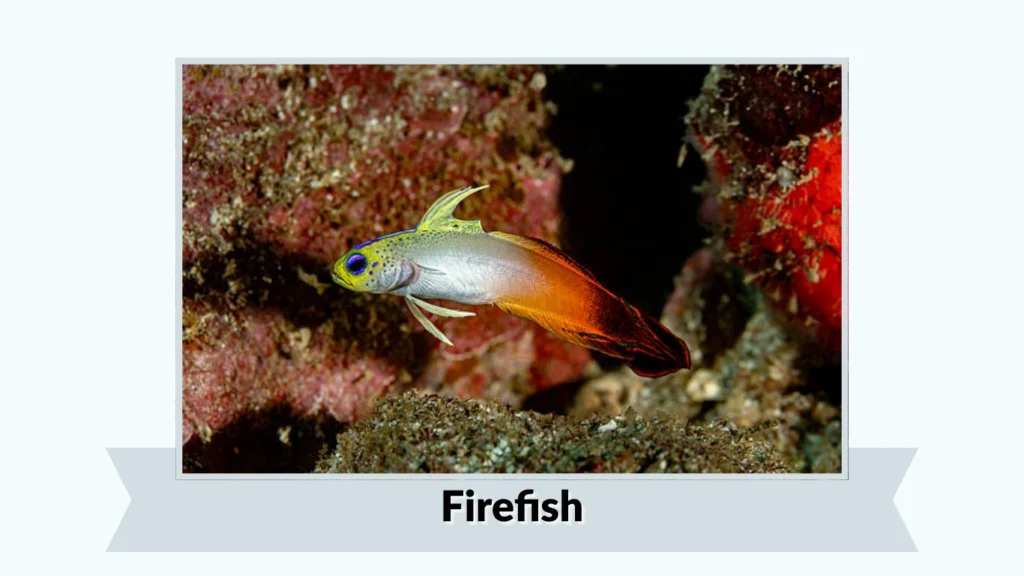
Firefish are small, colorful saltwater fish known for their slender bodies and striking coloration, often featuring shades of white, red, and orange. They are peaceful and popular in reef aquariums due to their calm nature and elegant swimming style. Firefish are also known for their quick movements and tendency to dart into hiding when startled, making them both beautiful and shy additions to marine environments.
Identification
- Slender, elongated body
- Gradient colors from white to red or orange
- Long, pointed dorsal fin
- Large eyes and small mouth
- Typically grows 2–3 inches in length
Habitat
Firefish are found in tropical Indo-Pacific waters, especially around coral reefs and sandy bottoms. They prefer areas with plenty of crevices and burrows where they can quickly hide from predators. These habitats provide both safety and access to food. Firefish often stay close to their chosen hiding spot and rarely stray far from it.
Behavior
Firefish are peaceful and shy fish that usually live alone or in pairs. They are known for their quick, darting movements when frightened. Most of their time is spent hovering above the substrate, watching for food. They are not aggressive and do well in calm community tanks. Providing hiding spots is essential for their sense of security.
Diet
Firefish are carnivores that feed on small plankton and tiny invertebrates in the wild. In aquariums, they accept a variety of foods such as finely chopped frozen foods, brine shrimp, and high-quality flakes. Regular feeding in small portions helps maintain their health and energy levels.
Lifespan
Firefish typically live around 5 to 7 years in the wild. In aquariums, they can live several years with proper care and a stress-free environment. Stable water conditions and a suitable diet are important for their longevity.
18. Hawkfish
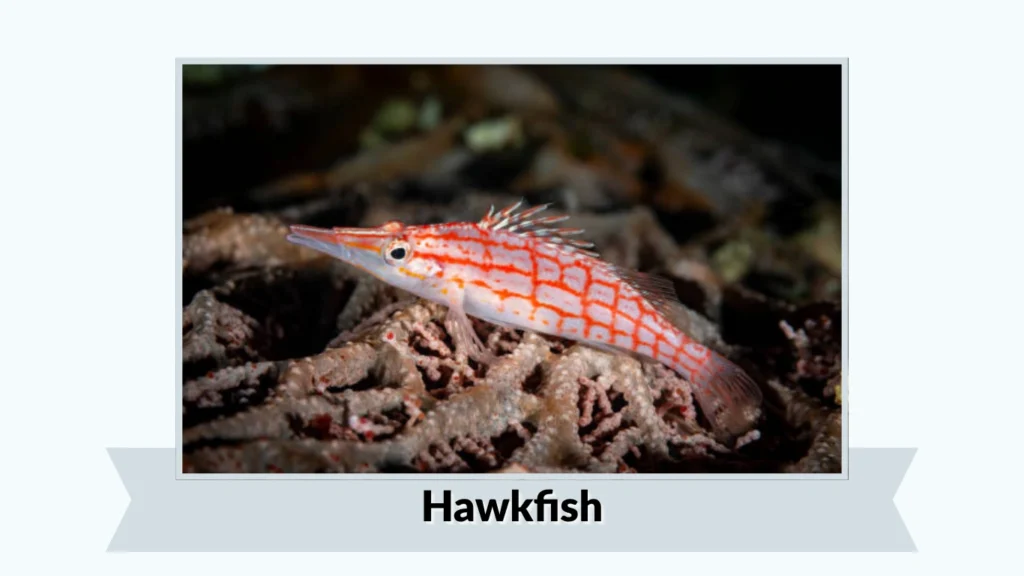
Hawkfish are small to medium-sized saltwater fish known for their perch-like behavior and watchful nature. They often sit on coral or rocks, observing their surroundings like a hawk, which is how they got their name. With bold patterns and a sturdy body, they are both attractive and interesting to watch. Hawkfish are popular in aquariums due to their hardy nature and unique personality.
Identification
- Stout, elongated body
- Bright colors with spots or stripes
- Large head with prominent eyes
- Thick pectoral fins used for perching
- Typically grows 3–6 inches in length
Habitat
Hawkfish are commonly found in coral reefs across the Indo-Pacific region. They prefer areas with plenty of coral heads and rocky outcrops where they can perch and observe. These environments provide both shelter and a good vantage point for spotting prey. They are usually found in shallow reef waters but can also inhabit deeper areas.
Behavior
Hawkfish are known for their perching behavior, often resting on coral or rocks while watching for prey. They are generally solitary and can be territorial, especially toward smaller fish or shrimp. Despite this, they are relatively hardy and adapt well to aquarium life. Their alert and curious nature makes them engaging to observe.
Diet
Hawkfish are carnivores that feed on small fish, shrimp, and crustaceans. They are ambush predators, waiting patiently before striking their prey. In aquariums, they are fed a diet of frozen shrimp, fish, and other meaty foods. A protein-rich diet is important for maintaining their health and activity.
Lifespan
Hawkfish typically live around 5 to 10 years in the wild. In aquariums, their lifespan depends on proper care, diet, and tank conditions. With a stable environment and regular feeding, they can live for several years. Their hardy nature contributes to their relatively long lifespan in captivity.
19. Rabbitfish
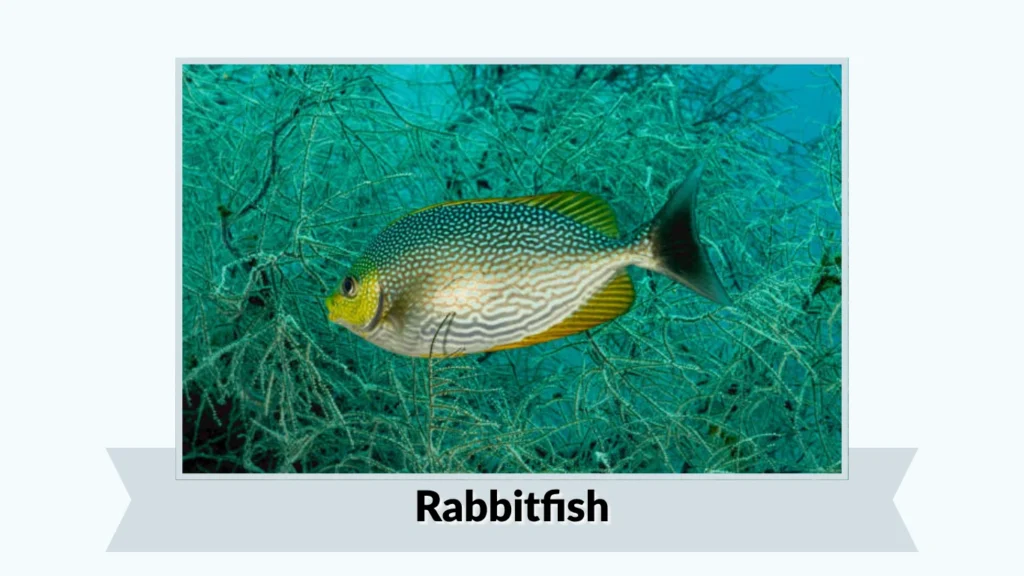
Rabbitfish are colorful saltwater fish known for their elongated bodies and rabbit-like faces. They are often recognized for their calm behavior and their ability to graze on algae, making them beneficial for reef environments. Some species also have venomous spines, which provide protection from predators. Their unique appearance and useful role in controlling algae make them popular in marine aquariums.
Identification
- Elongated body with a slightly pointed face
- Often bright yellow or mixed with dark patterns
- Large eyes and small mouth
- Venomous dorsal spines
- Typically grows 8–12 inches in length
Habitat
Rabbitfish are commonly found in the Indo-Pacific region, especially in coral reefs, lagoons, and coastal waters. They prefer shallow waters with abundant algae growth. These environments provide both food and shelter. They are often seen near reef edges or seagrass beds where they can graze freely.
Behavior
Rabbitfish are generally peaceful and may be seen alone, in pairs, or small groups. They are mostly active during the day and spend much of their time feeding. When threatened, they rely on their venomous spines for defense. In aquariums, they are usually calm but may become shy if stressed.
Diet
Rabbitfish are herbivores and primarily feed on algae. They play an important role in keeping reef environments clean by preventing excessive algae growth. In captivity, they should be fed seaweed, algae-based foods, and vegetable matter. Occasional protein can be added for balance.
Lifespan
Rabbitfish typically live around 5 to 10 years in the wild. In aquariums, they can live for several years with proper care, stable water conditions, and a suitable diet. Their hardy nature helps them adapt well to captivity.
20. Cardinalfish
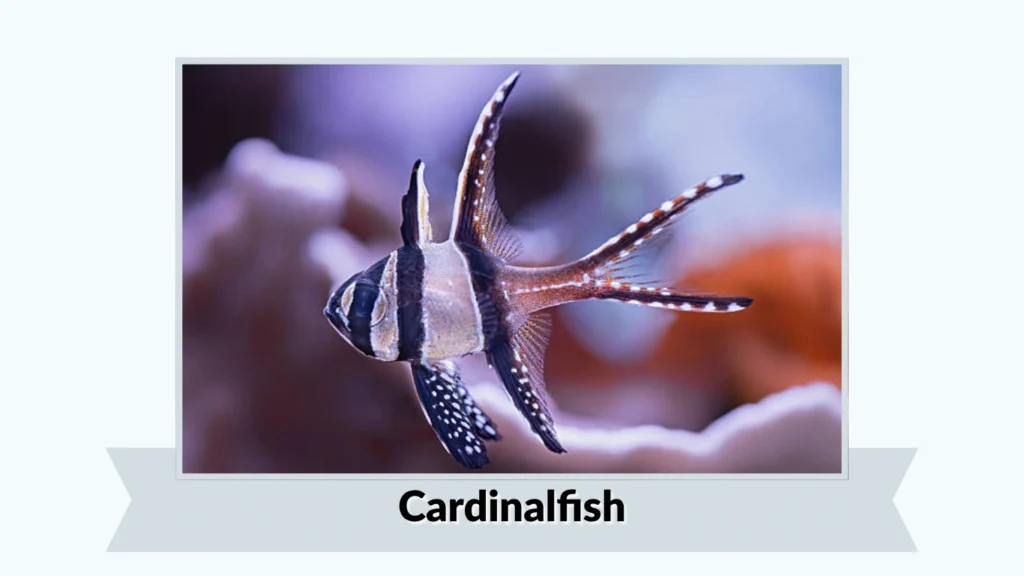
Cardinalfish are small, peaceful saltwater fish known for their subtle beauty and large eyes. They are commonly found in coral reefs and are popular in aquariums due to their calm nature and ease of care. Many species display soft colors with distinctive markings, making them attractive despite their understated appearance. They are especially active during the night, which makes them unique compared to many other reef fish.
Identification
- Small, oval-shaped body
- Large, prominent eyes
- Silvery, red, or patterned coloration
- Often features stripes or spots
- Typically grows 2–4 inches in length
Habitat
Cardinalfish are widely distributed across tropical and subtropical oceans, particularly in the Indo-Pacific region. They inhabit coral reefs, lagoons, and sheltered coastal waters. These fish prefer areas with plenty of hiding spaces such as coral branches and crevices. During the day, they often stay hidden, while at night they become more active in open water.
Behavior
Cardinalfish are peaceful and often found in small groups. They are nocturnal, meaning they are most active at night when they search for food. During the day, they remain in sheltered areas to avoid predators. Some species exhibit mouthbrooding behavior, where males carry fertilized eggs in their mouths until they hatch.
Diet
Cardinalfish are carnivores that feed mainly on small plankton and tiny invertebrates. In aquariums, they accept a variety of foods including frozen shrimp, flakes, and small pellets. Regular feeding in small portions helps maintain their health. A protein-rich diet supports their energy and growth.
Lifespan
Cardinalfish typically live around 3 to 5 years in the wild. In aquariums, they can live longer with proper care and stable conditions. Providing a peaceful environment and a balanced diet helps extend their lifespan.
21. Anthias
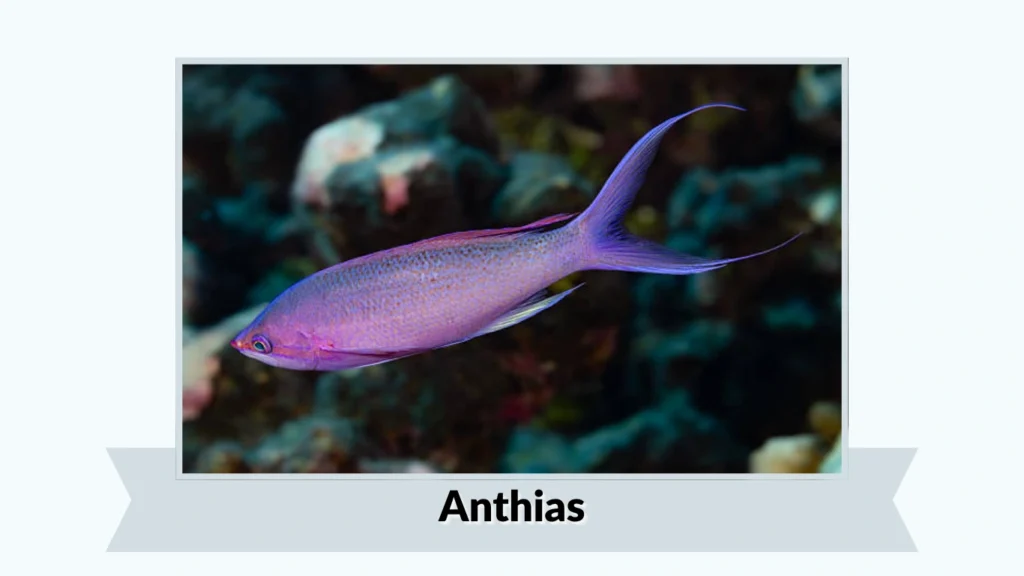
Anthias are small, brightly colored saltwater fish known for their vibrant hues of pink, orange, purple, and yellow. They are highly active swimmers and are often seen in large groups hovering above coral reefs. Their striking colors and schooling behavior make them a popular choice in reef aquariums. However, they require frequent feeding and stable conditions to thrive.
Identification
- Small, slender body
- Bright colors such as pink, orange, or purple
- Forked tail fin
- Large eyes and small mouth
- Typically grows 3–5 inches in length
Habitat
Anthias are commonly found in tropical coral reefs across the Indo-Pacific region. They prefer open water areas just above reefs, where they can swim freely in groups. These environments provide access to plankton, their main food source, and nearby coral for shelter. They are usually found in areas with strong water movement.
Behavior
Anthias are social fish that live in large groups called harems, usually consisting of one dominant male and multiple females. They are active during the day and spend most of their time swimming in the water column. Like some other reef fish, they can change sex, with dominant females becoming males if needed. They are generally peaceful but require group living to feel secure.
Diet
Anthias are carnivores that primarily feed on zooplankton. In aquariums, they require frequent feeding—often multiple times a day—with small portions of high-quality foods such as brine shrimp, mysis shrimp, and finely chopped seafood. A consistent feeding schedule is essential to maintain their energy and health.
Lifespan
Anthias typically live around 5 to 7 years in the wild. In aquariums, their lifespan depends heavily on proper feeding and care. With a well-maintained environment and regular feeding, they can live several years.
22. Boxfish
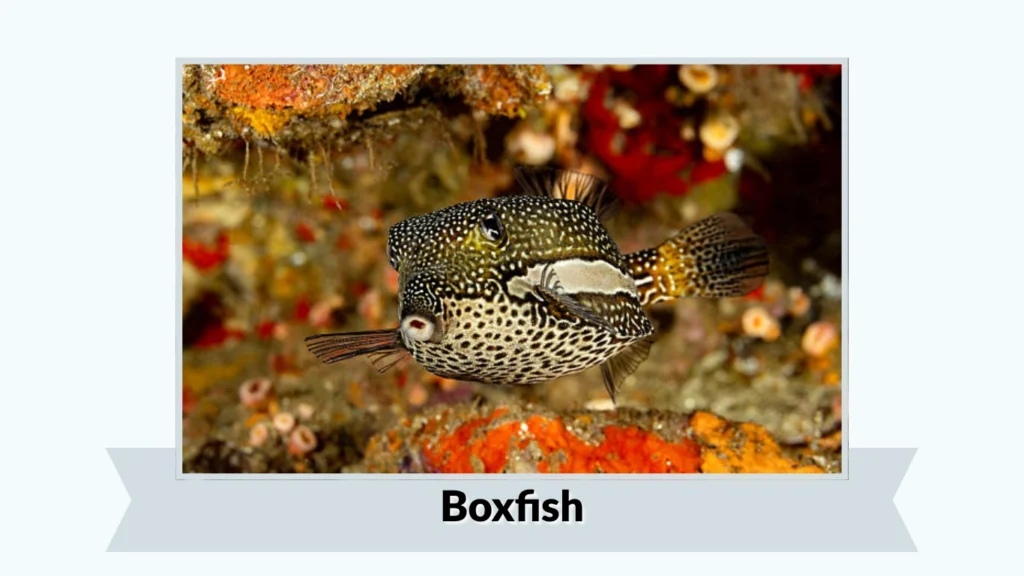
Boxfish are unique saltwater fish known for their box-like shape and rigid, bony bodies. Their unusual appearance and slow, gentle movement make them stand out among reef fish. Many species display bright colors and interesting patterns, adding to their visual appeal. Despite their calm nature, some boxfish can release toxins when stressed, which makes them a more advanced choice for aquariums.
Identification
- Box-shaped, rigid body
- Hard, bony outer covering
- Bright colors with spots or patterns
- Small fins used for slow movement
- Typically grows 4–18 inches depending on species
Habitat
Boxfish are commonly found in tropical and subtropical oceans, especially in coral reefs and lagoons. They prefer calm, shallow waters with sandy bottoms and plenty of hiding places. These environments provide protection and access to food. Boxfish are often seen moving slowly near the reef or resting close to the substrate.
Behavior
Boxfish are slow-moving and generally peaceful. They rely on their tough outer body and ability to release toxins as defense mechanisms. They are not aggressive and usually do well with other calm fish. Their gentle swimming style and curious nature make them interesting to observe in both natural and aquarium settings.
Diet
Boxfish are omnivores and feed on a variety of foods, including algae, small invertebrates, and plankton. In aquariums, they can be fed a mix of flakes, pellets, and frozen foods. A balanced diet helps maintain their health and coloration. Regular feeding in small amounts is recommended.
Lifespan
Boxfish typically live around 5 to 10 years in the wild. In captivity, their lifespan depends on proper care and stable water conditions. With a suitable environment and diet, they can live for several years. Stress should be minimized due to their ability to release toxins.
23. Moray Eel
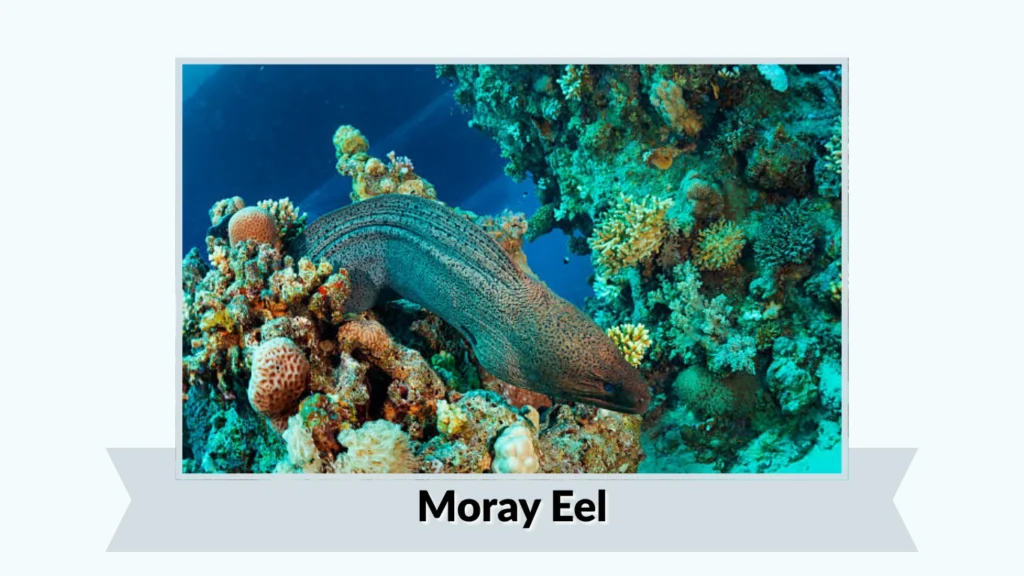
Moray Eels are long, snake-like saltwater fish known for their elongated bodies and wide mouths filled with sharp teeth. They are often seen hiding in crevices with only their heads visible. Despite their intimidating appearance, they are an important part of reef ecosystems. Moray eels are fascinating predators and are commonly found in both coral reefs and rocky marine environments.
Identification
- Long, snake-like body
- Smooth, scaleless skin
- Large mouth with sharp, visible teeth
- Continuous dorsal fin along the body
- Can grow from 1 to over 10 feet depending on species
Habitat
Moray Eels are found in tropical and subtropical oceans worldwide. They prefer coral reefs, rocky areas, and crevices where they can hide during the day. These environments provide protection and access to prey. They are typically found in shallow waters but can also inhabit deeper regions. Their hiding behavior helps them avoid predators and ambush prey.
Behavior
Moray Eels are mostly solitary and spend much of their time hidden in rocks or coral. They are nocturnal hunters, becoming more active at night. Their open-mouth appearance is actually a breathing behavior, not aggression. While they can bite if threatened, they are generally not dangerous unless provoked.
Diet
Moray Eels are carnivores that feed on fish, crustaceans, and cephalopods. They use their strong jaws and sharp teeth to catch and hold prey. Some species even have a second set of jaws to help pull food into their throat. In captivity, they are fed fish, shrimp, and other meaty foods.
Lifespan
Moray Eels can live between 10 to 30 years in the wild, depending on the species. In aquariums, their lifespan varies based on care and tank conditions. With proper maintenance and feeding, they can live for many years.
24. Snapper
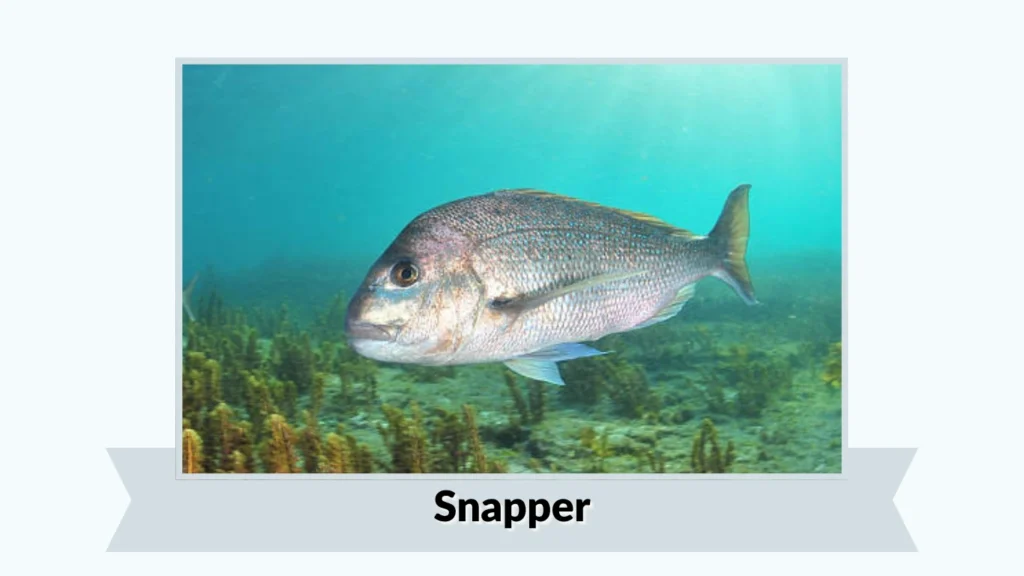
Snapper are popular saltwater fish known for their strong bodies, sharp teeth, and importance in both commercial fishing and marine ecosystems. They come in various colors, often ranging from red and pink to silver and yellow. Snappers are active swimmers and are commonly found in coastal waters and coral reefs. Their firm flesh also makes them highly valued as food fish around the world.
Identification
- Elongated, streamlined body
- Sharp teeth with a strong jaw
- Colors vary from red, pink, yellow to silver
- Forked tail fin
- Typically grows 1–3 feet depending on species
Habitat
Snapper are widely distributed in tropical and subtropical oceans, especially in the Atlantic, Indian, and Pacific regions. They are commonly found in coral reefs, rocky bottoms, and coastal waters. Juveniles often stay in shallow areas like mangroves or estuaries, while adults move to deeper waters. These habitats provide both protection and access to food.
Behavior
Snapper are generally active and may be found alone or in groups. Some species form large schools, especially during feeding or migration. They are alert and quick swimmers, which helps them avoid predators. Snappers are mostly active during the day but can also feed at night depending on conditions.
Diet
Snapper are carnivores and feed on fish, crustaceans, and other small marine animals. They use their sharp teeth to catch and hold prey. In the wild, they are opportunistic feeders. In captivity, they are fed a protein-rich diet including fish and shrimp. A balanced diet supports their growth and health.
Lifespan
Snapper can live between 10 to 20 years in the wild, depending on the species. Their lifespan in captivity varies based on care and environment. Healthy habitats and proper feeding play a key role in their longevity.
25. Grouper
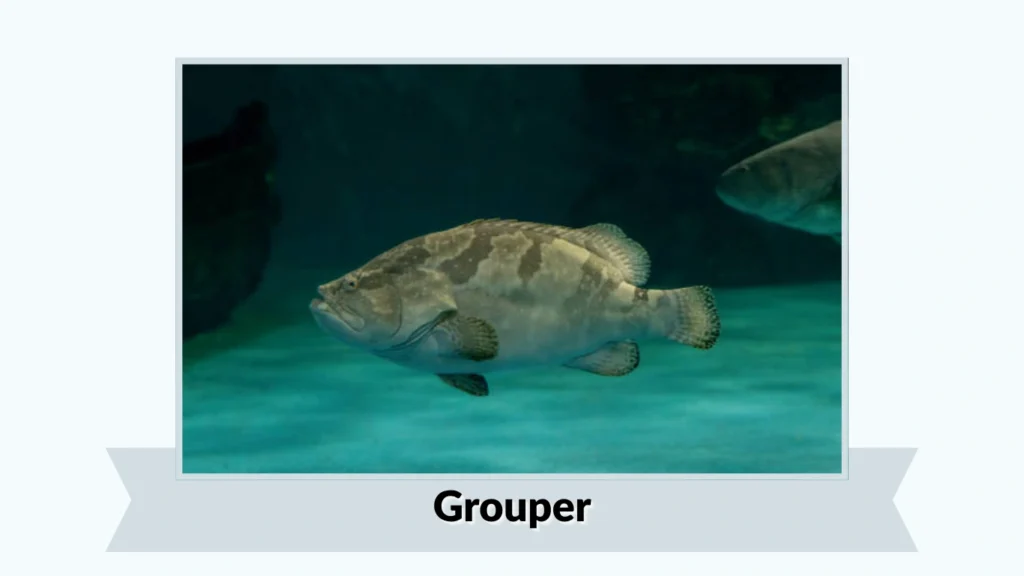
Grouper are large, powerful saltwater fish known for their heavy bodies and big mouths. They are commonly found in warm ocean waters and are important both ecologically and commercially. Groupers are ambush predators, often hiding in reefs before striking their prey. Their size and strength make them one of the dominant fish in reef environments.
Identification
- Large, stout body
- Wide mouth with thick lips
- Usually brown, gray, or spotted patterns
- Rounded tail fin
- Can grow from 1 to over 8 feet depending on species
Habitat
Grouper are found in tropical and subtropical oceans worldwide, especially in coral reefs, rocky bottoms, and offshore waters. They prefer areas with caves, ledges, and crevices where they can hide. Juveniles often stay in shallow coastal areas, while adults move to deeper waters. These habitats provide shelter and access to prey.
Behavior
Grouper are solitary and territorial fish. They are known for their ambush hunting style, waiting quietly before quickly swallowing prey. They are generally slow-moving but can strike with great speed. Some species are known to interact with other marine animals during hunting. In aquariums, they require large tanks due to their size.
Diet
Grouper are carnivores that feed on fish, crabs, and other marine animals. They use their large mouths to swallow prey whole. In captivity, they are fed a protein-rich diet including fish and shellfish. Their feeding behavior is aggressive and efficient.
Lifespan
Grouper can live for a long time, often between 20 to 50 years in the wild depending on the species. Their lifespan in captivity varies but can also be long with proper care. Clean water and adequate space are essential for their health and longevity.
26. Barracuda
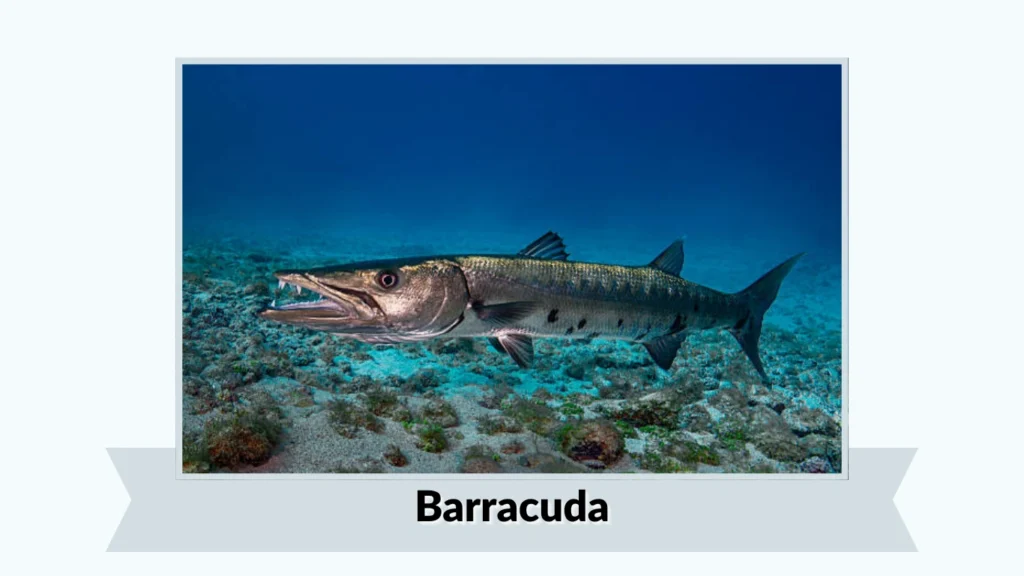
Barracuda are fast, predatory saltwater fish known for their sleek bodies and fearsome appearance. They are powerful swimmers with sharp teeth and excellent vision, making them highly effective hunters. Barracuda are commonly found in tropical and subtropical oceans and are often seen patrolling open waters near reefs. Their speed and agility make them one of the top predators in their environment.
Identification
- Long, streamlined body
- Large mouth with sharp, pointed teeth
- Silver or gray coloration with darker markings
- Forked tail fin
- Can grow up to 6 feet or more in length
Habitat
Barracuda are found in warm ocean waters worldwide, especially in tropical and subtropical regions. They are commonly seen near coral reefs, seagrass beds, and open coastal waters. Juveniles often stay in shallow, protected areas, while adults move into deeper waters. These habitats provide both hunting opportunities and protection during early life stages.
Behavior
Barracuda are solitary and highly aggressive predators. They rely on speed and surprise to catch their prey. They are known for their sudden bursts of movement and sharp turns. Despite their intimidating look, attacks on humans are rare. They are most active during the day and often hover motionless before striking.
Diet
Barracuda are carnivores that feed primarily on smaller fish such as sardines and anchovies. They use their sharp teeth to catch and tear apart prey. In captivity, they require a diet of fresh fish and other meaty foods. Their feeding behavior is fast and aggressive, reflecting their predatory nature.
Lifespan
Barracuda typically live around 10 to 15 years in the wild. Their lifespan in captivity is less common due to their size and specific needs. With suitable conditions, they can live for many years. Proper space and diet are essential for their health.
27. Mackerel
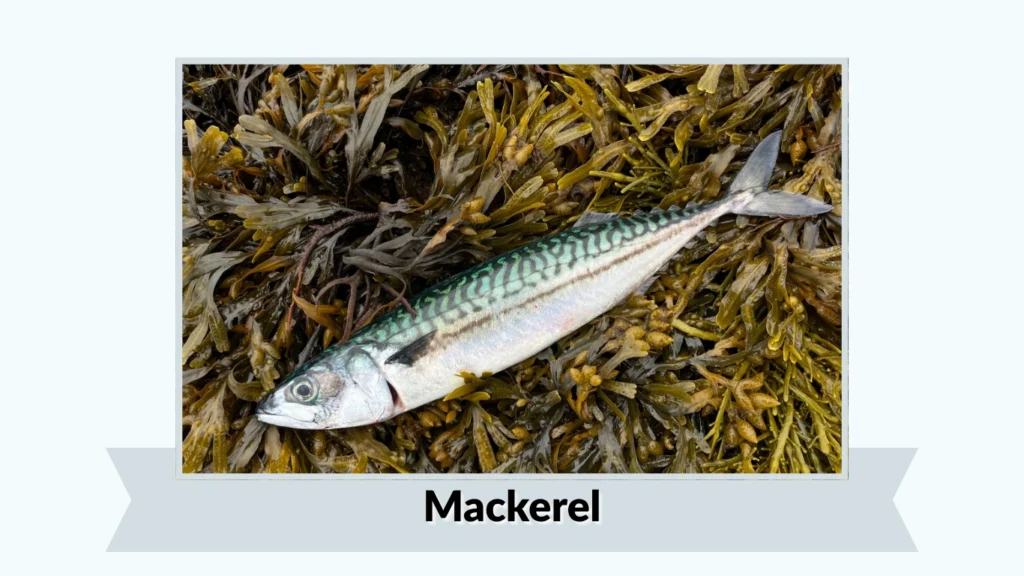
Mackerel are fast-swimming saltwater fish known for their streamlined bodies and metallic coloration. They are widely found in oceans around the world and are important both ecologically and commercially. Mackerel are highly active and often travel in large schools, making them a common sight in open waters. Their speed and agility help them escape predators and catch prey efficiently.
Identification
- Streamlined, torpedo-shaped body
- Metallic blue or green back with silvery sides
- Distinct vertical stripes on the upper body
- Forked tail fin
- Typically grows 1–2 feet in length
Habitat
Mackerel are found in temperate and tropical oceans worldwide. They prefer open waters but are often seen near coastal areas and continental shelves. These fish migrate seasonally in search of food and suitable water temperatures. Their habitats are usually rich in plankton and small fish, which provide ample feeding opportunities.
Behavior
Mackerel are highly active and social fish that travel in large schools. This schooling behavior helps protect them from predators and improves feeding efficiency. They are fast swimmers and can cover long distances during migration. Their coordinated movements make them one of the most dynamic fish in the ocean.
Diet
Mackerel are carnivores that feed on small fish, plankton, and crustaceans. They hunt in groups, making it easier to catch prey. In captivity, they are rarely kept, but their diet would consist of small fish and protein-rich foods. Their feeding habits support their high energy levels.
Lifespan
Mackerel typically live around 5 to 10 years in the wild, depending on the species. Their lifespan is influenced by environmental conditions and predation. In managed environments, proper care and diet can help maintain their health, although they are not commonly kept in aquariums.
FAQs
What is the most common saltwater fish?
Clownfish are among the most common saltwater fish, especially in aquariums. Their bright color, hardy nature, and easy care make them ideal for beginners. They are also widely recognized due to their appearance in popular media, which increases their popularity among marine fish enthusiasts.
Which saltwater fish is best for beginners?
Fish like clownfish, damselfish, and gobies are considered best for beginners. They are hardy, adaptable, and can tolerate slight changes in water conditions. These fish are also relatively easy to feed and maintain, making them suitable for those new to saltwater aquariums.
Are saltwater fish harder to keep than freshwater fish?
Yes, saltwater fish are generally harder to keep than freshwater fish. They require more stable water conditions, proper salinity levels, and specialized equipment. Maintaining a saltwater aquarium also involves more effort and cost compared to freshwater setups.
What do saltwater fish eat?
Saltwater fish have varied diets depending on their species. Some are herbivores that eat algae, while others are carnivores that consume small fish or crustaceans. Many are omnivores and eat a mix of both. In aquariums, they are fed flakes, pellets, frozen, or live foods.
How long do saltwater fish live?
The lifespan of saltwater fish varies widely by species. Smaller fish may live 3 to 5 years, while larger species like tangs or groupers can live 10 to 20 years or more. Proper care, diet, and a stable environment play a key role in determining their lifespan.