
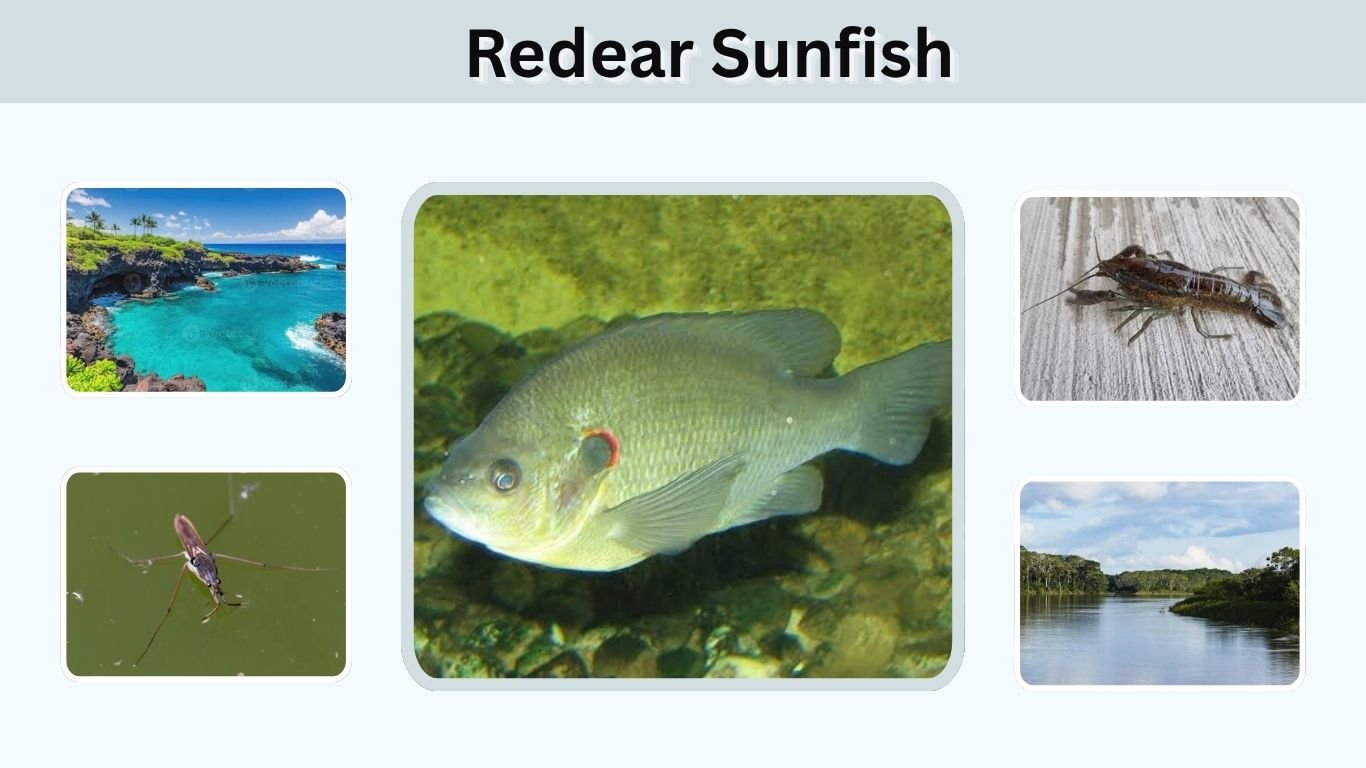
The redear sunfish is a popular freshwater fish known for its strong body, colorful ear flap, and unusual appetite for snails and other hard-shelled prey. Often called the shellcracker, this species is commonly found in lakes, ponds, reservoirs, and slow-moving waters across much of the United States. Anglers sometimes confuse redear sunfish with bluegill or pumpkinseed because of their similar shapes. This guide covers identification, size, habitat, diet, spawning, fishing tips, and the key differences between redear sunfish and bluegill.
What Is a Redear Sunfish?
The redear sunfish belongs to the Centrarchidae family, which also includes bluegill, largemouth bass, crappie, and several other freshwater sport fish. Its scientific name is Lepomis microlophus. The species gets its common name from the reddish or orange marking near the edge of the dark ear flap located behind the eye.
Redear Sunfish Identification
Common identification features include:
- Scientific name: Lepomis microlophus
- Common nickname: Shellcracker
- Body shape: Deep and laterally compressed
- Body color: Olive, bronze, or greenish
- Belly: Yellowish to pale
- Ear flap: Dark with a red or orange margin
- Mouth: Relatively small
- Fins: Usually darker with subtle spotting
- Adult appearance: Thick-bodied and rounded
The colored margin on the ear flap is one of the easiest ways to separate redear sunfish from similar species.
Juvenile Redear Sunfish
Young redear sunfish are generally less colorful than mature adults. Juveniles often have a silvery or olive appearance with faint vertical bars across the sides.
As they grow, their bodies become deeper and the ear-flap marking becomes more noticeable. Young redear sunfish feed heavily on small aquatic invertebrates before gradually taking larger prey such as snails and other mollusks.
Redear Sunfish Size and Growth
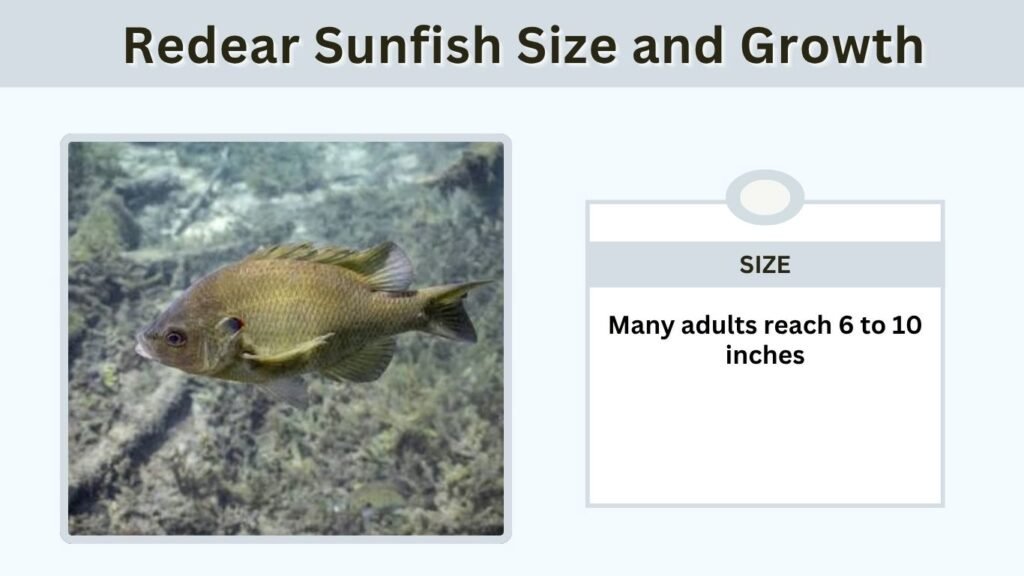
Redear sunfish can grow larger than many common sunfish species under good conditions. Their size depends on water quality, food availability, population density, genetics, and climate. Productive southern lakes and reservoirs often support particularly large individuals because fish have longer growing seasons and abundant aquatic prey.
How Big Do Redear Sunfish Get?
Typical size ranges include:
- Many adults reach 6 to 10 inches
- Large fish may exceed 10 to 12 inches
- Trophy specimens can grow considerably larger
- Weight varies according to body condition and habitat
- Warm, productive waters often produce faster growth
Exceptional redear sunfish have become famous among anglers because this species can reach impressive weights compared with many other panfish.
Redear Sunfish Growth Rate
Growth is usually fastest where snails, insects, and other natural foods are abundant. Young fish can grow quickly during warm months, while colder conditions slow their metabolism and feeding activity.
Overcrowding may limit growth. When too many fish compete for the same resources, individual redear sunfish may remain smaller than those living in well-managed waters with balanced predator and prey populations.
Redear Sunfish Habitat and Range
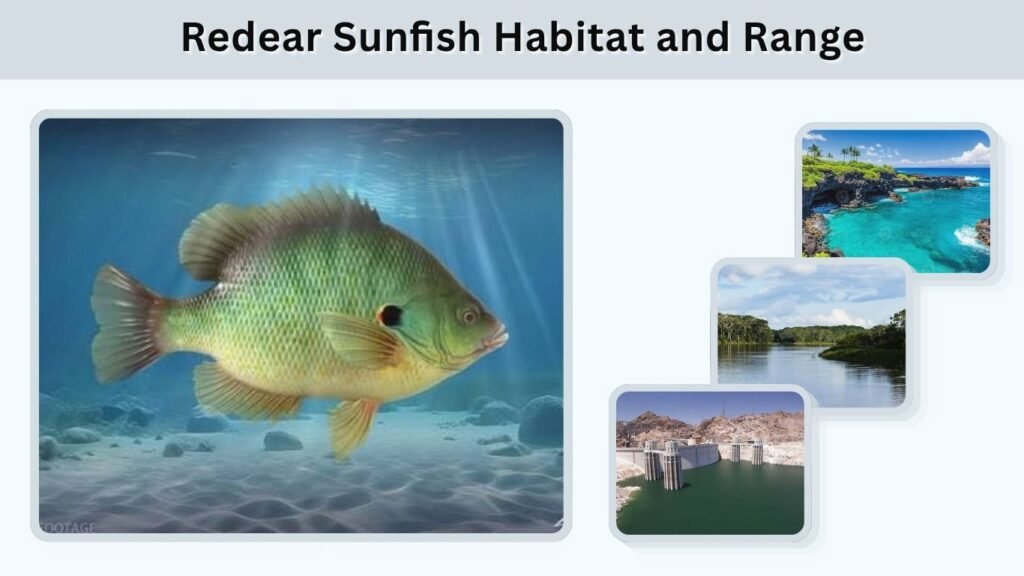
Redear sunfish prefer warm freshwater environments with relatively calm water and plenty of bottom-dwelling prey. They are commonly associated with submerged vegetation, woody cover, rocky areas, and firm bottoms where snails and other invertebrates are available. Although native to parts of the southeastern United States, the species has been introduced into many additional waters.
Where Are Redear Sunfish Found?
Typical habitats include:
- Lakes
- Farm ponds
- Reservoirs
- Slow-moving rivers
- Backwaters
- Vegetated coves
- Floodplain waters
- Shallow spawning areas
They often spend more time near the bottom than bluegill because much of their food is found around vegetation, rocks, mud, and other submerged structure.
Preferred Water Conditions
Redear sunfish generally prefer warm, relatively clear water with adequate vegetation or structure. During much of the year, larger fish may stay in deeper water than bluegill.
In spring, adults move toward shallow areas for spawning. Outside the breeding period, they may return to deeper edges, drop-offs, weed lines, or other locations where mollusks and aquatic insects are concentrated.
What Do Redear Sunfish Eat?
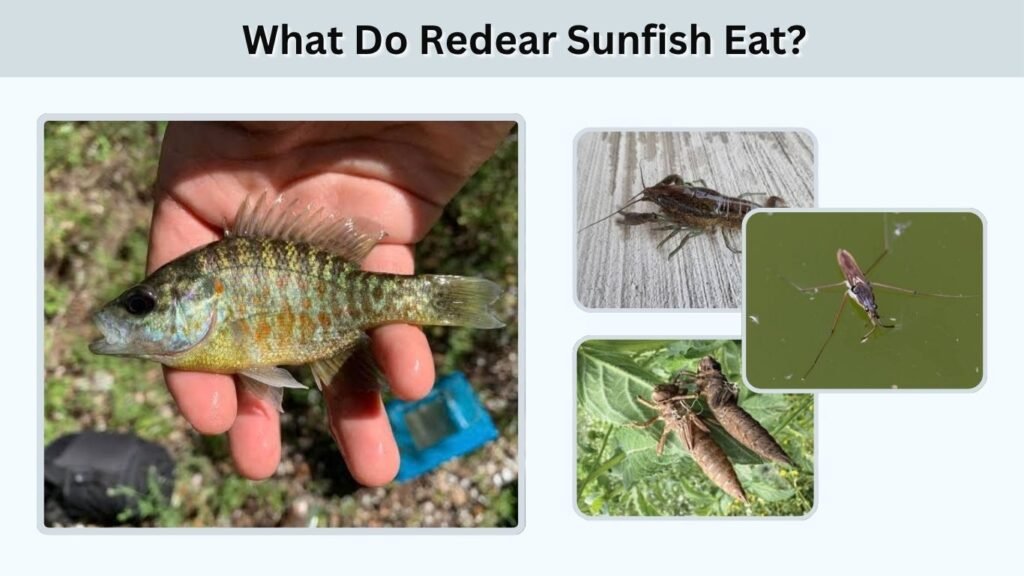
The redear sunfish is nicknamed the shellcracker because it is particularly well adapted to eating snails and other hard-shelled organisms. Specialized crushing structures in its throat help break shells before food is swallowed. However, snails are only part of its diet, and redear sunfish consume many different aquatic animals depending on availability.
Common Redear Sunfish Foods
Their diet may include:
- Freshwater snails
- Small mussels
- Aquatic insect larvae
- Crustaceans
- Worms
- Small crayfish
- Zooplankton
- Small fish
- Other bottom-dwelling invertebrates
Juveniles generally begin with smaller prey and gradually consume larger organisms as their mouths and crushing structures develop.
Feeding Behavior
Redear sunfish commonly feed close to the bottom, searching through vegetation and substrate for invertebrates. They may be less likely than bluegill to feed aggressively at the surface.
Because much of their natural food lives along the bottom, anglers often have success presenting bait close to the lake or pond floor. Their feeding style also explains why worms and other natural baits can be especially effective.
Redear Sunfish vs. Bluegill
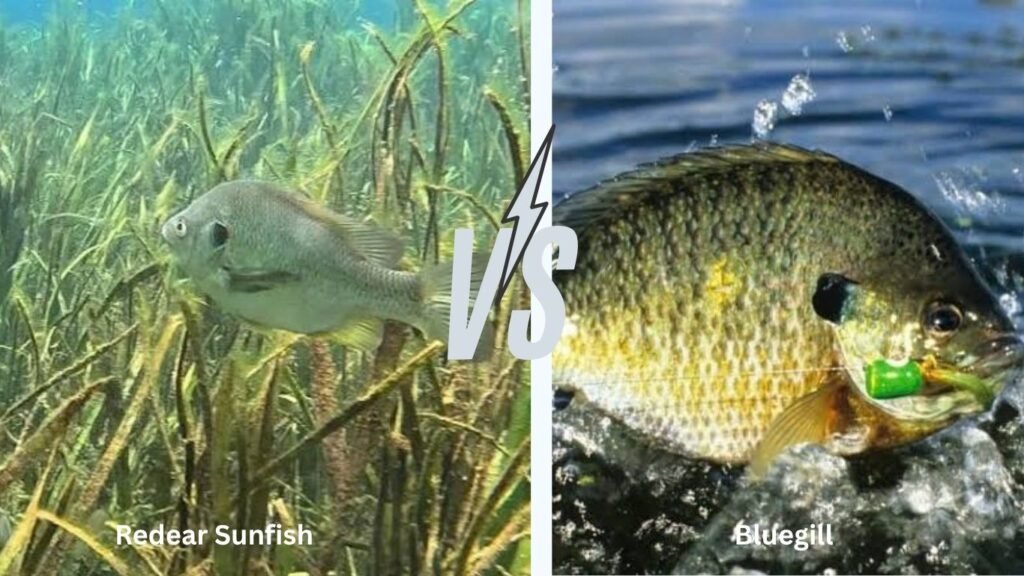
Bluegill and redear sunfish commonly live in the same waters and have similar deep-bodied shapes. However, several physical and behavioral differences make identification easier. The ear flap, mouth size, coloration, habitat preference, and feeding behavior are especially useful when comparing these two popular freshwater species.
Main Differences
- Ear flap: Redear have a red or orange margin; bluegill usually do not.
- Diet: Redear commonly eat snails; bluegill consume more insects and small organisms.
- Feeding depth: Redear often feed closer to the bottom.
- Color: Bluegill frequently display stronger blue or purple tones.
- Spawning: Both nest in colonies, but their preferred locations can differ.
- Size: Redear can grow heavier than many bluegill in productive waters.
Can Bluegill and Redear Sunfish Hybridize?
Yes, hybridization can occur between redear sunfish and bluegill. Hybrids may display a mixture of characteristics from both parent species, making identification more difficult.
Some pond-management programs intentionally use hybrid sunfish because particular crosses may show fast growth or aggressive feeding. However, stocking decisions should be based on the goals, size, and ecological balance of the pond rather than simply adding fish without a management plan.
Redear Sunfish Spawning and Reproduction
Redear sunfish generally spawn during spring and early summer as water temperatures increase. Males move into shallow water and create circular nests on suitable bottom areas. Several males may establish nests near one another, producing loose colonies similar to those formed by bluegill.
Redear Sunfish Spawning Behavior
A male clears a shallow nest using movements of his tail. Once a female enters the nest and deposits eggs, the male fertilizes them and remains nearby.
The male guards the eggs against other fish and potential predators. After hatching, young fish remain near protected shallow areas before gradually spreading into deeper habitat as they grow.
When Do Redear Sunfish Spawn?
Timing depends heavily on location and water temperature. Southern populations may begin spawning earlier than populations in cooler northern waters.
The strongest activity usually occurs after water temperatures become consistently warm. In suitable climates, some redear sunfish may spawn more than once or display extended reproductive activity during favorable conditions.
How to Catch Redear Sunfish
Fishing for redear sunfish can be rewarding because large individuals fight strongly on light tackle. They are often less visible than bluegill because they spend more time feeding along the bottom and may not gather as predictably near the surface.
Best Baits for Redear Sunfish
Popular options include:
- Red worms
- Nightcrawler pieces
- Small crickets
- Mealworms
- Small jigs
- Insect larvae
- Tiny soft-plastic baits
Natural bait presented close to the bottom is often particularly effective.
Best Places to Fish
During spawning season, search shallow flats, protected coves, and areas near vegetation. Clear water may allow anglers to spot circular nests.
At other times, look along weed edges, submerged structure, drop-offs, and deeper areas close to feeding habitat. Light line, small hooks, and sensitive floats can help detect their relatively subtle bites.
Are Redear Sunfish Good to Eat?
Redear sunfish are widely considered good table fish. Their flesh is white, mild, and firm, making them suitable for many of the same preparations used for bluegill and other panfish.
Redear Sunfish Taste
The taste is generally mild rather than strongly fishy. Larger specimens can provide thicker fillets than smaller sunfish, which makes them attractive to anglers who harvest legal fish.
They can be pan-fried, baked, grilled, or prepared whole depending on size. Always follow local fishing regulations, size limits, possession limits, and fish-consumption advisories before keeping fish from public waters.
FAQs
The redear sunfish has several characteristics that make it different from other popular panfish. Understanding its feeding habits, identification, growth, and habitat can make both fishing and species recognition much easier.
1. Why are redear sunfish called shellcrackers?
They are called shellcrackers because they commonly eat snails and other hard-shelled aquatic animals. Specialized structures in their throat help crush these shells.
2. How big do redear sunfish get?
Many adults grow between 6 and 10 inches, while larger specimens can exceed 10 or 12 inches. Exceptional fish can become much heavier under ideal conditions.
3. What is the difference between redear sunfish and bluegill?
Redear sunfish usually have a red or orange edge on the ear flap, feed more heavily on snails, and spend more time near the bottom. Bluegill generally have stronger blue coloration and different feeding habits.
4. What is the best bait for redear sunfish?
Worms, nightcrawlers, insect larvae, crickets, and other natural baits work well. Presenting bait close to the bottom is often especially productive.
5. Are redear sunfish good to eat?
Yes. Redear sunfish are considered excellent panfish with mild, firm, white flesh. Larger individuals provide useful fillets, but anglers should always follow local harvest rules and consumption advisories.