
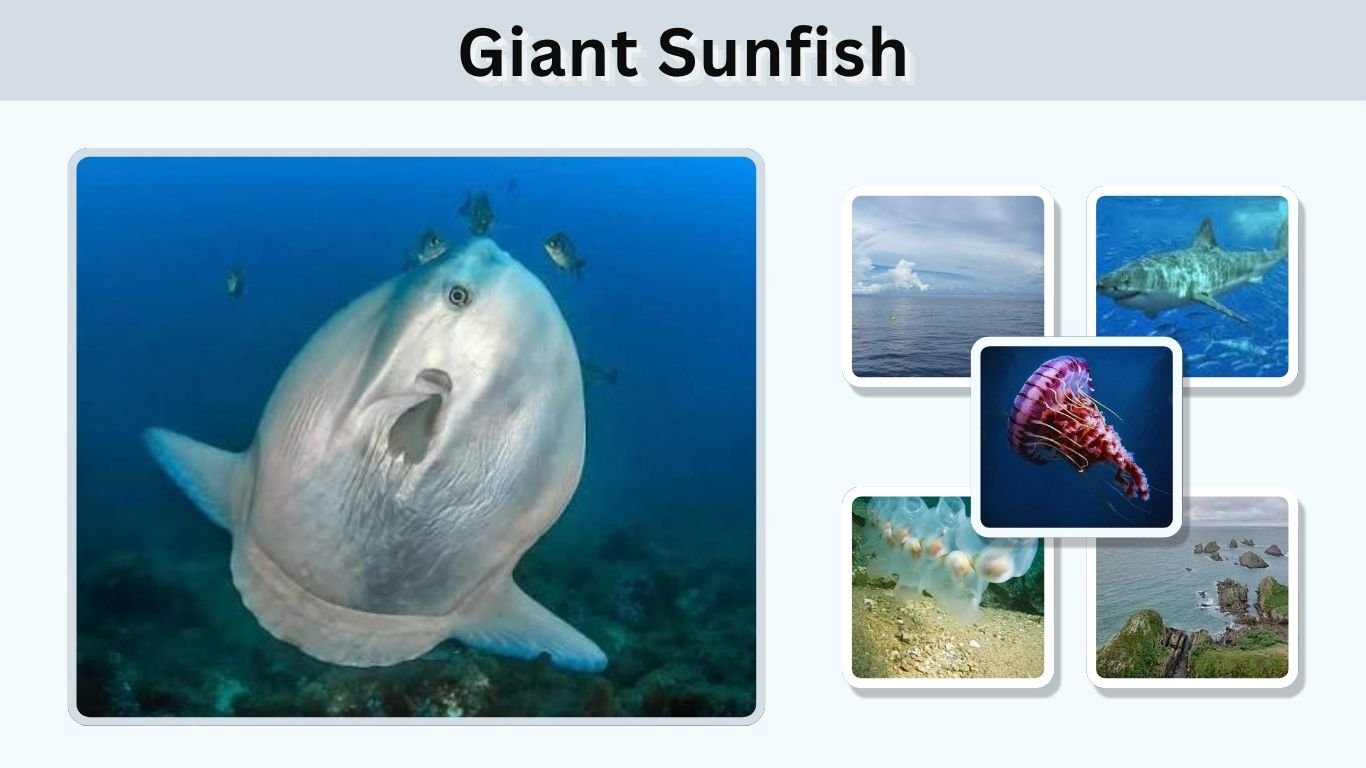
The giant sunfish is one of the most extraordinary fish in the ocean, famous for its enormous size, flattened body, and unusual shortened tail. The name is often used for giant members of the genus Mola, particularly the bump-head sunfish, Mola alexandrini, while the familiar giant ocean sunfish may refer to Mola mola. These remarkable marine fish inhabit temperate and tropical oceans worldwide. This guide covers giant sunfish size, habitat, diet, anatomy, behavior, predators, parasites, lifespan, and fascinating facts.
What Is a Giant Sunfish?
Giant sunfish belong to the ocean sunfish family Molidae, a small group containing some of the world’s heaviest living bony fish. The term “giant sunfish” can cause confusion because it is sometimes applied broadly to very large Mola. The bump-head sunfish, Mola alexandrini, currently holds the record for the heaviest scientifically documented bony fish.
Giant Sunfish Identification
Typical characteristics of giant Mola sunfish include:
- Family: Molidae
- Body: Extremely deep and laterally flattened
- Skin: Thick, rough, and often gray or silvery
- Tail: Replaced by a rounded structure called the clavus
- Dorsal fin: Very tall and narrow
- Anal fin: Large and used with the dorsal fin for propulsion
- Pectoral fins: Small and rounded
- Mouth: Small with fused, beak-like teeth
Rather than swimming by sweeping a conventional tail from side to side, sunfish propel themselves mainly with synchronized movements of their dorsal and anal fins.
Why Do Giant Sunfish Look So Unusual?
A sunfish appears almost as though the rear half of its body is missing. During development, its tail changes dramatically, producing the rounded clavus instead of a conventional caudal fin.
This unusual anatomy produces the characteristic tall, disk-shaped appearance for which ocean sunfish are famous.
Giant Sunfish Size and Weight
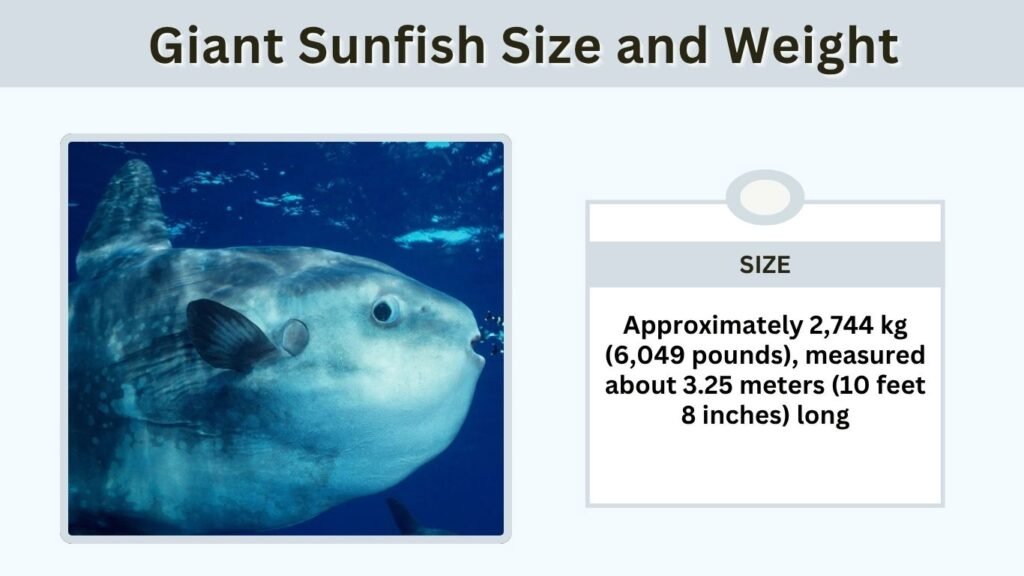
Size is the feature that makes giant sunfish truly remarkable. Members of the genus Mola can reach several meters across when measured between their dorsal and anal fin tips. Their bodies also become extremely heavy because they grow more in height and mass than the streamlined body shape of many other large fish.
How Big Can a Giant Sunfish Get?
The largest reliably documented specimen was a bump-head sunfish (Mola alexandrini) found near Faial Island in the Azores in December 2021.
It weighed approximately 2,744 kg (6,049 pounds), measured about 3.25 meters (10 feet 8 inches) long, and reached around 3.6 meters between its fin tips. Guinness World Records recognizes it as the heaviest bony fish on record.
Are Giant Sunfish the World’s Largest Fish?
Not overall. Whale sharks are much longer and heavier, but they belong to the cartilaginous fish group rather than the bony fishes.
Sunfish are remarkable because Mola alexandrini holds the record for the heaviest living bony fish specimen scientifically documented. Other bony fishes, such as oarfish, can grow considerably longer while weighing far less.
Giant Sunfish Habitat and Distribution
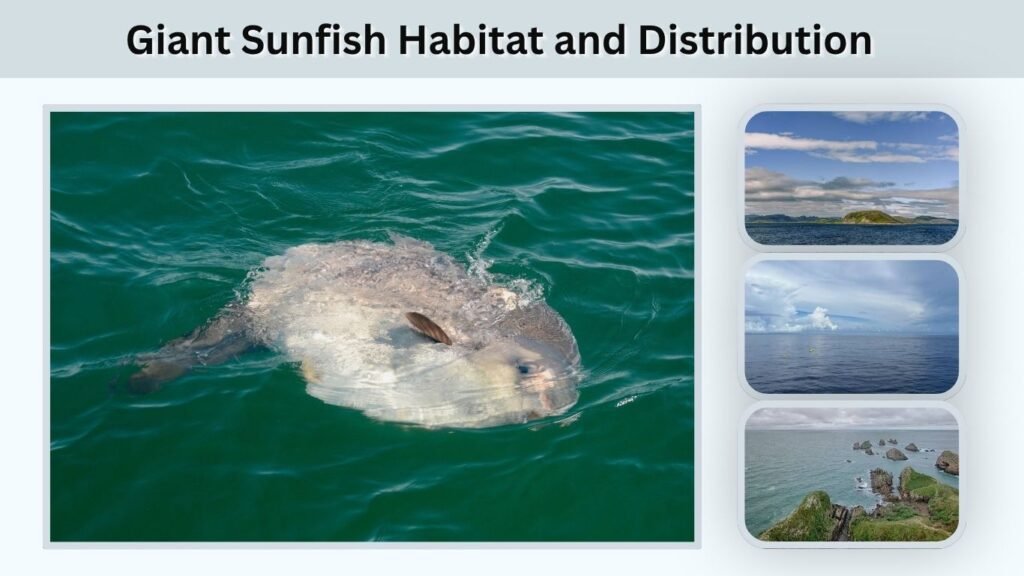
Giant ocean sunfish are pelagic animals, meaning much of their lives is spent in open marine waters rather than rivers, lakes, or shallow freshwater environments. Members of the sunfish family occur across an enormous geographical range. Their ability to travel long distances and make repeated deep dives allows them to exploit productive feeding areas throughout temperate and tropical oceans.
Where Do Giant Sunfish Live?
Ocean sunfish occur in the Atlantic, Pacific, Indian, and other connected ocean regions. They can be encountered in both tropical and temperate waters.
They are not restricted to the surface. Tracking research has shown that sunfish repeatedly move vertically through the water column, sometimes diving into colder, deeper water before returning toward warmer surface layers.
Are There Giant Freshwater Sunfish?
The giant ocean sunfish should not be confused with freshwater “sunfish” such as bluegill, green sunfish, or redear sunfish.
Those fish belong to the freshwater family Centrarchidae and are completely different animals. A giant Mola is a saltwater marine fish and does not naturally inhabit freshwater lakes such as Lake Havasu.
What Do Giant Sunfish Eat?
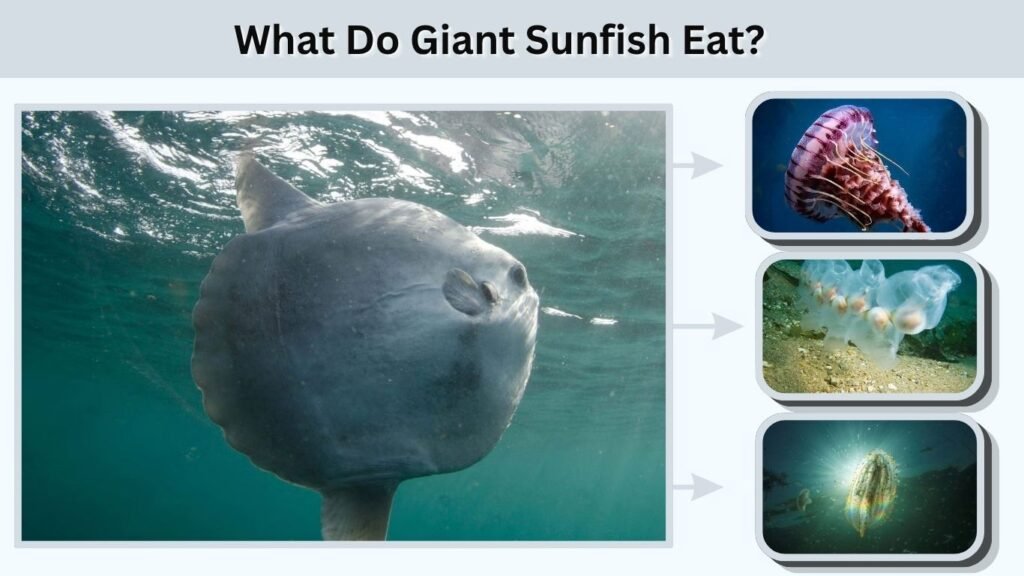
Although sunfish were once portrayed mainly as jellyfish specialists, research indicates a broader diet. Feeding changes with body size, location, depth, and available prey. Large ocean sunfish consume substantial quantities of gelatinous animals, but smaller individuals and other sunfish species may take fish, crustaceans, mollusks, and additional prey.
Giant Sunfish Diet
Food can include:
- Jellyfish
- Salps
- Comb jellies
- Siphonophores
- Squid
- Small fish
- Crustaceans
- Mollusks
- Other soft-bodied marine animals
Monterey Bay Aquarium notes that Mola mola undergoes a dietary shift as it grows, with larger individuals relying more heavily on gelatinous organisms.
How Does a Giant Sunfish Hunt?
Sunfish are not simply helpless animals drifting with currents. Tracking research shows that they are active swimmers capable of repeated deep dives and substantial movements.
Vertical dives may help them follow prey that changes depth throughout the day. Their small mouths and beak-like teeth allow them to capture and process relatively soft marine prey.
Giant Sunfish vs Ocean Sunfish
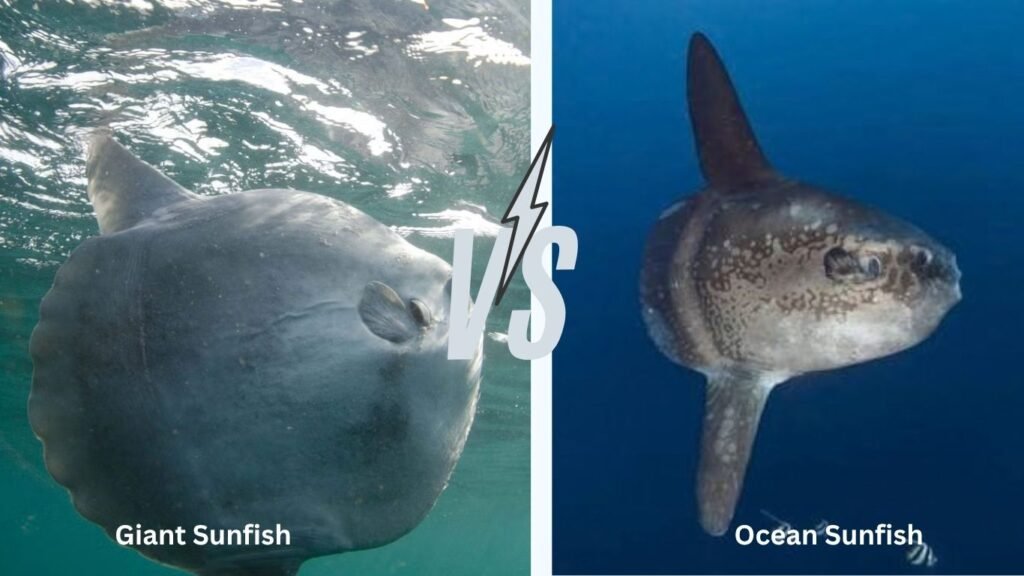
“Giant sunfish” and “ocean sunfish” are sometimes used interchangeably online, but they can refer to different species. Modern taxonomy recognizes several members of the family Molidae, including Mola mola, Mola alexandrini, and the hoodwinker sunfish, Mola tecta. Correct identification is particularly important when discussing record-breaking individuals.
Mola Alexandrini vs Mola Mola
The common ocean sunfish is Mola mola. The bump-head sunfish, also called the southern or giant sunfish in some references, is Mola alexandrini.
The record-breaking 2,744-kg individual was Mola Alexandrini, not Mola mola. An earlier 2,300-kg Japanese record fish was also eventually identified as Mola alexandrini after initially being associated with Mola mola.
Giant Sunfish vs Hoodwinker Sunfish
The hoodwinker sunfish, Mola tecta, is another distinct member of the genus.
Scientists formally described it relatively recently, demonstrating why identifying enormous sunfish from photographs alone can sometimes be difficult. Body shape, clavus structure, head profile, skin characteristics, and genetics can help researchers distinguish species.
Giant Sunfish Behavior and Anatomy
Despite their awkward appearance, giant sunfish are adapted to active ocean life. Their dorsal and anal fins generate propulsion while the clavus assists with steering. Satellite-tagging studies have overturned the old picture of sunfish as purely passive surface drifters, revealing complex diving and migration behavior linked to feeding and changing ocean conditions.
Why Do Sunfish Lie at the Surface?
Sunfish are sometimes seen lying on their sides near the surface, a behavior commonly called basking.
One explanation is that surface warming helps them recover body heat after feeding dives into colder, deeper water. Surface visits may also provide opportunities for birds or fish to remove parasites.
Giant Sunfish Parasites
Sunfish are famous for carrying many kinds of parasites.
Reported parasites can live externally on the skin as well as internally. Monterey Bay Aquarium notes that nearly 40 types have been observed in or on ocean sunfish, and some parasites themselves may even carry additional parasites.
Predators and Threats to Giant Sunfish
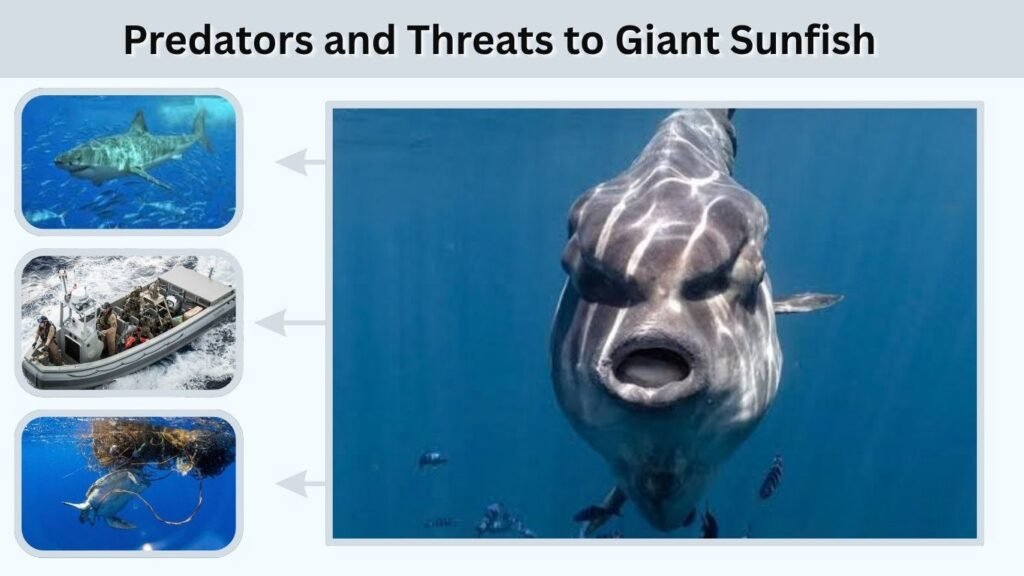
Enormous adults have relatively few natural predators compared with smaller fish, but size does not make them invulnerable. Large marine predators can attack sunfish, while human activities create additional risks. Their habit of swimming through open-water fishing zones makes accidental capture an important conservation issue for several members of the family.
Main Predators and Threats
Potential dangers include:
- Large sharks
- Sea lions and other large marine predators
- Accidental fisheries bycatch
- Fishing gear entanglement
- Boat strikes
- Marine debris
- Plastic ingestion
- Changes in ocean ecosystems
Bycatch is particularly significant because ocean sunfish may be captured unintentionally by fisheries targeting other species.
Are Giant Sunfish Endangered?
Conservation status depends on the species, which is another reason not to treat every giant-looking sunfish as Mola mola. The sunfish family contains five currently recognized species across three genera, and researchers have emphasized the need for updated species-specific conservation assessments because threats and available population information differ among them.
Are Ocean Sunfish Vulnerable?
The Monterey Bay Aquarium currently presents Mola mola as Vulnerable, reflecting conservation concern surrounding the species.
Accidental capture remains an important issue. Because sunfish move across large ocean areas and international fishing grounds, understanding their population trends requires coordinated research rather than relying only on local sightings.
Interesting Giant Sunfish Facts
Few fish combine enormous size with such unusual anatomy. Giant sunfish begin life extremely small yet can eventually outweigh cars. They lack a normal adult tail, make deep feeding dives, host a remarkable diversity of parasites, and occur across huge regions of the world’s oceans.
Giant Sunfish Fun Facts
- Mola alexandrini holds the record for the heaviest known bony fish.
- The record specimen weighed 2,744 kg.
- Sunfish lack a conventional adult tail fin.
- Their modified rear structure is called a clavus.
- They swim mainly using dorsal and anal fins.
- Some sunfish make repeated deep dives while feeding.
- They may bask sideways near the ocean surface.
- Their diet includes gelatinous zooplankton, fish, squid, and crustaceans.
- Sunfish can carry numerous parasite species.
- Freshwater sunfish are unrelated to marine Mola sunfish.
FAQs
What Is a Giant Sunfish?
A giant sunfish is a huge marine bony fish belonging to the family Molidae. The term is often applied to exceptionally large Mola species, particularly Mola alexandrini. These fish have flattened bodies, tall dorsal and anal fins, and a shortened rear structure called a clavus rather than a conventional tail.
How Much Does a Giant Sunfish Weigh?
The heaviest scientifically documented bony fish was a bump-head sunfish weighing 2,744 kg, or 6,049 pounds. It was found near Faial Island in the Azores in 2021. The enormous specimen measured about 3.25 meters long and belonged to the species Mola alexandrini.
What Do Giant Sunfish Eat?
Giant sunfish eat a variety of marine organisms. Their food may include jellyfish, salps, comb jellies, squid, small fish, crustaceans, and mollusks. Diet varies with species and size. Larger Mola mola are particularly associated with gelatinous prey and may dive deeply while searching for food.
Are Giant Sunfish Dangerous to Humans?
Giant sunfish are not considered aggressive predators of humans. Their diets consist largely of comparatively small marine organisms, and they lack the large teeth used by predatory sharks. Divers occasionally encounter enormous sunfish at close range, but their size alone should not be mistaken for aggressive behavior.
Is a Giant Sunfish the Same as an Ocean Sunfish?
Not always. The common ocean sunfish is Mola mola, while the giant or bump-head sunfish is commonly identified as Mola alexandrini. Both belong to the same genus and can reach enormous sizes, which explains why common names are frequently mixed up in articles, photographs, and search results.