
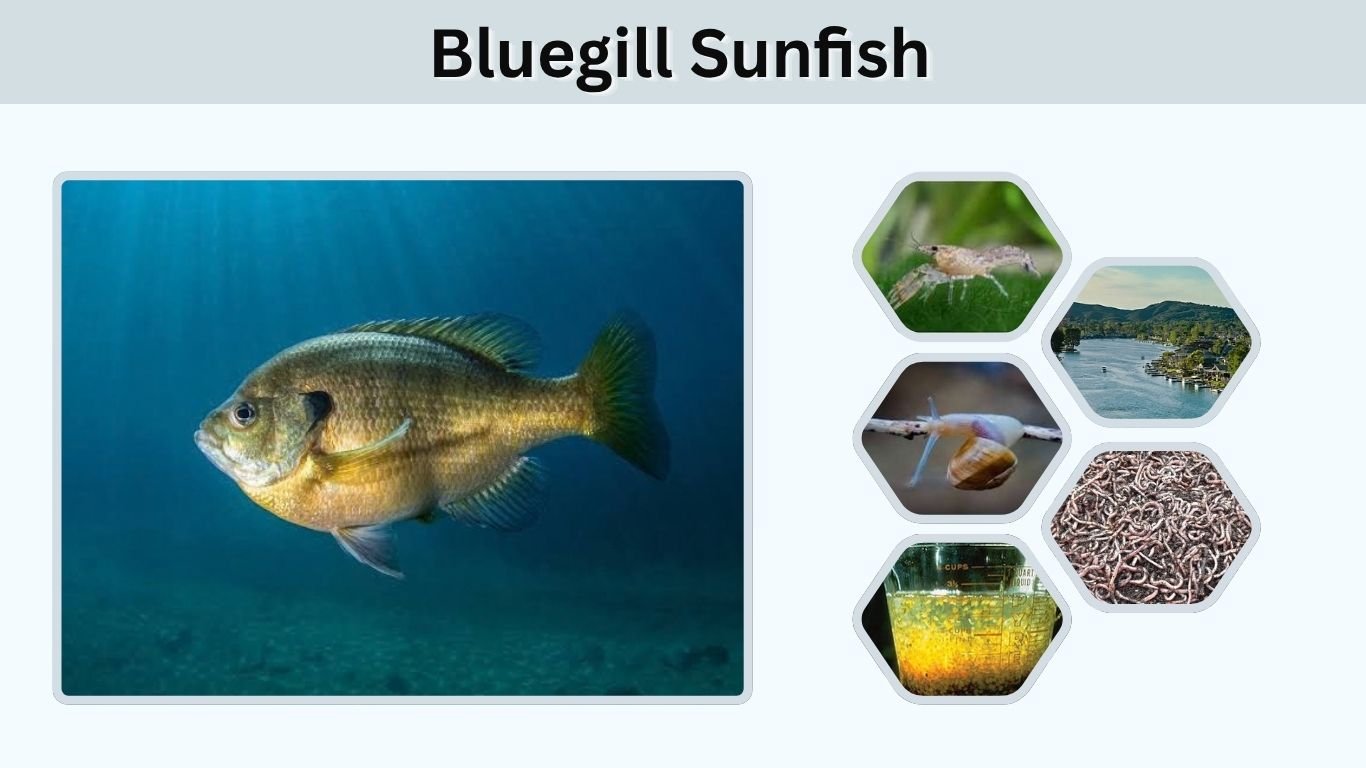
The bluegill sunfish is one of North America’s most familiar freshwater fish, valued by anglers for its abundance, colorful appearance, and willingness to take many types of bait. Scientifically known as Lepomis macrochirus, bluegill belong to the freshwater sunfish family Centrarchidae. They inhabit ponds, lakes, reservoirs, and slow-moving waters and feed mainly on insects and small aquatic animals. This guide explains bluegill habitat, diet, size, reproduction, record catches, identification, and the important differences between bluegill vs sunfish.
What Is a Bluegill Sunfish?
Bluegill are freshwater fish belonging to the sunfish family, so every bluegill is a sunfish, but not every sunfish is a bluegill. They are native to a large portion of North America and have also been introduced elsewhere. Their deep, flattened bodies and distinctive dark ear flaps make mature fish relatively easy to identify.
Bluegill Sunfish Identification
Important identification features include:
- Scientific name: Lepomis macrochirus
- Family: Centrarchidae
- Body shape: Deep and laterally compressed
- Back: Usually dark olive green
- Sides: Blue-green, brown, copper, or orange shades
- Belly: Yellow to reddish-orange
- Ear flap: Dark or nearly black
- Mouth: Relatively small
- Dorsal fin: Dark blotch near the rear base
- Sides: Several faint vertical bars
Breeding males often develop brighter blue, orange, and reddish coloration.
Why Are They Called Bluegill?
The name comes from the bluish coloration commonly visible around the lower cheek and gill-cover region.
Color varies considerably with age, sex, water conditions, and breeding season. Mature males may develop particularly intense blue-green coloration around the face along with orange or reddish bellies during spawning.
Bluegill vs Sunfish: What Is the Difference?
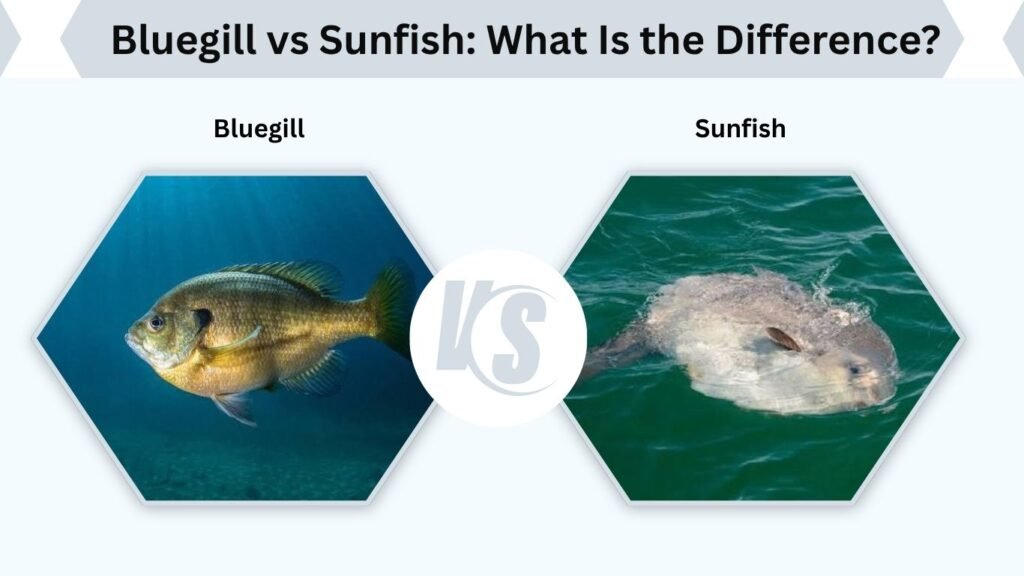
The phrase bluegill vs sunfish causes confusion because the two terms are not equal taxonomic categories. “Sunfish” refers to a family that contains numerous freshwater species, while bluegill identifies one particular species within that family. Therefore, calling a bluegill a sunfish is correct, but calling every freshwater sunfish a bluegill is not.
Are Bluegill and Sunfish the Same?
The easiest distinction is:
- Bluegill: One species, Lepomis macrochirus
- Sunfish: A broader group containing multiple species
- Green sunfish: Lepomis cyanellus
- Redear sunfish: Lepomis microlophus
- Pumpkinseed: Lepomis gibbosus
- Longear sunfish: Another member of Lepomis
- Bluegill: One of the best-known members of this group
In short, bluegill are sunfish, but “sunfish” can describe several other species.
Bluegill vs Green Sunfish
Bluegill usually have a smaller mouth, deeper body, longer pointed pectoral fins, vertical body bars, and a dark dorsal-fin blotch.
Green sunfish generally have a proportionally larger mouth and more elongated body. Missouri conservation identification materials also highlight the bluegill’s small mouth and distinctive dark ear flap as useful field marks.
Bluegill Sunfish Habitat
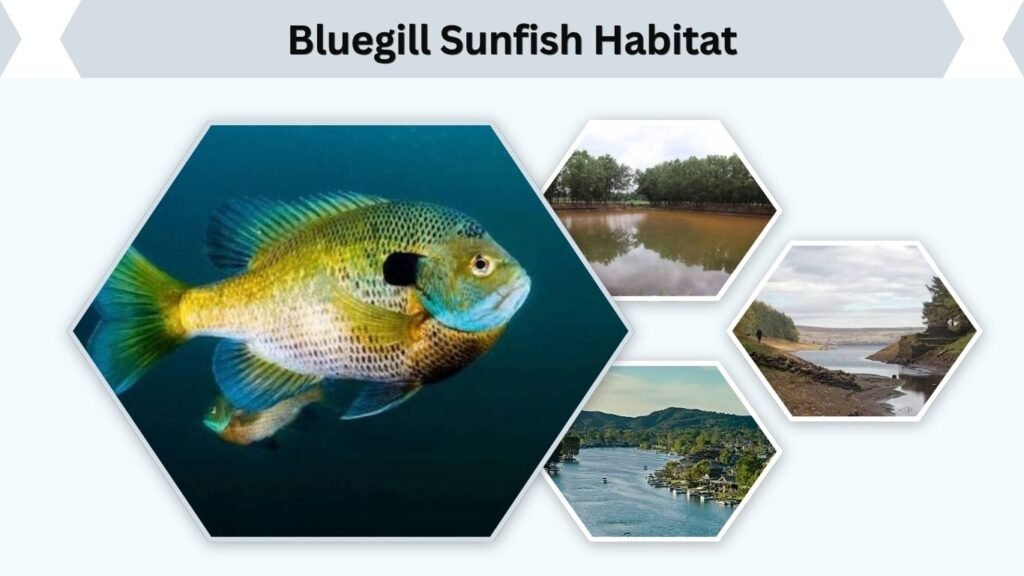
Bluegills can thrive in many freshwater environments, which helps explain their wide distribution and popularity. They generally prefer relatively calm water with vegetation or other forms of cover. Aquatic plants provide places to hide from larger predators while also supporting insects and other small animals that bluegills use as food.
Where Do Bluegill Live?
Typical bluegill habitats include:
- Ponds
- Lakes
- Reservoirs
- Slow-moving streams
- Quiet river sections
- Weed beds
- Submerged vegetation
- Areas near docks and fallen timber
Bluegills often move between vegetation and more open water depending on food availability, predators, season, and fish size. Research has shown that vegetation selection can change significantly through the year.
Native Range
Bluegills are native to major North American drainage systems, including the Great Lakes and Mississippi River regions.
They have since been stocked and introduced far beyond their original range because they are popular sport fish and commonly used in managed ponds. Some introduced populations can create ecological problems where bluegills are not native.
What Do Bluegill Sunfish Eat?
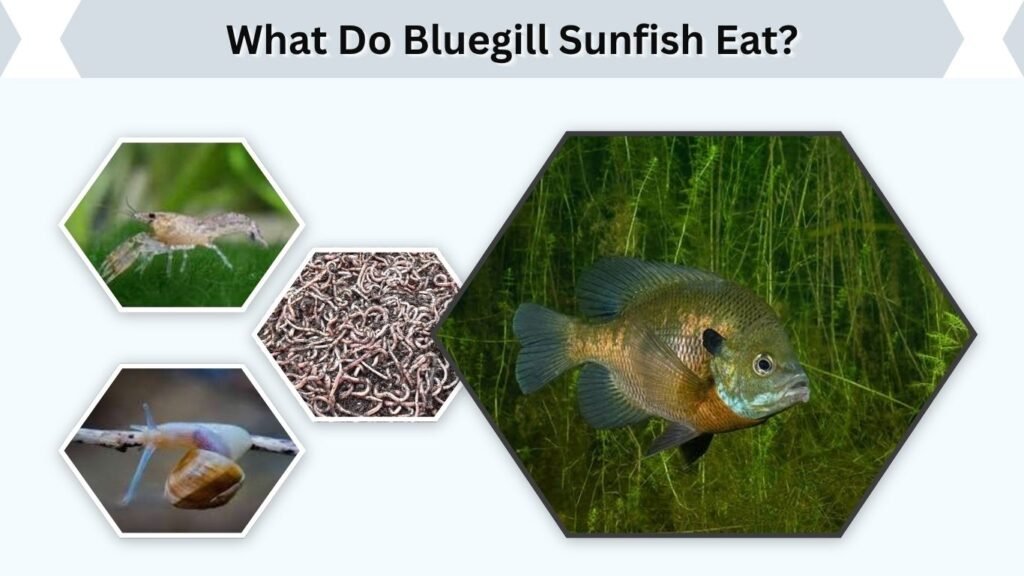
Bluegill are opportunistic feeders that consume small organisms available in their environment. Diet changes as the fish grows. Very young bluegills depend heavily on tiny zooplankton, while larger individuals increasingly eat aquatic insects and other invertebrates. Their relatively small mouths make them particularly well adapted for capturing small prey.
Bluegill Sunfish Diet
Common foods include:
- Zooplankton
- Aquatic insect larvae
- Terrestrial insects
- Worms
- Snails
- Small crayfish
- Shrimp and other crustaceans
- Small fish
- Fish eggs
- Occasional plant material
Research on bluegills has found young fish feeding heavily on small crustaceans, while larger fish commonly consume aquatic and terrestrial insects, amphipods, and mollusks.
What Is the Best Bluegill Bait?
Anglers commonly use worms, nightcrawler pieces, crickets, insect larvae, and small artificial lures.
Because bluegill have relatively small mouths, compact hooks and baits usually work better than oversized presentations. Their diet makes them especially responsive to baits that resemble insects, worms, or other small aquatic prey.
Bluegill Sunfish Size and Lifespan
Most bluegills encountered by anglers are modest in size, although ideal habitat, low fishing pressure, favorable genetics, and abundant food can produce much larger individuals. Growth also differs considerably between bodies of water. Some crowded ponds contain large numbers of small bluegill, while carefully managed fisheries may consistently produce considerably larger adults.
How Big Do Bluegill Get?
Many adult bluegills are roughly 6–9 inches long, while specimens around or above 10 inches are generally considered impressive in many fisheries.
Growth can be slow when bluegill populations become overcrowded because too many fish compete for limited food. Larger predators such as bass can sometimes help maintain a healthier size structure by reducing excessive numbers of small bluegills.
How Long Do Bluegill Live?
Wild bluegills commonly live around 4–6 years, although some can survive longer. Captive individuals have been reported reaching roughly 8–11 years.
Survival depends on predation, food availability, habitat quality, fishing pressure, disease, and environmental conditions.
World Record Bluegill Sunfish
Bluegill rarely approach the size of large game fish, which makes the long-standing world record especially remarkable. Exceptional fish require an unusual combination of abundant food, suitable habitat, age, genetics, and favorable environmental conditions.
How Big Was the World Record Bluegill?
The recognized world-record bluegill weighed 4 pounds, 12 ounces. T. S. Hudson caught it from Ketona Lake near Birmingham, Alabama, on April 9, 1950.
Alabama’s official freshwater fish record listing continues to identify that catch as the world record.
The fish remains extraordinary because even trophy bluegills encountered today are normally far smaller.
Bluegill Sunfish Reproduction
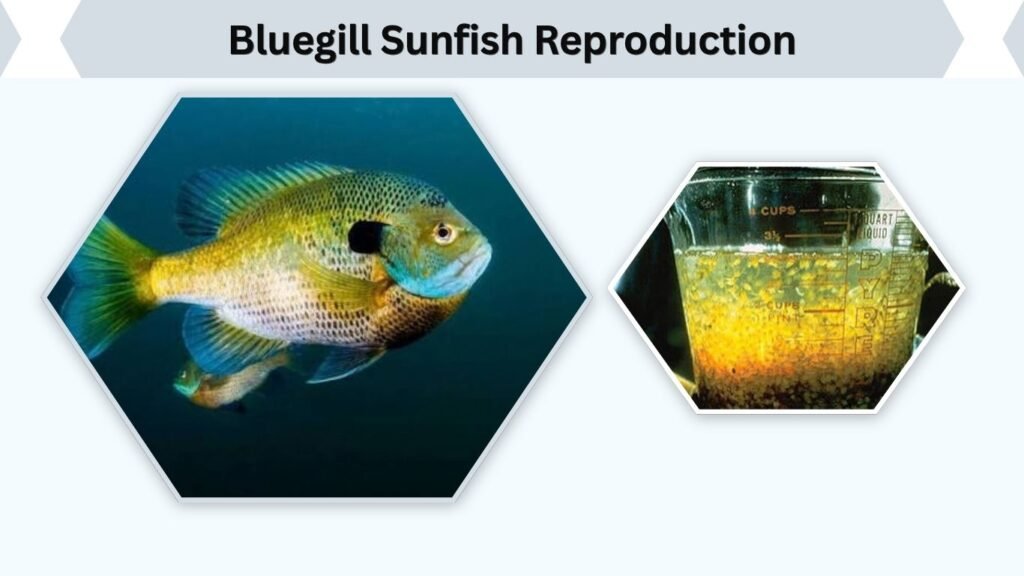
Bluegills are prolific breeders, which helps them establish strong populations in suitable ponds and lakes. Spawning usually takes place in warm, shallow water. Males construct circular nests on the bottom, often close to other males, creating large groups of nests that can resemble underwater colonies.
and Eggs
When water temperatures reach roughly 70°F, spawning activity generally begins.
Males clear shallow nests and defend them aggressively. Females enter the nests to deposit eggs, after which males fertilize and guard them.
Multiple spawning events can occur during warm months, allowing populations to increase rapidly when habitat and food conditions are favorable.
Can You Eat Bluegill Sunfish?
Yes. Bluegill are widely eaten and are considered good table fish by many anglers. Their flesh is mild, white, and relatively delicate. Because individual fish are usually small, anglers often prepare several at once.
Are Bluegill Good to Eat?
Bluegill can be fried whole after cleaning or prepared as small fillets. Larger individuals provide more usable meat and are easier to fillet.
Always check local fishing regulations, possession limits, and fish-consumption advisories before keeping bluegill. Consumption recommendations can vary between waters because contaminants may accumulate differently in different lakes and rivers.
Bluegill Sunfish Facts
Bluegill are important both recreationally and ecologically. They consume enormous numbers of small aquatic organisms while also serving as prey for bass, larger fish, birds, and other predators. Their rapid reproduction and adaptability also make them popular for pond management.
Interesting Bluegill Facts
- Bluegill are true freshwater sunfish.
- Their scientific name is Lepomis macrochirus.
- They have relatively small mouths.
- Adults commonly form schools.
- Males construct and defend spawning nests.
- Their colors intensify during breeding.
- Bluegill eat insects, worms, crustaceans, and small fish.
- They provide important forage for largemouth bass.
- Bluegill can hybridize with other Lepomis species.
- The world-record fish weighed 4 pounds, 12 ounces.
FAQs
Is a Bluegill a Sunfish?
Yes. A bluegill is a species of freshwater sunfish belonging to the family Centrarchidae. Its scientific name is Lepomis macrochirus. However, not every sunfish is a bluegill because the sunfish family also includes green sunfish, redear sunfish, pumpkinseed, longear sunfish, and several other species.
What Is the Difference Between Bluegill and Green Sunfish?
Bluegill typically have deeper bodies, smaller mouths, longer pointed pectoral fins, and a distinct dark spot near the rear of the dorsal fin. Green sunfish generally have larger mouths and more elongated bodies. Color alone is less reliable because both species can vary considerably between habitats and seasons.
What Do Bluegill Sunfish Eat?
Bluegill mainly eat zooplankton, insects, insect larvae, worms, crustaceans, mollusks, and other small aquatic animals. Larger individuals may also consume tiny fish. Their diet changes with age and available food, with young fish depending more heavily on microscopic organisms and other very small prey.
Can You Eat Bluegill Sunfish?
Yes. Bluegill are edible and widely regarded as good-tasting freshwater fish. They have mild, white flesh and can be fried whole or filleted. Before keeping fish for food, check local size and possession regulations as well as any consumption advisories issued for the particular lake, river, or reservoir.
Are Bluegill and Crappie the Same Fish?
No. Both belong to the freshwater sunfish family Centrarchidae, but they are different species and genera. Bluegill belong to Lepomis, while black and white crappie belong to Pomoxis. Crappie generally have larger mouths, different body markings, and commonly grow larger than typical bluegill.