
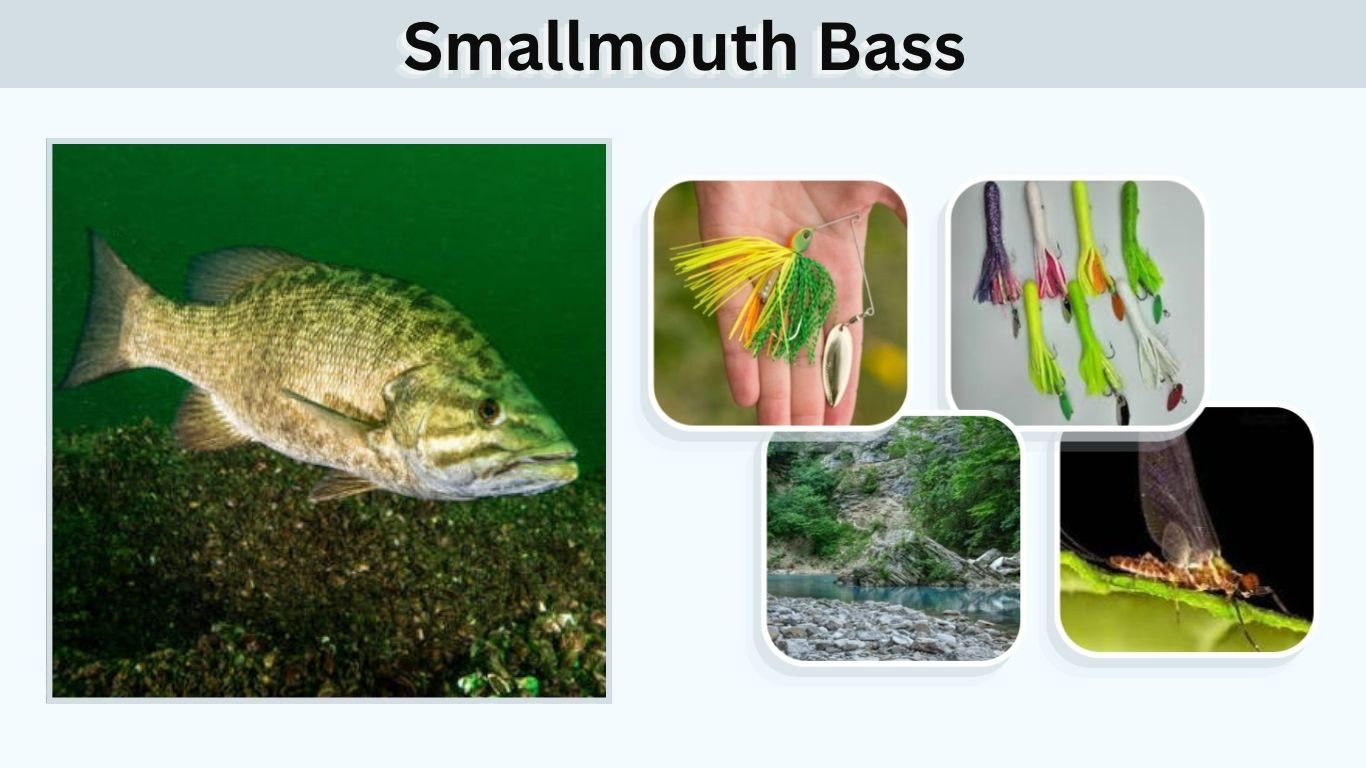
Smallmouth bass are popular freshwater game fish known for their powerful fights, aggressive feeding habits, and preference for clear, rocky waters. Scientifically called Micropterus dolomieu, these fish inhabit rivers, lakes, and reservoirs throughout North America. Anglers appreciate their impressive jumping ability, while fish enthusiasts recognize their bronze-colored bodies and distinctive vertical markings. Understanding smallmouth bass identification, habitat, diet, size, spawning behavior, and fishing techniques can help you recognize the species and improve your chances of catching one.
What Is a Smallmouth Bass?
The smallmouth bass is a freshwater fish belonging to the sunfish family, Centrarchidae. Although its name contains “bass,” it is more closely related to other sunfish than to true sea bass. Often called a smallie, bronzeback, or brown bass, this species is admired for its strength, speed, and ability to thrive in flowing freshwater environments.
Smallmouth Bass Identification
Smallmouth bass have several physical characteristics that distinguish them from other freshwater fish.
- Body color: Usually bronze, olive-green, or golden-brown.
- Vertical markings: Dark, irregular vertical bars along the sides.
- Mouth: The upper jaw generally does not extend beyond the rear edge of the eye.
- Eyes: Often brownish or reddish, although coloration varies.
- Body shape: Muscular, moderately elongated, and streamlined.
- Belly: Typically lighter, ranging from cream to pale white.
Scientific Name and Classification
The scientific name of the smallmouth bass is Micropterus dolomieu. It belongs to the order Centrarchiformes and family Centrarchidae.
Its scientific classification distinguishes it from largemouth bass, spotted bass, and rock bass. Despite their similarities, these freshwater fish differ in appearance, habitat preferences, and feeding behavior.
Where Do Smallmouth Bass Live?
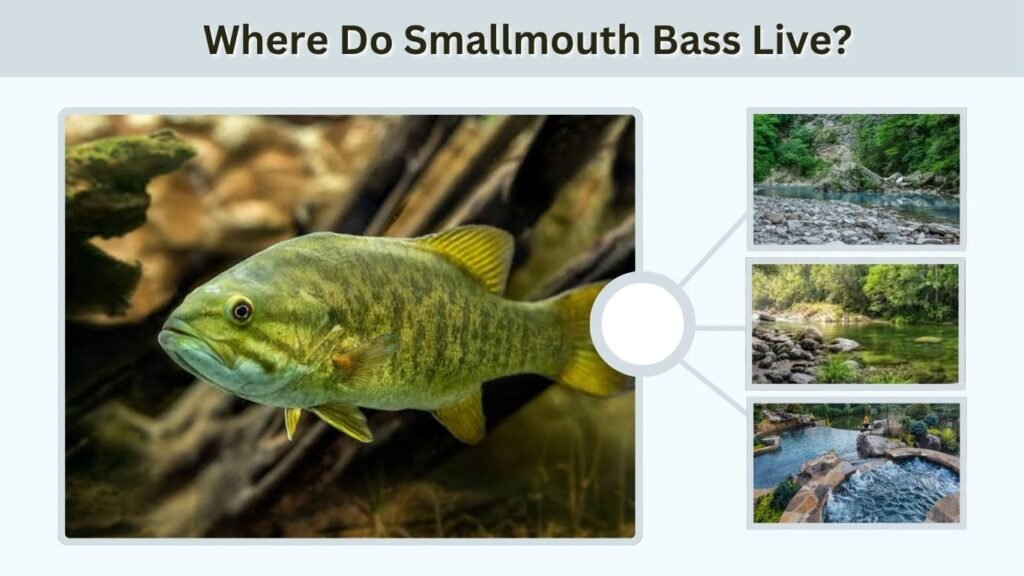
Smallmouth bass prefer clear, well-oxygenated freshwater environments with rocky bottoms and suitable underwater shelter. They naturally occur across parts of eastern and central North America and have been introduced to many additional locations. Their distribution depends on water temperature, habitat quality, food availability, and seasonal conditions. They are commonly associated with lakes, rivers, streams, and reservoirs.
Smallmouth Bass Habitat in Lakes
In lakes, smallmouth bass frequently inhabit rocky shorelines, submerged points, gravel beds, and underwater ledges.
They often remain near structures that provide shelter and attract prey. During warm summer weather, larger individuals may move into deeper, cooler water while occasionally returning to shallower areas to feed.
Smallmouth Bass Habitat in Rivers
River-dwelling smallmouth bass prefer flowing water with rocks, gravel, and current breaks.
They commonly rest behind large boulders, near submerged logs, or along deeper pools where the current is less demanding. These locations allow them to conserve energy while watching for passing insects, crayfish, and baitfish.
Common Smallmouth Bass Locations
Productive habitats include:
- Rocky lake shorelines and underwater points.
- Gravel-bottom rivers with moderate currents.
- Submerged boulders and ledges.
- Deep pools near faster-moving water.
- Reservoir drop-offs and rocky islands.
What Do Smallmouth Bass Eat?
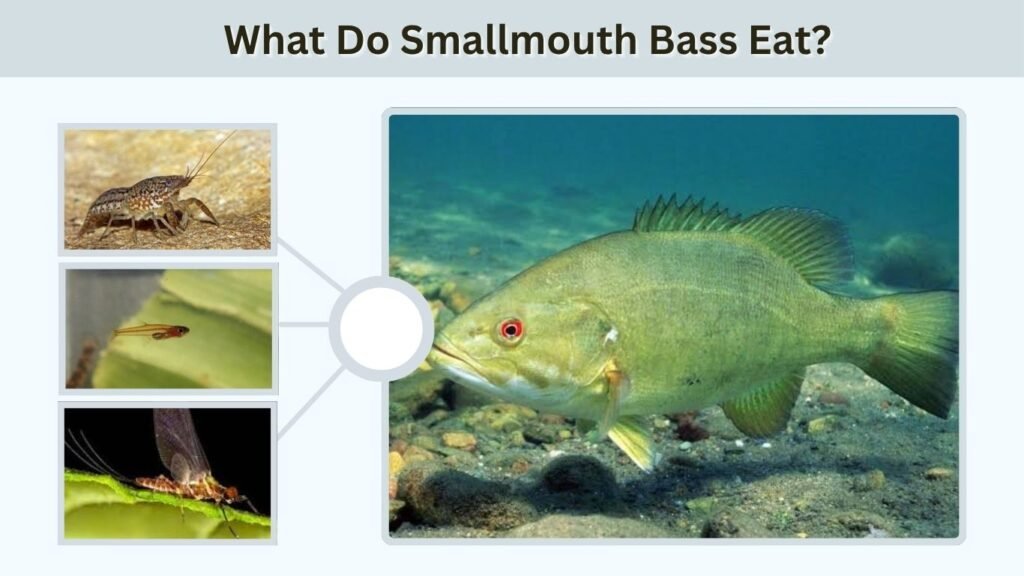
Smallmouth bass are carnivorous predators that consume various freshwater organisms. Their diet changes as they grow, with young fish relying heavily on tiny aquatic animals before transitioning toward larger prey. Food availability, season, and local habitat influence their feeding patterns. Understanding these preferences also helps anglers choose effective smallmouth bass bait and artificial lures.
Diet of Juvenile Smallmouth Bass
Juvenile smallmouth bass feed primarily on zooplankton, insect larvae, and other small invertebrates.
As their mouths and swimming abilities develop, they begin capturing larger aquatic insects and small fish. Abundant food sources are particularly important during their early growth stages.
What Do Adult Smallmouth Bass Eat?
Adult smallmouth bass feed mainly on crayfish, smaller fish, and aquatic insects. They may also consume terrestrial insects, salamanders, and other available prey.
Crayfish are especially important in many rocky habitats. Smallmouth bass use their strong jaws and quick movements to capture these bottom-dwelling crustaceans.
Smallmouth Bass vs Largemouth Bass: Key Differences
Smallmouth and largemouth bass belong to the same genus, but they have several noticeable differences. Both are popular sport fish, although their physical appearance and preferred habitats vary. The easiest way to distinguish them is by examining their mouths, body patterns, and surroundings rather than relying only on body color.
Differences in Appearance
Smallmouth bass have relatively smaller mouths, and their jaws generally stop near the rear of their eyes. Their bodies are commonly bronze or brownish-green with vertical markings.
Largemouth bass have noticeably larger mouths, with jaws extending behind the eyes. They typically display a dark horizontal stripe along their sides.
Differences in Habitat and Behavior
Smallmouth bass favor rocky, clearer waters and often tolerate stronger currents.
Largemouth bass generally prefer slower water, submerged vegetation, and sheltered environments.
Both species are aggressive predators, but smallmouth bass are particularly famous for their powerful runs and acrobatic jumps when hooked.
How to Catch Smallmouth Bass
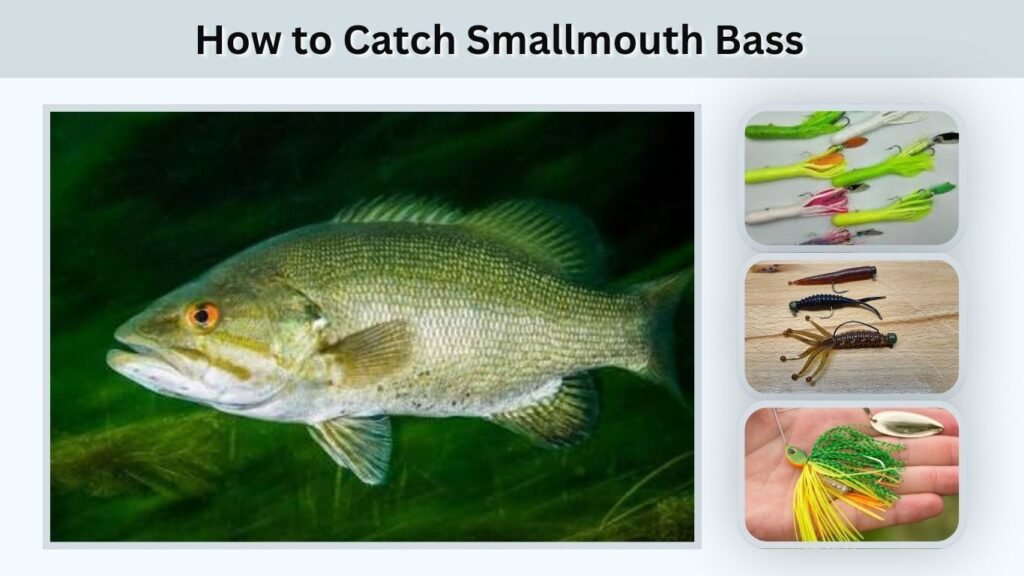
Catching smallmouth bass requires understanding their feeding patterns, seasonal movements, and preferred underwater structures. Anglers commonly target them with artificial lures, live bait, and fly-fishing equipment. Rocky shorelines, submerged points, and river current breaks are excellent places to begin. Choosing the right presentation for the conditions can significantly improve fishing success.
Best Smallmouth Bass Lures and Bait
Several fishing lures can imitate their natural prey.
- Tube jigs: Mimic crayfish and small bottom-dwelling creatures.
- Ned rigs: Excellent finesse presentations for less active fish.
- Spinnerbaits: Useful for covering water and attracting aggressive bass.
- Crankbaits: Effective around rocky banks and submerged ledges.
- Topwater lures: Productive when bass feed near the surface.
- Soft-plastic swimbaits: Imitate minnows and other small fish.
Live minnows, crayfish, and nightcrawlers may also work where local fishing regulations permit their use.
Best Seasons for Smallmouth Bass Fishing
Seasonal changes strongly influence feeding activity and fish location.
- Spring: Search rocky shallows and nearby deeper areas as bass prepare to spawn.
- Summer: Fish deeper structures during hot daylight hours and shallower feeding areas during cooler periods.
- Fall: Target rocky points and baitfish concentrations as bass feed actively.
- Winter: Use slower presentations around deeper winter holding areas.
Early mornings and evenings can be productive, particularly during warmer months.
Smallmouth Bass Size, Spawning, and World Record
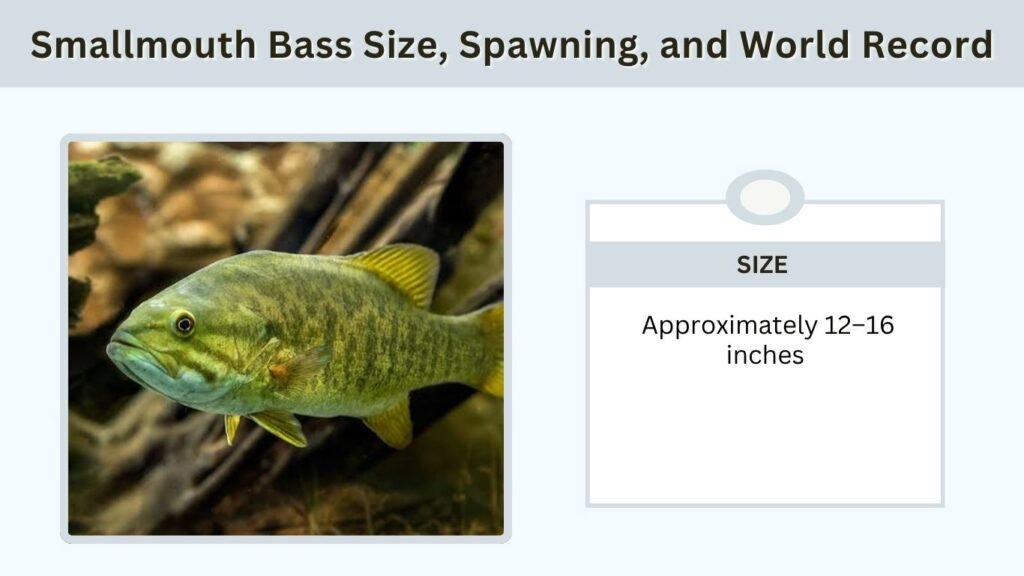
Smallmouth bass vary considerably in size depending on age, habitat quality, and food availability. Their growth and reproduction are influenced by water temperature and seasonal conditions. Although most fish caught by anglers are relatively modest in size, exceptionally large individuals have achieved international recognition and contributed to the species’ popularity among freshwater fishing enthusiasts.
How Big Do Smallmouth Bass Get?
Commonly caught smallmouth bass measure approximately 12–16 inches long. Many weigh around 1–3 pounds, although larger fish can exceed 5 pounds in productive waters.
Females generally grow larger than males. Growth rates vary substantially among regions and populations, particularly between northern and southern waters.
When Do Smallmouth Bass Spawn?
Smallmouth bass typically spawn during spring or early summer as water temperatures rise, often around 60–65°F.
Males construct shallow nests on gravel or rocky bottoms and attract females to deposit eggs. After fertilization, males guard the eggs and newly hatched young against predators.
Protecting nesting fish and following seasonal fishing regulations helps support healthy populations.
World Record Smallmouth Bass
The recognized all-tackle world record smallmouth bass weighed 11 pounds, 15 ounces.
Angler David Hayes caught this extraordinary fish in 1955 at Dale Hollow Lake, located along the Tennessee–Kentucky border.
The catch remains one of the most celebrated records in freshwater sport fishing.
FAQs
1. Are smallmouth bass good to eat?
Yes, smallmouth bass are edible and have firm, white flesh with a relatively mild flavor. They can be baked, grilled, or pan-fried. However, anglers should always check local fish consumption advisories because freshwater fish can accumulate contaminants such as mercury and PCBs in certain waters.
2. How long do smallmouth bass live?
Smallmouth bass commonly live around 6–12 years, although some survive considerably longer. Their lifespan depends on environmental conditions, fishing pressure, predation, and food availability. Fish living in colder northern waters may grow more slowly but can reach relatively old ages under favorable conditions.
3. Do smallmouth bass have red eyes?
Some smallmouth bass have reddish or orange-colored eyes, but not every individual displays this feature. Eye color varies naturally and should not be the only identification characteristic. Body markings, jaw length, and overall shape provide more reliable clues when distinguishing smallmouth bass from similar species.
4. Are smallmouth bass aggressive?
Smallmouth bass are active predators that aggressively pursue crayfish, insects, and smaller fish. They may also become territorial during spawning when males protect their nests. Their strong fighting behavior makes them popular among recreational anglers, especially when they jump or make sudden underwater runs after being hooked.
5. What is the best bait for smallmouth bass?
Crayfish, minnows, and nightcrawlers are effective natural baits for smallmouth bass where permitted. Artificial tube jigs, Ned rigs, and soft-plastic swimbaits are also dependable choices. The best option depends on water clarity, current, season, and the prey naturally available in the fishing location.