
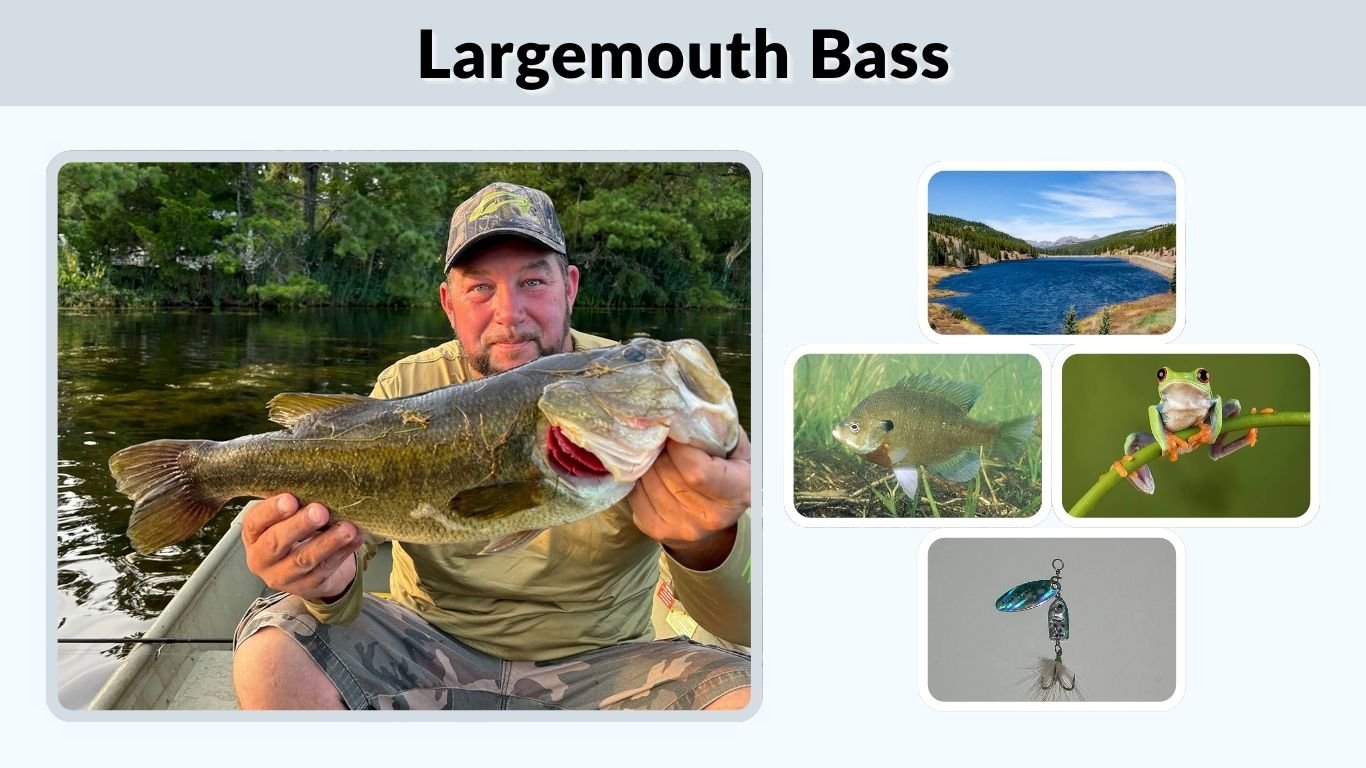
The largemouth bass is one of North America’s most popular freshwater game fish, famous for its powerful strikes, oversized mouth, and aggressive feeding behavior. Found in lakes, ponds, rivers, and reservoirs, this remarkable predator attracts anglers of all experience levels. Whether you’re learning to identify largemouth bass, exploring their natural habitat, or searching for effective fishing techniques, understanding their characteristics and behavior can improve your fishing experience.
What Is a Largemouth Bass?
The largemouth bass is a freshwater predatory fish belonging to the sunfish family, Centrarchidae. It is commonly called black bass, bigmouth bass, or green trout. Known for its impressive jaw size and powerful hunting ability, this fish plays an important ecological role by controlling populations of smaller fish and aquatic invertebrates.
Scientific Name and Classification
Following taxonomic revisions recognized in 2024, the largemouth bass is classified as Micropterus nigricans. Older references commonly identify it as Micropterus salmoides, a scientific name now assigned to the closely related Florida bass.
- Common Name: Largemouth Bass
- Scientific Name: Micropterus nigricans
- Family: Centrarchidae
- Order: Centrarchiformes
- Habitat: Freshwater lakes, ponds, and rivers
- Diet: Carnivorous
- Average Lifespan: Approximately 10–16 years
Largemouth bass are particularly valued for recreational fishing because they readily strike artificial lures and put up energetic fights.
Largemouth Bass Identification and Appearance
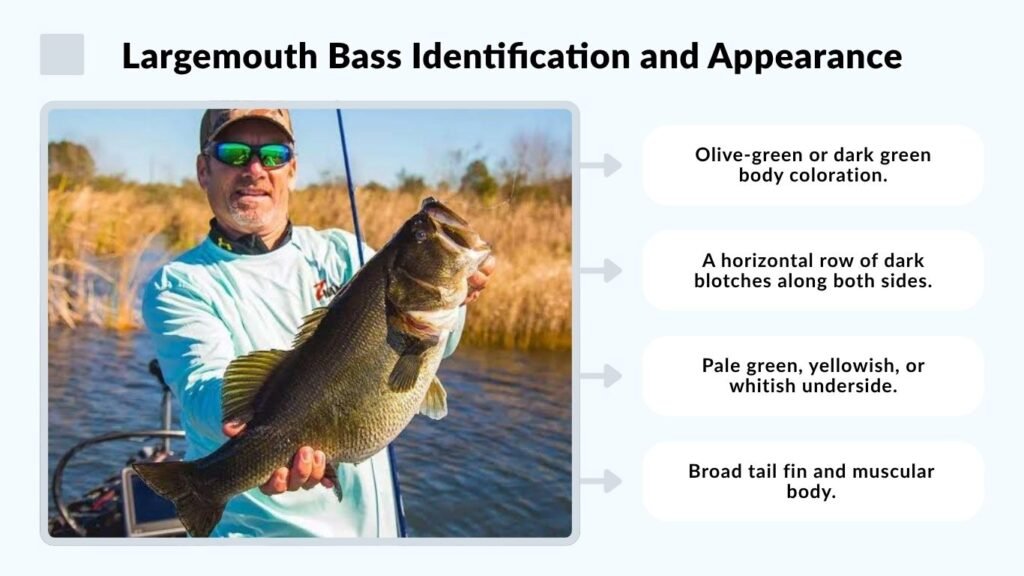
Largemouth bass have several distinctive physical characteristics that make identification relatively straightforward. Their large jaws, greenish coloration, and dark horizontal body markings distinguish them from many other freshwater species. However, their coloration varies depending on water clarity, vegetation, and environmental conditions, so identifying multiple features provides the most reliable results.
How to Identify a Largemouth Bass
The most recognizable characteristic is its oversized mouth. When closed, the upper jaw extends beyond the rear edge of the eye.
Other identification features include:
- Olive-green or dark green body coloration.
- A horizontal row of dark blotches along both sides.
- Pale green, yellowish, or whitish underside.
- A deep notch between the spiny and soft dorsal-fin sections.
- Broad tail fin and muscular body.
Young largemouth bass typically have more noticeable markings, while older fish may develop darker coloration.
Where Do Largemouth Bass Live?
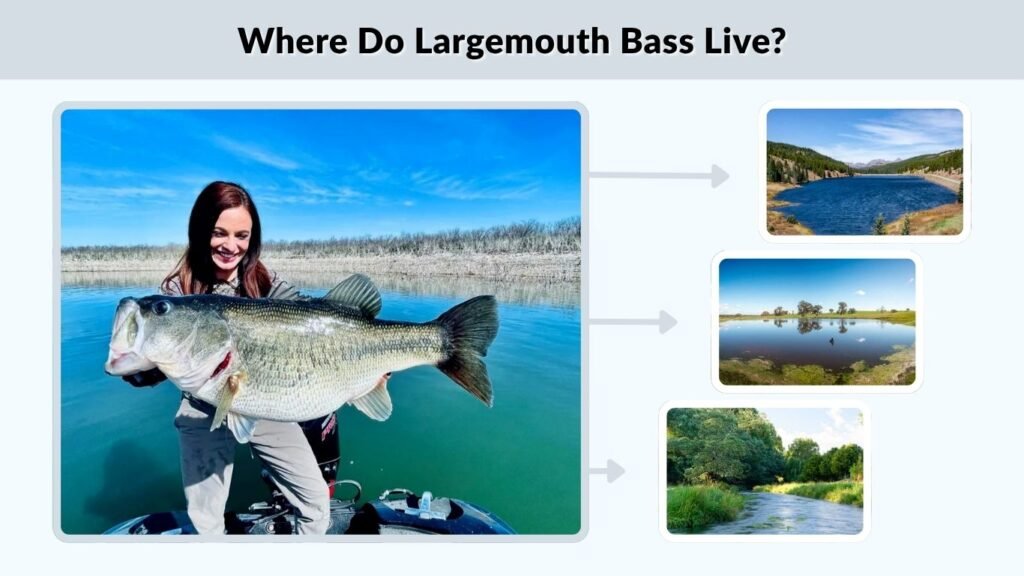
Largemouth bass are native to North America but have been introduced to numerous other regions for recreational fishing. They thrive in warm freshwater environments containing vegetation, submerged structures, and abundant prey. Their adaptability allows them to occupy different aquatic habitats, although they generally prefer slower-moving water with sufficient cover for ambushing prey.
Natural Habitat and Distribution
Largemouth bass commonly inhabit:
- Freshwater lakes and reservoirs.
- Farm ponds and small fishing lakes.
- Slow-moving rivers and streams.
- Marshes and vegetated backwaters.
- Areas containing submerged trees and aquatic plants.
They frequently remain near underwater structures where smaller fish gather.
Largemouth bass generally prefer warmer water than smallmouth bass, although they can survive considerable seasonal temperature changes.
Seasonal Habitat Changes
During spring, largemouth bass move into shallow water to reproduce.
In summer, they often seek deeper water, shaded structures, or thick vegetation to avoid excessive heat.
During autumn, they may follow schools of baitfish into shallower areas. Winter generally brings reduced activity, particularly in colder northern waters.
What Do Largemouth Bass Eat?
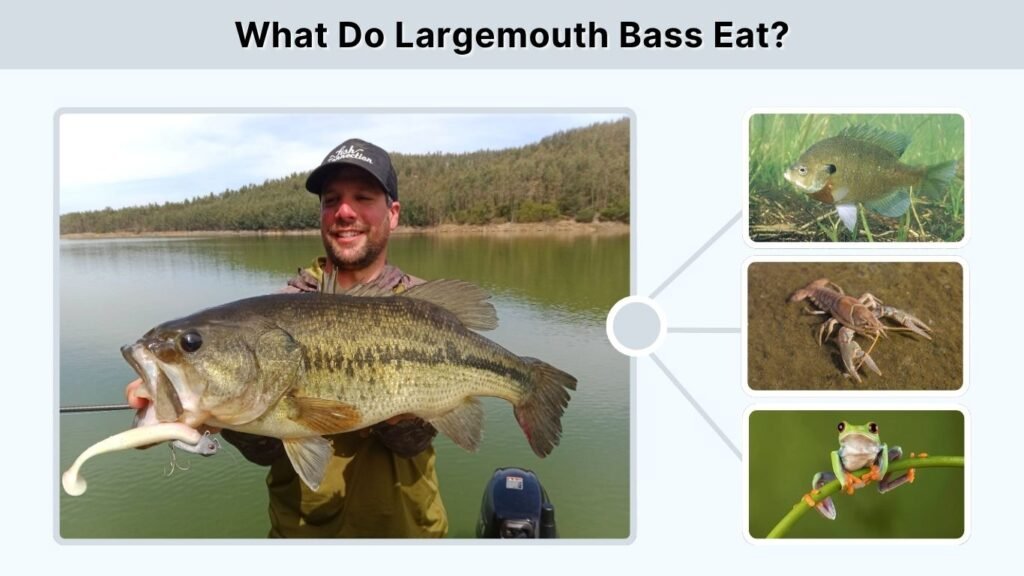
Largemouth bass are opportunistic carnivores that consume various aquatic animals. Their feeding habits change as they grow, allowing them to take advantage of different food sources. Their oversized mouths enable them to swallow surprisingly large prey, making them effective predators within freshwater ecosystems.
Largemouth Bass Diet
Adult largemouth bass commonly eat:
- Small fish such as shad, minnows, and bluegill.
- Crayfish and other crustaceans.
- Aquatic insects and larger insect larvae.
- Frogs and tadpoles.
- Occasionally small aquatic reptiles and other animals.
Baby largemouth bass initially consume zooplankton and tiny invertebrates before gradually switching to larger prey.
These fish frequently hunt from concealed positions near vegetation, rocks, or submerged branches.
Largemouth Bass Size, Lifespan, and Reproduction
Largemouth bass can reach impressive sizes under favorable environmental conditions. Their growth depends on water temperature, food availability, genetics, and habitat quality. Although many fish remain relatively small, well-managed lakes can produce trophy specimens weighing several pounds. Their reproductive behavior also contributes to their success across diverse freshwater environments.
How Big Do Largemouth Bass Get?
Many adult largemouth bass measure approximately 12–20 inches and weigh between 1 and 5 pounds.
However, exceptional individuals can exceed 10 pounds, particularly in productive warm-water fisheries.
Fish weighing 8 pounds or more are often considered trophy-sized by recreational anglers.
Growth rates differ significantly depending on location, available prey, and environmental conditions.
How Long Do Largemouth Bass Live?
Largemouth bass commonly live around 10–16 years, although individual lifespans vary with environmental conditions and mortality risks.
They generally spawn during spring when water temperatures become suitable.
Male bass construct nests in shallow water, where females deposit thousands of eggs. After fertilization, males guard the eggs and newly hatched fry.
World Record Largemouth Bass
The famous largemouth bass world-record weight is 22 pounds, 4 ounces.
George Perry caught a fish of this weight in Georgia in 1932. In 2009, Manabu Kurita caught a similarly sized bass in Japan, historically recognized as a tie.
Recent taxonomic revisions distinguish largemouth bass from Florida bass, resulting in separate species classifications and changes to record documentation.
How to Catch Largemouth Bass
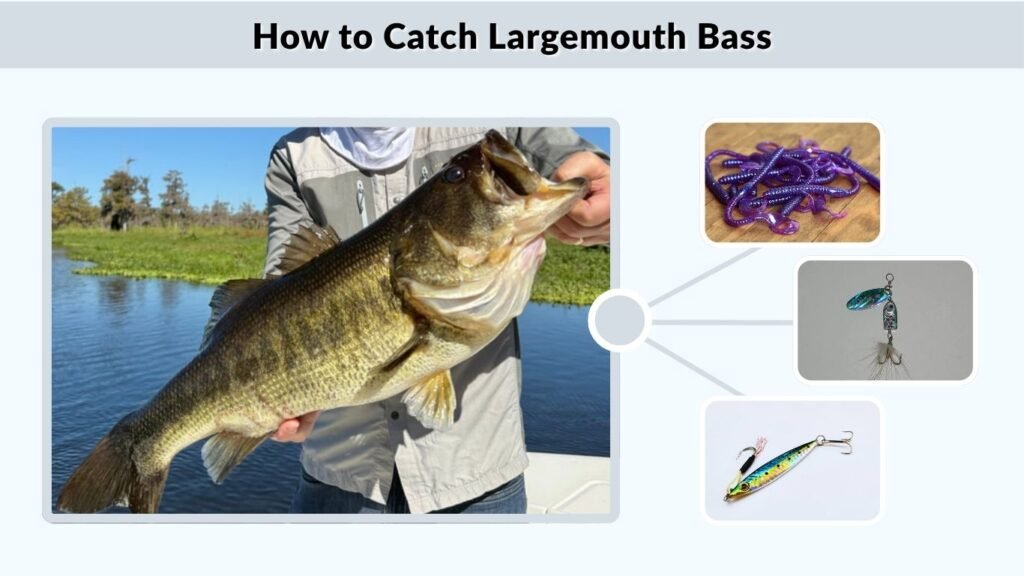
Largemouth bass fishing is popular because these aggressive predators respond to numerous artificial lures and natural baits. Successful fishing depends on understanding seasonal movements, feeding behavior, and preferred cover. Anglers generally achieve better results when they select fishing locations with abundant prey and adjust lure presentations according to water temperature and visibility.
Best Bait and Lures for Largemouth Bass
Some effective largemouth bass fishing lures include:
- Plastic worms: Effective around vegetation, submerged logs, and underwater structures.
- Spinnerbaits: Useful for covering water and attracting active fish.
- Crankbaits: Imitate small fish swimming near underwater structures.
- Topwater frogs: Especially useful around thick vegetation.
- Jigs: Work well around rocky bottoms, docks, and submerged timber.
- Live minnows: Natural bait that can attract feeding bass where permitted.
Choosing lure size and color according to available prey and water clarity can improve fishing success.
Best Time to Catch Largemouth Bass
Early morning and late evening often provide excellent fishing opportunities, particularly during summer.
Spring is another productive period because bass move into shallower water as temperatures rise.
During warmer afternoons, fishing shaded structures and deeper vegetation edges can be effective.
In colder conditions, slower lure presentations near deeper holding areas may produce better results.
Largemouth Bass vs Smallmouth Bass
Largemouth and smallmouth bass are closely related freshwater game fish, but their appearance and habitat preferences differ. Smallmouth bass typically occupy clearer, rockier environments, while largemouth bass often prefer vegetated waters. Understanding these differences helps anglers identify catches accurately and choose fishing methods suited to each species.
Key Differences
| Feature | Largemouth Bass | Smallmouth Bass |
| Mouth | Extends beyond eye | Ends near eye |
| Color | Green or olive | Bronze or brown |
| Markings | Horizontal stripe | Vertical bars |
| Habitat | Weedy lakes and ponds | Rocky lakes and rivers |
| Maximum size | Generally larger | Generally smaller |
| Fishing behavior | Ambush predator | Often associated with rocky cover and current |
Both provide exciting recreational fishing, but largemouth bass are particularly associated with vegetation and powerful ambush strikes.
Can You Eat Largemouth Bass?
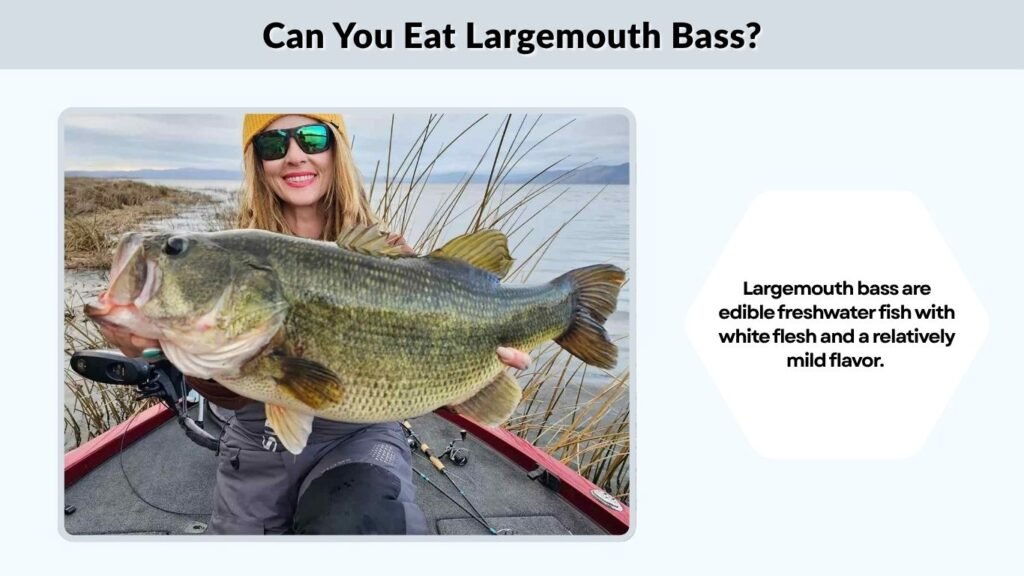
Largemouth bass are edible freshwater fish with white flesh and a relatively mild flavor. Although many anglers practice catch-and-release fishing, others harvest legally sized bass for meals. Flavor varies depending on habitat, water quality, handling, and preparation. Checking local fishing regulations and fish-consumption advisories is essential before keeping any fish.
Taste and Cooking Methods
Largemouth bass generally have firm, flaky flesh suitable for several cooking methods.
Common preparation methods include baking, grilling, pan-frying, and deep-frying.
Smaller legally harvested fish are sometimes preferred for their texture and flavor.
Proper cleaning, refrigeration, and thorough cooking help maintain food quality and safety.
FAQs
1. What is the scientific name of largemouth bass?
The scientific name is Micropterus nigricans under the updated classification. Historically, largemouth bass were widely called Micropterus salmoides, which now refers to Florida bass.
2. What is the best bait for largemouth bass?
Plastic worms, live minnows, spinnerbaits, crankbaits, and jigs are popular choices. The most effective bait depends on season, habitat, and feeding activity.
3. How big can largemouth bass grow?
Many adults measure 12–20 inches, but exceptional specimens can exceed 10 pounds. The famous all-tackle record weight is 22 pounds, 4 ounces.
4. Where is the best place to catch largemouth bass?
Vegetated lakes, ponds, slow-moving rivers, and reservoirs are productive locations. Focus on submerged trees, docks, weed edges, and other underwater structures.
5. Are largemouth bass aggressive fish?
Yes. Largemouth bass are predatory fish known for aggressive feeding strikes. However, their activity varies depending on water temperature, food availability, and seasonal conditions.