
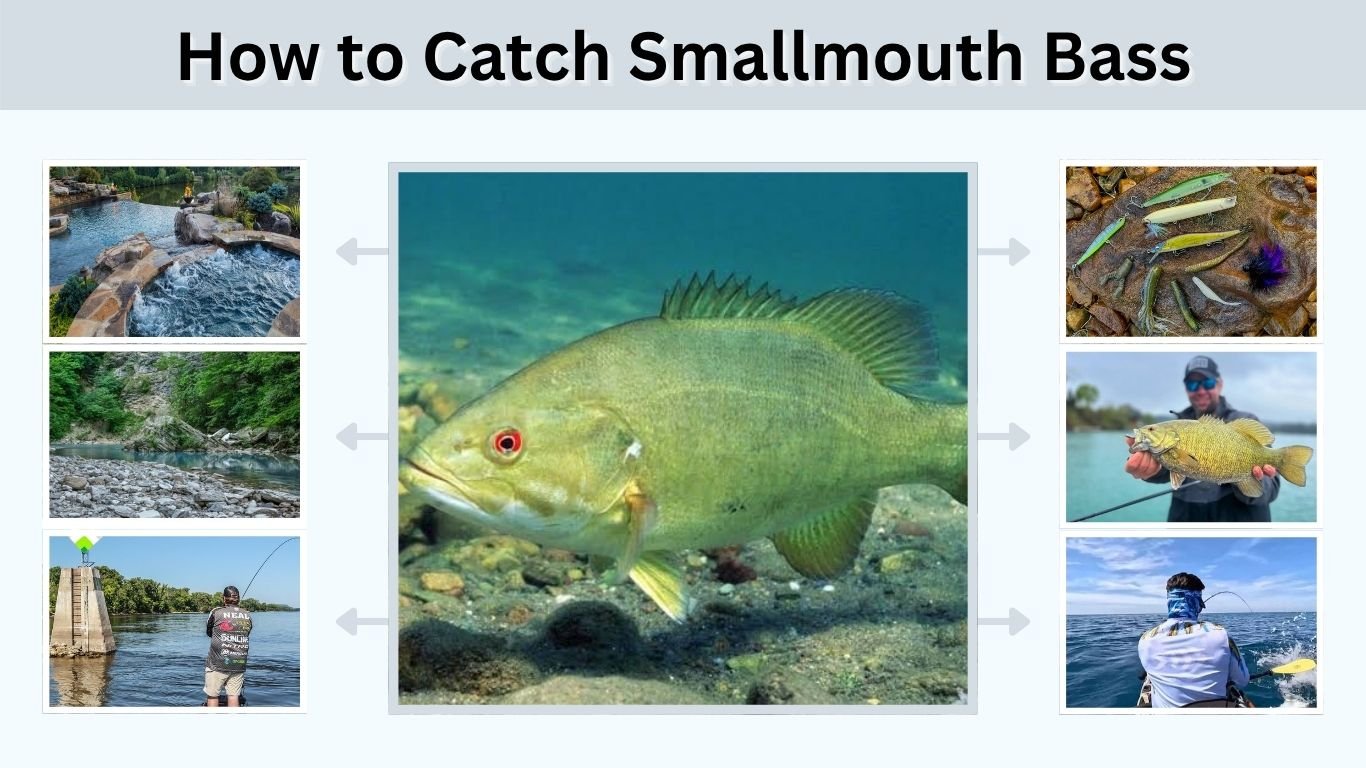
Learning how to catch smallmouth bass becomes easier when you understand their feeding habits, preferred habitats, and seasonal movements. These powerful freshwater fish are commonly found around rocky shorelines, river currents, and submerged structures. Whether you are fishing from shore, exploring a lake, or casting into a flowing river, choosing the right bait and technique can improve your results. This guide explains seven practical smallmouth bass fishing tips, including the best locations, equipment, lures, and seasonal strategies for beginners and experienced anglers.
How to Catch Smallmouth Bass: 7 Essential Tips
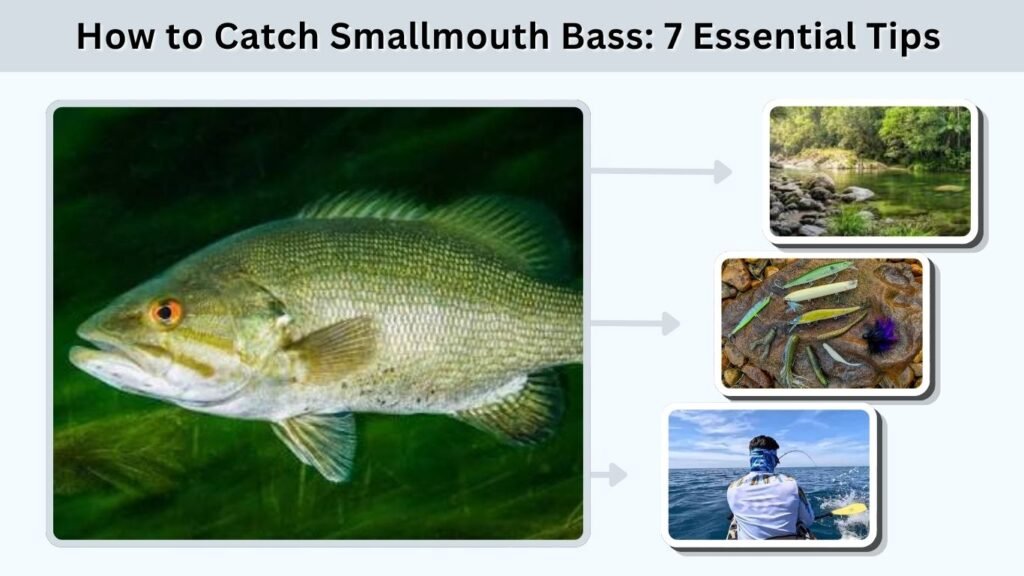
Smallmouth bass are active predators that often feed on crayfish, minnows, and aquatic insects. They prefer rocky environments and frequently gather near structures that provide shelter and feeding opportunities. Successful fishing involves locating productive areas, choosing suitable equipment, and presenting your bait naturally. The following seven tips can help you catch smallmouth bass consistently.
1. Find the Best Smallmouth Bass Fishing Spots
Start by looking for rocky bottoms, underwater ledges, gravel banks, and submerged boulders. These structures attract crayfish and smaller fish, making them excellent feeding locations.
Some productive spots include:
- Rocky points and underwater drop-offs.
- River pools and current breaks.
- Submerged logs and large boulders.
- Gravel shorelines and deeper lake edges.
- Areas where shallow water meets deeper channels.
Focus on places offering both shelter and nearby access to food.
2. Choose the Right Fishing Rod and Reel
A medium-light or medium-power spinning rod between 6 and 7 feet is a versatile choice for smallmouth bass fishing.
Pair it with a 2000–3000-size spinning reel and approximately 6–10-pound monofilament or fluorocarbon line. Another option is 10–15-pound braided line with a fluorocarbon leader.
Lightweight equipment helps anglers detect subtle bites while providing enough strength to control active fish.
3. Use the Best Lures for Smallmouth Bass
Smallmouth bass respond well to artificial lures that resemble their natural prey.
Effective choices include tube jigs, Ned rigs, crankbaits, spinnerbaits, and soft-plastic swimbaits.
Tube jigs imitate crayfish, while swimbaits resemble small baitfish. Ned rigs are especially useful when fish become less aggressive. In warmer conditions, topwater poppers can produce exciting strikes when smallmouth bass feed near the surface.
4. Try Natural Bait for Smallmouth Bass
Live minnows, nightcrawlers, and crayfish can be effective options where regulations allow them.
Present natural bait close to rocky structures or deeper pools where smallmouth bass search for food.
Using an appropriately sized hook and enough weight to maintain control helps keep the bait near the feeding zone. Always check local restrictions on live bait and crayfish before fishing.
5. Master Slow and Natural Retrieves
Smallmouth bass often respond to realistic bait movement.
Cast near rocks, let your lure sink, and retrieve it with short movements. Occasionally pause to imitate an injured or resting prey animal.
When fishing with a jig, allow it to contact the bottom before lifting it gently. Experiment with retrieval speeds until you discover what attracts bites.
6. Fish During Productive Feeding Periods
Early morning and late evening can be productive fishing periods, particularly during warm weather.
Smallmouth bass may move toward shallow feeding areas when sunlight becomes less intense.
However, cloudy conditions and moderate winds can also improve daytime fishing. Instead of relying entirely on a specific hour, observe baitfish activity, water temperature, and changing weather conditions.
7. Target Bigger Smallmouth Bass
To catch big smallmouth bass, concentrate on locations offering deeper water, rocky structures, and reliable food sources.
Large individuals often occupy productive feeding areas near underwater points or ledges.
Try slightly larger swimbaits, tubes, or crankbaits that imitate substantial prey. During colder periods, slow your presentation and focus on deeper holding areas.
Patience and accurate casting are especially important when targeting trophy-sized fish.
How to Catch Smallmouth Bass in Rivers and Lakes
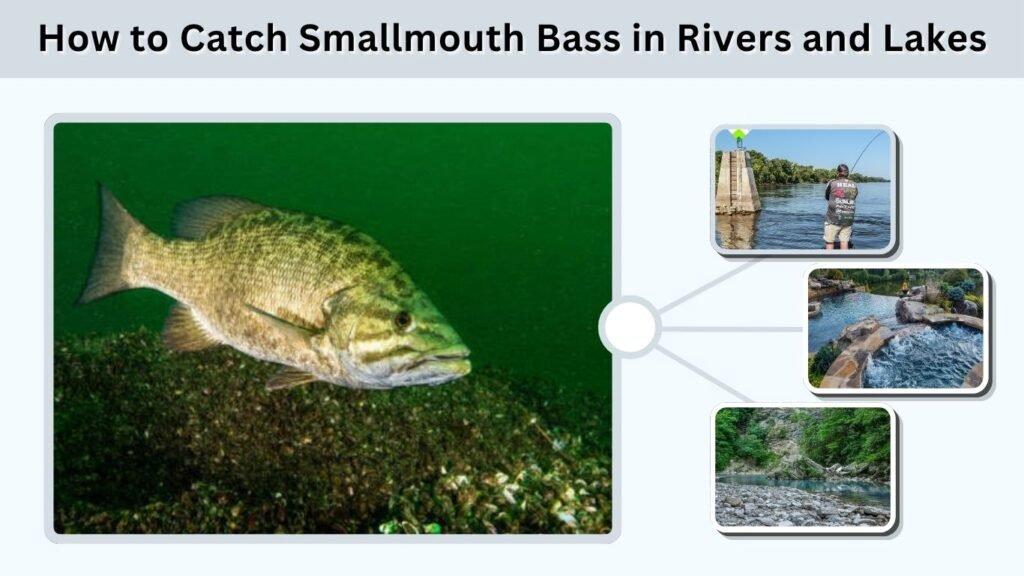
Smallmouth bass inhabit various freshwater environments, but their behavior changes depending on current, depth, and underwater structure. River fish often hold behind rocks or near slower-moving water, while lake fish frequently gather around submerged points and ledges. Understanding these differences helps anglers choose productive casting locations and fishing techniques.
How to Catch Smallmouth Bass in Rivers
In rivers, focus on current breaks, deeper pools, rocky banks, and areas downstream of boulders.
Cast slightly upstream or across the current and allow your lure to move naturally through the feeding zone.
Small tube jigs, soft-plastic grubs, and inline spinners can work particularly well. Avoid placing your lure directly into extremely fast current when fish are likely resting in nearby calmer water.
How to Catch Smallmouth Bass in Lakes
Lake fishing requires identifying submerged structures and changes in water depth.
Rocky points, gravel banks, underwater humps, and drop-offs are excellent starting locations.
During spring, smallmouth bass often move toward shallower water. In summer, some fish shift toward deeper, cooler structures.
Use crankbaits to cover larger areas and finesse jigs when targeting individual underwater features.
How to Catch Smallmouth Bass From Shore
Shore fishing can be productive without a boat.
Choose accessible rocky shorelines, bridge areas, and public fishing banks with nearby deeper water.
Cast parallel to shore before targeting distant locations because bass may feed surprisingly close to the bank.
Move quietly, vary your casting angles, and explore several spots instead of repeatedly fishing unproductive water.
How to Catch Smallmouth Bass in Different Seasons
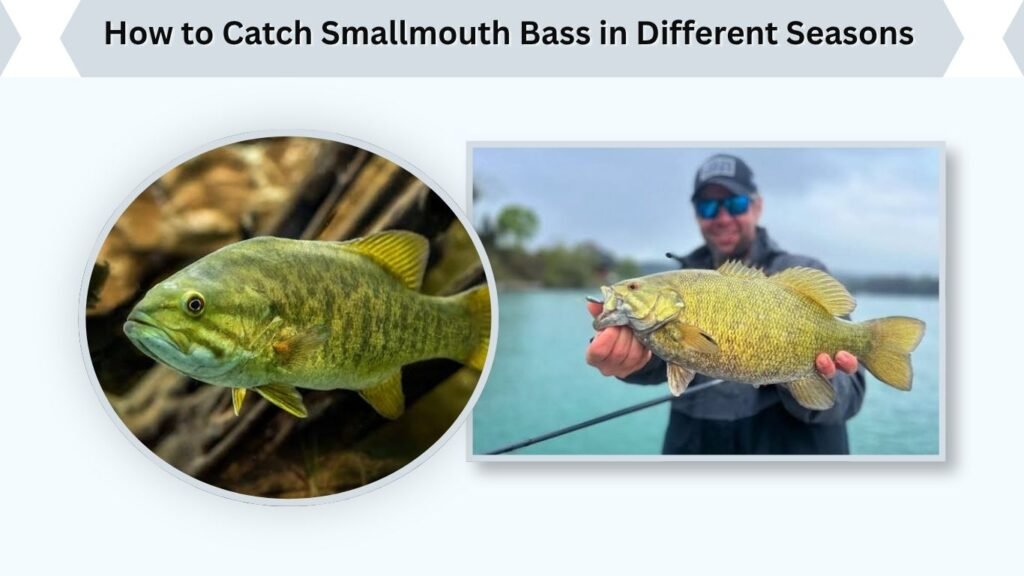
Water temperature influences smallmouth bass activity, feeding patterns, and seasonal movements. During warmer months, fish may actively pursue prey around rocky structures, while colder conditions can reduce their activity. Seasonal changes also affect preferred fishing depth and lure presentation. Adjusting your approach throughout the year helps maintain more consistent results.
Catching Smallmouth Bass in Spring
Spring fishing often becomes productive as water temperatures increase.
Bass move toward rocky shallows and nearby transition areas before spawning. Jigs, crankbaits, and soft-plastic lures can be effective during this period.
Avoid unnecessarily targeting fish guarding spawning nests, and follow seasonal fishing regulations to protect reproduction.
Catching Smallmouth Bass in Summer
During summer, target deeper rocky structures during hot daylight hours.
Early morning and evening can offer better shallow-water opportunities.
Use soft-plastic swimbaits, drop-shot rigs, and tube jigs around underwater ledges. In rivers, concentrate on deeper pools and areas with suitable current and oxygen levels.
Catching Smallmouth Bass in Fall and Winter
Fall smallmouth bass often follow baitfish and feed actively before temperatures drop.
Crankbaits, swimbaits, and jigs are useful for locating fish along rocky points.
In winter, bass usually become less active and may occupy deeper water. Slow-moving finesse presentations and patient retrieves are often more effective than fast-moving lures.
FAQs
1. What is the easiest way to catch smallmouth bass?
The easiest approach is to use a spinning rod with a small tube jig or soft-plastic lure near rocky structures. Cast toward submerged rocks, allow the lure to sink, and retrieve slowly. Concentrate on river pools, lake points, and other locations where bass naturally search for prey.
2. What is the best bait for smallmouth bass?
Crayfish, minnows, and nightcrawlers are effective natural baits for smallmouth bass. Artificial tube jigs, Ned rigs, and swimbaits also work well because they imitate common prey. The most effective choice depends on water clarity, temperature, current conditions, and the available food supply.
3. Can you catch smallmouth bass from shore?
Yes, smallmouth bass can be caught from shore in rivers, lakes, and reservoirs. Rocky banks, bridge areas, and public shoreline access points are promising locations. Use lightweight spinning equipment and cast around underwater structures. Changing fishing positions regularly can help you locate actively feeding fish.
4. What time of day is best for smallmouth bass fishing?
Early morning and late evening are often productive, particularly in summer when lower light encourages shallow-water feeding. However, smallmouth bass can also bite throughout the day. Cloud cover, water temperature, wind, and prey activity frequently influence feeding behavior more than the exact time.
5. How do you catch smallmouth bass in clear water?
In clear water, use natural-colored lures, lighter fishing lines, and longer casts to avoid startling fish. Soft-plastic minnows, tube jigs, and finesse rigs work particularly well. Keep your movements quiet and use realistic retrieval techniques around rocky structures where smallmouth bass commonly feed.