
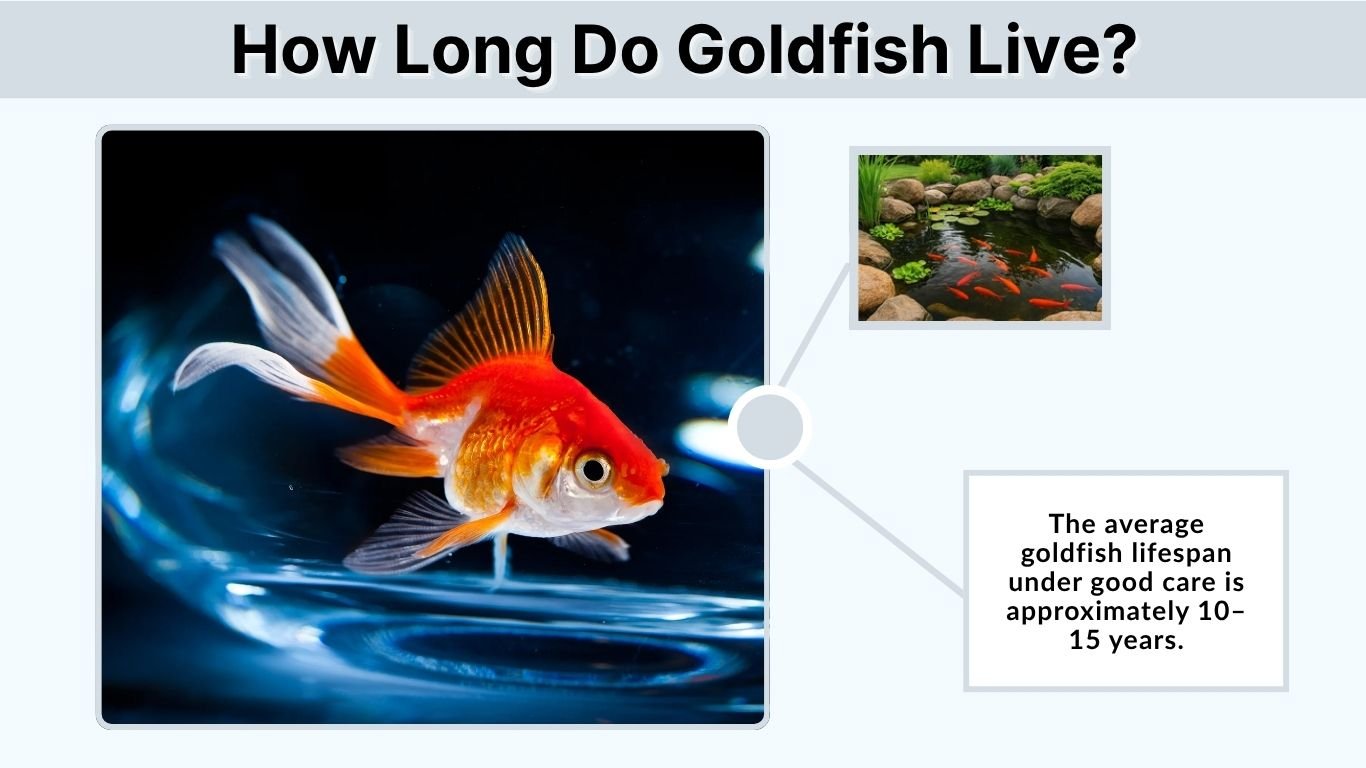
Have you ever wondered how long goldfish live and whether yours could survive for decades? Many people assume goldfish are short-lived pets, but they can live much longer than expected. With proper care, these colorful freshwater fish may remain healthy for 10–15 years or even longer. Their lifespan depends on several factors, including tank size, water quality, food, and variety. Understanding these differences can help you give your goldfish a longer, healthier life.
What Is the Average Lifespan of a Goldfish?
Goldfish (Carassius auratus) are surprisingly long-lived freshwater fish. Although some pet goldfish die within a few years, this usually does not represent their full biological potential. Healthy goldfish maintained in suitable environments often live for more than a decade, while exceptional individuals may survive considerably longer.
How Many Years Do Goldfish Usually Live?
The average goldfish lifespan under good care is approximately 10–15 years. Some individuals can reach 20 years or more, particularly when provided with spacious environments and stable water conditions.
Common goldfish and comet goldfish often have the potential for long lives because their streamlined bodies generally allow efficient swimming.
Fancy goldfish may be more vulnerable to health issues associated with selectively bred body shapes, although many also survive for over a decade.
How Long Can Goldfish Live at Most?
Goldfish have occasionally lived for more than 30 years, demonstrating their impressive longevity.
However, such extraordinary lifespans are uncommon and should not be considered typical. Genetics, disease resistance, aquarium maintenance, and environmental stability all influence how long individual goldfish survive.
How Long Do Goldfish Live in a Tank?
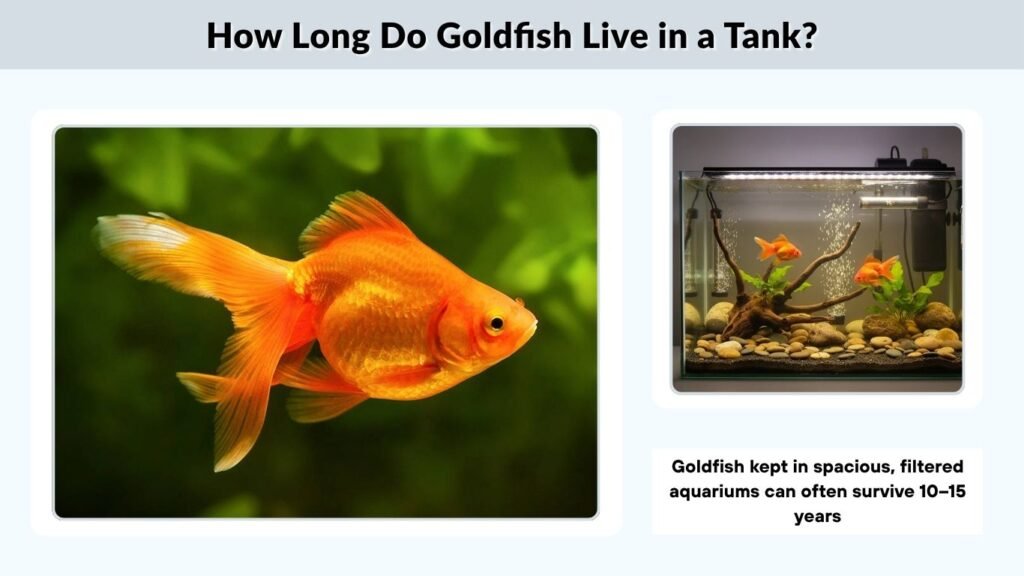
Goldfish can live for many years in a properly maintained aquarium. However, simply keeping a fish indoors does not guarantee a long life. Aquarium size, filtration, stocking density, and routine maintenance determine whether the environment supports healthy development and normal behavior.
Lifespan in a Properly Maintained Aquarium
Goldfish kept in spacious, filtered aquariums can often survive 10–15 years, sometimes exceeding 20 years.
The aquarium should be large enough for the fish’s adult size. The Ornamental Aquatic Trade Association recommends at least 100 liters for an adult goldfish, with additional space for more fish. Larger, more active varieties may require considerably more room.
A mature biological filter is essential because goldfish produce substantial waste. Without adequate filtration, harmful ammonia and nitrite can accumulate.
How Long Do Goldfish Live in a Small Tank?
Small aquariums can create conditions that shorten a goldfish’s life, particularly as the fish grows.
A 10-gallon tank is generally unsuitable as a permanent home for an adult goldfish. Even a 20-gallon aquarium may be inadequate, depending on the fish’s size and variety.
Limited water volume makes temperature and water-quality fluctuations more difficult to control.
An appropriately sized aquarium offers more swimming space and helps maintain a stable environment.
How Long Do Goldfish Live in a Bowl?
Goldfish bowls remain popular in movies and traditional pet displays, but they are unsuitable for long-term goldfish care. Their small water volume, limited swimming space, and lack of effective filtration can produce unhealthy conditions. A goldfish kept in a bowl may survive for some time, but its welfare and longevity are at risk.
Why Goldfish Bowls Reduce Lifespan
Traditional bowls often lack the equipment needed to maintain appropriate water quality.
Common problems include:
- Limited Space: Restricts normal swimming and growth.
- Poor Filtration: Allows harmful waste to accumulate.
- Temperature Changes: Small volumes heat and cool quickly.
- Low Oxygen Availability: Inadequate aeration can reduce oxygen levels.
- Unstable Water Chemistry: Waste buildup can cause rapid changes.
There is no reliable fixed lifespan for goldfish kept in bowls. Some die quickly, while others survive longer despite unsuitable conditions.
A spacious, filtered aquarium is the safer choice.
How Long Do Goldfish Live in a Pond?
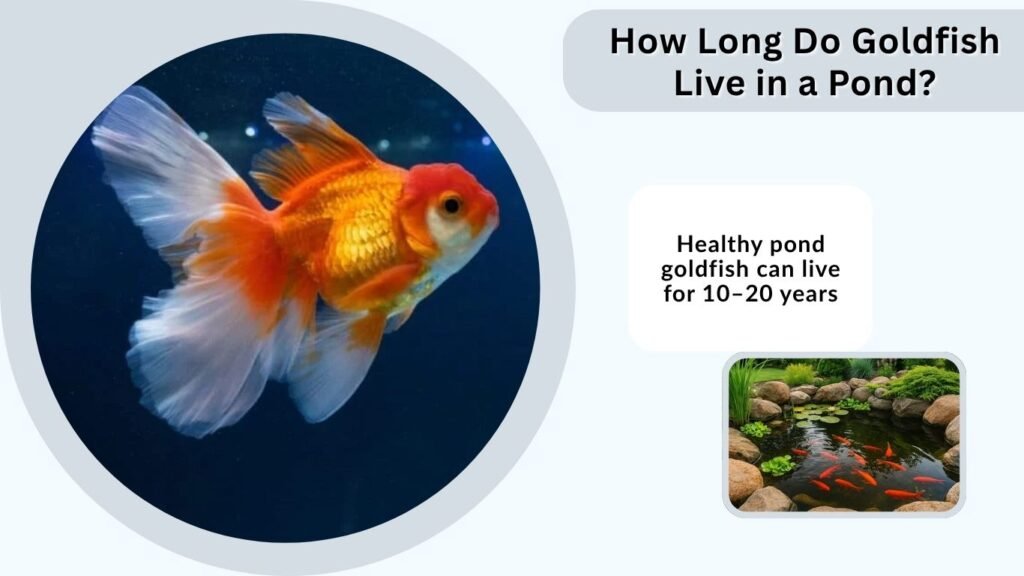
Outdoor ponds can provide excellent environments for certain goldfish varieties. Greater water volume and natural swimming opportunities may support long-term health when conditions are properly managed. However, outdoor environments also introduce risks such as predators, extreme temperatures, and seasonal changes that require attention.
Average Lifespan of Pond Goldfish
Healthy pond goldfish can live for 10–20 years or longer under suitable conditions.
Common goldfish, comet goldfish, and Shubunkins are often better suited to outdoor ponds than delicate fancy varieties.
Their streamlined bodies help them swim efficiently, while their relatively hardy nature allows them to tolerate a broader range of seasonal conditions.
Factors Affecting Pond Goldfish Lifespan
Pond depth, oxygen levels, filtration, and seasonal temperatures influence survival.
Predators such as herons and raccoons may also threaten outdoor goldfish.
Provide suitable depth, shelter, effective filtration, and adequate oxygenation. During cold weather, feeding should be adjusted according to water temperature and the fish’s activity.
A healthy pond is not necessarily maintenance-free. Regular observation and water testing remain important.
How Long Do Different Types of Goldfish Live?
Goldfish varieties differ in body structure, swimming ability, and susceptibility to health problems. Common and comet goldfish generally have streamlined bodies, while fancy varieties often possess shortened bodies, elaborate fins, or unusual head growth. These differences can influence their health and longevity.
Goldfish Lifespan by Variety
The following ranges are broad care-based estimates rather than guaranteed lifespans for individual fish.
| Goldfish Type | Potential Lifespan |
| Common Goldfish | 10–20+ years |
| Comet Goldfish | 10–20+ years |
| Shubunkin Goldfish | 10–20+ years |
| Fantail Goldfish | 8–15+ years |
| Oranda Goldfish | 8–15+ years |
| Ranchu Goldfish | 8–15+ years |
| Black Moor Goldfish | 8–15+ years |
| Ryukin Goldfish | 8–15+ years |
| Lionhead Goldfish | 8–15+ years |
| Bubble Eye Goldfish | Variable; often more vulnerable |
Common and Comet Goldfish Lifespan
Common goldfish and comet goldfish are generally hardy, active swimmers. With appropriate care, many can live well beyond 10 years.
Comet goldfish have long, flowing tails but retain relatively streamlined bodies. Their active swimming behavior means they need particularly spacious aquariums or suitable outdoor ponds.
Fancy Goldfish Lifespan
Fancy goldfish include Orandas, Ranchus, Fantails, Ryukins, and Black Moors.
Many fancy goldfish can live 10–15 years or longer, but certain varieties may experience more health complications.
Their compact bodies, delicate fins, or prominent eyes can make them vulnerable to injuries and swimming difficulties.
Providing gentle water movement, adequate space, and suitable companions supports their long-term well-being.
What Factors Affect Goldfish Lifespan?
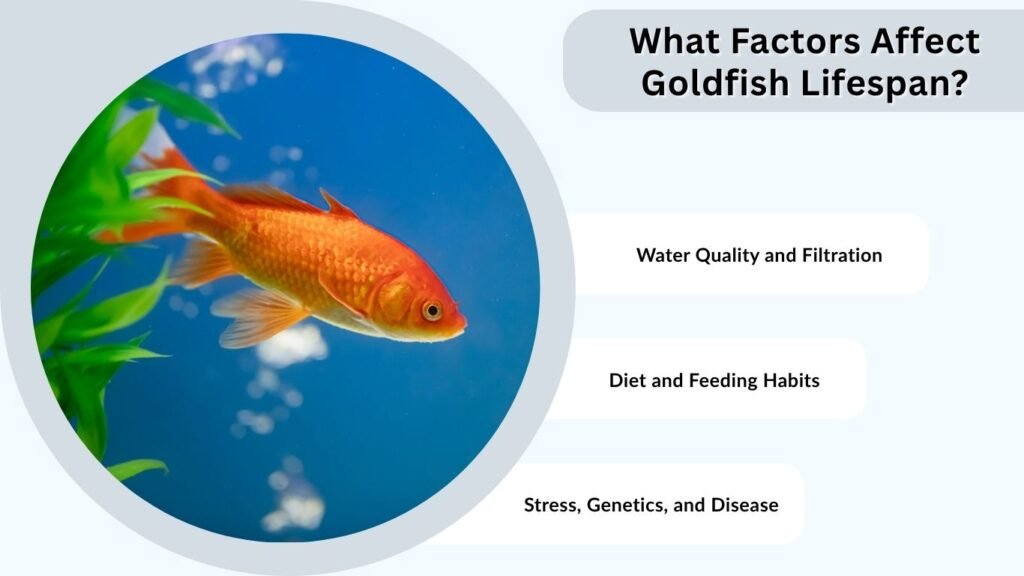
The lifespan of a goldfish depends on more than its variety. Environmental conditions, food quality, disease prevention, and daily maintenance all influence long-term survival. Understanding these factors can help owners prevent avoidable health problems and create a healthier living environment.
Water Quality and Filtration
Clean, stable water is essential for goldfish health.
Ammonia and nitrite should remain at undetectable levels, while nitrate should be controlled through filtration, water changes, and appropriate stocking.
Poor water quality can damage gills, increase stress, and make fish more vulnerable to disease.
Diet and Feeding Habits
Goldfish are omnivores and benefit from balanced, varied nutrition.
High-quality goldfish pellets or other complete foods should form the main diet, supplemented with suitable plant material and occasional protein-rich treats.
Overfeeding increases waste and may contribute to digestive problems. Feed appropriate portions and remove uneaten food.
Stress, Genetics, and Disease
Overcrowding, incompatible tank mates, poor handling, and sudden environmental changes can increase stress.
Genetics also influence longevity. Some fancy goldfish have selectively bred features that make normal movement, feeding, or vision more difficult.
Recognizing early signs of illness and seeking appropriate treatment can improve survival.
How to Help Goldfish Live Longer
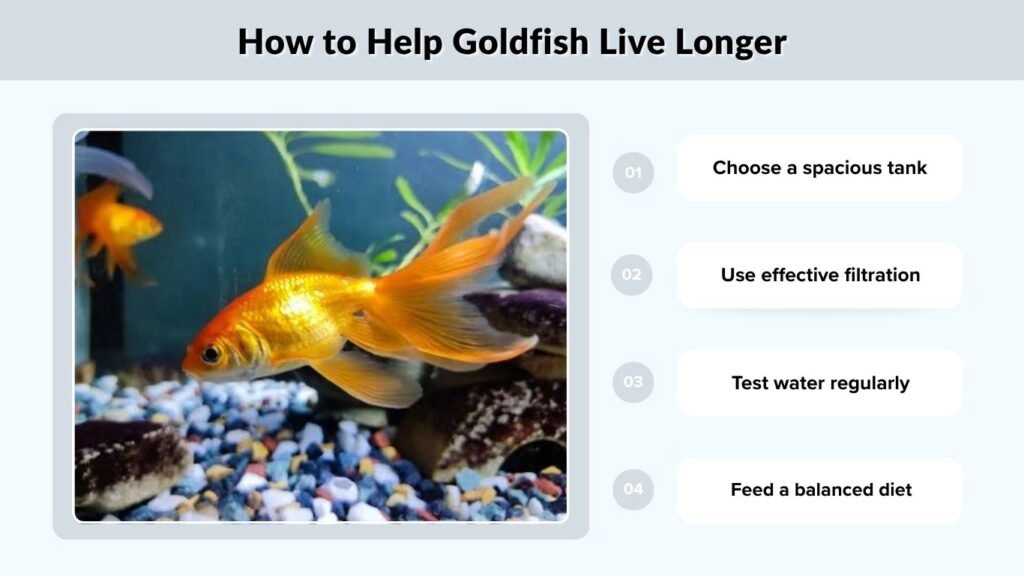
Helping goldfish reach their potential lifespan requires consistent care rather than complicated treatments. Establishing healthy daily habits and maintaining appropriate aquarium conditions can prevent many common problems. Owners should focus on long-term stability rather than frequently changing equipment or water conditions.
Essential Goldfish Care Tips
- Choose a spacious tank: Provide room for the fish’s full adult size.
- Use effective filtration: Maintain healthy biological filtration to process waste.
- Test water regularly: Monitor ammonia, nitrite, nitrate, and pH.
- Perform partial water changes: Replace approximately 20–25% weekly as a starting point, adjusting according to test results.
- Feed a balanced diet: Choose suitable goldfish food and avoid overfeeding.
- Maintain stable temperatures: Avoid rapid environmental changes.
- Choose compatible companions: Prevent aggression and excessive competition.
- Watch for illness: Identify abnormal swimming, reduced appetite, or visible injuries early.
Signs of a Healthy Goldfish
Healthy goldfish generally swim normally, respond to feeding, maintain intact fins, and display regular breathing.
They should not consistently gasp at the surface, rest motionless on the bottom, or struggle to maintain their swimming position.
If unusual behavior appears, check water conditions immediately and seek guidance from an aquatic veterinarian when necessary.
How Long Do Carnival or Feeder Goldfish Live?
Carnival goldfish and feeder goldfish are often common or comet varieties. They are sometimes considered disposable or short-lived fish, but their biological lifespan is not inherently limited to a few weeks or months. Their future health depends largely on previous conditions and subsequent care.
Lifespan of Carnival Goldfish
A healthy carnival goldfish may live 10–20 years or more when transferred into suitable long-term housing.
However, fish that have experienced overcrowding, transportation stress, or poor water conditions may already have health problems.
Feeder goldfish can likewise live for many years if healthy and cared for properly.
The place where a goldfish was purchased does not determine its natural lifespan.
FAQs
1. Can Goldfish Live for 20 Years?
Yes. Some goldfish live for 20 years or longer when provided with excellent water quality, appropriate nutrition, sufficient space, and consistent care.
2. How Long Do Goldfish Live Without Food?
Healthy adult goldfish may tolerate a brief feeding interruption, but survival varies with age, water temperature, and condition. Extended food deprivation can harm their health and should not be used as a care strategy.
3. Do Goldfish Live Longer in Ponds or Tanks?
Both environments can support long lives. Suitable ponds offer extensive swimming space, while well-maintained aquariums provide greater environmental control. Water quality and overall care matter more than location alone.
4. How Long Do Black Moor Goldfish Live?
Black Moor goldfish can often live around 8–15 years or longer with appropriate care. Their protruding eyes require protection from sharp decorations and aggressive companions.
5. Can Goldfish Live Longer Than 30 Years?
Yes, exceptionally long-lived goldfish have survived beyond 30 years. However, these cases are unusual, and most well-cared-for goldfish have shorter lifespans.