
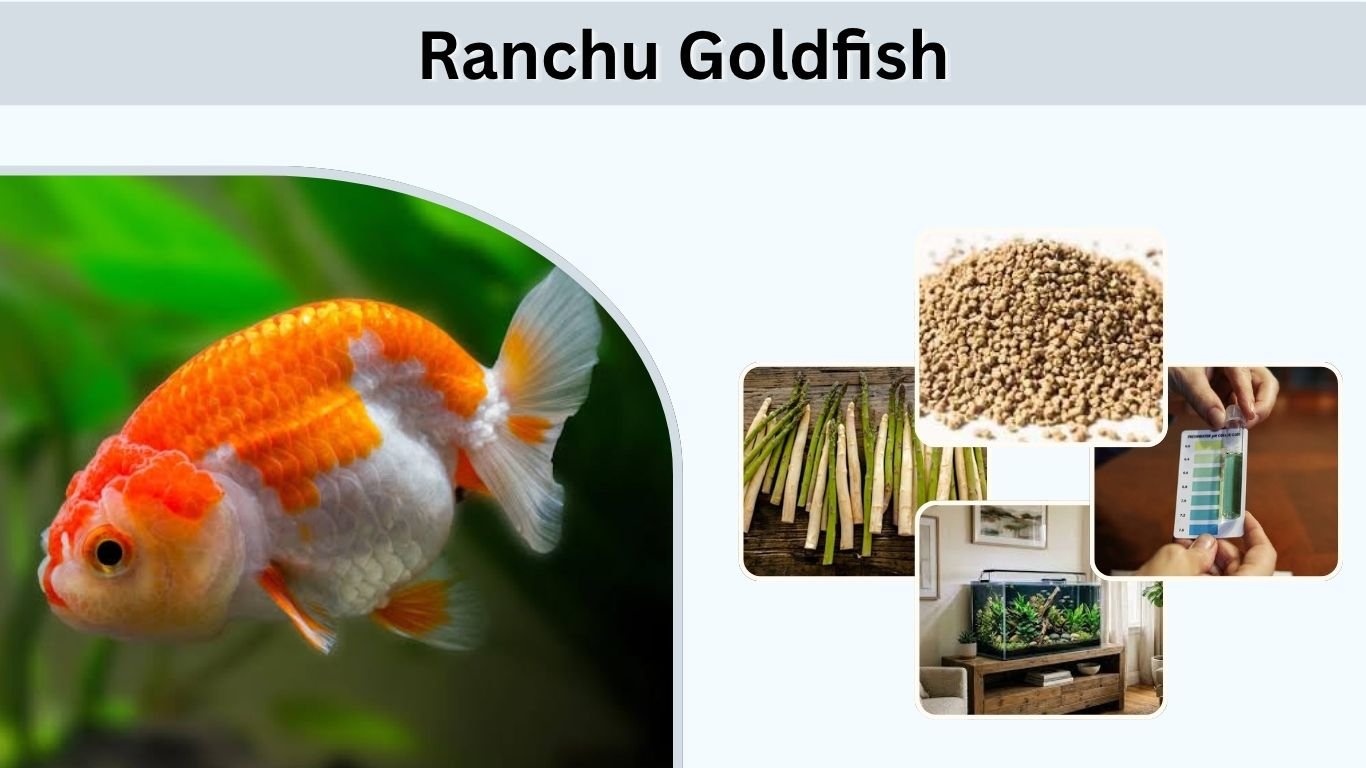
Ranchu goldfish are popular fancy goldfish known for their rounded bodies, distinctive head growth, and lack of a dorsal fin. Often called the “King of Goldfish,” these beautiful fish have a peaceful personality and unique swimming style. However, keeping them healthy requires proper tank conditions, balanced nutrition, and careful maintenance. This guide explores Ranchu goldfish care, popular varieties, tank size, lifespan, feeding requirements, and differences from Lionhead goldfish.
What Is a Ranchu Goldfish?
The Ranchu goldfish is a selectively bred variety of freshwater goldfish (Carassius auratus) originating from Japanese breeding traditions. Its unusual body shape, rounded appearance, and prominent head growth distinguish it from many other fancy goldfish. Ranchus are generally peaceful and relatively slow swimmers, making them suitable for carefully managed aquariums with compatible companions.
Appearance and Identification
Ranchu goldfish have several distinctive physical characteristics that make them easy to recognize.
- Body Shape: Short, rounded, egg-shaped body with a curved back.
- Dorsal Fin: Completely absent, creating a smooth back profile.
- Head Growth: Fleshy growth called a wen around the head and cheeks.
- Tail: Short, divided tail positioned downward.
- Adult Size: Usually around 5–8 inches.
- Lifespan: Commonly 10–15 years with appropriate care.
- Temperament: Peaceful, social, and relatively slow-moving.
Ranchu Goldfish Origin
Ranchu goldfish were developed in Japan through selective breeding from earlier Chinese fancy goldfish. Japanese breeders refined their distinctive curved backs, compact bodies, and head growth.
Traditional Japanese Ranchus are frequently appreciated from above, which highlights their body symmetry and tail placement. Today, aquarium enthusiasts also keep side-view Ranchus in glass aquariums.
Types of Ranchu Goldfish
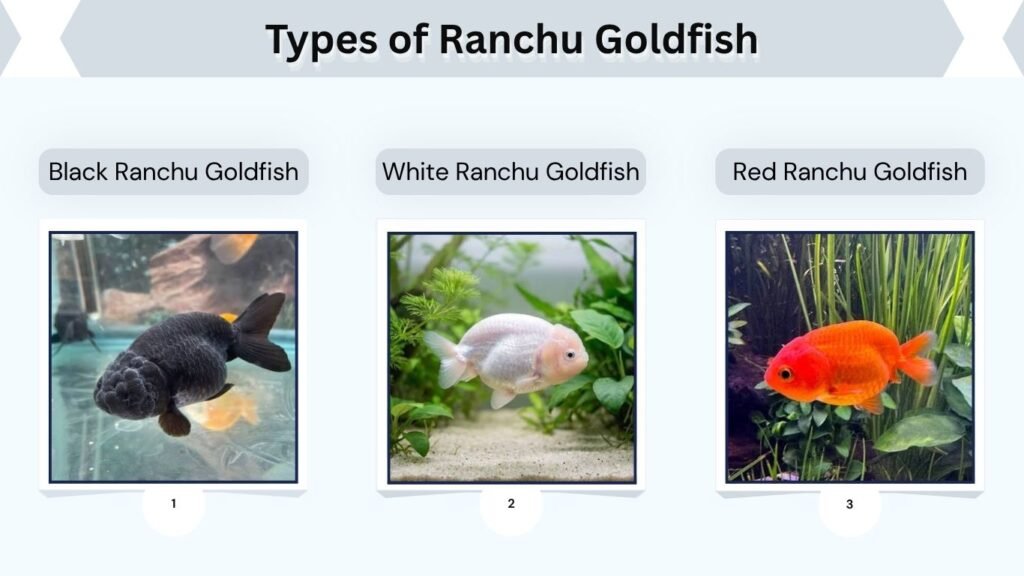
Ranchu goldfish are available in numerous colors and patterns. Although their fundamental body characteristics remain similar, different color varieties offer distinctive appearances. Some color forms are relatively common, while unusual patterns and carefully selected show-quality fish may be more expensive.
Calico Ranchu Goldfish
Calico Ranchu goldfish display a mixture of colors, often including blue, white, red, orange, and black. Their mottled patterns can create striking combinations that vary considerably between individual fish.
Calico Ranchus may have nacreous scales, producing a combination of translucent and reflective areas. Their coloration can change as they mature, making each fish visually distinctive.
Black Ranchu Goldfish
Black Ranchu goldfish have dark coloration covering much or most of their bodies. Some display deep black scales, while others develop bronze or lighter areas over time.
Their rounded bodies and contrasting facial features make them attractive aquarium specimens. However, black coloration is not always permanent, and environmental conditions, genetics, and age can influence their appearance.
Red, White, and Other Ranchu Varieties
Red-and-white Ranchus are especially popular because of their contrasting patterns. Solid red, orange, and predominantly white specimens are also available.
Other color forms include blue Ranchu, lavender Ranchu, and milk cow Ranchu goldfish. The milk cow pattern commonly refers to contrasting dark-and-light patches resembling cow markings.
Regardless of coloration, these varieties require similar aquarium conditions and nutritional care.
Ranchu Goldfish Tank Size and Setup
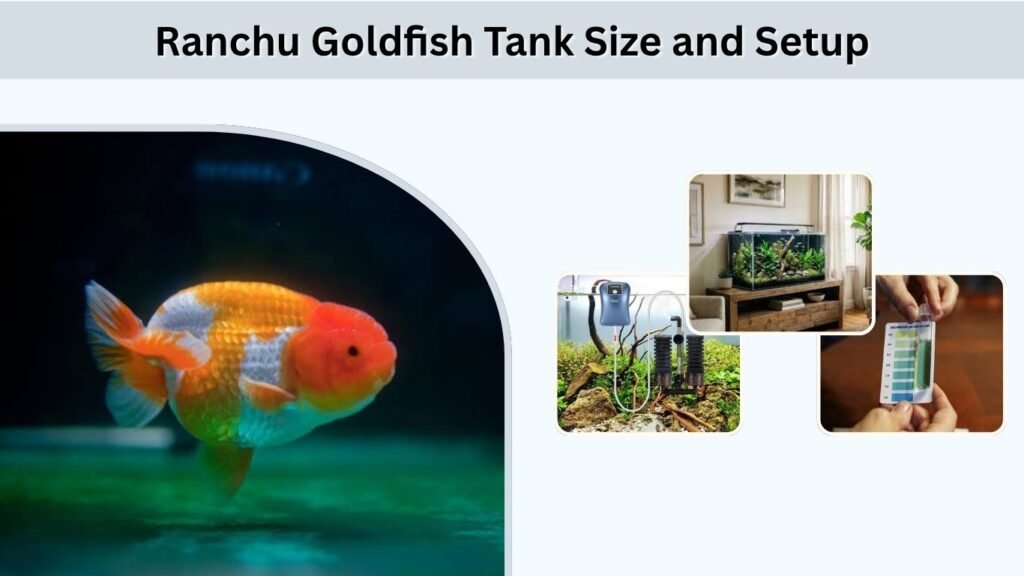
A suitable Ranchu goldfish aquarium should provide adequate swimming space, stable water conditions, and effective filtration. Because Ranchus lack dorsal fins and have compact bodies, they cannot swim as efficiently as many other goldfish. Choosing appropriate aquarium equipment and avoiding strong currents help create a safer environment.
Ideal Ranchu Goldfish Tank Size
A 30-gallon aquarium is a sensible starting point for one adult Ranchu goldfish. For two adult Ranchus, a 50–60-gallon aquarium or larger provides additional swimming space and water volume.
Although smaller tanks are sometimes advertised for fancy goldfish, larger aquariums offer better long-term conditions.
Select a wide, rectangular aquarium rather than a narrow, tall design. Ranchus benefit from horizontal swimming space and should never be kept permanently in small bowls.
Water Temperature and Parameters
Ranchu goldfish thrive in stable, moderately cool freshwater conditions.
Recommended water parameters include:
- Temperature: Approximately 68–74°F (20–23°C).
- pH Level: Around 7.0–8.0, with stability being important.
- Ammonia: 0 ppm.
- Nitrite: 0 ppm.
- Nitrate: As low as practical through routine maintenance.
- Water Movement: Gentle to moderate.
Sudden temperature fluctuations and deteriorating water quality can cause significant stress. Test aquarium water regularly and ensure the biological nitrogen cycle is established before introducing fish.
Aquarium Filtration and Decorations
Ranchus produce substantial waste, making effective biological and mechanical filtration essential. Choose a filter with adjustable flow so the current does not interfere with swimming.
Smooth gravel, fine sand, and rounded decorations are suitable aquarium options. Avoid sharp rocks or ornaments that may injure the fish’s delicate head growth.
Live aquarium plants can provide environmental enrichment, although goldfish may nibble or uproot certain species.
Best Food for Ranchu Goldfish
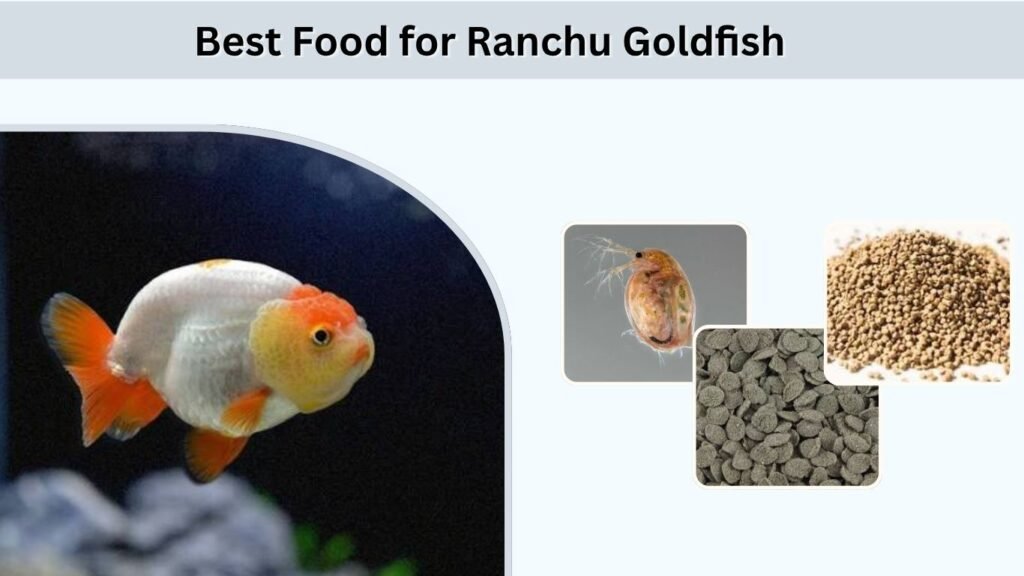
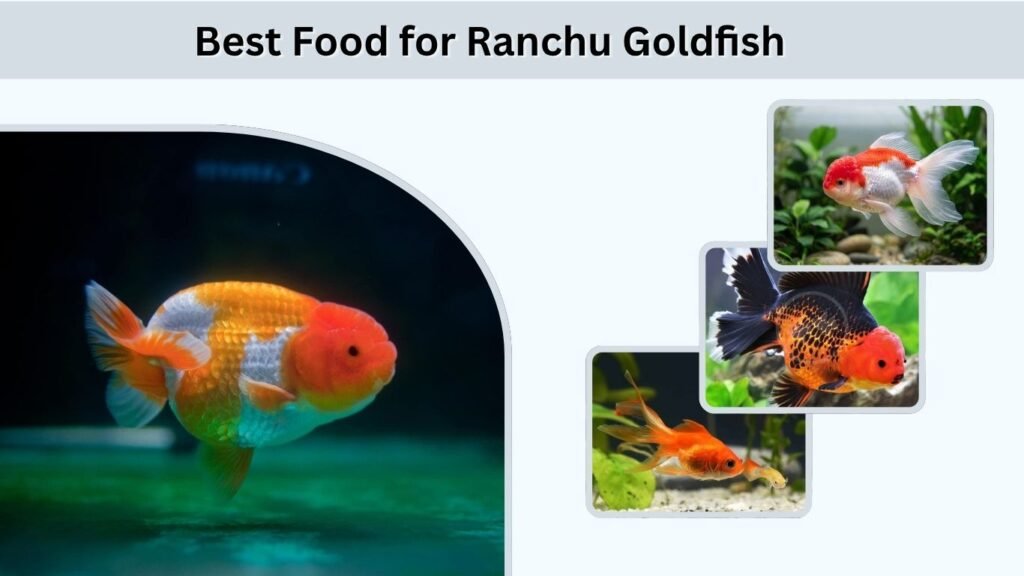
Ranchu goldfish are omnivores and require a balanced diet containing appropriate protein, plant material, vitamins, and minerals. Their compact bodies make careful feeding particularly important. Providing high-quality food in moderate quantities supports healthy growth while helping maintain aquarium water quality.
Recommended Ranchu Goldfish Foods
A complete, high-quality sinking goldfish pellet is an excellent everyday staple.
Other suitable foods include:
- Sinking Goldfish Pellets: Balanced daily nutrition.
- Goldfish Gel Food: A soft, easily consumed food option.
- Daphnia: Provides dietary variety and protein.
- Brine Shrimp: Suitable as an occasional supplement.
- Blanched Vegetables: Offer additional plant-based nutrients.
- Shelled Peas: Can be offered occasionally as part of a varied diet.
Avoid relying exclusively on freeze-dried treats or foods not formulated to meet goldfish nutritional requirements.
How Often Should Ranchu Goldfish Eat?
Most adult Ranchu goldfish can be fed once or twice daily in small, measured portions.
Offer an amount they can comfortably finish within a couple of minutes. Juveniles may benefit from more frequent, carefully controlled feeding.
Overfeeding can increase aquarium waste and contribute to digestive difficulties. Remove uneaten food and adjust portions according to the fish’s size, activity, and water temperature.
Ranchu Goldfish Tank Mates and Behavior
Ranchu goldfish are generally peaceful and rarely display serious aggression toward similarly sized companions. However, their slow swimming speed makes them vulnerable to competition from faster species. Suitable tank mates should have comparable environmental requirements, gentle behavior, and similar feeding abilities.
Best Tank Mates for Ranchu Goldfish
Other Ranchu goldfish are usually excellent companions because they share similar swimming abilities and nutritional requirements.
Additional possibilities include:
- Lionhead goldfish
- Oranda goldfish
- Carefully matched Fantail goldfish
- Other similarly sized, slow-swimming fancy goldfish
Monitor feeding behavior because faster fancy goldfish may occasionally consume food before Ranchus can reach it.
Avoid common goldfish, comets, aggressive tropical species, and fin-nipping fish.
Can Ranchu Goldfish Live Alone?
Yes, Ranchu goldfish can live alone when provided with appropriate care, sufficient swimming space, and environmental enrichment.
However, they may also benefit from interaction with compatible goldfish companions.
If keeping multiple fish, increase aquarium capacity and ensure each Ranchu receives adequate food.
Ranchu vs Lionhead Goldfish: Key Differences
Ranchu and Lionhead goldfish are frequently confused because both have rounded bodies, prominent head growth, and no dorsal fin. Despite their similarities, selective breeding has produced recognizable differences in their body profiles and tail positioning.
Physical Differences
| Feature | Ranchu Goldfish | Lionhead Goldfish |
| Back Shape | Strongly curved | Usually flatter |
| Dorsal Fin | Absent | Absent |
| Tail Position | Downturned and tucked | Generally higher |
| Head Growth | Prominent wen | Often fuller around cheeks |
| Swimming Ability | Slow | Slow |
| Temperament | Peaceful | Peaceful |
Ranchus typically have a smoother, more pronounced arch running toward the tail. Lionheads generally possess a straighter back profile and may display fuller head growth.
Both varieties require spacious aquariums, gentle water movement, and compatible companions.
Ranchu Goldfish Size, Lifespan, and Health
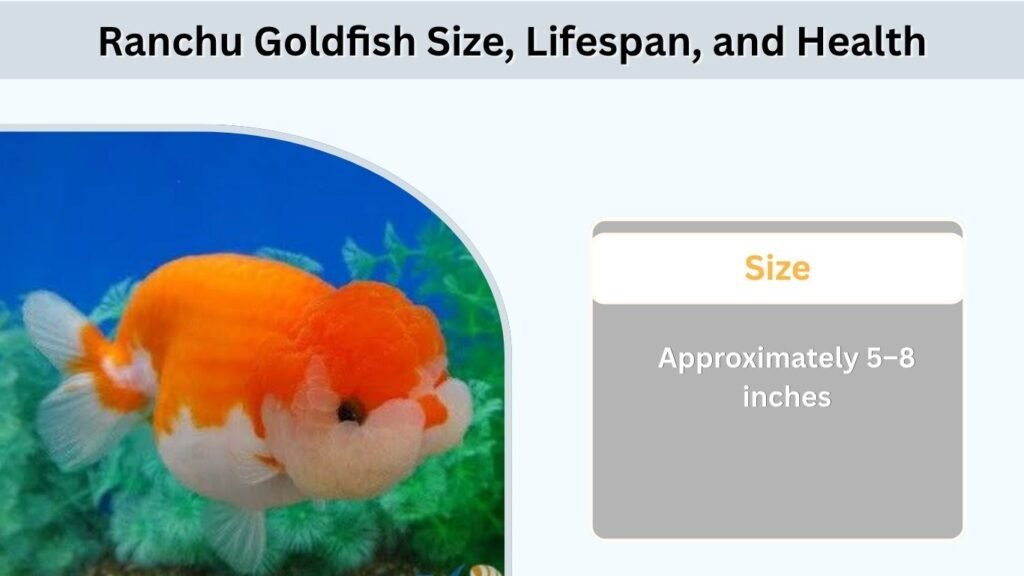
Understanding Ranchu goldfish growth and potential health problems is essential for responsible care. These ornamental fish can live for many years when their environment remains stable. However, their selectively bred features may make them more vulnerable to certain swimming difficulties and physical injuries.
How Big Do Ranchu Goldfish Get?
Adult Ranchu goldfish commonly reach approximately 5–8 inches, although final size varies with genetics, age, nutrition, and environmental conditions.
Young Ranchus grow most rapidly during their early development, but growth rates differ between individuals.
Adequate space and balanced feeding support normal development. A small aquarium should never be used to intentionally restrict a fish’s growth.
How Long Do Ranchu Goldfish Live?
Ranchu goldfish commonly live around 10–15 years under suitable aquarium conditions. Some individuals survive longer with excellent care.
Their lifespan depends on water quality, diet, genetics, disease prevention, and overall husbandry.
Regular maintenance and early attention to health problems can improve their chances of living a long life.
Common Ranchu Goldfish Health Problems
Ranchu goldfish may experience several conditions, including:
- Buoyancy Disorders: Difficulty maintaining a normal swimming position.
- Wen Infections: Inflammation or injury affecting head growth.
- Fin Rot: Damage and deterioration of fin tissue.
- Ich: A parasitic disease that may cause small white spots.
- Water-Quality Problems: Stress and illness associated with ammonia or nitrite exposure.
Overgrown head tissue may occasionally obstruct vision or interfere with feeding.
Never attempt to trim a Ranchu’s wen at home. Seek advice from an experienced aquatic veterinarian when head growth affects normal function.
Ranchu Goldfish Price and Buying Tips
Ranchu goldfish prices vary considerably depending on age, size, coloration, breeding quality, and availability. Ordinary juvenile fish are generally less expensive than mature show-quality Ranchus. Rare color patterns and carefully selected body shapes may command higher prices.
Choosing a Healthy Ranchu Goldfish
When comparing Ranchu goldfish for sale, prioritize health rather than appearance alone.
Look for active swimming, clear eyes, intact fins, healthy skin, and a strong feeding response.
Avoid fish displaying abnormal floating, visible wounds, persistent lethargy, or rapid breathing.
Choose reputable sellers who maintain clean aquariums and provide clear information about the fish’s health and history.
FAQs
1. Are Ranchu Goldfish Good for Beginners?
Ranchu goldfish can be suitable for committed beginners, but they require more careful management than many hardier goldfish varieties. Stable water quality, effective filtration, and appropriate feeding are essential.
2. Do Ranchu Goldfish Need a Heater?
A heater is not always necessary. Ranchu goldfish generally tolerate moderately cool water, but a thermostatically controlled heater may help maintain stable temperatures in colder or fluctuating environments.
3. Can Ranchu Goldfish Live in Outdoor Ponds?
Yes, Ranchu goldfish may live in carefully managed outdoor ponds with suitable temperatures, calm conditions, and protection from predators. However, ordinary deep koi ponds or ponds with strong currents are often unsuitable.
4. Are Ranchu Goldfish Aggressive?
No. Ranchu goldfish are generally peaceful. They may compete for food, but persistent aggression is uncommon when compatible fish have sufficient space.
5. How Long Does It Take for Ranchu Goldfish to Reach Full Size?
Ranchu goldfish grow rapidly during their first year or two, but reaching mature size may take several years. Genetics, nutrition, water quality, and available space influence development.