
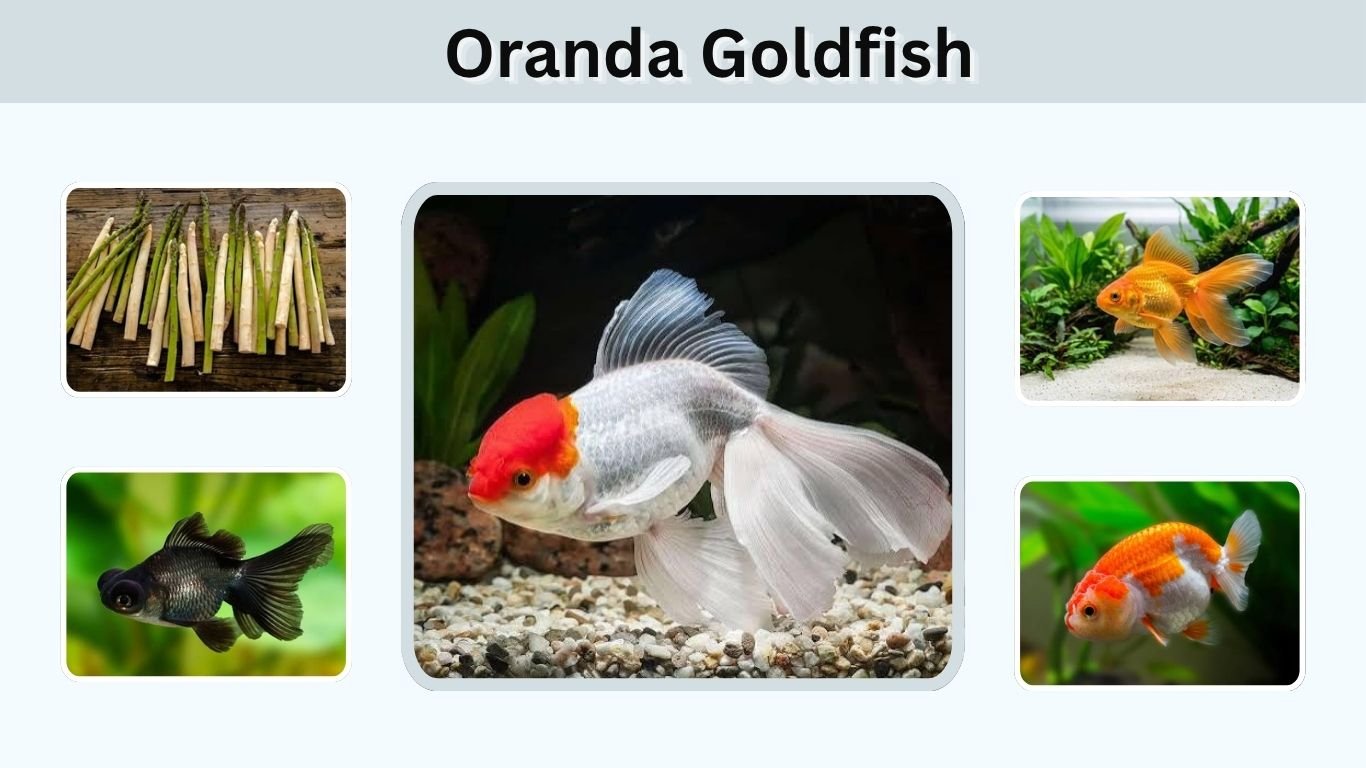
Oranda goldfish are among the most beautiful fancy goldfish, known for their rounded bodies, flowing fins, and distinctive head growth. Their peaceful personality makes them popular aquarium pets, but they need proper care to stay healthy. Whether you’re choosing the best food, setting up an Oranda goldfish fish tank, or wondering what fish can live with Oranda goldfish, understanding their needs will help you create a comfortable aquarium environment.
What Is an Oranda Goldfish?
Oranda goldfish are ornamental freshwater fish belonging to the species Carassius auratus. They are selectively bred fancy goldfish rather than a separate fish species. Their unusual appearance and generally gentle behavior make them attractive to aquarium enthusiasts. However, their rounded bodies and delicate fins require more specialized care than common goldfish.
Appearance and Characteristics
The most recognizable feature of an Oranda goldfish is its fleshy head growth, called a wen. This growth develops gradually as the fish matures and may become especially prominent around its head and cheeks.
Other identifying characteristics include:
- Body shape: Rounded, egg-shaped body.
- Head growth: Distinctive fleshy wen.
- Fins: Long, flowing fins and a divided tail.
- Size: Commonly reaches 6–8 inches.
- Lifespan: Often 10–15 years with suitable care.
- Temperament: Peaceful and social.
Popular Oranda Goldfish Varieties
Several varieties are available, each with distinctive colors and markings. Red cap Oranda goldfish have white bodies with bright red head growths. Panda Oranda goldfish feature contrasting black-and-white patterns that may change with age.
Other popular varieties include blue Oranda, black Oranda, calico Oranda, and red-and-white Oranda goldfish. Their basic aquarium requirements remain similar regardless of coloration.
Oranda Goldfish Fish Tank Requirements
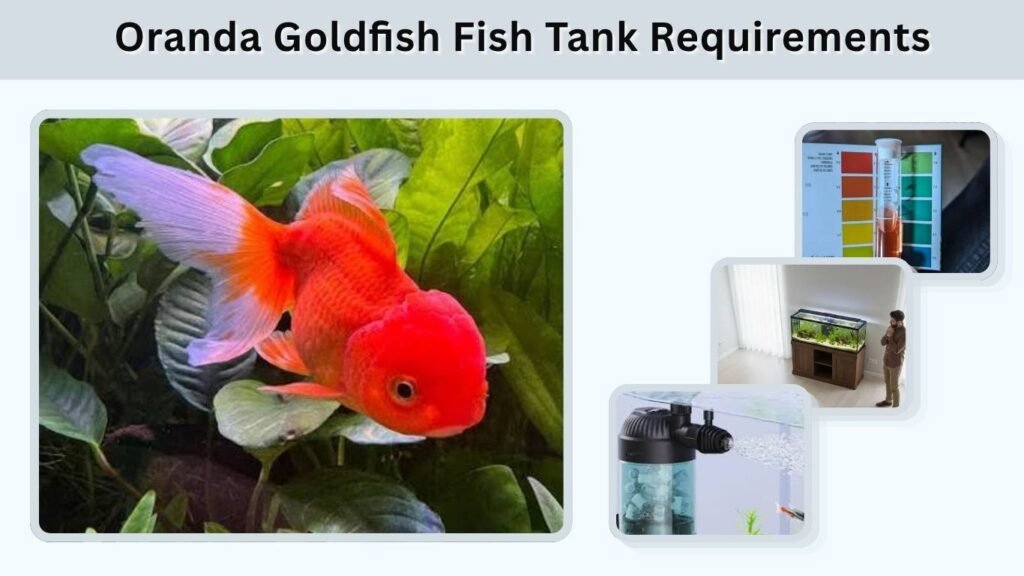
Providing a spacious, well-maintained aquarium is essential for healthy Oranda goldfish. Although these fish swim more slowly than common goldfish, they produce substantial waste and need enough space to move comfortably. Proper filtration, stable water conditions, and safe decorations are particularly important for maintaining their health.
Ideal Tank Size
A 30-gallon aquarium is a practical starting point for one adult Oranda goldfish. For two adults, a 40–55-gallon aquarium or larger is preferable.
Goldfish bowls and very small aquariums are unsuitable because they restrict swimming and allow waste to accumulate quickly. Choose a tank with plenty of horizontal swimming space rather than a tall, narrow design.
Water Temperature and Quality
Oranda goldfish thrive in stable, moderately cool freshwater conditions.
Recommended aquarium conditions include:
- Temperature: Around 68–74°F (20–23°C).
- pH level: Approximately 6.5–8.0.
- Ammonia: 0 ppm.
- Nitrite: 0 ppm.
- Nitrate: Kept low through regular maintenance.
- Filtration: Effective biological and mechanical filtration.
Avoid sudden temperature changes because unstable conditions can stress the fish and increase their vulnerability to disease.
Aquarium Decorations and Filtration
Use smooth stones, soft artificial plants, or suitable live plants to create hiding areas without damaging delicate fins.
Avoid sharp decorations that might injure the wen or eyes. A filter with adjustable flow is particularly useful because Orandas can struggle against strong currents.
Establish the aquarium’s biological nitrogen cycle before introducing fish. An air stone may also improve oxygenation when surface movement is insufficient.
What Fish Can Live With Oranda Goldfish?
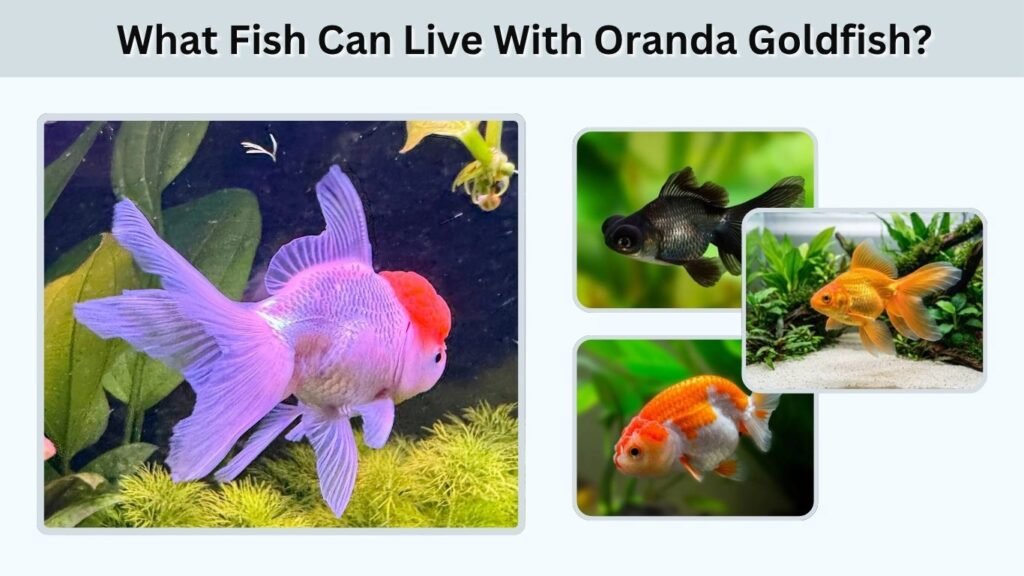
Choosing compatible tank mates is important because Oranda goldfish are peaceful but relatively slow swimmers. Some fish may compete aggressively for food, damage their flowing fins, or require different water temperatures. The most reliable companions are other fancy goldfish with similar swimming abilities and environmental requirements.
Best Fish Compatible With Oranda Goldfish
Other fancy goldfish are generally the safest companions.
Suitable options include:
- Other Oranda goldfish: Similar swimming speed and feeding behavior.
- Fantail goldfish: Peaceful fish with comparable care requirements.
- Ranchu goldfish: Slow swimmers that may live successfully with Orandas.
- Lionhead goldfish: Another fancy variety with similar environmental needs.
- Black Moor goldfish: Potentially suitable when fish are similarly sized and feeding competition is managed.
Even compatible goldfish require sufficient aquarium space. Observe feeding behavior to ensure every fish receives enough food.
Can Oranda Goldfish Live With Koi Fish?
Keeping Oranda goldfish with koi is generally not recommended.
Koi grow substantially larger and are stronger, faster swimmers. Their active feeding behavior may prevent slower Orandas from obtaining enough food.
Koi also need much larger environments, usually spacious outdoor ponds, while Orandas are better suited to protected aquariums with controlled conditions.
For long-term safety, avoid combining these fish.
Can Oranda Goldfish Live With Betta or GloFish?
A betta fish with Oranda goldfish is not a suitable combination. Bettas generally prefer warmer water and may become territorial or nip flowing fins.
GloFish are fluorescent varieties of several different fish species, so their requirements vary. Many prefer tropical community conditions, while some may nip fins or compete for food.
Small GloFish varieties could also be swallowed by adult goldfish. Keeping these fish in separate, species-appropriate aquariums is the safer option.
Other Fish to Avoid
Common goldfish, comet goldfish, and shubunkins usually swim faster than Orandas and may dominate feeding.
Aggressive cichlids, fin-nipping barbs, and many tropical aquarium fish are also poor companions.
Avoid common plecos because some may attach themselves to goldfish and damage their protective slime coat.
Best Fish Food for Oranda Goldfish
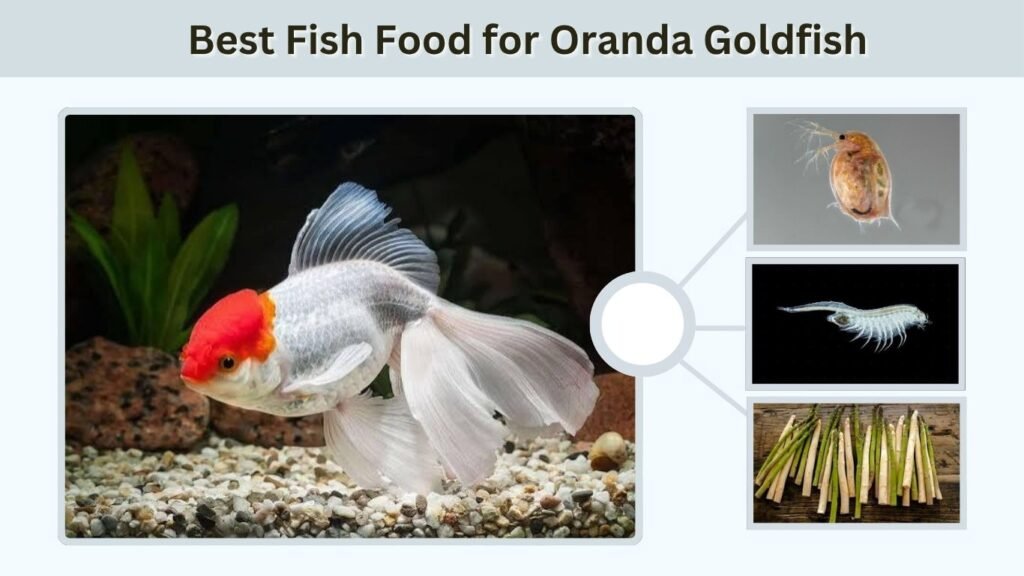
Oranda goldfish are omnivores that benefit from a varied, nutritionally balanced diet. Their food should support healthy growth without contributing to digestive problems or deteriorating aquarium conditions. Choosing appropriate food and controlling portions are equally important, particularly because fancy goldfish may experience buoyancy difficulties.
Recommended Oranda Goldfish Foods
High-quality sinking goldfish pellets are an excellent staple because they provide balanced nutrition without requiring fish to feed constantly at the surface.
Suitable foods include:
- Sinking goldfish pellets: Provide complete everyday nutrition.
- Gel food: A soft alternative formulated for goldfish.
- Daphnia: Adds dietary variety and protein.
- Brine shrimp: A useful occasional supplement.
- Blanched vegetables: Provide additional plant material and variety.
- Shelled peas: An occasional vegetable supplement.
Choose food specifically formulated for goldfish rather than relying exclusively on generic tropical fish flakes.
How Often Should You Feed Oranda Goldfish?
Feed adult Oranda goldfish once daily or divide their daily food allowance into two small portions.
Offer only what they can consume within a couple of minutes, adjusting quantities according to their size, age, and water temperature.
Remove uneaten food promptly. Overfeeding increases waste and can contribute to poor water quality and digestive problems.
Oranda Goldfish Behavior and Health Problems
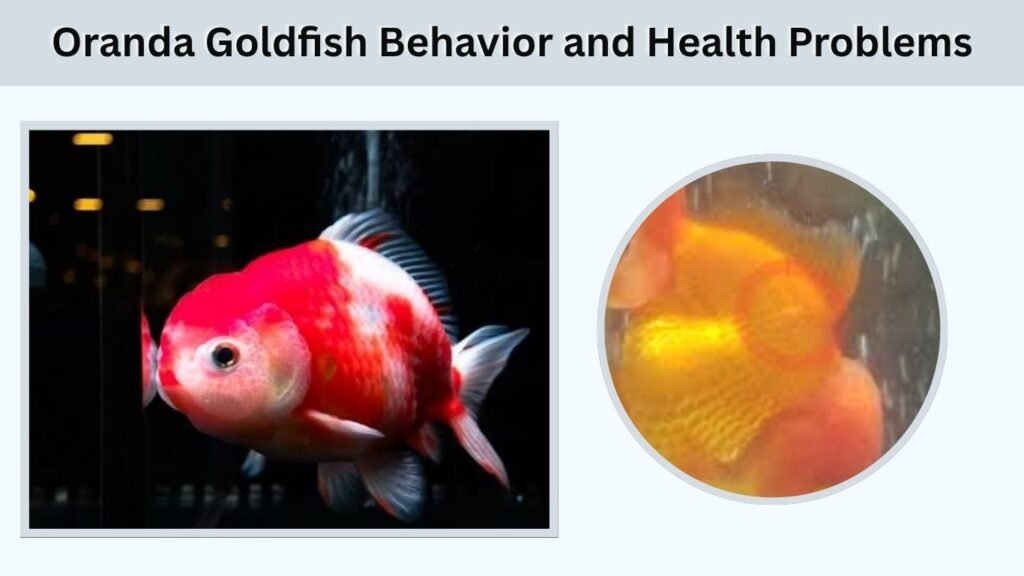
Understanding normal Oranda goldfish behavior makes it easier to recognize potential problems early. Healthy fish generally swim steadily, respond to food, and explore their surroundings. Changes in movement, appetite, coloration, or breathing can indicate stress, unsuitable water conditions, or illness requiring attention.
Do Oranda Goldfish Eat Other Fish?
Oranda goldfish are not aggressive predators, but they are opportunistic omnivores.
They may swallow tiny fish, fry, or shrimp that fit inside their mouths. This behavior is generally associated with natural feeding instincts rather than deliberate aggression.
Therefore, avoid keeping very small fish with adult Orandas, even when those species have peaceful temperaments.
Larger, similarly sized fancy goldfish are generally more reliable companions.
Common Health Issues
Oranda goldfish can develop several health problems, including:
- Buoyancy disorders: Difficulty maintaining normal swimming position.
- Fin rot: Deteriorating or damaged fins.
- Wen infections: Irritation, injury, or infection affecting head growth.
- Ich: A parasitic infection associated with small white spots.
- Water-quality stress: Irritation or illness related to ammonia and nitrite exposure.
A significantly overgrown wen may occasionally interfere with vision or feeding. Such cases require assessment by an experienced aquatic veterinarian.
Consistent water testing, appropriate feeding, and observation help reduce preventable problems.
How to Keep Oranda Goldfish Healthy
Long-term Oranda goldfish care depends on maintaining a clean, stable aquarium and preventing unnecessary stress. Simple routines are more effective than making frequent, sudden adjustments. Monitor the fish closely, especially when adding new companions or changing aquarium equipment.
Regular Tank Maintenance
Change approximately 20–25% of the aquarium water weekly, adjusting the schedule according to water-test results and stocking levels.
Always treat replacement tap water with a suitable conditioner to neutralize chlorine and chloramine.
Gently clean substrate to remove accumulated waste. Rinse filter media in removed aquarium water when necessary rather than washing away beneficial bacteria with untreated tap water.
Observe Fish Daily
Watch your Oranda goldfish during feeding and swimming. Look for changes in appetite, unusual floating, clamped fins, visible injuries, or difficulty breathing.
Test water quality promptly when abnormal behavior appears. Quarantine newly purchased fish before adding them to an established aquarium whenever possible.
FAQs
1. Can Oranda Goldfish Live With Other Fish?
Yes. Oranda goldfish can live with other peaceful fancy goldfish of similar size and swimming ability. Other Orandas, fantails, and carefully matched ranchus are potential companions.
2. Can Oranda Goldfish Live Alone?
Yes. An Oranda goldfish can live alone when provided with sufficient space, enrichment, and appropriate care. However, compatible goldfish companions can provide additional social interaction.
3. Will Oranda Goldfish Eat Small Fish?
Yes. Adult Oranda goldfish may swallow small fish or fry that fit inside their mouths. Avoid combining them with tiny aquarium species.
4. What Is the Best Food for Oranda Goldfish?
Quality sinking goldfish pellets are an excellent staple. Supplement them occasionally with suitable vegetables, daphnia, or brine shrimp to provide dietary variety.
5. How Big of a Tank Does an Oranda Goldfish Need?
A 30-gallon aquarium is a sensible starting point for one adult Oranda goldfish. Two adults generally need at least 40–55 gallons, with larger tanks offering additional swimming space and more stable water conditions.