

Male and female molly fish look similar at first glance, making it difficult for beginners to identify their sex. However, several physical characteristics and behaviors can help you distinguish them. The most reliable difference is the shape of the anal fin, although body size, dorsal fins, and breeding behavior offer additional clues.
Understanding male vs female molly fish differences is important for successful breeding, maintaining a peaceful aquarium, and preventing unwanted pregnancies. This guide explains seven key differences and how to identify males and females across popular molly varieties.
Male vs Female Molly Fish: Quick Comparison
Male and female mollies belong to the same group of livebearing freshwater aquarium fish, but their reproductive anatomy and physical appearance differ. Mature females are generally larger and fuller-bodied, while males often have slimmer bodies and a specialized anal fin. The following comparison summarizes their most recognizable characteristics.
| Feature | Male Molly Fish | Female Molly Fish |
| Anal fin | Narrow, rod-like gonopodium | Broad, fan-shaped fin |
| Body size | Often smaller | Usually larger |
| Body shape | Slimmer and streamlined | Fuller and rounder |
| Dorsal fin | Often larger in sailfin varieties | Generally smaller |
| Behavior | Frequently pursues females | May avoid persistent males |
| Gravid spot | Absent | Sometimes visible |
| Reproduction | Fertilizes females | Gives birth to live fry |
7 Key Differences Between Male and Female Molly Fish
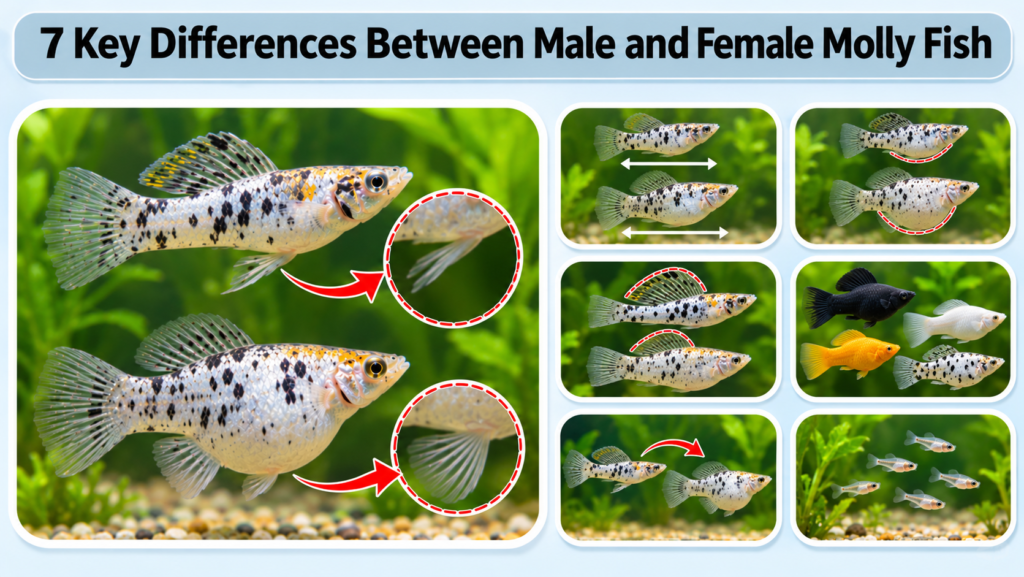
Identifying the sex of a molly becomes easier as the fish matures. Although coloration and body shape sometimes provide clues, these characteristics can vary between species and individuals. Examining several traits together helps prevent identification mistakes, particularly when comparing young fish or unusual ornamental varieties.
1. Anal Fin Shape
The most reliable difference between male and female mollies is the anal fin, located underneath the body near the tail.
Male mollies possess a narrow, rod-shaped reproductive structure called a gonopodium. This modified fin transfers sperm to females during mating.
Female mollies have a normal, broad anal fin that opens into a fan or triangular shape.
For accurate identification, observe the fish from the side while it swims. The anal fin provides stronger evidence than differences in color or body size.
2. Body Size
Female molly fish generally grow larger than males of the same species and similar age. Mature females often have a more substantial body because of their reproductive anatomy.
Male mollies are commonly smaller and more streamlined.
However, size alone is not dependable. Age, genetics, nutrition, and specific molly varieties influence adult growth. A young female may easily be smaller than a mature male.
3. Body Shape
Male mollies usually have elongated, relatively slim bodies. Their abdominal region tends to remain narrower.
Female mollies typically have fuller bodies and a naturally rounded abdomen. Pregnancy can make this difference particularly noticeable.
Nevertheless, a round belly does not automatically indicate a female or confirm pregnancy. Balloon mollies, for example, have naturally rounded bodies regardless of sex.
4. Dorsal Fin Appearance
Some male mollies have larger and more impressive dorsal fins than females.
This difference is particularly noticeable in sailfin mollies, where mature males develop tall, sail-like dorsal fins that may be displayed during courtship.
Female sailfin mollies generally have smaller dorsal fins.
In common shortfin ornamental mollies, dorsal fin differences can be subtle, making anal fin examination more useful.
5. Color and Appearance
Both male and female mollies can display black, white, orange, gold, silver, or spotted coloration.
In some species, breeding males show more noticeable colors or fin displays. However, many domesticated varieties have similar colors in both sexes.
Therefore, you cannot reliably identify a black, Dalmatian, or gold molly as male or female simply by examining its body color.
6. Swimming and Social Behavior
Male mollies frequently pursue females around the aquarium as part of their mating behavior. They may also compete with other males.
Females often spend time feeding, exploring plants, or avoiding persistent male attention.
However, female mollies can sometimes chase other fish, especially during feeding or social conflicts. Behavior should support identification rather than serve as the only determining factor.
7. Pregnancy and Reproduction
Female mollies are livebearers, meaning they give birth to live, free-swimming babies.
Males use their gonopodium to transfer sperm to females through internal fertilization.
A pregnant female may develop an enlarged abdomen and, in lighter-colored varieties, a visible gravid spot.
Because females can store sperm after mating, they may produce additional broods even when no male currently lives in the aquarium.
How to Identify Male and Female Molly Fish by Type
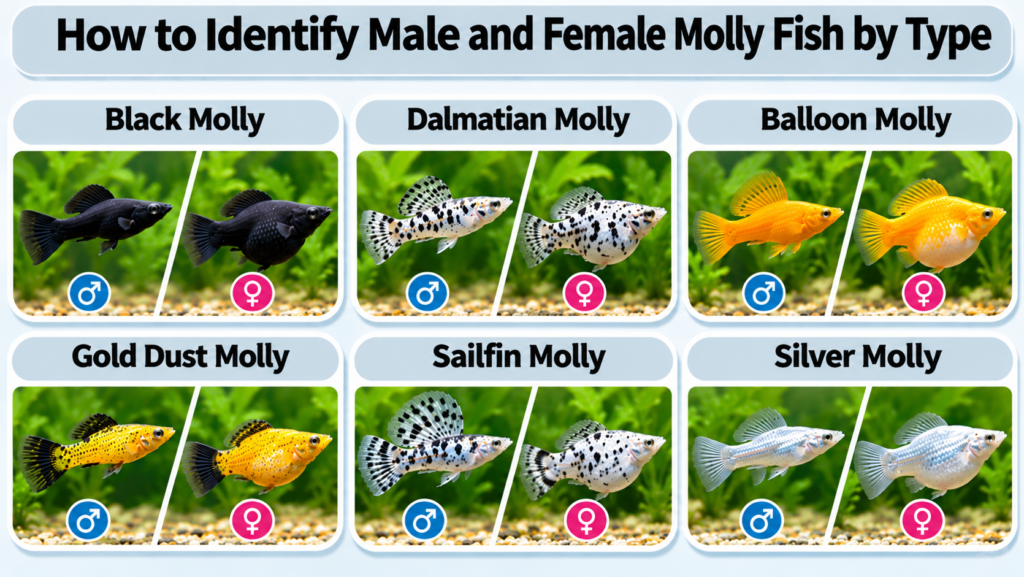
Molly fish are available in several popular aquarium varieties, including black, Dalmatian, balloon, gold dust, and sailfin mollies. Although these fish differ in color, patterns, and body shape, mature males and females can generally be distinguished through the same anal fin characteristics.
| Molly Variety | Male Characteristics | Female Characteristics |
| Black molly | Gonopodium; often slimmer | Fan-shaped anal fin; fuller body |
| Dalmatian molly | Pointed gonopodium | Broad anal fin |
| Balloon molly | Gonopodium beneath rounded body | Fan-shaped anal fin |
| Gold dust molly | Narrow reproductive fin | Normal triangular anal fin |
| Sailfin molly | Gonopodium and often tall dorsal fin | Fan-shaped anal fin and smaller dorsal fin |
| Silver molly | Narrow gonopodium | Broad anal fin and usually fuller body |
Black Molly Fish Male vs Female
Black mollies are particularly difficult to identify through coloration because both sexes may have entirely black bodies.
Mature males generally have a narrow gonopodium and may appear slimmer. Females possess a fan-shaped anal fin and often have larger, rounder bodies.
The gravid spot can be difficult to see in black females because of their dark pigmentation.
Dalmatian Molly Fish Male vs Female
Dalmatian mollies have distinctive black-and-white spotted patterns. Both males and females display these markings, so the distribution of spots does not determine sex.
Males have a modified anal fin, while females have a broader, triangular anal fin. Mature females may also be noticeably larger.
Balloon Molly Fish Male vs Female
Balloon mollies have unusually short, rounded bodies. This makes body-shape comparisons less dependable.
Look underneath the abdomen to identify the anal fin. Males have a narrow gonopodium, while females retain the characteristic fan-shaped fin.
How to Tell if a Molly Fish Is Male or Female
The easiest way to determine a molly’s sex is to observe its underside without removing it from the aquarium. Young mollies may not yet show clearly developed reproductive characteristics, so patience is important when identifying juvenile fish.
Check the Anal Fin Carefully
Watch your molly from the side when it swims near the front glass.
Look behind the pelvic fins, toward the rear of the abdomen. A thin, pointed anal fin indicates a mature male, while a wider, fan-shaped fin indicates a female.
Avoid chasing or netting the fish unnecessarily.
Consider the Fish’s Age
Young male and female mollies can appear nearly identical before sexual maturity.
Males gradually develop their gonopodium as they mature. The timing varies, and some develop recognizable characteristics later than others.
If the anal fin remains unclear, allow the fish more time to grow before making a definite identification.
Can Male and Female Molly Fish Live Together?

Yes, male and female mollies can live together peacefully in a suitable aquarium. However, males may repeatedly pursue females for mating, potentially causing stress when too many males are present.
A common recommendation is to keep approximately two or three females for every male, provided the aquarium has enough space and filtration.
| Aquarium Group | General Consideration |
| 1 male and 2–3 females | Helps distribute mating attention |
| Multiple males and few females | Greater risk of female harassment |
| Female-only group | Can avoid new mating, but stored sperm may still produce fry |
| Male-only group | Avoids reproduction but requires monitoring for aggression |
Provide plants, shelters, and open swimming areas. If a fish experiences persistent harassment, separate the aggressor or adjust the group composition.
FAQs
1. How Do You Identify a Female Molly Fish?
A mature female molly has a broad, triangular or fan-shaped anal fin rather than a narrow gonopodium. Females are also commonly larger and fuller-bodied than males. Examining the anal fin is the most dependable identification method.
2. Are Female Molly Fish Aggressive?
Female mollies are generally peaceful, but they can occasionally become aggressive toward other aquarium fish. Chasing may occur during feeding, competition for space, or stressful conditions. Adequate swimming room, suitable tankmates, and hiding places can reduce conflict.
3. Can Female Molly Fish Get Pregnant Without Males?
Female mollies require sperm from a male to become pregnant, but they can store sperm after mating. Consequently, a female may produce multiple broods without a male currently present. This can surprise aquarists keeping female-only groups.
4. How Can You Tell Male and Female Black Mollies Apart?
Look at the anal fin underneath the fish. A male black molly has a narrow, rod-shaped gonopodium, while a female has a broader, fan-shaped anal fin. Body size may provide another clue, but coloration does not reliably distinguish them.
5. Can You Keep Only Male Molly Fish Together?
Male-only molly groups can sometimes live together successfully, but aggression and competition may develop. Provide sufficient aquarium space, visual barriers, and hiding places. Monitor chasing and find damage, and separate individuals if persistent aggression becomes a problem.