
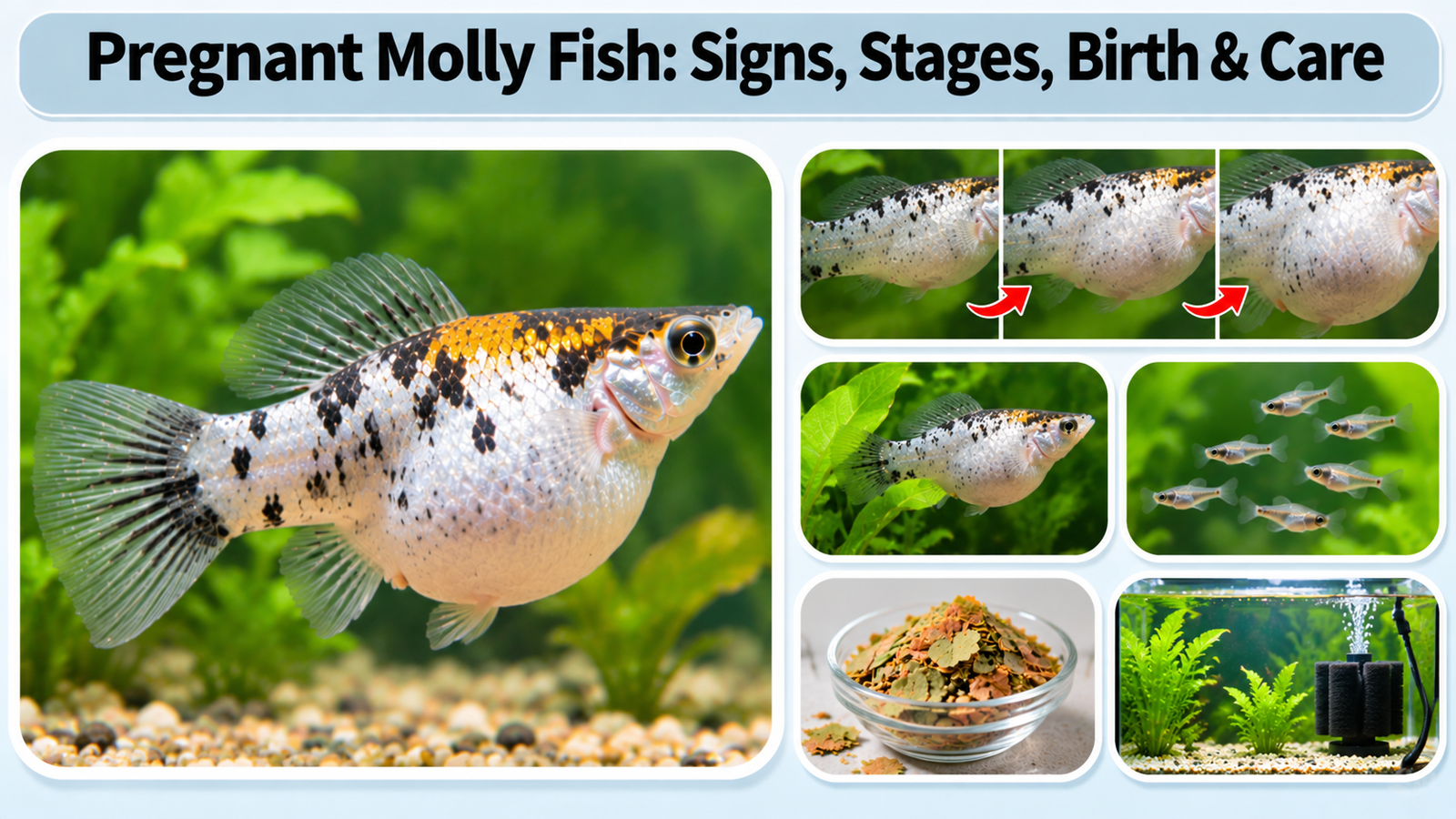
A pregnant molly fish often develops a noticeably swollen belly, changes its swimming behavior, and begins searching for quiet places in the aquarium. However, identifying pregnancy is not always easy, especially in black mollies or naturally round-bodied balloon mollies. Understanding the signs of pregnancy helps you prepare for the arrival of baby fish.
In this guide, you’ll learn how to tell if a molly fish is pregnant, how long pregnancy lasts, what happens during each stage, and how to care for the mother and newborn fry.
How to Tell if a Molly Fish Is Pregnant
Female mollies are livebearing fish that give birth to fully formed babies rather than laying eggs outside their bodies. Pregnancy usually produces gradual physical changes, although some are difficult to recognize. Observing your fish regularly can help you distinguish normal pregnancy from overeating or illness.
1. Swollen or Enlarged Belly
One of the most noticeable signs of a pregnant molly fish is a growing abdomen. During early pregnancy, the belly may appear slightly rounded. As the developing babies grow, the abdomen becomes more prominent.
Near birth, some mollies develop a slightly squared appearance around the lower abdomen. However, a swollen belly alone does not confirm pregnancy.
2. Dark Gravid Spot
The gravid spot is a darker area near the rear of the abdomen, just above the anal fin. It may become more noticeable during pregnancy, especially in light-colored mollies.
The spot can be difficult or impossible to see in black mollies because their dark pigmentation hides it. Not every pregnant female develops an obvious visible spot.
3. Changes in Swimming Behavior
Some pregnant mollies begin spending more time around aquarium plants or decorations. Others become less active or occasionally separate themselves from the group.
These behaviors can also indicate stress or illness, so they should be evaluated alongside physical changes.
How Long Are Molly Fish Pregnant?
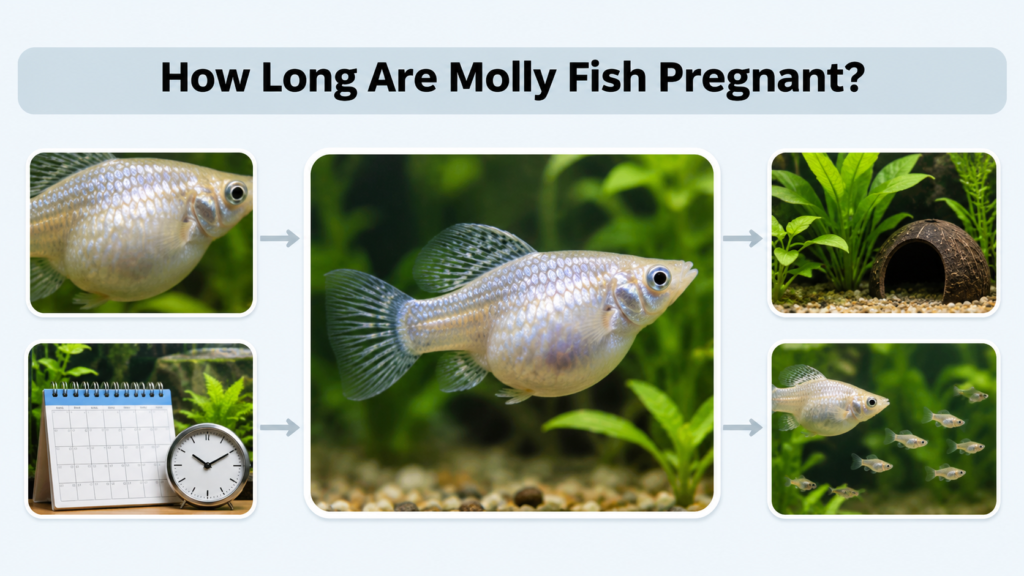
Molly fish are commonly pregnant for approximately 4–6 weeks, although the breeding timeframe can vary from around 30 to 60 days depending on the species, temperature, and aquarium conditions. Because fertilization may occur before the owner notices pregnancy, determining an exact delivery date is often difficult.
Factors Affecting Pregnancy Duration
Several conditions influence how long a molly carries developing fry.
- Water temperature: Temperature influences development, but stability is more important than trying to accelerate birth.
- Fish species: Different molly species may have different gestation periods.
- Overall health: Poor nutrition and stressful conditions may affect reproductive health.
- Water quality: Unstable aquarium conditions can harm both the mother and developing fry.
Black, Dalmatian, gold dust, and balloon mollies can have overlapping pregnancy timelines. Their colors alone do not determine gestation length.
Pregnant Molly Fish Stages
Molly pregnancy develops gradually, and the visible changes become more noticeable as birth approaches. The following stages provide a general guide rather than an exact weekly schedule. Different fish may progress at different rates.
Stage 1: Early Pregnancy
During early pregnancy, the female may appear almost normal. Her abdomen might become slightly rounded, but the change is often difficult to notice.
Most mollies continue eating, swimming, and interacting with tankmates normally. A female that recently lived with males may already be carrying developing fry.
Stage 2: Middle Pregnancy
As pregnancy progresses, the abdomen becomes noticeably larger. In lighter-colored mollies, the gravid spot may also become easier to observe.
The female usually continues feeding and swimming normally. Comparing photographs taken several days apart can help you monitor changes without handling or disturbing the fish.
Stage 3: Late Pregnancy
During the final stage, the belly may look particularly large or somewhat box-shaped. Some females seek sheltered areas or avoid persistent attention from male mollies.
Birth may occur soon, but these changes cannot establish an exact delivery time. Maintaining a calm, stable aquarium is especially important.
How to Tell if a Black Molly Fish Is Pregnant
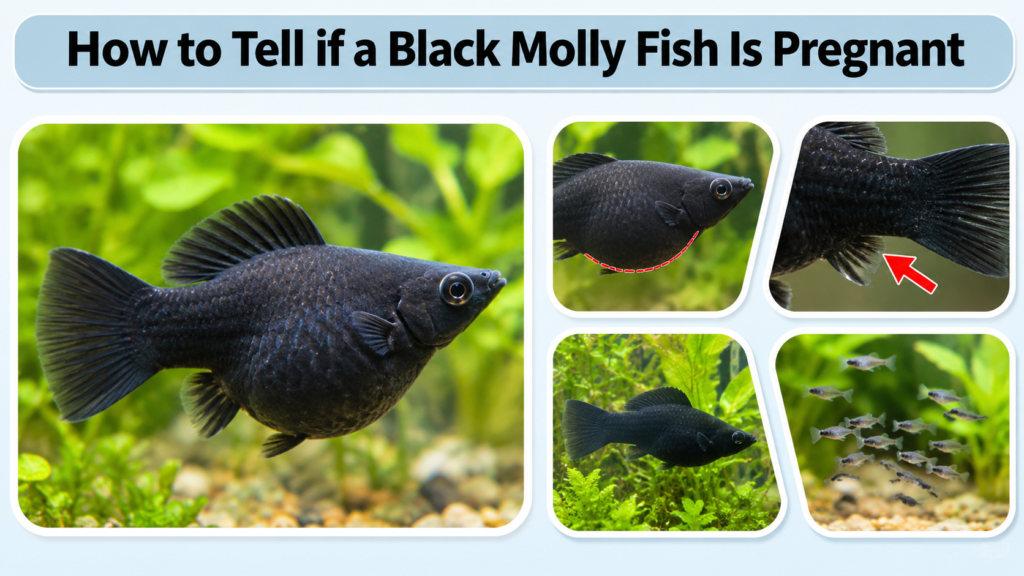
Black mollies can be challenging to assess because their coloration makes the gravid spot difficult to recognize. Observing body shape and gradual changes is more helpful than looking for a dark patch.
Signs of a Pregnant Black Molly
Common signs include:
- Gradual abdominal enlargement
- A fuller or squared-off belly
- Spending more time among aquarium plants
- Changes in activity near delivery
- A history of living with male mollies
Black mollies generally reproduce in the same way as other common aquarium mollies. Their dark coloration does not require different pregnancy care.
Pregnant Balloon Molly Fish
Balloon mollies naturally have short, rounded bodies, making pregnancy harder to identify through belly size alone.
Watch for increasing abdominal fullness over time rather than relying on a single observation. Sudden swelling, abnormal scales, or difficulty swimming should not automatically be attributed to pregnancy.
Is My Molly Fish Pregnant or Just Fat?
A large belly does not necessarily mean your molly is pregnant. Overfeeding, constipation, and certain health problems can also cause abdominal swelling.
| Observation | Possible pregnancy | Possible bloating or illness |
| Belly enlargement | Gradual over weeks | Sometimes sudden |
| Scales | Normally flat | May protrude with serious illness |
| Behavior | Often mostly normal | May show weakness or distress |
| Gravid spot | Sometimes visible | Not a reliable diagnostic sign |
| Appetite | Often maintained | May decline |
If your molly develops raised scales, difficulty swimming, rapid breathing, or sudden severe swelling, check water quality and seek advice from an aquatic veterinarian.
Signs a Pregnant Molly Fish Is About to Give Birth
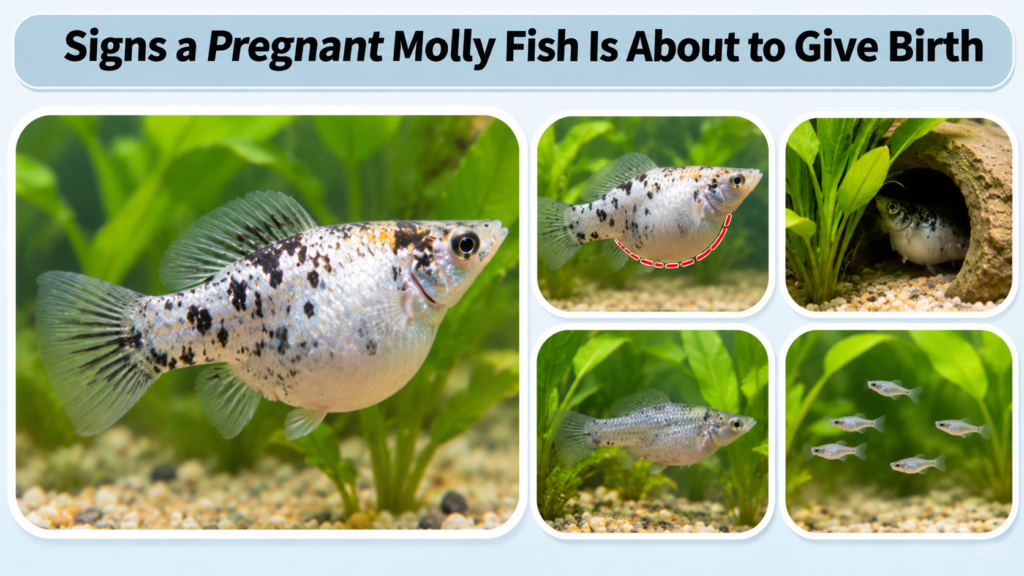
As delivery approaches, some mollies show noticeable changes in body shape and behavior. However, individual fish behave differently, and none of these signs guarantees birth within a particular number of hours.
Hiding and Reduced Activity
A female molly may seek shelter among dense plants or decorations before delivering her fry. Some fish also become less active or temporarily show reduced interest in food.
Avoid unnecessary handling or repeatedly moving the mother, because these actions may increase stress.
A Fuller, Squared-Off Abdomen
A heavily pregnant molly may develop a noticeably squared lower belly. This appearance is commonly associated with late pregnancy.
Mollies give birth to free-swimming babies. A brood may contain several dozen fry, although the number varies considerably with the female’s size, age, and species.
How to Take Care of a Pregnant Molly Fish
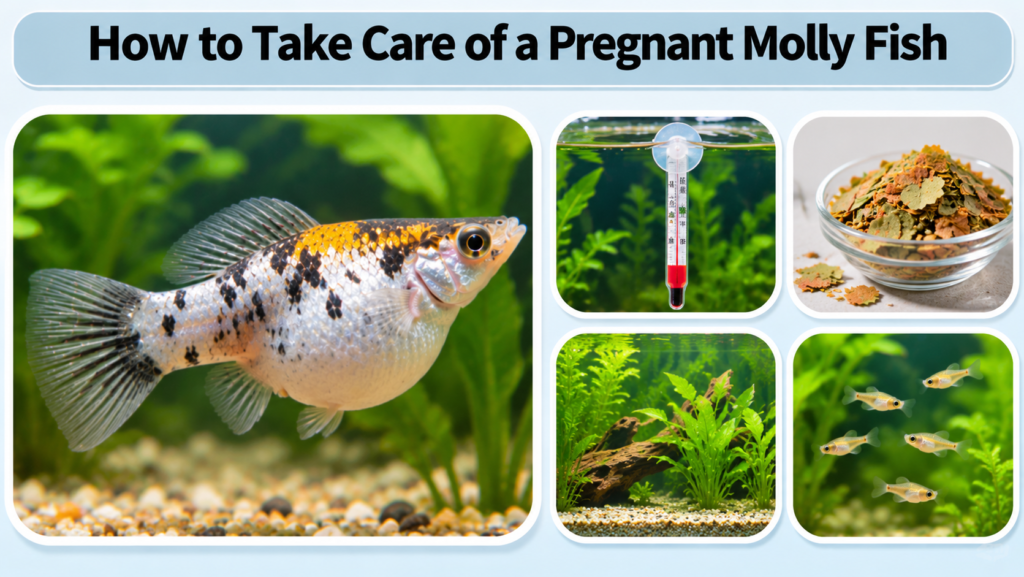
Providing appropriate aquarium conditions helps protect the mother and her developing fry. Pregnant mollies generally need the same basic care as healthy adult mollies, with extra attention to nutrition, stress reduction, and safe hiding places.
Maintain Good Water Conditions
Keep the water temperature stable, generally within 72–82°F (22–28°C), with a pH appropriate for mollies, commonly around 7.5–8.5. Mollies also prefer relatively hard water.
Use a reliable filtration system, test ammonia and nitrite regularly, and avoid sudden changes in temperature or water chemistry.
Provide a Nutritious Diet
Pregnant mollies benefit from a varied diet containing quality fish flakes or pellets, spirulina-based foods, and occasional protein-rich treats.
Offer modest portions and avoid overfeeding. A balanced diet supports the mother’s health without creating unnecessary waste in the aquarium.
Prepare a Safe Place for the Fry
Adult mollies may eat newborn fry, so provide dense plants, floating vegetation, or a properly maintained nursery aquarium.
A separate, established fry tank can improve survival. Avoid keeping a pregnant female inside a cramped breeding box for extended periods, as confinement can cause stress.
What to Do After Your Molly Fish Gives Birth
Newborn molly fry can swim and begin feeding shortly after birth. They need protection from larger fish, clean water, and food small enough to swallow.
Feed the babies finely crushed quality flakes, powdered fry food, or newly hatched baby brine shrimp in small portions several times daily. A sponge filter can provide gentle filtration without pulling fry into a strong intake.
Keep the babies separated from adult fish until they are too large to be swallowed.
FAQs
1. Can Molly Fish Get Pregnant Without a Male?
A female molly cannot reproduce entirely on her own, but she can give birth without a male currently present. Female mollies can store sperm from previous mating, allowing them to produce multiple broods after being separated from males.
2. How Many Babies Can a Pregnant Molly Fish Have?
A pregnant molly commonly gives birth to several dozen babies. Some females produce around 20–60 fry, while larger or more mature females may produce considerably more. The number depends on the species, size, age, and reproductive condition of the fish.
3. Do Molly Fish Hide When Pregnant?
Yes, some pregnant mollies hide among plants or decorations, particularly near delivery. However, hiding can also indicate stress, aggression, or poor water conditions. Check the aquarium environment before assuming a hidden molly is preparing to give birth.
4. At What Age Can Molly Fish Get Pregnant?
Some female mollies become capable of reproduction at approximately three to four months old, although maturity varies with species, growth, and conditions. Young females may become pregnant before reaching their full adult size, especially in mixed-sex aquariums.
5. Why Is My Pregnant Molly Fish Not Giving Birth?
Your molly may not be as close to delivery as expected. Gestation varies, and abdominal swelling does not always indicate pregnancy. If she shows persistent distress, stops eating, or develops unusual swelling, investigate possible aquarium problems or illness rather than attempting to force delivery.