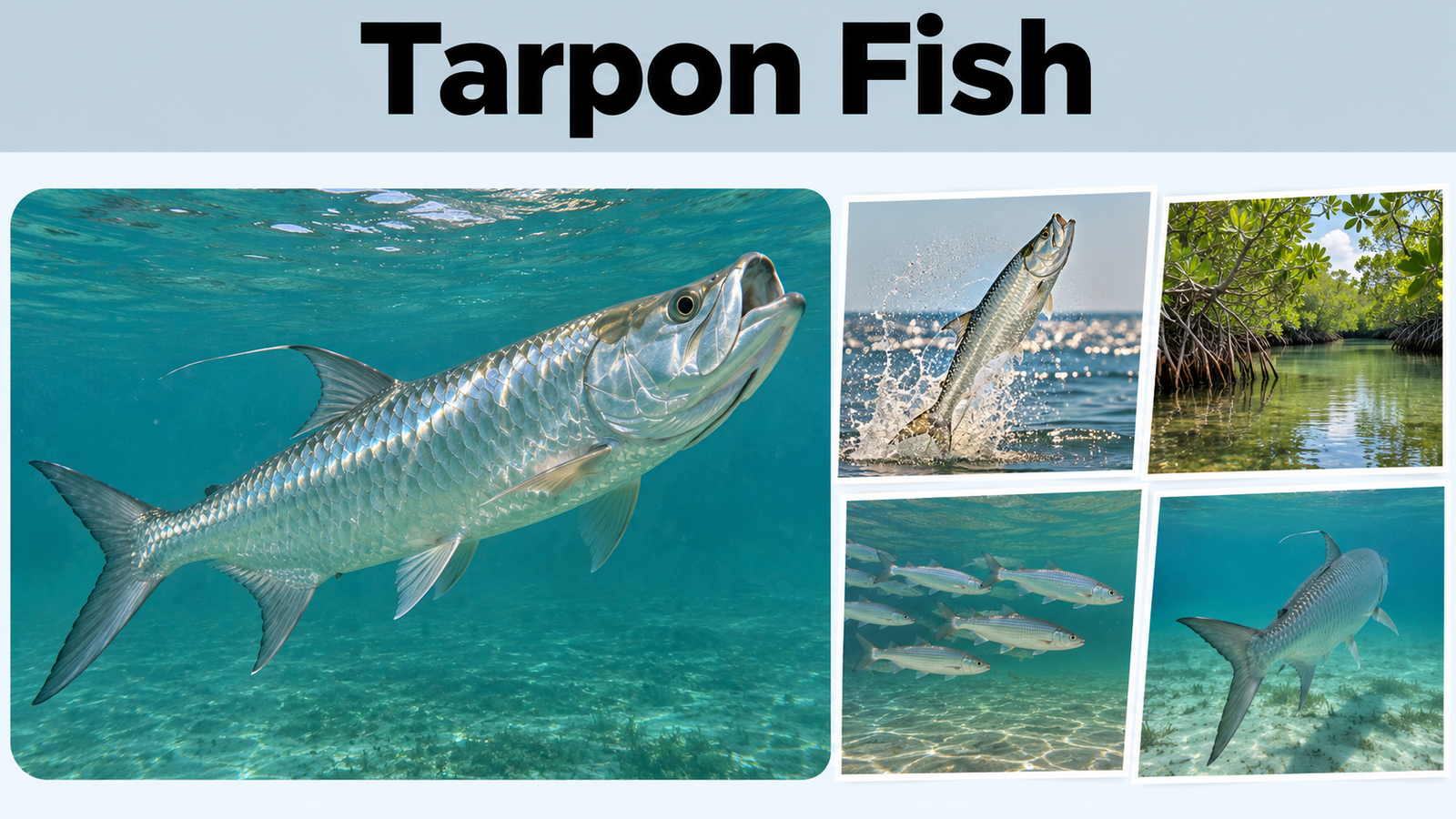
The tarpon is a large coastal fish with bright silver scales, an upturned mouth, and a habit of leaping when hooked. In Florida, anglers call the Atlantic tarpon the silver king. You can find these fish cruising beaches, moving through tidal passes, and rolling at the surface in quiet mangrove creeks. Tarpon can also gulp air, an adaptation that helps them survive in waters where dissolved oxygen is low. This guide explains how to identify a tarpon, how big it can get, where it lives, what it eats, and how anglers fish for it in Florida.
What Is a Tarpon Fish?
The Atlantic tarpon (Megalops atlanticus) is the species found in Florida, the Caribbean, and the Gulf of Mexico. It also occurs along parts of the Atlantic coasts of Central and South America and western Africa. A separate species, the Indo-Pacific tarpon (Megalops cyprinoides), occurs in the Indian and western Pacific oceans.
How to Identify a Tarpon
An Atlantic tarpon has a long body that looks broad from the side and narrow from above. Its back is usually dark blue-green or gray, while its sides are covered in large, reflective scales. The lower jaw projects forward, giving the fish its distinctive upturned mouth.
One of the clearest identification features is the long, thin ray that trails from the back of the dorsal fin. Juvenile tarpon can resemble ladyfish at a glance, so look for that filament and the large scales. If you see a fish with a bold black stripe along its side and two separate dorsal fins, you’re more likely looking at a snook.
How Big Do Tarpon Get and How Long Do They Live?
Atlantic tarpon can grow to about 8 feet long and reach roughly 280 pounds. Those figures describe exceptionally large fish. The tarpon you see rolling in a sheltered creek may be a juvenile, while a fish moving through a deep coastal pass can be several feet long. Tarpon can live for more than 50 years.
Spawning and Early Life
Adult tarpon spawn offshore. The young hatch into transparent, ribbon-shaped larvae called leptocephali. At this stage, they look very different from the deep-bodied, silver-scaled fish that anglers recognize. As the larvae develop, they move into shallow coastal nursery habitats.
Young tarpon often use mangrove pools, tidal creeks, and brackish ponds. As they grow, they move through a wider range of habitats, including bays, channels, and nearshore waters. In Florida, tarpon typically reach sexual maturity at around 7 to 13 years of age.
Where Do Tarpon Live?
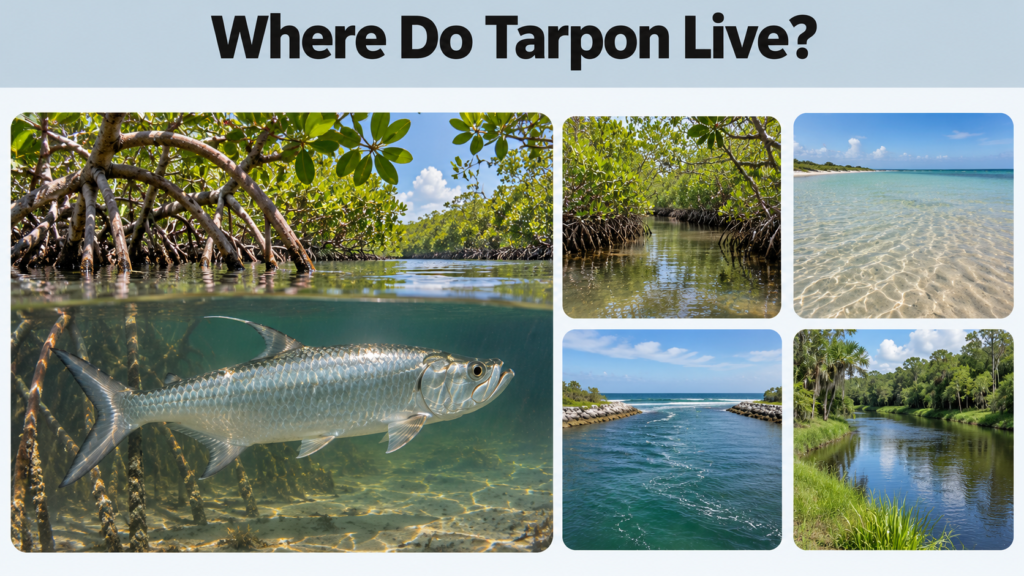
Tarpon are primarily coastal fish, but they tolerate a wide range of salinity. They move between saltwater along beaches, brackish water in estuaries, and freshwater stretches of some coastal rivers and canals. Water temperature influences their distribution. In Florida, tarpon are more widespread along the coast during summer and tend to concentrate in warmer South Florida waters in winter.
| Habitat | Where to look |
|---|---|
| Mangrove creeks and ponds | Sheltered pools and bends where juvenile tarpon may roll |
| Beaches and shallow flats | Troughs and shoreline routes where fish may cruise in clear water |
| Tidal passes and inlets | Channel edges and current seams where prey drifts past |
| Bays and estuaries | River mouths, deeper channels, and areas with schooling baitfish |
| Coastal rivers and canals | Protected bends and stretches connected to estuaries |
Why Do Tarpon Roll at the Surface?
Tarpon can gulp air at the surface and absorb oxygen through a modified swim bladder. This ability helps them survive in warm, still water with low dissolved oxygen. It is particularly useful for juveniles living in sheltered mangrove pools and backwater ponds.
When a tarpon rolls, its head briefly breaks the surface, followed by part of its back. A roll tells you where the fish surfaced. If it rolls again farther along the shoreline, you can use those two positions to judge its direction before making a cast.
What Do Tarpon Eat?
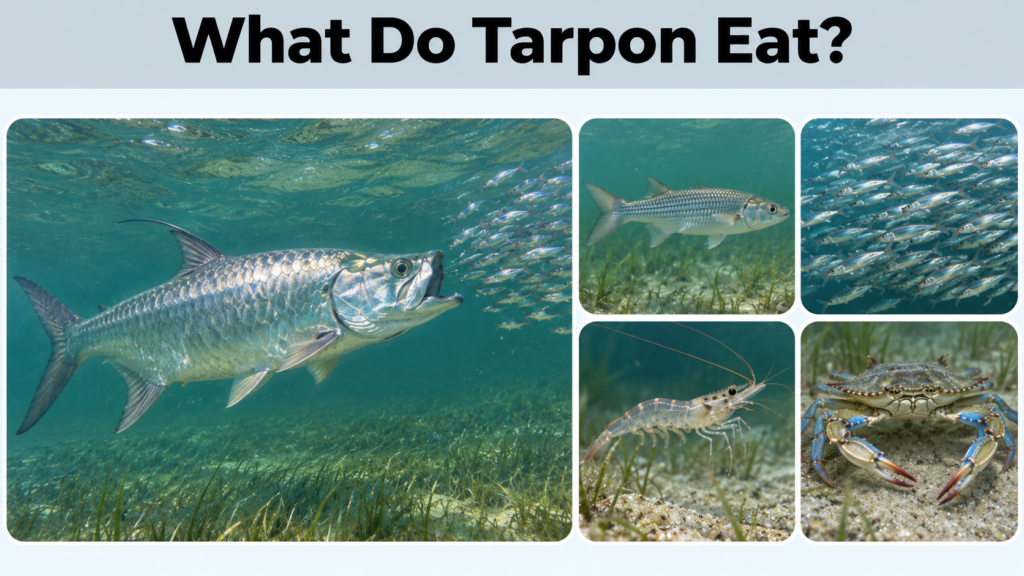
Adult tarpon eat fish such as mullet, sardines, pinfish, and needlefish. They also feed on shrimp and crabs. Juveniles take smaller prey, including insects, tiny crustaceans, and small fish. What a tarpon eats on a given day depends partly on what is moving through its habitat.
Choosing Bait and Lures for Tarpon
In a tidal pass or near a bridge, try drifting a live shrimp or crab along the edge of the current. If you see mullet or other small fish scattering, use a live baitfish or a soft-plastic swimbait close to the size of the prey. For juvenile tarpon in a sheltered creek, start with a small shrimp imitation or baitfish lure.
When you see a tarpon cruising, cast ahead of it so your bait crosses its path naturally. If fish keep rolling and your lure goes untouched, try a different depth. Give a soft plastic more time to sink before retrieving it, or adjust the weight on a drifting bait.
Tarpon Fishing in Florida
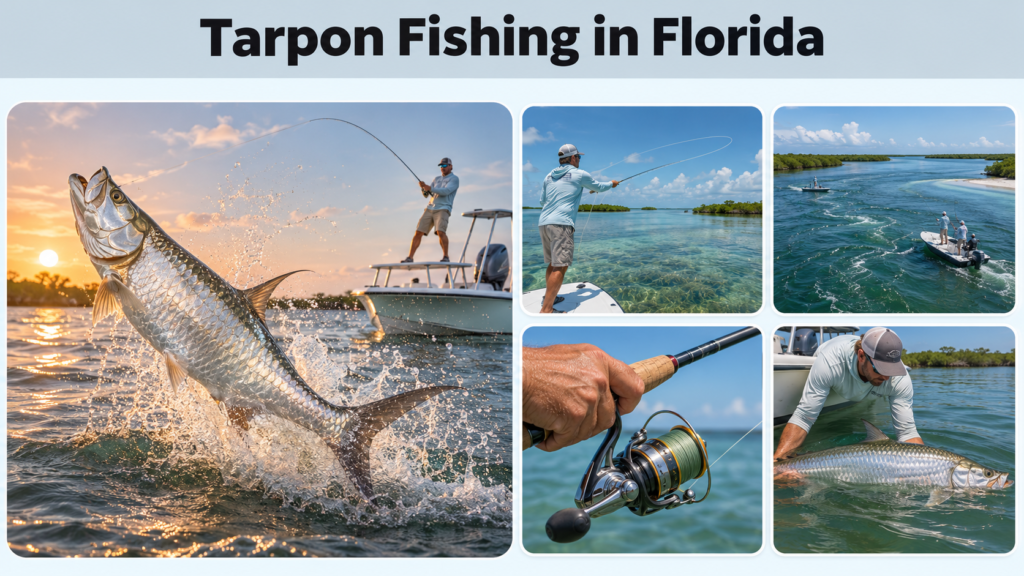
The Florida Keys, Boca Grande Pass, and the southwest Florida coast are well-known tarpon fishing areas. Late spring and summer are good times to look for fish moving through passes and along beaches. On calm mornings, surface rolls are easier to spot. In fast-moving water, look for the seam between the main current and slower water, where bait can concentrate.
Florida Tarpon Fishing Regulations
Florida manages tarpon as a catch-and-release fishery, with a limited exception for an angler pursuing a state or world record with a tarpon tag. Tarpon over 40 inches must stay in the water, including when you take photos. Fishing is limited to hook and line. Snagging is prohibited, and Boca Grande Pass has additional gear rules. Check the current requirements for the area you plan to fish.
How to Release a Tarpon
Use tackle heavy enough for the size of fish you’re targeting so you can bring it in without an unnecessarily long fight. Keep the fish in the water and have a dehooker or line cutters within reach. If you can’t remove the hook easily, cut the leader close to it.
Avoid touching the eyes or gills. If the fish has difficulty staying upright, gently support it in the water until it regains its balance and can swim away. Take photos with the fish alongside the boat or at the water’s edge.
Frequently Asked Questions
Can you eat tarpon fish?
Tarpon are edible, but their flesh contains many bones, so they are rarely kept for food. In Florida, recreational anglers generally must release tarpon.
Is a tarpon a freshwater or saltwater fish?
Tarpon are primarily marine fish. They also live in brackish estuaries and can travel into freshwater rivers, canals, and lakes connected to coastal waters.
Why are tarpon difficult to land?
Tarpon have a hard, bony mouth that makes getting a solid hookset difficult. Once hooked, they often leap and shake their heads. Those jumps can throw the hook, especially if the line stays tight as the fish changes direction in the air.
Can you catch tarpon from shore?
Yes. Beaches, public piers, and accessible banks near tidal inlets can all offer opportunities. Look for rolling fish, schooling bait, or a current seam you can reach from shore.
Are tarpon and snook the same fish?
They are separate species. Tarpon have large silver scales and a long filament trailing from their dorsal fin. Snook have a prominent black stripe along the side and two separate dorsal fins.