
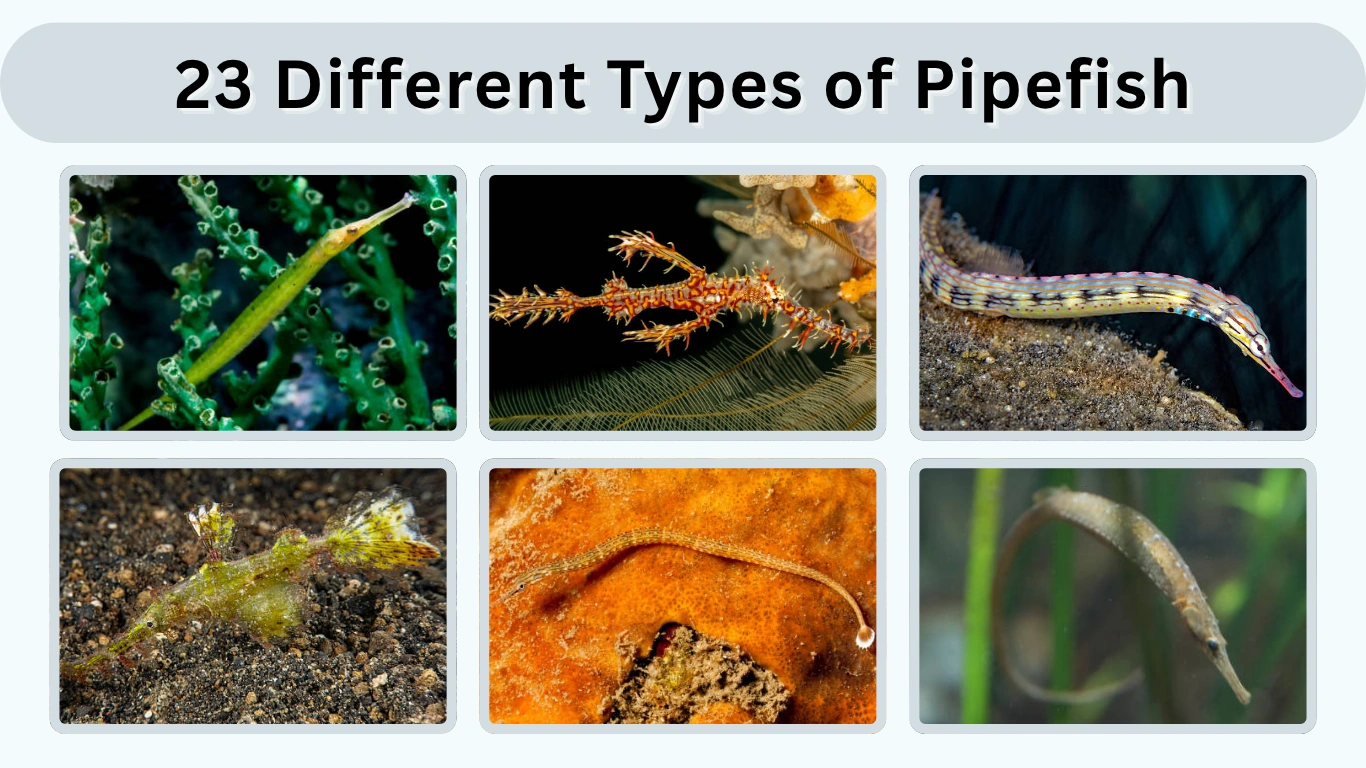
Pipefish are fascinating marine creatures closely related to seahorses and sea dragons. Known for their long, slender bodies and tube-shaped snouts, these fish inhabit coral reefs, seagrass beds, estuaries, and coastal waters around the world. Different pipefish species display unique colors, patterns, and body shapes that help them blend into their surroundings for protection. From the colorful Bluestripe Pipefish to the unusual Ornate Ghost Pipefish, each species has distinct features and behaviors. This guide explores 23 different types of pipefish, including their identification, habitat, diet, behavior, and reproduction.
1. Bluestripe Pipefish
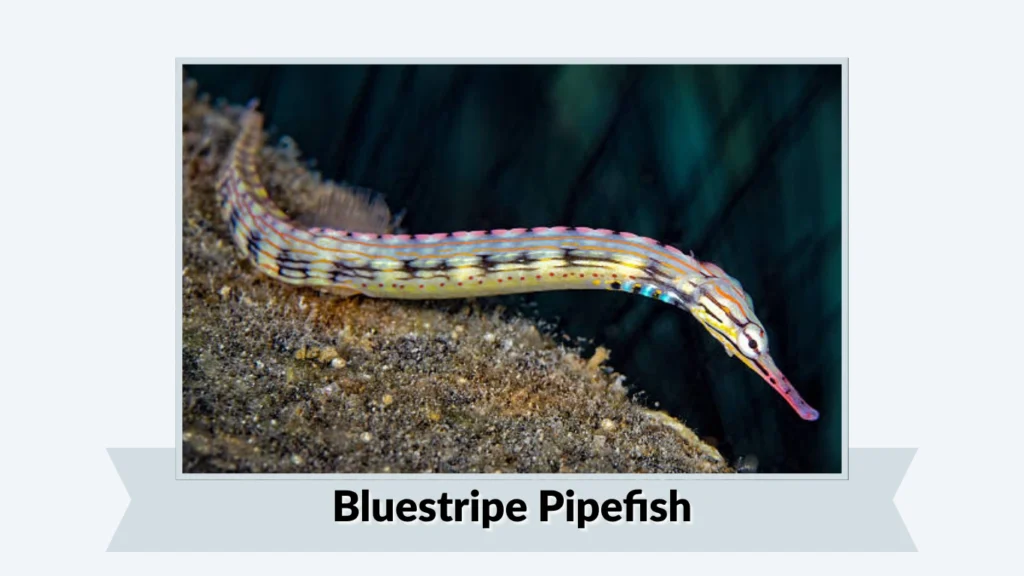
The Bluestripe Pipefish is a small, slender marine fish known for its bright blue horizontal stripes and elongated body. It is commonly found in coral reefs and seagrass beds across the Indo-Pacific region. This species is closely related to seahorses and is admired for its graceful swimming style and unique appearance.
Identification
- Slender, tube-shaped body
- Bright blue horizontal stripes along the sides
- Long snout with a small mouth
- Usually grows up to 8 inches long
- Yellowish or greenish body coloration
- Small dorsal fin used for propulsion
- Tail is thin and slightly curved
Habitat
Bluestripe Pipefish typically inhabit shallow tropical waters, especially around coral reefs, lagoons, and seagrass beds. They prefer calm environments where they can hide among corals and marine vegetation for protection from predators.
Diet
This pipefish mainly feeds on tiny crustaceans and plankton. It uses its long snout to suck in small prey from the water. Their feeding behavior is slow and precise, allowing them to capture microscopic organisms efficiently.
Behavior
Bluestripe Pipefish are peaceful and shy creatures. They often swim in pairs and move slowly through reef structures. Their camouflage and slender body help them blend into their surroundings to avoid predators.
Reproduction
Like seahorses, the male Bluestripe Pipefish carries the eggs after mating. The female deposits eggs into a brood area on the male’s body, where they remain protected until hatching. This unusual reproductive behavior is one of the most fascinating traits of pipefish species.
2. Banded Pipefish
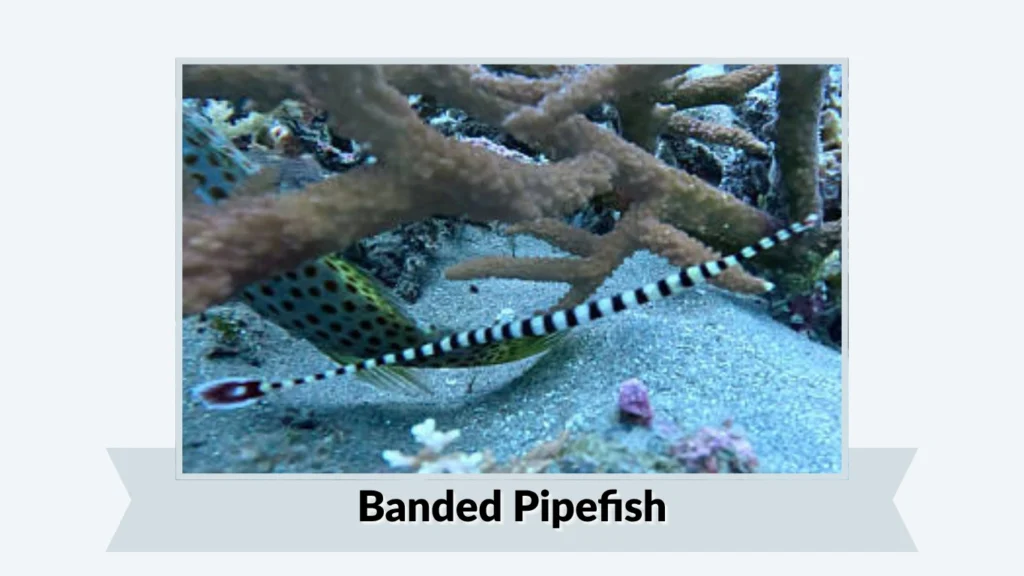
The Banded Pipefish is a colorful marine fish recognized for the distinct bands running across its body. It belongs to the same family as seahorses and is commonly seen in shallow coastal waters and coral reef environments. Its slow movement and unique body shape make it easy to identify among reef fish species.
Identification
- Long, thin, and tube-shaped body
- Dark vertical bands across the body
- Elongated snout with a tiny mouth
- Usually reaches 6 to 7 inches in length
- Yellow, brown, or green body coloration
- Small transparent fins for movement
- Tail is slender and flexible
Habitat
Banded Pipefish are commonly found in coral reefs, rocky shorelines, seagrass meadows, and shallow tropical waters. They prefer areas with plenty of hiding spaces where they can avoid predators and search for food safely.
Diet
This species mainly feeds on small crustaceans, plankton, and tiny shrimp. Using its narrow snout, the Banded Pipefish quickly sucks prey into its mouth with precise movements.
Behavior
Banded Pipefish are calm and slow-swimming fish that often remain hidden among corals or plants. They rely heavily on camouflage and body patterns to blend into their environment and stay protected from larger predators.
Reproduction
The male Banded Pipefish carries and protects the eggs after mating. Females transfer the eggs onto the male’s brood area, where the eggs develop until the young pipefish hatch and swim freely.
3. Broadnose Pipefish
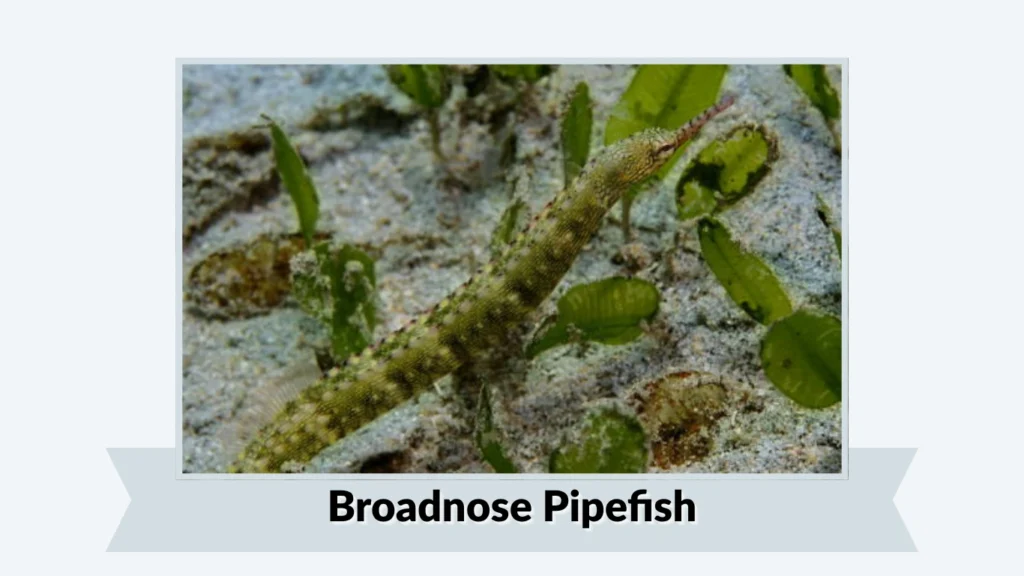
The Broadnose Pipefish is a freshwater and brackish-water species known for its wider snout compared to many other pipefish. It is commonly found in slow-moving rivers, estuaries, and coastal waters across Europe. This species has a slender body and excellent camouflage abilities that help it survive in aquatic vegetation.
Identification
- Long and slender body shape
- Broad and slightly flattened snout
- Brown or green body coloration
- Small fins positioned near the tail
- Usually grows up to 7 inches long
- Smooth body with subtle markings
- Tail is thin and flexible
Habitat
Broadnose Pipefish live in shallow waters with dense aquatic plants. They are commonly found in estuaries, lagoons, rivers, and coastal marshes where calm water and vegetation provide shelter and protection.
Diet
This pipefish feeds mainly on tiny crustaceans, insect larvae, and plankton. It hunts by slowly moving through vegetation and sucking prey into its long snout with quick precision.
Behavior
Broadnose Pipefish are shy and secretive fish that spend much of their time hidden among underwater plants. They swim slowly and rely on camouflage to avoid predators and remain unnoticed in their surroundings.
Reproduction
During breeding season, females deposit eggs onto the male’s brood pouch or protected body area. The male carries the eggs until they hatch, providing safety and oxygen to the developing young.
4. Snake Pipefish
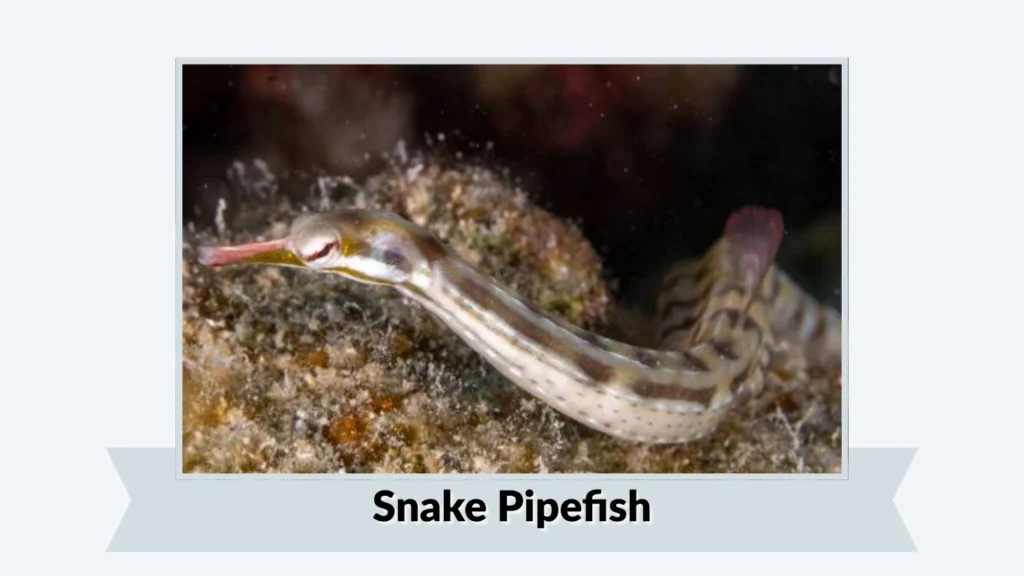
The Snake Pipefish is a long-bodied marine fish named for its snake-like appearance and movement. It is commonly found in shallow coastal waters, seagrass beds, and estuaries. Its thin body and excellent camouflage help it blend easily into underwater vegetation.
Identification
- Extremely long and slender body
- Snake-like swimming movement
- Narrow tubular snout
- Brown, green, or yellow body coloration
- Small dorsal fin near the tail
- Can grow up to 20 inches long
- Smooth body with faint markings
Habitat
Snake Pipefish are usually found in shallow marine environments such as seagrass meadows, estuaries, lagoons, and coastal waters. They prefer calm areas with dense vegetation where they can hide from predators.
Diet
This species feeds on tiny crustaceans, plankton, and small shrimp. It uses its elongated snout to suck prey into its mouth quickly while moving slowly through underwater plants.
Behavior
Snake Pipefish are slow swimmers that rely on camouflage for protection. They often remain motionless among seagrass or drift gently with currents to avoid attracting attention from predators.
Reproduction
The male Snake Pipefish carries the eggs after mating. Females place eggs onto a special brood area on the male’s body, where the eggs remain protected until they hatch into young pipefish.
5. Deepbody Pipefish
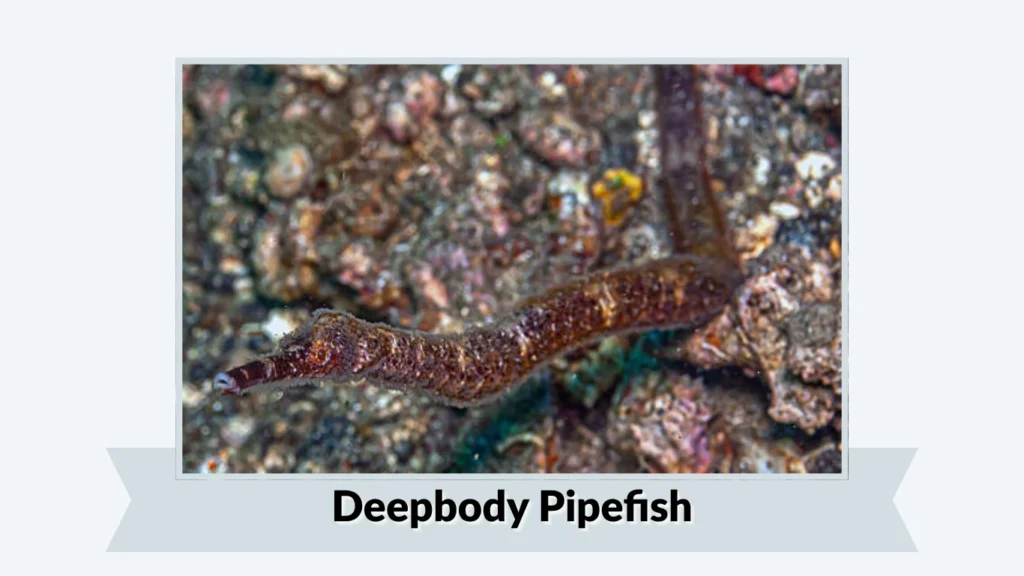
The Deepbody Pipefish is a distinctive species known for its slightly thicker and deeper body compared to most other pipefish. It is commonly found in coastal marine habitats with abundant vegetation and coral growth. Its unusual body shape helps it blend into underwater surroundings more effectively.
Identification
- Deeper and thicker body than typical pipefish
- Long tubular snout
- Brown, olive, or green coloration
- Small dorsal fin used for slow movement
- Usually grows up to 5 inches long
- Body may display faint spots or markings
- Slender tail with flexible movement
Habitat
Deepbody Pipefish inhabit shallow coastal waters, seagrass beds, coral reefs, and estuaries. They prefer environments with dense marine vegetation where they can remain hidden from predators.
Diet
This species mainly feeds on tiny crustaceans, copepods, and plankton. It captures prey using its narrow snout and quick suction-feeding technique while slowly navigating through aquatic plants.
Behavior
Deepbody Pipefish are shy and slow-moving fish that spend much of their time camouflaged among seagrass and coral structures. They often drift gently with water currents to avoid detection.
Reproduction
Like many pipefish species, the male Deepbody Pipefish carries the eggs after mating. The female transfers the eggs onto the male’s brood area, where they remain protected until hatching.
6. Dragonface Pipefish
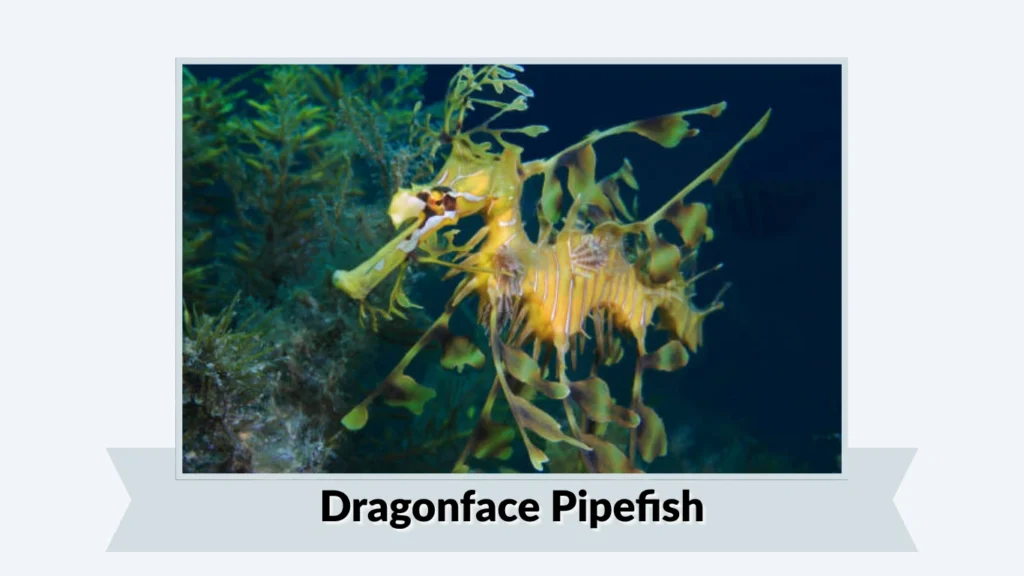
The Dragonface Pipefish is a unique and highly recognizable species known for its long snout and dragon-like facial appearance. It is popular among marine aquarium enthusiasts due to its striking patterns and graceful swimming style. This species is commonly found in coral reef habitats across the Indo-Pacific region.
Identification
- Long and slender body shape
- Distinct dragon-like face and snout
- Red, orange, yellow, or purple body coloration
- Thin body with decorative markings
- Small transparent fins for movement
- Usually grows up to 6 inches long
- Tail is narrow and flexible
Habitat
Dragonface Pipefish live in tropical coral reefs, rocky crevices, and lagoon environments. They prefer areas with strong coral growth and plenty of hiding places where they can move safely among reef structures.
Diet
This pipefish mainly feeds on tiny crustaceans, copepods, and plankton. It hunts slowly by picking small prey from coral surfaces and sucking them into its narrow mouth.
Behavior
Dragonface Pipefish are peaceful and delicate swimmers. They often move slowly through coral branches and may form pairs. Their colorful patterns and slender bodies help them blend naturally into reef environments.
Reproduction
The male Dragonface Pipefish carries fertilized eggs on a protected brood area beneath the body. The eggs remain attached until fully developed, after which miniature pipefish hatch and begin independent life.
7. Janss’ Pipefish
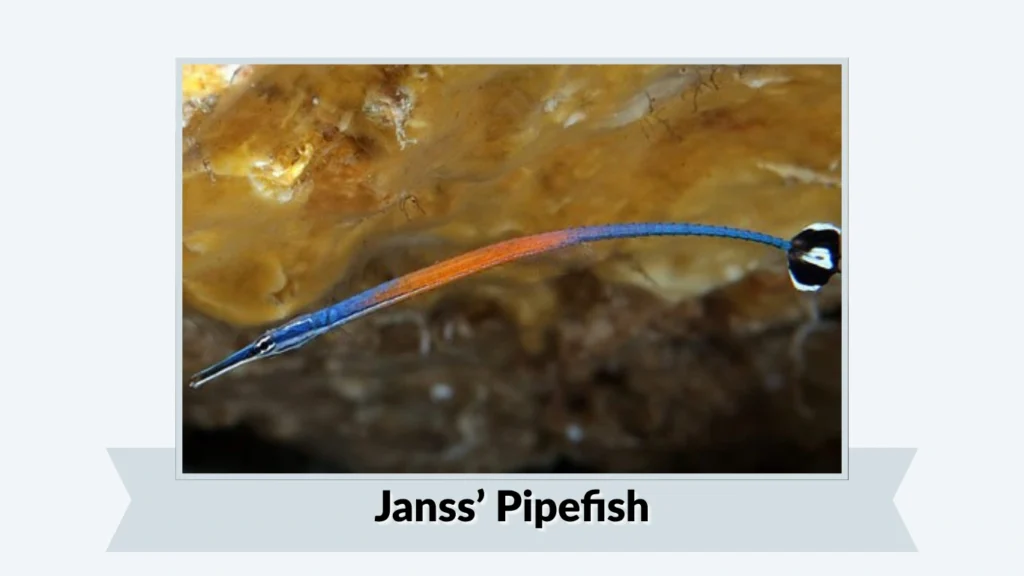
Janss’ Pipefish is a brightly colored marine species admired for its elegant appearance and reef-dwelling lifestyle. It is commonly found in tropical Indo-Pacific waters, especially around coral reefs. This pipefish is popular among divers because of its vivid colors and graceful swimming movements.
Identification
- Slender and elongated body
- Bright orange, yellow, and purple coloration
- Long narrow snout
- Thin body with decorative stripe patterns
- Small dorsal fin for smooth movement
- Usually grows up to 5 inches long
- Tail is flexible and slightly curved
Habitat
Janss’ Pipefish inhabit coral reefs, reef slopes, and lagoon areas with abundant coral growth. They prefer warm tropical waters where they can hide among reef structures and marine plants.
Diet
This species mainly feeds on tiny crustaceans, zooplankton, and copepods. It uses its long snout to capture microscopic prey from the water and coral surfaces with rapid suction feeding.
Behavior
Janss’ Pipefish are peaceful and slow-moving fish that often swim in pairs. They spend much of their time weaving through coral branches while relying on camouflage and coloration for protection from predators.
Reproduction
The male Janss’ Pipefish carries fertilized eggs on a specialized brood area beneath the body. The eggs remain protected until the young pipefish hatch and begin swimming independently.
8. Network Pipefish
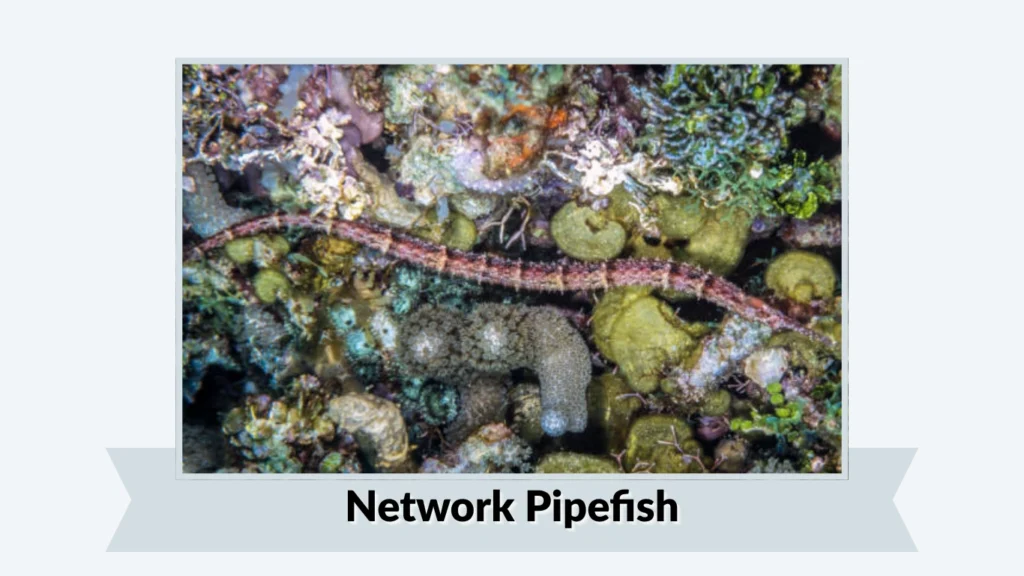
The Network Pipefish is a beautifully patterned marine species recognized for the net-like markings covering its body. It is commonly found in tropical coastal waters and coral reef environments. Its unique appearance and slow, graceful movement make it a fascinating member of the pipefish family.
Identification
- Long and slender body shape
- Distinct net-like or mesh body pattern
- Brown, yellow, or olive coloration
- Long tubular snout
- Small dorsal fin near the back
- Usually grows up to 7 inches long
- Thin and flexible tail
Habitat
Network Pipefish are typically found in shallow tropical waters, coral reefs, seagrass beds, and lagoons. They prefer areas with plenty of marine vegetation and reef cover for protection and camouflage.
Diet
This species feeds mainly on tiny crustaceans, plankton, and copepods. It slowly approaches prey and uses suction through its narrow snout to capture small organisms efficiently.
Behavior
Network Pipefish are calm and secretive fish that spend much of their time hidden among corals and seagrass. Their patterned body helps them blend into their surroundings and avoid predators.
Reproduction
The male Network Pipefish carries the eggs after mating. Females place fertilized eggs onto a protected brood area on the male’s body, where the eggs develop safely until hatching.
9. Ornate Ghost Pipefish
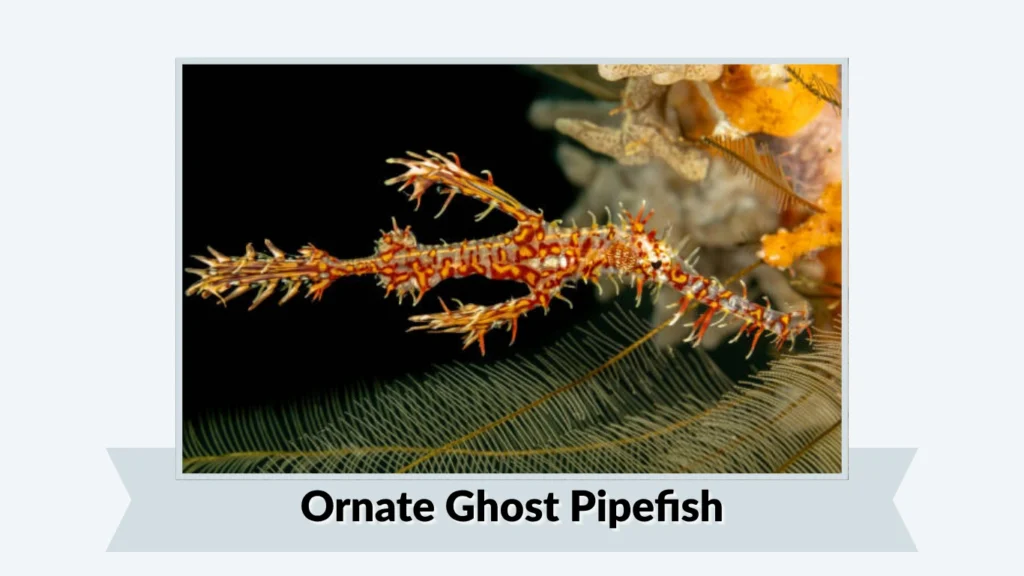
The Ornate Ghost Pipefish is one of the most striking and decorative pipefish species found in tropical oceans. It is famous for its leaf-like body extensions and exceptional camouflage abilities. Often mistaken for drifting seaweed or coral fragments, this species blends perfectly into reef environments.
Identification
- Elaborate body with leaf-like appendages
- Long slender snout and body
- Color varies from red and orange to yellow or brown
- Decorative fins with intricate patterns
- Usually grows up to 5 inches long
- Body resembles floating seaweed or coral
- Transparent fins used for gentle movement
Habitat
Ornate Ghost Pipefish are commonly found in coral reefs, lagoons, and coastal tropical waters. They often stay near soft corals, crinoids, and sea fans where their camouflage provides excellent protection.
Diet
This species feeds on tiny crustaceans, mysid shrimp, and plankton. It hunts slowly and carefully, using its narrow snout to suck in small prey from the surrounding water.
Behavior
Ornate Ghost Pipefish are shy and delicate creatures that drift slowly with ocean currents. Their body shape and coloration help them remain nearly invisible among corals and marine plants.
Reproduction
Unlike many true pipefish, the female Ornate Ghost Pipefish carries the eggs beneath the tail after mating. The eggs remain attached and protected until the young hatch and become free-swimming juveniles.
10. Robust Ghost Pipefish
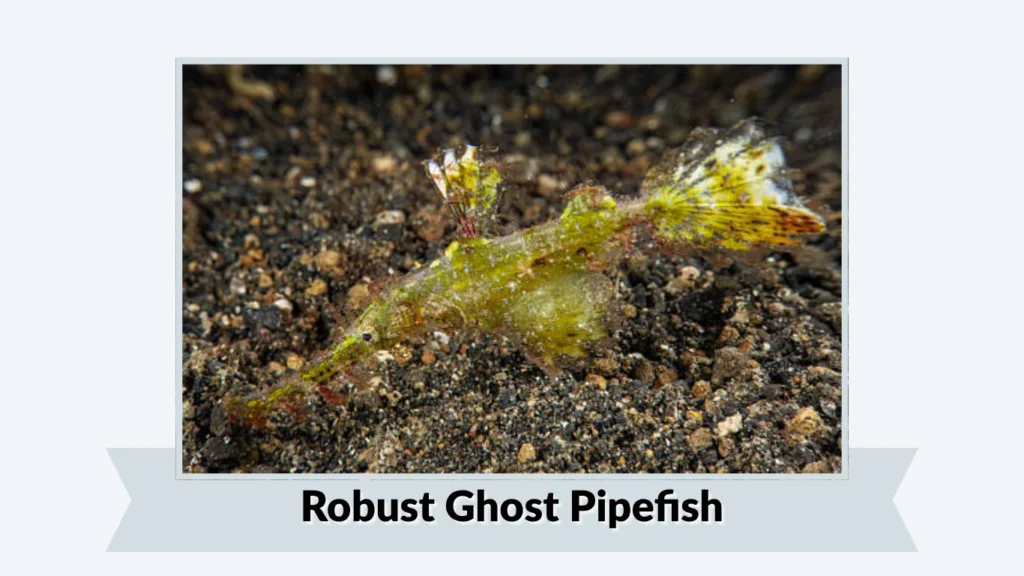
The Robust Ghost Pipefish is a fascinating marine species known for its thicker body and impressive camouflage abilities. It closely resembles floating seaweed or coral branches, helping it remain hidden from predators. This species is commonly found in tropical Indo-Pacific waters near coral reefs.
Identification
- Thick and sturdy body structure
- Long tubular snout
- Leaf-like body appendages for camouflage
- Brown, yellow, red, or orange coloration
- Decorative fins with delicate patterns
- Usually grows up to 6 inches long
- Body resembles drifting marine plants
Habitat
Robust Ghost Pipefish inhabit coral reefs, lagoons, and coastal tropical waters. They are often seen near soft corals, crinoids, and seagrass beds where their camouflage blends perfectly with the surrounding environment.
Diet
This species mainly feeds on tiny shrimp, plankton, and small crustaceans. It captures prey by using its long snout to create quick suction while drifting slowly through the water.
Behavior
Robust Ghost Pipefish are slow-moving and secretive animals that rely heavily on camouflage for survival. They often drift with currents and remain motionless among corals or seaweed to avoid predators.
Reproduction
In this species, the female carries the fertilized eggs beneath the tail area. The eggs remain attached and protected until the young hatch and begin swimming independently in reef environments.
11. Messmate Pipefish
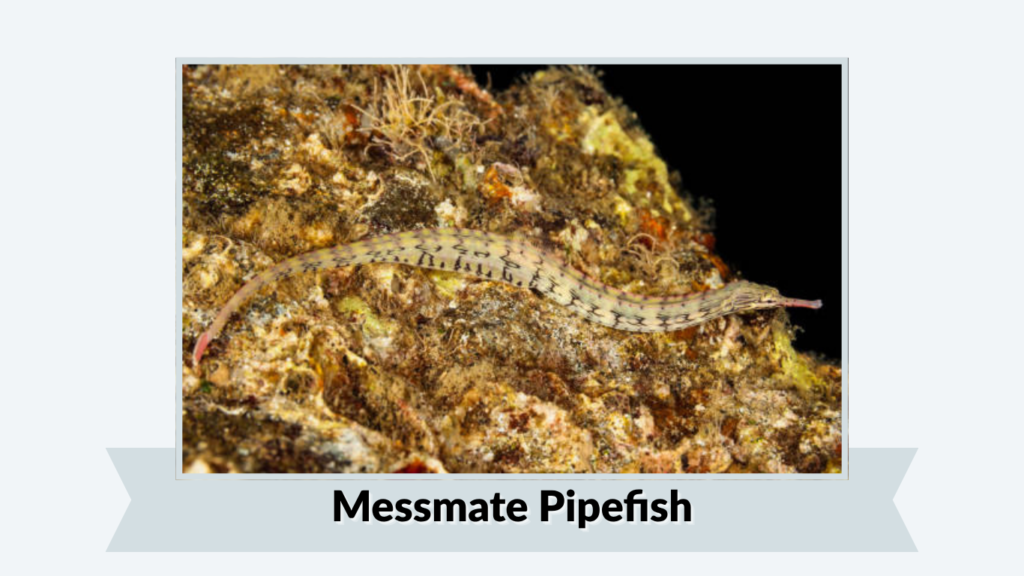
The Messmate Pipefish is a slender marine species commonly found in warm coastal waters and coral reef environments. It is known for its thin body, subtle coloration, and ability to blend easily into seagrass and reef habitats. This species is often seen swimming slowly among underwater vegetation.
Identification
- Long and narrow body shape
- Smooth tubular snout
- Brown, green, or yellowish coloration
- Thin body with faint stripes or markings
- Small dorsal fin for movement
- Usually grows up to 7 inches long
- Flexible and slender tail
Habitat
Messmate Pipefish are commonly found in shallow tropical waters, seagrass beds, lagoons, and coral reef areas. They prefer calm environments with dense marine vegetation that offers shelter and camouflage.
Diet
This pipefish feeds mainly on tiny crustaceans, plankton, and copepods. It slowly searches for prey among marine plants and captures food using rapid suction through its long snout.
Behavior
Messmate Pipefish are peaceful and shy creatures that spend much of their time hidden among seagrass and corals. Their slow swimming style and body coloration help them avoid detection by predators.
Reproduction
The male Messmate Pipefish carries the eggs after mating. The female deposits eggs onto a brood area on the male’s body, where they remain protected until the young pipefish hatch.
12. Gulf Pipefish
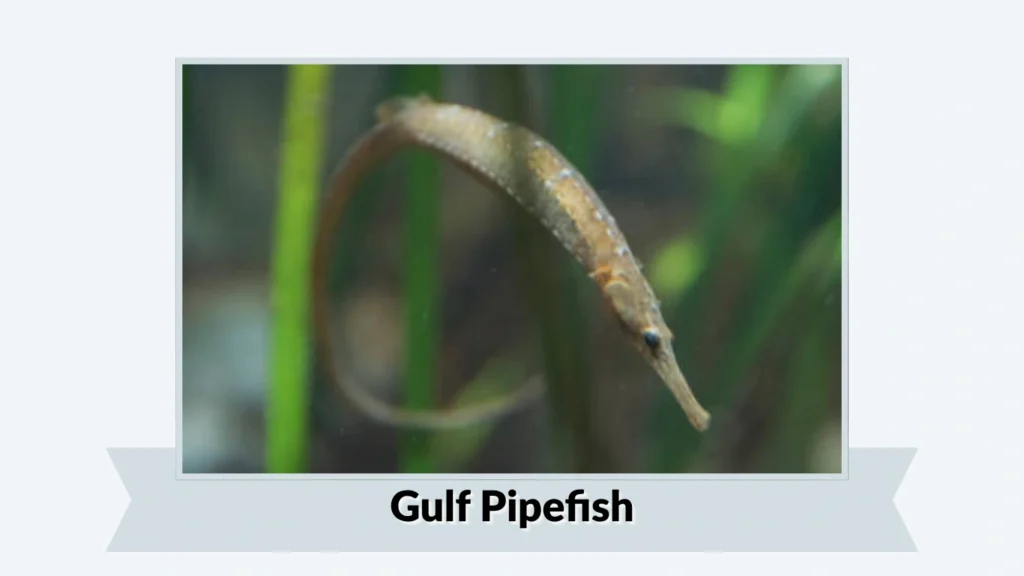
The Gulf Pipefish is a slender species commonly found in coastal waters around the Gulf of Mexico and nearby regions. It is closely associated with seagrass habitats where it can easily camouflage itself among underwater vegetation. This pipefish is known for its graceful swimming and elongated body.
Identification
- Long and thin body structure
- Narrow tubular snout
- Green, brown, or olive body coloration
- Fine stripes or faint body markings
- Small dorsal fin positioned near the tail
- Usually grows up to 8 inches long
- Tail is slender and flexible
Habitat
Gulf Pipefish inhabit shallow coastal waters, estuaries, seagrass meadows, and lagoons. They prefer calm environments with dense aquatic vegetation that provides shelter and feeding opportunities.
Diet
This species mainly feeds on small crustaceans, plankton, and tiny shrimp. It uses its elongated snout to suck prey into its mouth with quick and precise movements.
Behavior
Gulf Pipefish are slow-moving and secretive fish that spend much of their time hidden among seagrass. Their body shape and coloration help them blend into their surroundings and avoid predators.
Reproduction
The male Gulf Pipefish carries the fertilized eggs in a brood pouch or protected area beneath the body. The eggs remain safe there until they hatch into small free-swimming pipefish.
13. Dwarf Pipefish
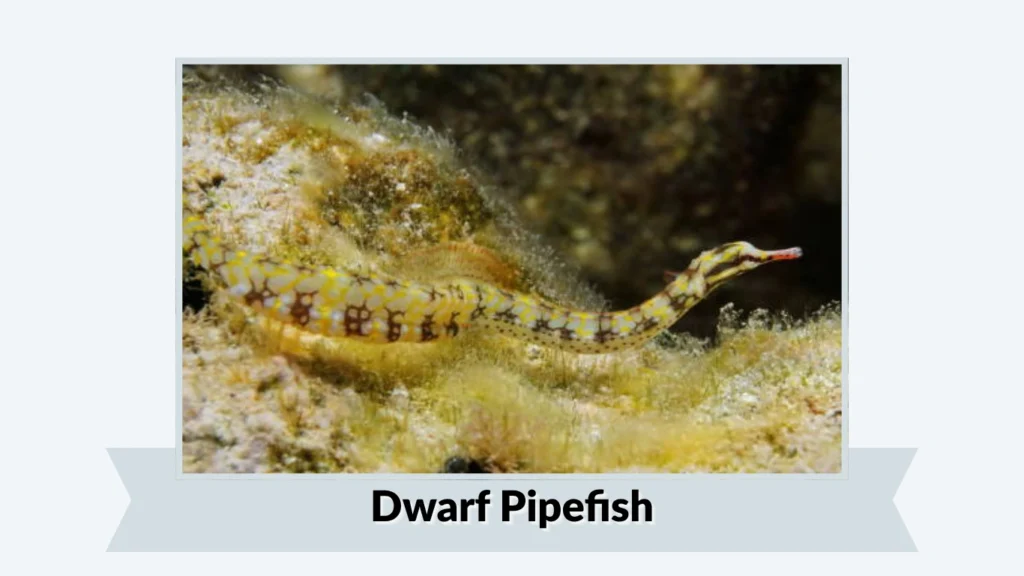
The Dwarf Pipefish is one of the smallest members of the pipefish family. It is commonly found in shallow coastal waters with dense vegetation, where its tiny size and camouflage help it avoid predators. Despite its small appearance, this species is an active hunter of microscopic prey.
Identification
- Very small and slender body
- Long narrow snout
- Green, brown, or yellowish coloration
- Fine body rings and subtle markings
- Usually grows up to 2 inches long
- Small transparent fins for movement
- Thin and flexible tail
Habitat
Dwarf Pipefish are typically found in seagrass beds, marshes, estuaries, and shallow coastal waters. They prefer calm environments with thick aquatic vegetation that provides excellent hiding places.
Diet
This species feeds mainly on tiny crustaceans, plankton, and copepods. It slowly moves through underwater plants and captures prey using quick suction through its tubular snout.
Behavior
Dwarf Pipefish are shy and delicate swimmers that spend most of their time hidden among seagrass. Their small size and body coloration allow them to blend naturally into their environment.
Reproduction
The male Dwarf Pipefish carries the eggs after mating. Females place fertilized eggs onto a protected brood area on the male’s body, where the eggs remain until the young hatch and begin independent life.
14. Chain Pipefish
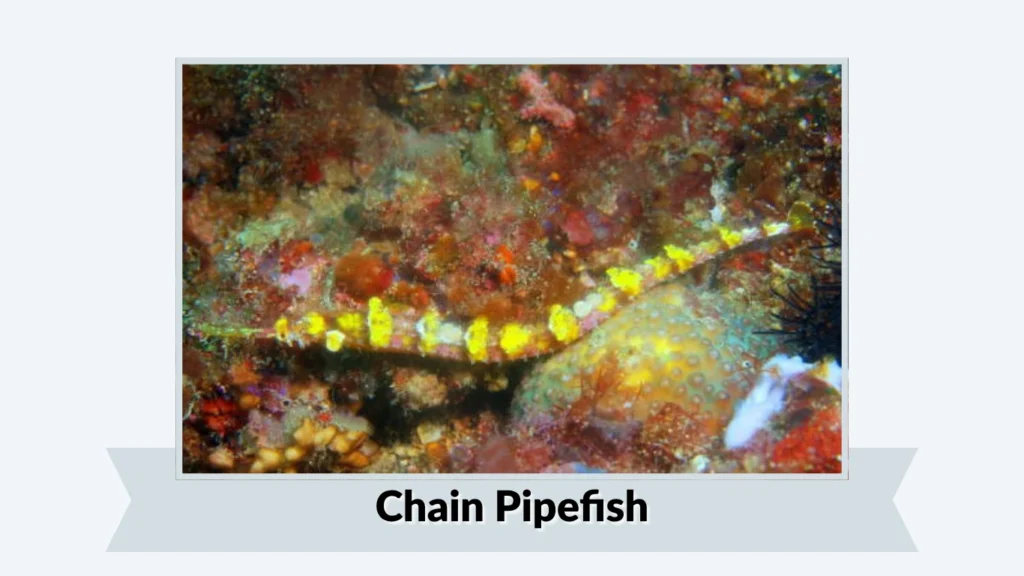
The Chain Pipefish is a beautifully patterned species named for the chain-like markings running along its body. It is commonly found in shallow coastal waters and seagrass habitats. Its slender shape and natural camouflage help it blend easily into underwater vegetation.
Identification
- Long and thin body shape
- Distinct chain-like body markings
- Brown, green, or yellow coloration
- Narrow tubular snout
- Small dorsal fin near the tail
- Usually grows up to 6 inches long
- Flexible and slender tail
Habitat
Chain Pipefish are commonly found in seagrass meadows, estuaries, marshes, and shallow coastal waters. They prefer calm environments with dense aquatic plants that provide shelter and protection.
Diet
This species mainly feeds on tiny crustaceans, plankton, and copepods. It hunts slowly among marine vegetation and uses suction through its snout to capture small prey.
Behavior
Chain Pipefish are slow-moving and secretive fish that spend much of their time hidden among seagrass. Their patterned body helps them camouflage effectively and avoid predators.
Reproduction
The male Chain Pipefish carries the eggs after mating. The female transfers fertilized eggs onto a brood area beneath the male’s body, where they remain protected until hatching.
15. Alligator Pipefish
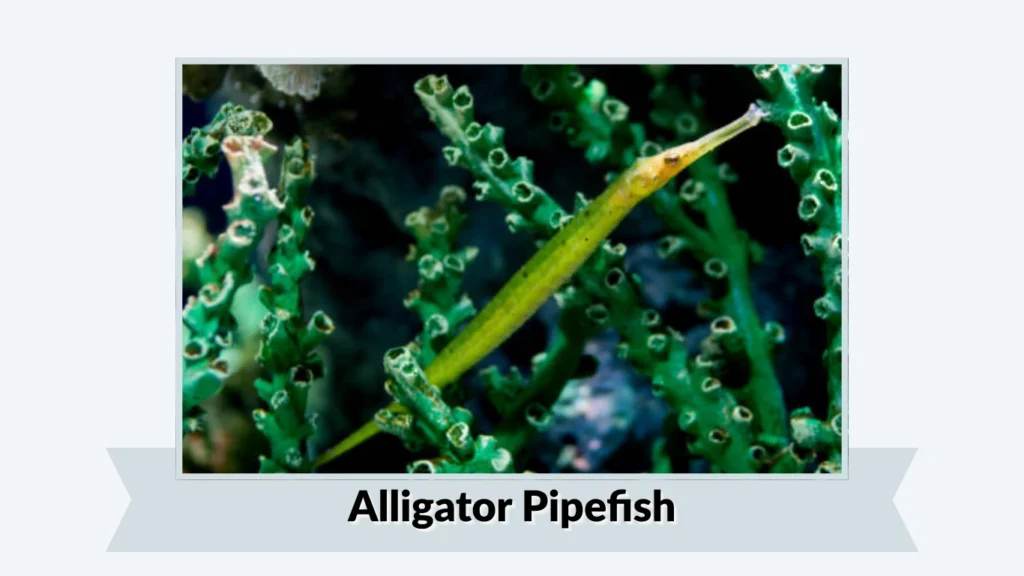
The Alligator Pipefish is a large and distinctive species known for its elongated body and strong resemblance to an alligator because of its long snout and armored appearance. It is commonly found in freshwater and brackish habitats across parts of Asia.
Identification
- Long and robust body structure
- Broad, alligator-like snout
- Brown or olive-green coloration
- Body covered with bony rings
- Small dorsal fin near the tail
- Usually grows up to 12 inches long
- Tail is thin and slightly curved
Habitat
Alligator Pipefish inhabit rivers, estuaries, mangroves, and coastal brackish waters. They prefer slow-moving waters with dense aquatic vegetation where they can remain hidden from predators.
Diet
This species mainly feeds on small fish, insect larvae, tiny crustaceans, and plankton. It uses its long snout to suck prey into its mouth with fast and accurate movements.
Behavior
Alligator Pipefish are generally slow swimmers that rely on camouflage and stealth. They often stay motionless among underwater plants and drift with currents to avoid attracting attention.
Reproduction
The male Alligator Pipefish carries fertilized eggs on a specialized brood area beneath the body. The eggs remain attached and protected until the young pipefish hatch and begin swimming independently.
16. Ringed Pipefish
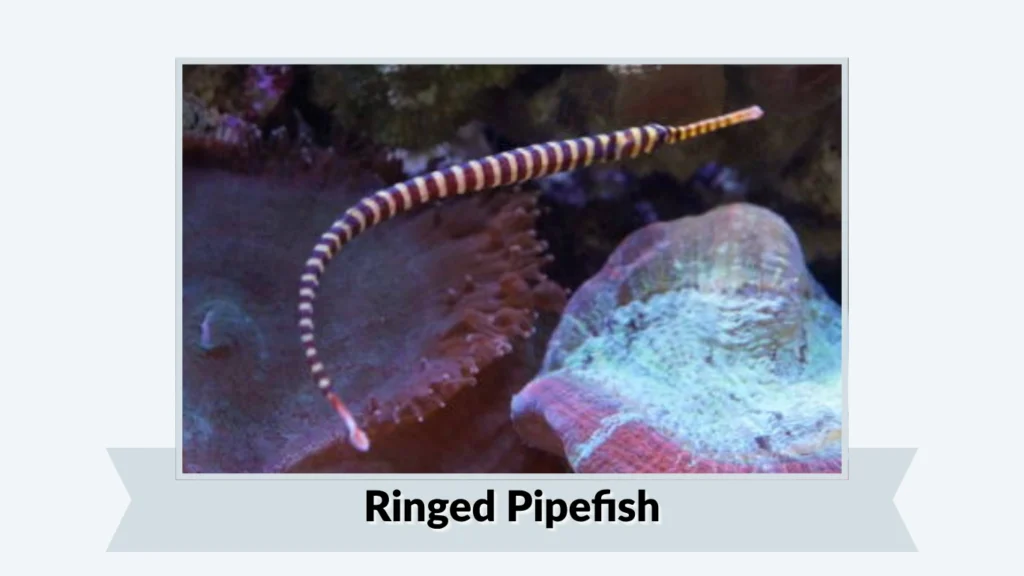
The Ringed Pipefish is a slender marine species recognized for the ring-like bands that circle its body. It is commonly found in shallow tropical and subtropical waters where it blends easily with seagrass and coral habitats. Its graceful movement and patterned body make it a fascinating reef fish.
Identification
- Long and narrow body shape
- Distinct ring-like bands across the body
- Brown, yellow, or green coloration
- Tubular snout with a tiny mouth
- Small dorsal fin for propulsion
- Usually grows up to 7 inches long
- Thin and flexible tail
Habitat
Ringed Pipefish inhabit coral reefs, lagoons, seagrass beds, and shallow coastal waters. They prefer calm marine environments with dense vegetation and reef structures that provide shelter and camouflage.
Diet
This species mainly feeds on plankton, copepods, and tiny crustaceans. It slowly approaches prey and captures it using rapid suction through its elongated snout.
Behavior
Ringed Pipefish are shy and peaceful swimmers that spend much of their time hidden among corals and marine plants. Their body patterns help them blend naturally into their surroundings and avoid predators.
Reproduction
The male Ringed Pipefish carries the eggs after mating. Females place fertilized eggs onto a protected brood area on the male’s body, where they remain safe until hatching into young pipefish.
17. Yellowbanded Pipefish
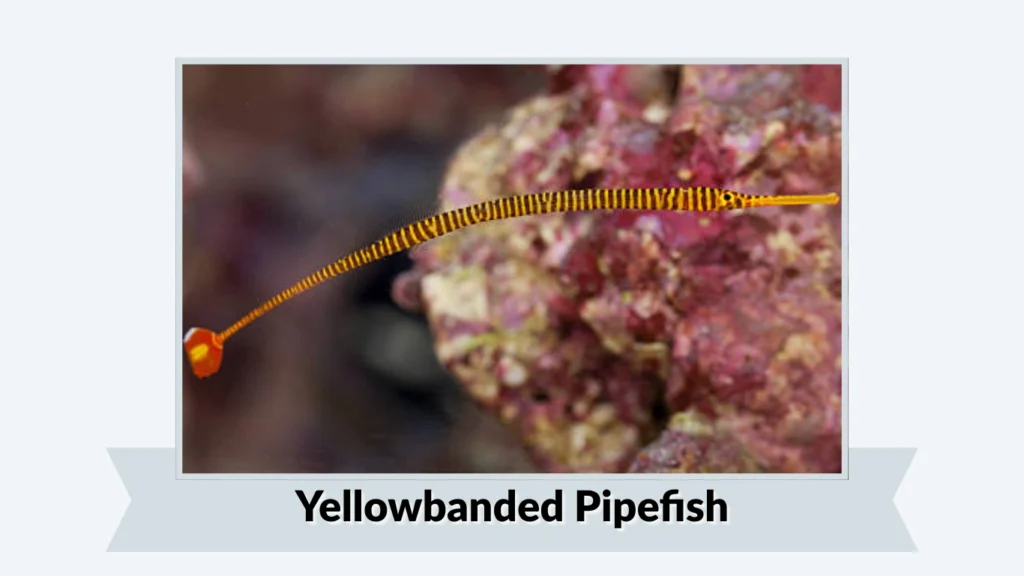
The Yellowbanded Pipefish is a colorful marine species known for the bright yellow bands running across its slender body. It is commonly found in coral reefs and tropical coastal waters, where its vivid patterns help it blend with reef surroundings and marine vegetation.
Identification
- Long and slender body structure
- Bright yellow bands across the body
- Brown, black, or olive background coloration
- Long tubular snout
- Small transparent fins for movement
- Usually grows up to 6 inches long
- Thin and flexible tail
Habitat
Yellowbanded Pipefish are commonly found in coral reefs, lagoons, and shallow tropical waters. They prefer reef environments with abundant coral growth and hiding spaces for protection.
Diet
This species feeds mainly on tiny crustaceans, plankton, and copepods. It captures prey using suction through its narrow snout while slowly moving among corals and marine plants.
Behavior
Yellowbanded Pipefish are calm and slow-moving fish that often remain hidden within reef structures. Their bright bands and slender body help them camouflage effectively in colorful reef habitats.
Reproduction
The male Yellowbanded Pipefish carries fertilized eggs on a protected brood area beneath the body. The eggs remain attached until the young hatch and begin independent swimming.
18. Blue-spotted Pipefish
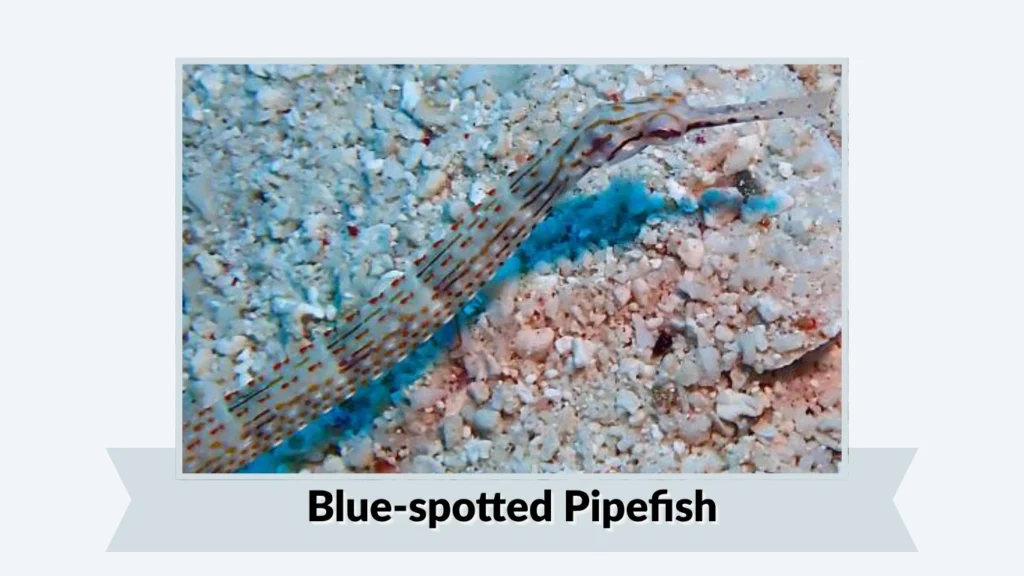
The Blue-spotted Pipefish is a striking marine species recognized for the bright blue spots scattered across its slender body. It is commonly found in tropical coral reef habitats where its colorful markings help it blend into the vibrant underwater environment.
Identification
- Long and slender body shape
- Bright blue spots along the body
- Brown, green, or yellow background coloration
- Narrow tubular snout
- Small dorsal fin near the tail
- Usually grows up to 5 inches long
- Thin and flexible tail
Habitat
Blue-spotted Pipefish inhabit coral reefs, lagoons, seagrass beds, and shallow tropical coastal waters. They prefer areas with dense coral growth and marine vegetation for shelter and camouflage.
Diet
This species mainly feeds on tiny crustaceans, copepods, and plankton. It hunts slowly and captures prey by sucking it into its narrow mouth with quick precision.
Behavior
Blue-spotted Pipefish are peaceful and secretive swimmers that often remain hidden among corals and seagrass. Their spotted body pattern helps them blend naturally into reef surroundings and avoid predators.
Reproduction
The male Blue-spotted Pipefish carries the eggs after mating. Females deposit fertilized eggs onto a specialized brood area on the male’s body, where they remain protected until hatching.
19. Zebra Pipefish
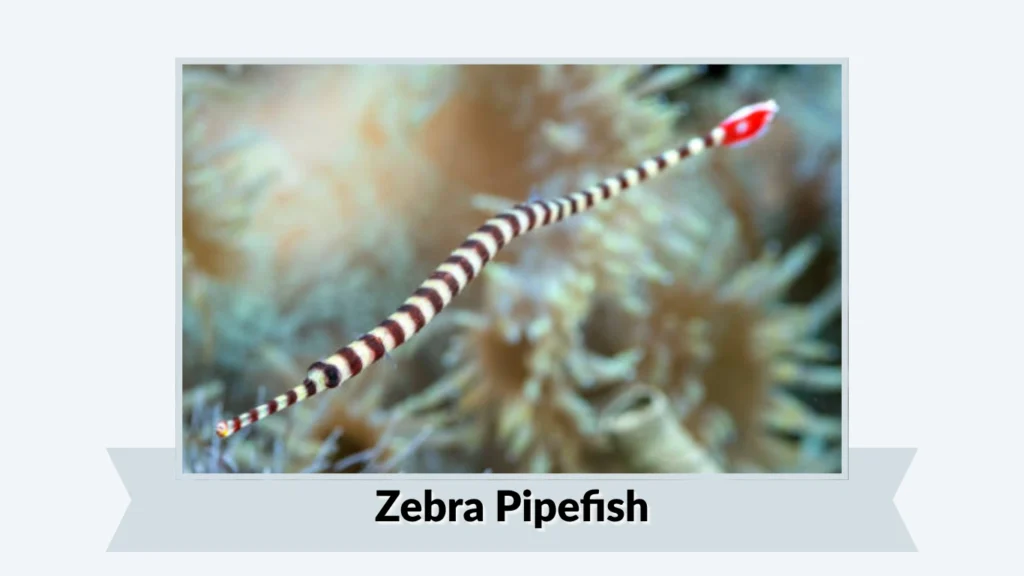
The Zebra Pipefish is a uniquely patterned species named for the bold stripe patterns covering its body. It is commonly found in tropical marine environments, especially around coral reefs and seagrass habitats. Its striking appearance and slender body make it one of the more recognizable pipefish species.
Identification
- Long and slender body structure
- Bold black and white zebra-like stripes
- Narrow tubular snout
- Small transparent fins for movement
- Usually grows up to 6 inches long
- Thin and flexible tail
- Smooth body with distinct band patterns
Habitat
Zebra Pipefish inhabit shallow tropical waters, coral reefs, lagoons, and seagrass meadows. They prefer calm marine environments with plenty of reef cover and vegetation for camouflage and protection.
Diet
This species mainly feeds on tiny crustaceans, plankton, and copepods. It slowly moves through underwater vegetation and captures prey using rapid suction through its elongated snout.
Behavior
Zebra Pipefish are shy and peaceful swimmers that rely heavily on camouflage despite their bold markings. They often remain hidden among corals and seagrass to avoid predators.
Reproduction
The male Zebra Pipefish carries fertilized eggs on a protected brood area beneath the body. The eggs remain attached and safe until they hatch into young free-swimming pipefish.
20. Red Pipefish
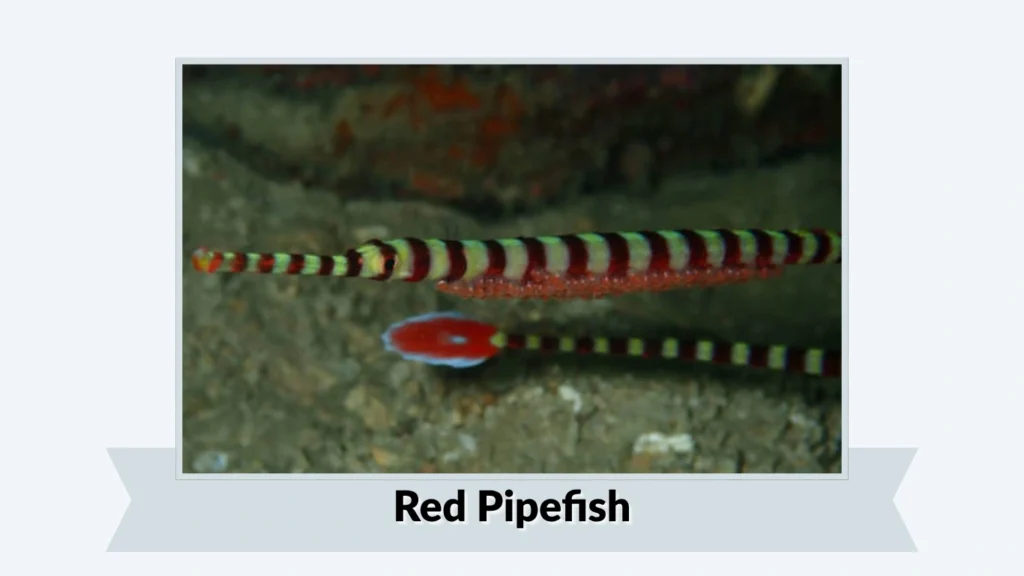
The Red Pipefish is a colorful marine species known for its bright reddish body and slender shape. It is commonly found in tropical reef environments where its coloration helps it blend among corals and marine plants. This species is admired for its graceful swimming and delicate appearance.
Identification
- Long and slender body shape
- Bright red or reddish-orange coloration
- Narrow tubular snout
- Small dorsal fin near the tail
- Usually grows up to 6 inches long
- Thin and flexible tail
- Smooth body with faint markings
Habitat
Red Pipefish inhabit coral reefs, lagoons, seagrass beds, and shallow tropical waters. They prefer reef environments with abundant coral structures and vegetation for shelter and camouflage.
Diet
This species mainly feeds on tiny crustaceans, copepods, and plankton. It slowly hunts among corals and marine plants, using suction through its long snout to capture small prey.
Behavior
Red Pipefish are peaceful and secretive swimmers that spend much of their time hidden within reef habitats. Their bright coloration and slender body help them blend naturally into colorful underwater surroundings.
Reproduction
The male Red Pipefish carries the eggs after mating. The female deposits fertilized eggs onto a protected brood area on the male’s body, where the eggs remain safe until hatching.
21. Crocodile Pipefish
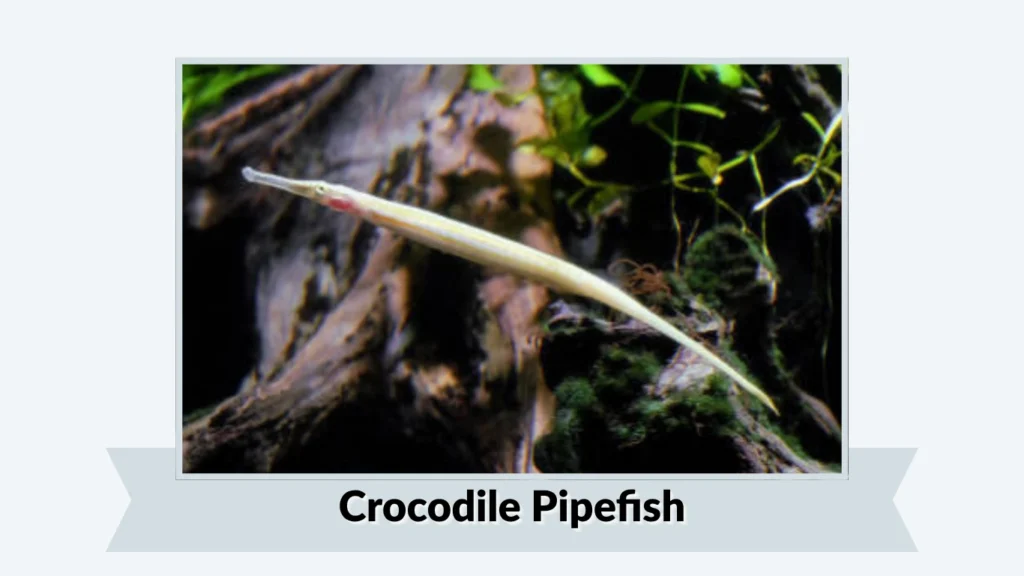
The Crocodile Pipefish is a long-bodied marine species named for its crocodile-like head and elongated snout. It is commonly found in tropical coastal waters where it hides among seagrass and coral reefs. Its camouflage and slow movement make it difficult for predators to detect.
Identification
- Long and slender body structure
- Crocodile-like head and snout
- Brown, green, or olive coloration
- Body covered with bony rings
- Small dorsal fin near the tail
- Usually grows up to 10 inches long
- Thin and flexible tail
Habitat
Crocodile Pipefish inhabit shallow tropical waters, coral reefs, lagoons, and seagrass beds. They prefer calm marine environments with dense vegetation and reef cover for protection.
Diet
This species mainly feeds on tiny fish, crustaceans, plankton, and shrimp larvae. It uses its elongated snout to suck prey into its mouth with quick precision while moving slowly through vegetation.
Behavior
Crocodile Pipefish are shy and slow-moving creatures that rely heavily on camouflage. They often remain motionless among seagrass or coral branches to avoid predators and ambush prey.
Reproduction
The male Crocodile Pipefish carries fertilized eggs on a specialized brood area beneath the body. The eggs stay protected there until the young pipefish hatch and begin independent swimming.
22. Longsnout Pipefish
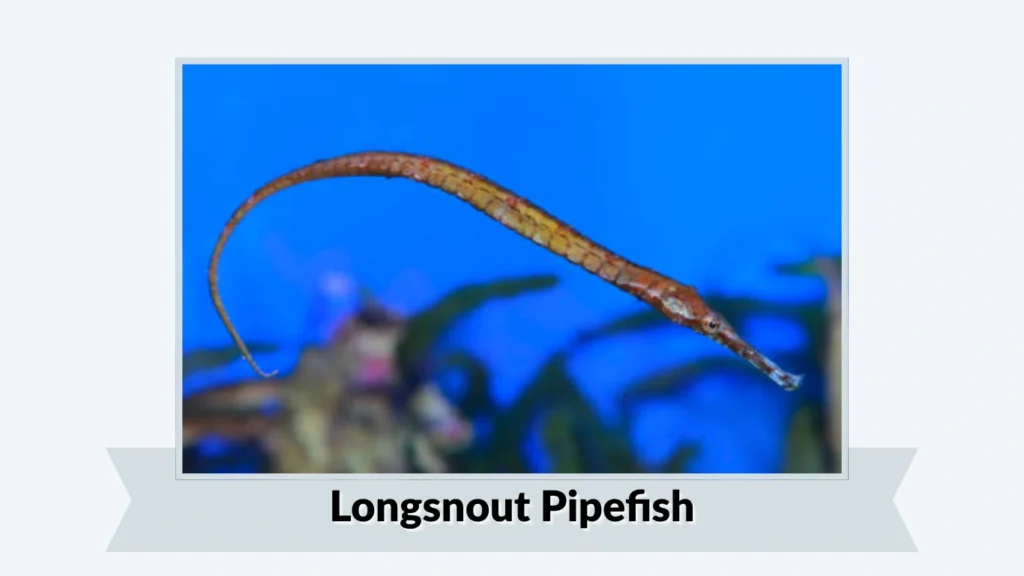
The Longsnout Pipefish is a slender marine species famous for its extremely long snout and narrow body. It is commonly found in shallow coastal waters where it blends easily among seagrass and coral formations. This species is closely related to seahorses and shares similar reproductive behavior.
Identification
- Very long and narrow snout
- Slender tube-shaped body
- Brown, green, or yellowish coloration
- Small dorsal fin used for movement
- Usually grows up to 8 inches long
- Body covered with bony rings
- Thin and flexible tail
Habitat
Longsnout Pipefish inhabit seagrass beds, estuaries, coral reefs, and shallow coastal waters. They prefer calm marine environments with abundant vegetation that provides shelter and camouflage.
Diet
This species mainly feeds on tiny crustaceans, plankton, and copepods. It hunts slowly through underwater plants and captures prey using rapid suction through its elongated snout.
Behavior
Longsnout Pipefish are shy and peaceful swimmers that spend much of their time hidden among seagrass and corals. Their body shape and coloration help them blend naturally into their surroundings.
Reproduction
The male Longsnout Pipefish carries the eggs after mating. The female deposits fertilized eggs onto a brood area beneath the male’s body, where the eggs remain protected until hatching.
23. Spotted Pipefish
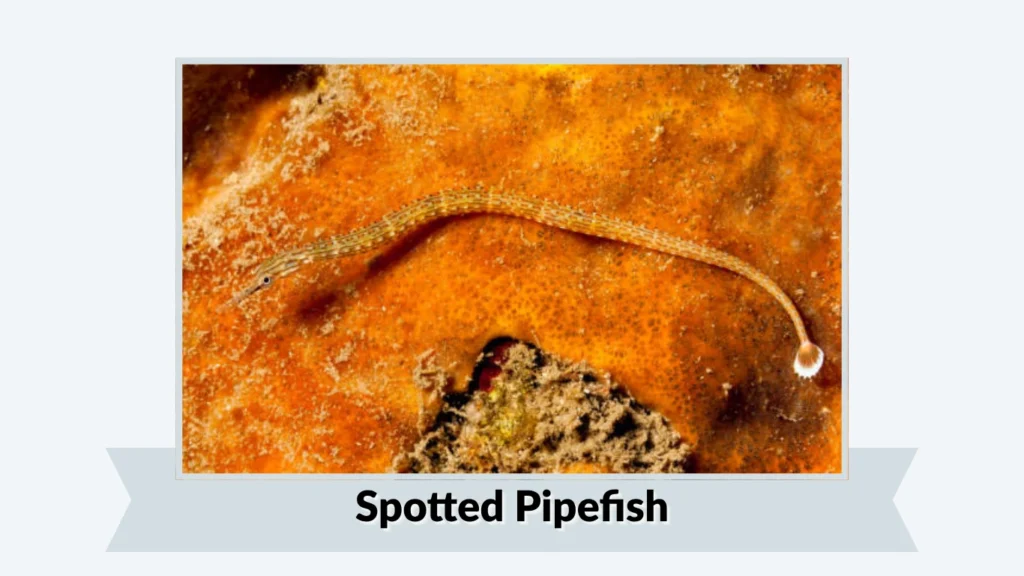
The Spotted Pipefish is a beautifully patterned species recognized for the dark spots scattered across its slender body. It is commonly found in shallow tropical and subtropical waters where it blends well among seagrass and coral habitats. Its elegant appearance and slow movement make it a fascinating marine fish.
Identification
- Long and slender body shape
- Dark spots covering the body
- Brown, green, or yellowish coloration
- Narrow tubular snout
- Small dorsal fin near the tail
- Usually grows up to 7 inches long
- Thin and flexible tail
Habitat
Spotted Pipefish inhabit seagrass beds, coral reefs, lagoons, and shallow coastal waters. They prefer calm marine environments with dense vegetation and reef structures that provide shelter and camouflage.
Diet
This species mainly feeds on tiny crustaceans, plankton, and copepods. It captures prey by slowly approaching and sucking small organisms into its narrow mouth.
Behavior
Spotted Pipefish are shy and peaceful swimmers that spend much of their time hidden among marine plants and corals. Their spotted body pattern helps them blend naturally into their surroundings and avoid predators.
Reproduction
The male Spotted Pipefish carries fertilized eggs on a specialized brood area beneath the body. The eggs remain attached and protected until the young hatch and begin independent life.
FAQs
What do pipefish eat?
Pipefish mainly eat tiny crustaceans, plankton, copepods, and small shrimp. They use their long tubular snouts to suck prey into their mouths quickly and efficiently while moving slowly through the water.
Where do pipefish live?
Pipefish are commonly found in shallow coastal waters, coral reefs, lagoons, estuaries, and seagrass beds. Most species prefer calm environments with plenty of vegetation for camouflage and protection.
Are pipefish related to seahorses?
Yes, pipefish are closely related to seahorses. Both belong to the Syngnathidae family and share similar features such as elongated snouts, armored bodies, and unique reproductive behavior.
Do male pipefish carry eggs?
Yes, male pipefish carry and protect the eggs after mating. Females deposit eggs onto a brood pouch or protected area on the male’s body, where the eggs remain until hatching.
Are pipefish dangerous to humans?
No, pipefish are harmless to humans. They are peaceful marine creatures that do not bite or attack people. Most species are shy and spend their time hiding among seagrass and coral reefs.