
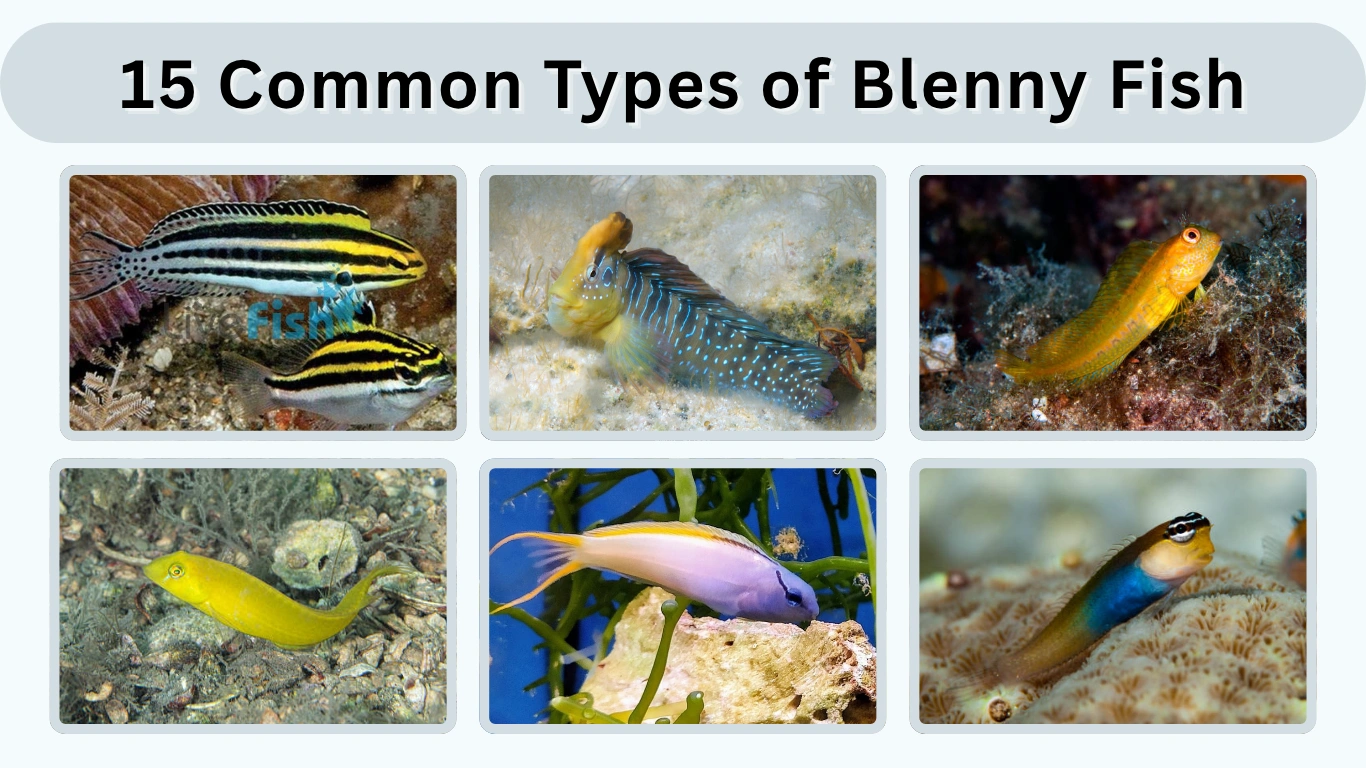
Blenny fish are small, active marine species loved by aquarium enthusiasts for their unique personalities, colorful appearances, and algae-grazing behavior. Found mainly in coral reefs and rocky coastal waters, blennies come in many fascinating shapes and patterns. Some species spend their time perched on rocks, while others actively swim throughout the aquarium searching for food. Their peaceful temperament and entertaining habits make them popular additions to reef tanks. From the bright Midas Blenny to the hardworking Lawnmower Blenny, these fish offer both beauty and practical benefits for marine aquariums and reef environments around the world.
1. Lawnmower Blenny
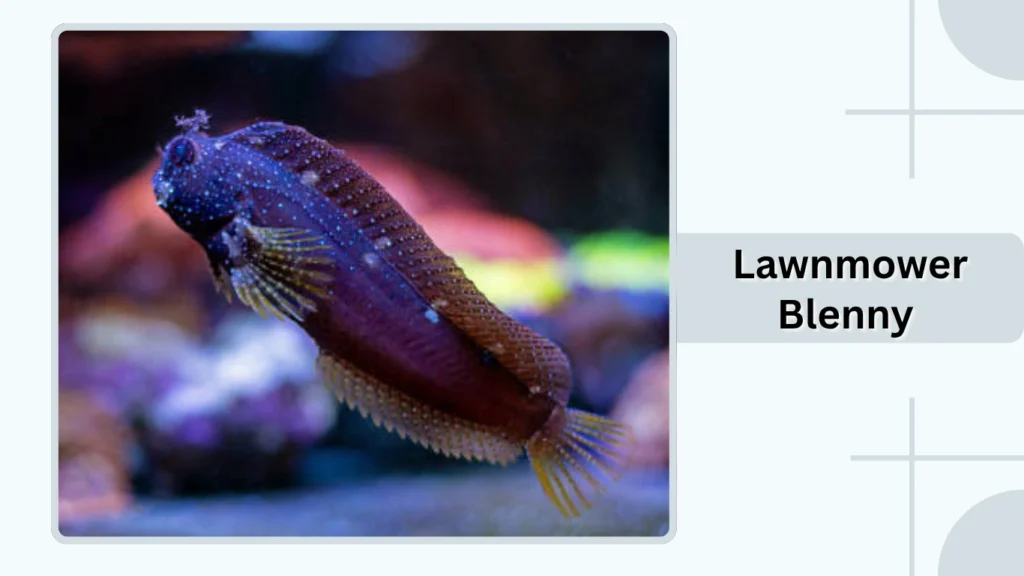
Lawnmower Blennies are popular marine fish known for their algae-eating abilities and entertaining personalities. These hardy reef fish are commonly kept in saltwater aquariums because they help control algae growth while adding active behavior to the tank. Their unique facial expressions, elongated bodies, and constant grazing habits make them one of the most recognizable blenny species among aquarium enthusiasts and reef keepers worldwide.
Identification
- Elongated body reaching around 4 to 6 inches long
- Mottled brown, green, gray, or cream coloration
- Large eyes positioned high on the head
- Blunt head with wide mouth for grazing algae
- Small tentacle-like cirri above the eyes
- Long continuous dorsal fin along the back
- Frequently seen resting on rocks or substrate
Habitat
Lawnmower Blennies naturally inhabit coral reefs and rocky coastal areas in the Indo-Pacific region. They prefer environments with abundant algae growth and plenty of rocky surfaces for grazing and shelter.
Diet
Their diet mainly consists of algae, microalgae, detritus, and tiny organisms found on rocks. In aquariums, they may also eat algae wafers, marine pellets, frozen foods, and vegetable-based fish foods.
Behavior
These blennies are peaceful but can become territorial toward similar-shaped fish. They spend most of their time perched on rocks while grazing continuously on algae-covered surfaces throughout the aquarium.
Aquarium Care
Lawnmower Blennies thrive in reef aquariums with stable water conditions and plenty of live rock for grazing. Tanks with natural algae growth and peaceful tank mates provide the best environment for their long-term health and activity.
2. Tailspot Blenny
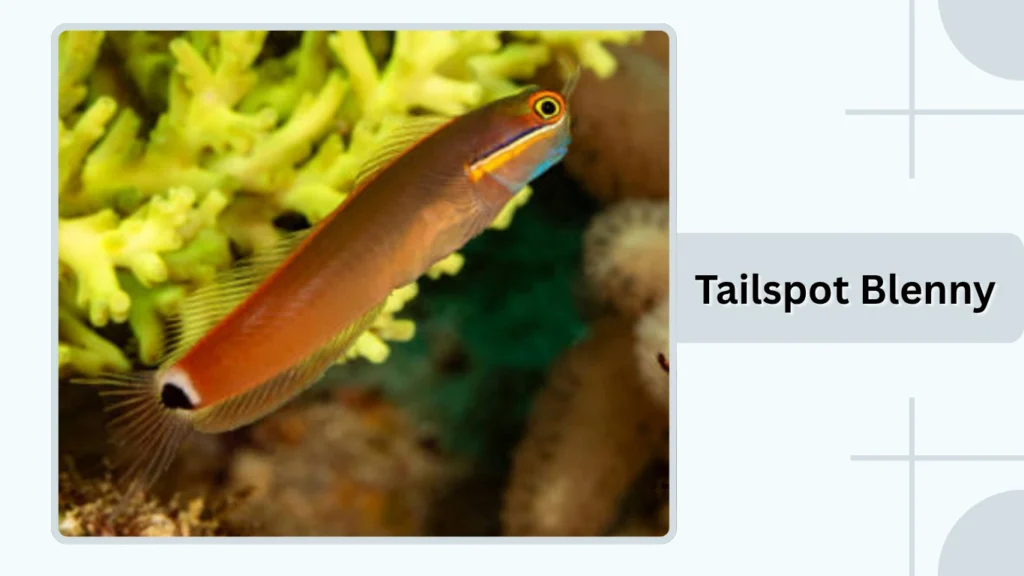
Tailspot Blennies are small and peaceful marine fish admired for their charming personality and distinctive tail marking. These reef-safe fish are highly popular in nano aquariums because of their compact size, algae-grazing behavior, and calm temperament. Their playful nature and ability to perch on rocks while observing their surroundings make them a favorite among saltwater aquarium hobbyists looking for active yet non-aggressive fish species.
Identification
- Small elongated body reaching about 2.5 inches long
- Light brown, cream, or yellowish body coloration
- Distinct black spot near the tail surrounded by blue markings
- Rounded head with large expressive eyes
- Small cirri above the eyes
- Long continuous dorsal fin along the back
- Frequently perches on rocks and coral surfaces
Habitat
Tailspot Blennies naturally inhabit shallow coral reefs and rocky coastal environments in the Indo-Pacific region. They prefer areas with crevices, live rock, and algae-covered surfaces for shelter and feeding.
Diet
Their diet mainly includes algae, detritus, and tiny marine organisms. In aquariums, they eat algae-based foods, marine pellets, frozen foods, and naturally growing algae on rocks and tank surfaces.
Behavior
These blennies are peaceful, curious, and active throughout the day. They spend much of their time grazing on algae, hopping between rocks, and watching their surroundings from elevated perches.
Aquarium Care
Tailspot Blennies thrive in nano and reef aquariums with stable water conditions and plenty of live rock. Peaceful tank mates, natural algae growth, and regular supplemental feeding help maintain their health and active behavior.
3. Bicolor Blenny
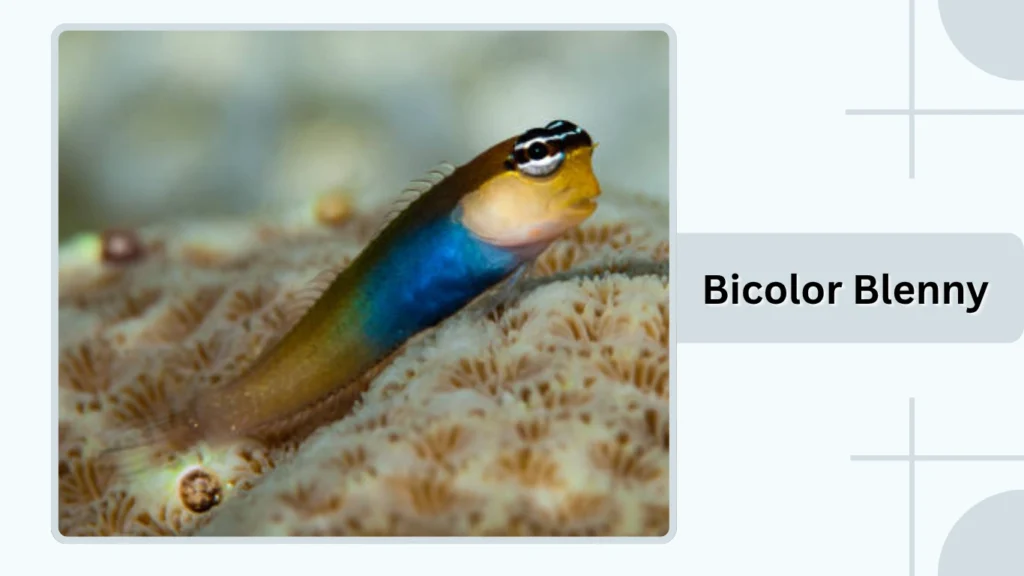
Bicolor Blennies are colorful reef fish known for their striking two-tone body coloration and energetic personality. These marine fish are popular in reef aquariums because of their algae-grazing habits and entertaining behavior. They are active perchers that often move between rocks and coral structures while searching for food. Their unique appearance, playful nature, and manageable size make them a favorite among saltwater aquarium enthusiasts.
Identification
- Elongated body reaching around 4 inches long
- Front half usually blue or purple in color
- Rear half displays bright orange or yellow coloration
- Large eyes with blunt head shape
- Small cirri located above the eyes
- Long continuous dorsal fin along the back
- Frequently seen resting on rocks and coral surfaces
Habitat
Bicolor Blennies naturally inhabit coral reefs and rocky marine environments in the Indo-Pacific region. They prefer reef areas with abundant live rock, crevices, and algae-covered surfaces for shelter and feeding.
Diet
Their diet mainly consists of algae, detritus, and tiny marine organisms. In aquariums, they eat algae-based foods, marine pellets, frozen foods, and naturally growing algae on tank surfaces.
Behavior
These blennies are active, curious, and generally peaceful fish. They spend much of their time grazing on algae and hopping between rocks, although they may show territorial behavior toward similar blenny species.
Aquarium Care
Bicolor Blennies thrive in reef aquariums with stable water quality and plenty of live rock for grazing and hiding. Tanks with natural algae growth, peaceful tank mates, and proper filtration provide the best environment for long-term care.
4. Starry Blenny
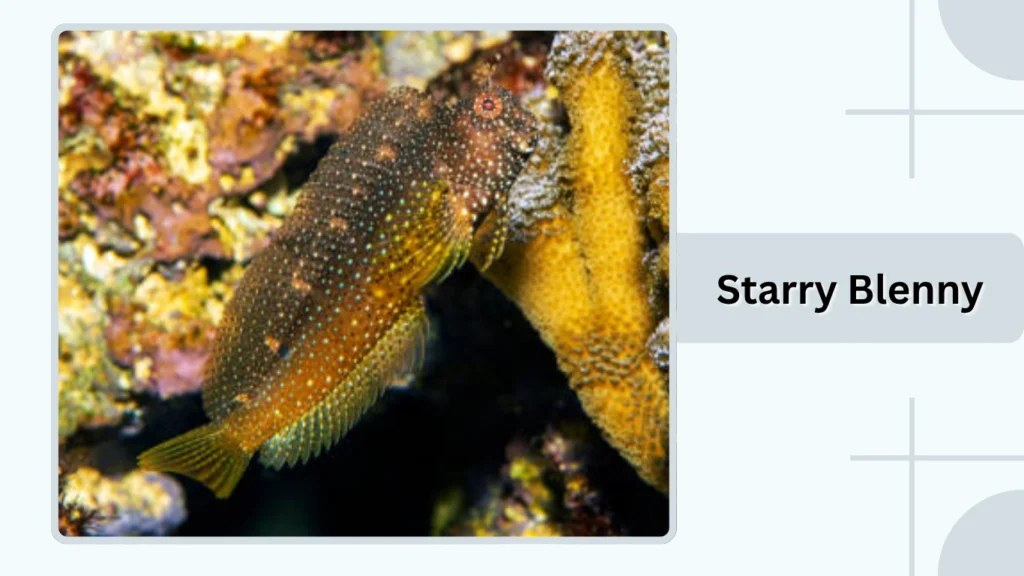
Starry Blennies are hardy marine fish recognized for their dark bodies covered with white spots that resemble stars. These reef fish are highly valued in saltwater aquariums because of their algae-eating behavior and amusing personalities. They are active perchers that spend much of their time grazing on rocks and observing their surroundings. Their unique spotted appearance and helpful role in controlling algae make them popular among reef aquarium hobbyists.
Identification
- Elongated body reaching around 5 to 6 inches long
- Dark brown or black body covered with white spots
- Large expressive eyes positioned high on the head
- Rounded head with wide grazing mouth
- Small cirri above the eyes
- Long continuous dorsal fin along the back
- Frequently perches on rocks and coral surfaces
Habitat
Starry Blennies naturally inhabit rocky reefs and shallow coastal waters in the Indo-Pacific region. They prefer reef areas with abundant algae growth, crevices, and rocky surfaces for shelter and feeding.
Diet
Their diet mainly includes algae, detritus, and tiny organisms found on reef surfaces. In aquariums, they also eat algae wafers, marine pellets, frozen foods, and vegetable-based preparations.
Behavior
These blennies are active, curious, and generally peaceful fish. They spend most of their time grazing on algae and hopping between rocks, although they may become territorial toward similar blennies in smaller tanks.
Aquarium Care
Starry Blennies thrive in reef aquariums with stable water conditions and plenty of live rock for grazing. Natural algae growth, peaceful tank mates, and secure hiding places help maintain their health and natural behavior.
5. Midas Blenny
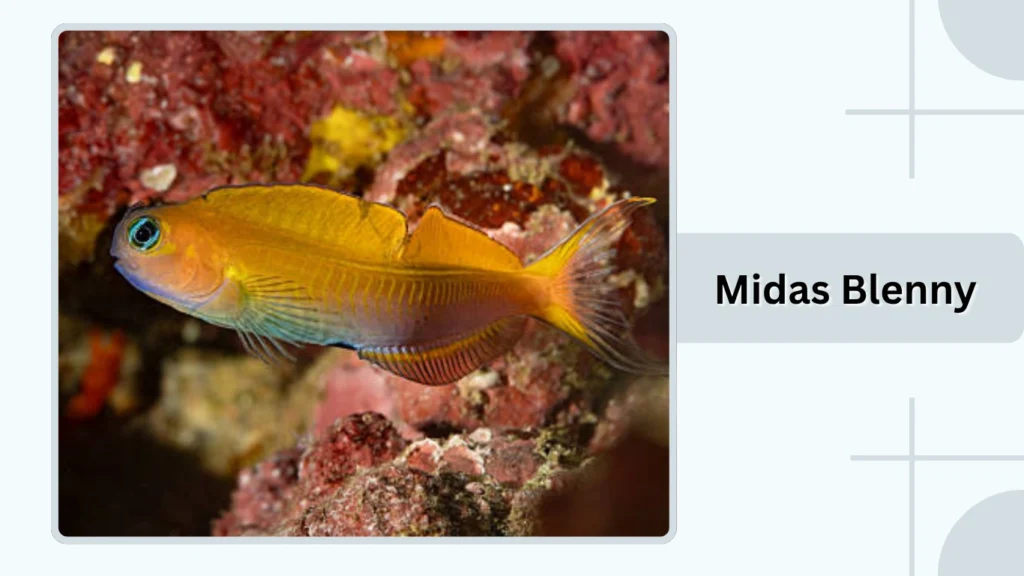
Midas Blennies are bright golden marine fish admired for their graceful swimming style and vibrant coloration. Unlike many blennies that perch on rocks, these fish spend much of their time swimming openly in the water column. They are highly popular in reef aquariums because of their peaceful nature, active behavior, and striking appearance. Their elegant movements and bold yellow color make them one of the most eye-catching blenny species available.
Identification
- Elongated body reaching around 5 to 6 inches long
- Bright yellow, gold, or orange body coloration
- Large eyes with pointed facial features
- Long continuous dorsal fin along the back
- Smooth slender body shape
- Small mouth adapted for plankton feeding
- Active open-water swimming behavior
Habitat
Midas Blennies naturally inhabit coral reefs and rocky coastal environments in the Indo-Pacific region. They often live in crevices and holes within reef structures where they can quickly retreat for safety.
Diet
Their diet mainly includes zooplankton, tiny crustaceans, and small marine organisms. In aquariums, they readily eat mysis shrimp, brine shrimp, marine pellets, and finely chopped seafood.
Behavior
These blennies are peaceful, energetic, and highly active swimmers. They often hover in the water column and quickly retreat into rock crevices when startled or threatened.
Aquarium Care
Midas Blennies thrive in reef aquariums with stable water quality and plenty of live rock for shelter. Peaceful tank mates, open swimming space, and regular feeding help support their health and vibrant coloration.
6. Forktail Blenny
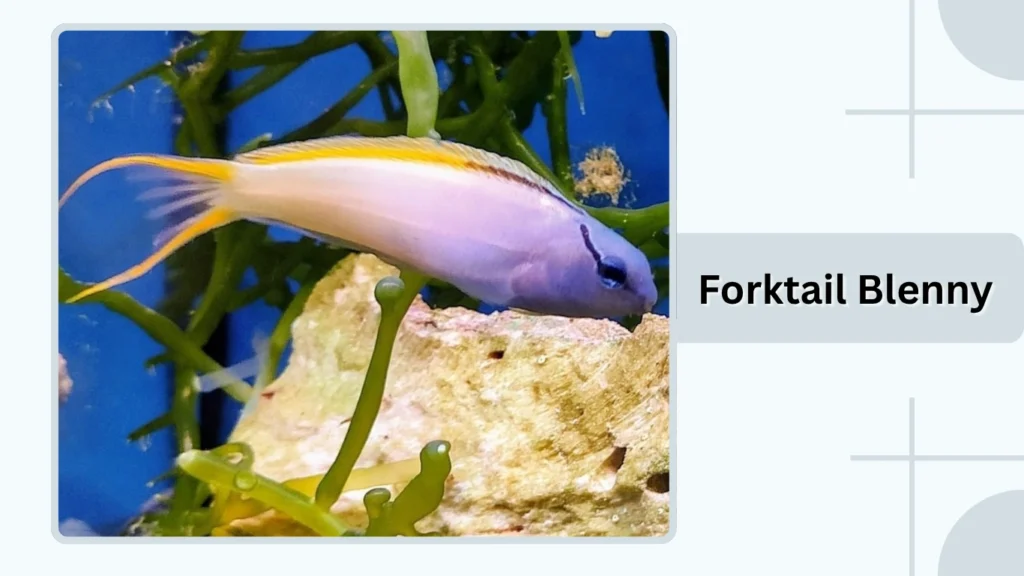
Forktail Blennies are small reef fish known for their forked tail fins and active grazing behavior. These peaceful marine fish are popular in reef aquariums because they help control algae growth while displaying entertaining personalities. They are often seen perched on rocks or darting between crevices in search of food. Their unique tail shape, compact size, and reef-safe nature make them attractive additions to saltwater aquariums.
Identification
- Small elongated body reaching around 3 to 4 inches long
- Brown, gray, or mottled body coloration
- Distinct forked tail fin
- Large eyes positioned high on the head
- Rounded head with small grazing mouth
- Long continuous dorsal fin along the back
- Frequently rests on rocks and coral surfaces
Habitat
Forktail Blennies naturally inhabit shallow coral reefs and rocky marine environments in the Indo-Pacific region. They prefer areas with live rock, crevices, and algae-covered surfaces for shelter and feeding.
Diet
Their diet mainly consists of algae, detritus, plankton, and tiny marine organisms. In aquariums, they eat algae wafers, marine pellets, frozen foods, and naturally growing algae within the tank.
Behavior
These blennies are peaceful, active, and curious fish that spend much of their time grazing on rocks and exploring reef structures. They may occasionally display territorial behavior toward similar blenny species.
Aquarium Care
Forktail Blennies thrive in reef aquariums with stable water quality and abundant live rock for grazing and hiding. Peaceful tank mates, natural algae growth, and proper filtration help maintain their health and activity levels.
7. Sailfin Blenny
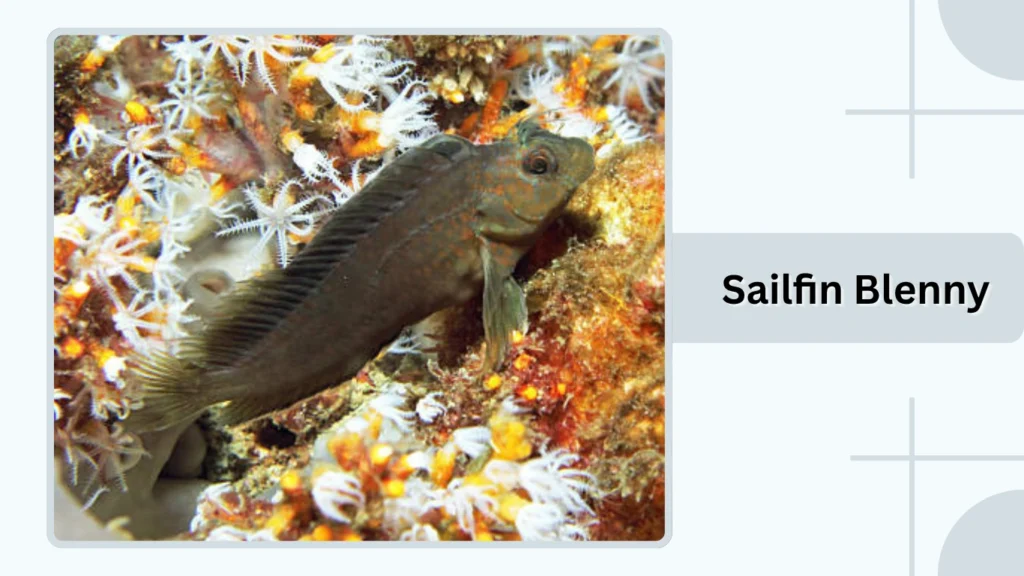
Sailfin Blennies are distinctive marine fish recognized for their large dorsal fins and constant algae-grazing behavior. These reef-safe fish are popular in saltwater aquariums because they help control algae while displaying amusing personalities. They spend much of their time perched on rocks, carefully watching their surroundings before hopping to another location. Their unique appearance and active behavior make them fascinating additions to reef aquariums.
Identification
- Elongated body reaching around 5 inches long
- Brown, gray, or mottled body coloration
- Large sail-like dorsal fin along the back
- Rounded head with wide grazing mouth
- Large expressive eyes positioned high on the head
- Small cirri above the eyes
- Frequently perches on rocks and coral surfaces
Habitat
Sailfin Blennies naturally inhabit shallow coral reefs and rocky coastal environments in the Indo-Pacific region. They prefer reef areas with abundant algae growth, rocky crevices, and live rock for shelter.
Diet
Their diet mainly includes algae, detritus, and tiny organisms found on reef surfaces. In aquariums, they eat algae wafers, vegetable-based foods, marine pellets, and naturally growing algae within the tank.
Behavior
These blennies are active, curious, and generally peaceful fish. They spend most of their time grazing on algae-covered rocks and may occasionally become territorial toward other blennies with similar appearances.
Aquarium Care
Sailfin Blennies thrive in reef aquariums with stable water conditions and plenty of live rock for grazing and hiding. Tanks with natural algae growth and peaceful tank mates provide the best environment for long-term health and activity.
8. Ember Blenny
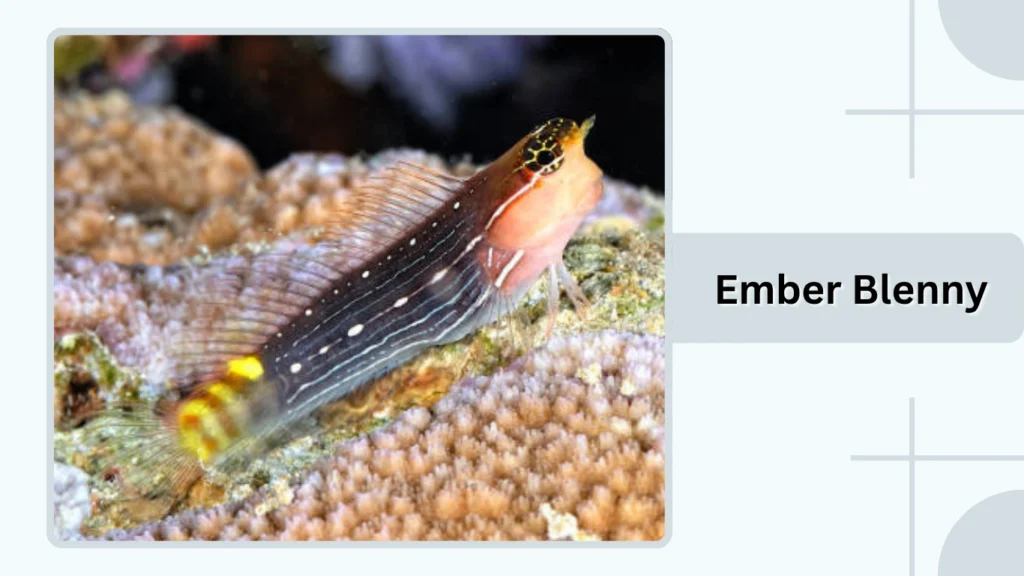
Ember Blennies are small and colorful reef fish admired for their fiery orange-red coloration and peaceful personality. These marine fish are popular in nano and reef aquariums because of their compact size, active behavior, and compatibility with other calm species. They spend much of their time perching on rocks and exploring reef structures while searching for food. Their vivid coloration and curious nature make them attractive additions to saltwater aquariums.
Identification
- Small elongated body reaching around 2 to 3 inches long
- Bright orange, red, or ember-colored body
- Large eyes positioned high on the head
- Rounded head with small grazing mouth
- Long continuous dorsal fin along the back
- Smooth body with fine scales
- Frequently perches on rocks and coral surfaces
Habitat
Ember Blennies naturally inhabit shallow coral reefs and rocky marine environments in tropical ocean regions. They prefer reef areas with crevices, live rock, and sheltered spaces for hiding and feeding.
Diet
Their diet mainly consists of algae, detritus, plankton, and tiny marine organisms. In aquariums, they eat algae-based foods, marine pellets, frozen foods, and naturally growing algae on rock surfaces.
Behavior
These blennies are peaceful, curious, and active throughout the day. They often perch on elevated surfaces while observing their surroundings and may occasionally display mild territorial behavior toward similar blenny species.
Aquarium Care
Ember Blennies thrive in reef aquariums with stable water quality and plenty of live rock for grazing and shelter. Peaceful tank mates, natural algae growth, and regular feeding help support their long-term health and vibrant coloration.
9. Canary Blenny
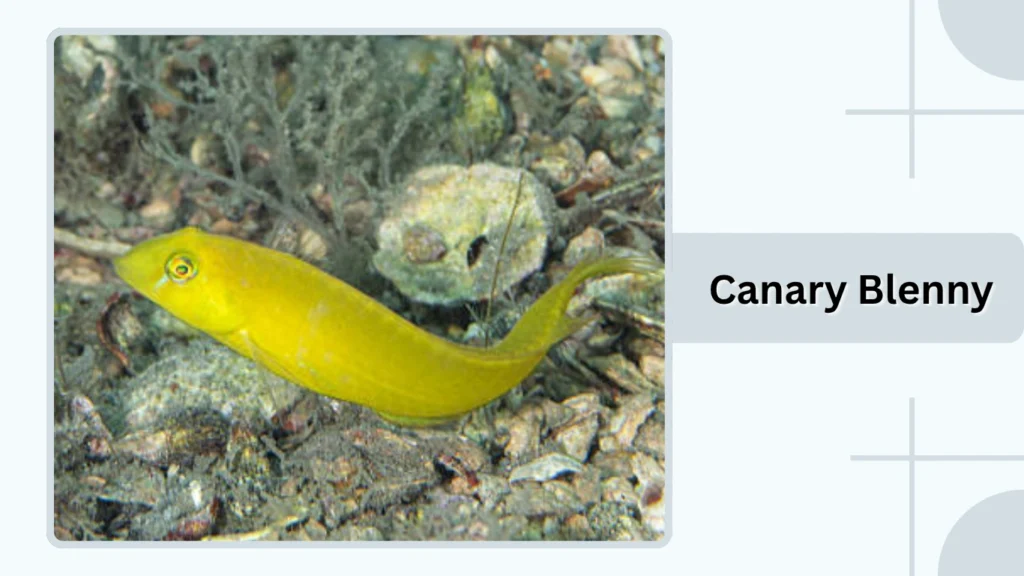
Canary Blennies are bright yellow marine fish known for their bold coloration and active personalities. These reef-safe fish are highly popular in saltwater aquariums because of their peaceful nature and eye-catching appearance. They spend much of their time swimming near rocks and coral structures while searching for food and shelter. Their vivid yellow color and energetic behavior make them standout additions to reef aquarium environments.
Identification
- Elongated body reaching around 4 to 5 inches long
- Bright yellow or golden body coloration
- Large expressive eyes positioned high on the head
- Rounded head with small mouth
- Long continuous dorsal fin along the back
- Smooth slender body shape
- Active swimming and perching behavior
Habitat
Canary Blennies naturally inhabit coral reefs and rocky marine environments in the Indo-Pacific region. They prefer reef areas with live rock, caves, and crevices that provide shelter and safe resting spots.
Diet
Their diet mainly includes plankton, tiny crustaceans, and small marine organisms. In aquariums, they eat mysis shrimp, brine shrimp, marine pellets, frozen foods, and finely chopped seafood.
Behavior
These blennies are peaceful, active, and curious fish that spend much of their time exploring reef structures. They usually coexist well with other calm tank mates and rarely show aggressive behavior.
Aquarium Care
Canary Blennies thrive in reef aquariums with stable water quality and plenty of live rock for shelter. Open swimming space, peaceful tank mates, and regular feeding help maintain their health and bright coloration.
10. Linear Blenny
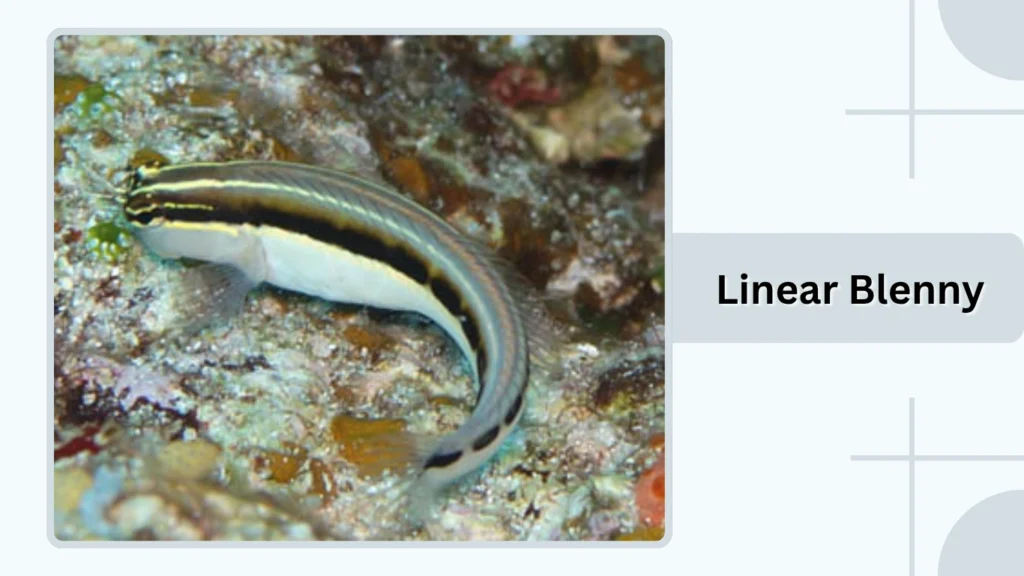
Linear Blennies are slender reef fish recognized for the horizontal lines running across their bodies and their active grazing behavior. These peaceful marine fish are popular in reef aquariums because they help control algae while displaying interesting personalities. They are often seen resting on rocks or moving through coral structures in search of food. Their streamlined appearance and calm nature make them attractive additions to saltwater aquariums.
Identification
- Elongated slender body reaching around 4 inches long
- Brown, cream, or gray body with horizontal linear markings
- Large eyes positioned high on the head
- Rounded head with small grazing mouth
- Long continuous dorsal fin along the back
- Smooth body with fine scales
- Frequently perches on rocks and reef surfaces
Habitat
Linear Blennies naturally inhabit coral reefs and rocky coastal environments in tropical marine regions. They prefer reef areas with abundant algae growth, rocky crevices, and live rock for shelter and feeding.
Diet
Their diet mainly consists of algae, detritus, plankton, and tiny marine organisms. In aquariums, they eat algae-based foods, marine pellets, frozen foods, and naturally growing algae on tank surfaces.
Behavior
These blennies are peaceful, curious, and active during the day. They spend much of their time grazing on algae-covered rocks and exploring reef structures while avoiding aggressive interactions with other fish.
Aquarium Care
Linear Blennies thrive in reef aquariums with stable water conditions and plenty of live rock for grazing and hiding. Peaceful tank mates, natural algae growth, and regular feeding help support their long-term health and active behavior.
11. Horned Blenny
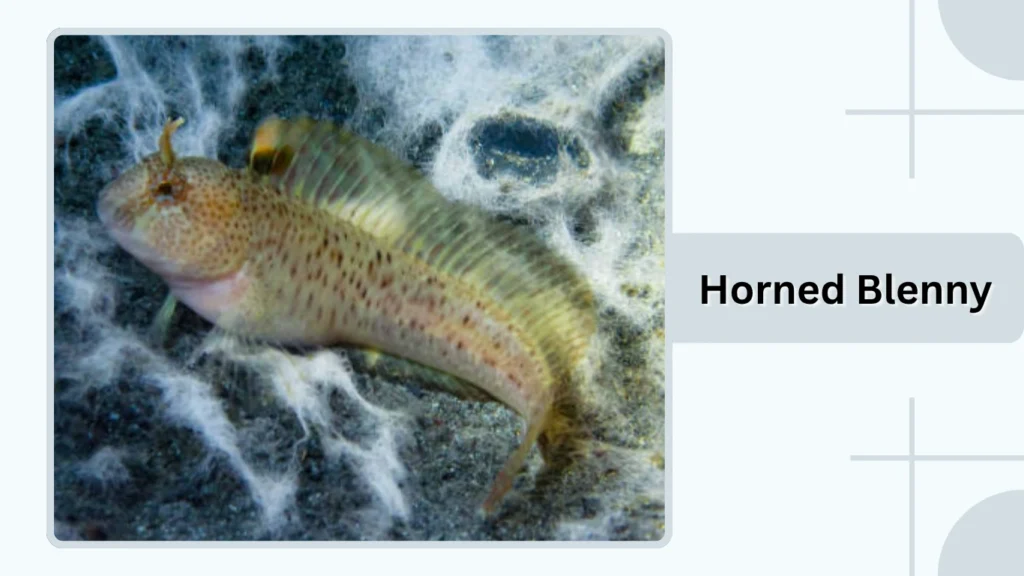
Horned Blennies are unusual-looking marine fish known for the horn-like cirri located above their eyes. These reef fish are admired for their distinctive appearance, active behavior, and algae-grazing habits. They are commonly kept in saltwater aquariums because of their entertaining personalities and ability to adapt well to reef environments. Their unique facial features and curious nature make them fascinating additions to marine aquarium setups.
Identification
- Elongated body reaching around 4 to 5 inches long
- Brown, gray, or mottled body coloration
- Distinct horn-like cirri above the eyes
- Large expressive eyes positioned high on the head
- Rounded head with small grazing mouth
- Long continuous dorsal fin along the back
- Frequently rests on rocks and coral surfaces
Habitat
Horned Blennies naturally inhabit shallow coral reefs and rocky coastal waters in tropical marine regions. They prefer reef environments with crevices, live rock, and algae-covered surfaces for feeding and shelter.
Diet
Their diet mainly consists of algae, detritus, and tiny marine organisms found on reef surfaces. In aquariums, they eat algae wafers, marine pellets, frozen foods, and naturally growing algae.
Behavior
These blennies are active, curious, and generally peaceful fish. They spend most of their time grazing on rocks, hopping between reef structures, and observing their surroundings from elevated perches.
Aquarium Care
Horned Blennies thrive in reef aquariums with stable water quality and abundant live rock for grazing and hiding. Peaceful tank mates, natural algae growth, and proper filtration help maintain their health and natural behavior.
12. Redlip Blenny
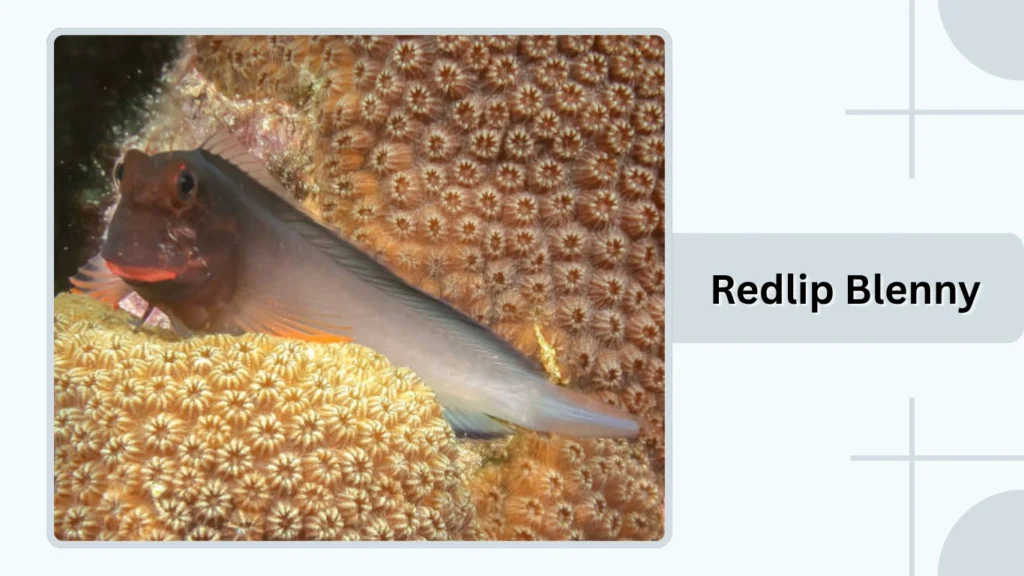
Redlip Blennies are colorful marine fish recognized for their bright red lips and active reef behavior. These peaceful blennies are popular in saltwater aquariums because of their unique appearance and constant algae-grazing habits. They are often seen perched on rocks while observing their surroundings or moving across reef surfaces in search of food. Their distinctive facial markings and entertaining personality make them attractive additions to reef aquariums.
Identification
- Elongated body reaching around 4 inches long
- Brown, gray, or mottled body coloration
- Bright red or orange lips around the mouth
- Large expressive eyes positioned high on the head
- Rounded head with grazing mouth
- Long continuous dorsal fin along the back
- Frequently perches on rocks and coral surfaces
Habitat
Redlip Blennies naturally inhabit shallow coral reefs and rocky marine environments in tropical ocean regions. They prefer reef areas with abundant live rock, crevices, and algae-covered surfaces for feeding and shelter.
Diet
Their diet mainly consists of algae, detritus, and tiny marine organisms found on reef surfaces. In aquariums, they eat algae wafers, vegetable-based foods, marine pellets, and naturally growing algae.
Behavior
These blennies are peaceful, curious, and active throughout the day. They spend much of their time grazing on algae-covered rocks and may occasionally display territorial behavior toward similar blenny species.
Aquarium Care
Redlip Blennies thrive in reef aquariums with stable water quality and plenty of live rock for grazing and hiding. Natural algae growth, peaceful tank mates, and regular feeding help maintain their health and active behavior.
13. Orange-Spotted Blenny
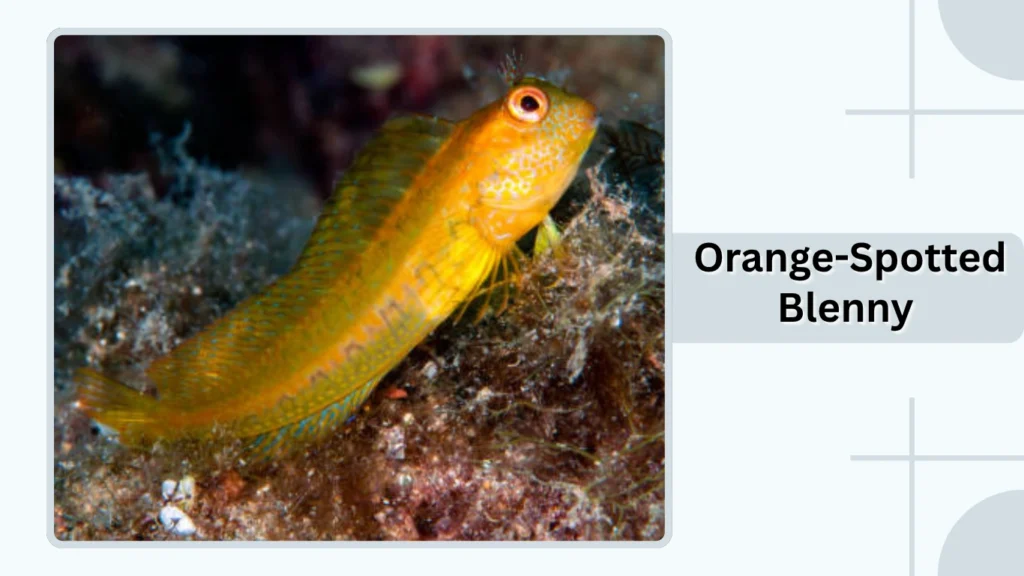
Orange-Spotted Blennies are attractive marine fish known for the bright orange spots scattered across their bodies and fins. These peaceful reef fish are popular in saltwater aquariums because of their algae-grazing habits and entertaining personalities. They often perch on rocks while watching their surroundings and move actively around the tank in search of food. Their colorful markings and curious behavior make them appealing additions to reef aquariums.
Identification
- Elongated body reaching around 4 to 5 inches long
- Brown, gray, or cream body coloration
- Bright orange spots covering the body and fins
- Large expressive eyes positioned high on the head
- Rounded head with small grazing mouth
- Long continuous dorsal fin along the back
- Frequently rests on rocks and coral surfaces
Habitat
Orange-Spotted Blennies naturally inhabit shallow coral reefs and rocky marine environments in tropical ocean regions. They prefer reef areas with abundant live rock, algae-covered surfaces, and crevices for shelter.
Diet
Their diet mainly consists of algae, detritus, and tiny marine organisms found on reef surfaces. In aquariums, they eat algae wafers, marine pellets, frozen foods, and naturally growing algae within the tank.
Behavior
These blennies are active, curious, and generally peaceful fish. They spend most of their time grazing on algae-covered rocks and exploring reef structures while occasionally defending small territories from similar species.
Aquarium Care
Orange-Spotted Blennies thrive in reef aquariums with stable water conditions and plenty of live rock for grazing and shelter. Peaceful tank mates, proper filtration, and natural algae growth help support their long-term health and activity.
14. Peacock Blenny
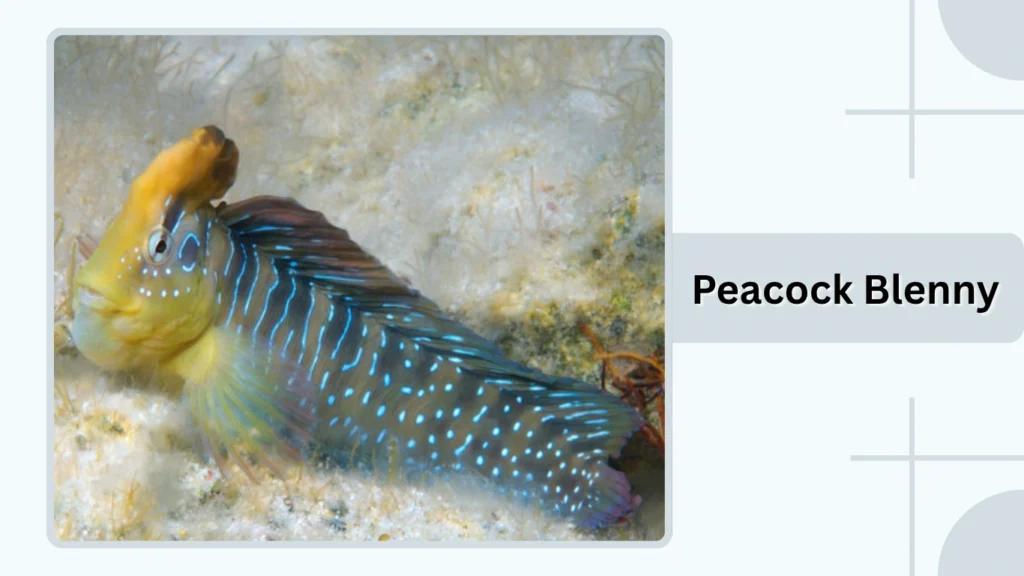
Peacock Blennies are colorful marine fish admired for their vibrant patterns and dramatic fin displays. These active reef fish are popular in saltwater aquariums because of their striking appearance and entertaining personalities. Males become especially colorful during breeding periods, displaying bright markings to attract mates. Their unique patterns, curious behavior, and active lifestyle make them fascinating additions to marine aquarium environments.
Identification
- Elongated body reaching around 4 to 5 inches long
- Brown, green, orange, or blue body coloration with patterns
- Large expressive eyes positioned high on the head
- Prominent dorsal fin with colorful markings
- Small cirri above the eyes
- Rounded head with small grazing mouth
- Frequently perches on rocks and reef surfaces
Habitat
Peacock Blennies naturally inhabit rocky coastal reefs and shallow marine waters in the Atlantic Ocean and Mediterranean Sea. They prefer areas with crevices, rocks, and algae-covered surfaces for feeding and shelter.
Diet
Their diet mainly consists of algae, detritus, plankton, and tiny marine organisms. In aquariums, they eat algae-based foods, marine pellets, frozen foods, and naturally growing algae on tank surfaces.
Behavior
These blennies are active, curious, and generally peaceful fish. Males may become territorial during breeding periods, especially around nesting sites, but they usually coexist well with other non-aggressive tank mates.
Aquarium Care
Peacock Blennies thrive in reef aquariums with stable water quality and abundant live rock for grazing and hiding. Natural algae growth, peaceful tank mates, and proper filtration help maintain their health and vibrant coloration.
15. Fang Blenny
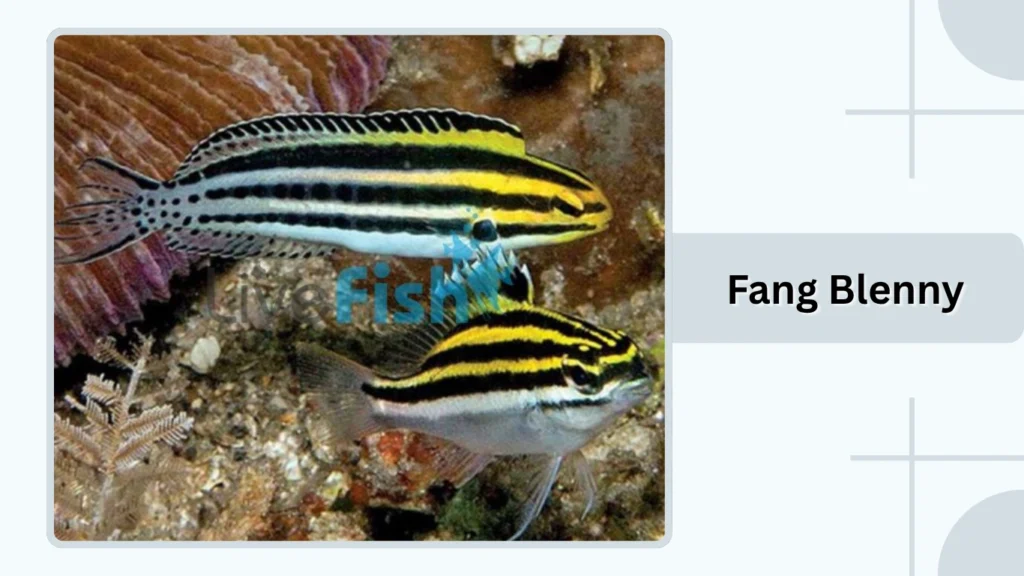
Fang Blennies are unique marine fish known for their elongated canine-like teeth and bold personalities. These reef fish are popular in saltwater aquariums because of their striking appearance, active behavior, and fascinating defense mechanisms. Some species can mimic cleaner fish to avoid predators or approach other fish safely. Their colorful bodies, quick movements, and unusual fangs make them one of the most interesting blenny species in marine aquariums.
Identification
- Elongated body reaching around 3 to 5 inches long
- Bright blue, black, yellow, or striped body coloration depending on species
- Distinct fang-like teeth in the lower jaw
- Large expressive eyes positioned high on the head
- Long continuous dorsal fin along the back
- Slender body with smooth scales
- Fast swimming and darting movements
Habitat
Fang Blennies naturally inhabit coral reefs and rocky coastal environments in tropical Indo-Pacific waters. They prefer reef areas with crevices, caves, and live rock that provide shelter and protection.
Diet
Their diet mainly consists of plankton, tiny crustaceans, and small marine organisms. In aquariums, they eat mysis shrimp, brine shrimp, marine pellets, frozen foods, and finely chopped seafood.
Behavior
These blennies are active, curious, and generally peaceful toward other fish species. Some Fang Blennies use mimicry for protection, while others may display territorial behavior toward similar-shaped fish in smaller aquariums.
Aquarium Care
Fang Blennies thrive in reef aquariums with stable water conditions and plenty of live rock for hiding places. Peaceful tank mates, open swimming space, and regular feeding help maintain their health and active behavior.
FAQs
Are blenny fish good for beginner aquariums?
Many blenny fish are excellent for beginners because they are hardy, peaceful, and easy to care for in stable marine aquariums. Species like the Lawnmower Blenny and Tailspot Blenny are especially popular among new saltwater aquarium keepers.
What do blenny fish eat?
Blenny fish mainly eat algae, detritus, plankton, and tiny marine organisms. In aquariums, they may consume algae wafers, frozen foods, marine pellets, and naturally growing algae depending on the species.
Can blenny fish live with other fish?
Most blenny fish are peaceful and can live with other non-aggressive marine species. However, some blennies may become territorial toward similar-looking fish or other blennies when kept in smaller aquariums.
Do blenny fish help control algae?
Yes, many blenny species are excellent algae grazers and help keep aquarium rocks and surfaces cleaner. Lawnmower Blennies and Starry Blennies are especially well known for their algae-eating behavior.
How long do blenny fish live?
Blenny fish can live between 3 to 8 years depending on the species, aquarium conditions, and overall care. Stable water quality, proper nutrition, and a stress-free environment help support a longer lifespan.