
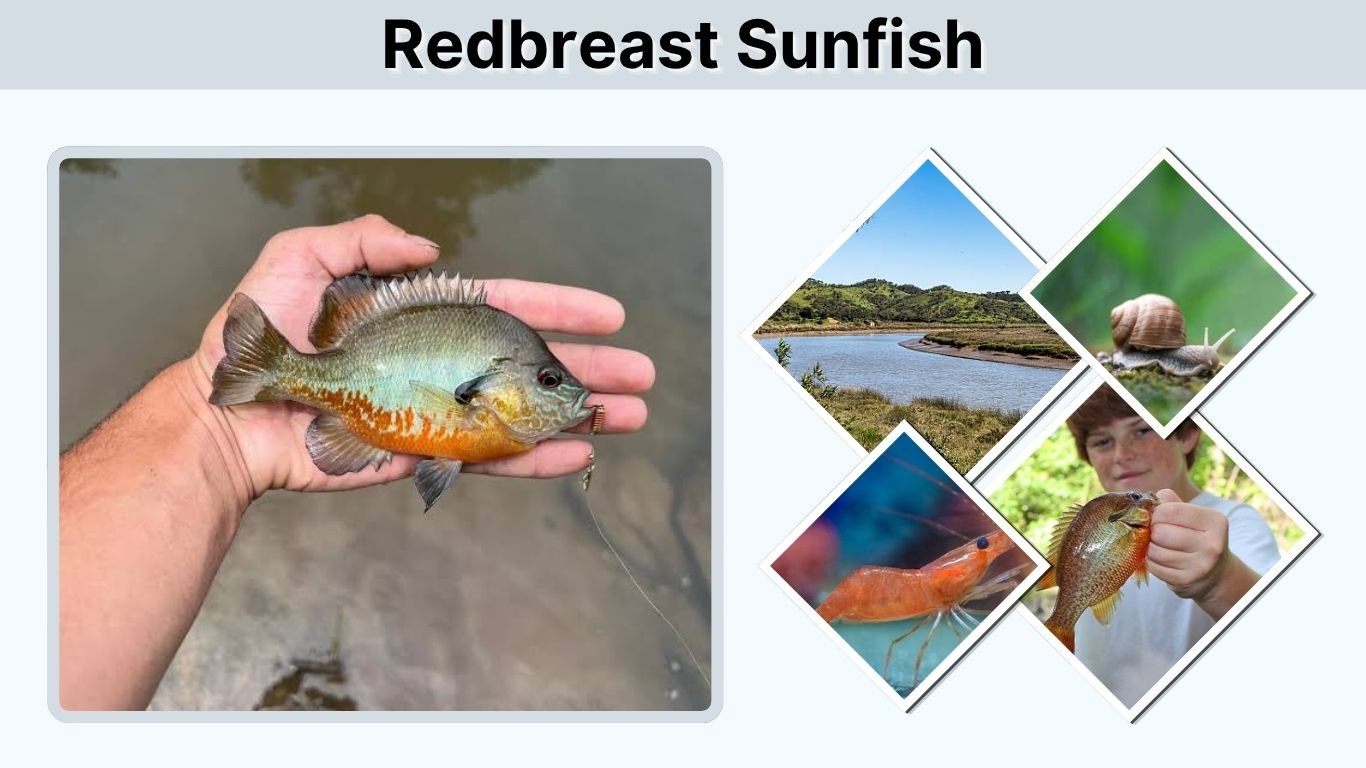
The redbreast sunfish (Lepomis auritus) is a colorful freshwater fish recognized by its bright orange-red belly, elongated ear flap, and attractive blue facial markings. Native to eastern North America, this species commonly inhabits rivers, streams, and slow-moving freshwater environments. Redbreast sunfish are popular among anglers because of their aggressive feeding behavior, beautiful appearance, and excellent eating quality. However, they are frequently confused with bluegill, pumpkinseed, and longear sunfish. This guide explores redbreast sunfish identification, size, habitat, diet, spawning behavior, lifespan, world records, and fishing tips.
Redbreast Sunfish Identification and Characteristics
Redbreast sunfish belong to the family Centrarchidae, which includes bluegill, largemouth bass, and other freshwater sunfish. Their elongated bodies and brilliant coloration make them relatively easy to recognize. Unlike redear sunfish, which have a reddish border around the ear flap, redbreast sunfish typically display an extended black ear flap without a prominent red margin.
Redbreast Sunfish Identification
- Scientific Name: Lepomis auritus
- Family: Centrarchidae
- Common Names: Redbreast Sunfish, Redbelly, Redbreast Bream
- Body Shape: Deep, laterally compressed, and somewhat elongated
- Body Color: Olive-green to bluish-green with an orange-red underside
- Ear Flap: Long, narrow, and predominantly black
- Face: Distinctive blue or turquoise lines
- Pectoral Fins: Short and rounded
- Typical Size: Approximately 4–9 inches
- Lifespan: Up to approximately eight years
Male vs. Female Redbreast Sunfish
Male redbreast sunfish generally display brighter coloration, particularly during the breeding season.
Their breasts and bellies may become vivid orange or deep red, while females usually have lighter yellow-orange undersides.
Males may also possess more prominent ear flaps.
Juvenile redbreast sunfish have subdued markings, making them more difficult to distinguish from other young sunfish species.
Redbreast Sunfish Size and Lifespan
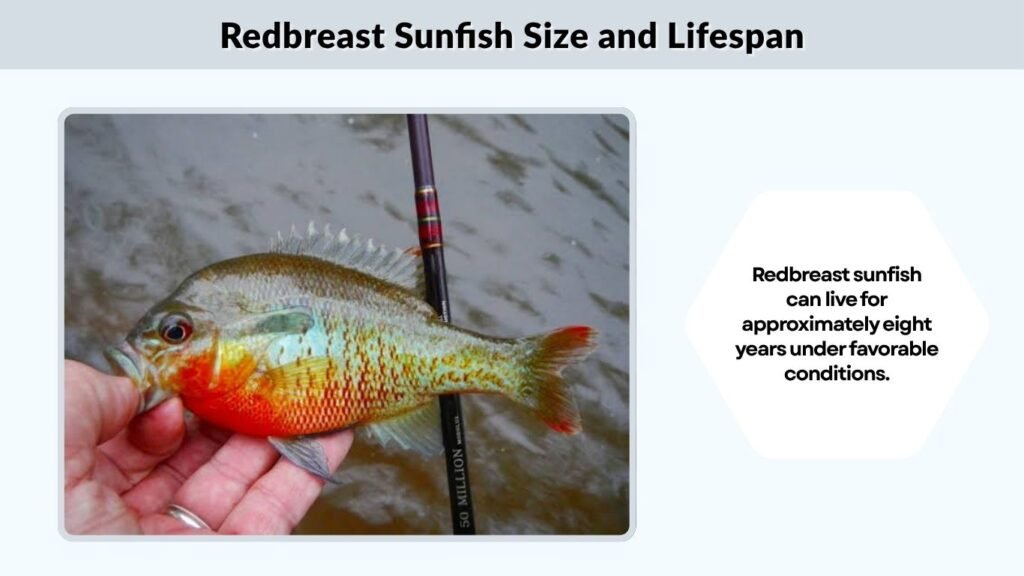
Redbreast sunfish are relatively small freshwater fish, although their maximum size varies considerably depending on habitat conditions. Growth is influenced by water temperature, food availability, competition, and population density. Fish inhabiting productive rivers may grow larger than individuals living in less favorable environments. Their relatively compact bodies make them popular among recreational anglers targeting smaller freshwater species.
How Big Do Redbreast Sunfish Get?
Adult redbreast sunfish commonly measure between 4 and 9 inches long.
According to the South Carolina Department of Natural Resources, average individuals weigh approximately 3–8 ounces.
However, exceptionally large specimens may exceed 10 inches and weigh more than one pound.
Redbreast sunfish generally grow more slowly than some other sunfish species.
In Florida, individuals may require approximately two to three years to reach six inches in length.
Redbreast Sunfish Lifespan
Redbreast sunfish can live for approximately eight years under favorable conditions.
Their longevity depends on habitat quality, available food, disease, predation, and fishing pressure.
Many wild individuals do not reach their maximum potential lifespan.
Young fish grow rapidly during favorable seasons before gradually reaching reproductive maturity, usually around two or three years of age.
Redbreast Sunfish Habitat and Distribution
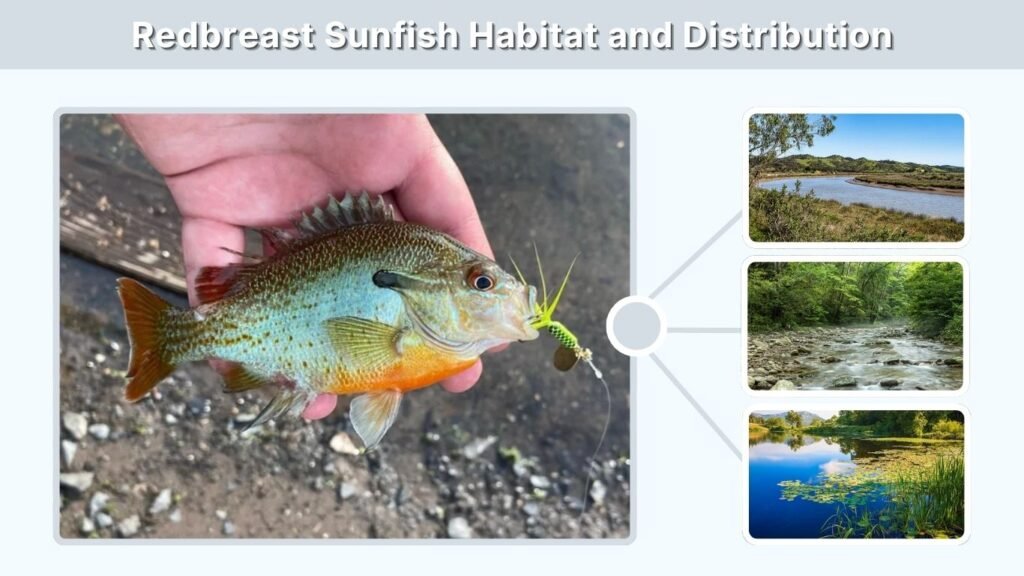
Redbreast sunfish naturally inhabit freshwater systems across eastern North America. Unlike bluegill, which frequently thrive in lakes and ponds, redbreast sunfish are particularly associated with flowing rivers and streams. They prefer environments containing suitable shelter, sandy or gravelly bottoms, and abundant aquatic insects. Habitat conditions significantly influence their feeding behavior, growth, reproduction, and seasonal movements.
Where Do Redbreast Sunfish Live?
Redbreast sunfish are native to eastern North America, with populations extending from eastern Canada through the eastern United States.
They occur naturally in many Atlantic coastal river systems and southeastern freshwater habitats.
States such as Florida, Georgia, South Carolina, North Carolina, and Virginia support well-known redbreast populations.
The species has also been introduced into waters outside its original range.
Preferred Redbreast Sunfish Habitat
Redbreast sunfish prefer streams, rivers, and backwaters containing relatively slow-moving water.
They commonly gather around submerged logs, rocky banks, stumps, undercut shorelines, and other underwater structures.
Sandy or gravelly bottoms provide suitable feeding and spawning habitats.
Although they occasionally inhabit reservoirs and ponds, flowing freshwater environments are particularly important for this species.
What Do Redbreast Sunfish Eat?
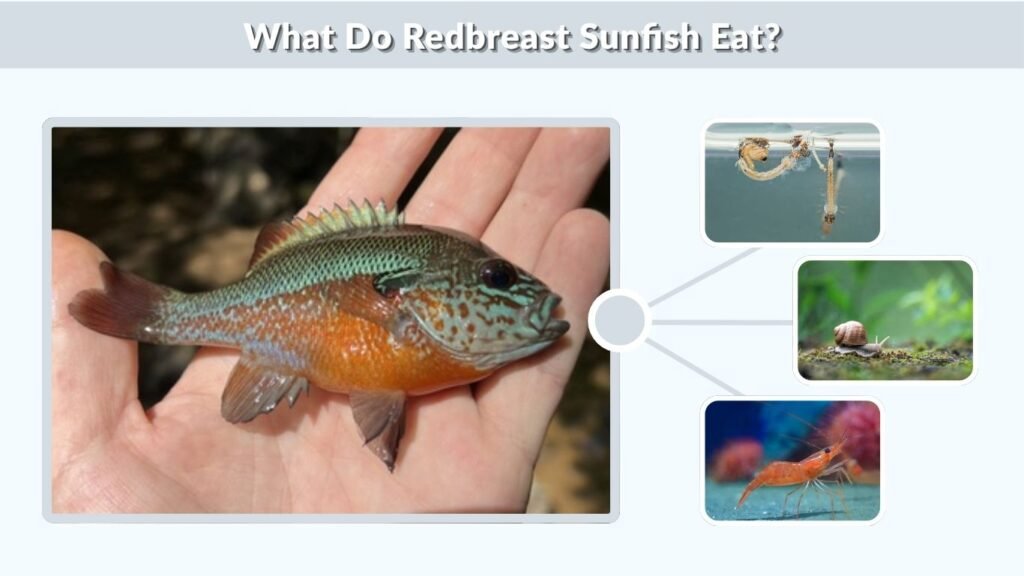
Redbreast sunfish are opportunistic carnivores that consume a wide variety of aquatic and terrestrial animals. Their diets vary depending on age, habitat, prey availability, and seasonal conditions. Compared with some other sunfish species, redbreasts have relatively diverse feeding habits. They capture insects near the water’s surface while also searching for invertebrates and small fish around submerged structures.
Common Foods Redbreast Sunfish Eat
- Aquatic Insect Larvae: Important foods throughout the year.
- Mayflies: Adults and aquatic immature stages provide nourishment.
- Caddisflies: Larvae are commonly available in flowing water.
- Crayfish: Small individuals are eaten when available.
- Snails: Provide an additional source of animal protein.
- Small Fish: Occasionally consumed by larger redbreasts.
- Shrimp: Small freshwater shrimp may contribute to their diet.
- Terrestrial Insects: Crickets, grasshoppers, and other insects falling into water.
Redbreast Sunfish Feeding Behavior
Redbreast sunfish actively search for food near underwater structures, sandy bottoms, and vegetation edges.
They use their relatively large mouths to capture insects and other small animals.
Feeding activity often increases during warmer conditions when aquatic insects become more abundant.
Their flexible diet allows them to exploit different food sources as environmental conditions change.
Redbreast Sunfish Spawning and Life Cycle
Redbreast sunfish reproduce during spring and summer when water temperatures become suitable for egg development. Males establish territories and construct nests in shallow water, usually over sand or gravel substrates. Like other sunfish, they provide parental care by protecting their nests against predators. Successful reproduction depends on water temperature, habitat quality, and the availability of appropriate nesting locations.
When Do Redbreast Sunfish Spawn?
In South Carolina, redbreast sunfish typically spawn from late May through July when water temperatures reach approximately 65–75°F.
Males construct shallow, saucer-shaped nests in protected locations.
These nests may occur individually or in groups containing numerous breeding males.
Females deposit eggs inside the prepared nests, where males fertilize them externally.
Eggs and Juvenile Development
After fertilization, the eggs remain attached to the nesting substrate.
Male redbreast sunfish guard the eggs and newly hatched young against potential predators.
Hatching time depends primarily on water temperature.
The newly emerged larvae initially rely on stored yolk before beginning to consume microscopic aquatic organisms.
As juveniles grow, they gradually transition toward larger insects and other invertebrates.
Redbreast Sunfish vs. Bluegill, Pumpkinseed, and Longear
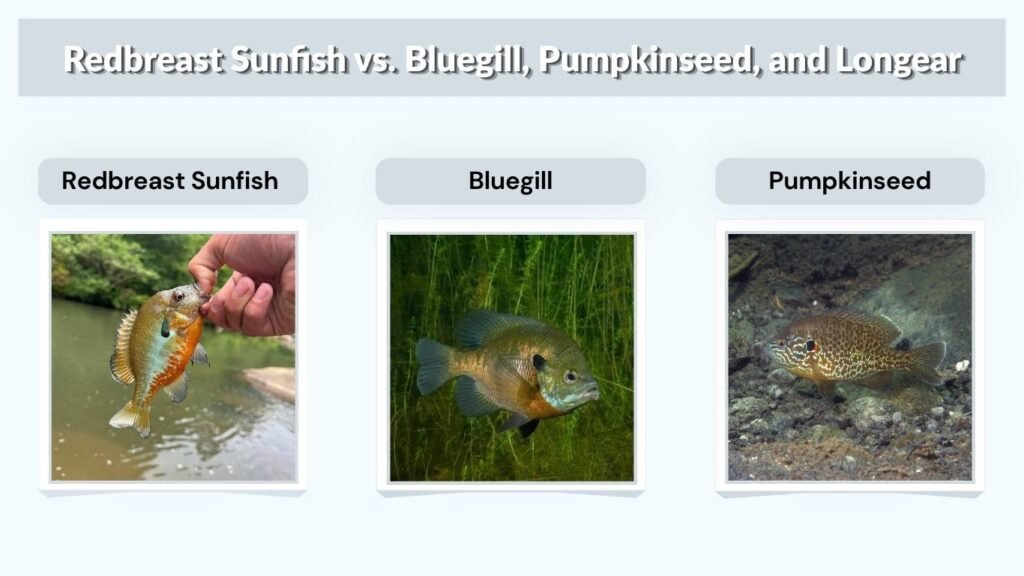
Redbreast sunfish are frequently confused with other members of the genus Lepomis. Their body shapes, colorful markings, and overlapping habitats make identification challenging, particularly among juveniles. However, several physical characteristics provide reliable clues. Examining the shape of the ear flap, pectoral fin length, facial markings, and body coloration can help distinguish redbreasts from other common sunfish species.
Redbreast Sunfish vs. Bluegill
Bluegill usually have deeper, rounder bodies with longer, pointed pectoral fins.
They also possess a noticeable dark spot near the rear of the soft dorsal fin.
Redbreast sunfish have shorter, rounded pectoral fins, elongated black ear flaps, and distinctive blue facial lines.
Redbreasts are also more strongly associated with rivers and streams than bluegill.
Redbreast Sunfish vs. Pumpkinseed
Pumpkinseed sunfish generally display bright orange markings and elaborate blue-green patterns across their faces.
Their ear flaps have a noticeable red or orange spot near the tip.
Redbreast sunfish instead possess longer, narrower black ear flaps and more elongated bodies.
Pumpkinseeds also tend to have smaller mouths relative to their body size.
Redbreast vs. Longear Sunfish
Both species possess elongated ear flaps and colorful facial markings.
However, longear sunfish typically have broader ear flaps with noticeable pale or colored borders.
Redbreast sunfish usually have narrower black ear flaps without a prominent contrasting margin.
Their relatively elongated body shape and short pectoral fins provide additional identification clues.
Redbreast Sunfish Fishing and World Record
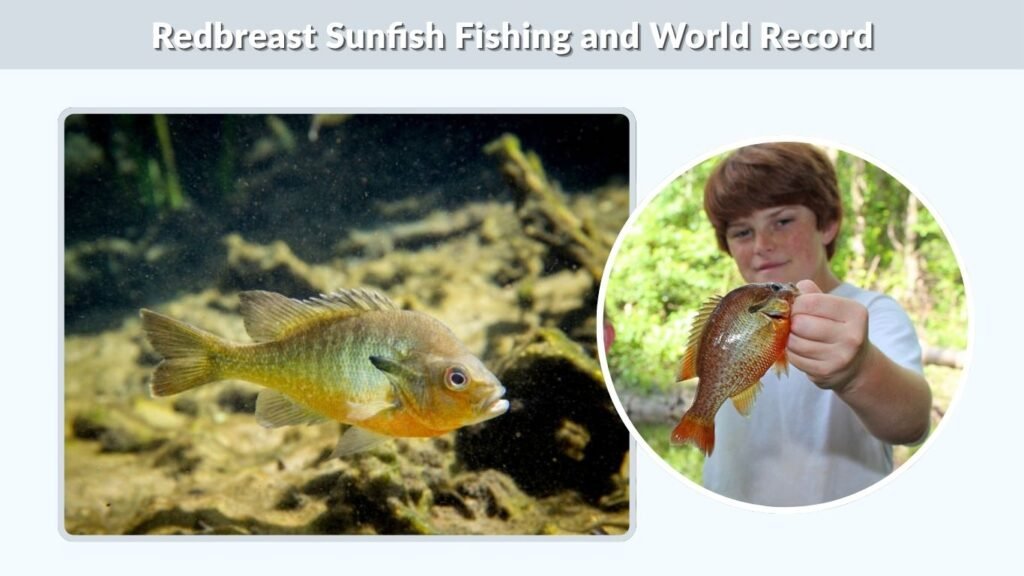
Redbreast sunfish are popular freshwater game fish, particularly in southeastern rivers. Their willingness to strike natural bait and small artificial lures makes them enjoyable targets for beginning and experienced anglers. Despite their relatively small size, they can provide spirited fights on lightweight tackle. Productive fishing locations often include sandy river bends, submerged timber, rocky banks, and protected backwaters.
Best Bait for Redbreast Sunfish
- Earthworms: Effective natural bait for many conditions.
- Crickets: Particularly useful during warmer months.
- Grasshoppers: Can attract fish feeding near the surface.
- Mealworms: Suitable for smaller hooks and light tackle.
- Small Spinners: Useful when fish are actively hunting.
- Artificial Flies: Effective for fly fishing in streams and rivers.
Redbreast Sunfish World Record
The International Game Fish Association has listed an all-tackle redbreast sunfish record of 1 pound, 12 ounces.
Alvin Buchanan caught a fish of that weight in Florida’s Suwannee River in 1984.
In May 2022, Lester Roberts caught another 1-pound, 12-ounce redbreast in Georgia’s Satilla River, tying that IGFA record.
Some state-record catches are heavier. For example, North Carolina recognizes a 2-pound, 1-ounce fish caught in the Lumber River in 2019.
State records and IGFA records follow different certification systems, so they should not be treated as interchangeable.
Are Redbreast Sunfish Good to Eat?
Yes, redbreast sunfish are widely considered excellent freshwater food fish.
Their flesh is generally white, tender, and mild-flavored.
They are commonly prepared by pan-frying, baking, or grilling.
Anglers should follow local fishing regulations and fish-consumption advisories before keeping their catches.
FAQs
Redbreast sunfish attract attention because of their vivid coloration, distinctive appearance, and importance in freshwater recreational fishing. They share several characteristics with other sunfish species but differ in their preferred habitats and physical features. These frequently asked questions address their diet, size, identification, and suitability for fishing or aquarium environments.
1. Are Redbreast Sunfish and Bluegill the Same?
No. Redbreast sunfish and bluegill are separate species. Redbreasts have elongated black ear flaps, shorter pectoral fins, and distinctive blue facial lines, while bluegill typically have deeper bodies and a dark dorsal-fin spot.
2. How Big Do Redbreast Sunfish Get?
Most redbreast sunfish measure approximately 4–9 inches long. Exceptionally large individuals can exceed 10 inches and weigh more than one pound.
3. What Do Redbreast Sunfish Eat?
Redbreast sunfish primarily consume aquatic insects, crayfish, snails, freshwater shrimp, and small fish. They may also eat terrestrial insects that fall into rivers and streams.
4. Can Redbreast Sunfish Live in Aquariums?
Yes, redbreast sunfish can be maintained in sufficiently large, properly managed freshwater aquariums. However, they require suitable water conditions, filtration, space, and appropriate feeding. Their territorial behavior may create problems with incompatible tank mates.
5. Are Redbreast Sunfish Good for Fishing?
Yes. Redbreast sunfish are popular among anglers because they readily strike worms, crickets, small spinners, and artificial flies. They are especially common targets in southeastern rivers and streams.